English
 русский
 Español
 عربى
عربى
HUNTACE HUNTACE HUNTACE HUNTACE HUNTACE
HUNTACE HUNTACE HUNTACE HUNTACE

The material used in a Rifle Cleaning Mop affects how the accessory interacts with an internal surface. Fiber type can influence absorption, softness, flexibility, durability, and compatibility with cleaning solutions.
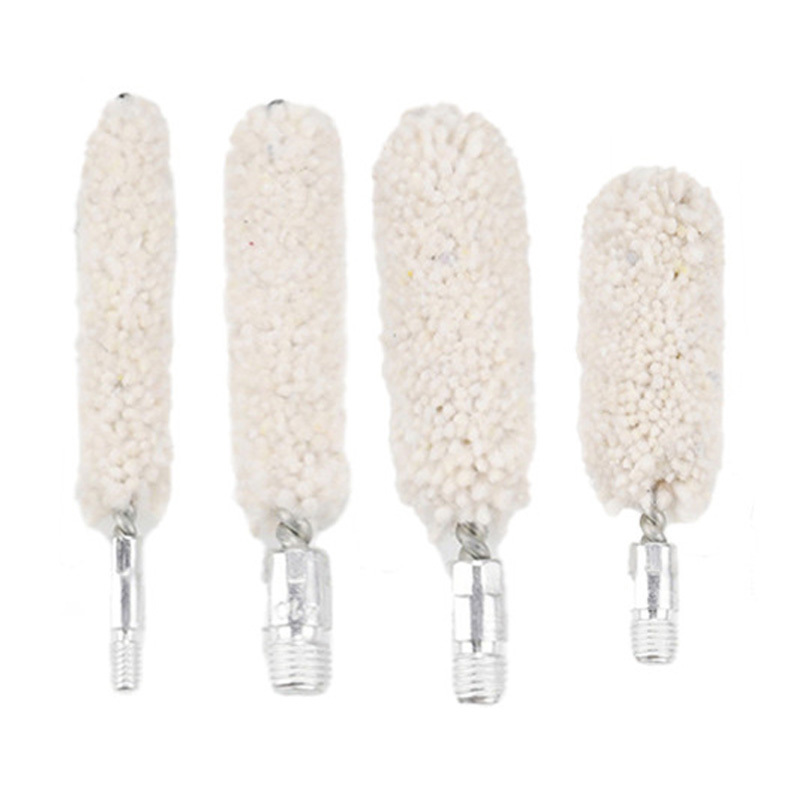
For this reason, material selection should be based on the intended maintenance task rather than appearance alone.
Cotton, wool, and synthetic fibers are common material categories. Each option has characteristics that may suit different maintenance environments.
Cotton fibers are widely used in cleaning accessories because they can absorb liquid and provide a soft contact surface.
A cotton mop can be suitable for wiping tasks and for carrying an appropriate cleaning solution. Its fiber structure allows liquid to remain within the mop head during handling.
Buyers considering cotton should review fiber density, construction, attachment method, and intended use. A well specified cotton mop should provide clear information about its dimensions and connection structure.
Storage conditions are also relevant because cotton fibers can retain moisture. Proper drying and storage can help maintain the condition of the accessory.
Wool is another fiber material used in certain bore cleaning accessories. It has a soft texture and can provide useful absorption characteristics.
A wool mop may be considered when gentle fiber contact and liquid absorption are important aspects of the maintenance process.
The density and shape of the wool head can affect how the accessory contacts the surface. Buyers should therefore review the product construction rather than selecting a wool mop based only on the fiber name.
Wool products also require suitable storage conditions. Keeping the material clean and dry can help preserve its intended characteristics.
Synthetic fibers provide another material category for cleaning mop production. Depending on the selected fiber, synthetic materials can offer consistent construction and specific chemical compatibility characteristics.
Different synthetic fibers can behave differently when exposed to cleaning solutions. Product documentation should therefore identify the intended chemical environment.
Synthetic mop heads can also be produced with controlled fiber dimensions and density. This may be useful for buyers who require consistent accessory specifications across a maintenance program.
Material selection should begin with the cleaning task.
For liquid application, absorption may be an important consideration. For dry wiping, fiber texture and surface contact may receive greater attention.
When cleaning solutions are involved, chemical compatibility should also be reviewed. A material that performs well in a dry environment may not be appropriate for every chemical solution.
The surface being cleaned is another factor. Softer fibers can provide a different contact characteristic compared with rigid brush materials.
Fiber density influences the amount of material present within the mop head. A denser structure may provide greater contact area, while a lighter structure may provide a different handling characteristic.
Fiber attachment is also important. Fibers should remain securely connected to the mop structure during normal use.
The connection between the mop head and shaft should receive similar attention. A secure connection supports predictable handling when the accessory is attached to a compatible cleaning system.
Cleaning mops can be supplied in reusable or disposable configurations.
Reusable products may be suitable for maintenance systems that include cleaning and storage procedures for accessories. Disposable products can be useful where a fresh accessory is preferred for a particular maintenance task.
The choice depends on the maintenance environment, cleaning workflow, storage conditions, and procurement requirements.
Buyers should also review whether the selected material can withstand the cleaning and drying process required for reusable products.
For procurement teams, a material specification should include fiber type, mop construction, dimensions, connection method, and intended application.
Clear product information makes it easier to compare cotton, wool, and synthetic alternatives.
When cleaning solutions are part of the maintenance process, chemical compatibility should be confirmed with the supplier. This approach allows the material choice to reflect the actual working environment rather than relying on a general product description.