English
 русский
 Español
 عربى

HUNTACE HUNTACE HUNTACE HUNTACE HUNTACE
HUNTACE HUNTACE HUNTACE HUNTACE


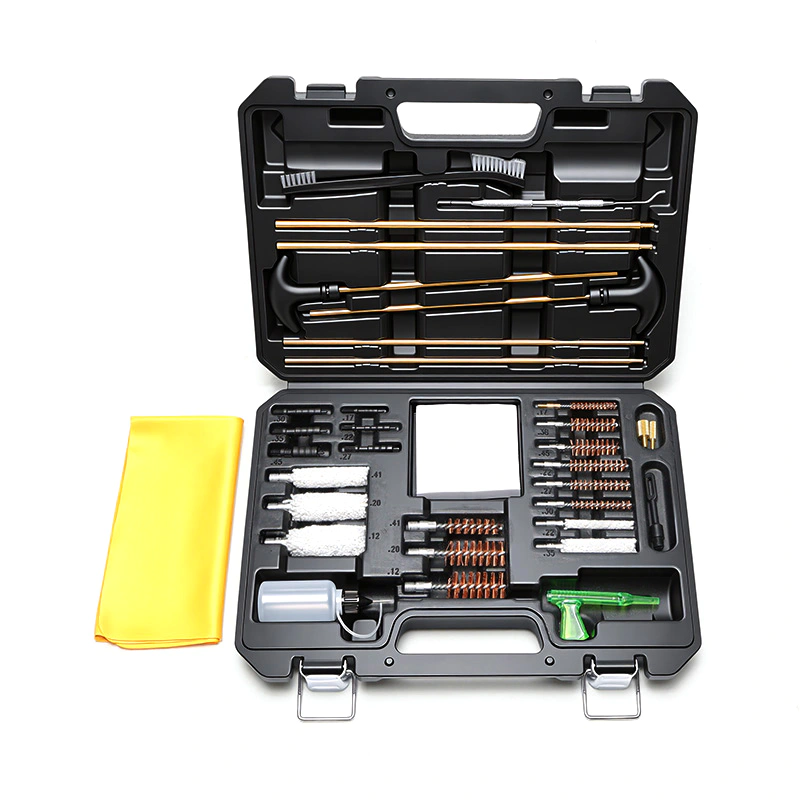
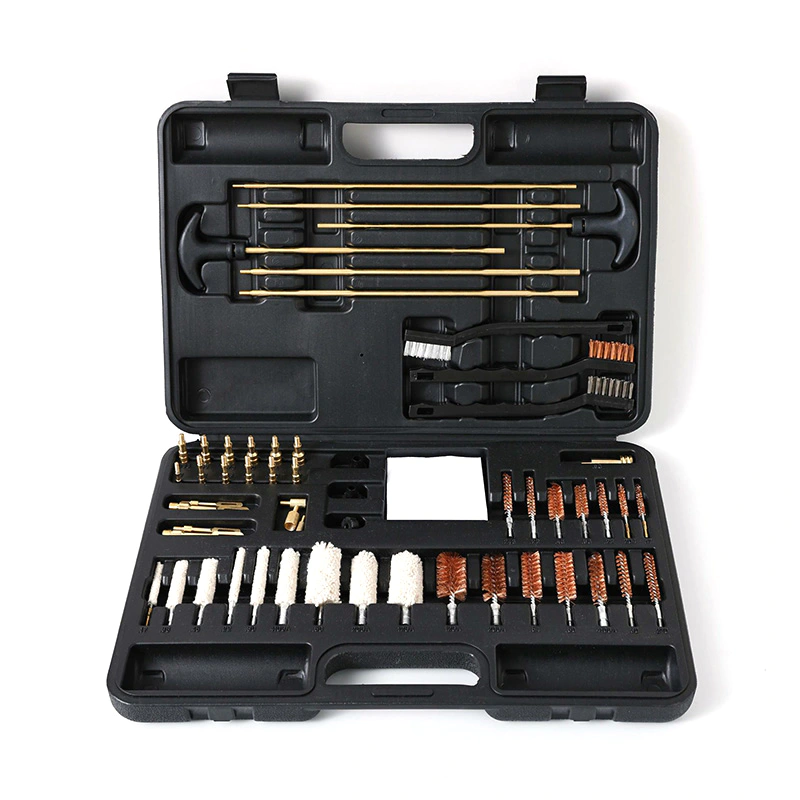
Reliable firearm maintenance depends on having the right accessories for every stage of the cleaning process. A cleaning rod may provide reach, and a brush may loosen fouling, but a properly designed patch holder is essential for wiping the bore, applying lubricant, removing solvent residue, and completing the final inspection of the barrel. The Gun Brush Accessories Patch Holder Adapter Parts Kit is developed as a practical, durable, and commercially versatile solution for these tasks.
Designed for pistols, rifles, and shotguns, this patch holder adapter kit combines broad caliber coverage, multiple material choices, secure patch retention, and compatibility with widely used cleaning rod threads. It is suitable for individual firearm owners, professional armorers, shooting clubs, outdoor retailers, maintenance suppliers, wholesalers, distributors, military and law enforcement procurement channels, and cross-border e-commerce sellers.
The product is available in brass and nylon configurations. The brass version provides strength, dimensional stability, corrosion resistance, and dependable thread engagement. The nylon version is lightweight and non-abrasive, making it especially appropriate for precision firearms and users who want to minimize the possibility of contact marks on internal barrel surfaces. Together, these options allow buyers to select the most suitable accessory for their cleaning requirements, customer base, and procurement budget.
Manufactured by Jinhua Tongshun Tool Factory, a specialized producer with more than 26 years of experience in firearm cleaning tools and related accessories, the kit is supported by established production capabilities, OEM and ODM services, packaging customization, and export experience in more than 50 countries and regions.
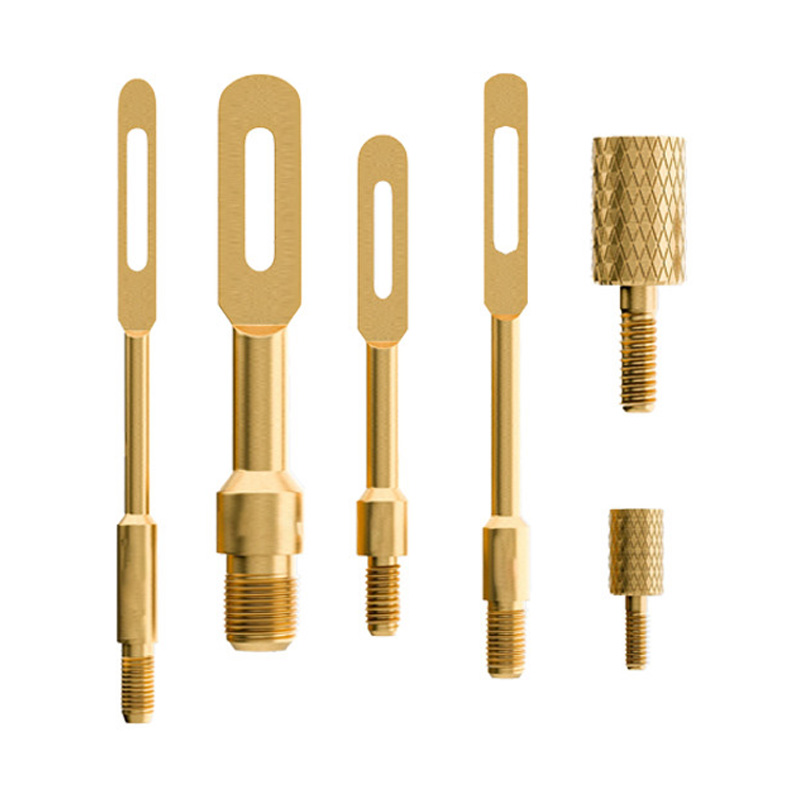
Gun Brush Accessories Patch Holder Adapter Parts Kit
A firearm bore is exposed to combustion residues, carbon fouling, copper or lead deposits, moisture, dust, and lubricant buildup. Even when a brush has removed the heavier deposits, the bore still requires wiping and inspection. Cleaning patches are widely used because they can absorb solvent, carry lubricant, collect loosened residue, and reveal the condition of the internal surface after cleaning.
However, a loose patch pushed through the bore without a suitable holder may fold, slip, bunch up, or fail to make consistent contact with the rifling and bore walls. A dedicated patch holder solves these problems by securing the patch at the end of a cleaning rod. The slotted tip holds the material in position while the rod moves through the bore, allowing the patch to wipe the internal surface more evenly.
The adapter also makes the cleaning process more organized. Instead of replacing an entire cleaning rod or using improvised methods, an operator can attach the appropriate patch holder and switch between brushing, patching, lubrication, and drying operations. This modular approach is valuable for both personal cleaning kits and professional maintenance systems.
For distributors, the patch holder is an attractive accessory because it complements many existing cleaning products. It can be sold independently, included in a multi-piece kit, bundled with cleaning rods and brushes, or supplied as an OEM component under a customer’s own brand. Its relatively compact size also supports efficient storage, packaging, and international shipment.
The Gun Brush Accessories Patch Holder Adapter Parts Kit is a bore-cleaning accessory designed to connect to a compatible cleaning rod and hold a cotton, textile, or other suitable cleaning patch. Its primary functions include barrel wiping, solvent application, oil distribution, moisture removal, and final bore inspection.
The product is offered in five general size ranges from approximately 4 mm to 9 mm. These size options are intended to serve a wide range of common firearm and airgun applications, including small-caliber bores, centerfire rifle calibers, pistol calibers, larger bores, and shotgun applications. Actual fit depends on the chosen patch holder size, cleaning rod thread, patch thickness, and bore configuration.
Standard thread specifications include 5-40, 8-32, and 5/16-27. These thread options are widely used in firearm cleaning accessories and allow the product to be integrated into many existing cleaning rod systems. Buyers can specify the required thread configuration and size combination when discussing wholesale, OEM, or ODM orders.
| Product Feature | Available Option or Benefit |
|---|---|
| Product type | Firearm bore cleaning patch holder and adapter |
| Primary materials | H65 brass or non-abrasive nylon |
| General size range | Approximately 4 mm to 9 mm |
| Caliber coverage | Approximately .177 to .50 caliber, with shotgun applications |
| Thread options | 5-40, 8-32, and 5/16-27 |
| Compatible firearms | Pistols, rifles, airguns, and shotguns, depending on size selection |
| Patch retention method | Slotted tip design |
| Available customization | Product configuration, packaging, branding, and OEM or ODM development |
| Typical sales channels | Wholesale distribution, firearm maintenance suppliers, online marketplaces, and independent websites |
The information in the table provides a general product framework. For production orders, exact dimensions, thread tolerances, materials, surface treatment, packaging, and labeling can be confirmed according to the customer’s technical requirements.
The brass version is machined from H65 brass, a copper-zinc alloy commonly selected for components that require a balance of strength, machinability, corrosion resistance, and dimensional reliability. Brass is particularly suitable for cleaning accessories because it can be formed with accurate threads and a stable slotted tip while remaining relatively resistant to corrosion in normal storage and use conditions.
One of the principal advantages of brass is its dependable mechanical performance. A brass patch holder can tolerate repeated attachment and removal from a cleaning rod without the same level of deformation that may occur with softer or poorly made materials. Accurate thread production helps the holder seat securely on the rod, reducing looseness during cleaning.
Brass also offers a professional appearance that is appreciated in retail packaging and premium maintenance kits. Its warm metallic finish communicates durability and craftsmanship, while its practical performance supports use by firearm owners, professional technicians, and institutional buyers.
In comparison with low-quality plated components, a properly manufactured brass holder can provide more predictable thread engagement and better long-term consistency. Plating on an inferior base material may chip, wear, or interfere with thread fit. A solid brass construction avoids dependence on a thin decorative coating for its basic performance.
The nylon version is designed for applications where low weight, flexibility, and non-abrasive contact are priorities. Nylon is well suited to precision-oriented cleaning because it is less likely to leave contact marks on internal surfaces when used correctly with an appropriate cleaning patch.
For users maintaining high-value sporting rifles, precision firearms, airguns, or firearms with carefully protected internal finishes, a nylon patch holder provides an additional level of surface-conscious handling. It is also convenient for portable kits because it adds little weight and is resistant to many common handling stresses.
Nylon can be an economical choice for large-volume procurement. Retailers may offer nylon accessories as an entry-level or value-focused option, while professional customers may include them alongside brass holders for different stages of the cleaning process. The two materials can therefore serve different market segments without requiring a completely different accessory system.
Material selection should be based on the firearm, the cleaning method, the type of patch, and the user’s preference. Brass may be preferred for rigidity and repeated heavy-duty handling, while nylon may be selected for lightweight kits and applications where minimizing abrasive contact is especially important.
A major commercial advantage of this adapter kit is its broad application range. The available size selections are intended to cover common small, medium, and large bore requirements. Listed applications include .177, .22, .243, .25, 6 mm, .270, .30, .35, .38, .40, .45, and .50 caliber, as well as .410 and 12-gauge shotgun bores.
The size range is useful for distributors because a single product family can serve multiple customer groups. A retailer can stock several clearly labeled sizes rather than sourcing a completely different accessory from different suppliers. A kit assembler can also combine the most popular sizes in one package for broader consumer appeal.
Compatibility is determined by more than caliber alone. A patch holder must correspond appropriately to the bore diameter, the dimensions of the cleaning patch, the cleaning rod thread, and the intended firearm type. A holder that is too small may not provide sufficient contact, while one that is too large may become difficult to pass through the bore. For this reason, size identification and technical confirmation are important during procurement.
The inclusion of 5-40, 8-32, and 5/16-27 thread specifications supports integration with many mainstream cleaning rod systems. This makes the product a practical replacement part as well as a new-kit component. Buyers who already sell rods, brushes, mops, and adapters can add the patch holder to their product range without changing their overall cleaning system.
| General Application Group | Representative Caliber or Bore Range | Common Commercial Positioning |
|---|---|---|
| Small bore | .177 to .22 caliber | Airguns, small-caliber rifles, and compact cleaning kits |
| Medium rifle bore | .22 to .270 caliber | Sporting rifles and general-purpose rifle maintenance |
| Intermediate and pistol bore | .270 to .40 caliber | Handguns, carbines, and medium-caliber firearms |
| Large bore | .40 to .50 caliber | Large-caliber firearms and specialized maintenance kits |
| Shotgun bore | .410 and 12 gauge | Shotgun cleaning and multi-purpose bore maintenance |
Because actual dimensions may vary according to the final design, customers should confirm the required bore fit and thread combination before placing a production order. Technical drawings, sample approval, and packaging labels can be incorporated into the OEM process.
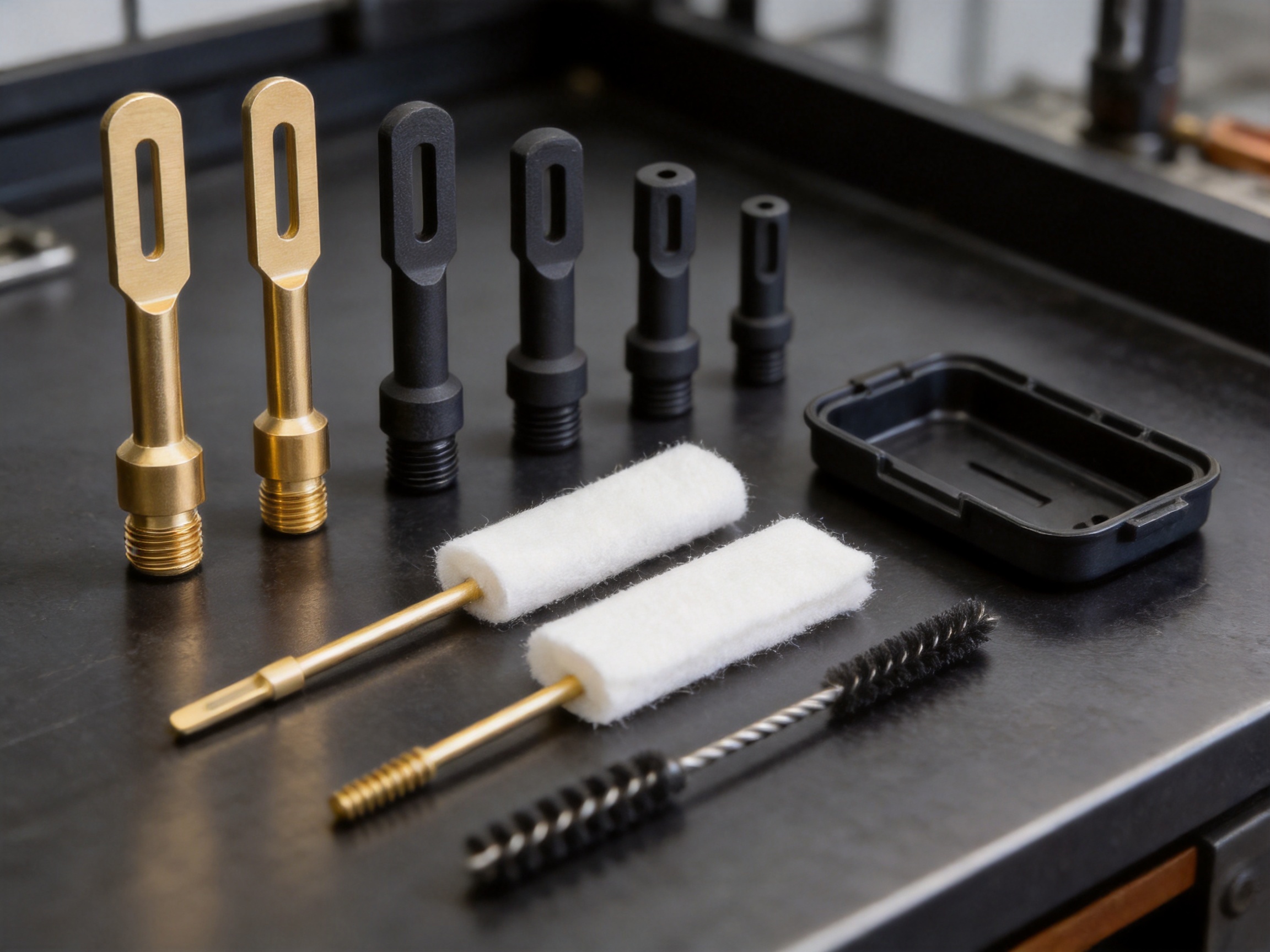
The slotted tip is one of the most important functional elements of the product. It is designed to receive and hold a cleaning patch so that the patch remains attached while the cleaning rod is pushed or pulled through the bore. This is more reliable than wrapping a patch loosely around a rod or attempting to push a folded patch without a dedicated holder.
A secure patch connection improves wiping consistency. As the holder moves through the barrel, the patch can contact the interior surface and collect loosened carbon, copper residue, lead residue, old lubricant, and moisture. The operator can then remove the used patch, inspect it, and attach a clean patch for another pass.
The slot also supports efficient solvent and lubricant application. A patch can be lightly saturated with an approved bore solvent and passed through the barrel to distribute the solution. After the residue has been loosened, dry patches can be used to remove remaining liquid. A lightly oiled patch may then be used when the firearm’s maintenance procedure calls for corrosion protection.
Users should always follow the firearm manufacturer’s maintenance instructions and use cleaning chemicals in accordance with their labels. The patch holder is a mechanical accessory; its performance is maximized when it is paired with suitable patches, compatible solvents, and a correctly sized cleaning rod.
The one-piece construction reduces the number of joints and connection points that could loosen during repeated use. This is especially valuable in a small accessory, where a weak joint can result in bending, separation, or loss of the holder inside the cleaning system.
A well-formed one-piece brass holder provides structural continuity from the threaded base to the patch-retaining tip. This helps reduce the risk of breakage when the operator encounters normal resistance from a properly sized patch. The nylon version offers a different balance of flexibility and light weight while retaining the convenience of an integrated design.
Durability is not determined by material alone. It also depends on thread accuracy, wall thickness, slot geometry, machining quality, finishing, and quality control. Tongshun Tools’ production experience in gun cleaning brushes, rods, kits, and related accessories provides a practical foundation for controlling these factors as part of a coordinated product system.
Compared with generic accessories made without consistent dimensional control, a professionally produced patch holder can reduce variation between batches. Consistent dimensions matter to distributors because customers expect replacement components to fit the same cleaning rods and function in the same way over time.
Many low-cost products offer only one material, forcing buyers to accept a compromise between rigidity, weight, surface protection, and price. This product family provides both brass and nylon options. Buyers can select a premium-feeling metal version, a lightweight non-abrasive version, or a combination of both for different product lines.
A narrow-size patch holder may serve only one firearm category. The five-size range and broad caliber positioning give distributors more flexibility. Stocking multiple sizes makes it easier to serve airgun users, rifle owners, pistol users, and shotgun customers through one supplier relationship.
Compatibility with 5-40, 8-32, and 5/16-27 threads helps the product integrate into established cleaning rod systems. This is commercially important because customers are more likely to purchase an accessory that works with equipment they already own.
The slotted tip is designed to reduce patch slipping and displacement. This improves user convenience and supports a cleaner, more controlled maintenance process. A secure patch also reduces the need to stop repeatedly to reposition the material.
Some competing products are available only in fixed configurations and standard packaging. Tongshun Tools supports product customization, private labeling, packaging development, and OEM or ODM cooperation. This allows importers and brand owners to create a product that matches their own market positioning.
Working directly with a specialized factory can simplify communication about materials, dimensions, samples, packaging, and production schedules. It may also help distributors coordinate several related products, such as brass brushes, nylon brushes, bore mops, cleaning rods, patches, cloths, and complete cleaning kits.
Jinhua Tongshun Tool Factory was established in 1999 and has developed more than 26 years of experience in firearm cleaning tools and accessories. The company integrates research and development, production, and sales, allowing product design and manufacturing feedback to be managed within one organization.
The factory operates modern production facilities supported by semi-automatic and fully automated production systems. Automation is valuable for repetitive operations because it can improve production consistency, support higher output, and reduce variation in processes such as forming, machining, assembly, and packaging.
For a small precision accessory such as a patch holder, manufacturing control may include material preparation, blank forming or machining, thread production, slot formation, surface finishing, dimensional inspection, cleaning, and packaging. Each stage contributes to the final user experience. A clean, accurately formed thread is necessary for secure attachment, while a properly shaped slot is necessary for reliable patch retention.
Production scale is also important for wholesale customers. Retail brands and distributors often require consistent replenishment rather than a single small order. A factory with established equipment and production systems can better support recurring programs, seasonal demand, promotional launches, and multi-product purchasing plans.
Tongshun Tools’ experience across related cleaning products creates opportunities for integrated development. A customer can discuss a patch holder together with matching cleaning rods, adapters, brushes, mops, patches, or complete kits. This reduces the risk of mismatched specifications and supports a more coherent product range.
Quality control for a patch holder should address both appearance and function. Visual inspection may identify burrs, surface defects, discoloration, incomplete slots, or irregular finishing. Functional inspection should confirm thread engagement, patch retention, dimensional conformity, and the absence of sharp edges that could interfere with safe handling.
Material verification is also important. Brass versions should be produced from the specified H65 brass or an agreed equivalent. Nylon versions should use a suitable grade capable of maintaining the intended shape and mechanical performance under normal cleaning conditions.
Thread gauges or approved reference components may be used to verify that the holder connects smoothly and securely to the intended cleaning rod. Excessively tight threads may be inconvenient or may damage mating parts, while excessively loose threads can produce wobbling and reduce cleaning control.
Size consistency is especially important when a product is sold as a multi-size kit. Each size should be clearly identified during production and packaging to prevent mixing. Labels can include the approximate caliber group, thread specification, material, and brand information required by the customer.
For OEM orders, buyers may define inspection standards, sampling procedures, acceptable tolerance ranges, packaging requirements, and approval stages. Tongshun Tools can work with customers to confirm these requirements before mass production.
After brushing, a patch holder can carry a clean patch through the bore to remove loosened residue. Repeating the process with fresh patches can help determine when the bore is sufficiently clean for the intended maintenance procedure.
A patch lightly treated with an appropriate bore-cleaning solution can distribute the solution along the interior surface. This may help soften fouling before brushing or wiping. The user should avoid excessive liquid and should observe all manufacturer safety recommendations.
When a firearm’s maintenance instructions call for lubrication, a lightly oiled patch can be guided through the bore. The goal is controlled, even application rather than excess oil. Excess lubricant should be removed when required by the firearm manufacturer or storage conditions.
Dry patches can help remove residual moisture after cleaning or after exposure to humid conditions. This is particularly useful because moisture left in a metal bore can contribute to corrosion over time.
The condition of removed patches can provide a simple visual indication of remaining fouling. A clean, dry patch may also help the operator confirm that excessive solvent or oil has not been left in the bore.
For firearm owners, the patch holder is a compact and useful addition to a personal cleaning kit. It provides a dedicated tool for wiping and lubrication without requiring improvised attachments. The choice between brass and nylon allows the user to match the accessory to the firearm and preferred maintenance method.
For shooting clubs and training facilities, replaceable patch holders can support routine cleaning of shared equipment. Multiple sizes can be organized in a labeled storage case, allowing staff or members to select the correct component for each firearm.
For gunsmiths and professional armorers, dependable thread fit and repeatable performance are especially important. A professional workspace may use brass holders for durability and nylon holders for specific precision-maintenance tasks.
For wholesalers and distributors, the product can be positioned as a replacement accessory, an add-on sale, or part of a complete cleaning system. Its compatibility with different cleaning rods makes it suitable for catalogs that already carry firearm maintenance tools.
For online sellers, the product offers several content and merchandising advantages. Listings can be organized by material, thread, size, caliber group, and kit quantity. Clear compatibility charts and close-up product photography can help reduce customer confusion and returns.
For private-label brands, the factory’s OEM and ODM capabilities provide a path to customized packaging, logo application, product combinations, instruction materials, and market-specific presentations. This is useful for brands seeking to differentiate themselves from generic marketplace listings.
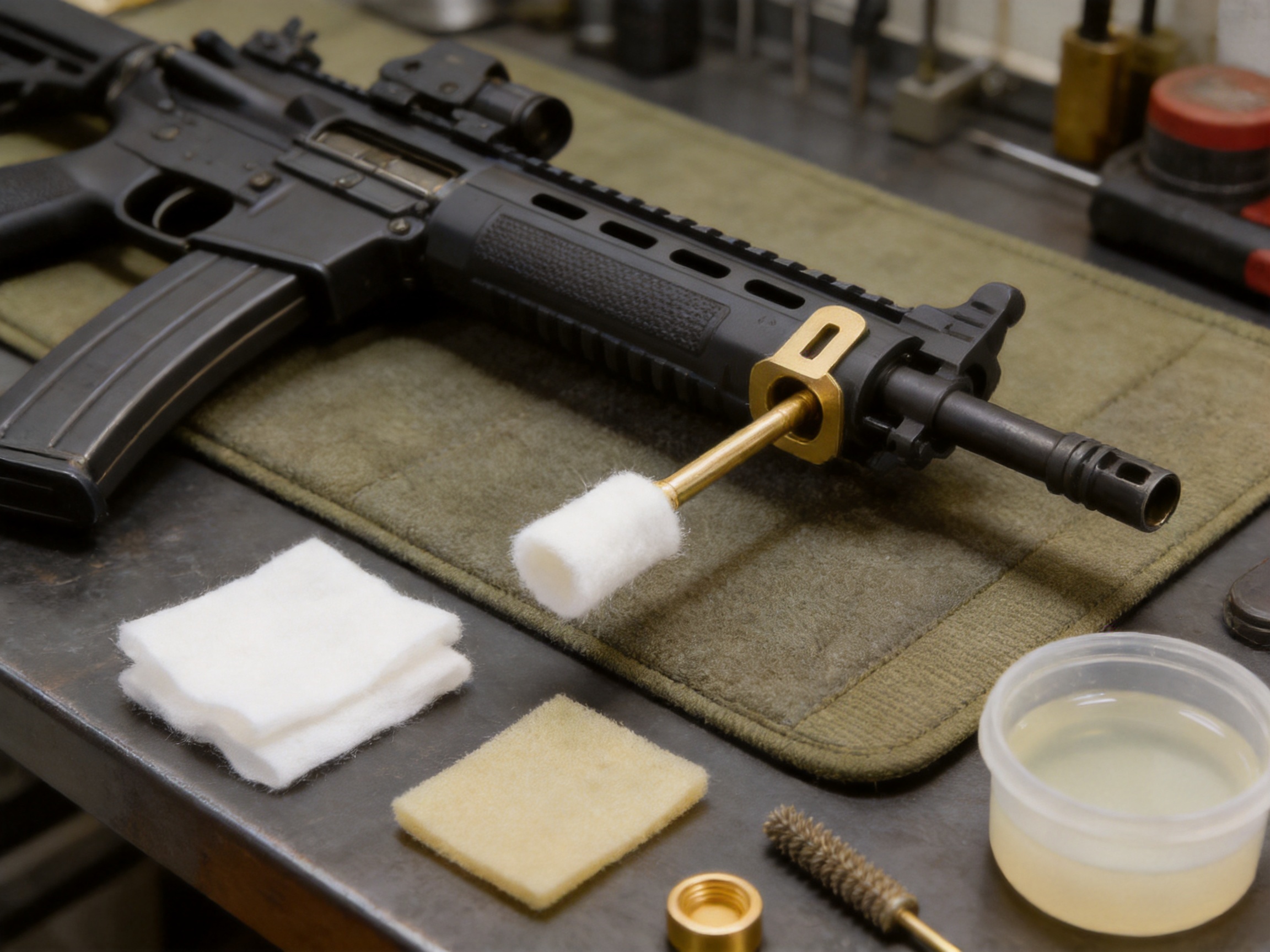
Customization is a central advantage for customers purchasing directly from a manufacturer. A buyer may require a particular combination of brass or nylon material, thread specification, size range, package quantity, or accessory configuration. These requirements can be discussed during the sampling stage before production approval.
Packaging customization may include printed cartons, polybags, blister packs, storage boxes, molded cases, instruction inserts, barcode labels, warning information, and multilingual product descriptions. The final packaging format can be selected according to the customer’s sales channel, shipping method, and target market.
Private-label customers may also request their own logo, color scheme, product naming system, and assortment structure. A retailer could sell a compact single-size patch holder, while a professional supplier might offer a multi-size kit with matching rods and brushes.
ODM development is appropriate when the customer wants a new configuration rather than a simple logo change. Possible development areas include modified dimensions, alternate thread combinations, special packaging, combined accessory kits, or product sets organized for a particular firearm category.
Before mass production, it is advisable to confirm a technical specification sheet covering the material, size, thread, slot dimensions, surface treatment, tolerances, packaging, labeling, and inspection requirements. Sample approval helps both parties verify the design and reduce misunderstandings.
The product is suitable for export-oriented distribution and cross-border e-commerce. Its compact form helps reduce storage requirements and supports efficient carton packing. Multiple units can be grouped into inner boxes or retail-ready packages according to the buyer’s needs.
Export packaging should protect the threads and slot during transport. Brass components may be separated or wrapped to minimize surface contact and cosmetic marking, while nylon components should be packed to avoid deformation or crushing. Carton labels can identify product type, material, size, quantity, and customer reference number.
Clear packaging information is important because compatibility is a key purchase factor. A label may state the thread specification and general caliber application, while an instruction insert can explain how to attach the holder, position the patch, and use the accessory with a compatible cleaning rod.
Tongshun Tools serves sales regions including Europe, North America, and South America, with products exported to more than 50 countries and regions. This experience can support communication concerning order documentation, packaging coordination, shipment planning, and requirements for different distribution markets.
A distributor seeking broad market coverage may begin with the most commonly requested small, medium, and large sizes, together with the most widely used thread specifications. A balanced assortment can include both brass and nylon versions so that customers can select between durability, rigidity, weight, and surface-conscious cleaning.
A value-oriented assortment may contain nylon holders, standard patches, and a basic cleaning rod. A professional assortment may combine brass holders, multiple thread adapters, bore brushes, cotton mops, high-quality patches, and storage packaging. Offering these tiers allows a retailer to address different price points without changing suppliers.
For online marketplaces, each variation should be clearly identified. Confusing caliber labels or thread descriptions can lead to incorrect orders. Product pages should explain that the correct holder depends on both bore size and cleaning rod thread. A compatibility table is often useful for customers comparing options.
| Suggested Sales Format | Typical Contents | Target Customer |
|---|---|---|
| Single replacement accessory | One brass or nylon patch holder | Existing cleaning kit owners |
| Material comparison pack | Matching brass and nylon holders | Users who maintain different firearm types |
| Multi-size kit | Several caliber sizes and selected thread options | Clubs, armorers, and professional users |
| Retail cleaning set | Patch holders, patches, rod, brush, and storage packaging | Consumer retail and online marketplaces |
| Private-label assortment | Customized products, branding, packaging, and instructions | Distributors and firearm maintenance brands |
The first consideration is bore size. The patch holder should be selected for the firearm or airgun caliber and should be appropriate for the diameter of the cleaning patch being used. If a customer maintains multiple firearm types, a multi-size set may be more practical than a single holder.
The second consideration is cleaning rod thread. A 5-40, 8-32, or 5/16-27 thread should be chosen according to the rod and adapters already owned. If the rod specification is unknown, the buyer should measure or confirm it before ordering.
The third consideration is material. Brass is a strong choice for repeated general-purpose use and for customers who prefer a rigid metal accessory. Nylon is appropriate when low weight and non-abrasive contact are priorities.
The fourth consideration is packaging and sales format. Individual accessories may be ideal for replacement sales, while multi-size kits are more attractive to new customers building a complete maintenance system. OEM buyers can request packaging that presents these choices clearly.
Finally, buyers should confirm the final technical drawing or sample. Product information may use approximate caliber groupings for commercial convenience, but final dimensions and thread details should be verified before mass procurement.
Before cleaning, the firearm must be unloaded and handled in accordance with applicable safety procedures. The user should confirm that the chamber, magazine, and action are clear. Cleaning should take place in a suitable, well-ventilated area with appropriate protective equipment.
The patch holder should be attached to a compatible cleaning rod without forcing the threads. A patch should be positioned securely in the slot and should not be so large or thick that it becomes excessively tight in the bore. Excessive resistance can make the cleaning process difficult and may place unnecessary stress on the rod or holder.
The holder should be pushed in the appropriate direction for the firearm and cleaning procedure, using controlled movement. If significant resistance is encountered, the user should stop and check the patch size, holder size, bore condition, and rod alignment rather than forcing the accessory.
After use, the holder should be wiped clean and dried before storage. Brass and nylon components should be kept away from unnecessary contamination, and the cleaning rod should be inspected for damaged threads or bends. Proper storage helps preserve performance and reduces the risk of transferring residue between firearms.
Firearm maintenance accessories are exposed to solvents, oils, moisture, and residue. Brass offers useful corrosion resistance under normal conditions, while nylon is naturally lightweight and suitable for many maintenance environments. Nevertheless, neither material should be treated as maintenance-free.
After a cleaning session, chemical residue should be removed from the accessory according to the solvent manufacturer’s recommendations. Components should be dried before being placed into a closed kit. Storing damp patches or solvent-soaked materials alongside the holder may affect the broader cleaning system and packaging.
For long-term storage or humid environments, users should follow the firearm and accessory manufacturer’s recommendations for corrosion prevention. The patch holder can help apply a controlled amount of approved lubricant, but it does not replace routine inspection of the firearm.
A patch holder appears simple, but its usefulness depends on many small manufacturing details. An inaccurate thread, an incomplete slot, an irregular tip, or a burr can negatively affect the entire cleaning process. Factory experience helps transform a simple component into a dependable commercial product.
Since 1999, Jinhua Tongshun Tool Factory has focused on gun cleaning kits, barrel cleaning brushes, cleaning rods, bore mops, patches, cloths, and related accessories. This specialization gives the company an understanding of how individual components function within a complete maintenance system.
The company’s integrated R&D, production, and sales structure supports communication from product concept through manufacturing and delivery. Its semi-automatic and fully automated production systems are intended to support scalable output and consistent quality for both standard and customized orders.
More than 26 years of industry experience also supports practical problem solving. Buyers can discuss compatibility, product assortment, material selection, packaging, and branding with a supplier familiar with the requirements of firearm maintenance distribution.
The company’s core values include quality first, integrity, and mutual benefit. These principles are relevant to long-term OEM relationships, where reliable communication and stable product quality are as important as the initial quotation.
Wholesale customers can benefit from the product’s combination of broad compatibility and compact logistics. A relatively small accessory can be sold independently or bundled with higher-value products, increasing the number of merchandising opportunities within a cleaning-tool catalog.
Stocking brass and nylon versions allows a supplier to serve budget-conscious buyers, precision-oriented users, professional customers, and private-label brands. The product’s modular nature also makes it suitable for replacement sales, which can create repeat purchasing after customers expand or renew their cleaning equipment.
The factory’s broader product range may help buyers consolidate purchasing. Instead of coordinating separate suppliers for rods, brushes, patches, mops, and adapters, a distributor can explore a combined sourcing program. This may simplify sample management, packaging coordination, and product-line development.
For cross-border sellers, customized packaging and clear product identification can strengthen the presentation of the listing. A professional image, accurate compatibility data, and consistent variation naming can help distinguish the product from generic accessories with incomplete specifications.
Its main purpose is to hold a cleaning patch at the end of a compatible firearm cleaning rod. It can be used to wipe the bore, apply suitable cleaning solutions or lubricant, remove residue, and help eliminate moisture after cleaning.
The product is available in H65 brass and nylon. Brass provides rigidity, strength, thread stability, and a durable metallic construction. Nylon is lightweight, flexible, and non-abrasive, making it suitable for precision-oriented applications and economical high-volume orders.
The available size range is intended for applications from approximately .177 to .50 caliber, as well as selected shotgun bores such as .410 and 12 gauge. Exact suitability depends on the selected holder size, patch dimensions, firearm bore, and cleaning method.
Common thread specifications include 5-40, 8-32, and 5/16-27. Buyers should confirm the thread specification of their cleaning rod before ordering or request a customized configuration for an OEM project.
Yes. The product is designed for use with pistols, rifles, airguns, and shotguns when the correct size and thread configuration are selected. It should always be used with a compatible cleaning rod and an appropriately sized patch.
The slot helps keep the cleaning patch attached during movement through the bore. It reduces slipping and displacement, supports more consistent wiping, and makes it easier to change from solvent application to dry wiping or lubrication.
Neither material is universally better. Brass is often preferred for rigidity, durability, and repeated general-purpose use. Nylon is often preferred for low weight and non-abrasive contact. The best choice depends on the firearm, cleaning procedure, user preference, and target market.
Yes. OEM and ODM cooperation is available. Customization may include material selection, dimensions, thread specifications, product combinations, packaging, labels, logos, and other requirements agreed during technical confirmation.
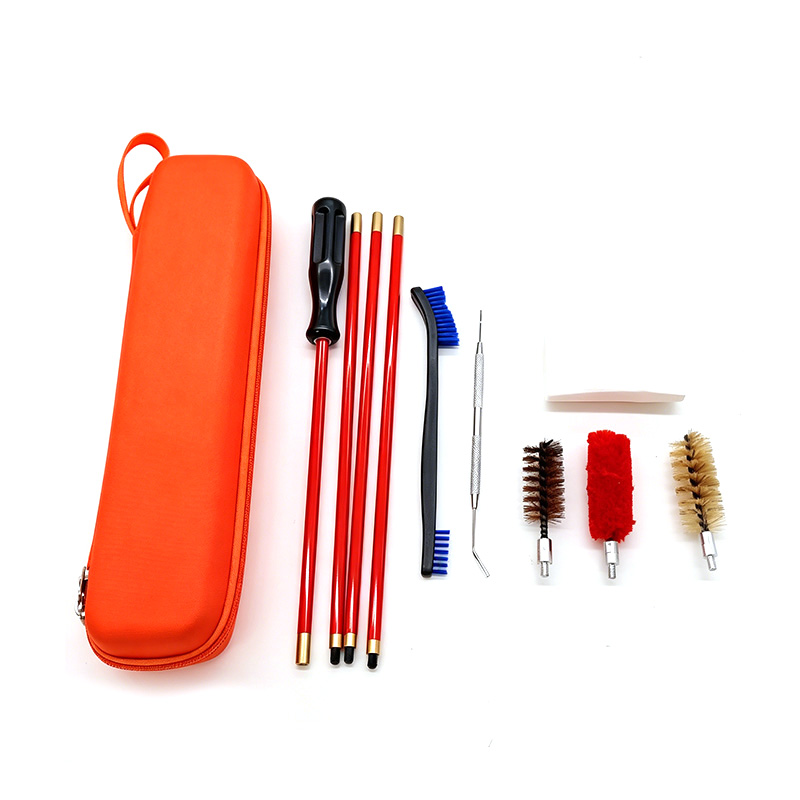
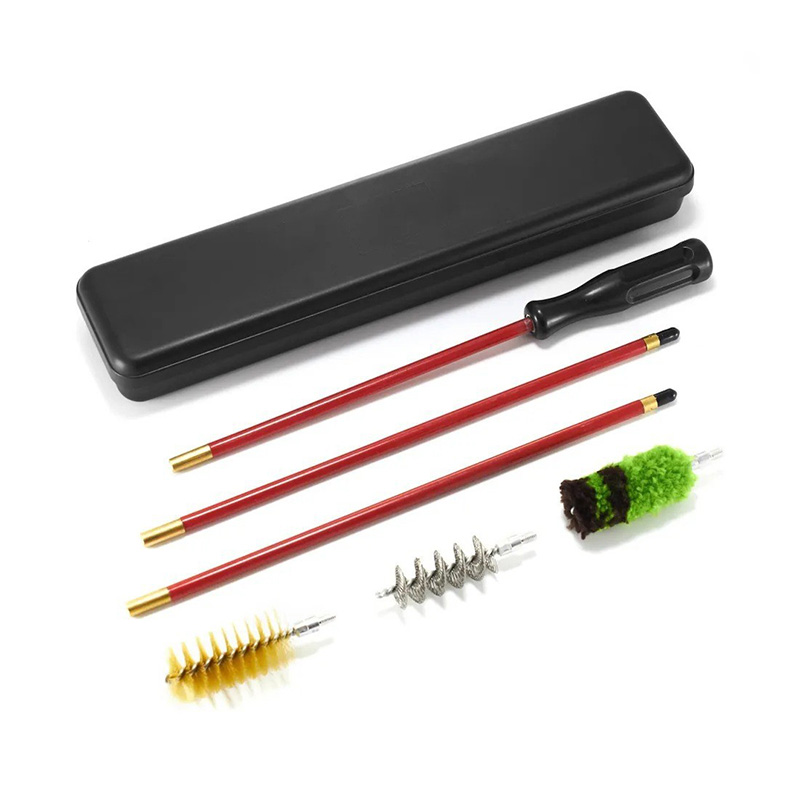
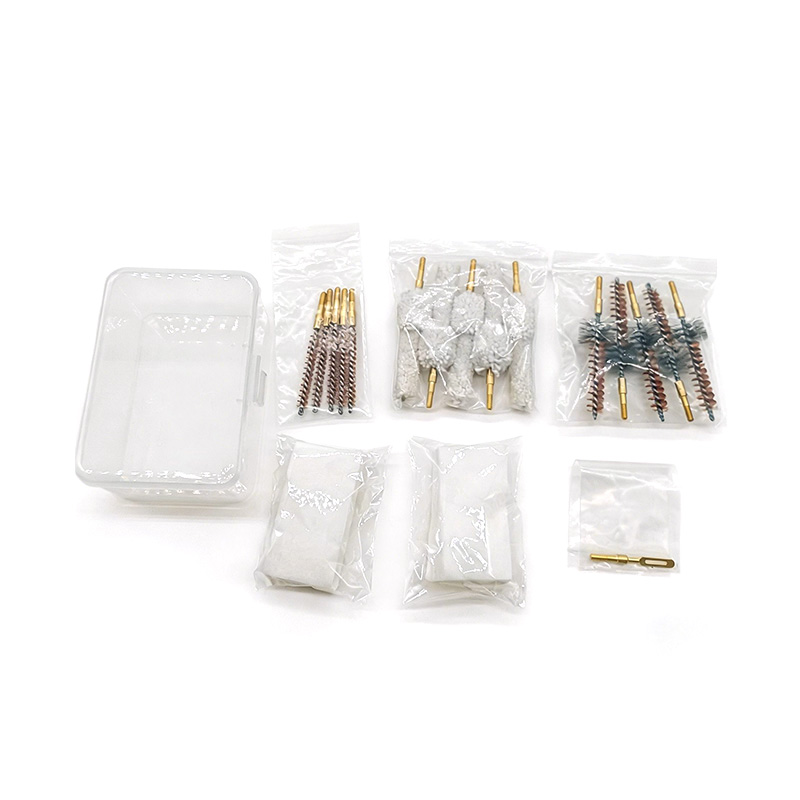
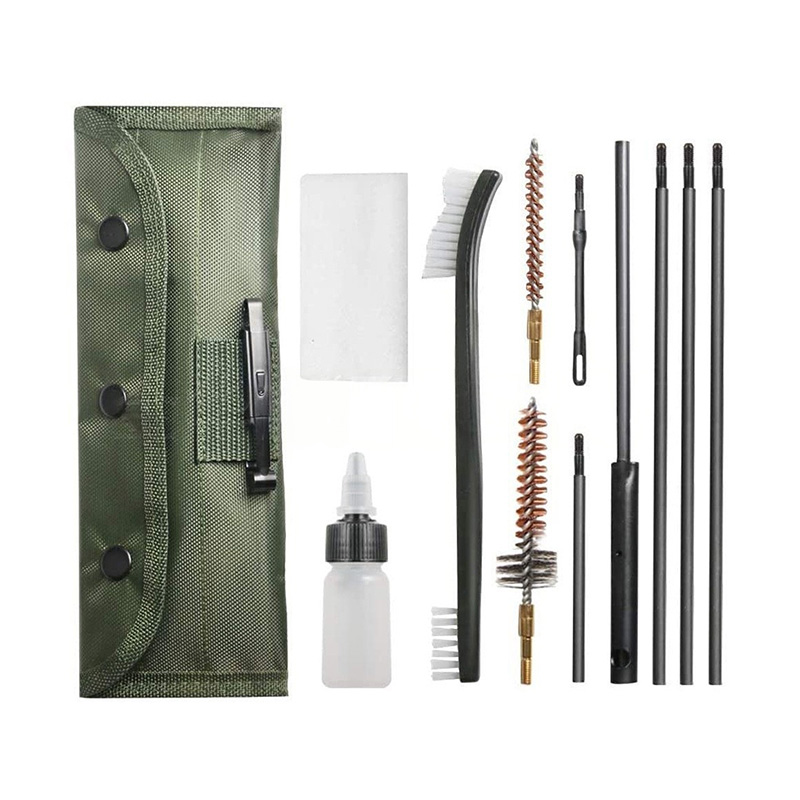
Yes. It can be packaged with cleaning rods, brushes, bore mops, patches, cloths, adapters, and storage cases. A multi-size package can be developed for retailers, professional users, clubs, or online marketplace sellers.
Buyers should confirm the material, size, caliber application, thread specification, slot design, surface finish, packaging, labeling, logo requirements, inspection standard, order quantity, and delivery schedule. Sample approval is recommended before mass production.
The holder should be wiped clean, dried, and stored in a dry environment. Solvent or oil residue should be managed according to the chemical manufacturer’s instructions. Users should also inspect the thread and slot periodically for damage or contamination.
A specialized manufacturer understands the dimensional, material, compatibility, and packaging requirements of firearm cleaning accessories. Factory-based supply can also simplify OEM development, quality communication, multi-product purchasing, and recurring wholesale orders.
The Gun Brush Accessories Patch Holder Adapter Parts Kit is a practical and adaptable component for firearm bore maintenance. Its brass and nylon material options address different cleaning preferences, while the five general size ranges and common thread specifications support broad compatibility across pistols, rifles, airguns, and shotguns.
The slotted tip helps retain cleaning patches, the one-piece construction supports dependable use, and the product can be used for wiping, solvent distribution, lubrication, moisture removal, and final inspection. These features give it advantages over improvised or poorly standardized alternatives.
For wholesalers, distributors, retailers, and private-label brands, the product offers more than a single replacement part. It can serve as the foundation for a broader accessory assortment or a customized cleaning kit. Supported by Jinhua Tongshun Tool Factory’s long manufacturing history, automated and semi-automated production capabilities, export experience, and OEM and ODM services, the product is positioned for both standard procurement and tailored commercial programs.
By combining suitable materials, broad compatibility, controlled manufacturing, and flexible packaging options, this patch holder adapter provides a dependable solution for efficient bore maintenance and a strong opportunity for companies developing professional firearm cleaning product lines.
1. Product specification and application information supplied for the Gun Brush Accessories Patch Holder Adapter Parts Kit.
2. Manufacturer information supplied by Jinhua Tongshun Tool Factory concerning company history, production capabilities, export markets, and OEM or ODM services.
3. General firearm maintenance principles concerning bore wiping, patch use, cleaning rod compatibility, solvent application, lubrication, and moisture removal.
4. General material information concerning H65 brass, brass machining characteristics, nylon accessory performance, and corrosion-conscious storage practices.
5. General wholesale product-development practices concerning sample approval, dimensional confirmation, packaging customization, quality inspection, and private-label manufacturing.
6. General product merchandising principles for firearm cleaning kits, bore brushes, cleaning rods, adapters, cotton mops, patches, cloths, and related maintenance accessories.