English
 русский
 Español
 عربى

HUNTACE HUNTACE HUNTACE HUNTACE HUNTACE
HUNTACE HUNTACE HUNTACE HUNTACE

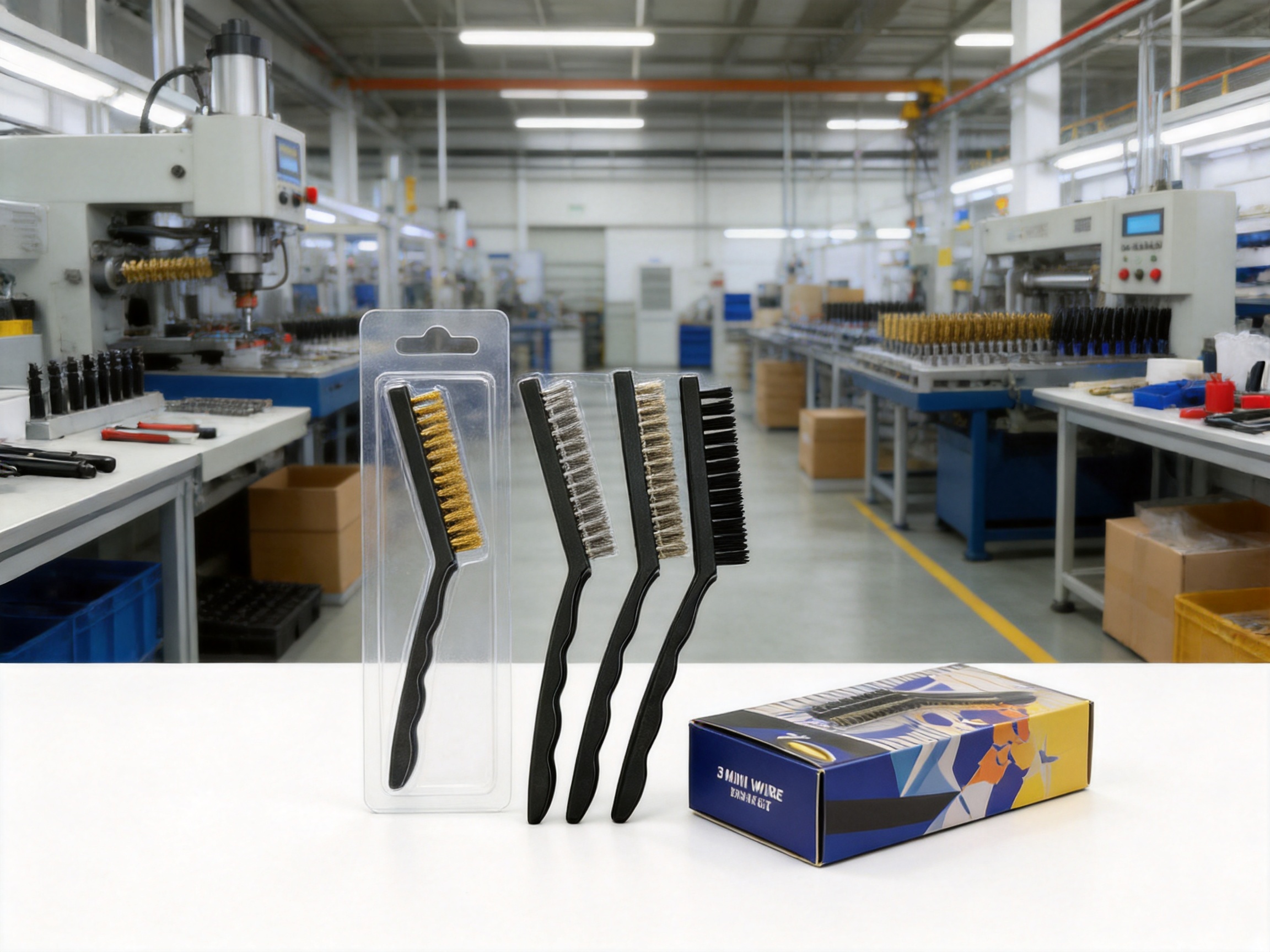
Firearm maintenance depends on more than a cleaning solvent and a patch. A reliable brush is often the tool that removes the residue, oxidation, carbon, and surface debris that ordinary cloths cannot reach. The 9-Inch Gun Brush Brass, Steel and Nylon Cleaning Kit is designed as a versatile surface-cleaning solution for firearm owners, gunsmiths, technicians, hardware distributors, and industrial maintenance professionals. By combining multiple bristle-material options with an extended handle and broad brush head, the product supports different cleaning tasks without requiring a separate tool for every surface.
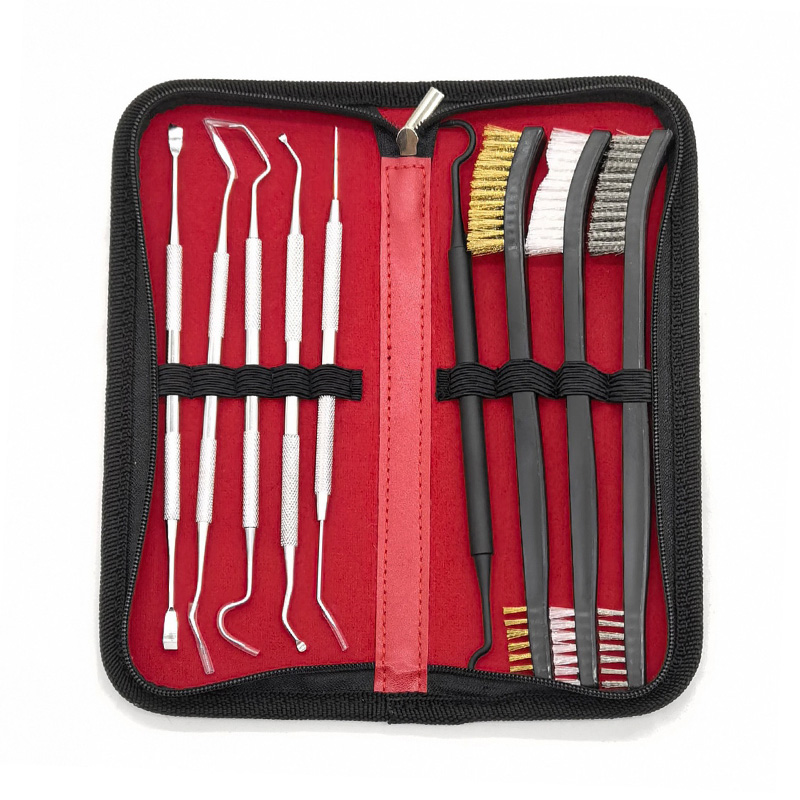
The brush is available in brass wire, stainless steel wire, and nylon bristle configurations. Each material serves a distinct purpose. Brass wire offers a comparatively mild cleaning action for firearm components and precision maintenance. Stainless steel wire provides a more aggressive option for heavy rust, oxidation, and stubborn debris on suitable metal surfaces. Nylon bristles are intended for scratch-sensitive, coated, painted, or otherwise delicate areas where a metal brush may be too abrasive.
With a total length of approximately 210 millimeters, equivalent to about 9 inches, the brush provides useful reach and handling comfort. Its approximately 30-millimeter brush head diameter and 83-millimeter bristle length create a relatively wide cleaning surface for faster coverage. The black plastic handle is shaped to support a stable grip, helping users apply controlled pressure during repetitive cleaning work.
For distributors and private-label buyers, the product is offered in bulk and retail-ready configurations. Options include single-piece bulk packaging and three-piece sets supplied in blister-card or color-box formats. This packaging flexibility allows the same basic product platform to serve professional supply channels, online marketplaces, hardware stores, firearm accessory retailers, and international wholesale programs.
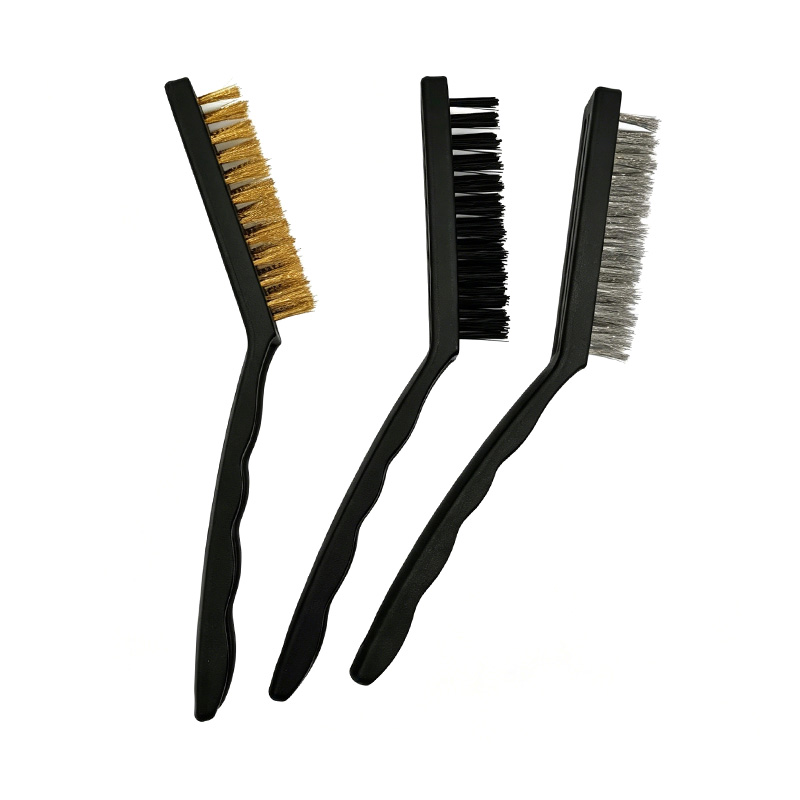
9-Inch Gun Brush Brass Steel Nylon Cleaning Kit
Firearms contain multiple surfaces and components that do not respond equally to the same cleaning method. A barrel, receiver, magazine component, trigger assembly, or coated exterior may each require a different balance of cleaning force and surface protection. Using an overly aggressive brush on a sensitive surface can cause unnecessary scratching or finish damage. Using a brush that is too soft on heavy oxidation may result in slow, incomplete cleaning.
A multi-material brush system addresses this challenge by allowing users to select the appropriate bristle type for the task. Brass wire can loosen residue and mild rust while offering a gentler action than stainless steel. Stainless steel wire is useful where a stronger mechanical cleaning effect is required on compatible metal surfaces. Nylon provides a non-metallic alternative for cleaning around finishes, coatings, painted parts, and sensitive areas.
The product is therefore more than a basic wire brush. It is a practical cleaning platform designed around the different material conditions encountered during firearm maintenance. The three bristle choices can be purchased individually in bulk configurations or combined in a three-piece retail set, giving buyers flexibility in how they organize their maintenance tools.
Brush selection should always be based on the material being cleaned, the condition of the surface, and the amount of pressure applied. No brush should be used as a substitute for proper firearm handling procedures. Before cleaning, the firearm must be unloaded, pointed in a safe direction, and checked according to the manufacturer’s safety instructions. The brush is intended for maintenance work, not for altering, modifying, or repairing firearm mechanisms.
Brass wire is a practical choice for users who need mechanical cleaning action without immediately moving to the most aggressive brush option. The material is suitable for mild rust removal, surface residue, and routine maintenance on compatible firearm components. It can help loosen fouling and debris while allowing the operator to maintain a controlled cleaning process.
For many firearm maintenance applications, brass is valued because it is softer than steel. This makes it a useful option when the user wants to remove residue while reducing the likelihood of harsh abrasion associated with a harder metal brush. The brass configuration can be particularly useful for routine cleaning of metal components, general hardware maintenance, and areas where a moderate brushing action is preferred.
Brass wire is not automatically safe for every surface or finish. Users should still test the brush on an inconspicuous area when the surface condition is uncertain. The appropriate technique is to begin with light pressure, inspect the result, and increase effort only when necessary. The product’s advantage is that it gives users a dedicated moderate-action option rather than forcing them to use a heavy-duty steel brush for every task.
Stainless steel wire is intended for more demanding cleaning work. It can help address heavy rust, oxidation, hardened residue, and stubborn debris on suitable metal hardware and components. When a softer brush cannot remove firmly bonded contamination, the stainless steel version provides a stronger mechanical action.
This configuration is particularly relevant to industrial maintenance users, workshop technicians, and professionals who clean heavily soiled hardware. It can be used on appropriate metal parts, molds, mechanical components, and other surfaces where aggressive brushing is acceptable. The brush should not be used indiscriminately on polished, coated, plated, painted, or finish-sensitive areas.
The stainless steel option is best understood as a targeted maintenance tool. It is designed to save time when dealing with difficult deposits, but it should be used with care. Excessive pressure, repeated brushing in one location, or use on an unsuitable finish may cause scratches or remove surface treatment. A careful user can take advantage of the bristle strength while preserving control over the cleaning process.
Nylon bristles provide a non-metallic cleaning choice for areas that require a lighter touch. They are suitable for general dirt, loose residue, dust, and surface cleaning on coated, painted, or sensitive components. Nylon can also be used where the user wants to avoid direct contact between hard metal wire and the surface.
The nylon configuration is useful for firearm exteriors, magazine-related components, trigger-area surfaces, hardware with protective coatings, and other parts where scratch prevention is a priority. It can also be used for cleaning around grooves, recesses, and fittings without introducing a metal edge into the cleaning process.
Although nylon is softer than brass and steel, users should still select the correct cleaning chemical and technique. Some solvents or chemicals may affect certain plastics, coatings, or finishes. Compatibility should be confirmed before extended use. The key advantage of the nylon option is that it provides a practical first step for surface cleaning before a stronger brush is considered.
| Bristle Material | Primary Cleaning Role | Typical Application | Recommended Approach |
|---|---|---|---|
| Brass wire | Moderate mechanical cleaning | Mild rust, residue, and routine firearm maintenance | Use controlled pressure and inspect the surface regularly |
| Stainless steel wire | Aggressive cleaning | Heavy rust, oxidation, and stubborn debris on compatible metal | Use selectively and avoid delicate finishes |
| Nylon | Gentle, non-metallic cleaning | Coated, painted, sensitive, or lightly soiled surfaces | Use as a low-abrasion cleaning option |
The approximately 9-inch overall length is one of the product’s most practical features. Short brushes can be difficult to hold when the user is working inside a recessed area or trying to keep fingers away from solvent and residue. An extended handle provides additional reach and gives the user more room to position the hand away from the working end.
At approximately 210 millimeters in total length, the brush is long enough for controlled handling while remaining compact enough for toolboxes, maintenance kits, retail packaging, and workshop storage. The length supports repetitive brushing without requiring the hand to remain directly beside the bristles. This is useful when cleaning firearm receivers, external hardware, mechanical assemblies, molds, and other parts with narrow or recessed sections.
The handle also contributes to leverage. A longer grip can help the user produce consistent brushing strokes with less need to pinch the brush close to the head. This may reduce hand fatigue during extended maintenance sessions. The ergonomic anti-slip design is intended to help maintain a steady hold, especially when the handle or the user’s gloves are exposed to cleaning fluid.
Reach should not be confused with unlimited access. The brush is not a substitute for a properly sized bore-cleaning rod, bore guide, chamber tool, or specialized firearm maintenance accessory. Its design makes it useful for surface cleaning and component maintenance, while other tools may be required for the inside of a barrel or for specific firearm platforms. Used as part of a complete cleaning system, the 9-inch brush can cover many tasks that would otherwise require a short-handled utility brush.
The brush head diameter is approximately 30 millimeters, with a bristle length of approximately 83 millimeters. This broad configuration creates a larger contact area than a narrow detail brush. Instead of concentrating all cleaning action into a very small line, the wider head can sweep across more of the working surface in each stroke.
For large hardware components, molds, mechanical parts, and firearm assemblies, wider coverage can improve productivity. Users can clean a larger area before needing to reposition the brush. This is especially beneficial in maintenance environments where several components must be processed in sequence or where time spent on manual cleaning affects overall workflow.
The wide head also makes the product suitable for more than firearms. It can be used for hardware rust removal, general workshop cleaning, maintenance of mechanical components, and cleaning around industrial parts. The brush’s shape is listed as a strip configuration, which supports broad contact along the bristled area while retaining the familiar handling characteristics of a hand brush.
Coverage must still be balanced with precision. A wide brush is efficient on open surfaces, but small recesses may require a narrower tool. The advantage of this product is that it combines a broad cleaning face with a relatively compact hand-held format. Buyers can use it as a general-purpose brush and supplement it with smaller brushes when highly detailed access is required.
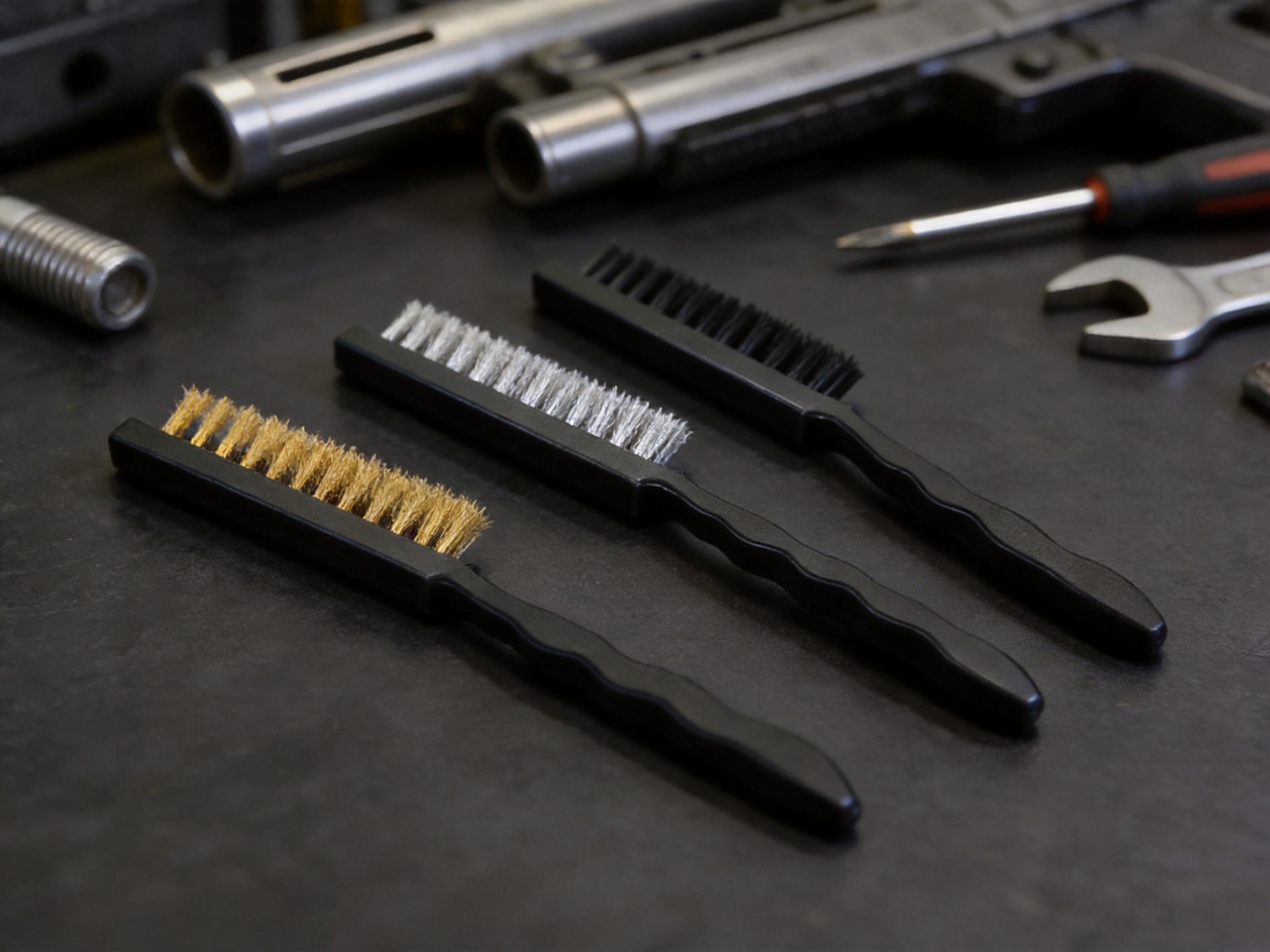
Cleaning tools are only effective when the user can control them. A brush that slips, flexes unpredictably, or becomes uncomfortable during repeated strokes can reduce cleaning quality and increase fatigue. This product uses a black plastic handle with an anti-slip grip design intended to support stable operation.
The handle provides a defined area for gripping and helps separate the user’s hand from the bristle head. This is helpful when the brush is used with cleaning agents, oils, or residue. Users should still wear appropriate protective equipment and follow the handling instructions for any chemical product. The handle is not designed to replace gloves or other protective measures.
Ergonomic handling is particularly relevant for professional users. Gunsmiths, repair technicians, industrial maintenance workers, and warehouse staff may use the same brush repeatedly throughout the day. A comfortable handle can support a more consistent grip and reduce the need to stop frequently because of discomfort. For consumers, the same design makes routine firearm maintenance easier to perform with controlled strokes.
The handle’s black color also provides a practical appearance for workshop and retail environments. It conveys a professional tool profile and can be coordinated with black blister cards, color boxes, or private-label packaging. For distributors, a consistent visual design can help create a recognizable product family across multiple brush sizes and cleaning accessories.
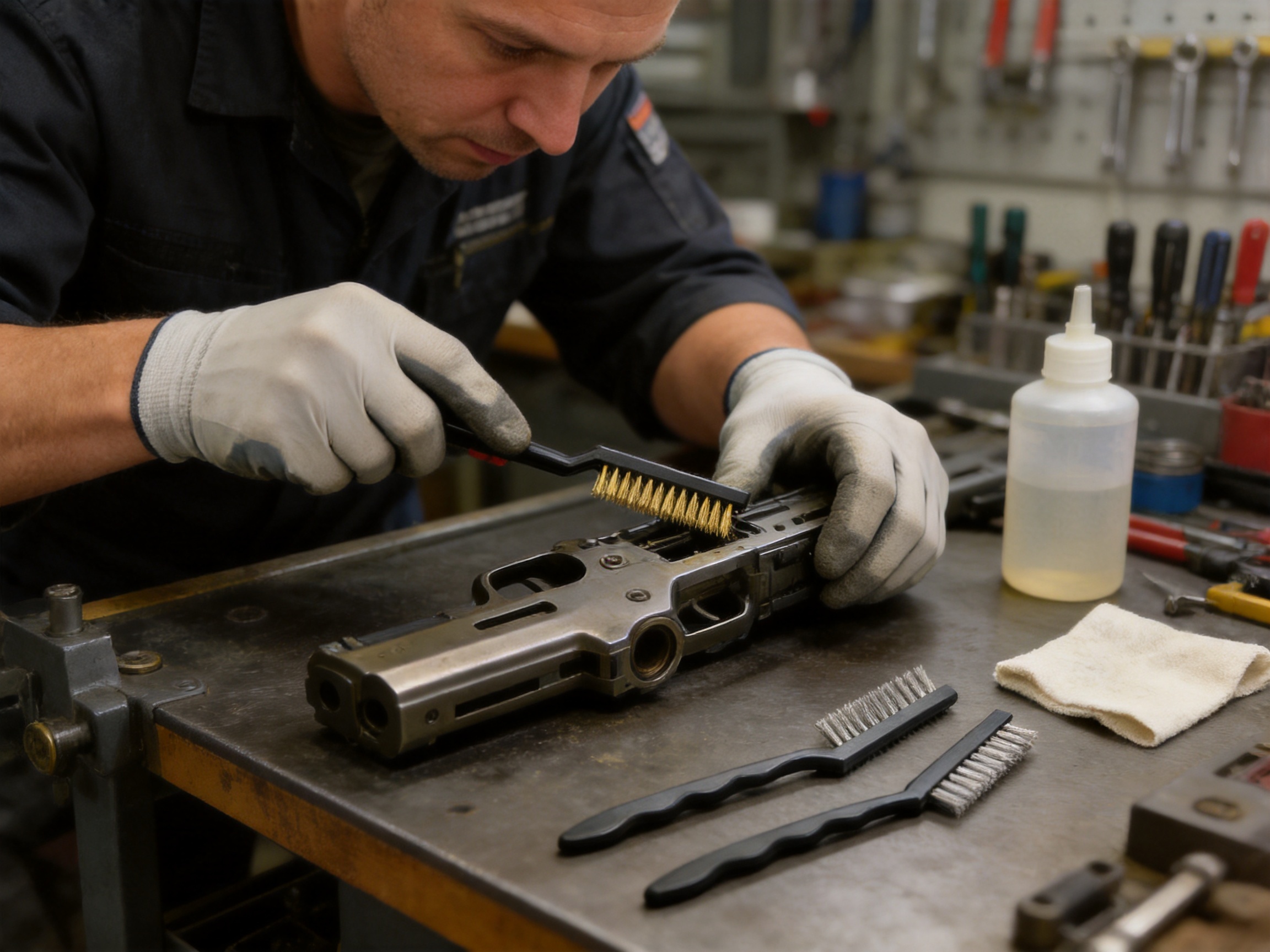
The brush can be used for cleaning suitable receiver surfaces and external metal components where residue, dust, oxidation, or debris has accumulated. Brass or nylon is generally appropriate for beginning a controlled cleaning process, while stainless steel should be reserved for compatible areas requiring a more aggressive action.
Users should avoid forcing the brush into delicate openings or applying excessive pressure around precision interfaces. The purpose of brushing is to loosen contamination, not to reshape or grind the component. After brushing, residue should be removed with an appropriate cloth, patch, or compressed-air procedure that follows safe workshop practices.
The product is marketed as part of a gun cleaning tool range and may support external barrel cleaning and related maintenance tasks. However, users should distinguish between cleaning the outside of a barrel and cleaning the bore. The internal bore should be serviced with a correctly sized bore brush, cleaning rod, patch, mop, or other tool designed specifically for that purpose.
Brass and nylon configurations may be useful for certain surrounding surfaces and components, but the user must confirm the brush’s suitability for the exact firearm and finish. A general-purpose hand brush should not be forced through a bore unless it is specifically designed and sized for that application. Correct sizing and compatibility are essential to prevent damage and ensure effective cleaning.
Firearm magazines and trigger-area components can collect dust, residue, and debris in corners and around edges. Nylon bristles are useful for gentle surface cleaning, while brass may assist with moderate residue on compatible metal areas. The brush’s extended handle helps users reach around assemblies without placing fingers directly against the working surface.
These components require careful handling. Firearms must be unloaded, and users should follow the manufacturer’s disassembly and reassembly instructions. The brush should not be used to force, pry, or alter a component. Its role is to remove contamination through controlled brushing.
The brush is also suitable for hardware maintenance beyond firearms. It can be used for removing surface rust from compatible hardware, cleaning molds, preparing mechanical parts, and removing stubborn debris from workshop components. This broader application increases the product’s value for distributors because the same item can serve firearm, hardware, tool, and industrial-maintenance markets.
For workshops that need different levels of cleaning force, the three-material set is especially convenient. Nylon can be used for sensitive surfaces, brass for moderate work, and stainless steel for heavy-duty tasks. Instead of purchasing unrelated brushes from several sources, a buyer can organize a consistent product family with a common length, handle style, and packaging concept.
A conventional single-material brush may perform well in one application but become less useful when the cleaning conditions change. A steel brush may remove heavy oxidation efficiently, yet it may be unsuitable for a delicate coating. A nylon brush may protect sensitive surfaces, but it may take considerably longer to remove hardened rust. A basic brass brush offers a middle ground but may not provide enough strength for severe contamination.
The multi-material product concept addresses this limitation by giving users access to three different cleaning behaviors. The main advantage is task matching. The user can select the material according to the surface instead of relying on one brush for every situation.
The extended handle is another advantage over small, short-handled utility brushes. It improves reach, provides more room for gripping, and can support more comfortable repetitive motion. The wide head also reduces the number of passes needed across larger surfaces. These characteristics can improve productivity for both individual users and professional maintenance teams.
Packaging flexibility offers a commercial advantage over products that are available only in one format. A single-piece bulk option is suitable for factories, workshops, distributors, and procurement programs. A three-piece set is more suitable for retail shelves, online listings, giftable maintenance kits, and consumers who want multiple cleaning options in one package.
The product is also positioned for OEM and private-label programs. Buyers can request customized logos, packaging, and product presentation, subject to supplier confirmation. This allows wholesalers and brands to create a coordinated offering without developing an entirely new brush design from the beginning.
| Comparison Factor | Basic Single-Material Brush | 9-Inch Multi-Material Cleaning Kit |
|---|---|---|
| Cleaning options | Usually limited to one bristle type | Brass, stainless steel, and nylon options |
| Reach | May use a short handle | Approximately 210 mm overall length |
| Surface coverage | Often designed for narrow areas | Approximately 30 mm head diameter and 83 mm bristle length |
| Packaging | Often sold in one standard format | Bulk pieces and three-piece retail sets |
| Market suitability | Focused on one user group | Firearms, hardware, workshops, and industrial maintenance |
| Branding potential | May offer limited customization | OEM and private-label support available |
The product is manufactured by Jinhua Tongshun Tool Factory, a China-based enterprise located in Jinhua, Zhejiang Province. Established in 1999, the company has more than 26 years of experience in research and development, production, and sales. Its specialization includes gun cleaning kits, barrel cleaning brushes, and related maintenance accessories.
Long-term experience is valuable in brush manufacturing because product consistency depends on several coordinated processes. Wire selection, bristle arrangement, handle molding, assembly, trimming, packaging, and inspection all influence the final product. A factory that has developed these capabilities over many years can better understand the practical requirements of buyers who need repeatable specifications and stable supply.
The company operates a modern production facility with semi-automatic and fully automated production systems. Automation can support repeatability in high-volume manufacturing by helping maintain consistent component positioning, production speed, and assembly output. Semi-automatic processes can provide flexibility for different configurations, while automated systems can improve efficiency for larger orders.
For international buyers, manufacturing capacity is important because product availability affects inventory planning. Stable factory supply can help distributors coordinate purchase orders, packaging requirements, and seasonal demand. The company reports exports to more than 50 countries and regions, indicating experience with cross-border business and international distribution requirements.
Quality management begins with the selection of appropriate materials and continues through production and packaging. For this brush, buyers may evaluate the uniformity of bristle placement, handle strength, overall dimensions, appearance, packaging integrity, and consistency between production batches. Professional buyers can also define inspection standards and confirm details before placing a large order.
The product is suitable for companies that want to expand an existing firearm maintenance range or launch a branded cleaning accessory line. OEM and ODM services can include product configuration, packaging, logo placement, and other agreed customization requirements. This gives wholesalers and retailers an opportunity to present the brush under their own brand identity while using an established manufacturing platform.
A three-piece set can be positioned as a complete material-selection kit. A buyer may package brass, stainless steel, and nylon versions together so that the customer can choose the appropriate brush for different cleaning conditions. Alternatively, individual configurations can be sold separately to professional users who prefer to purchase only the material they use most often.
Bulk packaging is suitable for distributors, gunsmithing suppliers, industrial maintenance companies, and businesses that assemble their own cleaning kits. Single-piece bulk units can reduce unnecessary retail packaging and may simplify warehouse handling. Retail packaging, including blister cards and color boxes, can improve shelf presentation and provide space for usage information, safety guidance, branding, and barcode labels.
Before confirming an OEM order, buyers should discuss minimum order quantities, packaging dimensions, logo artwork, color requirements, labeling language, inspection standards, carton specifications, and shipping arrangements. They should also confirm whether the final configuration includes brass, copper, stainless steel, or nylon, because material descriptions should be consistent across the product, package, catalog, and sales listing.
Clear technical communication is especially important for export orders. Product codes, dimensions, bristle material, handle material, packaging format, and intended application should be recorded in the purchase documentation. This reduces the risk of confusion when several brush variants are manufactured at the same time.
Single-piece bulk packaging is appropriate for professional buyers and distributors that already have their own packaging systems. It can help reduce packaging material, support efficient carton packing, and give resellers the flexibility to apply their own labels. This format is also useful when the brush is incorporated into a larger gun cleaning kit or industrial maintenance bundle.
A blister-card set offers a visible retail presentation. Customers can see the three brush types while the card communicates the intended uses and material differences. This format is suitable for hardware stores, firearm accessory retailers, trade counters, and e-commerce fulfillment programs that require a compact consumer-facing package.
Color-box packaging can provide additional space for product benefits, application guidance, brand identity, and multilingual information. It may be preferred for premium retail presentations, giftable maintenance kits, and private-label programs that require a stronger visual presence. The box can also help protect the brushes during transport and storage.
Before beginning any firearm cleaning task, ensure that the firearm is unloaded and safe according to the manufacturer’s instructions. Remove ammunition from the immediate work area. If the firearm requires disassembly, use only the procedures described in the owner’s manual or an appropriate professional service guide.
Select the bristle material based on the surface and contamination. Start with nylon when the surface is delicate or the debris is light. Move to brass when moderate mechanical cleaning is needed. Use stainless steel only on compatible surfaces where stronger action is appropriate. When uncertain, select the least aggressive option first.
Apply controlled pressure rather than forcing the brush. Several light passes are usually preferable to one heavy pass. Inspect the surface after brushing and remove loosened debris with a suitable cloth, patch, or cleaning method. Avoid using the brush to pry parts, scrape precision edges, or force material into a tight mechanism.
After use, remove residue from the bristles and allow the brush to dry before storage. If a cleaning chemical has been used, follow that chemical’s handling instructions. Store the brush away from excessive heat, moisture, and incompatible substances. Keep different bristle types clearly identified so that a stainless steel brush is not accidentally used on a delicate finish.
Brushes are wear items. Over time, bristles may bend, shorten, become contaminated, or lose their intended cleaning performance. Replace the brush when the bristles no longer provide consistent contact or when contamination cannot be removed effectively. Routine inspection supports both cleaning quality and surface protection.
Distributors and institutional buyers should evaluate more than the product photograph. Important considerations include material accuracy, overall length, head diameter, bristle length, handle finish, assembly strength, packaging consistency, carton quantity, and the supplier’s ability to repeat the same specification in future orders.
The listed product dimensions are approximately 210 millimeters in total length, 30 millimeters in brush head diameter, and 83 millimeters in bristle length. These figures should be confirmed against the final production specification and tolerance requirements before mass production. If the product will be sold through an online marketplace, accurate dimensions help reduce customer confusion and returns.
Buyers should also confirm how the bristle material is identified in the catalog. Brass and copper wire may be described differently by different suppliers, while bronze may be treated as a separate material category. The product listing should use terminology that accurately matches the actual configuration being supplied.
Packaging inspections should verify that the correct brush type is placed in the correct package. For three-piece sets, the brass, stainless steel, and nylon versions should be easy to distinguish. Labels should identify the intended application and include suitable cautionary language for aggressive brushing and finish-sensitive surfaces.
For international distribution, buyers may require additional documentation related to packaging materials, labeling, customs classification, or marketplace compliance. These requirements vary by destination and sales channel. The supplier and buyer should confirm responsibilities before shipment.
The brush’s combination of broad application, multiple bristle options, and flexible packaging makes it suitable for wholesale catalogs. A distributor can offer one product family to several customer groups: firearm owners, gunsmiths, hardware users, automotive technicians, mold-maintenance workers, machine shops, and general industrial buyers.
This cross-category potential can simplify inventory planning. Instead of carrying unrelated cleaning brushes with different handles and package styles, a distributor can build a consistent range around a common 9-inch platform. The three-piece set can serve retail customers, while bulk units can serve professional accounts.
Online sellers can emphasize the product’s measurable features, including the 9-inch length, 30-millimeter head diameter, 83-millimeter bristle length, three material options, plastic handle, and packaging choices. Clear product information helps customers select the correct version and reduces the risk that a buyer expects a soft nylon brush but receives a metal brush intended for heavy-duty cleaning.
Wholesale buyers can also include the brush in complete maintenance packages containing cleaning rods, adapters, patches, cotton mops, bore brushes, cloths, and storage accessories. Because the factory specializes in gun cleaning tools and related products, the brush can be sourced as part of a broader product program rather than as an isolated item.
The product is intended for cross-border export and is associated with European sales regions as well as other international markets. Its neutral black handle, straightforward design, and multiple packaging formats make it adaptable to different retail environments. OEM labeling can further localize the product for regional distributors.
International buyers should prepare product descriptions that clearly explain the difference between brass, stainless steel, and nylon. They should also provide appropriate safety information and avoid implying that one bristle type is suitable for every firearm surface. Accurate technical communication builds customer confidence and supports responsible use.
The product’s broad application range is useful in markets where firearm accessories overlap with hardware and industrial maintenance categories. A distributor can present the brush as a firearm maintenance tool while also highlighting its suitability for molds, mechanical parts, rust removal, and general workshop cleaning. This helps reduce dependence on one market segment.
Export programs benefit from consistent production and packaging. A factory with international experience can help coordinate bulk orders, retail sets, private-label packaging, and repeat shipments. Buyers should nevertheless conduct their own market research and confirm destination-country requirements before placing orders.
The range includes brush configurations with brass wire, stainless steel wire, and nylon bristles. Depending on the selected specification, the product may be supplied as a single bulk brush or as a three-piece set containing multiple bristle types.
The listed total length is approximately 210 millimeters, which is approximately 9 inches. The extended handle provides useful reach and supports controlled brushing during firearm and hardware maintenance.
The brush head diameter is listed as approximately 30 millimeters. This broad head supports faster coverage on larger surfaces while remaining suitable for general hand-held maintenance work.
The listed bristle length is approximately 83 millimeters. Actual production tolerances should be confirmed with the supplier when a buyer requires a formal dimensional specification.
Brass wire is generally the preferred option for mild rust and moderate residue when a controlled metal-brush action is appropriate. Users should begin with light pressure and inspect the surface frequently.
Stainless steel wire provides the most aggressive cleaning action among the listed options and may be used for heavy rust and oxidation on compatible metal surfaces. It should not be used indiscriminately on painted, coated, plated, polished, or otherwise sensitive finishes.
Nylon is suitable for lighter cleaning and for surfaces where a non-metallic, lower-abrasion option is preferred. It can be useful for coated, painted, and sensitive components, although chemical compatibility should still be checked.
The product should not automatically be treated as a bore brush. Internal bore cleaning requires a correctly sized tool designed for that purpose, such as a compatible bore brush, cleaning rod, patch, or mop. This 9-inch hand brush is primarily a general surface and component cleaning tool unless a specific configuration has been confirmed for bore use.
The listed handle material is plastic. The black plastic handle is designed to provide a comfortable, anti-slip gripping area for controlled maintenance work.
Yes. In addition to firearm maintenance, the brush can be used for hardware rust removal, mold cleaning, mechanical parts, and other suitable industrial or workshop applications. The appropriate bristle material should be selected according to the surface and contamination.
Available formats include single-piece bulk packaging and three-piece retail sets. Retail sets may be supplied in blister-card or color-box formats, subject to the final order specification.
Yes. OEM and ODM support is available for customized products, packaging, logos, and related branding requirements. Buyers should confirm artwork, minimum quantities, specifications, and production details with the factory before ordering.
The product is manufactured by Jinhua Tongshun Tool Factory in Jinhua, Zhejiang Province, China. The company has operated since 1999 and specializes in gun cleaning kits, barrel cleaning brushes, and related maintenance accessories.
Buyers should confirm the bristle material, dimensions, handle color, packaging format, set composition, logo requirements, minimum order quantity, carton details, inspection standards, shipping terms, and labeling requirements. They should also verify the final product specification for each purchase order.
The 9-Inch Gun Brush Brass, Steel and Nylon Cleaning Kit is designed to give firearm and maintenance users more control over the cleaning process. Its three bristle-material options address different levels of residue and different surface sensitivities. Brass offers controlled moderate cleaning, stainless steel provides aggressive action for suitable heavy-duty tasks, and nylon offers a gentler option for coated, painted, and sensitive surfaces.
The approximately 210-millimeter length, 30-millimeter brush head diameter, and 83-millimeter bristle length create a practical balance between reach, coverage, and handling. The black plastic anti-slip handle supports comfortable use during repetitive maintenance. Compared with a basic single-material brush, the product offers greater versatility and can be organized as either a bulk professional tool or a three-piece retail set.
For wholesale and private-label buyers, the product benefits from the manufacturing experience and production capabilities of Jinhua Tongshun Tool Factory. Established in 1999, the company combines research and development, manufacturing, sales, semi-automatic and automated production systems, international export experience, and OEM and ODM services. These capabilities support distributors seeking consistent supply, flexible packaging, and customized branding.
When used with correct firearm safety procedures and appropriate surface selection, the brush can become a practical part of a broader maintenance program. Its applications extend beyond firearms to hardware, molds, mechanical components, and industrial cleaning. This combination of product flexibility, manufacturing support, and packaging choice makes it suitable for professional users, retail sellers, international distributors, and brands developing their own firearm cleaning accessory range.
1. Product specification information supplied for the 9-Inch Gun Brush Brass, Steel and Nylon Cleaning Kit, including dimensions, materials, handle construction, packaging formats, and applications.
2. Company information supplied by Jinhua Tongshun Tool Factory concerning its establishment in 1999, manufacturing experience, production systems, export markets, and OEM and ODM services.
3. General firearm maintenance principles concerning safe unloading, controlled cleaning, surface compatibility, and the selection of appropriate brushes and cleaning accessories.
4. General industrial maintenance practices for the removal of rust, oxidation, residue, and debris from compatible hardware and mechanical components.
5. General product-development and wholesale packaging considerations for bulk goods, blister-card sets, color-box packaging, private-label programs, and international distribution.