English
 русский
 Español
 عربى

HUNTACE HUNTACE HUNTACE HUNTACE HUNTACE
HUNTACE HUNTACE HUNTACE HUNTACE


Regular firearm maintenance is essential for reliable operation, consistent accuracy, corrosion prevention, and long-term service life. A well-designed cleaning kit must do more than provide a collection of brushes. It should combine compatible cleaning components, practical storage, appropriate materials, ergonomic handling, and dependable manufacturing quality in a format that is easy to use at home, in a workshop, or at the range.
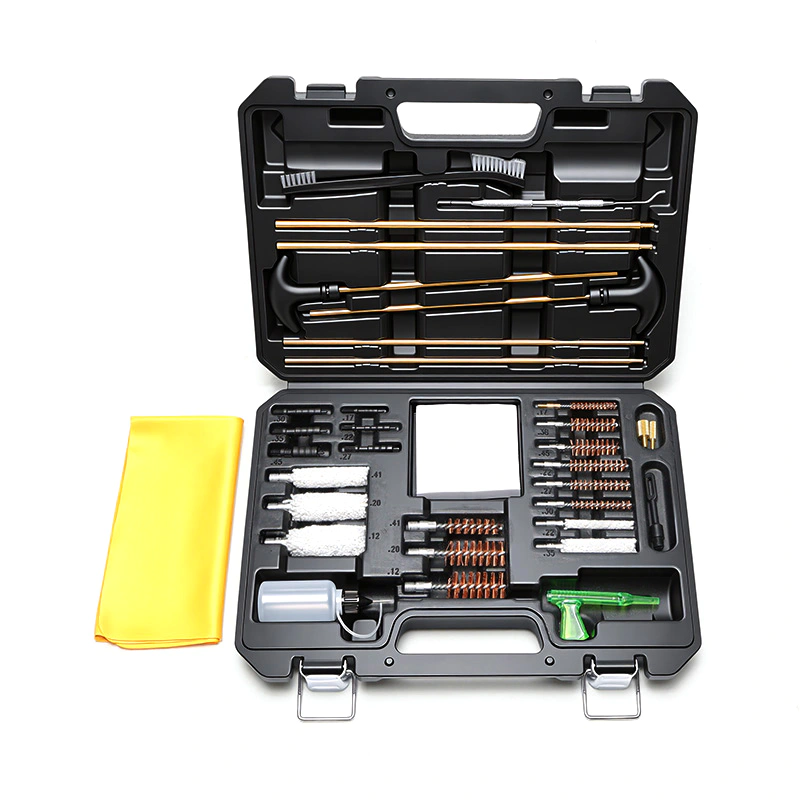
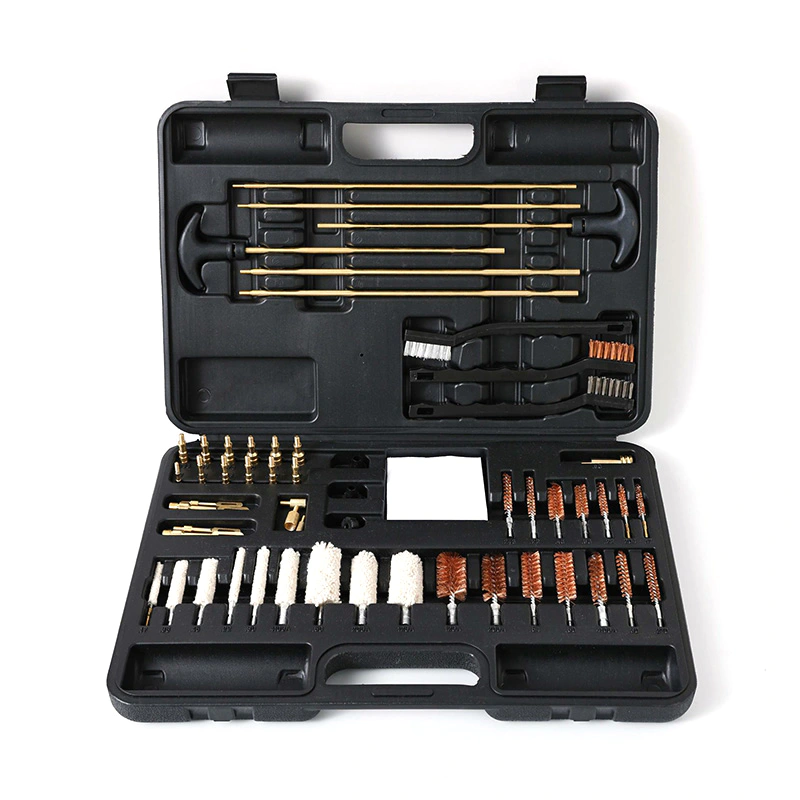
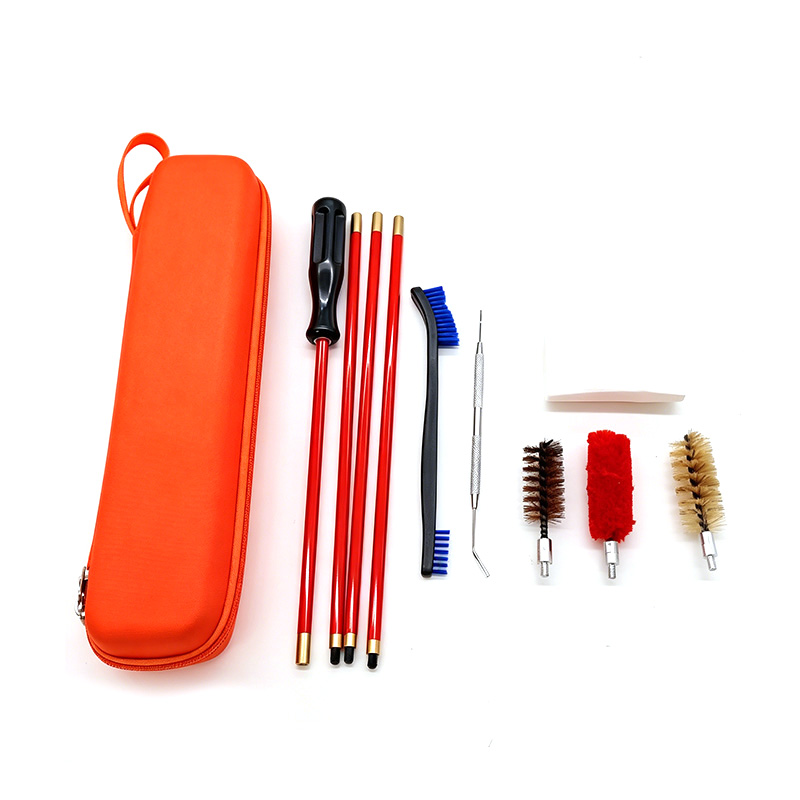
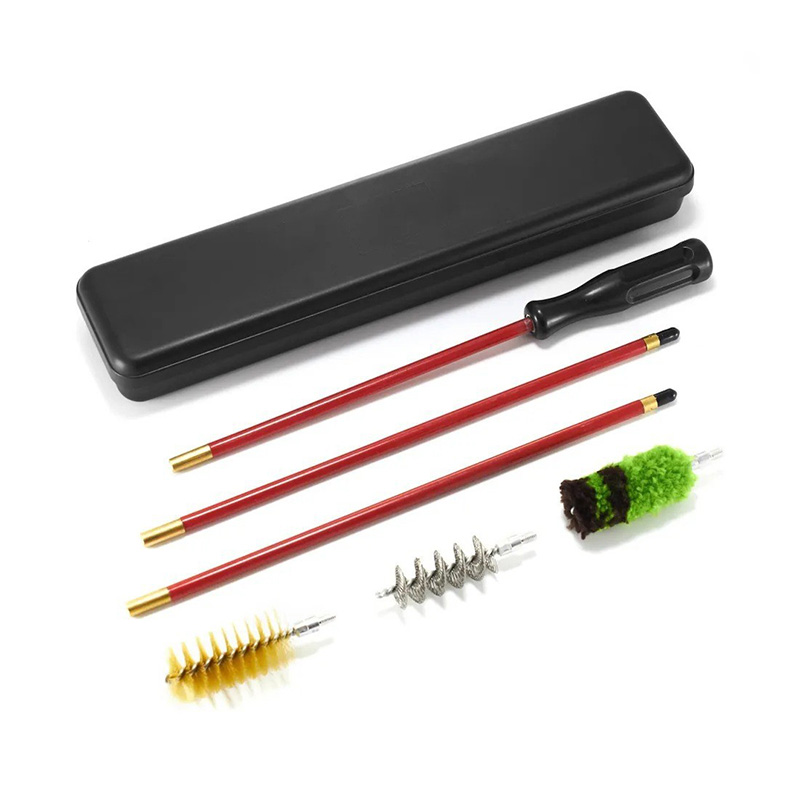
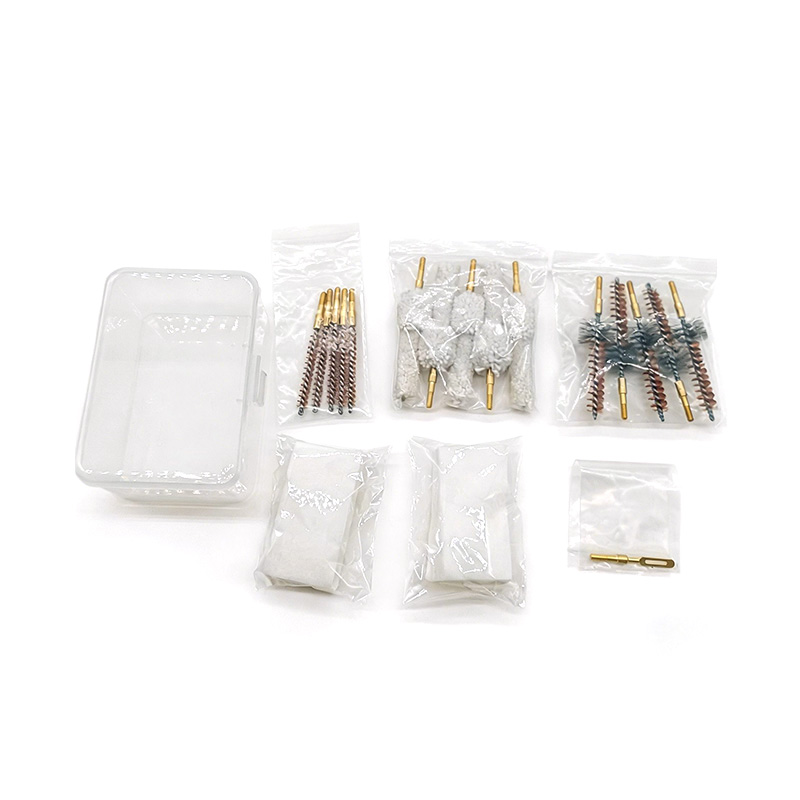
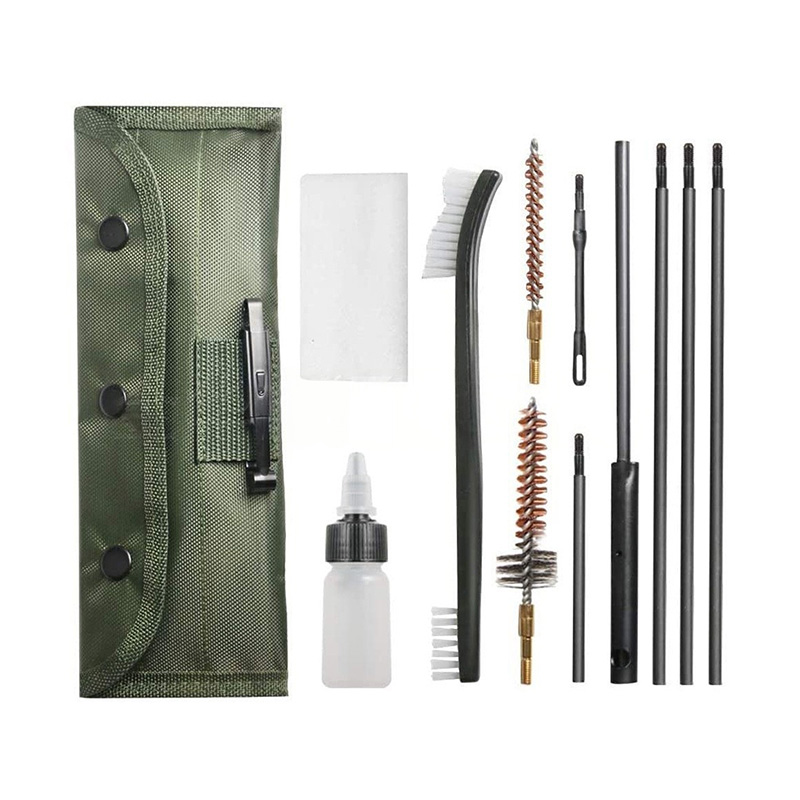
The 16-Piece Gun Cleaning Kit .22/.38/5.56 Cal is developed as a compact, multi-caliber maintenance solution for firearm owners, retailers, distributors, professional service providers, and private-label brands. It is intended to support cleaning work across .22 caliber, .38 caliber, 5.56mm platforms, and additional commonly used calibers, including .270, .40, and .45 caliber applications. The kit combines brass wire brushes, cotton mops, cleaning patches, a brass cleaning rod, thread adapters, and a T-handle in one organized carrying case.
Its principal advantage is versatility. Instead of requiring a separate cleaning package for every firearm, users can select the appropriate brush, mop, patch, rod configuration, or adapter from one compact set. This reduces equipment clutter and simplifies routine maintenance without sacrificing the ability to address different bore sizes and cleaning requirements.
The product is manufactured by Jinhua Tongshun Tool Factory, a China-based producer specializing in gun cleaning kits, barrel cleaning brushes, cleaning rods, cleaning patches, cotton mops, nylon brushes, bronze and brass brushes, and related maintenance accessories. With manufacturing experience dating back to 1999, the company combines product development, production, quality control, export packaging, and OEM or ODM support for international buyers.
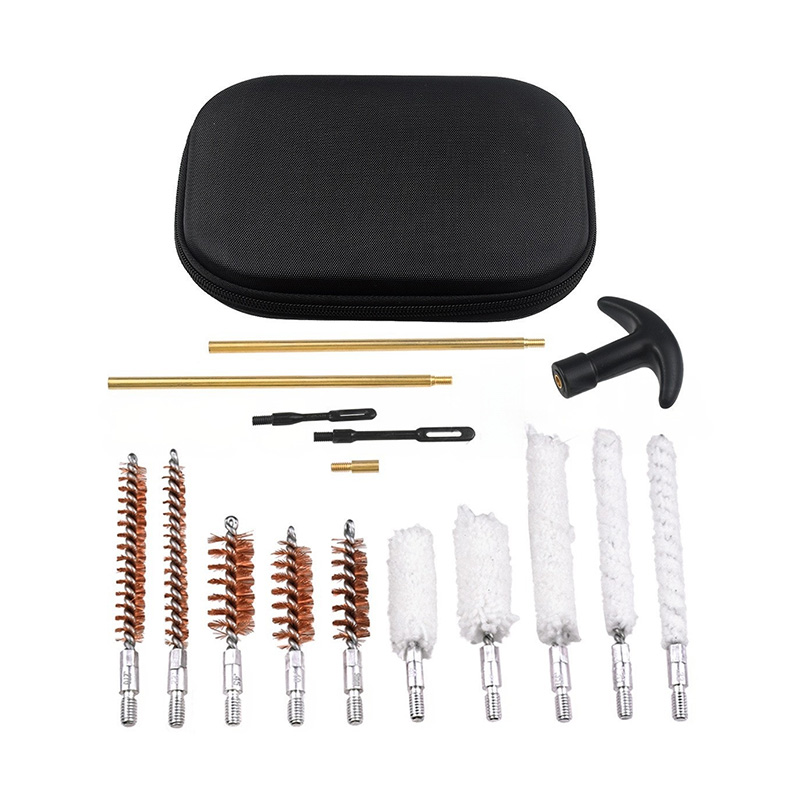
16-Piece Gun Cleaning Kit .22/.38/5.56 Cal
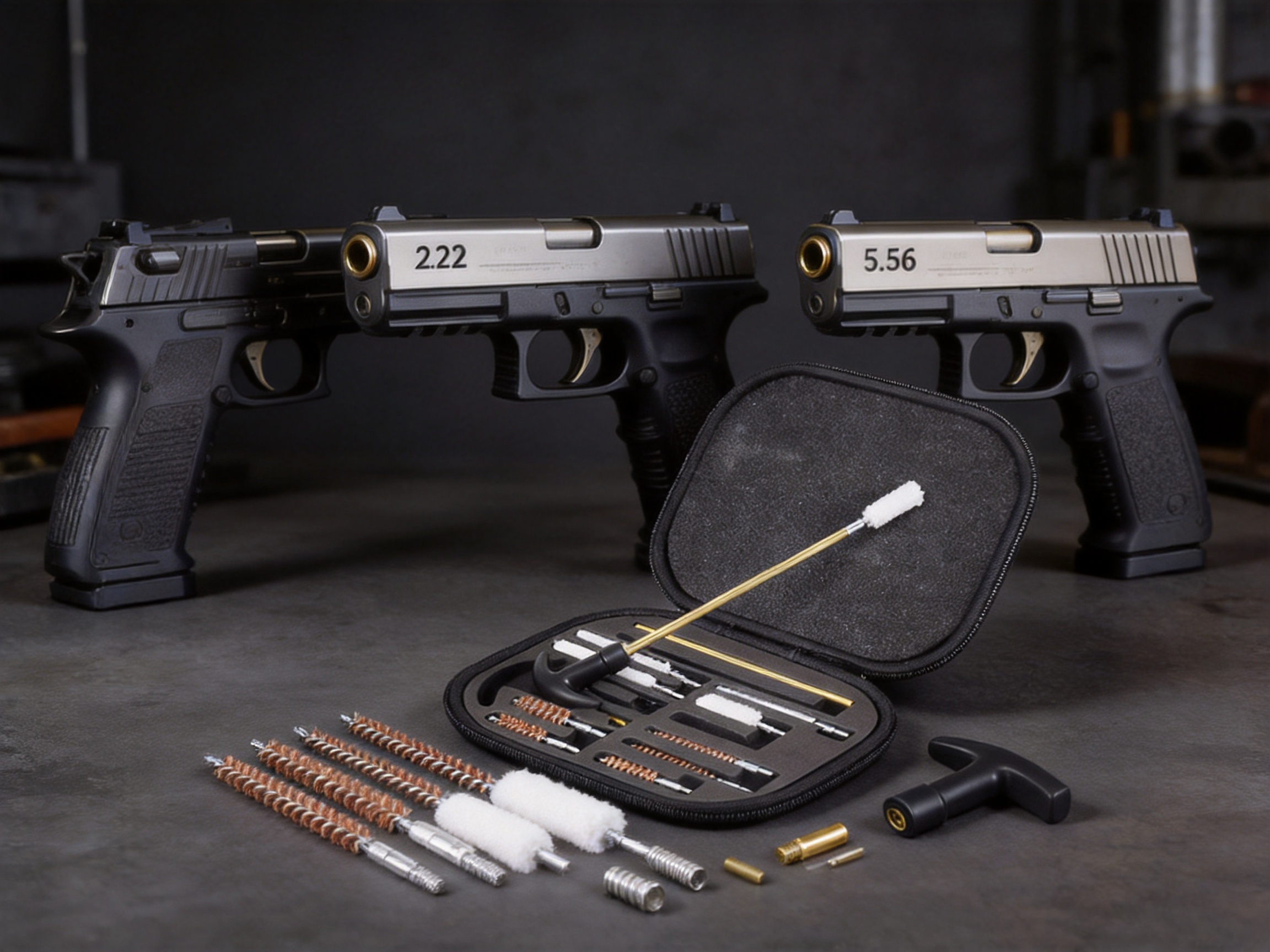
The 16-piece kit is designed for multi-caliber firearm maintenance. Its stated primary applications include .22 caliber, .38 caliber, and 5.56mm firearms, while its component configuration also supports cleaning requirements associated with .270, .40, and .45 caliber platforms. This makes the kit suitable for users who maintain several firearms or for distributors seeking a broadly applicable cleaning product rather than a single-caliber package.
Routine firearm cleaning generally involves several different tasks. Loose powder residue may need to be removed from accessible surfaces. Carbon fouling can accumulate in the bore and chamber area. Copper deposits may develop through repeated firing. Light rust or oxidation can appear when a firearm is exposed to moisture or stored without proper protection. The cleaning process may also require drying, polishing, and the application of a suitable protective product after debris has been removed.
No single brush or cleaning accessory is ideal for every stage of this process. A wire brush can loosen stubborn fouling, a cotton mop can distribute cleaner or remove remaining residue, and a patch can wipe the bore clean or help confirm whether contaminants remain. The inclusion of different component types allows the user to approach firearm maintenance as a complete process rather than relying on one general-purpose tool.
The kit is supplied in a compact black carrying case measuring approximately 20 × 17 × 4.3 cm. An EVA foam interior helps hold the tools in structured positions, reducing movement during transport and making individual components easier to locate. The case is suitable for storage in a workshop, range bag, equipment cabinet, or service counter.
| Specification | Details |
|---|---|
| Product type | 16-piece multi-caliber gun cleaning kit |
| Primary caliber applications | .22 caliber, .38 caliber, and 5.56mm |
| Additional supported applications | .270, .40, and .45 caliber cleaning requirements |
| Product code | B16 |
| Brush material | Copper or brass wire components, with additional cleaning materials in the set |
| Cleaning components | Brass wire brushes, cotton mops, cleaning patches, brass cleaning rod, adapters, and T-handle |
| Handle material | Plastic |
| Case color | Black |
| Case dimensions | Approximately 20 × 17 × 4.3 cm |
| Primary functions | Bore cleaning, residue removal, rust removal, and surface polishing |
| Packaging format | Compact EVA-lined carrying case |
| Customization | OEM and ODM configuration, packaging, and logo support |
Specifications may be adjusted for customized orders, private-label programs, or different market requirements. Buyers should confirm the final component list, thread standard, packaging artwork, and applicable product configuration before placing a production order.
One of the strongest selling points of this cleaning kit is its multi-caliber positioning. Many entry-level cleaning products are designed around one firearm type or one bore diameter. Such products may be appropriate for a single-purpose user, but they can be inconvenient for households, shooting clubs, gunsmithing businesses, security equipment suppliers, and retailers that serve customers with different firearms.
A multi-caliber kit provides a more efficient alternative. The user can keep one organized set available for routine cleaning rather than maintaining several individual kits. For distributors, this also creates a product with a broader potential customer base. A single stock-keeping unit can be marketed to firearm owners who use rimfire rifles, centerfire rifles, pistols, or multiple platforms.
The kit’s stated compatibility includes .22 caliber, .38 caliber, and 5.56mm applications. It also supports cleaning work involving .270, .40, and .45 caliber platforms. Caliber compatibility should always be understood in relation to the specific brush, mop, adapter, and rod configuration. The correct component should be selected for the bore size and firearm design, and users should not force an oversized accessory through a bore.
For retailers, broad compatibility can make product education simpler. Instead of presenting customers with a large number of narrowly differentiated cleaning sets, a retailer can offer a multi-caliber option supported by clear instructions. Product packaging can list the supported calibers, the intended component use, and basic care precautions. This improves the customer experience and can reduce uncertainty at the point of purchase.
For professional users, the ability to maintain multiple firearms with one compact case can improve workflow. A range officer, service technician, training facility, or gunsmith may need to move between firearm types during the day. A kit that keeps the basic cleaning tools together reduces setup time and makes it easier to verify that the necessary components are available before work begins.
Brass and copper wire brushes are widely used for loosening fouling and residue inside firearm bores and on compatible metal surfaces. Their practical advantage is that they provide effective mechanical cleaning while being less aggressive than many steel-wire alternatives. When used correctly with suitable cleaning products and the proper caliber-specific brush, they can help remove carbon, powder residue, and copper deposits without unnecessarily stressing the bore.
The kit includes brass wire brush components intended to support cleaning across multiple calibers. These brushes are particularly useful when a patch or cotton mop alone cannot loosen material that has adhered to the bore. The brush can be passed through the bore in accordance with the firearm manufacturer’s cleaning guidance, allowing the bristles to contact fouled areas and break up deposits.
Material selection is important because the wrong brush can create avoidable risks. An excessively hard or incorrectly sized brush may damage a surface, become difficult to remove, or fail to provide uniform contact. Brass and copper materials offer a practical balance between cleaning strength and bore compatibility when correctly matched to the firearm and used with appropriate technique.
Cotton mops serve a different function from wire brushes. Their soft fibers can help collect loosened residue, remove excess cleaning fluid, dry the bore after cleaning, or distribute a thin protective film when the maintenance procedure calls for it. They are also useful for final inspection because they can help reveal whether visible fouling remains after brushing.
A cotton mop can be especially helpful during the finishing stage. After mechanical cleaning has loosened deposits, the mop can move through the bore to gather remaining residue. This two-stage approach is generally more effective than relying only on a patch or only on a brush. The mop also offers a soft contact surface for users who want to complete a cleaning cycle without applying additional abrasive action.
Cleaning patches provide an economical and replaceable method for wiping away residue. They can be used with a suitable bore-cleaning product, used dry for final removal, or used as an inspection aid. The kit’s inclusion of patches increases its readiness for immediate use and reduces the need to purchase basic consumables separately.
In a professional or retail setting, cleaning patches are also important from a customer convenience perspective. A buyer who purchases a kit expects to be able to begin basic maintenance without assembling numerous additional items. Including patches, mops, brushes, and rod accessories in one package gives the product a more complete value proposition than a brush-only set.
The brass cleaning rod provides a structured means of guiding brushes, mops, and patches through the bore. Brass is selected for its practical combination of strength, machinability, and compatibility with routine firearm maintenance. The rod is intended to support controlled cleaning rather than improvised methods that could place unnecessary pressure on the firearm.
The rod should be used with the correct adapter and accessory for the firearm being cleaned. Users should follow the firearm manufacturer’s instructions, keep the rod aligned with the bore, and avoid excessive force. Correct alignment is important because even a suitable material can cause problems if a tool is forced, bent, or used at an angle.
The T-handle is included to improve grip and torque during cleaning. A straight rod can be difficult to control when residue is stubborn, particularly if the user is wearing gloves or working in a field environment. A T-handle provides a more secure hand position and can reduce user effort during controlled rotation or pulling movements.
Ergonomics are valuable in both occasional and professional use. A hobbyist may appreciate the improved comfort during a longer cleaning session, while a gunsmith or maintenance technician may benefit from reduced hand fatigue across repeated tasks. The plastic handle material also contributes to a lightweight design that is easy to carry with the rest of the kit.
Thread adapters improve compatibility by allowing different brushes, mops, patches, or rods to be connected to the cleaning system. Because firearm accessories may use different thread standards or connection formats, adapter selection is a key part of a multi-caliber kit. The adapters provided with the standard configuration are intended to broaden the range of compatible components, but buyers should verify thread requirements for the target market and firearm categories.
For OEM buyers, thread specifications can be reviewed during product development. A customized program may include market-specific adapters, revised component combinations, or packaging that identifies thread compatibility more clearly. This is useful for importers serving different countries, where common accessory standards may vary.
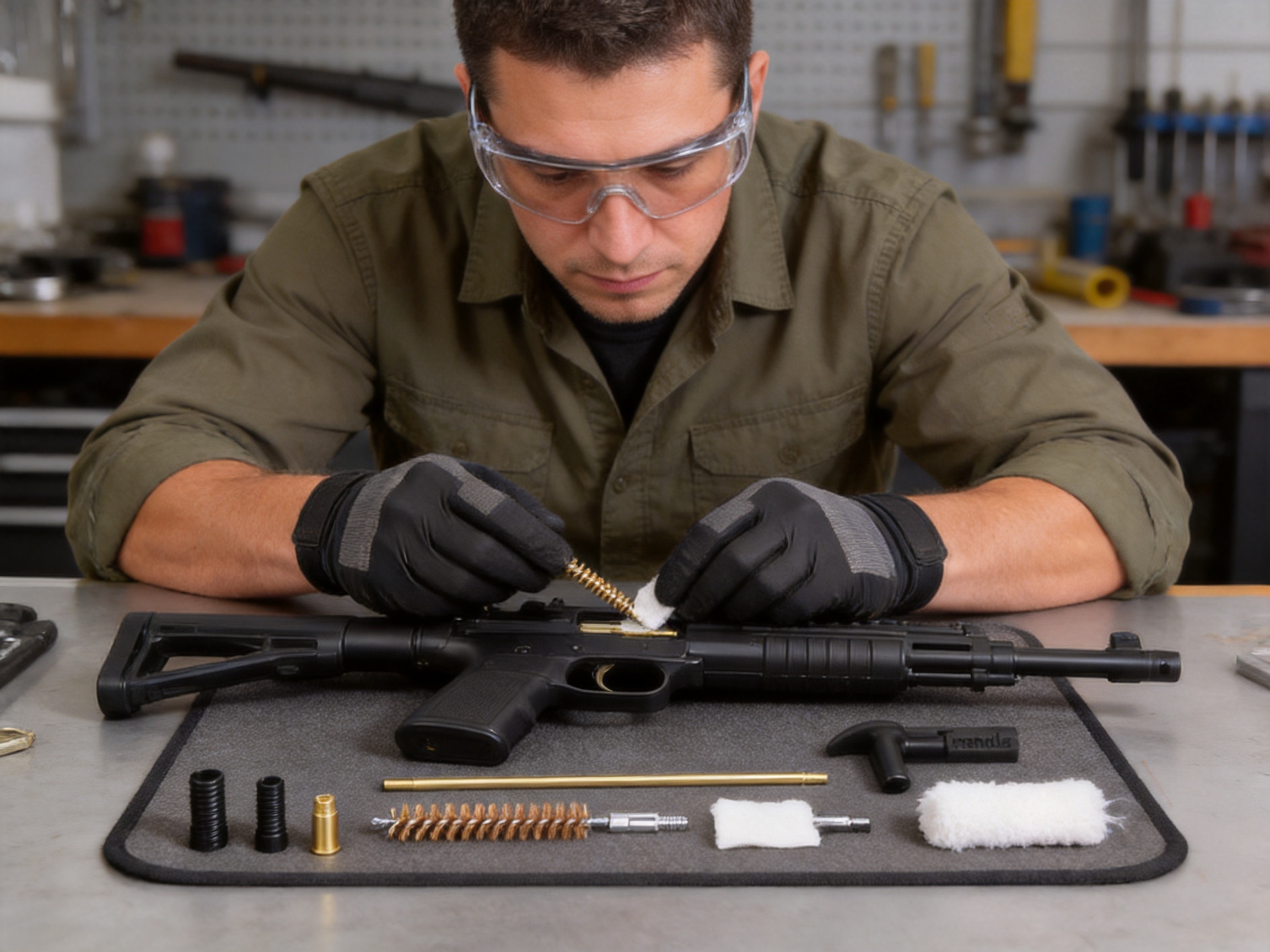
The kit is designed to support several connected stages of firearm maintenance. A typical process begins with safe preparation and inspection, continues with loosening and removing fouling, and ends with drying, inspection, and suitable protection. The individual kit components are intended to work together rather than function as unrelated accessories.
Before beginning any cleaning procedure, the firearm must be unloaded and made safe according to the manufacturer’s instructions. Ammunition should be removed from the work area, and the user should verify the condition of the firearm before inserting any cleaning tool. The user should also consult the firearm owner’s manual for disassembly requirements, bore access, and cleaning limitations.
Cleaning should be carried out in a stable, well-lit location. Eye protection is recommended because loosened residue or cleaning fluid may become airborne. Suitable ventilation is also important when using chemical cleaning products. The kit itself provides mechanical cleaning tools, but the user remains responsible for selecting compatible solvents, oils, and protective products.
Brass or copper wire brushes can be used to loosen carbon, powder residue, and copper deposits in the bore when the appropriate brush size has been selected. The brush should be attached securely to the rod or adapter. The user should work with controlled movements and avoid forcing the brush through an obstruction.
The purpose of brushing is to break up deposits so they can be removed more easily by patches or a cotton mop. Excessive force is not a substitute for the correct cleaning product or technique. If a brush becomes stuck, the user should stop and follow appropriate firearm maintenance guidance rather than pulling aggressively.
Once deposits have been loosened, cleaning patches can remove residue from the bore. A cotton mop can then be used to gather remaining contaminants or help dry the interior. The exact order may vary according to the firearm, the condition of the bore, and the cleaning products being used.
Repeated patching may be necessary when a firearm has accumulated substantial fouling. The user can inspect each patch to evaluate progress. A clean or nearly clean patch does not by itself prove that every surface is free of residue, but it provides a practical indication that the main cleaning stage is complete.
After cleaning, the bore and accessible surfaces should be inspected under appropriate lighting. The firearm should be left free of excessive cleaning fluid, since pooled liquid can attract debris or create other maintenance concerns. If the firearm is to be stored, a suitable protective product may be applied according to the manufacturer’s recommendations.
The cotton mop can be useful during the final stage because its soft fibers can remove remaining residue without the mechanical action of a wire brush. The cleaning patches can also assist with wiping external surfaces, provided that the material and cleaning product are suitable for the surface being treated.
The 16-piece configuration provides several practical advantages over minimal brush-only kits. A basic kit may include one rod and a small number of brushes, but it may not offer enough flexibility for users who maintain multiple firearms. It may also require separate purchases of patches, mops, adapters, or a storage case.
This product brings those functions together in one compact package. Its combination of mechanical brushes, soft cleaning components, rod accessories, and storage supports a more complete maintenance routine. The result is a product that can be positioned above entry-level single-caliber kits while remaining compact enough for everyday use.
| Comparison Factor | Basic Single-Caliber Kit | 16-Piece Multi-Caliber Kit |
|---|---|---|
| Caliber flexibility | Usually limited to one primary bore size | Designed for .22, .38, 5.56mm, and additional applications |
| Cleaning stages | May focus mainly on brushing | Supports brushing, mopping, patching, and final cleaning |
| Handle options | May provide only a straight rod | Includes a T-handle for improved control and torque |
| Connection flexibility | Limited adapter availability | Includes thread adapters for broader component compatibility |
| Storage | Loose components or basic bag | Compact EVA-lined black carrying case |
| Retail positioning | Entry-level or single-purpose | Multi-caliber, complete-maintenance value proposition |
| Private-label potential | May offer limited customization | Supports OEM configuration, packaging, and logo customization |
Compared with kits that rely heavily on plastic accessories, the brass cleaning rod and brass wire brush components provide a more substantial tool configuration. Compared with kits that include only metal brushes, the addition of cotton mops and patches improves finishing capability. Compared with loose tool assortments, the EVA-lined case provides clearer organization and better portability.
These advantages do not mean that one kit is suitable for every firearm or every cleaning method. Professional users should still confirm thread compatibility, brush dimensions, and firearm-specific requirements. The product’s strength is its broad, practical configuration for common maintenance tasks rather than an assertion that it replaces every specialized tool.
Storage is an important part of a cleaning kit because small brushes, adapters, mops, and patches are easy to misplace. The black carrying case measures approximately 20 × 17 × 4.3 cm and is designed to keep the components together in a compact format. Its size supports portability without requiring a large tool box.
The EVA foam interior provides structured storage. Each component can be placed in an organized position, allowing the user to identify missing tools quickly. This is particularly useful for professional service operations, where tools may be transported between locations and checked in and out repeatedly.
A well-organized case also strengthens the product’s retail presentation. It allows distributors to present the kit as a complete, finished product rather than a loose collection of accessories. For online marketplaces, a case can make product images clearer and communicate the intended value of the set to customers who may not have technical knowledge of firearm maintenance.
The compact format is suited to range bags, workshop drawers, vehicle equipment compartments, and storage cabinets. It can also support export distribution because the case provides a defined product footprint and helps protect small accessories during handling and shipment.
Jinhua Tongshun Tool Factory was established in 1999 and operates as an integrated enterprise combining research and development, production, and sales. This structure can provide advantages for buyers who require more than a standard catalog product. Instead of relying only on trading operations, an integrated manufacturer can coordinate product design, component selection, assembly, packaging, and order management within one supply chain.
The company specializes in gun cleaning kits, barrel cleaning brushes, cleaning rods, cleaning patches, cotton mops, nylon brushes, brass brushes, bronze brushes, and associated accessories. This product focus supports technical familiarity with the materials and configurations used in firearm maintenance products.
According to the supplied company information, the factory operates modern production facilities with semi-automatic and fully automated production systems. A combination of manual oversight, semi-automated workstations, and automated equipment can help balance flexibility with production consistency. Standardized operations are particularly valuable when producing repeated brush assemblies, cleaning rods, molded handles, accessory sets, and packaged kits.
Integrated research and development capability allows the factory to evaluate product changes across the entire manufacturing process. For example, a request for a different caliber configuration may affect brush dimensions, adapter selection, case layout, labeling, and packaging. Coordinating these factors early can reduce avoidable incompatibilities between components.
Product development can also address the needs of different sales channels. A distributor may require a compact retail package, an online seller may need clear product identification and protective packaging, and an OEM customer may request a custom logo or exclusive component arrangement. A manufacturer that handles development and production together is better positioned to review these requirements as one project.
The factory’s semi-automatic and fully automated production systems are intended to support large-scale orders with consistent quality. This is important for importers, wholesalers, and distributors that need stable replenishment rather than occasional small quantities. Capacity planning helps reduce the risk of inconsistent lead times when a product becomes successful in a specific market.
Large-scale production does not remove the need for quality control. Instead, it increases the importance of clear specifications, process checks, sample approval, and final inspection. For OEM projects, buyers should define the final bill of materials, component tolerances, case dimensions, logo placement, packaging artwork, and acceptable product variation before mass production begins.
The supplied product information describes strict quality control and stable supply capacity. In practical terms, a quality-control program for this type of product should evaluate the fit and finish of brush components, the connection between rods and adapters, the condition of cotton mops and patches, the function of the T-handle, and the organization of the final case.
Quality checks may also include visual inspection for burrs, loose wires, damaged threads, incomplete assembly, packaging defects, and incorrect component counts. For a 16-piece kit, count accuracy is particularly important because a missing adapter or brush can affect the usefulness of the complete set.
International buyers can request pre-production samples, production samples, packaging confirmation, and inspection criteria as part of their procurement process. These steps create a shared understanding between buyer and manufacturer and help ensure that the delivered product matches the approved specification.
The kit is suitable for OEM and ODM programs. Buyers may request changes to the component configuration, carrying case, packaging design, logo application, printed instructions, or market-specific presentation. This flexibility enables importers and distributors to develop a product line that fits their brand identity without designing an entirely new cleaning system from the beginning.
Configuration customization may include different brush combinations, alternate caliber markings, additional cotton mops, revised patch quantities, or changes to the adapter set. The appropriate configuration depends on the target market and the customer groups being served. For example, a retailer focused on rimfire firearms may need a different emphasis from a wholesaler supplying general firearm accessory stores.
Packaging customization can include a branded outer box, color scheme, instruction sheet, barcode label, product code, and carton markings. The standard compact black case provides a practical foundation, while external packaging can be adapted to meet retail requirements. Buyers should confirm printing methods, minimum order quantities, sample approval procedures, and packaging materials before production.
Logo customization can be applied to suitable product or packaging surfaces, subject to production feasibility and order quantity. A branded kit can help distributors build recognition across a broader range of firearm maintenance products, including brushes, rods, mops, patches, and cleaning ropes.
ODM cooperation may be appropriate for buyers who want the manufacturer to recommend a component combination based on a target market. The factory’s experience with cleaning brushes and related accessories can help identify a practical balance between product size, cost, functionality, and retail presentation.
The product is positioned for international B2B buyers, distributors, wholesalers, and online sellers. It is identified as an export-oriented product and is suitable for markets where compact, multi-caliber firearm maintenance products are in demand. The factory reports exports to more than 50 countries and regions, indicating experience with international order handling and export-oriented product delivery.
For distributors, the kit offers several inventory advantages. Its multi-caliber positioning can broaden the potential customer base, while the compact case can simplify warehousing and retail display. The complete configuration also allows a seller to market one product at several price points depending on branding, packaging, order volume, and channel strategy.
The product can be sold through firearm accessory stores, sporting goods distributors, gunsmith supply channels, outdoor retailers, shooting clubs, online marketplaces, and private-label catalogs. Its compact form is suitable for direct-to-consumer fulfillment, while its standardized packaging supports larger wholesale shipments.
Export buyers should verify all destination-market requirements before ordering. These may include labeling, packaging language, customs classification, product documentation, and carrier restrictions. Firearm cleaning accessories are not the same as firearms or ammunition, but import rules and marketplace policies can vary by country and sales platform.
The company identifies North America as a main sales region and Amazon as a main downstream platform. This suggests that the product configuration is suitable for direct online retail, where customers typically value clear compatibility information, a complete component set, compact storage, and an easy-to-understand product benefit.
Distributors can position the kit as a complete multi-caliber maintenance set rather than simply a collection of brushes. The principal message should emphasize practical coverage: one compact case, multiple cleaning materials, a brass rod, adapters, and a T-handle for controlled use.
Product descriptions should clearly state the primary caliber applications and identify additional supported calibers. They should also explain that the user must select the correct accessory for the firearm and avoid forcing any tool through the bore. Clear instructions improve customer confidence and reduce misuse.
Retail packaging can highlight the following benefits:
Multi-caliber configuration for .22, .38, and 5.56mm platforms.
Additional support for .270, .40, and .45 caliber cleaning applications.
Brass or copper wire brushes for loosening stubborn residue.
Cotton mops and cleaning patches for finishing and residue removal.
Brass cleaning rod, T-handle, and adapters for improved control and compatibility.
Compact black EVA-lined case for organized storage and portability.
OEM and private-label customization for distributors and branded product programs.
Distributors should avoid making unsupported claims about universal firearm compatibility, guaranteed accuracy improvement, or complete removal of every type of fouling. The strongest commercial position is based on practical versatility, organized storage, suitable materials, and reliable manufacturing support.
Users should read the firearm manufacturer’s instructions before cleaning. The firearm must be unloaded, and ammunition should be kept away from the cleaning area. Cleaning accessories should be checked before use to confirm that brushes, rods, and adapters are properly assembled and free from damage.
The correct brush and mop size should be selected for the firearm. A component that is too large may become difficult to move or remove, while a component that is too small may not clean effectively. If the user is uncertain about compatibility, the firearm manufacturer, a qualified gunsmith, or an experienced professional should be consulted.
Cleaning rods should remain aligned with the bore. The user should avoid excessive leverage, sudden impacts, or improvised extensions. The T-handle is intended to improve grip and control, not to encourage excessive force. If resistance is unusually high, the cleaning process should stop until the cause is understood.
After use, components should be wiped clean and dried as appropriate. Cotton mops and patches should be replaced when saturated or heavily contaminated. Wire brushes should be inspected for excessive wear, bent components, or loose bristles. The case should be kept dry, and the tools should be returned to their designated positions after the cleaning session.
Cleaning chemicals should be used only according to their labels and compatibility instructions. They should not be mixed unless specifically permitted by the manufacturer. The storage of chemicals should be handled separately from the cleaning kit unless the case and packaging are explicitly designed for that purpose.
For individual firearm owners, the kit provides a straightforward way to keep common cleaning tools together. Its compact case is convenient for occasional maintenance, range trips, and home storage. The broad caliber coverage is useful for users who own more than one firearm or who expect to purchase additional platforms in the future.
For professional gunsmithing and service environments, the kit’s component variety supports repeated maintenance across different firearm types. The T-handle can improve handling efficiency, while the EVA case helps control inventory. Businesses may also purchase the product in larger quantities for staff use, resale, or inclusion in maintenance packages.
For shooting clubs and training facilities, a multi-caliber kit can serve as a general maintenance resource. However, shared-use environments should establish cleaning procedures, inspect tools regularly, and ensure that users understand how to select the correct component. Proper supervision is especially important for inexperienced users.
For retailers and online sellers, the product has a clear value proposition that can be communicated through images, compatibility charts, and educational content. The branded or private-label version can become part of a wider maintenance category that includes individual brushes, replacement patches, bore mops, cleaning ropes, rods, and adapters.
Before placing a wholesale or OEM order, buyers should confirm the final product configuration. Important points include the exact number of pieces, the caliber markings, brush materials, rod length, handle design, adapter types, patch and mop quantities, case dimensions, and packaging format.
The supplied information identifies a total length of 200 in the product data. Because length specifications can be interpreted differently depending on the component being measured, buyers should request a technical drawing or approved sample if this measurement is important to the order. This is especially relevant when a product must fit a specific retail package or shipping carton.
Buyers should also clarify the country-of-origin marking, product labels, instruction language, carton dimensions, export documentation, and inspection process. For branded programs, artwork approval should be completed before production, and the approved sample should be retained as a reference.
Stable supply is valuable, but it should be supported by a clear production schedule and communication process. Buyers can improve order reliability by providing forecasts, confirming seasonal demand, and agreeing on production milestones. These practices are useful for both standard catalog orders and customized OEM programs.
Quality expectations should be written into the purchase agreement. Examples include acceptable case appearance, brush assembly quality, thread engagement, component count, logo clarity, packaging integrity, and defect limits. Written criteria make inspection more objective and help both parties resolve issues efficiently.
The kit is primarily designed for .22 caliber, .38 caliber, and 5.56mm firearm platforms. The product information also identifies support for .270, .40, and .45 caliber cleaning applications. Users should select the correct brush, mop, rod, and adapter for each firearm and verify compatibility before use.
It is designed as a complete basic maintenance kit containing 16 pieces, including brass wire brushes, cotton mops, cleaning patches, a brass cleaning rod, a T-handle, and thread adapters. The exact piece-by-piece configuration should be confirmed with the supplier for the selected version or customized order.
The compact black carrying case measures approximately 20 × 17 × 4.3 cm and includes an EVA foam interior for organized storage.
The product information describes the brush components as brass wire and also identifies copper wire brush parts in the specifications. Buyers should confirm the exact alloy designation and brush composition for a specific production order, especially when the information will be printed on retail packaging.
The standard product description emphasizes brass wire brushes, cotton mops, patches, and rod accessories. Jinhua Tongshun Tool Factory also produces nylon brushes and related cleaning products. Nylon components may be available through a customized configuration, subject to product review and order requirements.
The T-handle provides a more secure grip and can improve control and torque during cleaning. It may reduce hand effort during controlled movements, but it should not be used to apply excessive force or to push a tool through an obstruction.
Yes. The company supports OEM and ODM customization in product configuration, packaging, and logos. Buyers should discuss the target market, minimum order quantity, artwork, component list, sample approval, and production schedule with the supplier.
The product is identified as suitable for downstream platforms including Amazon and is designed with a compact case and clear multi-caliber positioning. Sellers should independently verify the labeling, product documentation, and marketplace policies applicable to their target country.
The product information identifies rust removal as one intended use. Brass or copper brushes can help address suitable surface residue and light rust in appropriate applications. Severe corrosion, damaged surfaces, or structural problems should be evaluated by a qualified professional rather than treated as routine cleaning.
After use, tools should be cleaned or wiped as appropriate, dried, and returned to the EVA-lined case. The case should be kept in a dry location. Cleaning chemicals should be stored according to their own instructions and should not be placed in the case unless the packaging has been designed for that purpose.
Yes. The company specializes in gun cleaning kits, bronze and brass brushes, nylon brushes, barrel cleaning brushes, cotton mops, cleaning rods, adapters, cleaning patches, cleaning cloths, cleaning ropes, and related firearm maintenance accessories.
It combines several cleaning stages in one organized package. In addition to brushes, it includes cotton mops, patches, a brass rod, a T-handle, adapters, and a structured carrying case. This gives users greater flexibility than a brush-only set and supports both cleaning and finishing tasks.
The 16-Piece Gun Cleaning Kit .22/.38/5.56 Cal is a practical multi-caliber maintenance solution that combines broad application coverage with a compact, organized design. Its configuration includes brass or copper wire cleaning components, cotton mops, patches, a brass rod, thread adapters, and a T-handle, allowing users to address loosening, wiping, drying, polishing, and routine bore maintenance in one kit.
Its advantages over basic or single-purpose cleaning products include greater caliber flexibility, more complete cleaning-stage coverage, improved handling, organized EVA-case storage, and suitability for retail or professional use. The product is positioned for .22, .38, and 5.56mm platforms while also supporting .270, .40, and .45 caliber applications when the appropriate component is selected.
For B2B buyers, the product is supported by an experienced manufacturer established in 1999, with integrated research and development, semi-automatic and automated production systems, export experience, and OEM or ODM capabilities. Custom configurations, private-label packaging, and logo applications can help distributors adapt the product to regional market requirements.
As with any firearm maintenance accessory, correct selection and safe use are essential. The kit should be used with an unloaded firearm, the appropriate accessory size, controlled movements, and the firearm manufacturer’s maintenance instructions. When these principles are followed, the product offers a convenient and scalable approach to firearm cleaning for consumers, retailers, service providers, and international distributors.
1. Product specification and technical description supplied for the 16-Piece Gun Cleaning Kit .22/.38/5.56 Cal, product code B16.
2. Manufacturer information supplied by Jinhua Tongshun Tool Factory, including company history, product categories, production capabilities, and OEM or ODM services.
3. General firearm maintenance principles relating to safe unloading, bore cleaning, residue removal, tool alignment, and post-cleaning inspection.
4. General materials information concerning brass, copper, nylon, cotton, EVA foam, and plastic components used in cleaning accessories.
5. General wholesale product-development practices concerning sample approval, packaging customization, quality-control criteria, and export preparation.