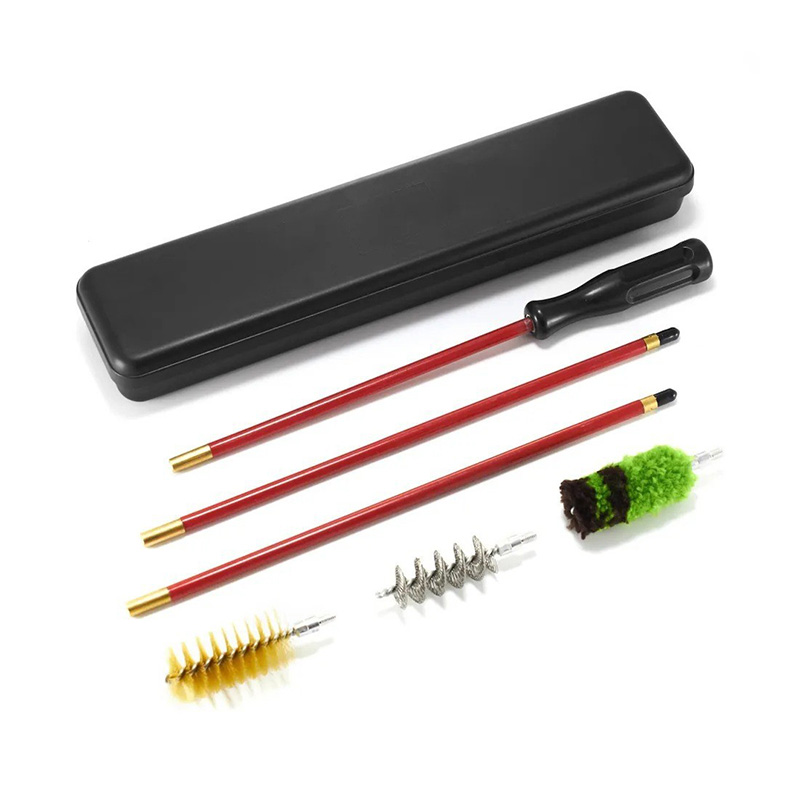
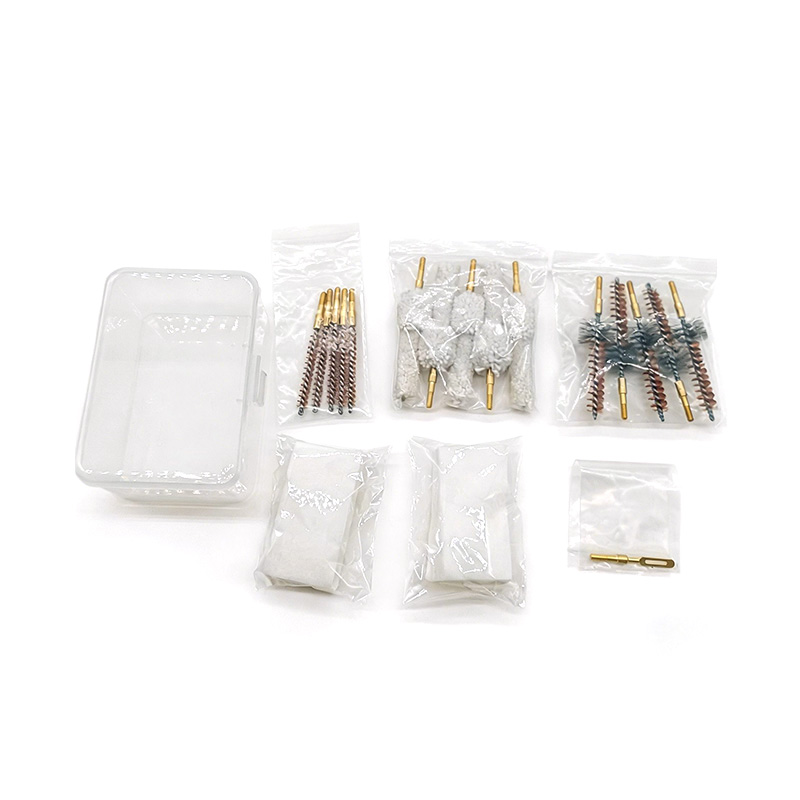
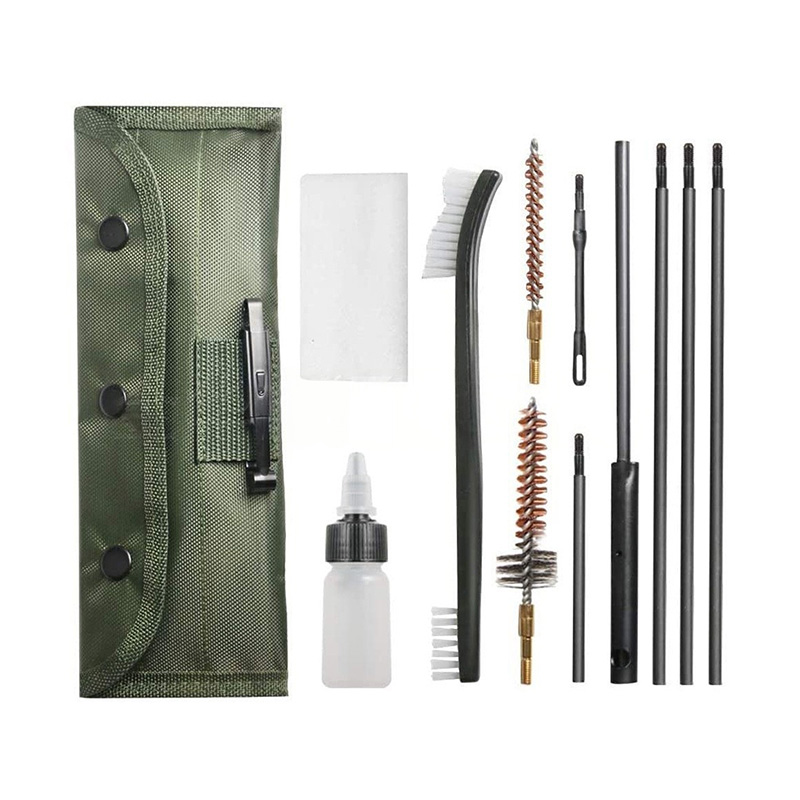
English
 русский
 Español
 عربى

HUNTACE HUNTACE HUNTACE HUNTACE HUNTACE
HUNTACE HUNTACE HUNTACE HUNTACE

A dependable firearm maintenance program begins with the right cleaning equipment. For distributors, tactical suppliers, sporting-goods retailers, gunsmithing businesses, and international e-commerce sellers, a complete gun bore cleaning kit must do more than place several accessories in one box. It should offer broad application coverage, organized storage, durable components, efficient inspection tools, private-label potential, and consistent factory support.
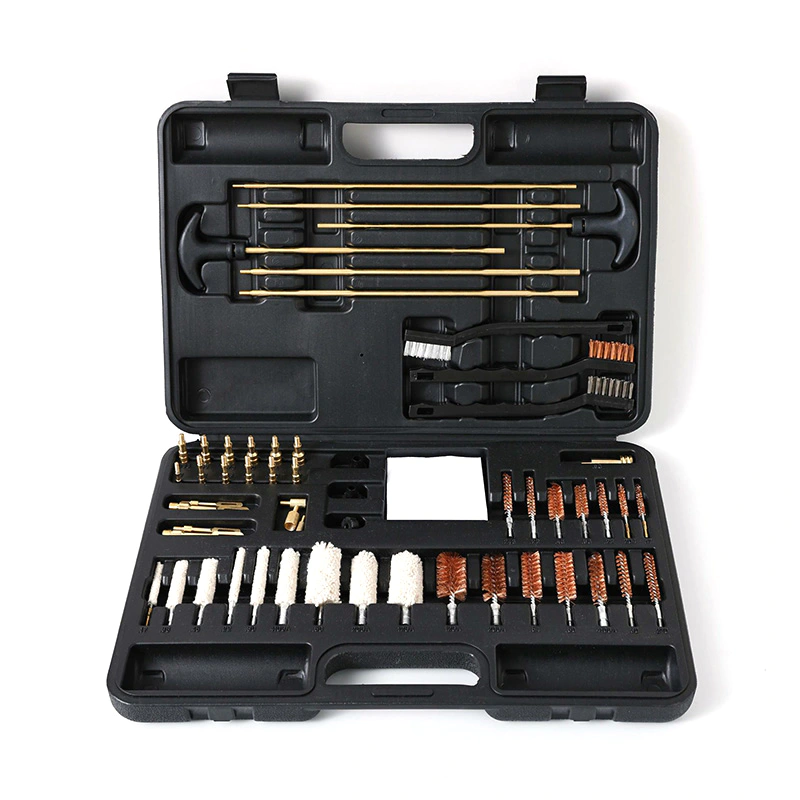
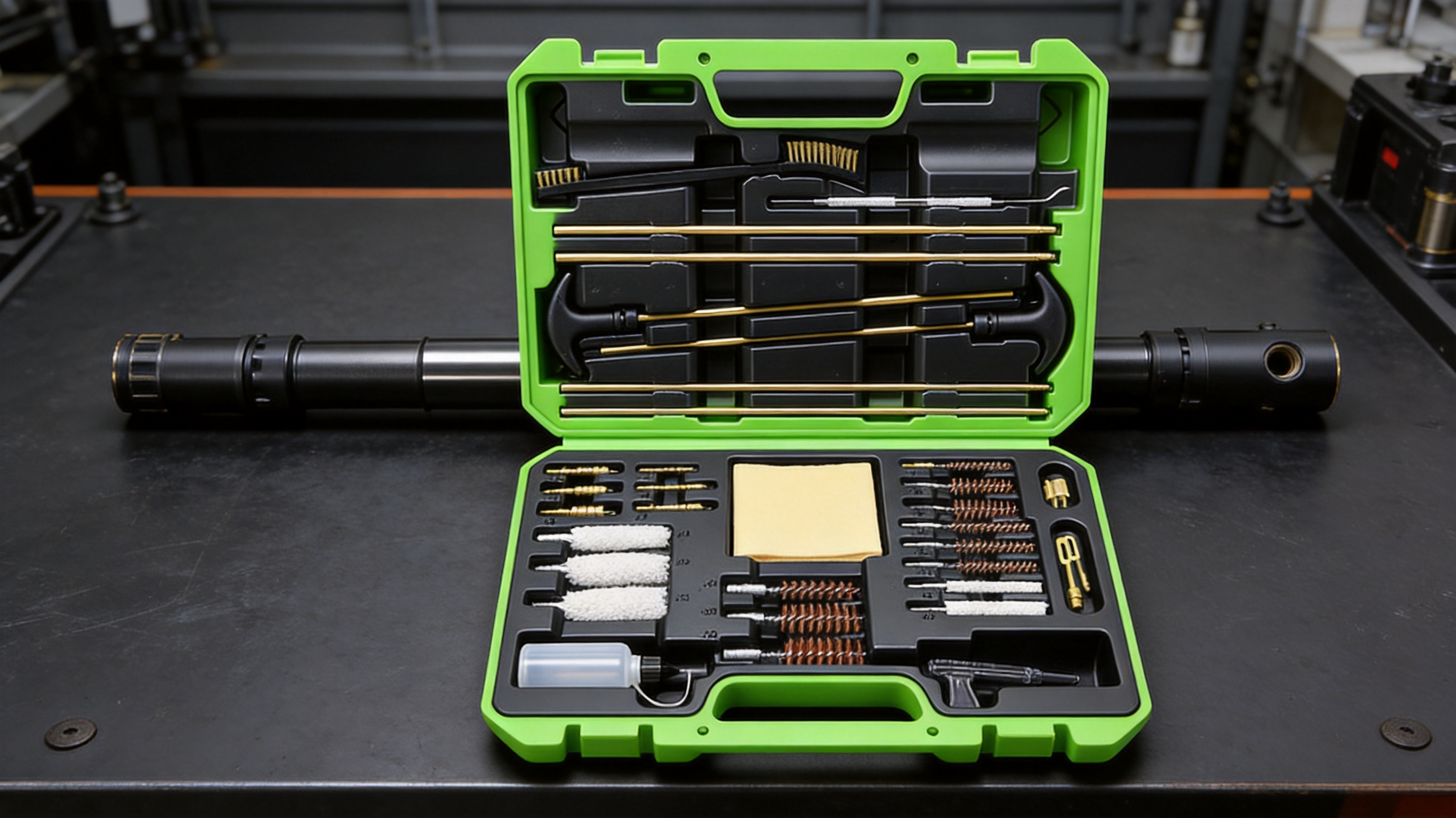
The Full Caliber Gun Bore Cleaning Kit is developed to meet these requirements. It combines cleaning brushes, rods, adapters, patches, cloth, inspection accessories, and storage features in a structured kit intended for commercial distribution and regular firearm maintenance. The product is supplied in a newly customized hard plastic storage case mold, creating a distinctive appearance while helping protect the contents during warehousing, transportation, and field use.
Unlike basic cleaning sets that often use generic packaging and loosely arranged accessories, this kit emphasizes organization and product presentation. Its internal compartments help prevent small components from becoming mixed together or lost. A 35 × 35 cm lint-free suede cleaning cloth provides a smooth finishing surface and can support custom logo printing for private-label programs. A universal chamber light guide accessory assists with visual inspection of firearm chambers and barrel conditions, helping users identify residue or maintenance needs more efficiently.
For wholesale buyers, the kit also offers a practical balance between product breadth and customization. Available configurations include a 36-piece copper set and a 36-piece plastic set, allowing distributors to select a combination that suits different consumer groups, price points, and sales channels. Packaging and kit configurations can be adapted for B2B procurement, retail distribution, tactical supply programs, and cross-border e-commerce.
Manufactured by an experienced Chinese factory specializing in gun cleaning tools and related accessories, the product benefits from integrated research and development, production, and sales capabilities. The company has operated since 1999, uses semi-automatic and fully automated production systems, exports to more than 50 countries and regions, and supports OEM and ODM services for products, packaging, and logos.
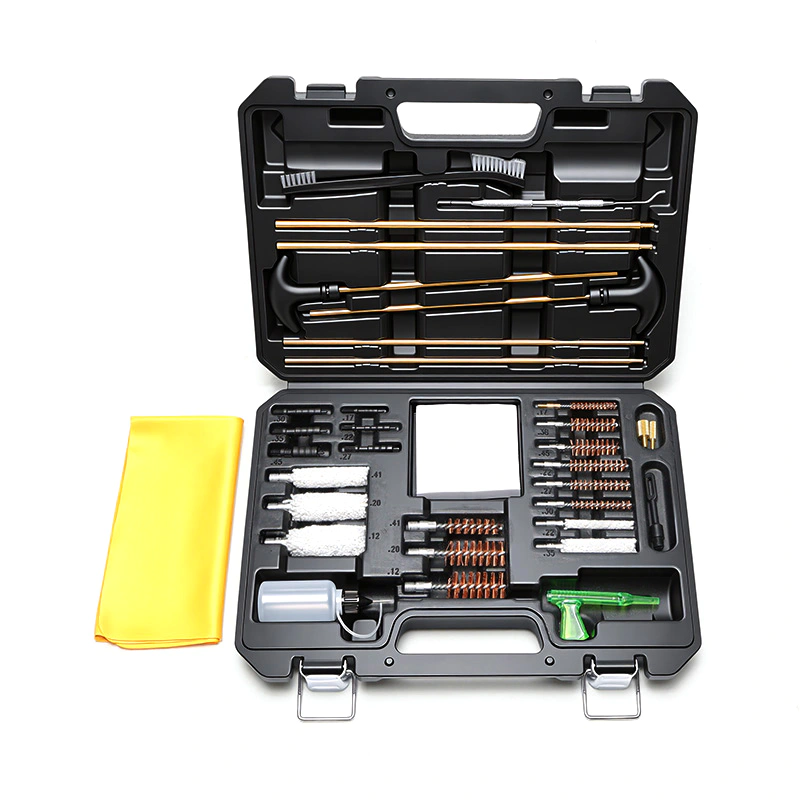
Full Caliber Gun Bore Cleaning Kit
The Full Caliber Gun Bore Cleaning Kit is designed as a comprehensive maintenance solution rather than a single-purpose brush set. Its intended use is firearm cleaning, with particular emphasis on bore, barrel, chamber, and surface maintenance. The boxed form makes it suitable for storage, display, shipping, and organized workplace use.
The kit is available in green and black color styling. Its hard plastic case creates a more structured and recognizable presentation than soft pouches or plain cartons. This case format can be especially useful for retailers that need products to remain visually appealing after repeated handling. It also supports more efficient inventory management because the kit has a defined shape and an identifiable package profile.
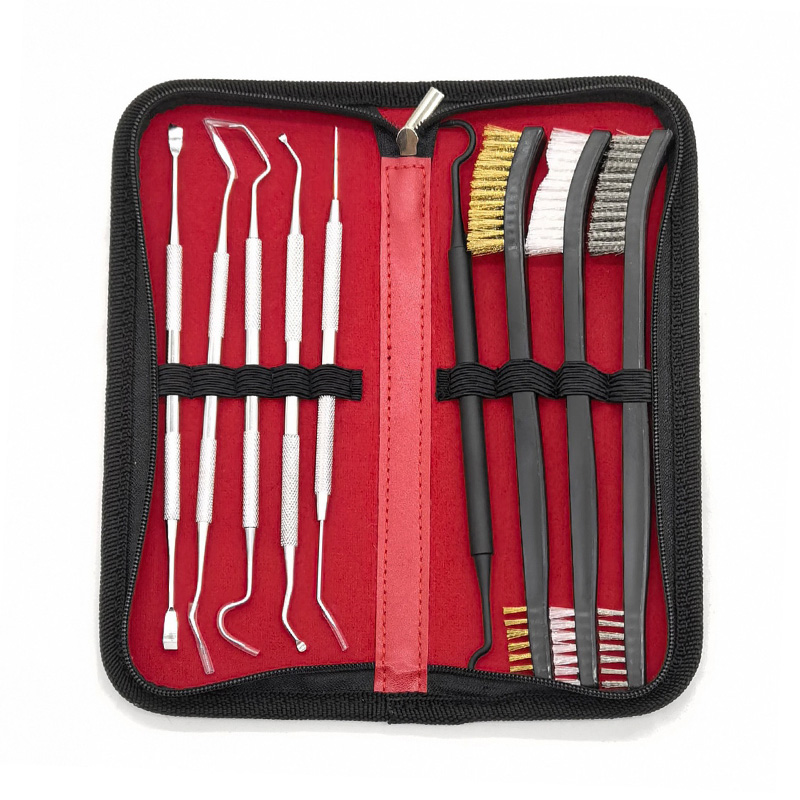
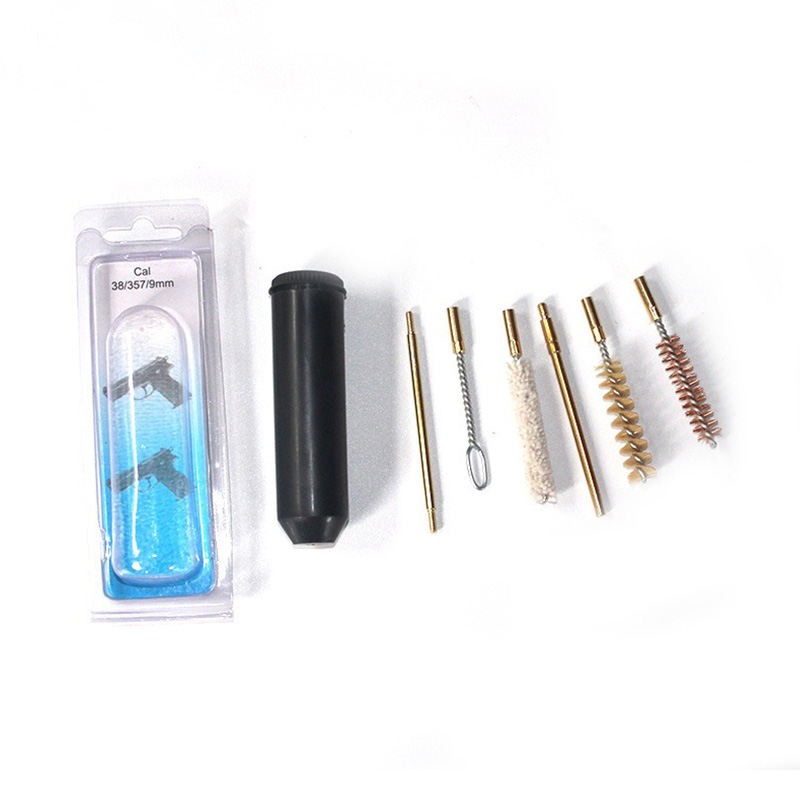
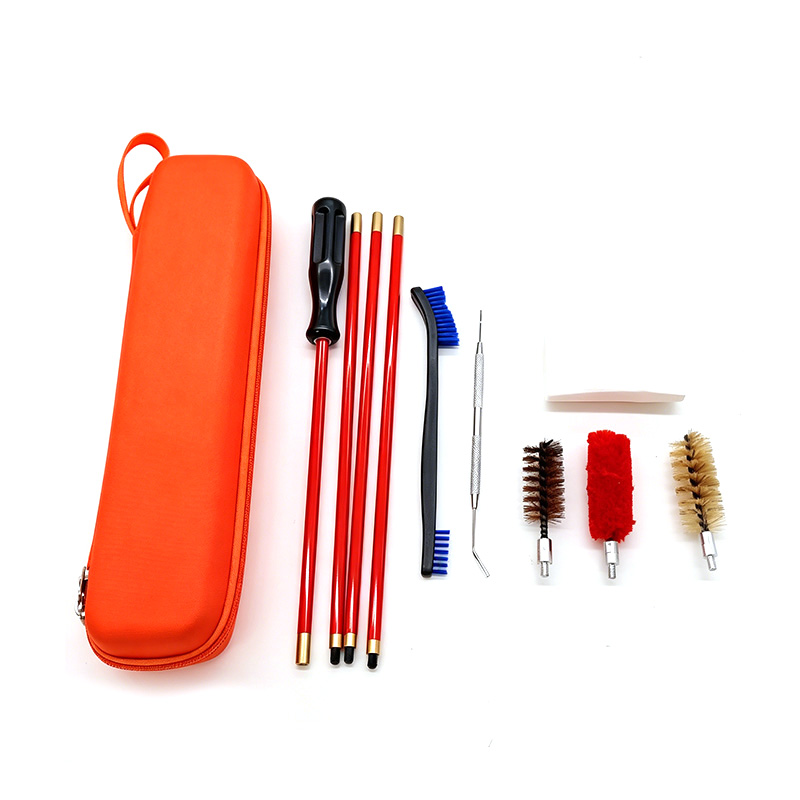
According to the supplied product information, the set includes copper-wire brush configurations and plastic brush configurations. The listed specifications are a 36-piece copper set and a 36-piece plastic set. Buyers should confirm the final accessory list, thread standards, brush sizes, and packaging contents with the factory before placing a production order, particularly when the kit is intended for a specific firearm platform or regional market.
| Product name | Full Caliber Gun Bore Cleaning Kit |
| Primary category | Gun Cleaning Kits |
| Intended use | Firearm cleaning and maintenance |
| Available configurations | 36-piece copper set; 36-piece plastic set |
| Brush type listed | Copper-wire brushes |
| Brush head diameter listed | 22.2 mm |
| Bristle length listed | 50 mm |
| Handle material listed | Metal |
| Product shape | Boxed |
| Color | Green and black |
| Cleaning cloth | 35 × 35 cm lint-free suede cloth |
| Inspection accessory | Universal chamber light guide |
| Storage format | Hard plastic case with structured compartments |
| Product code | 2021 |
| Manufacturing location | Zhejiang, China |
Firearm cleaning involves several different tasks. Removing loose residue from a bore is not the same as wiping exterior surfaces, inspecting a chamber, drying a barrel, or applying a maintenance product. Each task requires an appropriate tool or material. A complete kit reduces the need for users to purchase multiple separate accessories and helps standardize the maintenance process.
For end users, a complete kit can simplify preparation. Instead of searching for a brush, rod, adapter, patch, and cloth in different locations, the user can open one case and find the required components in designated compartments. For retailers, a comprehensive product is easier to position as a practical maintenance solution. For wholesalers, it can provide a higher-value product category than individual replacement brushes alone.
A complete kit also supports different maintenance preferences. Some users favor copper or brass brushes for appropriate bore-cleaning applications, while others prefer nylon or plastic brushes for lighter cleaning or surfaces where a less aggressive material is desired. Offering multiple configurations gives distributors greater flexibility when serving different customer groups.
It is important to understand that a “full caliber” description does not eliminate the need for compatibility verification. Firearms differ in bore diameter, chamber design, thread specification, and cleaning-rod requirements. Responsible users should select the correct brush and adapter, ensure that the firearm is unloaded, follow the firearm manufacturer’s maintenance instructions, and avoid forcing any accessory through a bore or chamber.
One of the product’s principal differentiators is the newly customized hard plastic storage case mold. Many low-cost cleaning kits rely on generic fabric bags, thin plastic sleeves, or undivided boxes. While those formats may reduce initial packaging costs, they can make the product less recognizable and allow accessories to move freely during shipping. A custom-molded case addresses both presentation and organization.
The rigid case provides a defined exterior structure. This helps protect the kit from compression during transportation and can reduce the risk of bent rods, displaced brushes, or damaged small parts. A hard case is also suitable for repeated opening and closing, which is valuable for professional users, range operators, gunsmiths, and distributors who want a product that remains presentable after use.
The custom mold contributes to product recognition. A distinctive case shape can make a product easier to identify on a retail shelf, in an online product image, or within a distributor’s inventory. It may also make direct imitation more difficult than a standard pouch or generic cardboard package. While no packaging design can completely prevent copying, a customized structure can strengthen product identity and support a more consistent brand presentation.
For OEM and private-label buyers, the case can form part of a broader customization plan. Subject to technical and minimum-order requirements, buyers may discuss color selection, logo placement, printed inserts, labels, carton design, accessory combinations, and retail-ready packaging. These options allow the same basic cleaning platform to be adapted for different market segments.
The interior of the case uses a compartmentalized layout. Each designated space helps keep accessories in position and reduces the chance of parts being misplaced during transport or field use. This is particularly important for small adapters, brushes, patches, and other components that can be difficult to identify when mixed together.
Organized storage also improves user efficiency. A maintenance kit is more useful when the user can quickly locate the desired accessory. Clear organization can shorten preparation time, support a more consistent cleaning routine, and make it easier to check whether all components have been returned to the case after use.
For distributors, compartments can also reduce the number of customer complaints associated with apparently missing parts. When a kit is packed in a divided case, both factory inspection personnel and end users can visually check the contents more easily. The final arrangement should still be verified against the approved packing list for each specific configuration.
The included 35 × 35 cm lint-free suede cleaning cloth expands the kit beyond bore cleaning. A firearm maintenance routine often includes wiping exterior metal surfaces, removing fingerprints, polishing suitable areas, and drying components after the cleaning process. A cloth designed to minimize lint can help create a cleaner finish than ordinary household fabric.
The suede-style material is intended to provide a smooth wiping surface. This can be useful when users want to finish maintenance without leaving visible fibers behind. The cloth is large enough to fold into several working sections, allowing users to separate cleaner areas from used areas during a maintenance session.
For commercial buyers, the cloth is also an important private-label opportunity. The supplied information indicates that custom logo printing is supported. A printed cloth can reinforce product identity each time the kit is used and may be particularly attractive for distributors seeking a premium appearance without redesigning every component of the kit.
Logo printing requirements should be confirmed in advance, including artwork format, printing area, color limitations, minimum order quantity, sample approval, and wash or abrasion expectations. Buyers should also request a pre-production sample to verify that the logo remains clear on the selected cloth material.
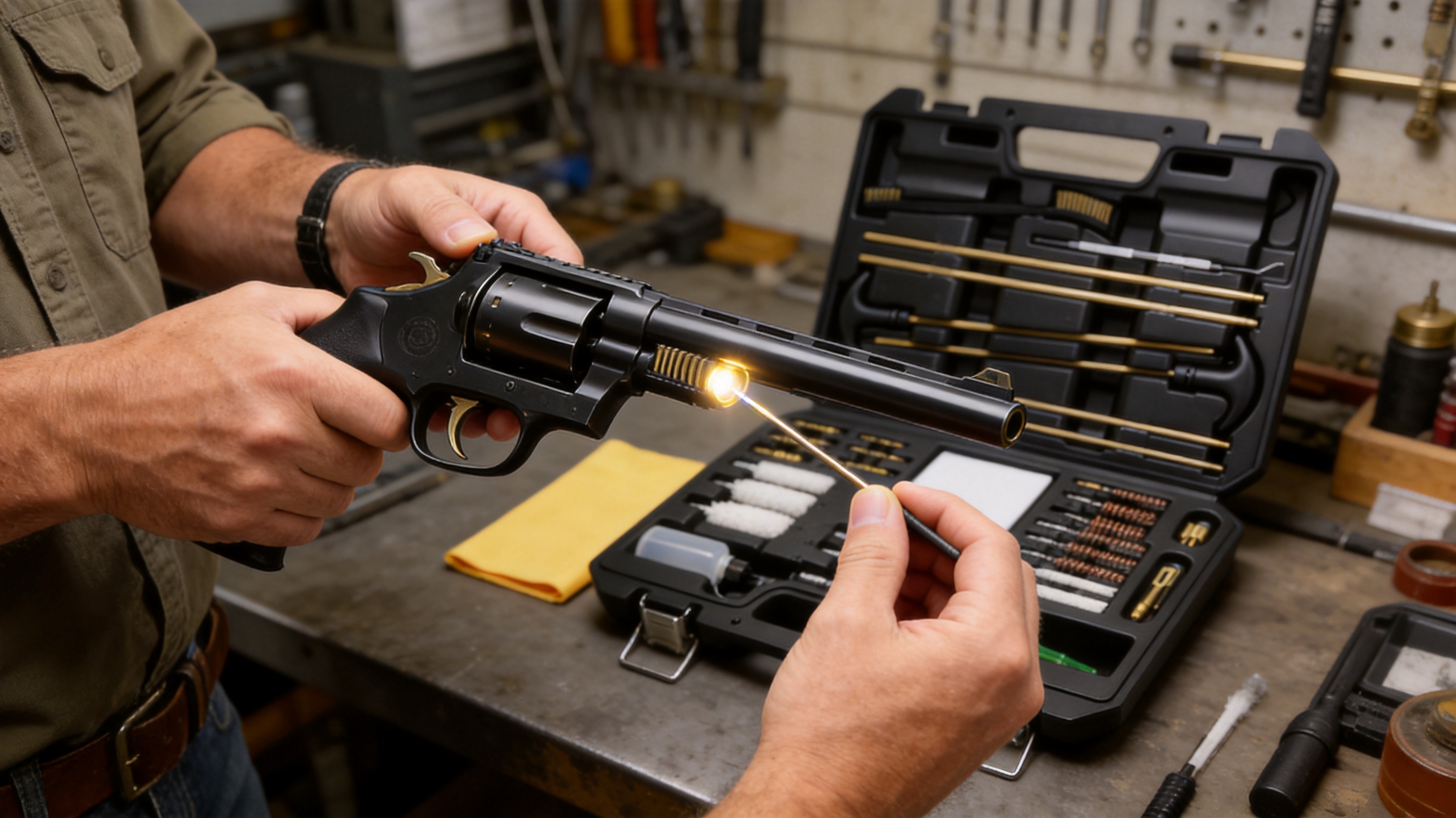
The universal chamber light guide accessory adds an inspection function to the kit. Cleaning is more effective when users can see the area they are maintaining. A light guide can help illuminate or direct light into a chamber or related inspection area, allowing users to examine visible residue, fouling, obstructions, or general cleanliness more conveniently.
This accessory is designed for use across firearm platforms, but universal compatibility should be interpreted responsibly. Firearms vary widely, and the exact suitability of an inspection accessory depends on geometry, access, and safe handling procedures. Users must unload the firearm completely, remove ammunition from the work area, and follow the firearm manufacturer’s safety guidance before inspection.
From a product-positioning perspective, the light guide helps separate this kit from basic brush-and-rod sets. It demonstrates that the product is intended not only for mechanical cleaning but also for a more complete maintenance workflow involving preparation, cleaning, inspection, and finishing.
For tactical suppliers and professional users, an inspection accessory may improve the perceived value of the kit. For online retailers, it provides an additional product feature that can be explained clearly in product photography and listing content. When preparing sales materials, the accessory should be described accurately without claiming that it replaces professional inspection or gunsmith evaluation.
The product information lists copper-wire brushes and two principal set configurations: a 36-piece copper set and a 36-piece plastic set. These configurations allow buyers to select the material profile that best matches their target market.
Copper or brass-style brushes are commonly selected for applications that require more mechanical action than a soft cloth or nylon brush can provide. They can help loosen residue when used with suitable cleaning methods and the correct bore size. The brush should always match the firearm’s specifications, and users should avoid excessive force or incorrect accessories.
The listed brush head diameter is 22.2 mm, with a listed bristle length of 50 mm. These figures should be treated as product reference data and confirmed with technical drawings or samples before a buyer markets the brush for a specific caliber. Variations in bore dimensions and thread standards make precise compatibility information essential.
Plastic or nylon-style brushes may be selected for lighter cleaning tasks or for users who prefer a less aggressive material. They can be suitable for removing loose residue and working on surfaces where a softer brush is preferred. As with any cleaning accessory, the user should choose the appropriate brush size and follow the firearm manufacturer’s instructions.
Offering a plastic configuration can broaden the product’s customer base. Some retailers may prefer a lower-risk maintenance set for general consumers, while tactical or professional buyers may request copper configurations. The ability to provide both options from one factory simplifies sourcing and can make assortment planning easier.
Cleaning rods and adapters connect the user to the bore-cleaning process. A well-organized kit should make it straightforward to select the correct rod section, brush, adapter, or patch holder. The metal handle specified for this product supports a durable, tool-like presentation, although purchasers should confirm the exact rod construction, connection style, finish, and thread compatibility for the target market.
Adapters are particularly important because the wrong connection can prevent a brush or patch holder from being used correctly. Buyers selling internationally should verify whether the supplied thread standard aligns with the expectations of their principal markets. Factory samples, technical drawings, and packing lists should be approved before mass production.
The kit is structured for commercial distribution rather than only individual consumer purchase. Its combination of broad accessory coverage, hard-case packaging, inspection support, and customization potential gives buyers several ways to position it.
The kit can be offered through firearm accessory retailers, hunting and shooting-sports stores, tactical equipment suppliers, gunsmithing businesses, maintenance-service providers, and online marketplaces. The boxed presentation is suitable for shelf display, while the organized case and accessory range support online product descriptions.
The supplied information identifies Amazon as a main downstream platform and Europe as a main sales region. For online and export sales, buyers should prepare accurate product specifications, safety statements, package dimensions, country-specific labeling, and any documentation required by the destination market. Firearm cleaning tools are generally maintenance accessories, but import and marketplace rules can vary by country and platform.
Competition in gun cleaning accessories often includes basic kits with similar-looking brushes and rods. The custom hard case, lint-free cloth, chamber light guide, and structured internal layout provide several differentiation points that can be communicated without relying only on low pricing.
Product differentiation is especially important for private-label sellers. A retailer can combine the case design, printed cloth, customized packaging, and selected accessory configuration to create a more recognizable offer. This may help the seller develop a clearer position in a crowded marketplace.
The 36-piece copper and 36-piece plastic options allow distributors to build a product assortment around customer preferences. A buyer may choose one configuration for professional or enthusiast customers and another for general maintenance users. Alternatively, both versions can be sold under a coordinated product family with different color accents, packaging labels, or price levels.
Configuration flexibility also supports regional adaptation. Some markets may prioritize copper-wire brush sets, while others may show stronger demand for plastic or nylon accessories. Working directly with a factory allows the buyer to discuss component substitution, package inserts, language requirements, and market-specific product presentation.
The manufacturer provides OEM and ODM services, including customized products, packaging, and logos. This is important for importers that want more than a standard catalog item. Instead of purchasing an unmodified kit, the buyer can develop a product presentation aligned with its own sales strategy.
OEM customization may include private-label printing, case labeling, cloth logo printing, color selection, retail carton artwork, instruction sheets, barcode placement, and customized packing marks. ODM services may involve discussing the accessory combination, case layout, product configuration, or other design details for a market-specific version.
Customization should be managed through a documented approval process. A typical project may include an initial product brief, target market review, accessory list, artwork submission, prototype or sample development, testing, packaging approval, production scheduling, and final inspection. Clearly documenting each step reduces misunderstandings and helps ensure that the delivered kit matches the buyer’s expectations.
Buyers should also confirm minimum order quantities, mold or tooling charges, sample costs, lead times, payment terms, inspection standards, spare-part availability, and after-sales procedures. These commercial details are not included in the product specification and should be obtained directly from the factory.

The company behind the product was established in 1999 and integrates research and development, production, and sales. More than 26 years of manufacturing experience provides a foundation for managing product design, component sourcing, assembly, quality inspection, packaging, and export coordination.
The factory operates semi-automatic and fully automated production systems. Automation can improve repeatability in suitable manufacturing stages, support stable output for larger orders, and reduce variation caused by inconsistent manual operations. Semi-automatic processes remain valuable where product assembly, inspection, packaging, or customization requires flexibility.
A combination of automated and semi-automatic equipment is particularly useful for multi-component cleaning kits. Brushes, rods, adapters, cloths, cases, and printed materials may require different production and inspection methods. An integrated factory can coordinate these stages more efficiently than a trading structure that depends entirely on unrelated suppliers.
Product development is reflected in the customized hard plastic case mold and the inclusion of a chamber light guide. These features suggest attention to product usability, protection, presentation, and market differentiation. Research and development in this category is not limited to inventing a new brush; it also includes improving how the complete kit is stored, transported, inspected, and sold.
A factory with in-house or closely integrated development capabilities can respond more effectively to buyer requests. For example, a distributor may require a revised internal compartment, a different accessory count, a new cloth size, or a market-specific package. The ability to evaluate these requests within the manufacturing organization can shorten communication cycles.
Stable production capacity is important for wholesalers and cross-border e-commerce sellers. Stockouts can interrupt marketplace rankings, retailer replenishment, and promotional schedules. A manufacturer with established production systems and experience serving international markets is better positioned to discuss repeat orders and planned production programs.
Production stability should still be evaluated through samples, factory communication, order history, quality documentation, and agreed inspection procedures. Buyers should not rely only on a general capacity statement. A written production plan, approved sample, and defined quality standard provide stronger commercial protection.
Quality control for a gun cleaning kit should cover both individual components and the finished package. Brush bristles should be checked for secure attachment and appropriate trimming. Rods and handles should be examined for straightness, surface condition, and connection quality. Adapters should be checked for fit and thread integrity. The hard case should be inspected for molding defects, closure performance, and compartment accuracy.
The lint-free cloth should be checked for size, surface consistency, stitching or edge quality, print accuracy, and visible contamination. The chamber light guide should be examined for correct assembly and safe packaging. Final kit inspection should verify that the correct number of accessories is present and that each component is placed in the intended compartment.
For export orders, quality control should also include carton strength, internal protection, product labeling, barcode accuracy, shipping marks, and documentation. A pre-shipment inspection can help confirm that the production batch matches the approved sample and packing list.
The product is intended for international distribution and is identified as a cross-border export product. Export readiness involves more than translating a product name. It includes selecting suitable materials, protecting the case during transport, preparing accurate carton information, and complying with destination-market requirements.
Two packaging solutions are available to meet different distribution needs. The exact details of these solutions should be confirmed with the factory, but the availability of alternatives allows buyers to balance retail presentation, shipping efficiency, protection, and cost. A B2B buyer may prefer practical bulk packaging, while an online retailer may require individual retail-ready units.
Packaging design should account for warehouse stacking, container loading, parcel handling, and last-mile delivery. The hard case protects the contents, but the outer carton must also prevent scuffing, compression, and movement. Buyers should request packaging samples or transport tests when shipping conditions are demanding.
For European and other international markets, product descriptions should state the intended use clearly and avoid exaggerated claims. Instructions should explain safe handling, compatibility checking, storage, and cleaning practices. Where required, packaging may need local-language information, recycling marks, importer details, or other regulatory information.
This kit is intended for firearm cleaning and maintenance. Before beginning any cleaning procedure, the user should ensure that the firearm is completely unloaded, remove all ammunition from the immediate work area, and follow the firearm manufacturer’s instructions. If the user is uncertain about a cleaning procedure or the condition of the firearm, qualified professional assistance should be sought.
The correct brush, rod, adapter, and patch size should be selected for the firearm. Users should never force an oversized accessory into a bore or chamber. Excessive pressure can damage components, deform accessories, or create an unsafe condition. Cleaning products should be used according to their labels and should not be mixed unless specifically approved by the manufacturer.
After use, accessories should be wiped clean and allowed to dry as appropriate. The cloth should be stored without contamination that could transfer residue to other surfaces. Brushes and rods should be returned to the designated compartments, and the case should be closed before transport. The kit should be stored away from children, unauthorized users, ammunition, and unsuitable heat or moisture.
The chamber light guide is an inspection aid, not a substitute for safe firearm handling or professional examination. Visual inspection can help identify visible conditions, but it cannot diagnose every mechanical or structural issue. Any suspected obstruction, damage, excessive wear, or malfunction should be evaluated by a qualified professional.
A basic cleaning set may contain only a few brushes, a short rod, and a small pouch. Such a product can meet simple needs, but it may provide limited organization, fewer configuration options, and less space for branding. The Full Caliber Gun Bore Cleaning Kit is positioned as a more complete commercial product.
| Evaluation area | Basic cleaning set | Full-Caliber Kit |
| Storage | Often pouch or plain box | Customized hard plastic case |
| Internal organization | May be limited | Structured compartments |
| Brush options | Usually narrow selection | Copper and plastic configurations |
| Surface finishing | May not include cloth | 35 × 35 cm lint-free suede cloth |
| Inspection support | Often not included | Universal chamber light guide |
| Private-label potential | May be limited | Logo, cloth, packaging, and configuration options |
| Commercial positioning | Entry-level maintenance | Wholesale, OEM, tactical, and e-commerce use |
| Product presentation | Generic appearance possible | Distinctive case and coordinated components |
This comparison does not mean that a basic kit is unsuitable for every user. Simple kits may be appropriate for low-cost applications or occasional maintenance. However, buyers seeking a stronger retail proposition may prefer the additional organization, presentation, and accessory coverage of a structured full kit.
Online marketplace customers often evaluate products through images, specifications, package contents, and reviews. A well-organized case creates strong visual content because the buyer can see the complete assortment at a glance. Compartments also make it easier to create accurate “what is included” images and reduce uncertainty during purchase.
The chamber light guide and lint-free cloth provide additional features that can be highlighted in product listings. The custom hard case supports a premium presentation, while the choice between copper and plastic configurations allows sellers to create separate listings or variations where marketplace rules permit.
Online sellers should avoid vague claims such as universal compatibility with every firearm. Instead, listing content should explain that the kit is intended for broad firearm maintenance and that users must verify caliber, bore, thread, and platform compatibility. Accurate product information supports customer trust and can reduce returns.
Because the product is intended for export markets, online sellers should also consider shipping restrictions, customs descriptions, local product regulations, and platform policies. The factory can provide commercial information, but the importer or seller remains responsible for checking the requirements of the destination market.
Tactical suppliers often need products that can be stored, transported, and issued efficiently. The hard case and internal compartments are useful for organized equipment management. A supplier can include the kit in maintenance packages for training organizations, shooting facilities, security equipment distributors, or professional users who require a portable cleaning solution.
The durable presentation may also support institutional procurement. A procurement officer can review a defined kit configuration, confirm the packing list, and distribute standardized equipment. For larger orders, the factory’s OEM capabilities can support customized labels, packaging, and accessory combinations aligned with the purchasing organization.
Professional buyers should establish a clear inspection standard before ordering. This may include accessory count, brush dimensions, rod straightness, case color, logo position, cloth dimensions, packaging strength, and acceptable cosmetic tolerances. Written specifications make repeat purchasing more consistent.
A successful wholesale project begins with a clear product brief. The buyer should identify the target market, preferred configuration, expected order quantity, color requirements, logo needs, package format, destination country, and desired delivery schedule.
The next step is technical confirmation. Buyers should request detailed photographs, a packing list, measurements, thread information, case dimensions, carton data, and samples of the copper and plastic configurations where relevant. The buyer should compare the sample with the intended sales claims and confirm whether all components are suitable for the planned customer group.
Artwork and packaging should be approved separately from the product sample. The buyer should review logo size, placement, color, language, barcode, safety text, and carton markings. A final pre-production proof can help prevent costly printing errors.
Before mass production, the parties should agree on quality standards and inspection procedures. Important criteria include component quantity, brush attachment, rod condition, case closure, compartment fit, cloth size, light-guide assembly, print quality, and carton protection.
After production, the buyer may arrange pre-shipment inspection. The inspection should use the approved sample and packing list as references. Any discrepancy should be documented and resolved before shipment whenever possible.
The kit itself benefits from routine care. After each use, brushes should be cleared of loose residue and stored dry. Rods and adapters should be wiped and checked for dirt or damage. The cloth should be kept clean so that it does not transfer particles back onto a firearm’s surface.
The hard case should be inspected periodically. Dust and residue can be removed from the compartments with a dry or slightly damp cloth, provided the case is completely dry before the accessories are returned. The case should not be exposed unnecessarily to extreme heat, harsh chemicals, or conditions that could affect the plastic.
Distributors can include a simple care sheet with OEM orders. A short instruction insert may explain unloading, compatibility checking, accessory selection, post-use storage, and general safety. Clear instructions can improve customer satisfaction and reinforce the professional positioning of the kit.
The kit is described as a comprehensive firearm cleaning set with brush, rod, adapter, patch, cloth, storage, and inspection functions. The listed configurations are a 36-piece copper set and a 36-piece plastic set. The package also includes a 35 × 35 cm lint-free suede cleaning cloth and a universal chamber light guide. Buyers should confirm the final packing list for the selected configuration before ordering.
The kit is designed for broad firearm maintenance, but no cleaning kit should be assumed to fit every firearm without verification. Users must check brush size, bore diameter, rod connection, adapter thread, and platform requirements. The factory should provide detailed compatibility information for a specific configuration.
The supplied product information lists a brush head diameter of 22.2 mm and a bristle length of 50 mm. These measurements should be confirmed against production samples and technical drawings before being used in a product listing or compatibility claim.
Yes. The kit uses a newly customized hard plastic storage case with structured internal compartments. The case is designed to improve product recognition, protect accessories, and reduce accessory loss during transportation or field use.
Yes. The supplied information states that the 35 × 35 cm lint-free suede cleaning cloth supports custom logo printing. Artwork requirements, printing method, minimum quantities, and sample approval should be confirmed with the factory.
The universal chamber light guide assists users with visual inspection of chambers and barrel conditions. It is an inspection aid and does not replace safe handling, manufacturer instructions, or professional firearm inspection.
Yes. The manufacturer provides OEM and ODM services, including customized products, packaging, and logos. Buyers can discuss private-label branding, accessory configurations, packaging solutions, printed cloths, and other project requirements.
The product is manufactured in Zhejiang, China, by a factory located in Jinhua. The company has operated since 1999 and specializes in firearm cleaning kits, barrel cleaning brushes, and related accessories.
Yes. The company states that its products are exported to more than 50 countries and regions and that the product is intended for cross-border export. Buyers remain responsible for checking import, labeling, customs, and marketplace requirements in the destination country.
The supplied information identifies green and black as the product colors. Additional colors or private-label variations may be possible, but they should be confirmed according to the required order quantity and production conditions.
Users should select a brush based on the firearm’s bore and the manufacturer’s cleaning instructions. They should never force a brush or rod through a bore or chamber. If compatibility is uncertain, the user should consult the firearm manufacturer or a qualified professional.
Yes. The hard case, structured layout, cloth, inspection accessory, and available configurations make the kit suitable for retail, wholesale, tactical supply, and online marketplace distribution. Retail buyers should prepare accurate product content and comply with applicable local requirements.
The Full Caliber Gun Bore Cleaning Kit is designed to combine practical firearm maintenance with commercial flexibility. Its principal strengths include a customized hard plastic case, organized internal compartments, copper and plastic configuration options, a 35 × 35 cm lint-free suede cloth, and a universal chamber light guide. Together, these features create a more complete proposition than a basic brush-and-pouch set.
For distributors and wholesalers, the product offers several useful advantages: a distinctive package, broad accessory coverage, multiple configuration choices, private-label potential, and suitability for international sales. The hard case improves organization and presentation, while the cloth and light guide extend the product beyond basic bore brushing into finishing and inspection support.
The manufacturing partner adds further value through long-term industry experience, integrated research and development, semi-automatic and fully automated production systems, export experience, and OEM and ODM capabilities. Established in 1999 and serving customers in more than 50 countries and regions, the company is positioned to support both standard procurement and customized product programs.
As with any firearm maintenance product, accurate compatibility information and responsible use are essential. Buyers should approve samples, confirm technical specifications, define quality standards, and review destination-market requirements before mass production or resale. When these steps are followed, the kit can serve as a reliable foundation for retail assortments, professional maintenance programs, tactical supply packages, and branded cross-border e-commerce products.
1. Product specification and commercial information supplied for the Full Caliber Gun Bore Cleaning Kit, including configurations, dimensions, materials, packaging, and accessories.
2. Manufacturer profile supplied for Jinhua Tongshun Tool Factory, including company history, production capabilities, export experience, and OEM and ODM services.
3. General firearm maintenance and safe-handling principles provided for responsible cleaning, inspection, accessory selection, and storage.
4. General wholesale product-development practices covering sampling, artwork approval, quality inspection, packaging review, and export preparation.