English
 русский
 Español
 عربى

HUNTACE HUNTACE HUNTACE HUNTACE HUNTACE
HUNTACE HUNTACE HUNTACE HUNTACE

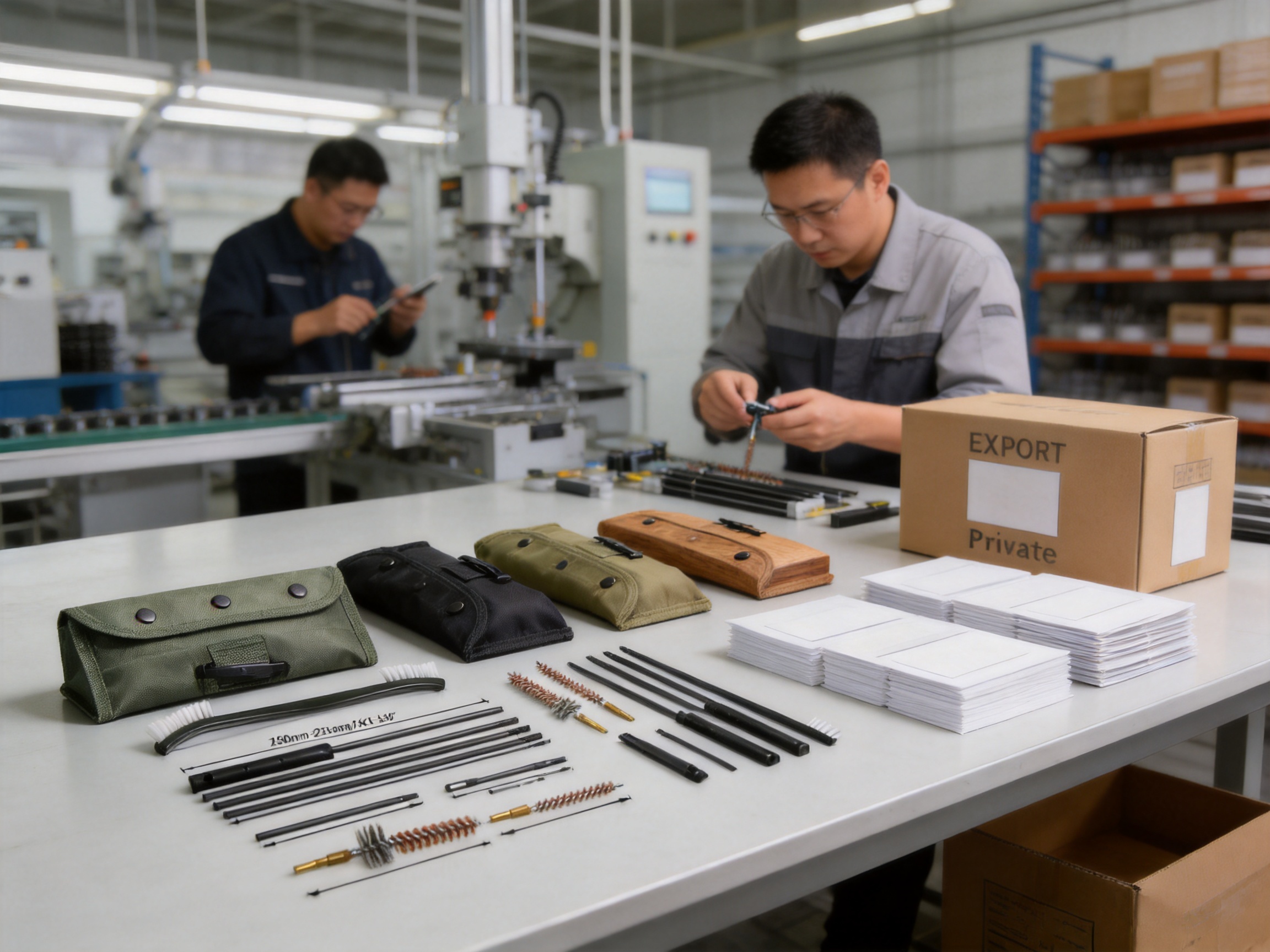
Reliable firearm maintenance begins with the right cleaning equipment. A suitable cleaning kit must do more than provide a rod and a brush. It must offer the correct caliber compatibility, sufficient working length, dependable materials, practical organization, and the durability required for repeated use. The AR15 Cleaning Kit .22/.30 Cal Brushes is designed to meet these needs in one compact and portable package.
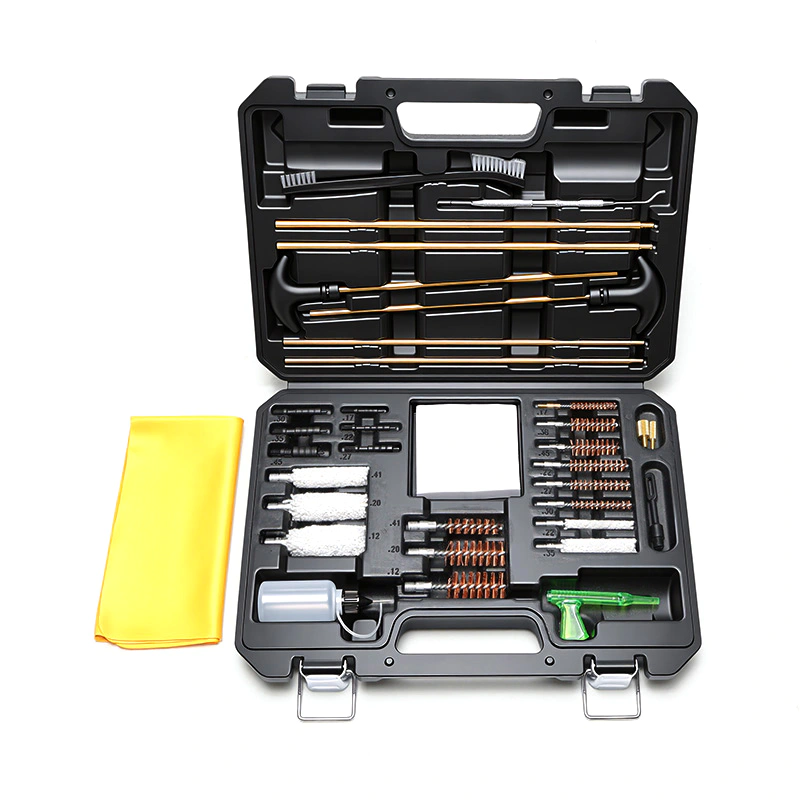
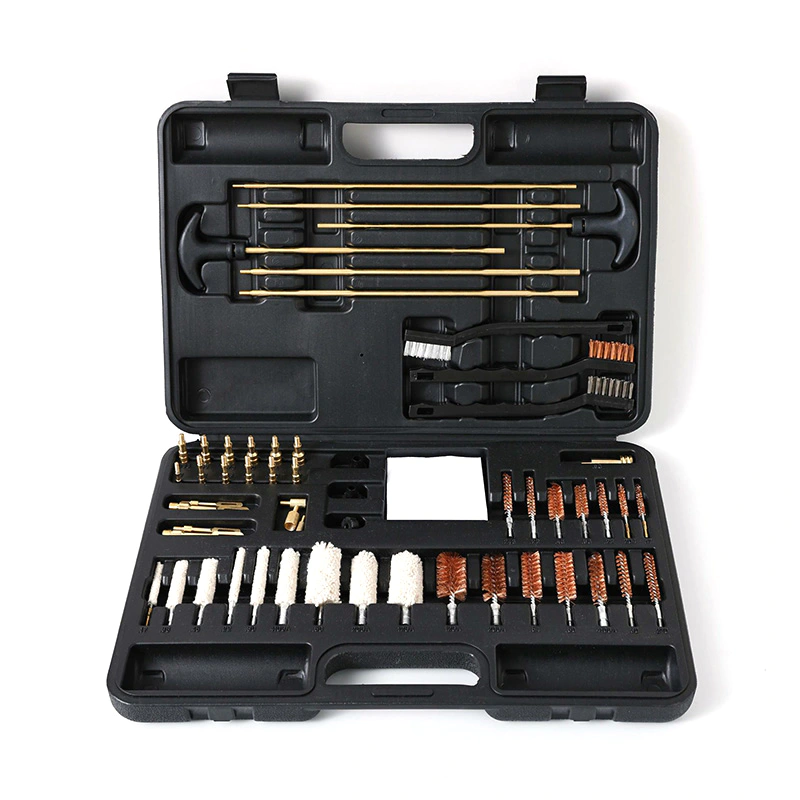
Developed for .22 caliber, .223 caliber, and 5.56mm rifles, this cleaning kit combines a black-coated segmented steel cleaning rod with brass wire brushes and additional cleaning brushes. The standard configuration is suitable for AR-15 and similar long-barrel rifles, while a .30 caliber version can be customized for buyers who require broader compatibility. Its total rod length can reach 853mm, giving users the working reach needed to clean extended rifle barrels effectively.
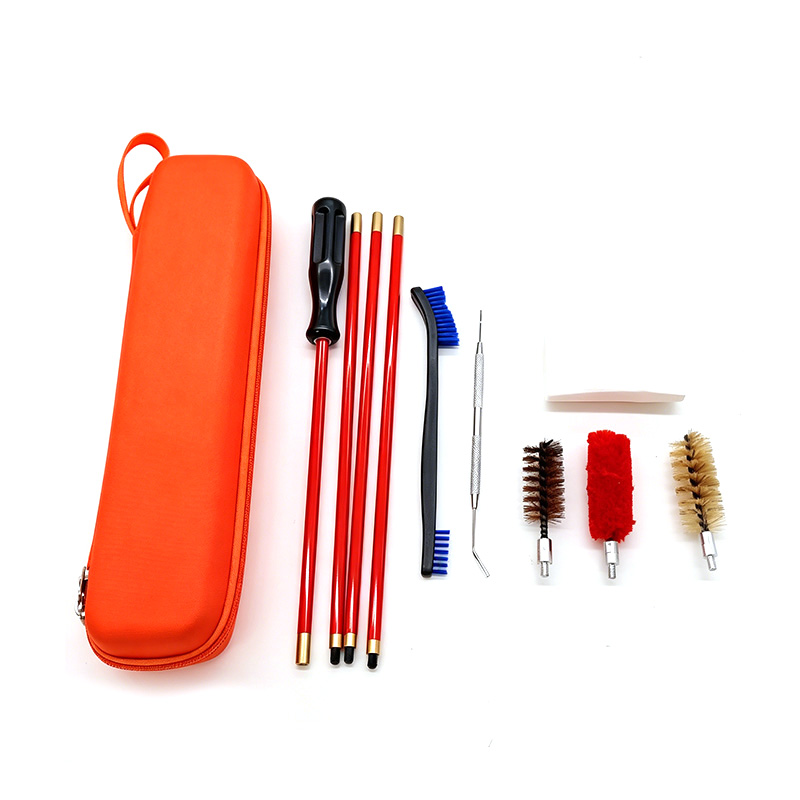
The kit is intended for carbon removal, powder residue cleaning, copper deposit removal, and routine barrel maintenance. Each component contributes to a complete cleaning process, while the tactical carrying pouch keeps the accessories organized and easy to transport. Available pouch and component color options include military green, black, khaki, and wood-colored variations, depending on the selected configuration.
For wholesalers, firearm accessory distributors, online retailers, sporting goods suppliers, and private-label brands, this product offers a combination of practical design and manufacturing flexibility. It can be supplied in standardized export packaging and adapted through OEM or white-label services, including caliber options, colors, packaging, and branding.
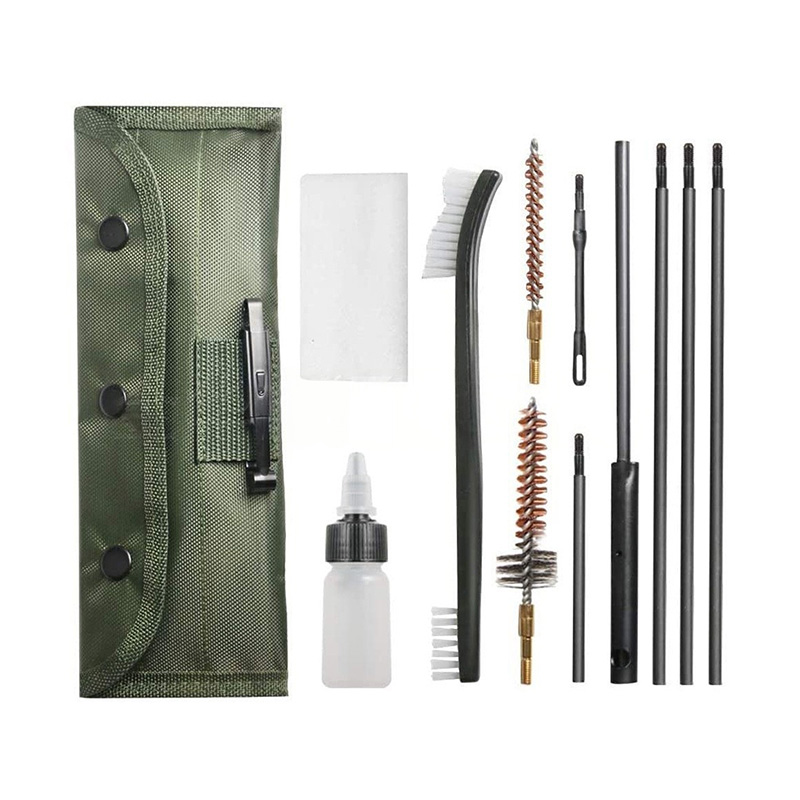
AR15 Cleaning Kit .22/.30 Cal Brushes
Rifle cleaning is most effective when the tools are matched to the bore diameter and barrel length. A brush that is too small may not contact fouling effectively, while an unsuitable brush or poorly constructed rod can reduce cleaning efficiency or create unnecessary wear. This kit is configured around the requirements of .22 caliber, .223 caliber, and 5.56mm rifles, which makes it particularly suitable for AR-15 platforms and other rifles using compatible bore dimensions.
The main cleaning rod is assembled from multiple segments. This construction makes the rod easier to store and transport than a single long shaft, while still allowing it to reach a total length of up to 853mm when assembled. The segmented format is convenient for field users, retailers, shooting clubs, and maintenance professionals who need a compact kit that can be carried in a range bag, vehicle, workshop, or tactical storage system.
The black coating on the steel rod provides a protective surface and gives the product a professional appearance. More importantly, the coated segmented rod is intended to support repeated cleaning work while helping protect the metal against ordinary handling and storage conditions. Proper use remains essential: users should select the correct brush, avoid excessive force, and follow the maintenance recommendations appropriate for their firearm.
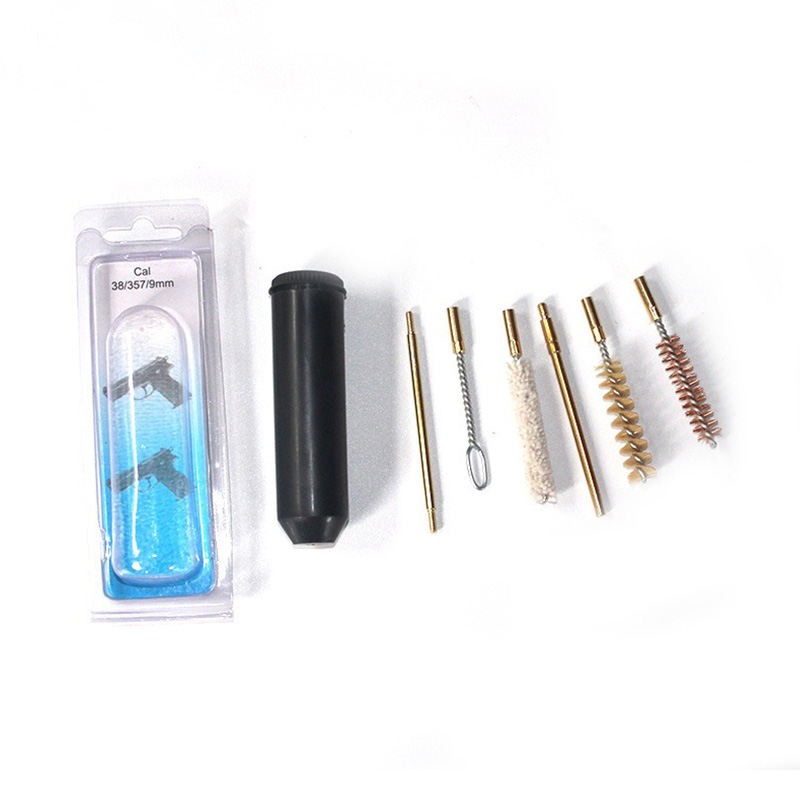
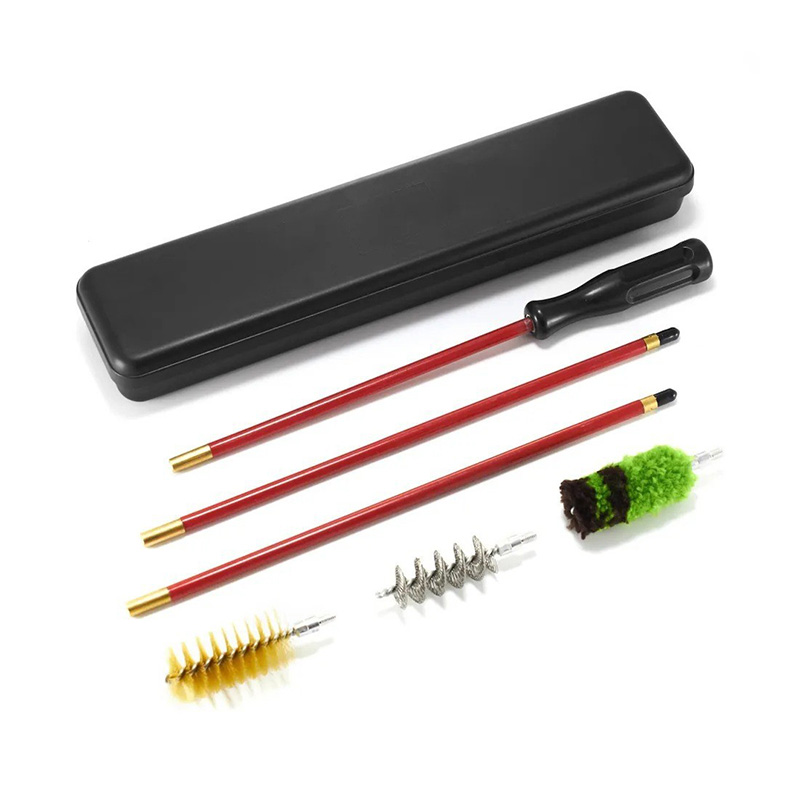
The brush components are designed to work inside the barrel and around areas where fouling commonly accumulates. Brass wire brushes provide firm brushing action for carbon and residue, while cleaning brushes made from other materials can be used for less aggressive cleaning tasks and for areas where a softer contact surface is preferred. The combination gives users more flexibility than a single-material brush kit.
| Product type | AR-15 rifle cleaning kit |
| Standard caliber compatibility | .22 caliber, .223 caliber, and 5.56mm |
| Custom caliber option | .30 caliber available upon customization |
| Product code | M16-AR15 |
| Primary function | Barrel cleaning, carbon removal, and routine firearm maintenance |
| Rod material | Steel with black protective coating |
| Brush material | Brass wire and additional cleaning brush materials |
| Brush style | Stick-shaped brush configuration |
| Bristle length | 80mm |
| Total assembled rod length | Up to 853mm |
| Handle material | Plastic |
| Color options | Green, black, khaki, and wood-colored variations depending on configuration |
| Carrying solution | Compact tactical pouch |
| Manufacturing location | Jinhua, Zhejiang, China |
| Customization | OEM, ODM, private label, packaging, color, and caliber customization |
The standard caliber configuration is one of the most important advantages of this cleaning kit. .22 caliber, .223 caliber, and 5.56mm rifles are widely used across sporting, training, recreational, professional, and field applications. By combining these related bore specifications into one market-focused product, the kit is easier for distributors to position and easier for end users to select.
Many general-purpose cleaning kits are sold with broad accessory assortments but provide limited clarity about which components are suitable for a specific rifle. This product is more focused. Its stated standard specification gives buyers a clear starting point for AR-15 and compatible rifle maintenance. That clarity can reduce selection errors for online customers and help retailers present the product more effectively.
The optional .30 caliber version adds another layer of commercial flexibility. Distributors may order a standard .22/.223/5.56mm version for the main market while requesting a .30 caliber configuration for customers who use larger rifle calibers. This approach allows one manufacturer to support multiple product listings, private-label programs, or regional product assortments without requiring a completely unrelated cleaning system.
Caliber-specific cleaning is important because brush diameter and contact pressure influence cleaning performance. A properly selected brush can make contact with the interior surface without being excessively tight. Users should always verify the actual caliber specification of their firearm and select the appropriate kit configuration before use.
The cleaning rod is the structural foundation of the kit. It must be long enough to pass through the barrel, strong enough for regular cleaning, and practical to store. This product uses a segmented steel rod that can be assembled to a total length of up to 853mm. The design provides a useful balance between reach and portability.
A single-piece rifle cleaning rod can be inconvenient for shipping, storage, and field use. It may also require a larger package and more storage space at the retail or customer level. The segmented design addresses these practical concerns. When disassembled, the rod occupies less space and fits more naturally inside the tactical pouch. When assembled, it provides the length necessary for cleaning many long-barrel rifle applications.
The black coating contributes to a consistent appearance across the product and supports protection during normal use and storage. The surface is designed to provide a smooth, professional finish while maintaining the underlying steel structure. As with all firearm maintenance tools, the rod should be kept clean and dry after use, and users should inspect the segments and connections before each cleaning session.
Compared with low-quality rods that may bend easily, separate at the joints, or use inconsistent threads, a properly manufactured segmented rod offers more dependable operation. The rod sections must be formed accurately so that they connect smoothly and remain aligned during use. Consistent threading and dimensional control are therefore important parts of the manufacturing process.
The 853mm maximum assembled length is a practical specification for distributors and users evaluating rifle cleaning equipment. It gives the product a clear advantage over short pistol-oriented kits that may not provide adequate reach for rifles. A longer rod also allows the same kit to serve more than one maintenance environment, including home workshops, shooting ranges, outdoor sites, and professional equipment rooms.
Although the assembled rod provides extended reach, the segmented format keeps the kit compact when packed. This combination is valuable for customers who want rifle functionality without carrying a long rigid tool separately.
Brass wire brushes are included to help remove stubborn fouling from the barrel. During regular use, residue may accumulate from propellant, carbon, copper, and other deposits. Brushing helps loosen this material so that it can be removed with patches, cloth, or other suitable cleaning accessories.
Brass is widely used in firearm cleaning brushes because it provides effective brushing action while being less aggressive than many harder metals. When the correct brush size is used with appropriate technique, brass bristles can help clean the bore without unnecessarily damaging the rifling. The product description emphasizes a bore-safe design, but safe use also depends on selecting the correct caliber, maintaining proper alignment, and avoiding excessive pressure.
The 80mm bristle length provides a useful working area for barrel cleaning. It gives the brush enough surface contact to engage residue while remaining compact enough for use with a segmented rod. The stick-shaped configuration is straightforward to handle and is familiar to professional and recreational firearm maintenance users.
Brass brushes are especially useful when ordinary cloth or patches cannot remove firmly attached residue. However, brushing should be part of a controlled maintenance process rather than a substitute for careful inspection. Users should follow the cleaning instructions supplied with the firearm and use solvents or oils only in accordance with their intended applications.
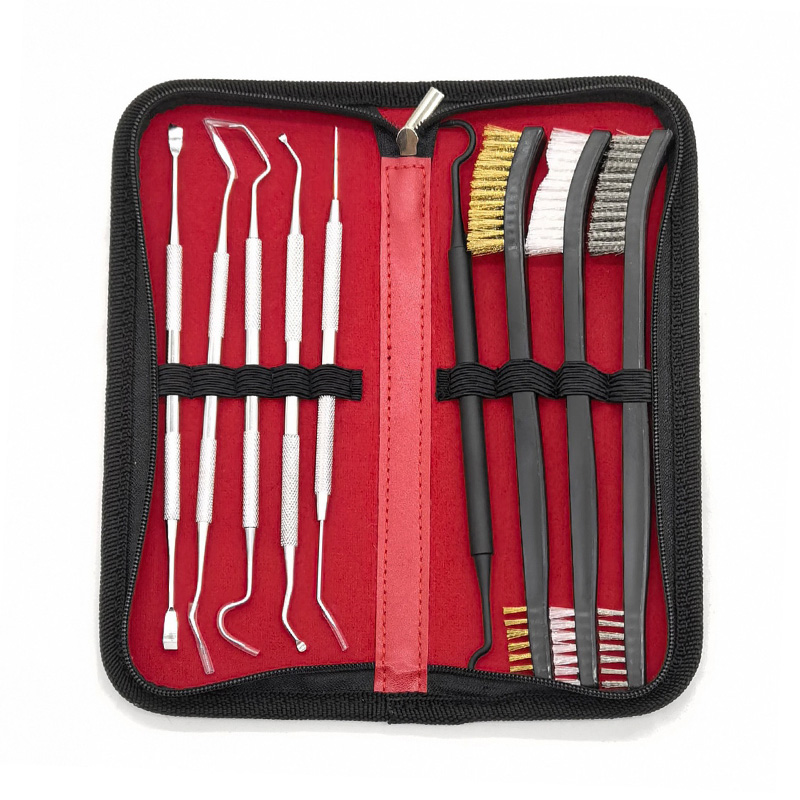
A complete maintenance kit benefits from having more than one brush type. Brass wire brushes offer stronger mechanical contact, while nylon or other softer brushes can be used for lighter cleaning and for surfaces where a gentler material is preferred. The availability of different cleaning brush materials increases the kit’s usefulness and allows customers to adapt their cleaning routine to the condition of the firearm.
Nylon brushes are often selected for routine brushing, light residue removal, and cleaning tasks involving finished surfaces or components that should not be exposed to aggressive contact. A mixed brush selection also gives retailers a stronger product story than a basic single-brush package. It can be presented as a more complete maintenance solution for both periodic and detailed cleaning.
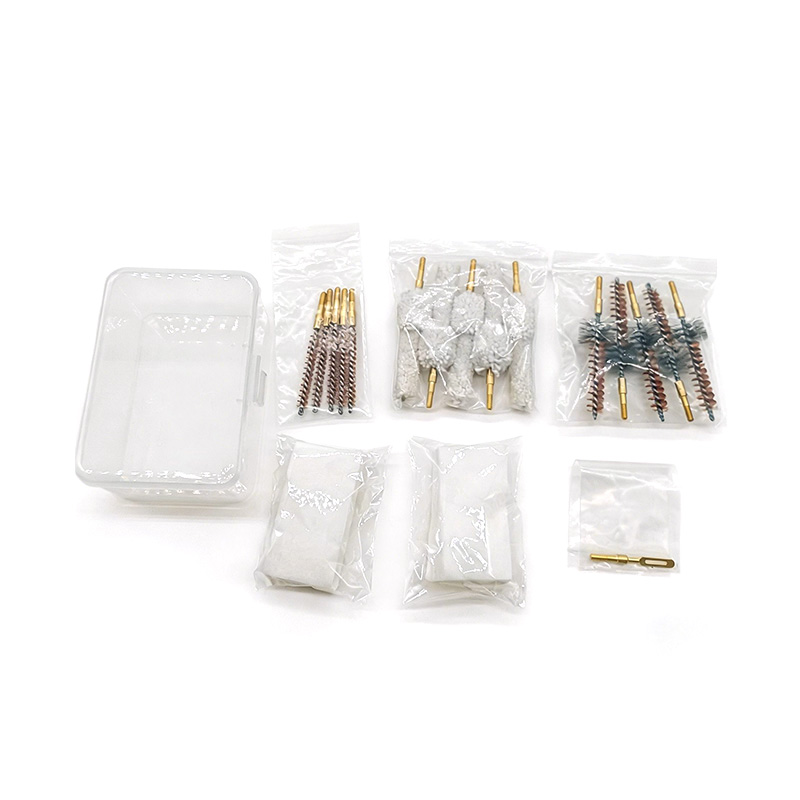
The company’s broader product range includes bronze and brass brushes, nylon brushes, bore mops, cleaning rods, adapters, patches, and cleaning cloths. This product ecosystem supports buyers who prefer to source several related components from one manufacturing partner. It also creates opportunities for bundled product programs, accessory replenishment packs, and customized cleaning sets.
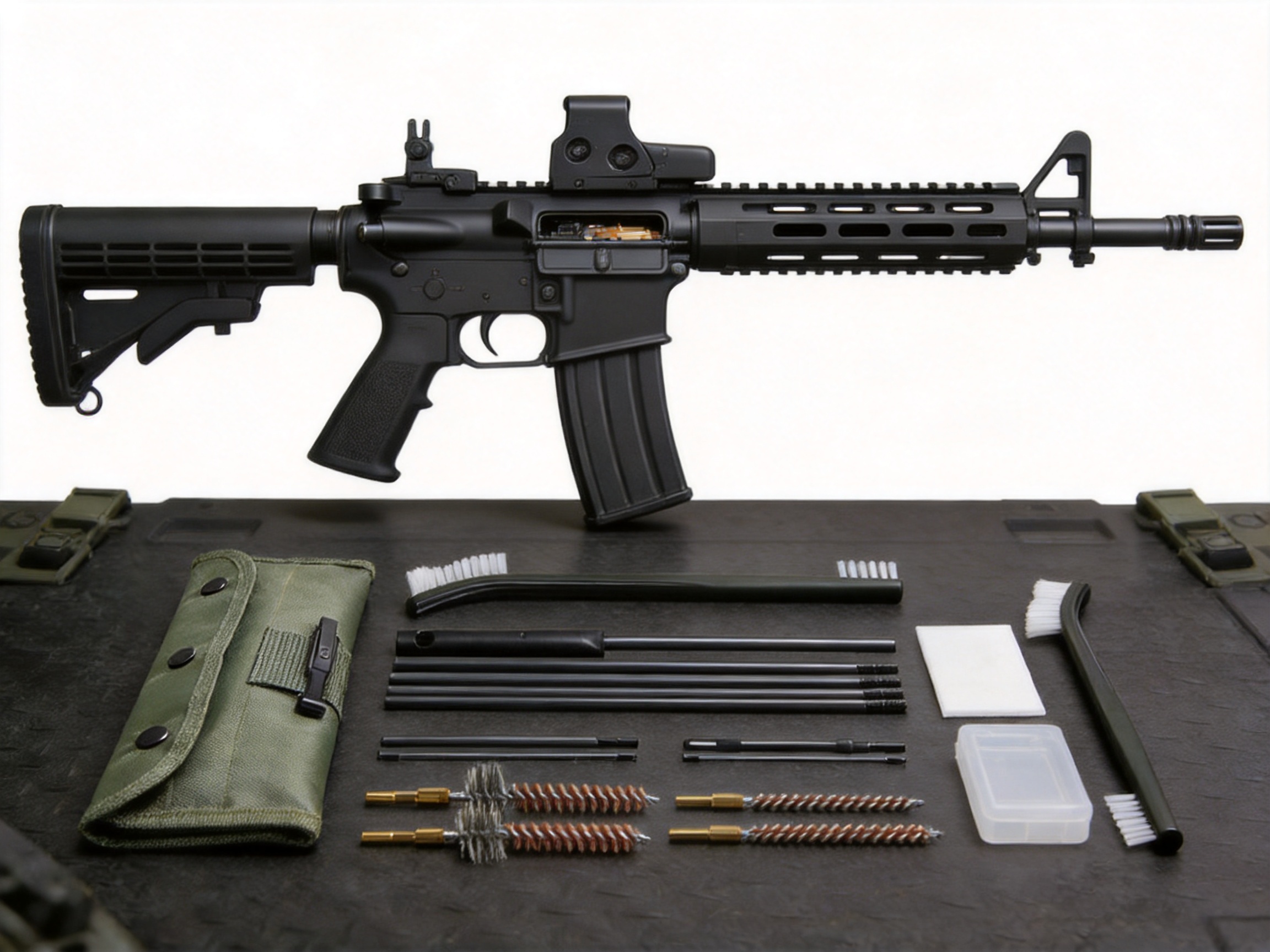
Organization is a practical feature that is sometimes overlooked when comparing firearm cleaning kits. Loose rods and brushes can become difficult to identify, easy to misplace, or vulnerable to damage during transport. The compact tactical pouch included with this kit is intended to keep the components together and improve portability.
The pouch is available in military green, black, and khaki-related color options, depending on the selected product configuration. These colors are familiar in outdoor, tactical, sporting, and field-maintenance markets. Color selection can also help distributors create separate product versions or coordinate the kit with an existing brand identity.
A carrying pouch improves the customer experience in several ways. It reduces clutter in storage, makes the kit easier to place in a range bag, and allows users to transport the cleaning equipment to outdoor locations. For wholesalers, the pouch also creates a more complete retail presentation than a collection of loose accessories packed in a plain carton.
The portable format is particularly useful for customers who maintain firearms away from a permanent workshop. Hunters, range users, instructors, security personnel, and sporting clubs may all value a kit that can be carried in a vehicle or stored with other equipment. The pouch also supports practical inventory handling in warehouses and retail environments.
The market includes simple cleaning sets, individual brushes, short pistol kits, and premium multi-caliber systems. The AR15 Cleaning Kit .22/.30 Cal Brushes occupies a practical position between a basic accessory pack and a highly specialized professional system. Its main advantages are focused rifle compatibility, extended rod length, mixed brush materials, compact storage, and customization support.
| Comparison factor | Basic single-brush product | AR15 Cleaning Kit configuration | Customer benefit |
| Caliber focus | May have limited or unclear compatibility | .22/.223/5.56mm standard, .30 caliber customizable | Clearer selection for rifle owners |
| Rod format | May be short or non-segmented | Segmented steel rod | Portable storage with extended working reach |
| Maximum length | Often intended for compact firearms | Up to 853mm assembled | Better suited to long-barrel applications |
| Brush selection | Usually one material | Brass wire and additional brush materials | More flexible cleaning options |
| Storage | Loose or basic packaging | Compact tactical pouch | Improved organization and portability |
| Private-label support | May not be available | OEM and ODM customization supported | Suitable for branded product programs |
| Bulk supply | May rely on spot availability | Stable inventory and export packaging options | More convenient for wholesale planning |
Compared with a very low-cost cleaning tool, the value of this kit lies in its complete format and intended rifle application. A single brush may be inexpensive, but it does not provide the same convenience as a rod, multiple brush options, and a carrying pouch supplied together. Compared with some larger multi-caliber kits, this product is more focused and may be easier for retailers to explain to customers seeking AR-15-compatible maintenance equipment.
Product selection should always be based on the customer’s actual firearm and cleaning requirements. The kit is not intended to replace every possible accessory, and users may still require cleaning patches, cloths, solvents, oils, or specialized adapters. However, it provides a strong core system for regular barrel maintenance.
The product is manufactured by Jinhua Tongshun Tool Factory, a comprehensive enterprise based in Jinhua, Zhejiang, China. Established in 1999, the company has more than 26 years of experience in the development, production, and sale of gun cleaning kits, barrel cleaning brushes, rods, mops, patches, and related maintenance accessories.
Long-term experience is important in this category because firearm cleaning tools depend on repeated dimensional and material decisions. Brush diameter, bristle density, thread compatibility, rod alignment, handle strength, coating consistency, and pouch assembly all influence the final user experience. A manufacturer with an established product history is better positioned to manage these details across different product models and order quantities.
The factory operates production systems that include semi-automatic and fully automated equipment. This combination enables the company to balance flexibility with manufacturing efficiency. Semi-automatic processes can support product variations, customized components, and smaller or specialized production runs. Automated systems can improve repeatability and output for standard products and larger orders.
For international buyers, production capacity is only one part of supplier evaluation. Stable quality, dependable communication, export documentation, packaging control, and delivery planning are equally important. The company’s stated experience serving more than 50 countries and regions provides a foundation for cross-border supply and international product development.
Quality control for a rifle cleaning kit should cover every component rather than focusing only on the visible pouch. Rod sections should be checked for straightness, connection quality, thread accuracy, and surface finish. Brushes should be reviewed for proper bristle attachment, consistent dimensions, and secure connection points. Plastic handles should be examined for molding quality, grip consistency, and resistance to ordinary handling stress.
The black coating on the rod should be visually consistent and free from obvious defects that could affect handling or storage. The carrying pouch should be checked for stitching, closure performance, compartment arrangement, and overall appearance. Packaging should protect the components from damage during warehouse handling and international transportation.
Stable inspection procedures are especially valuable for wholesale customers. A retailer ordering a small quantity may evaluate individual products, while a distributor ordering in bulk needs confidence that the entire shipment will remain consistent. Standardized production and inspection procedures help reduce variation between batches and support repeat orders.
As a manufacturer specializing in cleaning tools, Tongshun Tools can use product experience to improve designs based on market requirements. Product development may involve adjusting brush materials, refining rod connections, improving packaging, adding caliber options, or changing the pouch configuration for a particular sales channel.
The company’s range covers cleaning kits as well as individual components. This allows product development to be approached as a complete maintenance system rather than as isolated accessories. For example, a distributor may request a kit that combines a specific rod length, a selected brush material, a bore mop, cleaning cloths, and a branded pouch. A supplier with experience across these categories can coordinate the components more efficiently.
OEM and ODM capability is another important strength. OEM projects may include customer logos, product labels, package artwork, instruction inserts, and selected colors. ODM projects may involve adapting an existing kit or developing a more customized configuration based on a retailer’s target market. These services allow buyers to build a distinctive product range without establishing their own tooling, assembly, or packaging operation.
The cleaning kit is suitable for companies that want to sell a ready-to-market firearm maintenance product under their own brand. White-label programs can use the existing product configuration with customized labeling and packaging. OEM orders can include more detailed adjustments, such as color changes, pouch design, logo placement, brush selection, and caliber configuration.
Customization is particularly relevant for online retailers and distributors. A product with a clear caliber designation and branded presentation can be easier to position than a generic unmarked kit. Retailers may create separate listings for standard .22/.223/5.56mm configurations and custom .30 caliber versions, provided that product descriptions accurately identify the supplied components.
Packaging can be adapted for different sales channels. A compact retail box may be appropriate for e-commerce fulfillment, while a larger master carton can support wholesale distribution. Export packaging should be planned around product protection, carton efficiency, labeling, and cross-border logistics. Standardized packaging solutions help buyers coordinate warehousing and shipping more effectively.
Color customization also creates commercial value. Military green, black, khaki, and wood-colored options can serve different customer preferences or brand identities. A distributor may use color to distinguish caliber versions, create a premium line, or align the kit with an existing range of outdoor equipment.
| Customization area | Possible options | Commercial purpose |
| Caliber | .22/.223/5.56mm standard; .30 caliber customizable | Serve different firearm user groups |
| Pouch color | Green, black, khaki, and other agreed options | Support branding and product differentiation |
| Logo | Printed, labeled, or packaged branding | Build private-label recognition |
| Packaging | Retail cartons, export cartons, inserts, and labels | Adapt to online or wholesale distribution |
| Brush configuration | Brass, bronze, nylon, and other suitable materials | Match market positioning and cleaning needs |
| Product bundle | Rods, brushes, mops, patches, cloths, or adapters | Create complete maintenance solutions |
The standard configuration is suitable for AR-15 owners and users of compatible .22, .223, and 5.56mm rifles. Its portability makes it appropriate for range bags, workshop storage, vehicle equipment, and outdoor maintenance kits. It can be sold through sporting goods stores, firearm accessory retailers, shooting range shops, e-commerce stores, and professional supply channels where firearm maintenance products are permitted.
For shooting clubs and training organizations, a durable and organized cleaning kit can support routine equipment care. The pouch helps staff keep components together, while the segmented rod makes it easier to store multiple kits in a limited space. For outdoor users, the compact format reduces the amount of equipment needed during travel.
For distributors, the product can be positioned as an entry-level professional kit or as a practical upgrade from loose cleaning accessories. The product description can emphasize the extended 853mm rod length, standard .22/.223/5.56mm compatibility, brass wire brushes, additional cleaning brush materials, and tactical pouch.
Customers who use .30 caliber rifles can be directed toward the customizable version. This creates a broader sales opportunity while preserving the clarity of the standard product. Buyers should confirm the desired caliber, brush size, rod connection, pouch color, logo requirements, and packaging before placing a custom order.
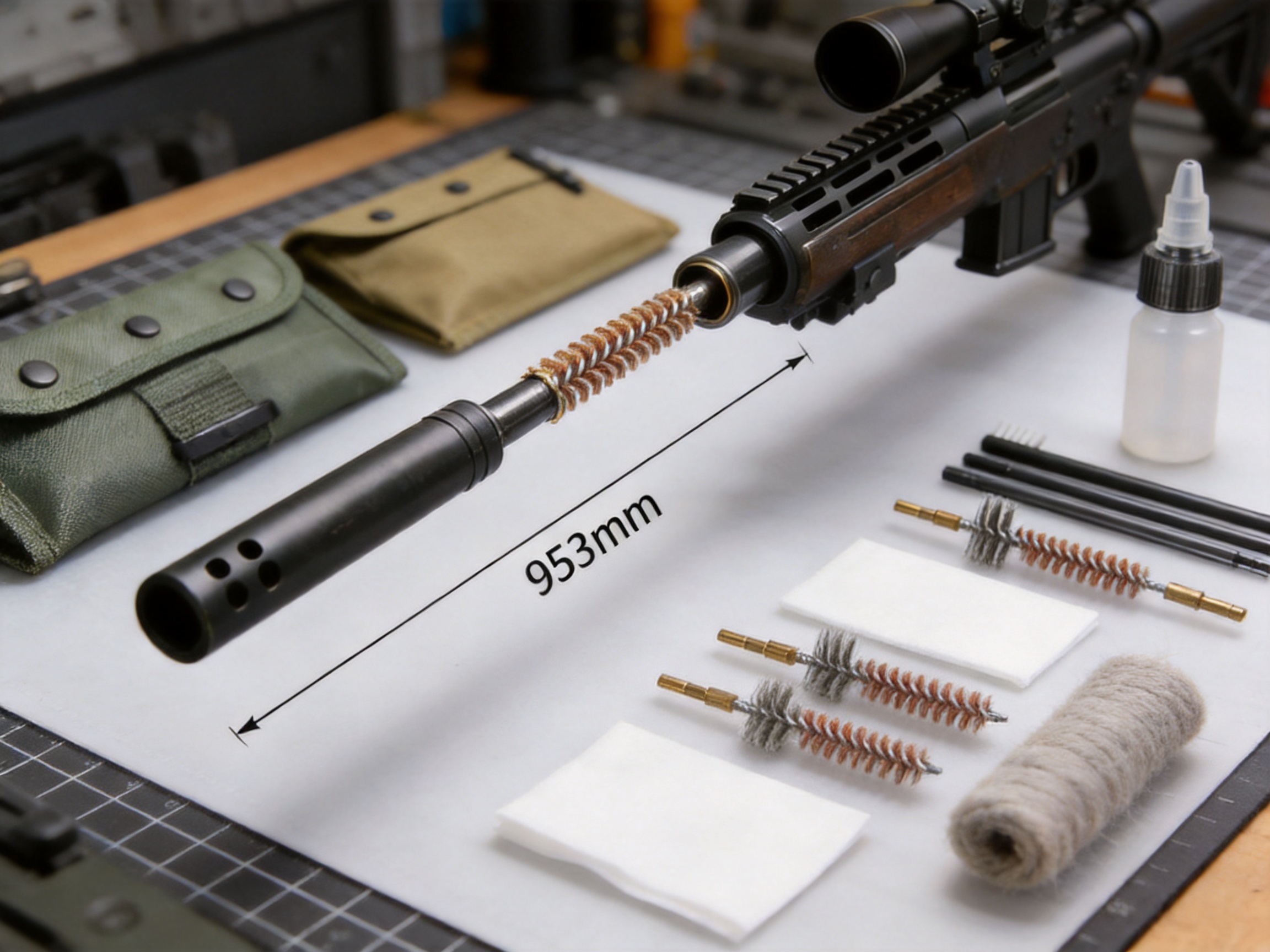
The kit is designed to support a controlled firearm cleaning routine. Before cleaning, the user should follow all applicable firearm safety rules, consult the firearm manufacturer’s instructions, and confirm that the firearm is unloaded. The firearm should be placed in a stable, safe working position, and the user should use suitable ventilation and protective equipment when cleaning chemicals are involved.
The appropriate brush should be selected according to the firearm’s caliber. For standard AR-15 applications, the .22/.223/5.56mm configuration should be used. If the firearm is .30 caliber, the user should obtain the corresponding customized version rather than attempting to use an unsuitable brush.
The rod sections should be assembled carefully and checked for secure connection. The user should maintain alignment with the bore and avoid forcing the rod. A suitable cleaning solution may be applied according to the firearm manufacturer’s recommendations. The brush can then be used with controlled passes to loosen carbon and other residue.
After brushing, patches, cloths, or a bore mop may be used to remove loosened material and remaining cleaning solution. The bore should be inspected as appropriate, and the firearm should be dried and lightly protected according to the manufacturer’s maintenance instructions. When the cleaning task is complete, the rod and brushes should be wiped, dried, and returned to the pouch.
This workflow is intentionally general because different firearms, finishes, ammunition types, and cleaning products may require different procedures. The cleaning kit supplies the physical tools, while the user remains responsible for applying the correct maintenance method for the firearm.
Proper storage helps extend the service life of the kit. After use, residual solvent, oil, carbon, or moisture should be removed from the rod and brushes. The steel rod should be stored dry, and the brush connections should be checked for contamination that could interfere with assembly.
The pouch should be stored in a dry environment. If it becomes wet or exposed to cleaning chemicals, it should be allowed to dry fully before the components are packed inside. Keeping the kit organized reduces the likelihood of losing a brush or damaging the rod sections during transport.
Users should periodically inspect the bristles. A brush that has become excessively worn, deformed, or contaminated should be replaced. The rod should also be checked for bending, damaged threads, loose connections, or surface defects. Regular inspection is a simple way to maintain safe and effective operation.
For wholesale and private-label customers, product quality must be supported by supplier capability. A well-designed sample is valuable, but long-term business depends on consistent production, responsive communication, and the ability to repeat the same specification over multiple orders.
Jinhua Tongshun Tool Factory integrates research and development, production, and sales. This structure can simplify communication because product specifications, manufacturing questions, packaging requirements, and order coordination are handled through an experienced source. The company’s specialization in firearm cleaning tools also means that buyers can discuss related products such as brass brushes, bronze brushes, nylon brushes, bore mops, rods, adapters, patches, and cleaning cloths.
The company supports export-focused business and has experience supplying customers in Europe and other international markets. Its products are reported to be exported to more than 50 countries and regions. This international orientation is relevant to buyers who need standardized packaging, bulk shipping coordination, and products prepared for cross-border sales.
Manufacturing in Jinhua, Zhejiang provides access to an established industrial supply environment and a workforce experienced in tool production. Combined with semi-automatic and fully automated systems, this supports both product consistency and the flexibility required for customized orders.
Online retailers can present this product around several clear selling points. The first is compatibility: the standard kit is designed for .22 caliber, .223 caliber, and 5.56mm rifles. The second is reach: the segmented rod can reach up to 853mm when assembled. The third is material selection: the kit combines a black-coated steel rod with brass wire and additional cleaning brushes. The fourth is portability: all components are stored in a compact tactical pouch.
Product listings should identify the included components accurately and explain the difference between the standard version and the customizable .30 caliber version. Clear descriptions can reduce returns caused by caliber confusion. Retailers should also state that users must verify compatibility with their firearm before use.
High-quality product photography should show the assembled rod, separated rod sections, brushes, pouch, and color options. Packaging images can help wholesale buyers understand how the product will arrive. For private-label customers, sample packaging and logo placement should be approved before mass production.
Search terms relevant to the product category may include gun cleaning kit, AR-15 cleaning kit, .223 cleaning kit, 5.56mm bore brush, brass gun brush, rifle cleaning rod, tactical cleaning pouch, bore cleaning brush, and OEM gun cleaning accessories. Retailers should use these terms naturally while maintaining accurate product information.
The standard kit is designed for .22 caliber, .223 caliber, and 5.56mm rifles, including AR-15 platforms and other compatible long-barrel rifles. Buyers should always verify the exact caliber and maintenance requirements of the firearm before use.
Yes. A .30 caliber configuration can be customized. Customers should confirm the required brush specification, rod configuration, pouch color, packaging, and order quantity with the supplier before production.
The segmented rod can reach a total assembled length of up to 853mm. Its sections can be separated for more compact storage and transport.
The rod is made from steel and has a black protective coating. The segmented construction is intended to combine working reach with convenient portability.
The kit includes brass wire brushes and additional cleaning brushes. Different brush materials provide flexibility for carbon removal, powder residue cleaning, copper deposit removal, and lighter maintenance tasks.
The extended assembled rod length makes the kit suitable for many long-barrel rifle cleaning applications. Compatibility should be confirmed based on the firearm’s caliber, barrel design, and manufacturer instructions.
Yes. The components are organized in a compact tactical carrying pouch. Color options include green, black, and khaki-related variations, depending on the selected configuration.
Yes. OEM, ODM, and white-label services are available. Customization may include logos, packaging, pouch colors, brush configurations, caliber options, and product bundles.
Yes. The manufacturer specializes in gun cleaning kits, bronze and brass brushes, nylon brushes, bore mops, cleaning rods, adapters, cleaning patches, and cleaning cloths. Buyers can discuss mixed orders or coordinated product programs.
The product is manufactured in Jinhua, Zhejiang Province, China, by Jinhua Tongshun Tool Factory.
Users should follow all applicable safety requirements, confirm that the firearm is unloaded, consult the firearm manufacturer’s instructions, and work in a suitable ventilated area. The correct caliber brush and proper cleaning method should always be used.
The rod and brushes should be wiped clean and dried after use. Components should be returned to the pouch and stored in a dry environment. The rod connections and brush condition should be inspected periodically.
The AR15 Cleaning Kit .22/.30 Cal Brushes is a practical rifle maintenance solution built around the needs of .22 caliber, .223 caliber, and 5.56mm users. Its black-coated segmented steel rod provides an assembled reach of up to 853mm, while brass wire brushes and additional brush materials support different cleaning requirements. The compact tactical pouch improves organization and portability, making the kit suitable for home workshops, shooting ranges, vehicles, field operations, and outdoor equipment storage.
Its advantages over basic cleaning products include clearer rifle-focused compatibility, longer working reach, multiple brush materials, organized storage, and the option to customize for .30 caliber applications. For distributors and private-label brands, the product also offers meaningful commercial flexibility through custom colors, packaging, logos, product bundles, and export-ready supply arrangements.
Behind the product is a specialized manufacturer with a history dating back to 1999, more than 26 years of manufacturing experience, semi-automatic and automated production systems, international export capability, and OEM and ODM expertise. This combination of product specialization and manufacturing infrastructure makes the kit suitable not only for individual users but also for wholesale, online retail, sporting goods distribution, and branded firearm maintenance programs.
For buyers seeking a dependable and adaptable rifle cleaning product, this kit provides a balanced combination of reach, material selection, portability, customization, and supplier support.
1. Product specification sheet for AR15 Cleaning Kit .22/.30 Cal Brushes, product code M16-AR15.
2. Manufacturer information supplied by Jinhua Tongshun Tool Factory.
3. General firearm maintenance and bore-cleaning practices recommended by firearm manufacturers and professional maintenance organizations.
4. General principles of brass, bronze, nylon, and steel brush selection for cleaning applications.
5. General principles of OEM, ODM, white-label, and export packaging management for tool products.