English
 русский
 Español
 عربى

HUNTACE HUNTACE HUNTACE HUNTACE HUNTACE
HUNTACE HUNTACE HUNTACE HUNTACE

Effective firearm maintenance depends on more than selecting a suitable solvent or brush. The cleaning accessory must also enter the bore smoothly, remain properly aligned, hold patches and mops securely, and connect reliably to the cleaning rod. A poorly designed adapter can create unnecessary resistance, move off-center, damage a patch, or make routine maintenance slower than necessary. The Gun Cleaning Accessories Spike Tip Adapter Parts Tool Kit is designed to address these practical requirements with a tapered guide profile, precision-machined attachment threads, and broad caliber compatibility.
Developed for use with cleaning patches, cotton mops, brushes, and related bore-care accessories, this spike tip adapter is positioned within the cleaning rods and adapters category. It is available in brass and nylon options to meet different maintenance preferences. Brass provides a durable, corrosion-resistant connection and a balanced level of hardness, while nylon offers a lightweight and non-abrasive alternative for users who prioritize extra protection for sensitive bore surfaces.
The adapter is intended for a wide range of firearm platforms, including rifles, pistols, and shotguns. Its available caliber range extends from small .17-caliber applications to larger .50-caliber platforms, with additional options for shotgun sizes such as .410 and 12 gauge. Standard 5-40 and 8-32 thread specifications support compatibility with many commonly used cleaning rods in North American, European, and other international markets.
For distributors, firearm accessory brands, shooting-sports retailers, maintenance kit suppliers, and cross-border e-commerce sellers, the product also provides a practical foundation for OEM and ODM programs. Configurations, packaging, logos, and product combinations can be adapted for different sales channels and customer requirements.
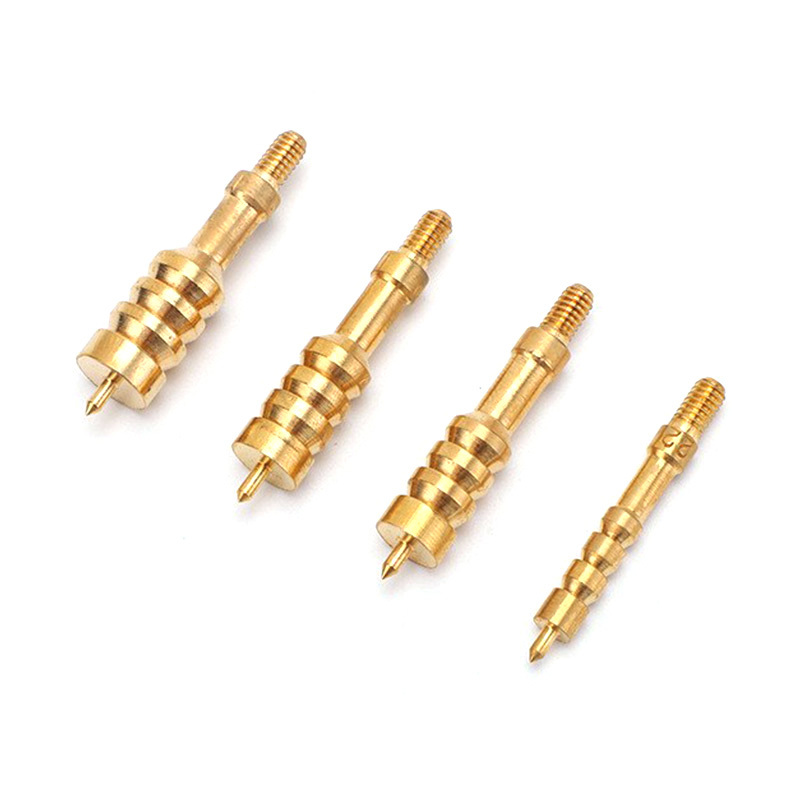
Gun Cleaning Accessories Spike Tip Adapter Parts Tool Kit
A cleaning rod is the main carrier in a bore-cleaning system, but the rod itself does not normally perform every cleaning operation. It requires an end fitting that connects the rod to a patch, mop, brush, jag, or other cleaning component. The spike tip adapter serves as this connection and guiding element.
In a typical cleaning process, a patch or mop is placed over or around the tapered tip. The assembled accessory is then attached to a compatible cleaning rod and guided through the barrel. As the rod moves, the adapter helps keep the cleaning material centered and directs it into the bore without requiring excessive force.
The tapered geometry is important because it reduces the abrupt transition between the cleaning rod and the cleaning material. A blunt or poorly shaped attachment may catch on the chamber entrance, barrel throat, or internal rifling. A guided, gradual profile can make insertion more controlled and reduce resistance during the first stage of cleaning.
The adapter also helps distribute pressure more evenly. When a patch or mop is held off-center, one side may make heavier contact with the bore while the opposite side makes little contact. This can result in incomplete cleaning and uneven wear on the patch. A centering groove and carefully formed tip help maintain a more consistent position as the accessory travels through the barrel.
For brushes, the adapter provides a stable connection point between the rod and the brush assembly. For patches and cotton mops, it provides the support needed to push or pull cleaning material through the bore. This makes the accessory useful as a replacement component, a spare part for a complete cleaning kit, or an item included in a customized maintenance package.
The product is offered in brass and nylon versions, allowing purchasers to match the adapter material to the firearm, cleaning method, and customer preference.
The brass version is suited to users who want a durable, rigid, and long-lasting metal component. Brass has useful corrosion-resistance properties and can be precision-machined to create clean attachment threads and a consistent tapered shape. Its hardness is sufficient for repeated use while remaining more suitable for bore-care applications than many harder ferrous metals.
The nylon version is lightweight and non-abrasive. It is especially appropriate for users who want to reduce the possibility of contact marks or scratching on delicate bore surfaces. Nylon can also be a practical choice for compact cleaning kits because it adds little weight and is easy to handle in field-maintenance situations.
Offering both materials gives wholesalers and brands greater flexibility. A distributor can stock a basic nylon option for value-oriented kits, a brass option for premium kits, or both versions to cover different segments of the shooting-accessory market.
Many cleaning adapters are limited to a narrow group of firearm calibers. This can create inventory complications for retailers and force end users to purchase several unrelated components. The spike tip adapter range is designed to cover a broad selection of commonly used firearm sizes.
Available configurations include .17 caliber, .22 caliber, .243 caliber, 6 mm, .25 caliber, 6.5 mm, .270 caliber, 7 mm, .30 caliber, .338 caliber, 8 mm, .357 caliber, 9 mm, .375 caliber, .40 caliber, .416 caliber, .44 caliber, .45 caliber, and .50 caliber. The supplied product information also identifies .35 caliber, .410 caliber, and 12 gauge options within the broader product range.
This variety makes the adapter suitable for small-caliber sporting rifles, centerfire rifles, handguns, large-caliber firearms, and selected shotgun cleaning applications. Buyers should select the exact tip size and thread specification according to their cleaning rod, bore, and intended cleaning accessory.
The adapter is available with standard 5-40 and 8-32 thread specifications. These thread sizes are widely used in cleaning rods and firearm maintenance accessories, making them familiar to retailers, gunsmiths, shooting clubs, and individual firearm owners.
Thread accuracy is essential. If the connection is loose, the adapter can wobble, detach, or place uneven pressure on the cleaning accessory. If the thread is poorly formed or misaligned, installation may be difficult and repeated use can damage the connection. Precision thread machining supports a more secure fit and improves the overall reliability of the cleaning assembly.
Because thread standards can vary among manufacturers and product categories, users should verify compatibility before ordering. For OEM projects, the manufacturer can discuss the desired thread pattern, tip size, packaging format, and accessory combination before production.
The tapered spike profile is one of the product’s most functional features. Instead of presenting a sharp change in diameter, the tip provides a gradual guide for patches, mops, and brushes. This can help the assembled cleaning tool enter the bore more smoothly and reduce snagging at the barrel entrance.
The shape also supports more controlled movement during cleaning. A guide that enters the bore gradually can reduce the amount of force required from the operator. Lower insertion resistance helps users work carefully, particularly when cleaning narrow or fouled bores where patches and brushes may already fit tightly.
The design is not intended to replace correct cleaning technique. Users should always select the right caliber accessory, avoid forcing a component through the bore, and follow the safety and maintenance instructions applicable to the firearm. The adapter is a precision aid that supports those procedures.
An integrated centering groove helps keep the brush, patch, or mop aligned with the bore. Consistent alignment improves the chance that the cleaning material contacts the internal surface evenly, helping remove carbon fouling, powder residue, oil, and other contaminants across the bore rather than concentrating pressure on one side.
Centering is also valuable for protecting the cleaning process itself. An off-center accessory may fold, twist, or bunch up inside the bore. When that occurs, the operator may need to stop and remove the cleaning material, interrupting the maintenance process. A properly guided adapter helps reduce this risk by providing a more stable interface.
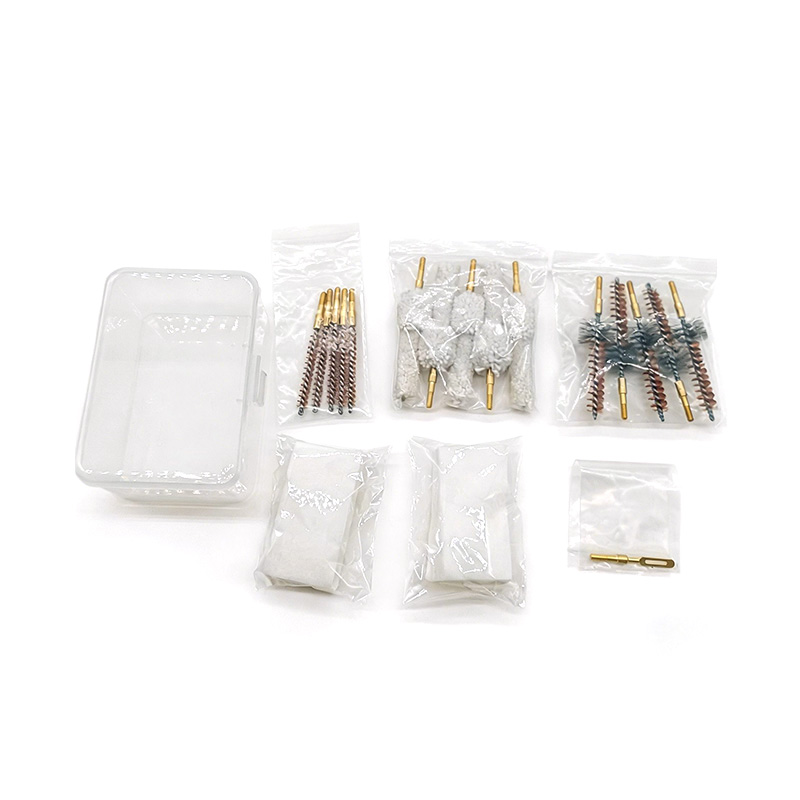
The spike tip adapter can be sold as an individual replacement part, included in a multi-piece gun cleaning kit, or combined with rods, brushes, patches, cotton mops, and storage cases. This flexibility makes it useful for several commercial formats.
Retailers may offer it as a replacement for worn or misplaced adapters. Cleaning-kit manufacturers may include several caliber sizes in one package. Private-label brands may use the adapter as part of a specialized rifle kit, pistol kit, universal maintenance kit, or professional armorer’s accessory set.
The adapter’s compact form also supports efficient packing and shipping. It can be included in small retail cartons, blister packs, polybags, foam inserts, or larger organizer cases, depending on the customer’s positioning and target market.
Brass is widely used in firearm maintenance accessories because it offers a useful combination of machinability, strength, corrosion resistance, and practical durability. It can be formed and threaded accurately, allowing manufacturers to produce a consistent connection between the adapter and the cleaning rod.
For regular maintenance, the brass tip can withstand repeated attachment and removal when handled correctly. Its metallic structure also gives the user a clear sense of engagement during installation. The component is sufficiently rigid to guide a patch or mop without flexing like a soft plastic part.
Brass is not immune to surface change. Exposure to moisture, aggressive chemicals, or poor storage conditions may affect its appearance over time. Users should wipe the accessory after use, remove residue, and store it in a dry environment. Proper care can help maintain both its appearance and service life.
Nylon provides a different set of benefits. It is light, durable, and non-abrasive, making it appropriate for users who want a softer interface between the cleaning accessory and the firearm. It can be particularly attractive for precision-oriented maintenance where the operator wishes to minimize contact between a metal component and sensitive surfaces.
The lower weight of nylon can also improve portability. A compact field kit may benefit from lightweight adapters, especially when the kit already contains multiple rods, brushes, solvents, patches, and other accessories.
Nylon should still be used according to the intended application. It should not be exposed unnecessarily to chemicals or temperatures outside the manufacturer’s recommendations. Buyers selecting nylon for OEM programs should confirm the required polymer specification, color, dimensional tolerance, and chemical-resistance expectations during product development.
Product listings for this type of accessory may use terms such as brass, bronze, copper, or copper-colored metal interchangeably in informal sales descriptions. The supplied product information identifies a brass cleaning-tip option in the product content while also listing copper-related descriptions in the technical information. For professional purchasing, the exact alloy should be confirmed before mass production or catalog publication.
Manufacturers and buyers should establish whether the requested metal is brass, bronze, copper, or another copper-based alloy. They should also confirm surface finish, hardness, thread standard, plating requirements, corrosion expectations, and packaging details. This step prevents confusion between a material specification and a visual color description.
A cleaning accessory is most valuable when it helps make the maintenance process controlled, repeatable, and efficient. The spike tip adapter contributes to this goal through several complementary design elements.
First, the tapered tip provides a gradual entry path. Second, the centering groove helps stabilize the cleaning material. Third, the machined thread provides a dependable connection to the cleaning rod. Finally, the choice between brass and nylon allows the user to select an appropriate balance between rigidity, weight, and surface protection.
These features can be particularly useful when removing common residues such as powder fouling, carbon deposits, lubricant buildup, dust, and environmental contaminants. The adapter does not chemically dissolve fouling by itself; rather, it improves the mechanical delivery of patches, mops, and brushes that perform the cleaning work.
For best results, the firearm should be unloaded and made safe before maintenance begins. The user should select a bore-specific accessory, apply an appropriate cleaning solution when required, and move the rod in a controlled manner. Excessive force should be avoided because resistance can indicate an incorrect size, an obstructed bore, or an improperly positioned patch.
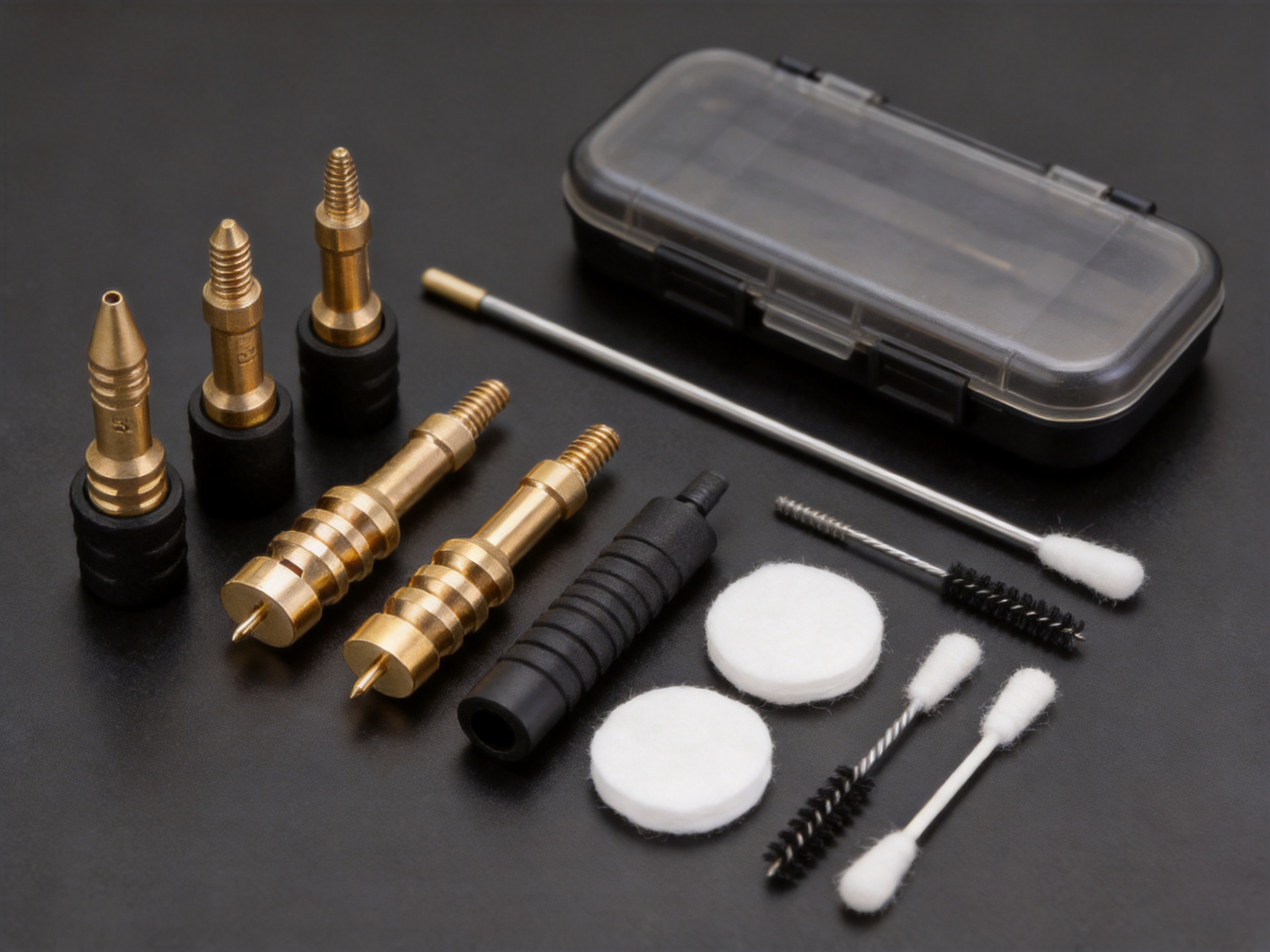
The product’s competitive value becomes clearer when compared with basic adapters that offer only a simple threaded connection.
| Evaluation Area | Spike Tip Adapter | Basic Single-Function Adapter | Practical Benefit |
|---|---|---|---|
| Material options | Brass and nylon configurations | Often limited to one material | Allows selection based on durability, weight, and surface-protection needs |
| Caliber coverage | From .17 caliber through .50 caliber, with additional listed options | May cover only a narrow caliber group | Supports broader kit and inventory programs |
| Entry profile | Tapered guiding tip | May use a blunt or abrupt end | Can reduce resistance during bore entry |
| Alignment | Integrated centering groove | May provide limited centering support | Helps keep patches, mops, and brushes aligned |
| Thread options | 5-40 and 8-32 specifications available | May use an incompatible or less common thread | Improves compatibility with many cleaning rods |
| Commercial use | Suitable for retail, replacement, OEM, and ODM applications | Often sold only as a standard component | Provides greater flexibility for private-label programs |
| Application range | Rifles, pistols, and selected shotgun configurations | May be designed for one firearm category | Supports multi-platform product assortments |
These advantages should be understood as design and commercial benefits rather than a guarantee that one adapter is suitable for every firearm or every cleaning procedure. Proper caliber selection, thread confirmation, careful handling, and appropriate maintenance practices remain essential.
A simple adapter may connect a rod to a patch, but connection alone does not ensure smooth operation. If the transition into the bore is abrupt, the patch can catch at the chamber or rifling. If the cleaning material is not centered, the user may experience uneven resistance and inconsistent cleaning results.
The tapered and grooved design addresses these common usability concerns at the component level. This can give the product an advantage in customer satisfaction because the accessory is easier to position and more predictable in use. For kit manufacturers, it can also help create a more professional overall experience when customers assemble and operate the complete cleaning system.
Different users have different expectations. A professional maintenance kit may favor brass for its rigidity and traditional appearance. A compact field kit may favor nylon for its low weight. A retailer serving a broad customer base may want to offer both.
Providing both options also supports product segmentation. A brand can create an economical series with nylon components, a premium series with brass components, or a hybrid kit that includes both. Packaging and instructions can explain the intended use of each option, helping customers make a better-informed purchase.
The product is supplied by Jinhua Tongshun Tool Factory, a Zhejiang-based manufacturer established in 1999. The company specializes in gun cleaning kits, barrel cleaning brushes, rods, patches, mops, adapters, and related firearm maintenance accessories.
More than 26 years of manufacturing experience provide a substantial foundation for understanding the dimensional, material, and packaging requirements of cleaning-tool production. Experience in this category is important because small parts such as adapters require consistent threading, repeatable dimensions, suitable surface quality, and reliable assembly performance.
The company operates as an integrated enterprise combining research and development, production, and sales. This structure can shorten communication between product design and manufacturing teams. It also allows customer feedback from distributors and brands to be considered during product improvement and new model development.
For OEM and ODM customers, integrated capabilities are valuable because a project may involve more than making a metal or nylon component. The supplier may need to review drawings, confirm materials, develop samples, adjust dimensions, prepare packaging, apply logos, and coordinate production scheduling. Direct coordination across these functions can simplify the development process.
According to the supplied company information, the factory uses both semi-automatic and fully automated production systems. A mixed production structure can provide flexibility for different order sizes and product configurations.
Automated systems are useful for repetitive operations requiring consistency, such as forming, machining, threading, or assembly steps. Semi-automatic equipment can provide greater adaptability for customized components, smaller batches, or product variants that require operator adjustment. The combination can support large-scale orders while retaining the ability to manage customized requirements.
For adapters, manufacturing consistency is particularly important in the following areas:
Thread formation must be accurate enough to engage the cleaning rod without excessive looseness or binding.
The external profile should remain consistent so that the tip guides cleaning materials predictably.
The centering groove should be formed at the correct location and depth for the intended patch, mop, or brush.
Material selection must match the agreed specification, whether the order calls for brass, nylon, or another approved material.
Surface quality should be checked to reduce burrs, rough edges, or machining imperfections that could interfere with operation.
Automated and semi-automated equipment does not eliminate the need for quality control. Rather, it provides a more repeatable manufacturing base that should be supported by incoming-material inspection, in-process checks, final inspection, and sample testing.
The factory’s production capabilities are intended to support large-scale orders with consistent quality. This is relevant to distributors and e-commerce sellers who need stable replenishment rather than occasional spot purchases.
Consistent production can help buyers maintain uniform retail listings, packaging dimensions, product photography, and customer instructions. It can also reduce the risk of receiving visibly different versions of the same item across separate purchase orders.
Before placing a large order, buyers should establish acceptance standards. These may include material confirmation, thread gauges, dimensional tolerances, surface finish, color, tip shape, packaging, logo placement, and carton markings. A written specification helps both parties evaluate the finished product against the same criteria.
The company provides OEM and ODM services, including customized products, packaging, and logos. This supports brands that want to sell under their own identity without building a separate factory or tooling department.
Possible customization areas include product material, caliber assortment, thread specification, surface finish, color, logo marking, retail packaging, instruction cards, barcode labels, carton design, and kit combinations. The precise options depend on the product design and order quantity.
A private-label project may begin with an existing standard adapter and customized packaging. A more advanced ODM project may involve changes to the tip geometry, material, accessory combination, or retail format. In either case, prototype approval is recommended before mass production.
The supplied information states that products are exported to more than 50 countries and regions. The company identifies Europe, South America, and North America as important sales regions, with Amazon, AliExpress, and independent websites among the main downstream platforms.
International experience can help a supplier understand the practical needs of cross-border commerce, including compact packaging, product labeling, assortment planning, export documentation, and communication with overseas buyers. It may also help brands coordinate products for different market segments without changing the fundamental manufacturing process.
Because firearm-related regulations and product restrictions differ by country, importers remain responsible for checking local requirements. The adapter is a maintenance component, but buyers should still review applicable customs, marketplace, labeling, and product-compliance rules before sale.
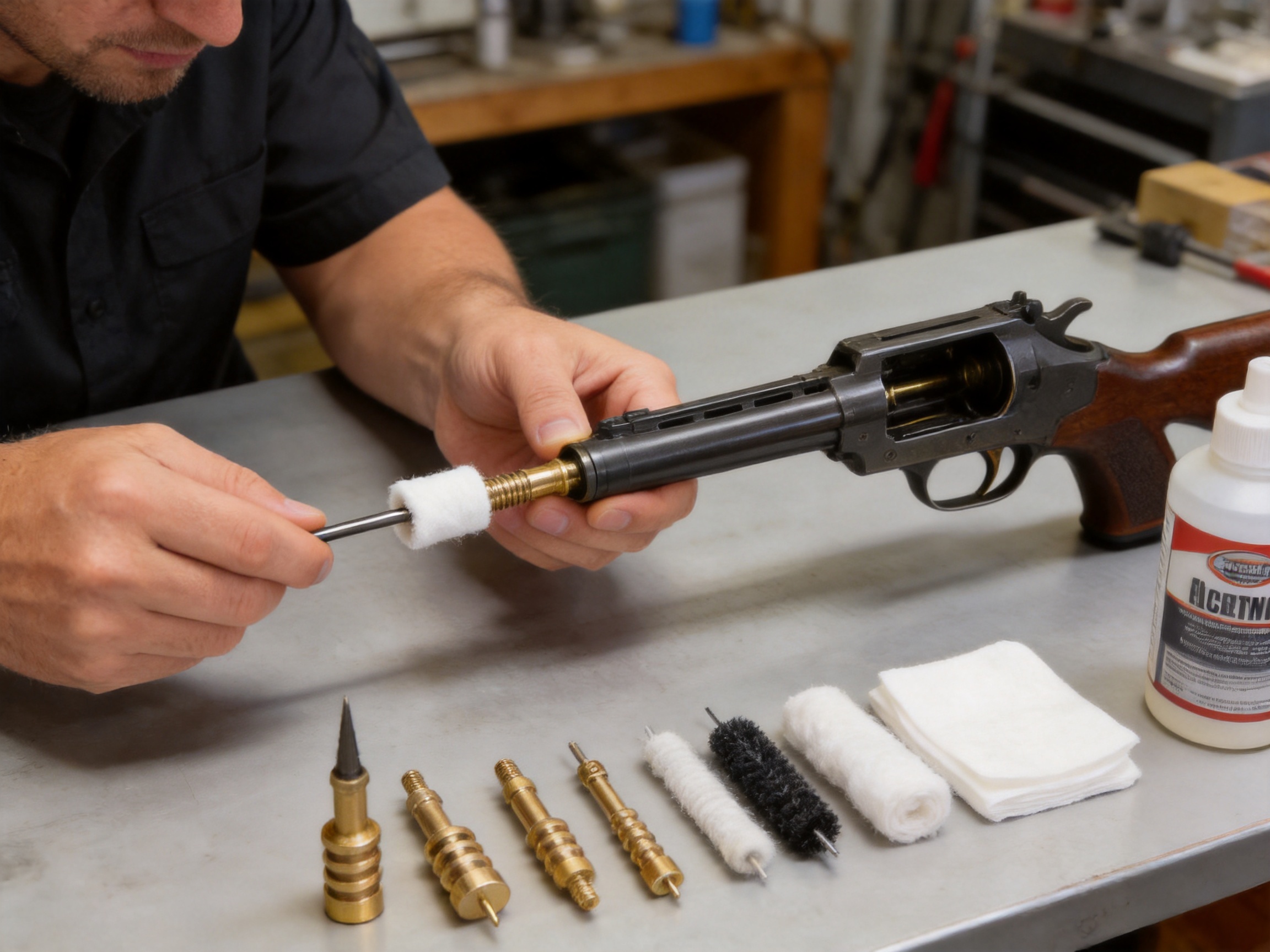
The following table summarizes the main specifications and commercial information supplied for the product. Buyers should confirm the final production specification with the manufacturer, especially where alloy terminology, dimensions, or exact variant names require clarification.
| Specification | Product Information |
|---|---|
| Product name | Gun Cleaning Accessories Spike Tip Adapter Parts Tool Kit |
| Product category | Cleaning Rods and Adapters |
| Primary function | Guiding and connecting patches, mops, brushes, and cleaning accessories |
| Material options | Brass and nylon; confirm exact alloy specification for metal orders |
| Thread options | 5-40 and 8-32 |
| Caliber range | Approximately .17 caliber through .50 caliber, with additional .410 and 12 gauge options listed |
| Application | Rifles, pistols, shotguns, and general firearm maintenance kits |
| Design features | Tapered guide tip and integrated centering groove |
| Customization | OEM and ODM customization available |
| Customization areas | Product configuration, packaging, logos, and kit combinations |
| Country of origin | China |
| Manufacturing location | Zhejiang Province |
| Brand listed in product data | Huntace |
| Manufacturer | Jinhua Tongshun Tool Factory |
The correct caliber should be selected according to the firearm’s bore and the cleaning accessory being used. A tip that is too small may not support adequate contact between the patch or mop and the bore. A tip that is too large may create excessive resistance or become difficult to move.
Caliber names may also be presented in different systems. For example, a product range may list both .243 caliber and 6 mm, or .357 caliber and 9 mm. These labels may refer to closely related but not always identical specifications. The user should follow the firearm manufacturer’s instructions and select the cleaning accessory intended for the specific bore.
The thread must match the cleaning rod. The two listed standards, 5-40 and 8-32, are common in firearm cleaning accessories, but they should not be assumed to be interchangeable. A mismatch can prevent installation or cause damage to the threads.
For a retail kit, the thread specification should be printed clearly on the packaging. For an OEM order, the buyer should provide a sample rod, technical drawing, or thread gauge where possible. This can reduce the risk of producing a large quantity of parts that do not fit the intended cleaning system.
Brass is generally suitable when the buyer wants a rigid, durable, traditional metal adapter for repeated maintenance. Nylon is appropriate when low weight and a non-abrasive material are higher priorities.
Some professional or premium cleaning kits may include both. The brass tip can be used for robust general-purpose work, while the nylon option can be selected when the operator wants a softer material. Including both also increases the perceived value of a multi-piece kit.
Before using any cleaning accessory, make sure the firearm is unloaded, the action is open where applicable, and the working area is safe. Follow the firearm manufacturer’s maintenance instructions and use protective equipment appropriate for the cleaning chemicals involved.
Inspect the adapter before installation. The threads should be clean and free from visible damage. The tapered tip and centering groove should not have burrs, cracks, deformation, or embedded debris. If a component appears damaged, it should not be forced into the bore.
Choose the correct caliber and thread. Attach the adapter to the cleaning rod by hand and ensure that the connection is fully engaged without cross-threading. Do not use excessive torque because small threaded components can be damaged if overtightened.
Place the patch, mop, or compatible cleaning accessory on the spike tip according to the kit design. The material should be secure but should not be packed so tightly that it creates excessive resistance. If movement becomes difficult, withdraw the assembly carefully and verify the accessory size.
Move the rod in a controlled, straight manner. Avoid bending the rod sharply or applying side pressure that could cause the tip to move off-center. After use, remove residue from the adapter, dry it, and store it in a clean container or organizer.
When using solvents or oils, verify chemical compatibility with the nylon version. Some chemicals may soften, swell, discolor, or otherwise affect certain plastics. Buyers developing instructions for private-label kits should identify suitable maintenance fluids and include clear usage guidance.
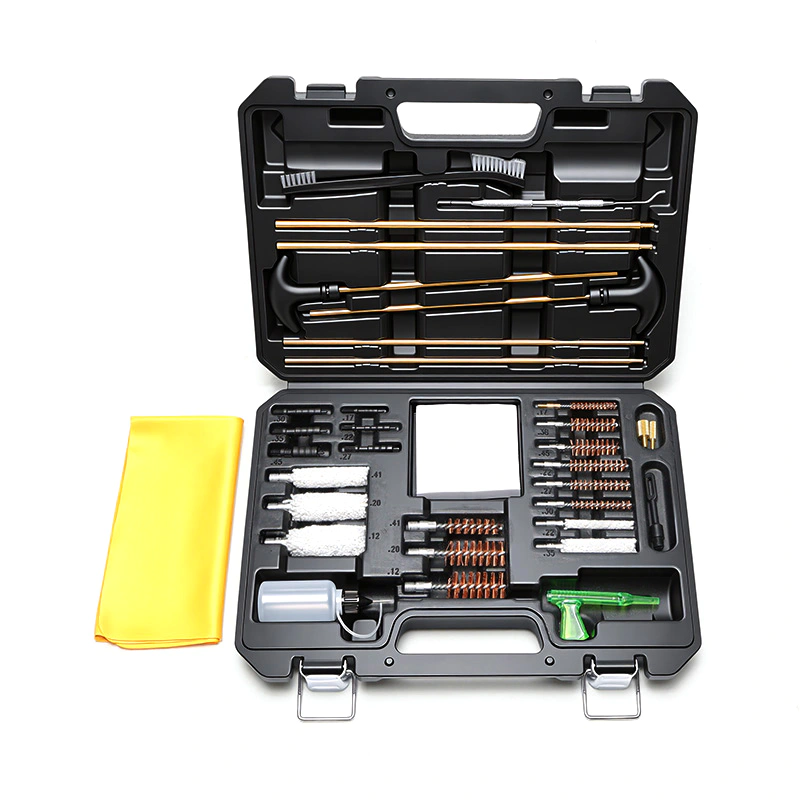
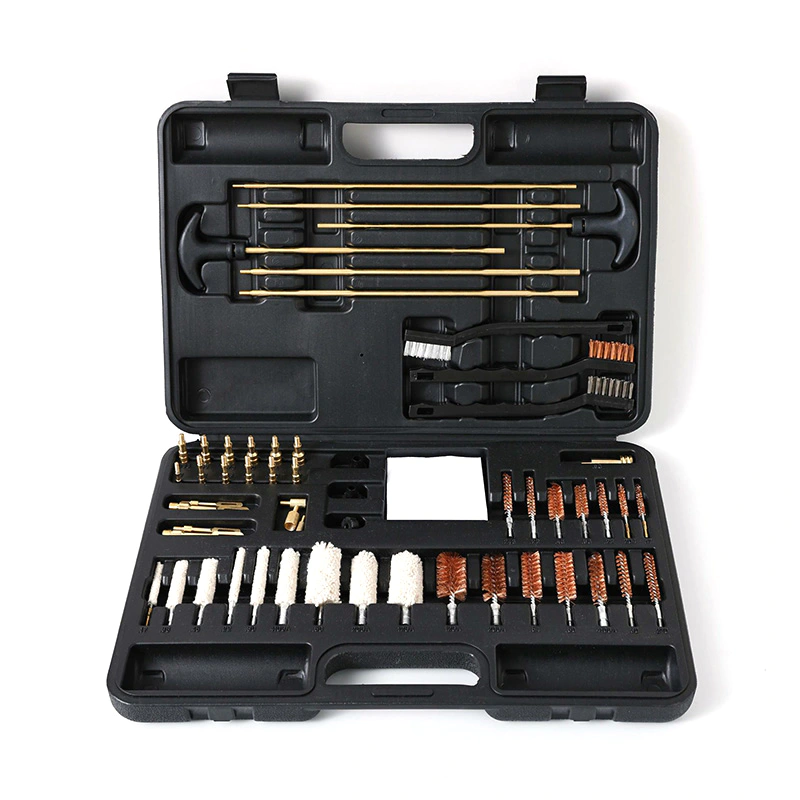
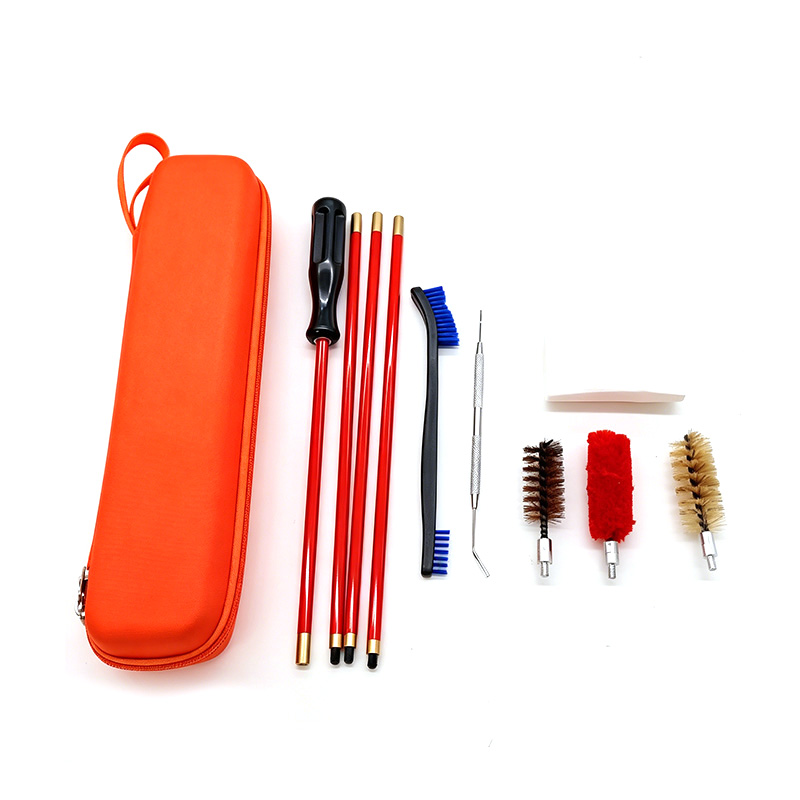
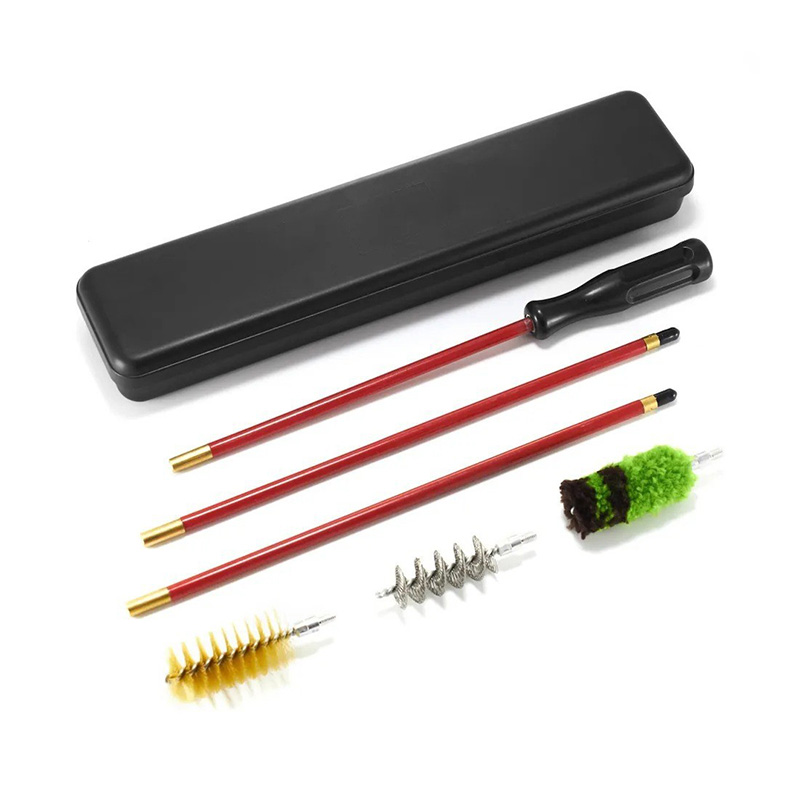
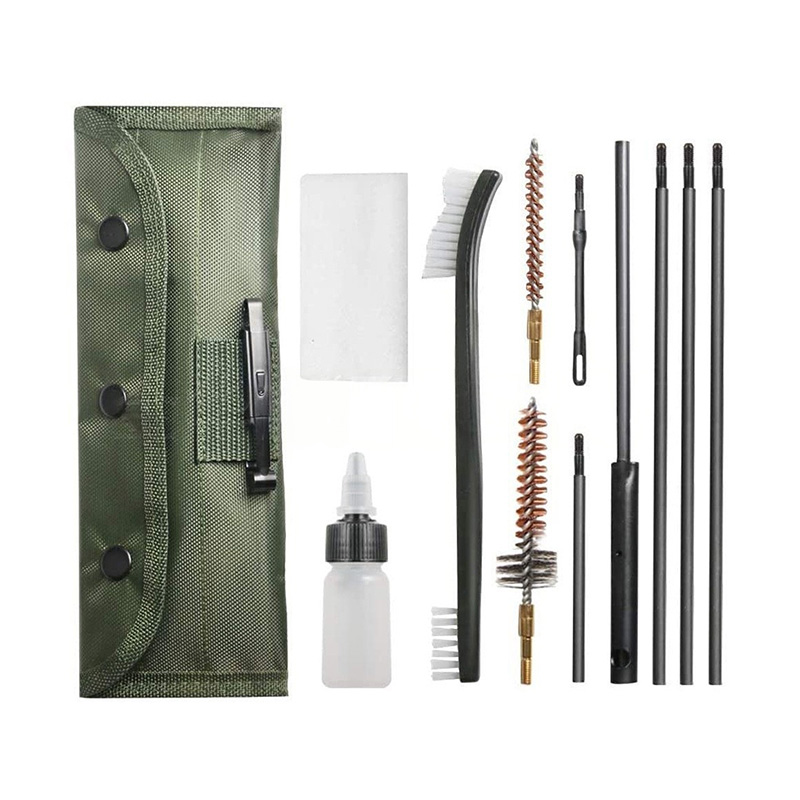
The adapter is a natural component for universal gun cleaning kits. A kit can contain several caliber tips, a multi-section rod, brass and nylon brushes, cotton mops, cleaning patches, a cloth, and a compact storage case.
For a basic kit, the supplier may provide one or two commonly requested caliber options. For a premium kit, the assortment can be expanded to support rifle and pistol maintenance across a wider caliber range. The product’s small size allows several adapters to be stored in a divided case without significantly increasing package volume.
Cleaning accessories may be lost, worn, or damaged during years of use. Selling the spike tip separately gives consumers a convenient replacement option and creates an additional product category for retailers.
Replacement packaging should identify the caliber and thread clearly. It may also be useful to state whether the part is brass or nylon, what accessories it supports, and which cleaning rods it is designed to fit.
Brands can use the adapter in private-label programs aimed at hunting, sport shooting, firearm training, gunsmithing, or general maintenance. The product can be packaged as a standalone accessory or combined with other components under a unified brand identity.
Private-label buyers may request a specific color, logo location, retail carton, blister card, instruction sheet, barcode, or master-carton format. The factory’s OEM and ODM support is intended to accommodate these requirements, subject to product feasibility and order quantity.
Wholesale distributors often need products that serve several customer groups without creating excessive inventory complexity. A broad caliber range, two material choices, and standard thread options make this adapter suitable for a structured wholesale catalog.
Distributors can organize inventory by caliber family, material, thread, or application. They may also sell mixed assortments to retailers, shooting clubs, range operators, and maintenance-kit assemblers.
The adapter is well suited to online sales because it is compact, lightweight, and easy to describe through clear specifications. Product pages should include high-quality photographs, accurate dimensions, thread information, caliber selection, material details, and compatibility guidance.
Online sellers should avoid describing the item as universally compatible unless the exact rod and accessory standards have been verified. A more accurate description is that the adapter is available in broad configurations and supports many commonly used cleaning rods when the selected thread matches the rod.
Professional buyers should evaluate more than appearance. A reliable quality-control program should cover raw materials, dimensions, threads, surface finish, assembly, packaging, and labeling.
Metal orders should specify the exact alloy or material grade rather than relying only on terms such as copper-colored or copper fitting. Nylon orders should identify the polymer type and any requirements for hardness, color, chemical resistance, or operating temperature.
Although the supplied product information does not provide fixed overall dimensions, buyers can request technical drawings or approved samples. Important dimensions may include overall length, tip diameter, groove dimensions, thread length, thread major diameter, and transition geometry.
Thread gauges or approved mating components can be used to verify that the adapter engages correctly. The connection should be secure without requiring excessive force. Inspection should also check for cross-threading, incomplete threads, burrs, and deformation.
The adapter should be inspected for sharp burrs, machining marks, cracks, discoloration, flash, or other defects. A smooth, properly finished surface contributes to safer and more convenient handling during firearm maintenance.
Sample adapters can be tested with the intended cleaning rod, patch, mop, and brush. The test should evaluate attachment, entry into the bore-sized guide, centering, resistance, and removal. For OEM projects, functional testing should be performed using the actual components planned for the final kit.
Packaging should protect the tips from scratching, bending, contamination, and loss during transport. Labels should distinguish caliber, material, thread, quantity, and model. For export orders, carton strength and internal organization should be reviewed before shipment.
Cleaning accessories often include numerous small variations. Without a clear system, retailers can confuse similar-looking components or carry too many overlapping items. This product range can be organized in a way that makes purchasing and fulfillment more efficient.
One approach is to group products by caliber family: small caliber, rimfire and pistol, intermediate rifle, large rifle, and shotgun. A second approach is to separate brass and nylon versions. A third is to organize by thread, particularly when the same caliber is offered with more than one rod connection.
Standardized labels and internal product codes can help warehouse staff select the correct item. For online sales, variant names should follow a consistent pattern such as material, caliber, and thread. This reduces customer confusion and lowers the chance of shipping an incorrect accessory.
For kit assembly, a bill of materials should identify every adapter included in each package. The manufacturer can work with the buyer to create mixed sets that balance market demand with storage efficiency.
A small accessory can appear simple, but dependable production requires careful control of several details at once. The tapered shape must guide the cleaning material without creating unnecessary bulk. The groove must support centering without weakening the tip. The thread must be strong and accurate. The selected material must match the intended use. Packaging must keep the part organized and protected.
A factory with long-term category experience is better positioned to understand these relationships. Jinhua Tongshun Tool Factory has specialized in gun cleaning tools and related accessories since 1999. Its experience across brushes, rods, patches, mops, kits, and adapters allows it to consider the component as part of a complete maintenance system rather than as an isolated part.
This broader perspective can improve OEM discussions. For example, a brand may initially request an adapter but later discover that it also needs matching brushes, cotton mops, cleaning patches, or a full storage case. A manufacturer with related product capabilities can coordinate a more complete solution.
Research and development support is also useful when a buyer wants to adapt the product for a specific market. Changes may involve a new caliber assortment, a different thread, a special retail configuration, or a combined kit designed for a particular customer group.
When requesting a quotation, buyers should provide the intended application, estimated order quantity, material preference, caliber list, thread standard, packaging requirements, logo artwork, and target market. Clear information at the beginning helps the supplier prepare an accurate proposal.
Buyers should also request a sample or pre-production approval where appropriate. The sample should be tested with the intended cleaning rod and accessories. If the product is part of a complete kit, all components should be assembled and evaluated together.
Commercial discussions should cover minimum order quantities, lead times, tooling or development charges, packaging costs, inspection arrangements, shipping marks, and after-sales support. For customized products, the buyer should confirm which specifications are fixed and which can be modified.
Because the listing includes many possible calibers, a staged purchasing plan may be useful. A distributor can begin with the most frequently requested variants, evaluate sales performance, and then expand the assortment. A factory with flexible production systems may be able to support this gradual approach more effectively than a supplier focused only on a single standard model.
Its main purpose is to connect and guide cleaning patches, cotton mops, brushes, and similar bore-cleaning accessories through a firearm barrel. The tapered tip supports smoother entry, while the centering groove helps maintain alignment.
The adapter is intended for rifles, pistols, and selected shotgun cleaning applications. The correct caliber and thread must be selected for the firearm and cleaning rod.
The product content identifies brass and nylon versions. Brass provides a rigid and durable metal option, while nylon is lightweight and non-abrasive. The exact material should be confirmed on the purchase order, especially because informal listings may use copper-related terminology for copper-based metal components.
The listed thread specifications are 5-40 and 8-32. Customers should verify the thread on their cleaning rod before ordering because these specifications are not interchangeable.
The range covers configurations from approximately .17 caliber through .50 caliber. Listed examples include .22, .243, 6 mm, .270, .30, .357, .40, .45, and .50 caliber. The supplied information also lists .410 and 12 gauge options. Exact availability should be confirmed for each order.
The product can be supplied as an adapter part or incorporated into a larger gun cleaning kit. Buyers should confirm the included components, quantity, packaging, and caliber assortment before placing an order.
OEM and ODM customization is available. Potential options include product configurations, logos, packaging, labels, and combinations with rods, brushes, patches, mops, or other cleaning accessories.
Brass is commonly used for firearm cleaning accessories and offers useful durability and machinability. However, users must select the correct size, avoid forcing the adapter, and follow the firearm manufacturer’s maintenance instructions.
Nylon may be preferred when low weight and a non-abrasive material are important. It can be useful for field kits or for users who want to minimize the possibility of contact between a metal adapter and sensitive surfaces.
Remove visible residue, wipe the adapter with a suitable cloth, and store it in a dry, clean container. The user should confirm that any cleaning chemical is compatible with the selected material, particularly nylon.
It is designed for compatible patches, cotton mops, and brushes, but the exact fit depends on the caliber and accessory design. The cleaning material should be secure without being so tight that it creates excessive resistance.
An OEM buyer should provide the required material, caliber assortment, thread specification, dimensions, finish, logo artwork, packaging design, order quantity, and target market. A sample cleaning rod or technical drawing can help confirm compatibility.
The product is manufactured in Zhejiang Province, China, by Jinhua Tongshun Tool Factory. The company has operated since 1999 and specializes in firearm cleaning tools and related accessories.
The factory operates semi-automatic and fully automated production systems intended to support large-scale orders with consistent quality. Buyers should confirm production capacity, lead time, inspection standards, and packaging requirements for each project.
The Gun Cleaning Accessories Spike Tip Adapter Parts Tool Kit is a practical, configurable component for modern firearm maintenance systems. Its main advantages include dual brass and nylon material choices, broad caliber coverage, 5-40 and 8-32 thread options, a tapered guiding profile, and an integrated centering groove.
These features help the adapter support smooth and controlled use with patches, cotton mops, brushes, and related cleaning tools. The design is suitable for rifles, pistols, and selected shotgun applications, while the compact format makes it useful for replacement sales, complete cleaning kits, private-label products, and wholesale distribution.
The supplier adds value through long-term category experience, integrated research and development, semi-automatic and fully automated production systems, international export experience, and OEM and ODM support. For buyers seeking a reliable cleaning-accessory component, the product offers a combination of functional design and commercial flexibility.
As with any precision maintenance accessory, the best results depend on selecting the correct caliber and thread, confirming material specifications, using appropriate cleaning techniques, and following safe firearm-handling procedures. For large-volume or customized orders, technical drawings, samples, quality standards, and packaging specifications should be approved before production.
1. Product specification and application information supplied for the Gun Cleaning Accessories Spike Tip Adapter Parts Tool Kit.
2. Manufacturer profile and company information supplied for Jinhua Tongshun Tool Factory.
3. General firearm maintenance principles concerning unloaded-firearm verification, bore-specific accessory selection, controlled cleaning-rod movement, and post-use storage.
4. General manufacturing quality-control practices for threaded metal and polymer components, including material verification, dimensional inspection, thread inspection, surface inspection, functional testing, and packaging review.
5. General wholesale and OEM product-development practices for private-label firearm maintenance accessories, including sample approval, technical specification confirmation, packaging development, and production inspection.