English
 русский
 Español
 عربى

HUNTACE HUNTACE HUNTACE HUNTACE HUNTACE
HUNTACE HUNTACE HUNTACE HUNTACE

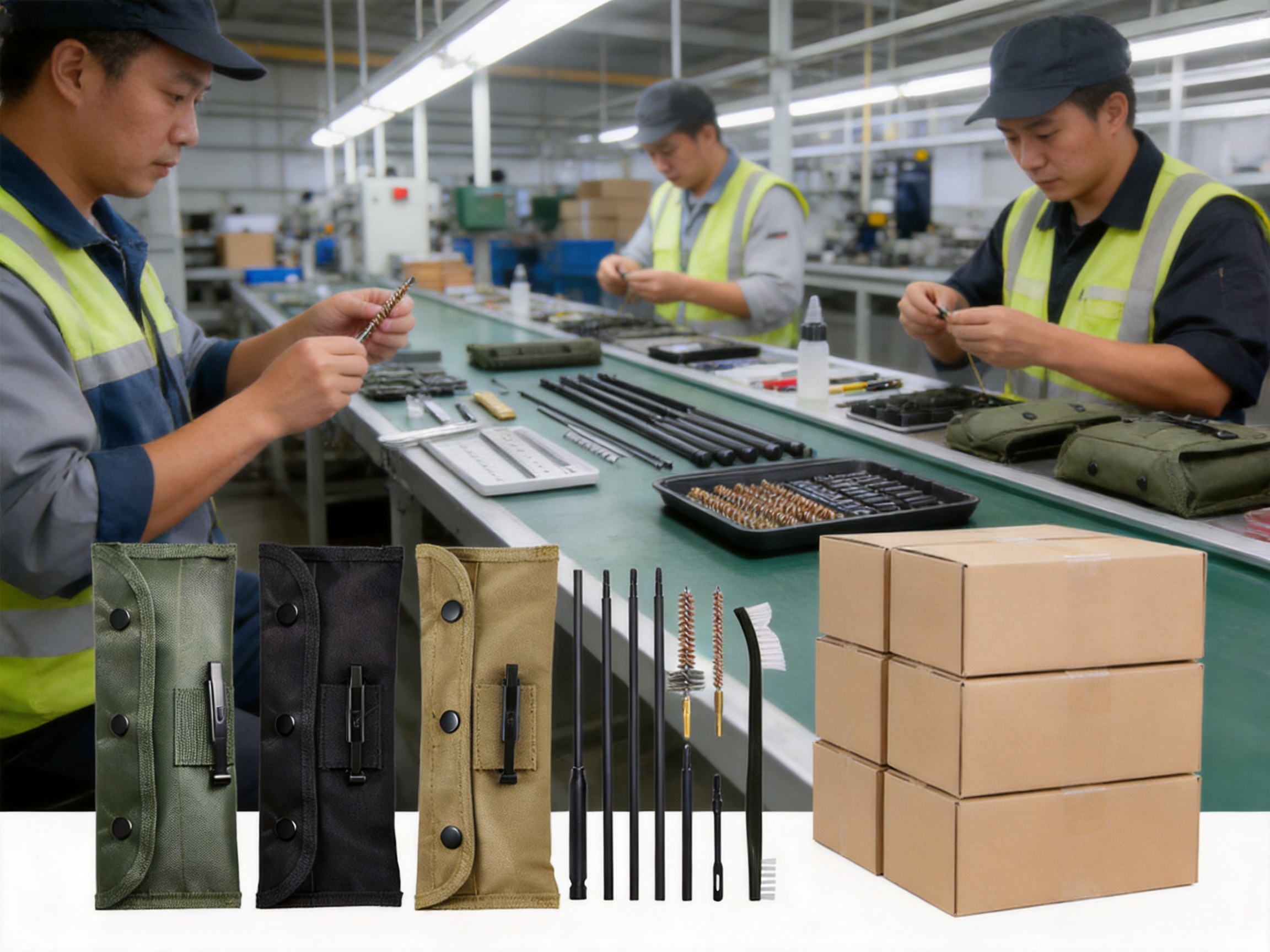
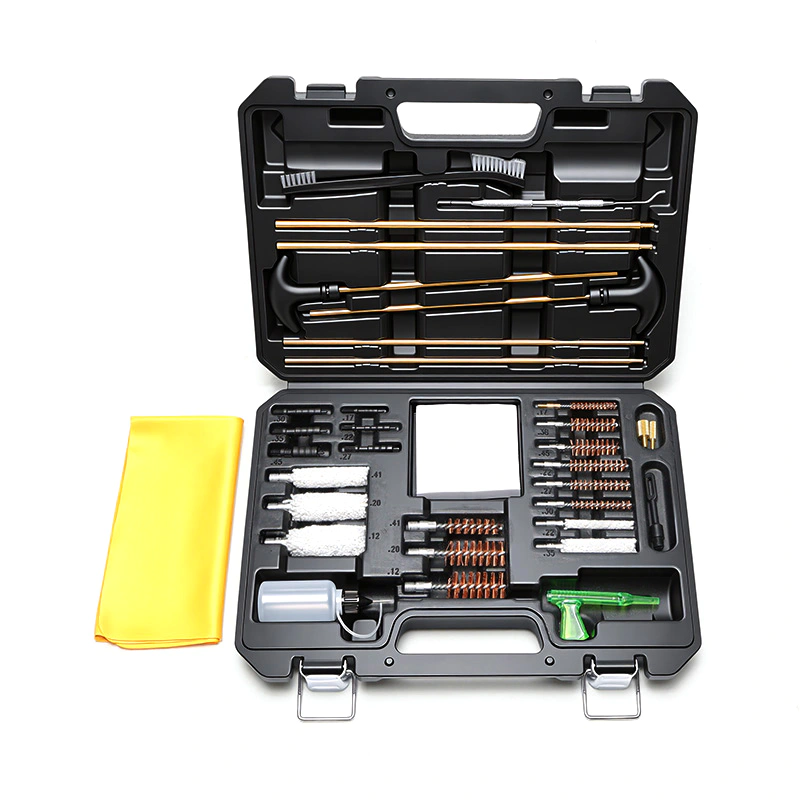
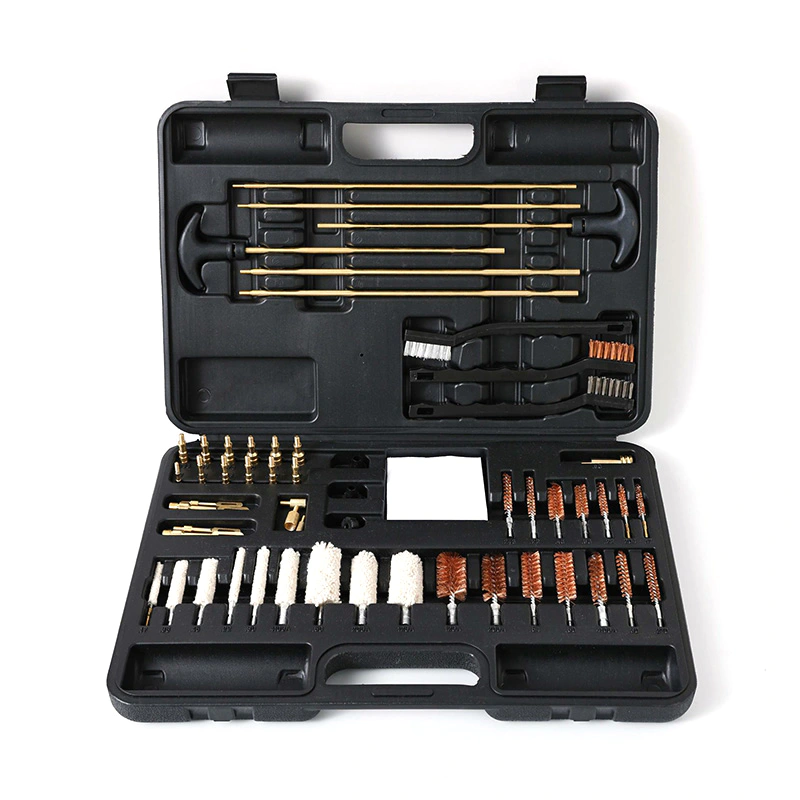
Reliable firearm maintenance depends on having the correct tools for the bore, chamber, and exterior components of a rifle. The AR-15 Cleaning Kit .22/.30 Cal Brushes is designed as a practical maintenance solution for .22 Cal, .223 Cal, and 5.56mm rifles, with customization available for .30-caliber applications. It combines a segmented steel cleaning rod, brass wire brushes, cleaning brushes, and a compact tactical carrying pouch in one portable set.
For distributors, sporting goods suppliers, gunsmithing businesses, shooting clubs, and private-label importers, this type of kit offers an efficient way to provide essential cleaning equipment without sourcing every component separately. The product is designed for field portability, repeated use, and organized storage. Its black-coated rod helps support durability, while the included brushes are intended to assist with removing carbon fouling, powder residue, copper deposits, and other common contaminants from the barrel.
The kit is manufactured by Jinhua Tongshun Tool Factory, a Zhejiang-based producer specializing in gun cleaning kits, bore brushes, cleaning rods, patches, mops, and related accessories. Established in 1999, the company integrates research and development, manufacturing, quality control, and export services. Its production capabilities support standard products as well as OEM and ODM requirements, including customized calibers, colors, packaging, and logos.
This article examines the construction, intended applications, manufacturing strengths, customization options, packaging value, and purchasing considerations associated with the AR-15 Cleaning Kit .22/.30 Cal Brushes.
The AR-15 Cleaning Kit .22/.30 Cal Brushes is a compact, rifle-oriented cleaning set developed for long-barrel maintenance. The standard version is intended for .22-caliber, .223-caliber, and 5.56mm rifles. A .30-caliber version can be customized for customers whose product ranges include larger rifle calibers.
The central component is a black-coated segmented steel cleaning rod. When assembled, the rod reaches a total length of up to 853mm. This extended length is useful for long-barrel rifle applications because it allows the user to reach through the bore while maintaining a practical, segmented format for transport and storage.
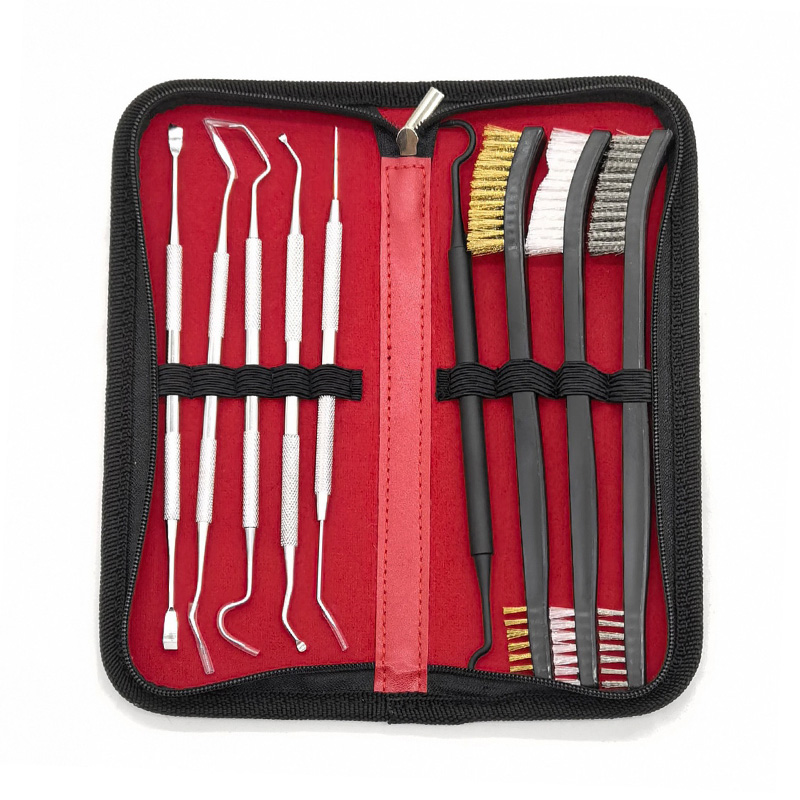
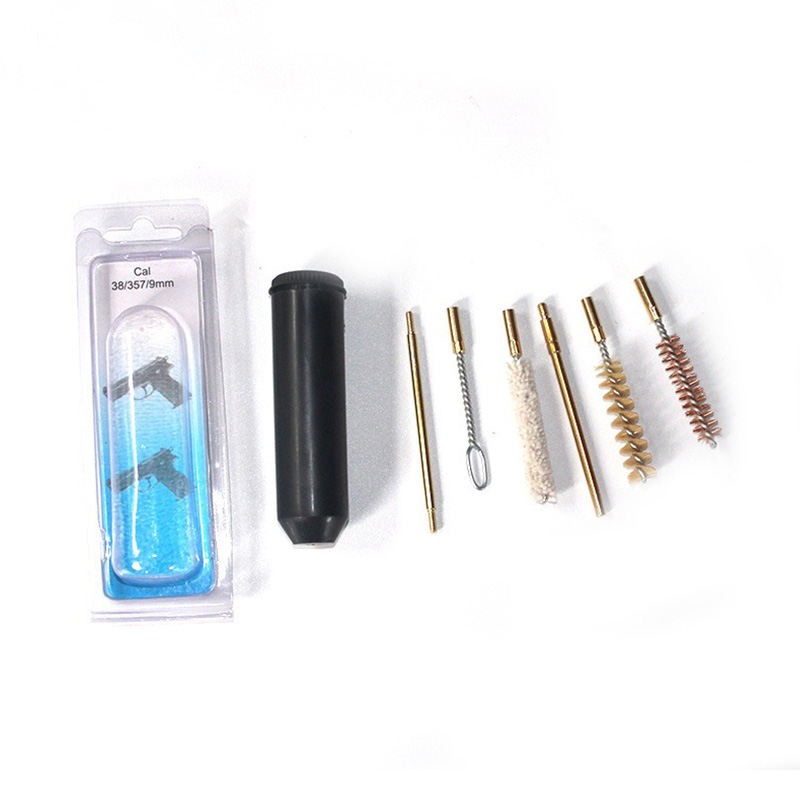
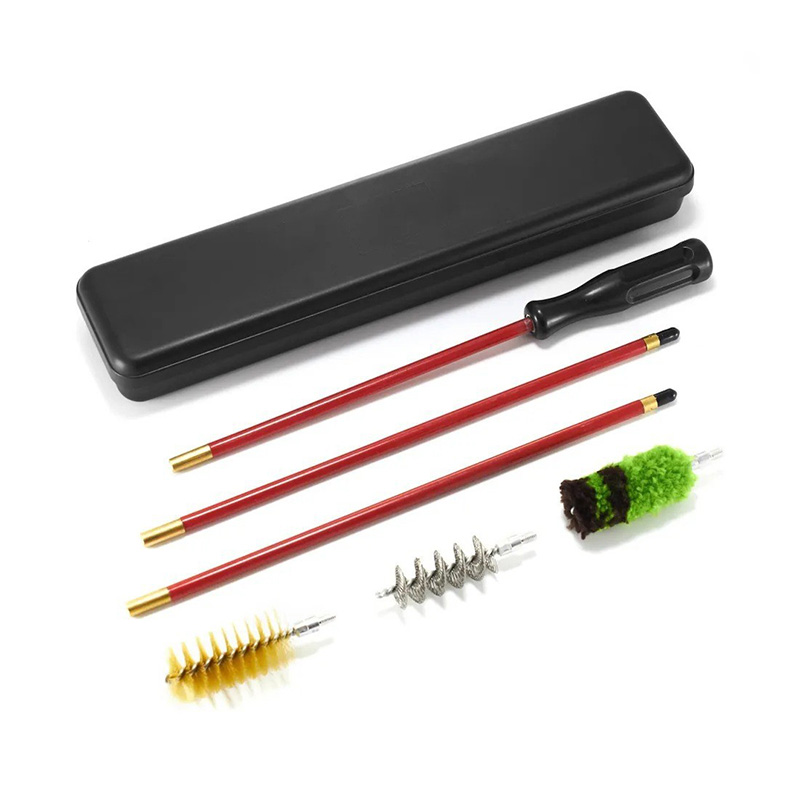
The kit includes brass wire brushes and other cleaning brushes to support different stages of barrel maintenance. Brass bristles are commonly selected for their balance between cleaning effectiveness and relative compatibility with firearm bore surfaces when used correctly. The brush design is intended to loosen and remove fouling without relying on excessively abrasive materials.
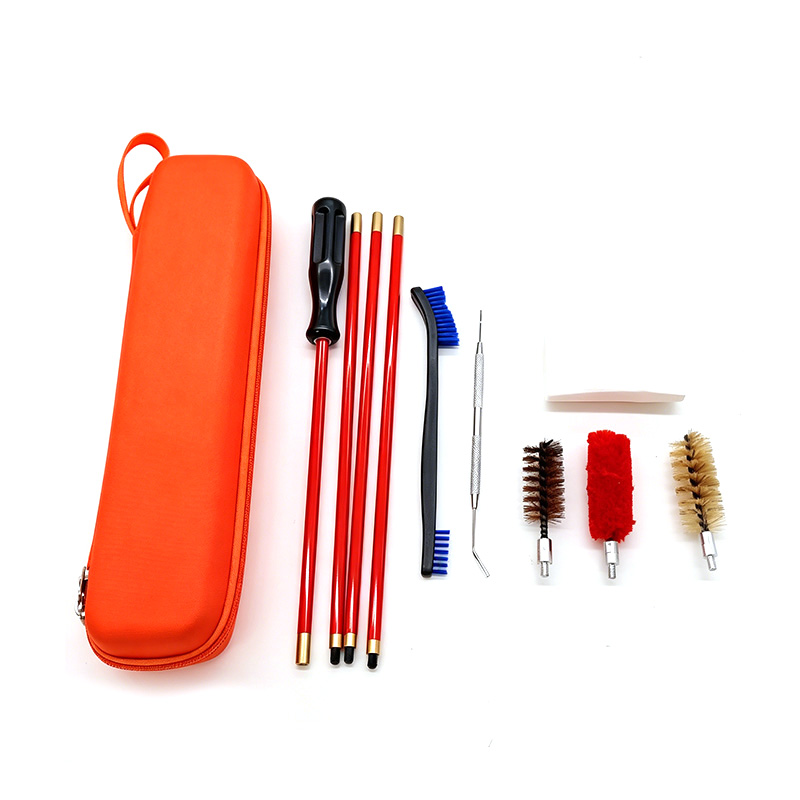
All components are supplied in a compact tactical pouch. Available pouch colors include military green, black, and khaki. The pouch keeps the rod sections and brush accessories together, reducing the risk of misplaced parts during transport. This makes the kit suitable for range bags, workshop storage, maintenance stations, outdoor use, and field-service applications.
| Item | Specification | Application or Value |
| Product type | Rifle cleaning kit | Routine barrel cleaning and carbon removal |
| Standard caliber range | .22, .223, and 5.56mm | Suitable for compatible rifles in the standard configuration |
| Optional caliber | .30 caliber | Available as a customized specification |
| Rod material | Segmented steel with black coating | Portable structure and repeated-use durability |
| Maximum assembled rod length | 853mm | Designed for long-barrel access |
| Brush type | Brass wire brush and cleaning brushes | Assists with carbon, powder residue, and copper fouling removal |
| Pouch colors | Military green, black, and khaki | Retail, tactical, and private-label presentation options |
| Handle material | Plastic | Lightweight handling |
| Product code | M16-AR15 | Reference code for purchasing and production communication |
Caliber compatibility is one of the most important considerations when selecting a cleaning kit. The standard configuration of this product is designed around .22-caliber, .223-caliber, and 5.56mm rifle applications. These designations are widely associated with modern sporting rifles and AR-pattern platforms, although users should always confirm the exact specifications of their firearm and accessories before use.
The kit is not presented as a universal solution for every firearm. Instead, it focuses on a commonly requested rifle caliber range and offers a dedicated configuration for those applications. This focused approach can be advantageous for retailers because it makes product positioning clearer. A buyer can identify the intended caliber group without sorting through an unnecessarily broad assortment of incompatible accessories.
For customers serving multiple rifle categories, the manufacturer can support an additional .30-caliber configuration. This option helps importers and distributors build a coordinated product family. A retailer may therefore offer a smaller-bore kit and a larger-caliber kit with similar pouch styling, packaging architecture, and brand presentation.
Caliber-specific brush selection is important because a brush that is too large may be difficult to pass through the bore, while one that is too small may not provide adequate contact with fouled surfaces. The availability of customized specifications gives buyers an opportunity to match the product more closely to their target market and sales channel.
Users should follow the firearm manufacturer’s maintenance instructions and verify brush, rod, and accessory compatibility before cleaning. The product is intended for maintenance and residue removal, not for replacing professional inspection or repair when a firearm has mechanical damage or other safety concerns.
The segmented cleaning rod is a key feature of this kit. A one-piece rod can provide rigidity, but it may be inconvenient to package, ship, store, and carry. A segmented rod addresses these logistical limitations by separating into shorter sections that can be assembled when needed.
With a total assembled length of up to 853mm, the rod is configured for access to long rifle barrels. Its length supports practical cleaning applications while its separated sections make the kit more suitable for a compact pouch. This balance between reach and portability is particularly valuable for field users, shooting clubs, and retailers that want to minimize package size.
The steel construction is intended to provide a durable foundation for repeated maintenance. The black coating adds a protective surface and gives the rod a consistent appearance suitable for tactical-style product presentation. Coating also helps support resistance to ordinary handling wear, although users should still keep cleaning components dry and properly stored after use.
Segmented construction can also simplify replacement and product customization. If a customer requires a different overall length, rod configuration, or accessory combination, the modular format gives the manufacturer more flexibility during production planning. This is useful for OEM customers that sell cleaning kits under several product families.
The rod is paired with a plastic handle. The handle material helps keep the overall kit lightweight and supports convenient handling during routine maintenance. The stick-shaped format is straightforward for users and familiar within the cleaning-tool category.
As with any cleaning rod, proper alignment and controlled movement are important. A rod should not be forced through an obstruction. Users should assemble the sections securely, inspect the rod and brush before use, and follow appropriate cleaning procedures recommended for the firearm.
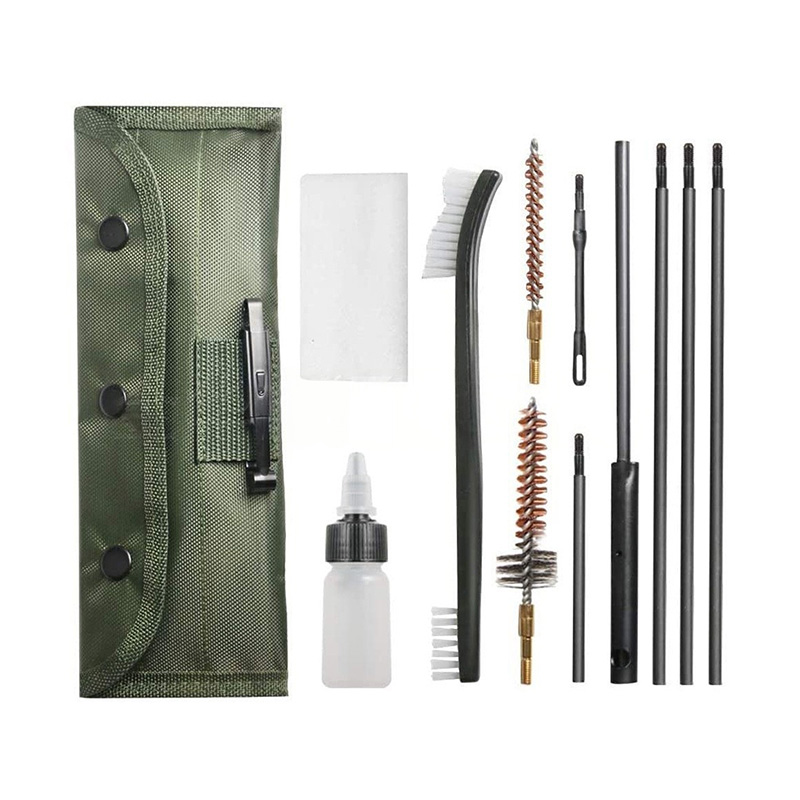
AR15 Cleaning Kit .22/.30 Cal Brushes
The brush selection is intended to address common residues found inside rifle barrels. Firing can leave behind carbon fouling, powder residue, copper deposits, and other contamination. If residue is allowed to accumulate, it can make maintenance more difficult and may affect the consistency of future use. Regular cleaning with appropriate tools helps users maintain the bore according to the firearm manufacturer’s recommendations.
Brass wire brushes are often selected for firearm maintenance because brass provides useful cleaning strength while being less aggressive than many steel-bristle alternatives. The purpose of the brush is to loosen fouling through controlled contact rather than relying on excessive force. The included cleaning brushes can support additional cleaning steps where a softer or more general-purpose brush is preferred.
The product information identifies the brush as a copper wire brush and lists a bristle length of 80mm. For purchasing communication, customers should confirm the precise brush composition, thread specification, diameter, and accessory configuration required for their market. These details can be finalized during sampling and OEM development.
Brush selection is one area where this product can offer an advantage over very basic competitor kits. Low-cost sets sometimes provide only one generic brush or include accessories that are difficult to identify. A more organized combination of brass wire brushes and cleaning brushes gives distributors a stronger product story and allows users to choose a suitable tool for different residue conditions.
Another advantage is the possibility of customizing the brush assortment. A buyer may request a different caliber combination, replacement brush quantity, handle color, packaging format, or accessory selection. This flexibility helps the product serve both standard wholesale orders and specialized private-label programs.
The kit is designed around a bore-safe cleaning approach. This means the rod and brush combination is intended to assist with effective cleaning while reducing the likelihood of unnecessary damage to rifling when used correctly. The phrase “bore-safe” should not be interpreted as permission to apply excessive force or disregard the firearm manufacturer’s instructions. Safe use depends on correct caliber selection, proper assembly, careful alignment, and appropriate cleaning technique.
Rifling is a precision-machined part of the barrel. Cleaning tools should be matched to the bore and used with controlled movement. Users should inspect accessories for damage, make sure the brush is compatible with the firearm, and avoid using a bent or heavily worn rod. Any abnormal resistance should be investigated rather than overcome by force.
The product’s brass brush configuration provides a practical option for users seeking a balance between residue-removal performance and care of the bore surface. The black-coated rod further supports the complete tool system by providing a durable structure for attaching the cleaning accessories.
For commercial buyers, a bore-focused design can make the product easier to market than an assortment of loosely related tools. Retail descriptions can emphasize intended calibers, rod length, brush materials, portability, and professional maintenance applications. Clear instructions and caliber labeling can further reduce confusion for end users.
The pouch is more than a storage accessory. It contributes to the product’s portability, presentation, and retail value. Cleaning rods are easier to transport when separated into compact sections, while brushes and small accessories are less likely to become lost when stored in a dedicated pouch.
Military green, black, and khaki color options allow the product to serve different sales environments. Black can provide a neutral appearance for general sporting goods and online retail. Military green and khaki can appeal to outdoor, tactical, hunting, and field-maintenance markets. Importers may select a single color for inventory simplicity or offer multiple colors as separate stock-keeping units.
A compact pouch is useful for range bags, workshop drawers, vehicle storage, and outdoor equipment cases. It also supports organized maintenance by giving each component a defined place. This can be especially valuable for professional users who need to transport tools between locations.
From a packaging perspective, the pouch helps create a complete-kit impression. Customers are not purchasing loose rods and brushes in an unstructured bundle; they are receiving a portable maintenance system. For private-label customers, the pouch may also be an important surface for logo placement, color coordination, labeling, and product differentiation.
Packaging specifications can be discussed during quotation and sampling. Buyers may request standardized export packaging, barcode labels, instruction sheets, color cartons, master-carton marks, or other documentation needed for cross-border distribution. Packaging should be finalized according to the destination market and the buyer’s logistics requirements.
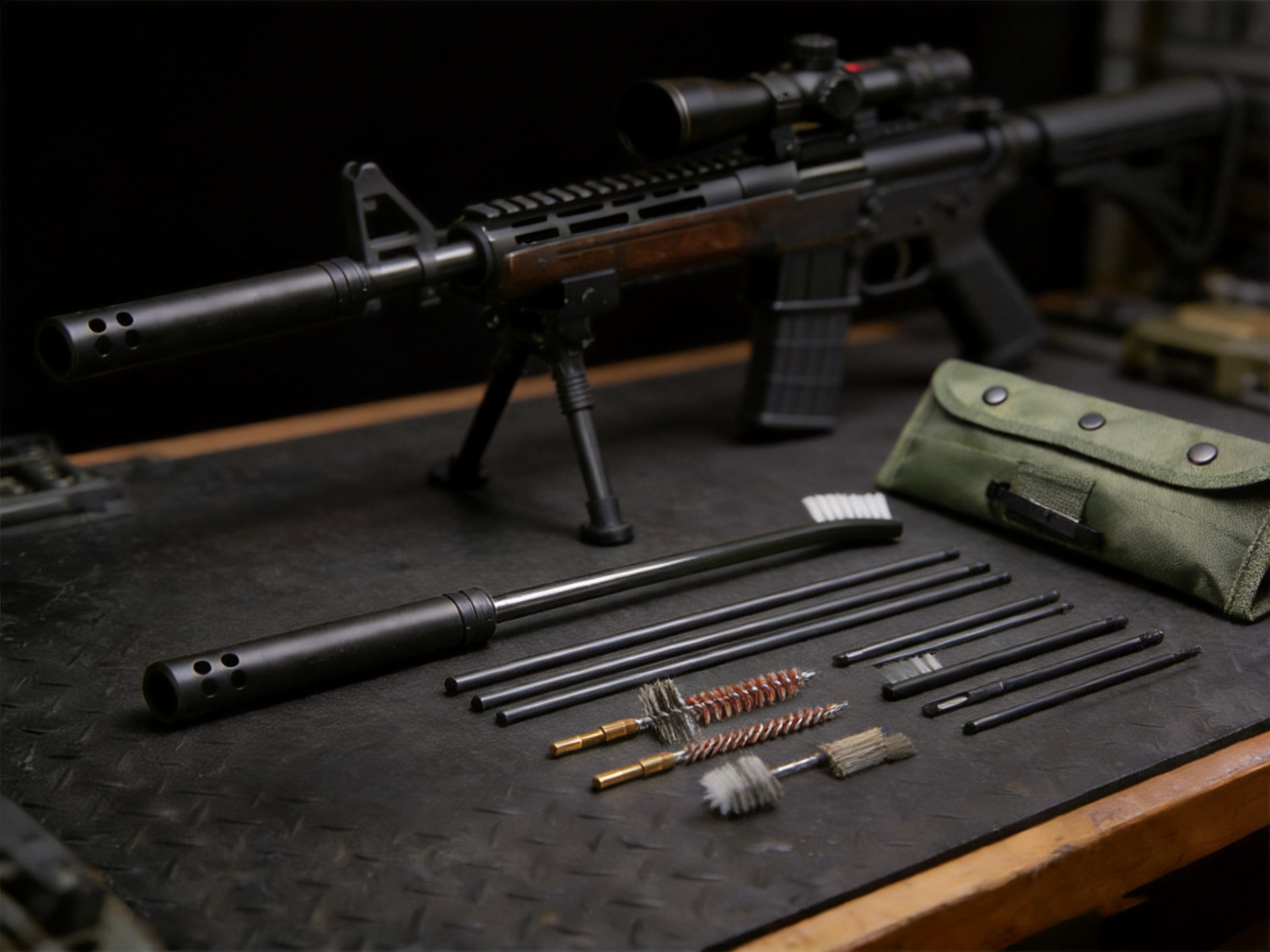
One advantage of the product is that it combines the rod, brushes, and carrying pouch in a single coordinated package. A fragmented purchasing approach requires users to source a rod, brushes, storage case, and possibly adapters from different suppliers. That process can create compatibility issues and increase procurement time.
An integrated kit simplifies product selection for consumers and inventory management for distributors. Retailers can list one principal product with clear caliber specifications rather than presenting multiple loose accessories. This structure can also make the product more attractive for gift sales, range equipment packages, and new-shooter maintenance bundles.
The assembled rod reaches up to 853mm, providing useful reach for long-barrel rifles. At the same time, the segmented format supports compact storage and transport. Many inexpensive competitor products compromise either reach or portability. A short rod may not be appropriate for longer barrels, while a long one-piece rod may be inconvenient to ship and carry.
This product addresses both requirements through a sectional design. That combination can be valuable to customers who clean rifles at home but also want to bring the kit to a range or field location.
The standard .22/.223/5.56mm configuration covers a common rifle maintenance segment, while the option to customize for .30 caliber expands the potential market. Competitors that only offer a fixed configuration may be less suitable for distributors with varied customer demand.
Caliber customization can be coordinated with brush specifications, labeling, pouch colors, and packaging. This gives OEM buyers more control over product positioning and helps them create a coherent family of cleaning products.
The tactical pouch and black-coated rod provide a consistent, professional appearance. Although appearance does not replace function, organized presentation can influence purchasing decisions, especially in online retail and private-label channels. A compact, complete-looking kit is easier to photograph, display, and explain than a collection of unorganized accessories.
The manufacturer supports bulk supply, export packaging, and OEM or ODM customization. This is an important distinction for commercial buyers. A product may be technically suitable but commercially difficult if the factory cannot maintain consistent inventory, respond to specification changes, or support private-label packaging.
Jinhua Tongshun Tool Factory’s manufacturing background and established product category provide a foundation for repeat orders. Customers can discuss standard inventory, custom configurations, packaging, logos, and color variations through a structured purchasing process.
Jinhua Tongshun Tool Factory was established in 1999 and has more than 26 years of experience in the production of gun cleaning tools and related accessories. The company integrates research and development, manufacturing, and sales. This integrated structure can improve communication between product design, production, quality management, and customer service.
The company operates a modern production facility with semi-automatic and fully automated production systems. Automation can improve repeatability in suitable stages of production, while semi-automatic processes allow flexibility for product variations and customized orders. The combination is useful for a factory serving both standardized wholesale goods and OEM programs.
For cleaning kits, quality control may involve multiple stages. These can include incoming material inspection, dimensional checks, brush attachment verification, rod-section assembly checks, surface-finish inspection, pouch inspection, accessory counting, and final packaging review. Exact inspection procedures should be confirmed with the factory for each order, but a structured process is important for maintaining consistent output.
Rod quality is central to product performance. Sections should be formed and finished consistently, threaded or joined components should fit correctly, and the coating should present a uniform appearance. Brush quality also matters because loose or poorly secured bristles can reduce user confidence and affect product durability.
Packaging control is equally relevant to export customers. Each kit should contain the agreed accessories, color, labeling, and documentation. Correct carton quantities, protective packing, and export marks help reduce errors during warehouse receiving and international shipment.
The factory’s reported export experience across more than 50 countries and regions indicates familiarity with international business requirements. For prospective buyers, it remains advisable to confirm current lead times, minimum order quantities, sample procedures, inspection standards, payment terms, and shipping arrangements before placing an order.
Customization is a major commercial strength of this product category. The standard kit can serve customers who need a ready-to-sell item, while OEM and ODM services can support buyers who want a unique product identity.
Customers can discuss .30-caliber customization in addition to the standard .22/.223/5.56mm version. Other changes may include the number of brushes, brush materials, accessory combinations, replacement brush packs, or special cleaning attachments. Any proposed configuration should be evaluated through samples to confirm fit, durability, and user requirements.
The listed pouch colors are military green, black, and khaki. Buyers may select one of these colors or discuss additional color requirements depending on order volume and production feasibility. Consistent pouch color can help a distributor maintain a recognizable product family.
Private-label customers may request printed logos, woven labels, hangtags, carton markings, barcode stickers, or instruction materials. Logo placement should be planned around pouch construction and printing limitations. Artwork files, color references, and packaging dielines should be approved before mass production.
Standardized export packaging is available to support bulk shipping and cross-border logistics. Packaging can be coordinated with the customer’s warehouse requirements, retail presentation, and shipping method. Buyers should provide destination-market labeling requirements early in the order process to reduce revisions later.
ODM support can be useful for buyers that want to modify the product rather than simply add a logo. Development may involve changes to rod length, pouch organization, brush assortment, color combination, or retail presentation. A practical development process usually includes a written specification, sample approval, packaging approval, pilot production, and final inspection.
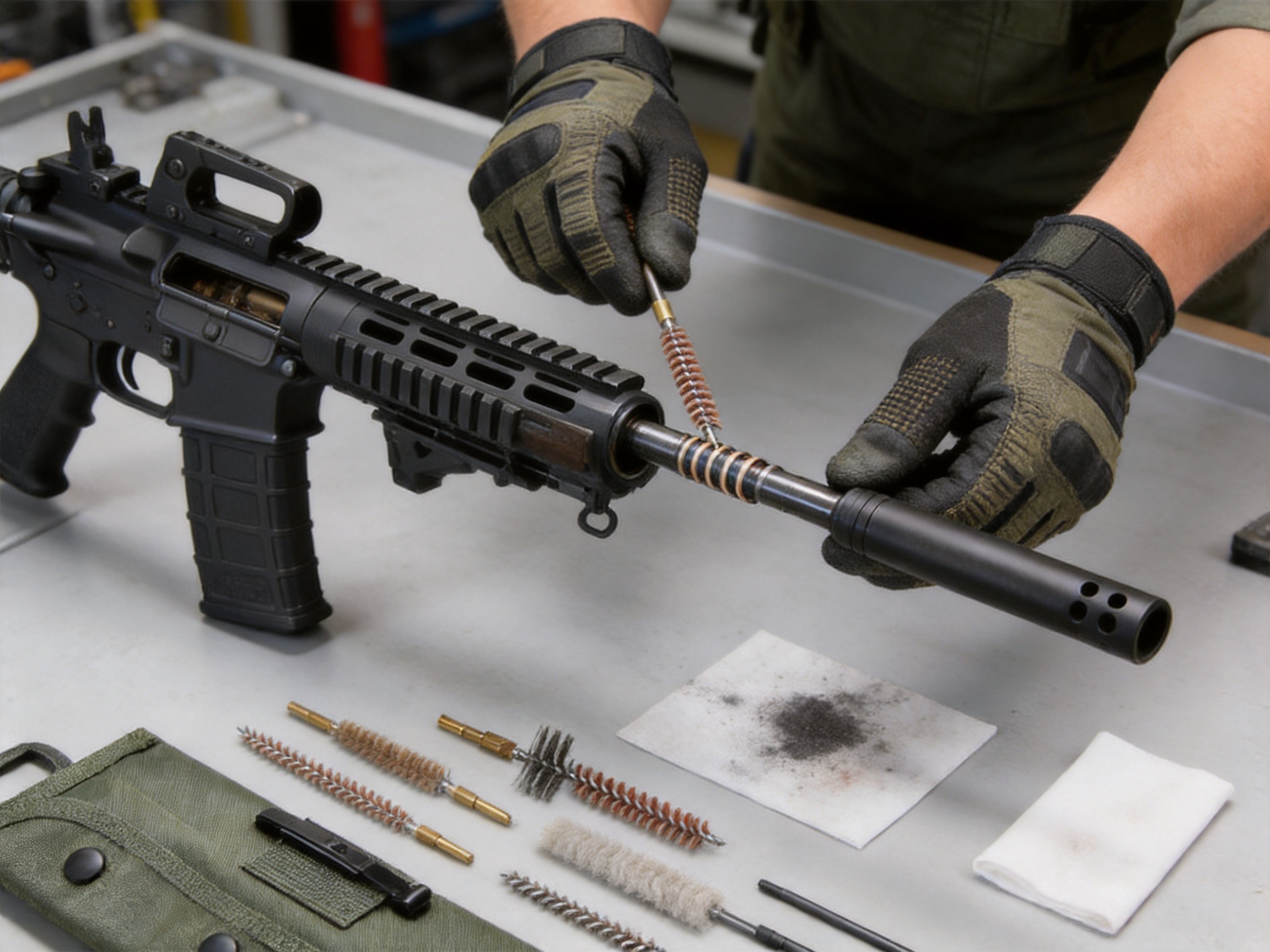
Sporting goods retailers can position the kit as a complete rifle maintenance accessory. Its compact size and clear caliber focus make it suitable for shelf display and online listings. The pouch also supports gift-oriented presentation for customers purchasing cleaning tools for a rifle owner.
The product’s main downstream platform is identified as Amazon, and its features are suitable for online product presentation. Sellers can build listings around the caliber range, segmented rod, brass brushes, 853mm assembled length, pouch colors, and portability. Accurate specifications are important because online customers depend heavily on product descriptions and images when judging compatibility.
Online sellers should avoid implying that the kit fits every firearm. Listings should identify the standard calibers clearly and state when .30-caliber specifications are customized. Compatibility language should be supported by actual product configuration and verified sample information.
Professional maintenance businesses may use cleaning kits as general-purpose tools, customer add-ons, or replacement inventory. The durable rod format and organized pouch can help technicians keep essential accessories together between workstations or service locations.
Shooting clubs and training facilities may require multiple kits for equipment rooms, range bags, or member-use programs. Wholesale purchasing can simplify replenishment and provide consistent accessories across several locations.
The compact pouch and segmented rod are appropriate for users who transport cleaning equipment outdoors. The product can be included in field-maintenance kits, hunting equipment assortments, or tactical-style gear collections, subject to local laws and the buyer’s market requirements.
Private-label importers can use the standard product as a base for their own brand. Custom pouch colors, logos, labels, and retail packaging can help distinguish the product from generic competitor listings. The ability to combine OEM presentation with established manufacturing support may reduce the development burden for new product lines.
The kit should be positioned as a portable, caliber-focused rifle cleaning solution rather than an unlimited universal cleaning system. This approach is more accurate and can improve customer satisfaction. Key selling points include the standard .22/.223/5.56mm compatibility, optional .30-caliber version, segmented steel rod, brass wire brushes, 853mm assembled length, tactical pouch, and OEM availability.
For consumer-facing copy, the product can be described as suitable for routine barrel cleaning and carbon removal. Retailers may also emphasize the organized pouch, color choices, and compact format. For business-to-business buyers, the focus can shift toward stable supply, export packaging, customization, production experience, and repeat-order support.
Product photographs should show the assembled rod, separated rod sections, included brushes, pouch, and color options. Clear visual presentation helps customers understand how the kit is organized. Specification diagrams or package-content illustrations may also be useful, provided that they accurately reflect the final version.
Packaging and product labeling should identify the caliber configuration. If the kit is customized for .30 caliber, the label should not be confused with the standard .22/.223/5.56mm version. Separate stock codes and carton markings can help distributors prevent warehouse picking errors.
Before ordering, commercial buyers should confirm the exact product configuration. The following checklist can help organize discussions with the manufacturer.
| Verification area | Questions to confirm |
| Caliber | Is the order for .22/.223/5.56mm, .30 caliber, or another approved configuration? |
| Rod length | Is the assembled length up to 853mm required, and are the individual sections specified? |
| Brush material | Are the required brushes brass, nylon, or another material? |
| Brush dimensions | What diameter, bristle length, attachment, and thread specifications are required? |
| Handle | Is the plastic handle design and color approved? |
| Pouch | Which color, layout, closure, label, and logo specifications apply? |
| Packaging | What are the retail package, master-carton, barcode, and export-marking requirements? |
| Quality control | What inspection points, tolerances, sampling standards, or third-party inspections are required? |
| Order planning | What are the minimum order quantity, sample lead time, production lead time, and replenishment schedule? |
| Shipping | What shipping method, carton dimensions, gross weight, and export documents are needed? |
Sample approval is particularly important for customized products. A sample allows the buyer to check the rod connection, brush fit, pouch construction, color, logo appearance, and package contents before production begins. Any changes should be documented in the final approved specification.
Buyers should also maintain a clear distinction between product claims and user responsibilities. A cleaning kit can support maintenance, but it does not replace safe handling, firearm-specific instructions, or qualified repair services. Clear instructions benefit both end users and distributors by reducing misuse and avoidable returns.
The cleaning kit itself should be stored in a clean, dry environment. After use, users should remove residue from the brushes and rod, allow components to dry where necessary, and return them to the pouch. Proper storage helps maintain the condition of the tools and reduces the likelihood of losing small accessories.
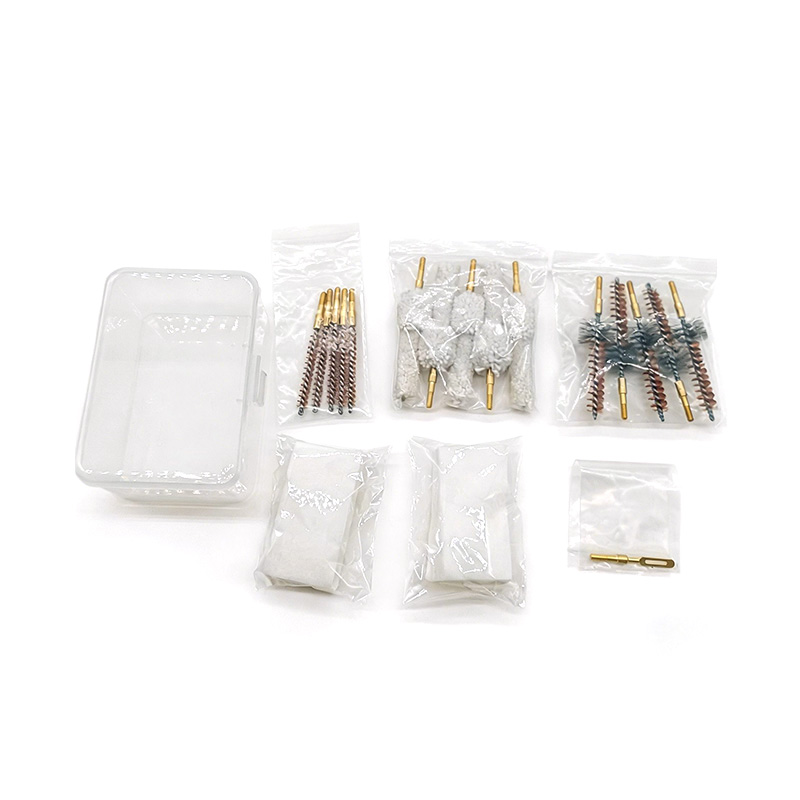
Brushes are consumable maintenance components. Bristles may wear after repeated use, particularly when cleaning heavily fouled equipment. Retailers may consider offering replacement brush packs or additional accessories as part of a broader product range. The manufacturer’s ability to produce cleaning brushes and related components can support this type of accessory strategy.
Rod sections should be inspected before assembly. A visibly bent, damaged, or contaminated section should not be forced into use. Threads or joining points should be kept clean enough to assemble securely. If a component does not fit normally, users should stop and check compatibility instead of applying excessive pressure.
Because firearms differ in construction and manufacturer recommendations, the appropriate cleaning frequency can vary. Users should follow the instructions supplied with their firearm and use suitable cleaning products in accordance with local requirements. The kit provides mechanical cleaning tools; solvents, lubricants, and other chemical products may be supplied separately unless included in a customized package.
Gun cleaning tools may appear simple, but consistent production requires attention to materials, dimensions, joining methods, bristle security, surface finishing, packaging, and compatibility. A factory with long-term category experience is better positioned to understand recurring quality issues and customer requirements.
Jinhua Tongshun Tool Factory has focused on gun cleaning kits, barrel cleaning brushes, cleaning rods, patches, mops, and associated accessories since 1999. This specialization supports product knowledge across multiple accessory types. It also allows the factory to develop coordinated product families rather than treating every order as an unrelated item.
The company’s semi-automatic and fully automated production systems support production volume and repeatability. At the same time, its integrated R&D and manufacturing structure can provide flexibility for customized projects. This combination is valuable for buyers that need both stable standard inventory and the possibility of future product development.
Export experience is another consideration. Customers shipping to Europe and other international markets often require consistent cartons, documentation, labeling, and delivery coordination. A manufacturer familiar with cross-border supply can help buyers plan these requirements earlier in the process.
OEM and ODM support further strengthens the commercial proposition. Instead of competing only on a generic unbranded item, a distributor can develop a product with a distinct pouch color, logo, accessory combination, and packaging design. This can improve catalog consistency and support long-term customer recognition.
The standard version is designed for .22 Cal, .223 Cal, and 5.56mm rifles. Buyers should verify the exact configuration and firearm compatibility before use.
Yes. The product information identifies .30 caliber as a customizable option. The brush and accessory configuration should be confirmed during the quotation and sample-approval process.
The total assembled rod length is up to 853mm. Because the rod is segmented, it can be separated for compact storage and transport.
The rod is made from steel and has a black coating. It is supplied in sections that are assembled for use.
The kit includes brass wire brushes and cleaning brushes. The product information also identifies the brush type as a copper wire brush. Exact brush dimensions and accessory quantities should be confirmed for each order.
The extended assembled length and rifle-focused design are intended to support long-barrel cleaning applications. The user must still confirm that the specific rod and brush configuration is suitable for the firearm.
Yes. The components are organized in a compact tactical carrying pouch. Available colors include military green, black, and khaki.
The listed options are military green, black, and khaki. Additional customization can be discussed according to order quantity, production feasibility, and private-label requirements.
Jinhua Tongshun Tool Factory supports OEM and ODM services, including customized products, packaging, and logos. Logo artwork, placement, color, and production details should be approved before mass production.
Yes. The product is designed for wholesale and cross-border supply, with standardized export packaging options and support for bulk orders.
The product is manufactured in Jinhua, Zhejiang, China, by Jinhua Tongshun Tool Factory.
The listed product code is M16-AR15. Buyers should include the product code and the confirmed caliber configuration in purchase communications.
The provided product information describes rods, brushes, and a pouch. It does not specify the inclusion of solvent, lubricant, or other chemical cleaning products. Buyers should confirm the final package contents.
No. The kit is intended for routine cleaning and carbon removal. It does not replace professional inspection, repair, or servicing when a firearm has a mechanical problem, visible damage, or an unresolved safety concern.
Users should check the firearm manufacturer’s maintenance instructions, confirm the caliber, inspect the brush and rod specifications, and stop if the tool encounters abnormal resistance. Caliber labels and product instructions should be followed carefully.
The AR-15 Cleaning Kit .22/.30 Cal Brushes offers a practical combination of long-barrel reach, portable storage, caliber-focused brush selection, and customization potential. Its standard .22/.223/5.56mm configuration serves a widely requested rifle maintenance segment, while the customizable .30-caliber option helps distributors address additional demand.
The black-coated segmented steel rod reaches up to 853mm when assembled, giving the kit useful reach without sacrificing transport convenience. Brass wire brushes and additional cleaning brushes support the removal of carbon fouling, powder residue, and copper deposits when used with appropriate care. The tactical pouch keeps the kit organized and provides color and private-label opportunities.
For commercial customers, the product’s value extends beyond its individual components. Jinhua Tongshun Tool Factory offers more than two decades of category experience, semi-automatic and automated production capabilities, export support, OEM and ODM services, and customization for calibers, colors, packaging, and logos. These strengths can help wholesalers, online sellers, sporting goods retailers, and private-label importers develop a consistent and scalable cleaning-tool product line.
When evaluating the kit, buyers should confirm the final caliber, brush dimensions, rod specifications, pouch design, package contents, inspection requirements, order quantity, and export documentation. With those details clearly approved, the product can serve as a durable, portable, and commercially adaptable solution for rifle cleaning markets.
Jinhua Tongshun Tool Factory. Product specification for AR15 Cleaning Kit .22/.30 Cal Brushes, product code M16-AR15.
Jinhua Tongshun Tool Factory. Company information and manufacturing profile, established 1999.
Jinhua Tongshun Tool Factory. OEM, ODM, export packaging, caliber customization, and private-label service information.
Firearm manufacturer maintenance manuals and user instructions for compatible .22, .223, and 5.56mm rifles.
General industry guidance concerning firearm cleaning tools, bore maintenance, brush materials, storage, and safe handling practices.