English
 русский
 Español
 عربى

HUNTACE HUNTACE HUNTACE HUNTACE HUNTACE
HUNTACE HUNTACE HUNTACE HUNTACE

Regular firearm maintenance is essential for safe handling, dependable performance, and the long-term preservation of a shotgun barrel. Fouling from powder residue, carbon, copper deposits, moisture, and surface oxidation can accumulate after repeated use. Without suitable cleaning tools, these contaminants may become difficult to remove and can gradually affect accuracy, loading reliability, corrosion resistance, and the overall service life of the firearm. A well-designed cleaning kit therefore needs to combine effective brushes, a suitable rod system, absorbent bore mops, convenient storage, and compatibility with the intended firearm caliber.
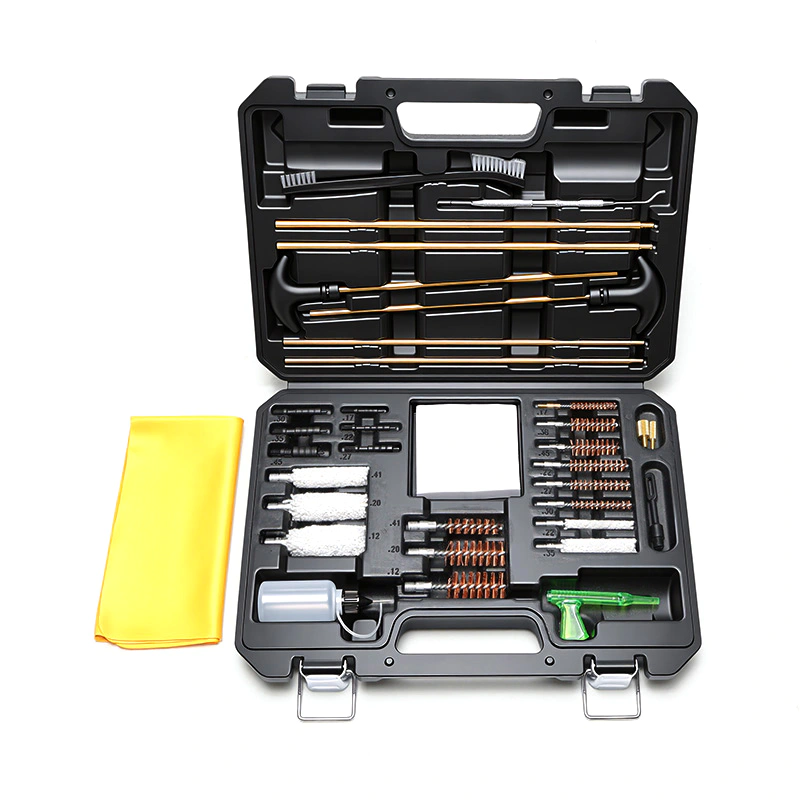
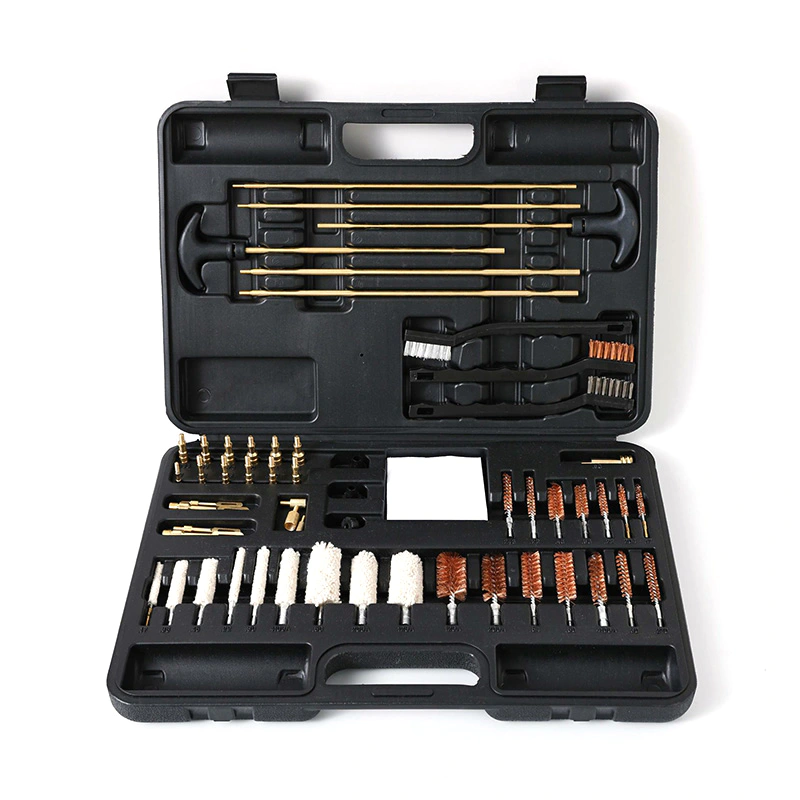
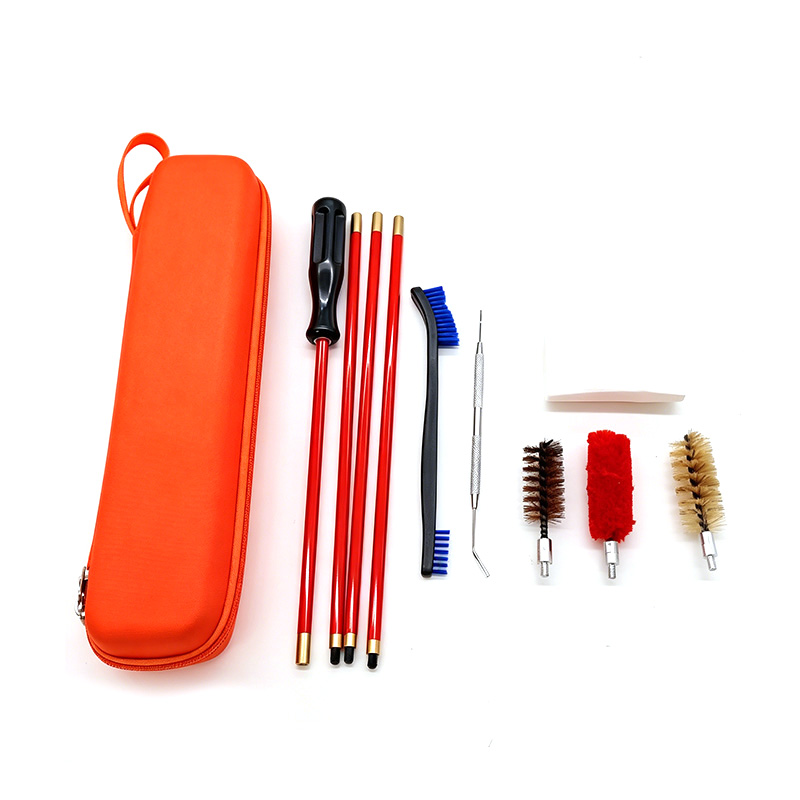
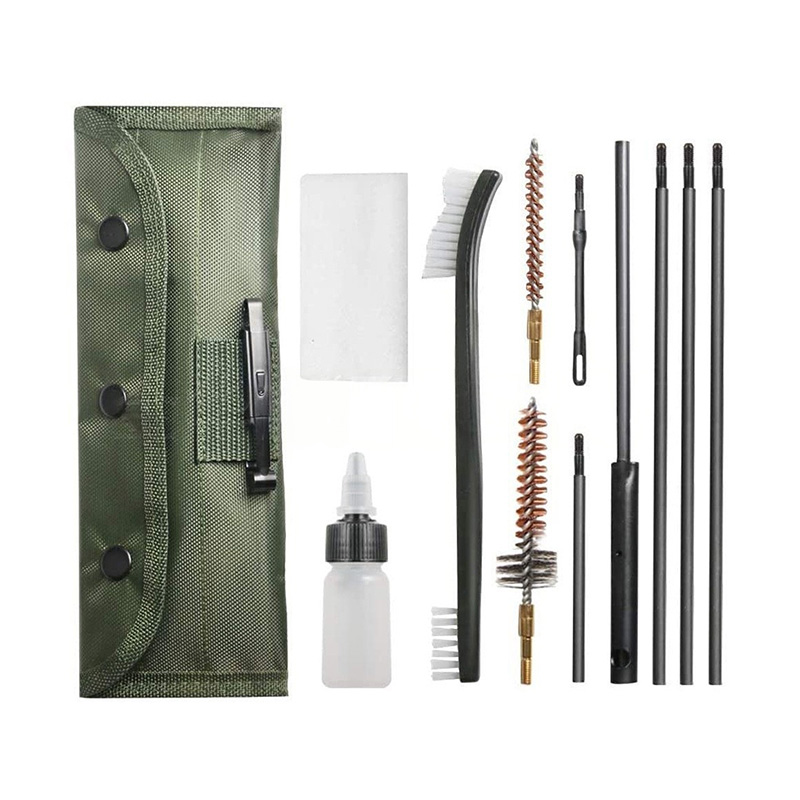
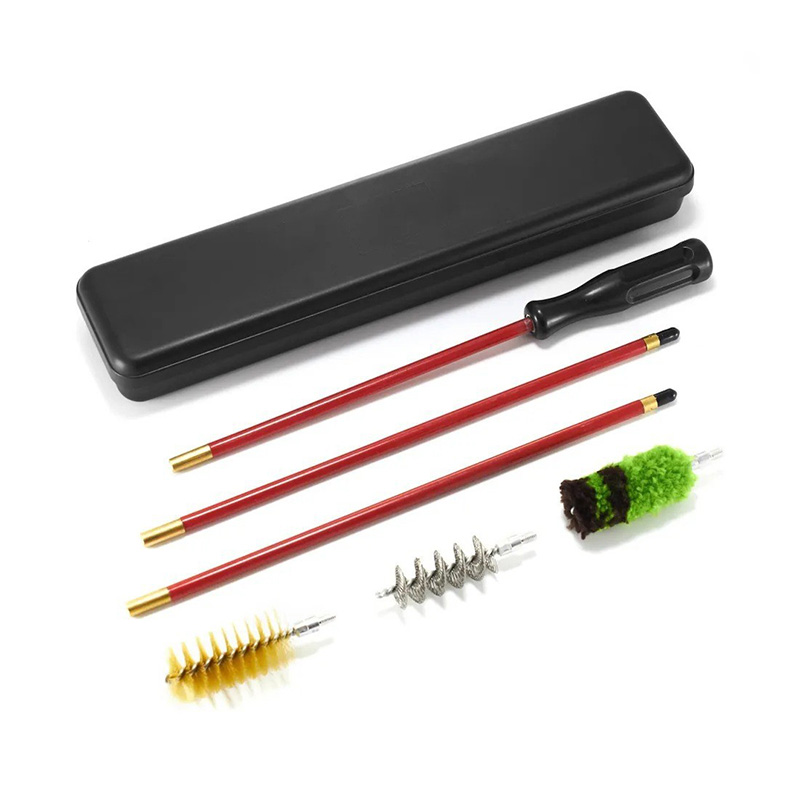
The Brass Bore Brush Gun Cleaning Kit is developed for 12-gauge, 16-gauge, 20-gauge, and .410 bore shotguns. It combines several cleaning components in one compact package, including a red segmented cleaning rod, a brass wire brush, a stainless steel brush, and a cotton mop. These components are designed to support different stages of routine maintenance, from initial loosening of fouling to final wiping and drying of the bore.
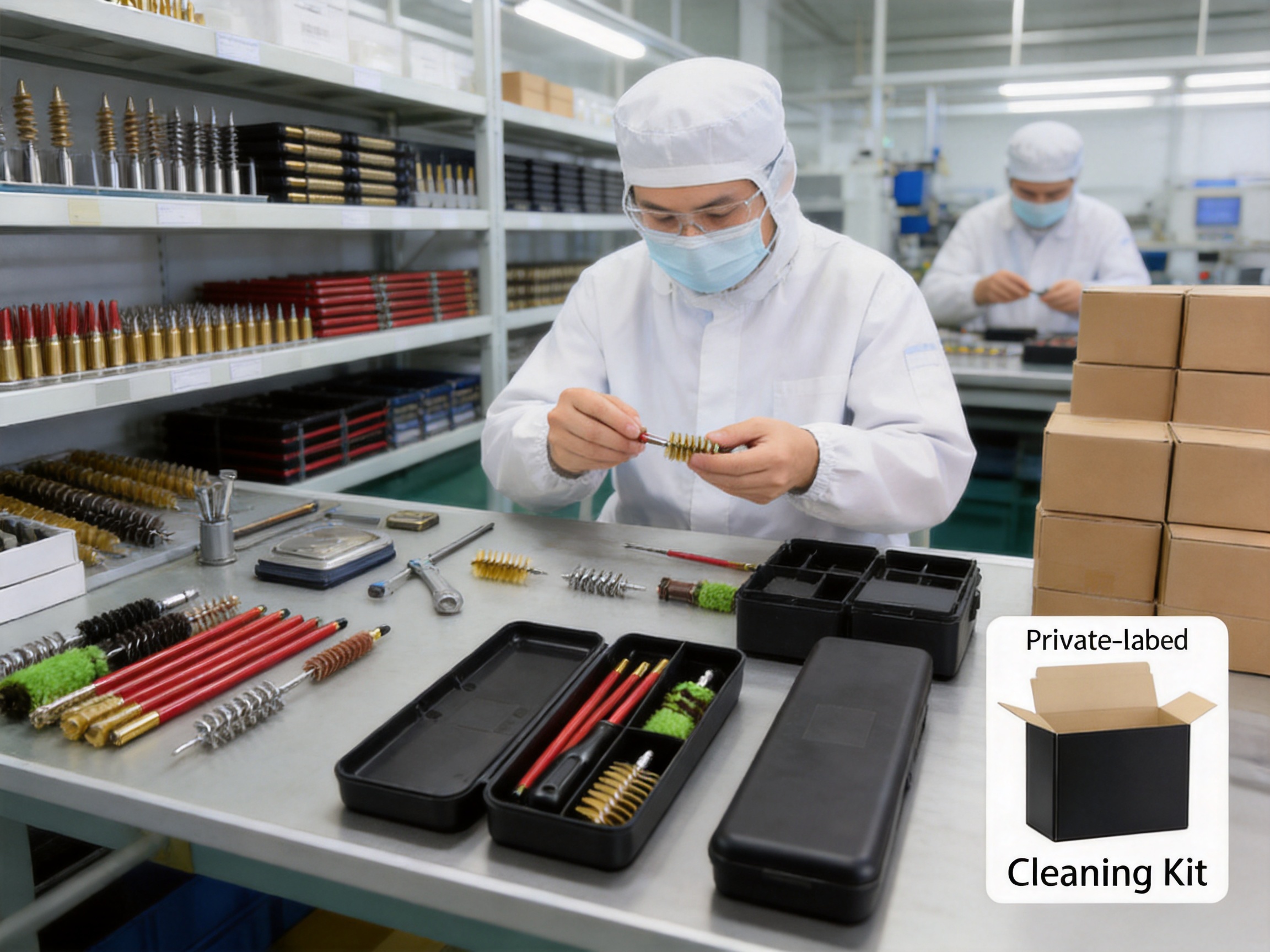
Manufactured by Jinhua Tongshun Tool Factory, the kit reflects a factory-direct approach to firearm maintenance accessories. The manufacturer integrates product development, production, quality control, packaging, and export services within one organization. This structure supports stable supply, OEM and ODM customization, and consistent production for wholesalers, distributors, retailers, shooting-sports brands, and online marketplaces.
Unlike a basic single-brush tool, this kit is arranged as a multifunctional cleaning system. Its combination of brush materials and a cotton mop allows users to select a suitable cleaning action for different levels of fouling. The modular 450 mm rod is sized for standard shotgun-barrel maintenance, while the compact black plastic case supports storage, transportation, and field use.
The Brass Bore Brush Gun Cleaning Kit is intended for shotgun owners, shooting clubs, outdoor enthusiasts, firearm retailers, and professional distributors seeking a practical barrel-cleaning solution. Its core purpose is to remove residue from the internal barrel surface while helping users maintain a clean, dry, and serviceable bore.
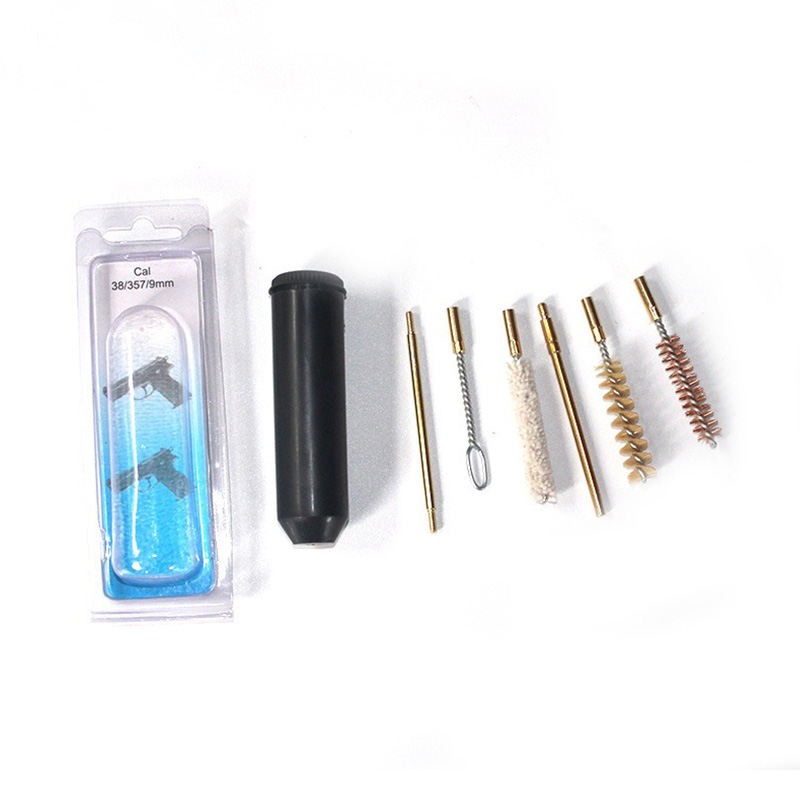
The kit is available for several common shotgun configurations. The listed dimensions include versions for 410 gauge, 16 gauge, 20/28 gauge, and 10/12 gauge applications. Additional versions are also identified for .17 caliber, .22 caliber, .30 caliber, and 5.56 mm applications. This range gives importers and product buyers the opportunity to source related versions from one manufacturing partner instead of managing multiple suppliers for every caliber category.
The product has an overall rod length of approximately 450 mm and is supplied in a black case measuring about 30 × 6 × 3 cm. Its black color provides a practical appearance suitable for retail packaging, workshop storage, and field equipment. The rod handle material is listed as stainless steel, providing a durable structural component for repeated use when the tool is handled correctly.
| Product name | Brass Bore Brush Gun Cleaning Kit |
| Primary application | Shotgun and firearm bore cleaning |
| Compatible shotgun sizes | 12 gauge, 16 gauge, 20 gauge, 28 gauge, and .410 gauge versions |
| Additional versions | .17 caliber, .22 caliber, .30 caliber, and 5.56 mm options |
| Cleaning rod length | Approximately 450 mm |
| Included cleaning elements | Segmented rod, brass wire brush, stainless steel brush, and cotton mop |
| Case dimensions | Approximately 30 × 6 × 3 cm |
| Case color | Black |
| Product function | Cleaning, residue removal, wiping, and bore maintenance |
| Customization | OEM and ODM product, logo, packaging, and specification support |
Different types of residue require different cleaning actions. Loose powder particles may be removed with a patch or mop, while compacted carbon deposits may require the mechanical action of a brush. Moisture and cleaning fluid must then be removed with an absorbent material. Using one tool for every stage can make cleaning slower and may produce less consistent results.
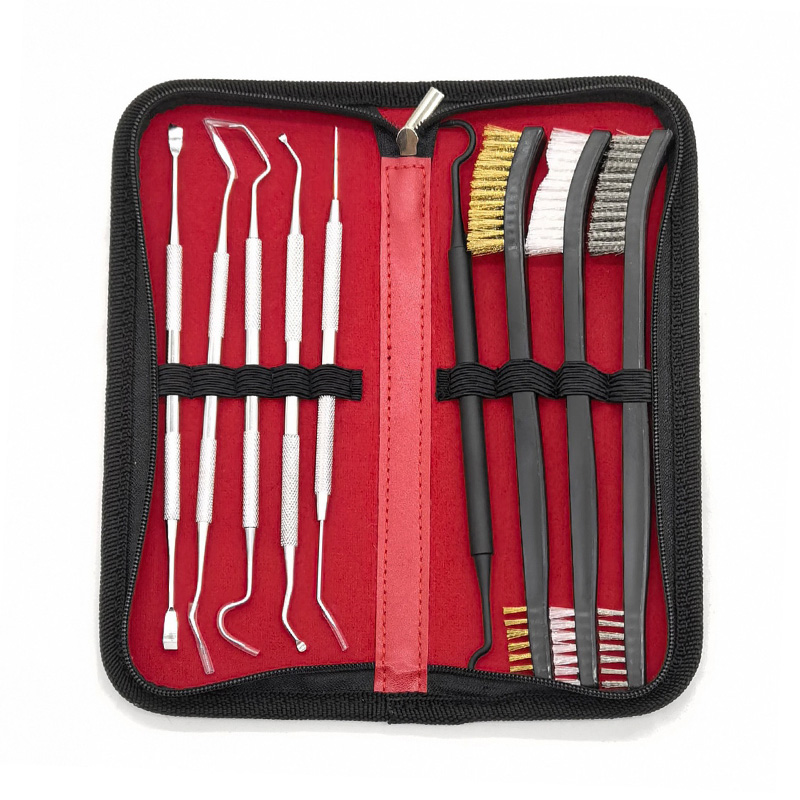
The Brass Bore Brush Gun Cleaning Kit addresses this issue by combining multiple cleaning elements. The brass wire brush is intended to loosen stubborn deposits through controlled brushing. The stainless steel brush provides a different level of mechanical action for selected cleaning tasks. The cotton mop can be used to distribute cleaning fluid, collect loosened residue, and wipe the bore after brushing.
This arrangement is more versatile than a single-material kit. A nylon-only set may be useful for gentle cleaning, but it may take more time to deal with heavier fouling. A metal-brush-only set may lack a suitable component for final drying and polishing. By supplying several cleaning elements together, the kit gives users more flexibility while reducing the need to purchase separate accessories.
The system is also practical for retailers. A complete kit is easier to position as an all-in-one maintenance product than a loose assortment of individual parts. It can be offered to first-time firearm owners, experienced shooters, hunting customers, shooting clubs, and customers who want a replacement or backup cleaning set.
Brass is widely used in firearm cleaning brushes because it offers useful mechanical strength while being comparatively softer than many steel barrel surfaces. A brass brush can help loosen powder residue, carbon fouling, and other deposits without relying on excessive force. When used properly, it offers a balance between cleaning effectiveness and controlled contact with the bore.
The brass brush in this kit is especially suitable for routine maintenance after shooting. The user can apply an appropriate cleaning solution if required, pass the brush through the bore in a controlled manner, and then follow with a mop or patch. The brush should be matched to the correct caliber or gauge, and users should follow the firearm manufacturer’s maintenance instructions.
Correct technique remains important. A bore brush should not be forced through an obstruction, used with a damaged rod, or operated with excessive pressure. Users should confirm that the firearm is unloaded before beginning maintenance and should work in a safe, well-ventilated area. A cleaning rod should be aligned with the bore to reduce unnecessary contact with the crown or barrel interior.
The advantage of a brass brush is not that it eliminates the need for care, but that it provides a practical cleaning surface for common fouling conditions. The material is suitable for users who need more cleaning power than a soft cloth can provide while still seeking a bore-conscious maintenance tool.
The included stainless steel brush adds another cleaning option to the kit. Stainless steel bristles can provide a more assertive brushing action for selected maintenance requirements, particularly where residue has become firmly attached. This component is intended to complement the brass brush rather than replace it for every cleaning stage.
Because stainless steel is a strong material, it should be used carefully and only when appropriate for the firearm and cleaning condition. The brush must be correctly sized, and the user should avoid aggressive force, excessive repetitions, or unsuitable applications. It is good maintenance practice to begin with the least aggressive method that can reasonably remove the residue, then use a stronger brush only when necessary.
Including both brass and stainless steel brushes improves the commercial value of the kit. Buyers receive a broader maintenance range in one package, while distributors can explain the function of each component according to the user’s needs. The two-brush arrangement also makes the kit suitable for a range of cleaning preferences, from routine post-use maintenance to more thorough cleaning after extended storage or intensive shooting.
The cotton mop is an important part of the cleaning sequence. After brushing, loosened residue may remain inside the barrel. A cotton mop can help collect particles, distribute a suitable cleaning product, and remove excess moisture or oil. It can also assist with the final inspection stage by leaving the bore cleaner and more uniform.
Cotton is valued for its absorbency and soft contact surface. Compared with a rigid brush, a mop is better suited to wiping and finishing. It can be used after mechanical brushing to reduce remaining residue and help prepare the bore for storage. A dry mop may be useful for removing excess cleaning fluid, while an appropriately treated mop may assist with preservation according to the firearm manufacturer’s recommendations.
The mop also adds convenience for users who do not want to purchase separate finishing accessories. In a compact case, the combination of metal brushes and a cotton mop creates a simple maintenance sequence: loosen, remove, wipe, and inspect.
Brass Bore Brush Gun Cleaning Kit
The cleaning rod is the structural component that connects the user’s hand to the brush or mop. This kit uses a segmented rod with an overall length of approximately 450 mm. The modular design makes the product easier to pack, store, and transport than a long, single-piece rod.
A segmented rod can be assembled when needed and separated for storage. This is helpful for field shooters, hunters, shooting clubs, and retailers who want a compact product suitable for shelves, range bags, vehicle compartments, and outdoor equipment cases. The red rod sections also provide visual contrast, making the components easier to identify inside the black case.
The listed handle material is stainless steel. Stainless steel is valued for its strength, resistance to corrosion, and suitability for repeated handling. When paired with a suitable modular structure, it provides a practical balance between durability and portability.
Rod alignment is important during use. The user should assemble the sections securely, attach the correct brush or mop, and guide the rod straight through the bore. The rod should not be bent, twisted aggressively, or used to force a brush through an obstruction. Routine inspection of the rod and threaded connections can help identify wear before continued use.
From a manufacturing perspective, segmented rods require consistent forming, threading, finishing, and fit control. Poorly matched sections may loosen during use or create an uneven connection. A manufacturer with established production systems can control these points through component inspection and assembly checks.
The black plastic case measures approximately 30 × 6 × 3 cm and is designed to keep the kit components together. Compact packaging helps protect small accessories from being misplaced and gives the product a more organized presentation for retail sale.
A case is particularly valuable for a kit that contains several small parts. Without dedicated storage, brushes, rod sections, and mops may be separated in a drawer, range bag, or workshop. The case helps users identify the complete set before and after use. It can also reduce exposure to dust and help prevent accessories from coming into contact with unrelated tools.
For wholesalers and private-label buyers, the case creates additional packaging opportunities. The exterior may be adapted with a printed label, product sticker, barcode, instruction panel, or customized color scheme, subject to production requirements. A well-organized package can improve shelf presentation and make the kit easier for e-commerce sellers to photograph and describe.
The compact dimensions also support efficient shipping and storage. More units can be arranged in cartons compared with bulky, non-collapsible cleaning systems. This may help distributors manage warehouse space and reduce unnecessary packaging volume.
One of the kit’s significant advantages is the availability of multiple size configurations. Shotguns are commonly identified by gauge, and the correct brush diameter is essential for effective cleaning. The product range includes versions for 12 gauge, 16 gauge, 20 gauge, 28 gauge, and .410 gauge applications. This allows a buyer to select the appropriate version for a specific shotgun rather than relying on a one-size-fits-all tool.
The listed product information also identifies related versions for .17 caliber, .22 caliber, .30 caliber, and 5.56 mm. These options broaden the manufacturer’s ability to serve customers across hunting, sport shooting, firearm maintenance, and outdoor equipment categories.
For commercial buyers, a multi-size product family can simplify sourcing. Retailers can create a range of compatible listings, while distributors can combine several versions in one purchase program. OEM customers may also request model-specific packaging, labels, color arrangements, or accessory combinations.
Users should always verify the firearm’s caliber or gauge before ordering or using a brush. A brush that is too small may not clean effectively, while an incorrectly sized brush may be difficult to pass through the bore. Product labels and customer instructions should clearly identify the intended application.
Before cleaning, the firearm must be unloaded and handled in accordance with applicable safety rules. Ammunition should be removed from the work area, and the chamber and magazine area should be checked according to the firearm manufacturer’s procedures. Cleaning should take place in a stable location with adequate lighting and ventilation.
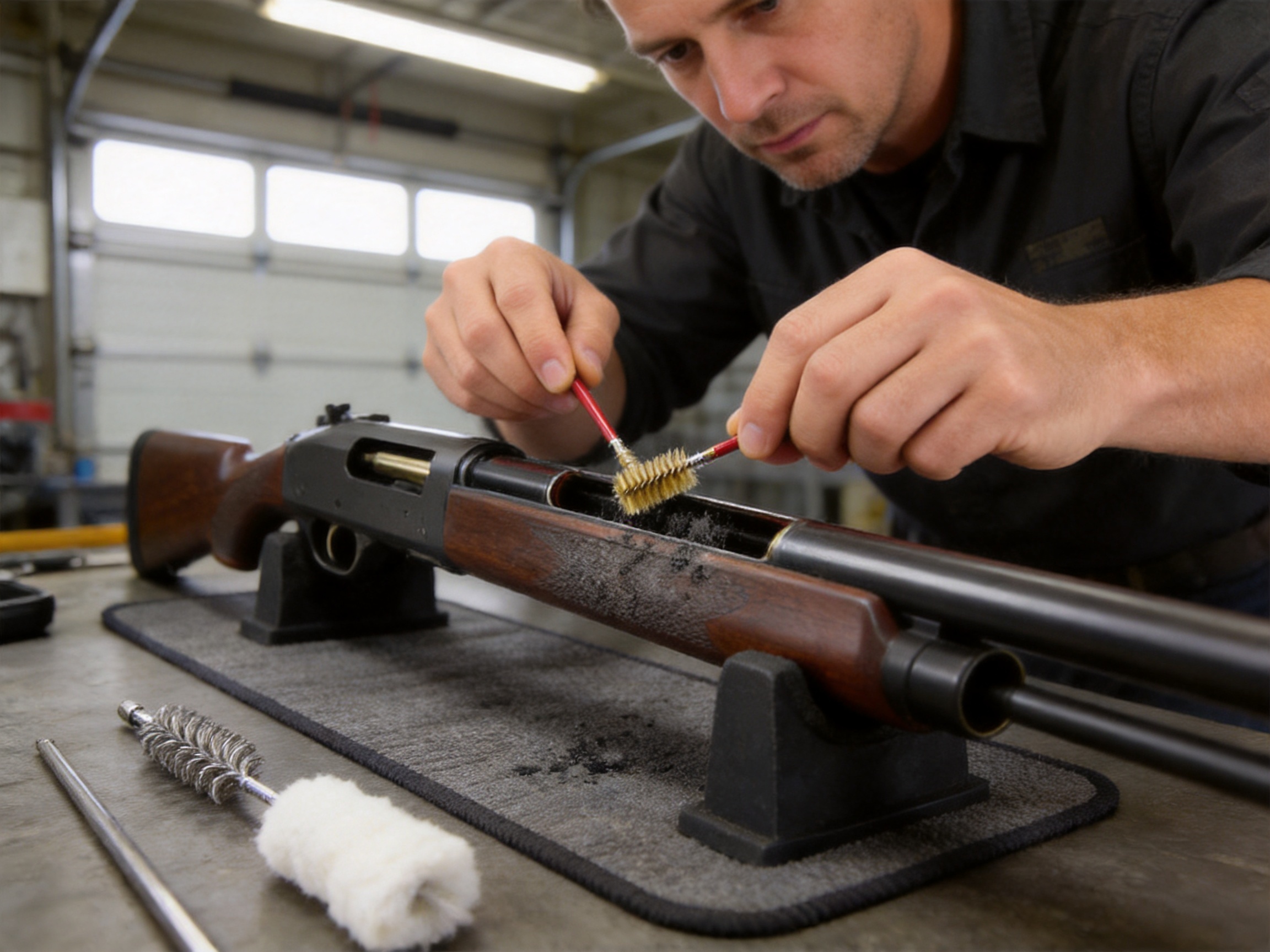
Select the appropriate rod sections and connect them securely. Check that the joints are properly engaged and that the rod is straight. Attach the correct brass brush, stainless steel brush, or cotton mop for the cleaning stage. The selected component must correspond to the firearm’s caliber or gauge.
For routine fouling, the brass brush may be used with controlled passes through the bore. If heavier residue requires additional mechanical action, the stainless steel brush may be considered when suitable for the firearm and under careful control. The user should avoid forcing the brush or applying excessive pressure.
After brushing, use the cotton mop to collect loosened residue and remove excess cleaning fluid. Additional passes may be made until the bore appears clean according to the user’s inspection method. A clean light and visual inspection can help identify remaining deposits, but users should never look through a loaded firearm.
The final cleaning stage depends on the storage environment and the firearm manufacturer’s instructions. A dry mop can remove unwanted moisture, while an appropriate protective treatment may be used for storage when recommended. The firearm and cleaning accessories should be stored in a dry, secure location.
The market includes many low-cost cleaning tools, but price alone does not determine value. A basic competitor product may contain only one brush, a short rod, or a loose selection of poorly organized parts. The Brass Bore Brush Gun Cleaning Kit offers several practical advantages in comparison.
The combination of brass wire, stainless steel, and cotton components supports more stages of cleaning than a single-brush product. Users can select the appropriate action instead of applying the same tool to every condition.
The supplied black case keeps the kit compact and organized. This is an advantage over loose accessories that may be misplaced or damaged during transport.
The segmented 450 mm rod is more convenient for travel and storage than a long, rigid rod. It can be assembled at the point of use and packed away after maintenance.
The availability of several shotgun gauges and additional caliber versions supports a wider customer base. Buyers can source related products from a consistent product family.
The product is suitable for OEM and ODM programs. Private-label customers can request customized product details, branding, packaging, and potentially accessory configurations according to order requirements.
Working with an established factory can provide greater supply continuity than purchasing from an unverified trading source. Consistent manufacturing processes, production planning, and quality inspection are especially important for retailers that require repeat orders.
| Comparison point | Basic single-tool product | Brass Bore Brush Gun Cleaning Kit |
| Cleaning elements | Usually one brush or mop | Brass brush, stainless steel brush, and cotton mop |
| Storage | May be loose or minimally packaged | Compact black plastic case |
| Rod design | Often fixed or less portable | Segmented rod, approximately 450 mm assembled |
| Gauge and caliber range | May be limited | Multiple shotgun and firearm versions available |
| Cleaning flexibility | Limited selection of cleaning intensity | Different materials for different maintenance stages |
| Private-label suitability | Depends on supplier | OEM and ODM support available |
| Commercial positioning | Entry-level accessory | Complete, organized maintenance kit |
Jinhua Tongshun Tool Factory was established in 1999 and specializes in gun cleaning kits, barrel cleaning brushes, and associated firearm maintenance accessories. With more than two decades of manufacturing experience, the company has developed capabilities covering research and development, production, sales, export coordination, and customized product services.
The company operates in Jinhua, Zhejiang Province, a region with an established manufacturing base and access to industrial supply chains. Its production facility uses semi-automatic and fully automated systems. These systems can improve repeatability in processes such as wire forming, brush assembly, rod production, component fitting, and packaging preparation.
Automation does not remove the need for quality management, but it can reduce variation when properly controlled. In brush manufacturing, consistent bristle placement, secure anchoring, correct trimming, and stable dimensions are important. In rod production, accurate section length, thread quality, connection fit, and surface finishing affect the user experience. A structured factory process allows these elements to be monitored more systematically.
A manufacturer that combines product development with production can respond more efficiently to changing market requirements. Different firearm platforms require different brush sizes, rod connections, packaging formats, and accessory combinations. In-house or closely integrated development supports the creation of new configurations and modifications for specific buyers.
Research and development also helps the factory improve product ergonomics, storage efficiency, component compatibility, and packaging presentation. For OEM customers, this can reduce the communication gap between a design request and a manufacturable product.
The use of semi-automatic and fully automated production systems supports larger orders while maintaining consistent output. This is valuable for distributors that need regular replenishment or online sellers that expect seasonal demand. Stable production planning may also help buyers coordinate product launches, promotional campaigns, and private-label programs.
Production scale can offer additional benefits in material purchasing and component management. When a factory produces a broad range of cleaning accessories, it can maintain established supply channels for brush wire, cotton materials, metal rod sections, plastic cases, and packaging components.
Quality control for a cleaning kit involves more than checking the finished appearance. The brush size should correspond to the listed application, the bristles should be secured, the rod sections should connect properly, and the case should accommodate the components. Packaging should also identify the relevant caliber or gauge to reduce the risk of product selection errors.
Factory-direct production makes it easier to coordinate these checks across the product process. Incoming materials can be reviewed, in-process components can be inspected, and finished kits can be checked before shipment. Consistent inspection is particularly important for OEM programs, where the customer’s brand reputation depends on reliable product performance.
The kit is suitable for companies that want to sell firearm maintenance products under their own brand. OEM services may include customized logos, labels, packaging artwork, case markings, instruction inserts, product codes, and barcode arrangements. ODM services may involve adapting an existing kit or developing a revised combination of components for a specific market.
Customization can help a buyer create a differentiated product line. For example, a distributor may request separate packages for hunting, sport shooting, law-enforcement supply channels, firearm retail, or outdoor equipment. A brand may also want different colors, case formats, brush combinations, or caliber assortments for different regions.
Before placing a customized order, buyers should confirm technical details such as brush dimensions, rod length, thread standards, packaging measurements, case material, printing method, minimum order quantity, sample approval, production time, and inspection requirements. Clear specifications help prevent misunderstandings and improve consistency between samples and mass production.
Packaging information should be accurate and easy to understand. Each version should clearly state the intended caliber or gauge, included components, care instructions, and any relevant safety notices. Professional packaging can improve customer confidence and reduce returns caused by incorrect product selection.
For firearm retailers, the kit can be displayed alongside shotguns, ammunition storage products, firearm cases, hearing protection, and other maintenance accessories. Its all-in-one structure makes it easy for sales staff to explain the benefits to customers who need a basic or replacement cleaning system.
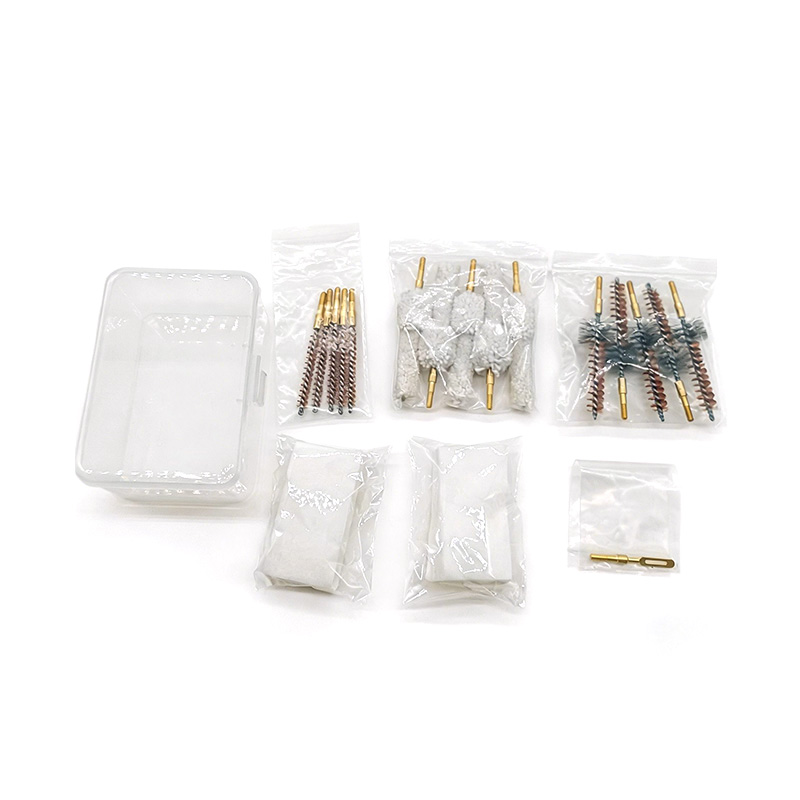
For wholesalers, the product offers a practical combination of compact packaging, multiple size versions, and repeat-order potential. Cleaning accessories are consumable or replaceable products in many shooting communities. Cotton elements may require replacement over time, while brushes and rods can be purchased as backup equipment or supplied with new firearms.
For online marketplaces, the kit provides several clear listing points: compatible gauges, brush materials, modular rod design, compact case, factory-direct supply, and private-label availability. Product images should show the complete contents, the case dimensions, and the intended gauge or caliber marking. Clear descriptions are especially important because online customers cannot physically compare brush sizes before purchase.
For shooting clubs and outdoor organizations, compact cleaning kits can be useful as equipment-room supplies or as part of beginner maintenance packages. The organized case makes it easier to distribute and retrieve kits, while the multiple cleaning components allow instructors to demonstrate different stages of barrel care.
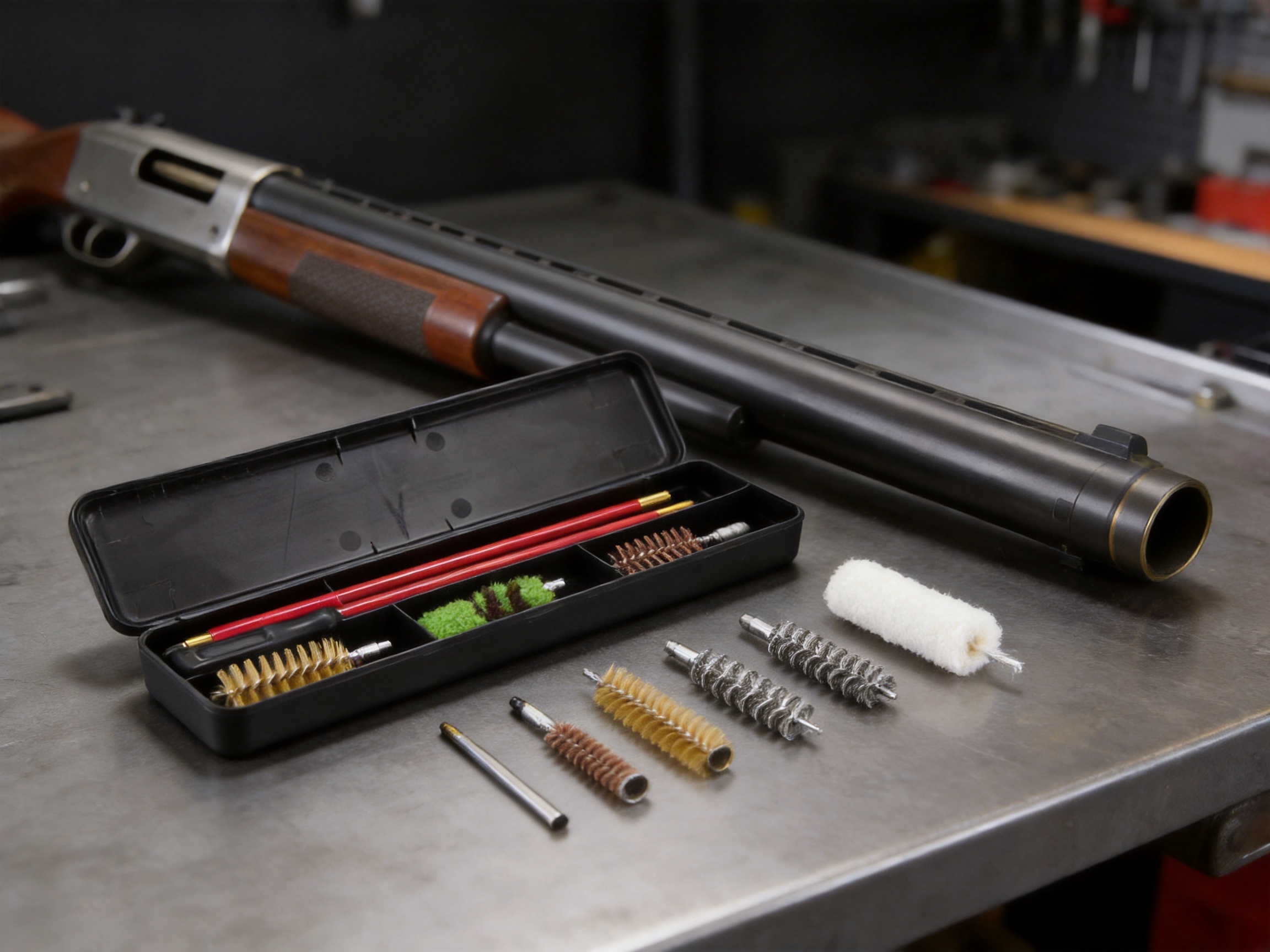
Cleaning accessories should be kept dry after use. Moisture, cleaning chemicals, and residue may affect metal components if they remain on the brush or rod for extended periods. Users should wipe the rod and allow damp cotton components to dry before placing the kit back into the case.
The case should be stored away from extreme heat, prolonged direct sunlight, and excessive humidity. The case is designed for organization and transport, but it should not be treated as a substitute for secure firearm storage. The firearm itself must always be stored according to applicable laws, safety standards, and manufacturer instructions.
Brushes should be inspected periodically. If bristles become severely deformed, loose, contaminated, or damaged, the brush should be replaced. Rod sections should also be checked for bent parts, worn threads, or loose connections. Regular inspection helps maintain effective cleaning and reduces the chance of damaging the bore or the cleaning tool.
Users should avoid mixing incompatible chemicals or using cleaning products that are not recommended for the firearm. The correct cleaning solution, lubricant, and preservation method should be selected according to the firearm manufacturer’s instructions and local regulations.
Wholesale and retail buyers should first determine which firearm sizes are most relevant to their customers. Twelve-gauge products may represent a major portion of shotgun demand in some markets, while 20-gauge, 16-gauge, 28-gauge, and .410 versions may be important for hunting, sporting, youth, or specialist applications.
Buyers should also evaluate whether their market prefers a basic value product or a more complete kit. The inclusion of multiple brush materials and a cotton mop positions this product as a broader maintenance solution. If a buyer serves professional users or premium retail channels, additional packaging, inspection, and documentation requirements may be appropriate.
Order planning should consider both fast-moving and specialized sizes. A mixed assortment can help test market demand before committing to a large quantity of one version. The manufacturer’s ability to provide several related sizes may simplify this process.
Other factors include case quality, printed instructions, product weight, carton packing, shipping dimensions, logo placement, language requirements, and replacement accessory availability. These details affect not only manufacturing but also customer satisfaction and after-sales service.
A cleaning kit’s value is determined by more than its first use. A well-organized set can remain useful across repeated maintenance sessions if the rod, brushes, mop, and case are properly cared for. The presence of several components also means the user can adapt the kit to different cleaning conditions rather than replacing the entire product after one accessory wears out.
For brands, long-term value can translate into stronger customer retention. A customer who is satisfied with a complete cleaning kit may later purchase replacement brushes, patches, mops, or another kit for a second firearm. A consistent product family also makes it easier for retailers to expand their maintenance category.
The factory’s broad experience in firearm cleaning tools supports this product-line approach. Instead of treating the kit as an isolated item, the manufacturer can supply related brushes, cleaning rods, patches, cloths, nylon tools, bronze accessories, and customized combinations. This may help buyers create a unified assortment under one brand.
Firearm cleaning should always be performed responsibly. The firearm must be unloaded before maintenance begins, and the user should follow the specific safety procedure provided by the firearm manufacturer. Ammunition should be kept separate from the cleaning area.
The cleaning rod and brush must match the firearm’s caliber or gauge. Users should never force a brush through an obstruction or use damaged equipment. Excessive force can harm the tool, the barrel, or the user. If a brush becomes stuck, the user should stop and seek qualified assistance rather than applying uncontrolled pressure.
Cleaning chemicals should be used according to their labels. Adequate ventilation, appropriate personal protection, and careful disposal of used patches or cloths are recommended. The kit is a maintenance accessory and does not replace professional inspection when a firearm has a mechanical fault, severe corrosion, a blocked bore, or other unsafe condition.
Responsible maintenance also includes compliance with local firearm laws and storage requirements. Product users, retailers, and distributors should ensure that their use and sale of firearm-related accessories comply with the regulations applicable in their market.
The primary versions are designed for 12-gauge, 16-gauge, 20-gauge, 28-gauge, and .410 bore shotguns. The product range also includes additional versions for .17 caliber, .22 caliber, .30 caliber, and 5.56 mm applications.
The kit includes a segmented cleaning rod, a brass wire brush, a stainless steel brush, and a cotton mop. The components are supplied in a compact black plastic case.
The listed overall length is approximately 450 mm when assembled. Because the rod is segmented, it can be separated for storage and transport.
The two brushes provide different cleaning options. Brass is suitable for controlled routine fouling removal, while stainless steel offers a stronger mechanical action for selected demanding cleaning tasks. Users should choose the brush carefully and avoid excessive force.
Yes. The cotton mop can help remove loosened residue, excess cleaning fluid, and moisture. It may also be used with an appropriate maintenance product when permitted by the firearm manufacturer’s instructions.
The 450 mm rod is engineered for standard shotgun-barrel maintenance, but compatibility depends on the firearm design, barrel length, gauge, and connection requirements. Buyers should confirm the correct version before ordering.
Yes. Jinhua Tongshun Tool Factory supports OEM and ODM services, including customized products, packaging, and logos. Buyers should confirm the available customization options, order quantities, samples, and production schedule with the factory.
Yes. The product is positioned for factory-direct supply and is suitable for wholesalers, retailers, e-commerce sellers, shooting clubs, and outdoor equipment distributors. Multiple gauge and caliber versions can support a broader product assortment.
Users should clean and dry the rod and accessories as appropriate, allow damp cotton components to dry, and return the parts to the case. The kit should be kept in a dry location away from excessive heat and humidity.
The kit is designed to help remove common carbon fouling, powder residue, copper deposits, and surface contamination, but no single tool is suitable for every condition. Users should follow the firearm manufacturer’s maintenance guidance and seek professional help for severe corrosion, obstructions, or damage.
It combines several cleaning functions in one package. The brass brush, stainless steel brush, and cotton mop allow users to loosen deposits, apply different levels of mechanical cleaning, and complete the wiping stage without purchasing each accessory separately.
The Brass Bore Brush Gun Cleaning Kit is a practical, compact, and versatile solution for shotgun and firearm bore maintenance. Its combination of brass and stainless steel brushes provides flexible cleaning performance, while the cotton mop supports wiping, absorption, and finishing. The segmented 450 mm rod improves portability, and the black plastic case keeps the set organized during storage and transport.
The product’s availability in several shotgun gauges and additional firearm caliber versions makes it suitable for a broad customer base. Compared with a basic single-tool accessory, it offers a more complete maintenance experience and stronger potential for retail, wholesale, and private-label positioning.
Its commercial value is further supported by the capabilities of Jinhua Tongshun Tool Factory. Established in 1999, the manufacturer combines product development, semi-automatic and automated production, quality control, export experience, and OEM and ODM services. The company’s focus on firearm cleaning kits, barrel brushes, rods, patches, cloths, mops, and related accessories allows buyers to develop a broader maintenance product line through one experienced supplier.
For firearm owners, correct caliber selection, responsible handling, suitable cleaning technique, and regular inspection remain essential. For commercial buyers, accurate specifications, packaging clarity, sample approval, and quality requirements should be confirmed before mass production. With these considerations in place, the kit provides a strong foundation for dependable firearm maintenance and a competitive addition to a professional cleaning-accessory portfolio.
1. Manufacturer product specifications for the Brass Bore Brush Gun Cleaning Kit, including dimensions, components, compatible gauges, and available caliber versions.
2. Manufacturer company information concerning production capabilities, OEM and ODM services, export experience, and factory history.
3. General firearm maintenance principles concerning unloaded-firearm verification, bore cleaning, brush selection, cleaning-rod alignment, and safe storage.
4. General materials guidance concerning brass, stainless steel, cotton, and their common applications in cleaning accessories.
5. General product-development and quality-control practices for modular cleaning rods, wire brushes, plastic cases, and private-label maintenance kits.