English
 русский
 Español
 عربى

HUNTACE HUNTACE HUNTACE HUNTACE HUNTACE
HUNTACE HUNTACE HUNTACE HUNTACE

Effective cleaning depends on selecting the right brush for the surface, the residue, and the space being cleaned. A tool that is too soft may fail to remove carbon, rust, or compacted debris. A tool that is too aggressive may scratch, score, or otherwise damage the internal surface of a pipe or firearm bore. The Nylon Pipe Brush Wire Crevice Rust Removal Factory Supply is designed to provide a balanced solution: strong cleaning performance, controlled abrasion, flexible application, and dependable production support for wholesale and private-label buyers.
This professional-grade pipe brush combines black nylon bristles, an aluminum handle, and a spiral bristle configuration. The result is a compact cleaning tool suitable for narrow pipes, firearm bores, mechanical channels, slots, and other hard-to-reach areas. Its design focuses on efficient contact with internal surfaces while helping reduce the risk of unwanted scratching associated with harder metal bristles.
The brush is available for standard and customized dimensions. The reference .22 caliber version measures 76 × 5.1 × 6.5 mm, with a total length of 76 mm and a listed bristle length of 51 mm. Custom sizing allows distributors, equipment manufacturers, firearm accessory brands, and industrial users to specify dimensions according to their intended application.
For companies seeking a dependable OEM or ODM supplier, the product is supported by Jinhua Tongshun Tool Factory’s long-term manufacturing experience, modern production systems, quality-focused processes, and export capability. The factory has operated since 1999 and specializes in gun cleaning kits, barrel cleaning brushes, cleaning rods, patches, cloths, and related maintenance accessories.
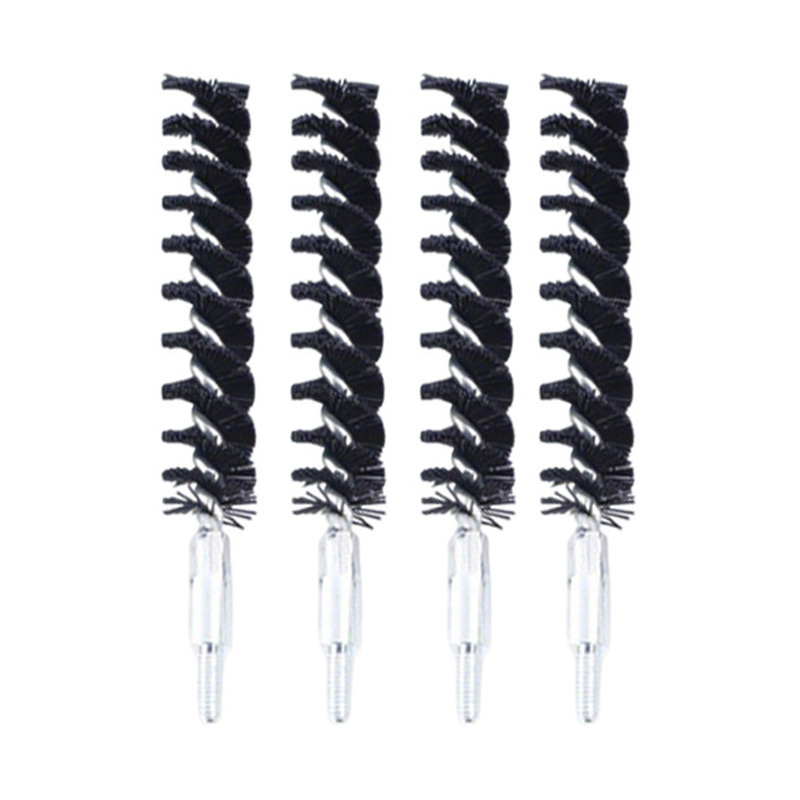
Nylon Pipe Brush Wire Crevice Rust Removal Factory Supply
The Nylon Pipe Brush Wire Crevice Rust Removal Factory Supply is a round pipe brush developed for cleaning narrow passages and recessed surfaces. Its primary function is the removal of residue, rust, carbon buildup, dust, and other contaminants from metal pipes and similar components. The same basic design can also be used for firearm bore maintenance, industrial equipment cleaning, hardware maintenance, and precision gap cleaning.
The brush is constructed around three functional elements. First, the black nylon bristles provide the working surface that contacts the residue. Second, the aluminum handle provides a lightweight and corrosion-resistant support structure. Third, the spiral bristle arrangement helps distribute the bristles around the cleaning path, improving contact inside round channels and crevices.
Unlike a flat brush, a round pipe brush can enter cylindrical openings and maintain contact around the internal circumference. This geometry is particularly useful when contamination is distributed along the inner wall of a pipe or bore. As the brush is pushed, pulled, or rotated, the spiral bristles can lift and carry debris away from the surface.
The tool is compact, portable, and simple to use. It does not require a complex mechanism, a motor, or a specialized power source. This makes it practical for field maintenance, workshop use, retail cleaning kits, and industrial supply programs. Its relatively simple construction also supports scalable production and customization.
| Specification | Product Information |
|---|---|
| Product type | Pipe brush |
| Primary function | Cleaning |
| Main application | Metal pipe cleaning |
| Additional applications | Firearm bore cleaning, industrial equipment maintenance, and crevice cleaning |
| Bristle material | Black nylon bristles |
| Handle material | Aluminum |
| Brush shape | Round |
| Total length | 76 mm for the reference version |
| Bristle length | 51 mm |
| Reference dimension | .22 caliber version: 76 × 5.1 × 6.5 mm |
| Color | Black |
| Customization | Dimensions, logo, packaging, and labeling can be customized |
| Country of origin | Jinhua, Zhejiang, China |
Dimensions may be adjusted according to the customer’s application requirements. Buyers should confirm the final working diameter, handle configuration, bristle density, packaging format, and labeling details before placing a production order.
Nylon is widely used in cleaning brushes because it offers a useful combination of flexibility, resilience, chemical tolerance, and controlled cleaning action. For many internal surfaces, especially surfaces that must remain free from scratches, nylon can be a more suitable choice than steel, brass, or bronze.
The black nylon bristles in this product are designed to loosen residue without behaving as aggressively as many metal-bristle alternatives. When used properly, they can remove dust, powder residue, light rust deposits, carbon buildup, and other contaminants while helping preserve the underlying surface.
Nylon bristles can flex as they pass through a narrow channel. This flexibility allows the brush to conform to small variations in internal diameter and maintain contact with curved surfaces. A rigid wire may contact only a limited portion of the internal wall, while flexible bristles can reach more of the circumference.
Nylon also offers a practical balance between softness and cleaning strength. It is not intended to replace every type of metal brush. Heavy corrosion, hardened deposits, or industrial-scale contamination may require a more aggressive cleaning material. However, nylon is highly useful for routine maintenance, finishing passes, delicate surfaces, and applications where minimizing abrasion is important.
One of the product’s principal advantages is its non-abrasive or low-abrasion cleaning behavior compared with many metal wire brushes. Internal bores, precision channels, coated components, and finished metal surfaces may be affected by excessive scraping. Nylon helps provide mechanical cleaning without relying on sharp metal edges.
This characteristic is valuable for firearm maintenance. Routine bore cleaning should remove fouling and residue while avoiding unnecessary wear to the bore surface. The appropriate brush should be selected according to the firearm, caliber, fouling condition, and manufacturer’s cleaning recommendations. A nylon brush is often useful when a gentler cleaning action is preferred.
The same principle applies to industrial pipes and precision gaps. A brush that can loosen debris without leaving significant scratches may help preserve dimensional accuracy, surface finish, and service life.
The spiral arrangement of the bristles is another important design feature. Spiral bristles form a continuous helical cleaning surface rather than a single straight row. This can improve coverage as the brush moves through a pipe or bore, particularly when the user combines forward and backward strokes with gentle rotation.
The flexible bristles can reach irregularities and recessed areas where a cloth or flat pad cannot make effective contact. They can also enter narrow holes and channels without requiring the user to disassemble every component. This improves convenience during inspection and routine maintenance.
Many cleaning tools are designed for a single surface or task. A cloth patch may wipe a smooth outer area but cannot effectively scrub the inside of a narrow pipe. A flat brush may clean an open surface but fail to reach the full circumference of a bore. A rigid metal brush may provide strong scraping action but create an unnecessarily aggressive contact pattern on sensitive materials.
The Nylon Pipe Brush addresses these limitations through its round profile, flexible nylon bristles, compact construction, and spiral geometry. It is suitable for users who need a versatile brush that can serve both routine cleaning and precision maintenance requirements.
Flat brushes are effective for broad surfaces, edges, and external components. However, they are less efficient when the contamination is located inside a cylindrical passage. Their bristles may touch only one side of the opening, requiring repeated repositioning and making it difficult to maintain uniform contact.
A round pipe brush is naturally suited to cylindrical spaces. Its bristles extend around the body of the tool and can engage the internal wall as the brush moves through the passage. This makes it more efficient for pipes, bores, holes, channels, and recessed openings.
Cotton mops and patches are useful for wiping, absorbing cleaning fluid, and collecting loosened residue. They are often used as part of a complete cleaning process. However, they generally do not provide the same scrubbing action as a bristle brush.
The nylon brush can loosen deposits before a patch or mop is used. It can also reach into crevices where a larger cotton mop may compress, tear, or fail to make contact. For this reason, it works well as a complementary tool in a multi-step maintenance system.
Brass and bronze brushes are established products for cleaning firearm bores and metal components. They can be valuable when stronger mechanical action is required. Nevertheless, some users prefer a nylon brush for regular maintenance, final cleaning, coated surfaces, softer materials, or situations where the risk of scratching must be minimized.
Nylon bristles are less likely to leave metal fragments and are generally more forgiving when the operator applies moderate pressure. They can also be a practical choice for customers who want different levels of cleaning aggressiveness within the same product range.
Low-cost brushes may use inconsistent bristle density, weak connections, poorly finished handles, or unstable dimensions. These problems can reduce cleaning efficiency and create quality complaints during wholesale distribution.
The product described here is manufactured in a factory environment with established production capability. Its aluminum handle, defined dimensions, spiral bristle structure, and customizable specifications provide a stronger foundation for consistent private-label products.
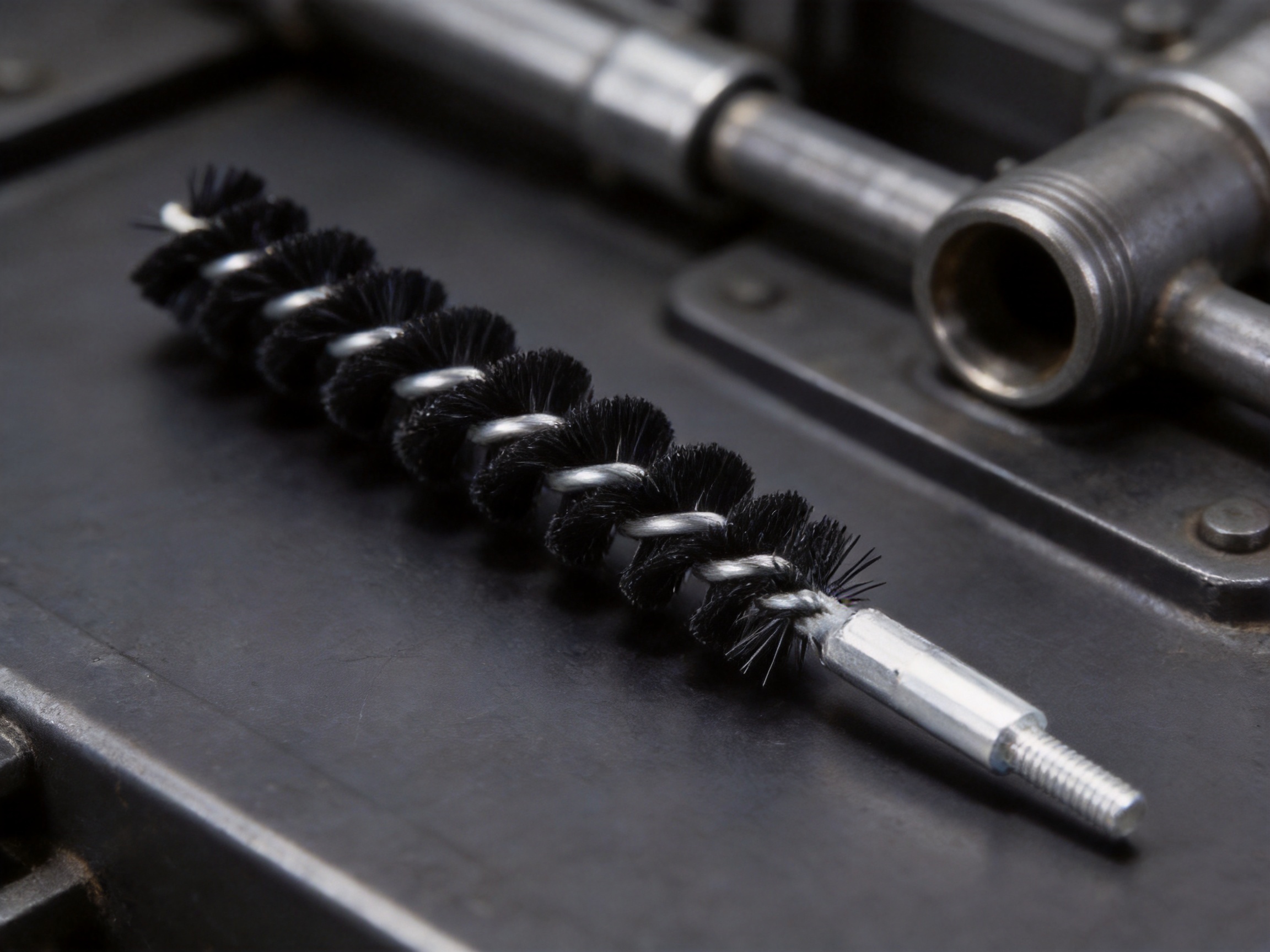
The brush is included in the Nylon & Other Material Brushes category and is suitable for firearm bore cleaning when the size and configuration match the firearm. The reference .22 caliber version is designed for a small bore application, while other dimensions may be developed for different calibers or equipment requirements.
During routine maintenance, the brush may be used to loosen powder residue, carbon deposits, light fouling, and other contamination inside the bore. A suitable cleaning solvent may be used where appropriate, followed by patches or a cotton mop to remove loosened material. Users should always follow the firearm manufacturer’s instructions and confirm that the brush size is appropriate.
A nylon brush is especially useful as part of a controlled cleaning routine. It can be used before a final wipe, after soaking, or between inspection stages. Because nylon provides a gentler contact than many metal brushes, it may be selected for frequent maintenance or for surfaces where unnecessary abrasion is undesirable.
The brush should not be forced through an obstruction. If resistance is unusually high, the operator should stop, inspect the bore, and use the correct procedure for the specific firearm. Proper direction of movement, compatible cleaning chemicals, and correct brush sizing are important for safe and effective maintenance.
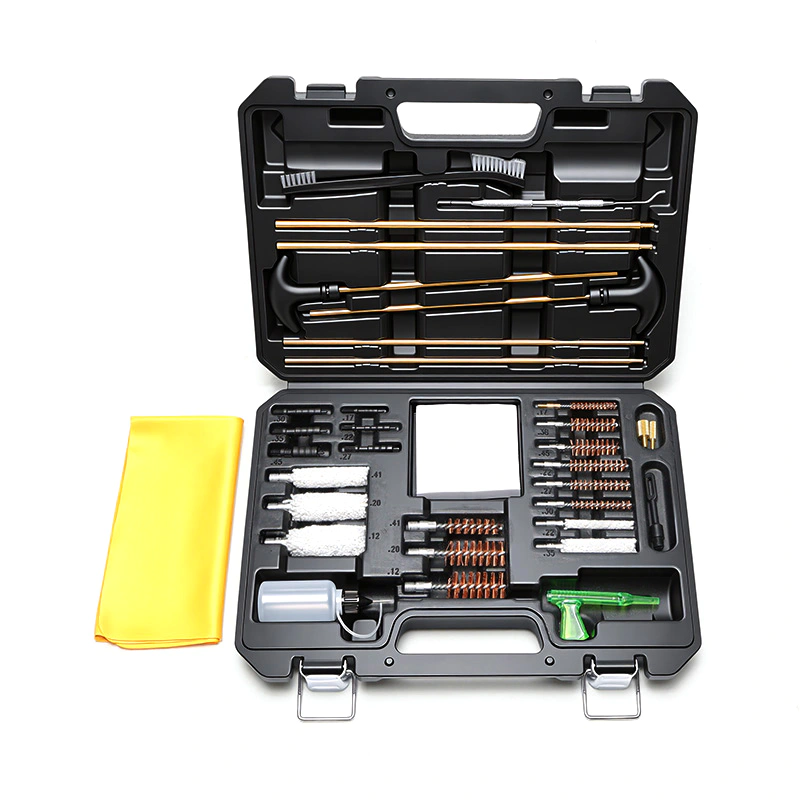
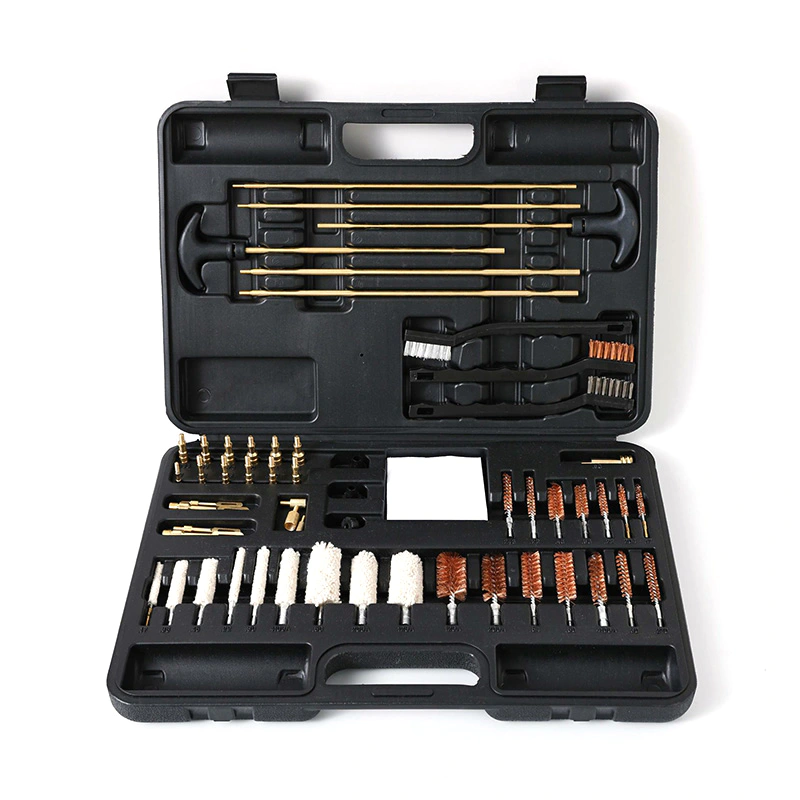
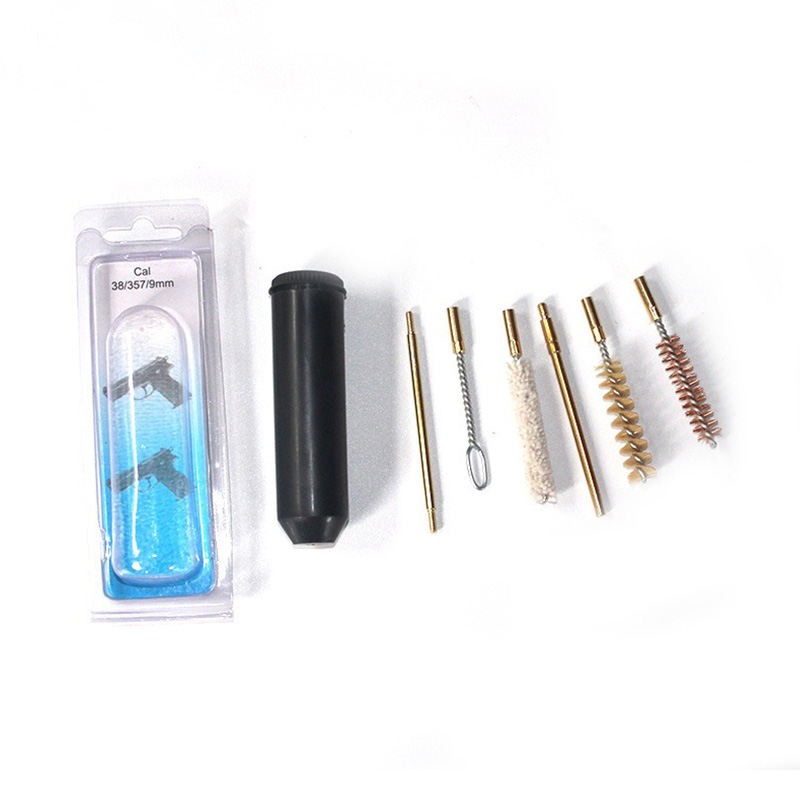
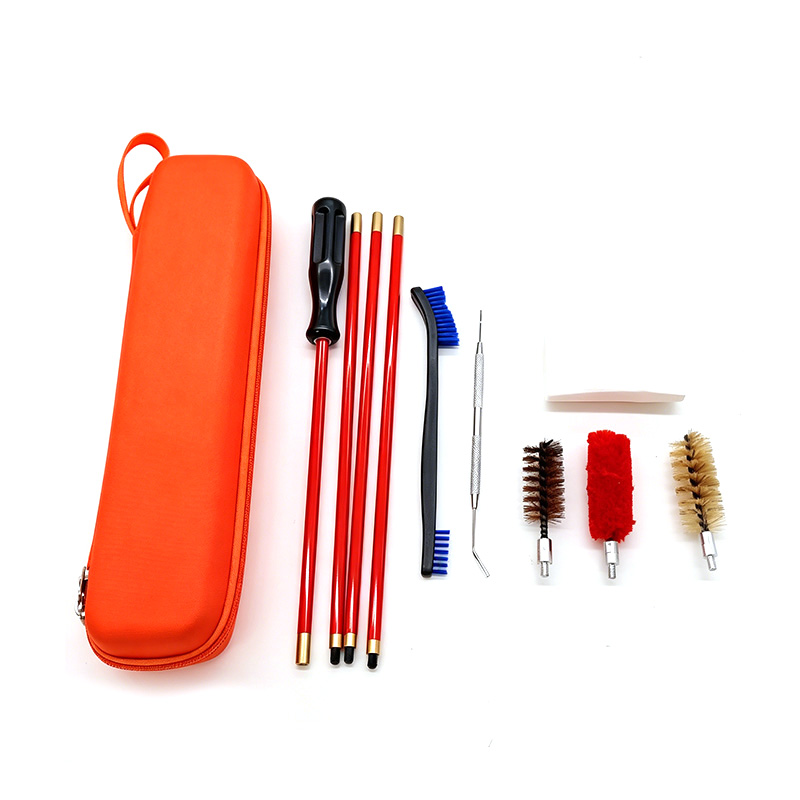
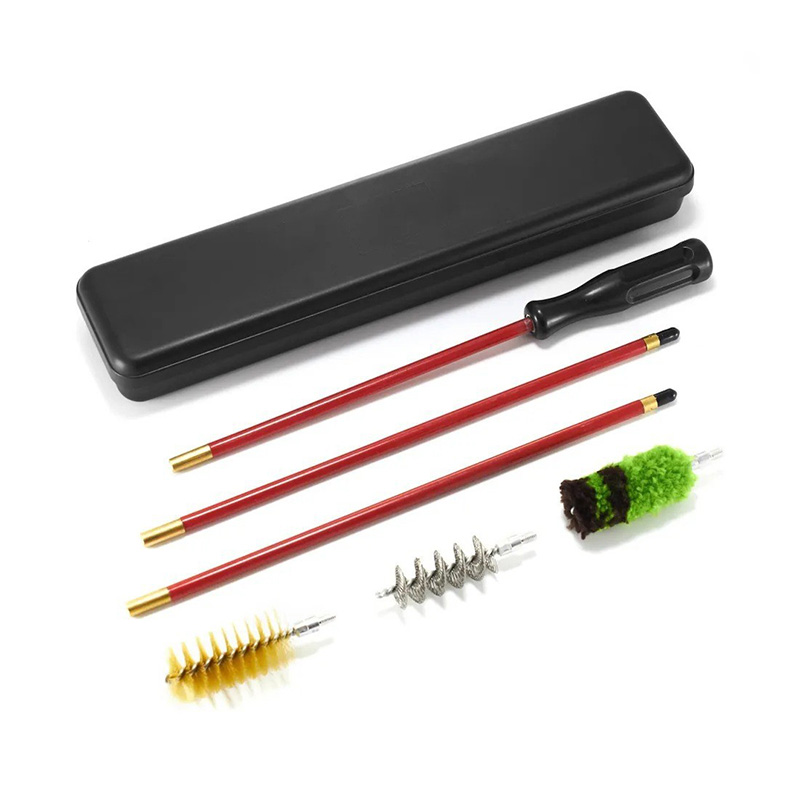
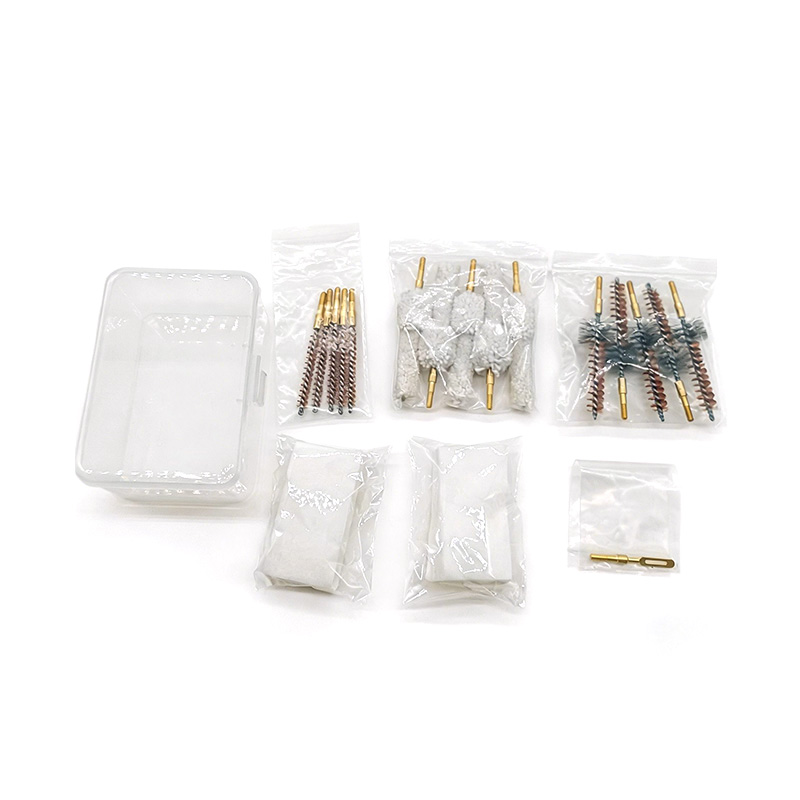
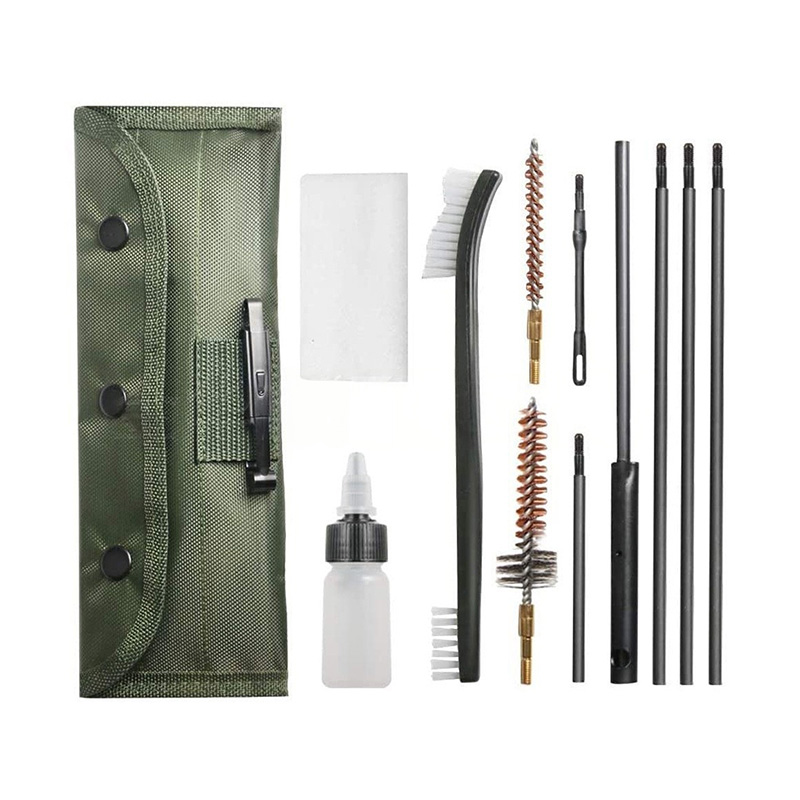
A nylon bore brush is one component of a broader cleaning system. A complete kit may include bronze or brass brushes for heavier deposits, nylon brushes for gentler cleaning, cotton mops for drying and polishing, cleaning patches for wiping, rods for controlled access, and adapters for compatibility with different tools.
This product can therefore be sold as an individual replacement brush, a caliber-specific accessory, or part of a complete OEM gun cleaning kit. Its compact size makes it suitable for retail kits, range bags, workshop organizers, and field maintenance packs.
The product is not limited to firearm maintenance. Its stated intended use is metal pipe cleaning, and the same core design can be applied to many industrial and hardware tasks.
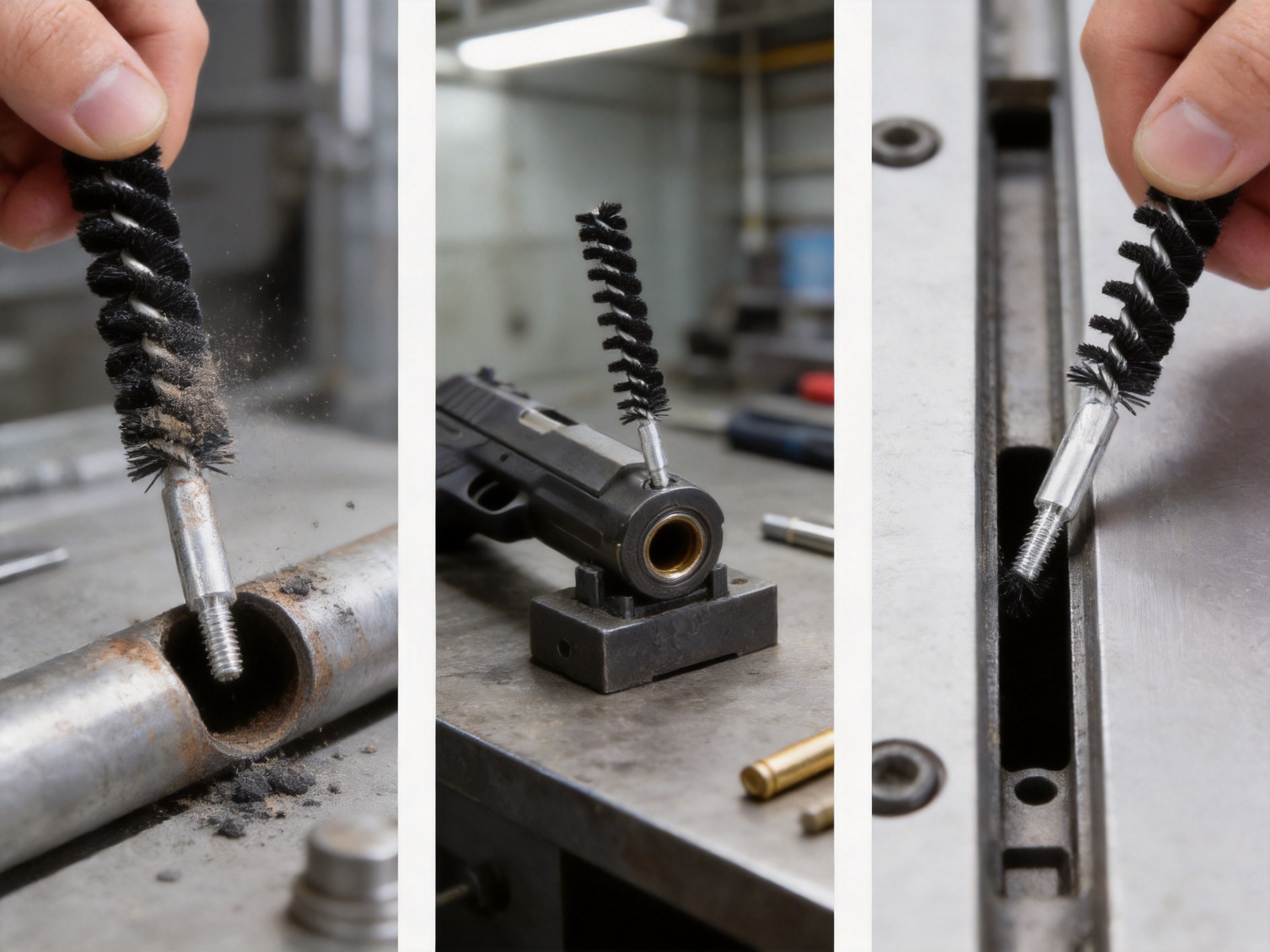
Small-diameter pipes often accumulate dust, rust particles, scale, oil residue, and production debris. External wiping may not remove contamination from the internal wall. A round nylon brush can enter the pipe and provide mechanical agitation over the affected area.
Maintenance workers may use similar brushes for fittings, tubes, channels, housings, threaded openings, and narrow mechanical passages. The aluminum handle is lightweight and easy to handle during repeated cleaning tasks. The black bristles make visible contamination easier to identify during inspection.
The tool may also be useful for precision gap cleaning. Hinges, slots, grooves, ports, and recessed hardware can collect debris that is difficult to remove with a cloth. A narrow brush can reach into these spaces while the operator maintains control over the cleaning direction and pressure.
Potential use cases include cleaning small metal tubes after machining, removing light rust from internal channels, clearing residue from maintenance components, preparing parts before inspection, and cleaning equipment gaps during scheduled servicing.
Because the bristles are nylon, users should evaluate temperature, chemical exposure, and material compatibility before use in demanding industrial environments. Nylon is versatile, but the exact performance depends on the chemical, temperature, pressure, and contamination involved.
The aluminum handle provides a practical combination of low weight, strength, and corrosion resistance. A lightweight handle helps reduce fatigue when the brush is used repeatedly or carried as part of a portable maintenance kit. Aluminum also provides a clean, professional appearance suitable for industrial and retail products.
The handle serves as the connection between the user and the bristle section. Its dimensions can be adapted for different applications, including product lines requiring specific lengths, diameters, thread formats, or packaging configurations.
The spiral bristle structure improves contact around a cylindrical cleaning path. It can help collect and move loosened debris as the brush travels through the channel. When combined with controlled rotation, the spiral pattern supports a more uniform cleaning action than a simple straight bristle arrangement.
Spiral construction is also efficient for compact tools because it places working bristles around the available circumference. This allows a relatively small brush to serve a larger effective cleaning area during each pass.
The reference version has a total length of 76 mm, making it suitable for storage in small cleaning kits and maintenance cases. Its listed .22 caliber dimensions of 76 × 5.1 × 6.5 mm allow it to serve narrow bore and pipe applications where larger brushes cannot enter.
Compact dimensions are particularly valuable for retailers and distributors. The brushes require limited warehouse space, are easy to count and package, and can be included in multi-item kits without significantly increasing shipping volume.
Different industries and end users require different brush sizes. A firearm accessory brand may need caliber-specific dimensions. An industrial buyer may require a particular tube diameter. A tool distributor may need a family of brushes with color-coded handles or packaging.
Customizable dimensions allow the product to be adapted to these requirements. Before development, the buyer should provide the target internal diameter, working length, total length, bristle length, bristle stiffness, handle dimensions, connection method, and intended cleaning environment.
Jinhua Tongshun Tool Factory was established in 1999 and has more than 26 years of experience in the development and production of gun cleaning tools and related accessories. The company integrates research and development, manufacturing, and sales, allowing product design and production planning to be coordinated within one organization.
The factory is located in Jinhua, Zhejiang Province, China, an established manufacturing region with access to industrial supply chains, component suppliers, packaging resources, and export logistics. This location supports the production of both standard catalog items and customized OEM products.
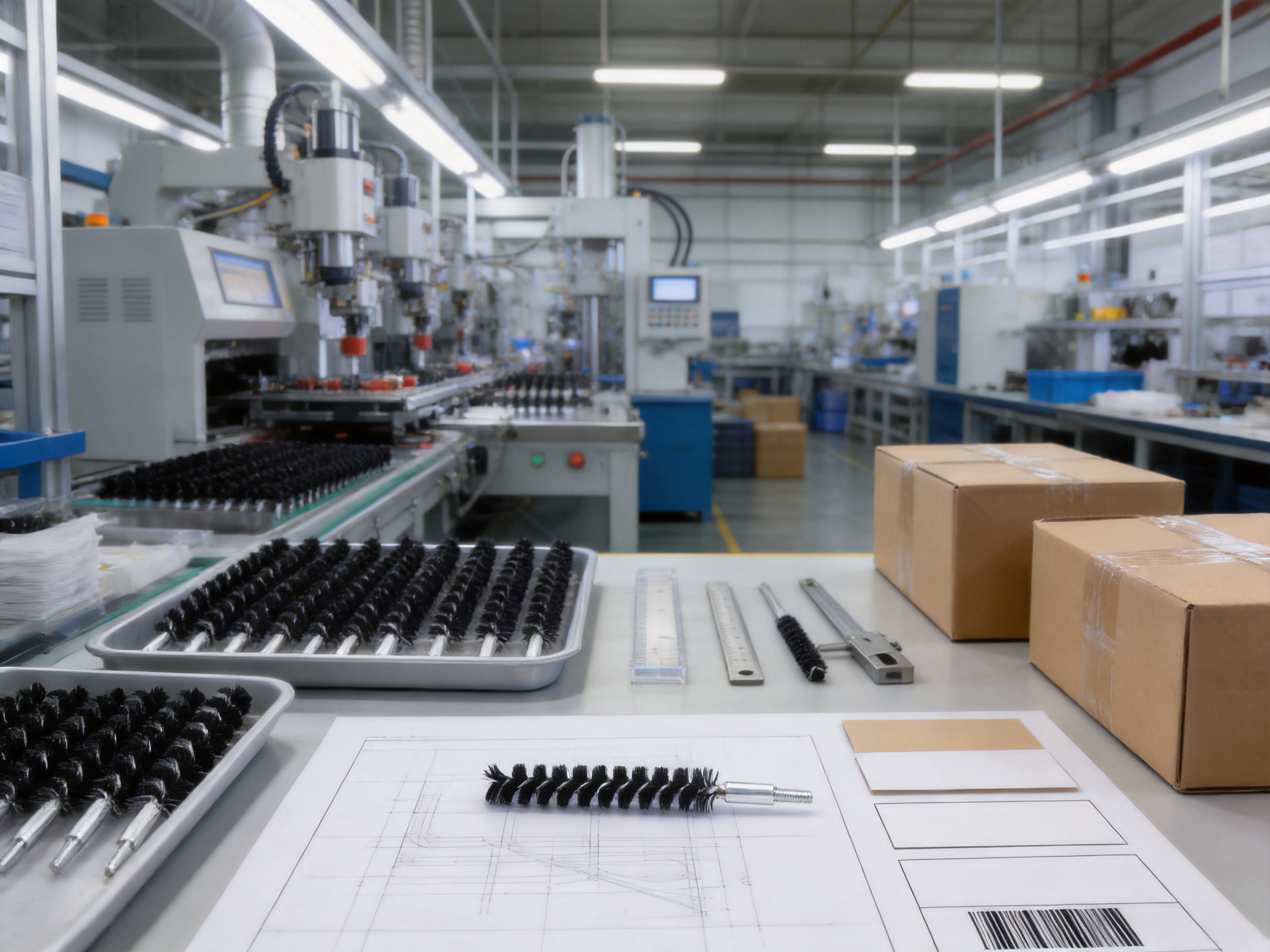
Tongshun Tools operates production systems that include semi-automatic and fully automated equipment. This combination allows the factory to balance flexibility and volume. Semi-automatic processes can support customized or small-batch orders, while automated systems can improve repeatability for larger production runs.
In-house research and development capability helps the factory respond to different cleaning requirements. Brush design involves more than selecting a bristle material. The overall performance depends on bristle length, density, diameter, spacing, spiral formation, handle construction, working diameter, and the relationship between the brush and the target surface.
By coordinating design and production, the factory can evaluate product specifications with manufacturing practicality in mind. This reduces the risk of developing a design that performs well in theory but is difficult to produce consistently or package economically.
Large-scale orders require more than available machinery. They also require production scheduling, material planning, process coordination, inspection procedures, and stable packaging operations. The factory’s semi-automatic and automated systems are intended to support consistent quality across repeat orders.
Scalable production benefits distributors and brand owners in several ways. It can help maintain product availability, support seasonal demand, reduce the risk of extended lead times, and provide a more stable foundation for long-term retail programs.
The company’s products are exported to more than 50 countries and regions. This international experience is relevant for buyers who need products prepared for cross-border distribution. Export-oriented manufacturing often requires attention to carton labeling, packaging language, barcode placement, product consistency, and shipping documentation.
The product information identifies Europe as a main sales region and confirms that the item is intended exclusively for cross-border export. Buyers serving European, North American, and other international markets can discuss packaging, labeling, product compliance, and import requirements with the factory before production.
Private-label programs allow distributors and brand owners to sell a customized brush under their own market identity. Jinhua Tongshun Tool Factory provides OEM and ODM support for product customization, logo application, packaging, and barcode labeling.
Brand identification can be applied through logo printing or laser engraving, depending on the handle material, design, quantity, and desired appearance. Laser engraving can provide a durable, precise mark on suitable surfaces, while printing may offer greater flexibility for certain colors and artwork.
Customers should submit vector artwork, preferred logo size, position, color requirements, and production references for evaluation. A pre-production sample or digital approval should be completed before mass production begins.
Packaging can be developed for different sales channels. Bulk industrial packs may be appropriate for workshops, distributors, and maintenance departments. Retail blister cards may be suitable for hardware stores, firearm accessory retailers, and consumer-facing displays. FBA-ready packaging can be planned for e-commerce fulfillment requirements.
Packaging customization may include product cards, instruction inserts, barcode labels, warning information, color schemes, carton markings, and multilingual content. The correct format depends on the target market and sales channel.
Barcode labeling helps retailers and online sellers manage inventory and product identification. Customers can provide their own barcode numbers or request a packaging solution based on their distribution system. The listing information identifies eBay as a downstream platform, while the product can also be prepared for other suitable e-commerce channels.
Barcode placement should be checked for readability, contrast, quiet zones, and packaging curvature. The buyer should confirm the required barcode type and label dimensions before final artwork approval.
Flexible MOQ arrangements can help different types of buyers. A small brand may need a manageable first order for market testing, while an established distributor may require a larger repeat program. MOQ depends on the level of customization, material requirements, packaging complexity, and production schedule.
Buyers should provide an estimated annual demand and an initial order target. This allows the factory to recommend a practical manufacturing and packaging plan.
Product quality should be evaluated through measurable specifications rather than appearance alone. For this nylon pipe brush, important quality points include the uniformity of the bristle arrangement, the security of the bristle attachment, the accuracy of the working diameter, the finish of the aluminum handle, and the consistency of the total length.
Bristles should remain securely fixed during normal pushing, pulling, and rotational use. Loose bristles can reduce cleaning efficiency and create contamination inside the component being cleaned. Buyers may establish sampling procedures to check bristle retention during incoming inspection.
Caliber-specific and pipe-specific brushes must maintain consistent dimensions. A brush that is too large may be difficult to insert, while one that is too small may fail to contact the internal wall effectively. Production tolerances should be agreed upon during the technical confirmation stage.
The aluminum handle should be free from sharp burrs, damaging edges, and visible defects that could affect handling or packaging. A smooth, consistent finish contributes to user comfort and supports the perceived quality of the final branded product.
Packaging should protect the bristle shape and prevent crushing during storage and transport. Labels should remain attached, barcodes should scan correctly, and product information should match the approved artwork. Cartons should be suitable for the planned logistics method.
Before using the brush, identify the material and internal dimensions of the component. Select a brush that fits the opening without excessive force. For firearm applications, confirm the caliber and follow the firearm manufacturer’s maintenance instructions.
Apply an appropriate cleaning solution when necessary. Move the brush through the passage with controlled strokes. Gentle rotation may improve contact in cylindrical spaces, but excessive force should be avoided. After brushing, remove loosened residue with a patch, cloth, cotton mop, or suitable rinse procedure.
Inspect the brush after use. If the bristles become heavily worn, deformed, contaminated, or loose, replace the brush. Clean the tool according to the chemical manufacturer’s recommendations and allow it to dry before storage.
Users should check chemical compatibility before applying strong solvents, acids, alkaline cleaners, or high-temperature processes. Nylon performance can vary depending on the specific chemical and exposure conditions.
The first requirement is the internal diameter of the pipe, bore, or opening. The brush should be sized to provide useful bristle contact without becoming difficult to insert or remove. The desired cleaning intensity may influence bristle diameter, density, and length.
The second requirement is working depth. A short brush may be suitable for shallow gaps, while a longer configuration may be necessary for extended pipes or channels. The total length should provide enough grip and access for the operator.
The third requirement is the surface material and finish. Nylon may be selected for finished metal, coated surfaces, and applications that require controlled abrasion. If the contamination is exceptionally hard or heavily bonded, the buyer may need to compare nylon with brass, bronze, stainless steel, or other brush materials.
The fourth requirement is packaging and market positioning. A brush intended for a professional industrial catalog may require bulk packaging and technical labeling. A consumer retail version may require a printed card, barcode, instructions, and a visually distinctive presentation.
The fifth requirement is forecast volume. A clear demand estimate helps determine whether the best solution is an existing specification, a modified standard item, or a fully customized design.
The product offers several advantages for companies building a cleaning accessory range. It fills an important position between aggressive metal brushes and soft wiping tools. It can be sold alone or combined with other products in a complete maintenance kit.
Its compact size supports efficient storage and shipping. Its simple form is easy to explain to customers and can be marketed for several compatible applications. Its black nylon bristles and aluminum handle create a professional appearance that is suitable for industrial, hardware, and firearm accessory channels.
The product also benefits from customization capability. A distributor can request its own logo, packaging format, and barcode rather than selling an anonymous generic item. This supports brand recognition, repeat purchasing, and product differentiation.
For wholesalers, the ability to source multiple related items from the same factory can simplify purchasing. The company manufactures gun cleaning kits, barrel brushes, bore mops, cleaning rods, adapters, patches, and cloths. A buyer may therefore develop a coordinated product portfolio rather than managing unrelated suppliers for every accessory.
In a competitive cleaning-tool market, the product can be positioned around durability, controlled cleaning action, application flexibility, and factory customization.
Its principal technical advantage is the use of nylon in a spiral round-brush structure. This combination provides a practical solution for internal cleaning where a flat brush is unsuitable and a metal brush may be unnecessarily aggressive.
Its principal commercial advantage is the ability to support OEM and ODM programs. Many suppliers can provide a basic brush, but fewer can support product development, logo application, customized packaging, barcode labeling, and scaled production as part of one coordinated service.
Its principal supply advantage is the manufacturer’s long operating history and international export experience. Since 1999, the factory has focused on cleaning tools and related accessories, building specialized knowledge in product design, production, and global supply.
It is designed for cleaning metal pipes, firearm bores, narrow channels, gaps, and other hard-to-reach areas. It can remove residue, light rust, carbon buildup, dust, and similar contaminants when the brush size is appropriate for the application.
The bristles are made from black nylon. Nylon provides flexible, controlled cleaning action and is suitable for applications where a lower-abrasion alternative to metal bristles is preferred.
The handle is made from aluminum. Aluminum provides a lightweight structure with good corrosion resistance and practical durability for routine cleaning use.
The reference .22 caliber version measures 76 × 5.1 × 6.5 mm, with a total length of 76 mm. The listed bristle length is 51 mm. Final dimensions may be customized according to the buyer’s requirements.
Yes. It is suitable for firearm bore cleaning when the brush size matches the firearm and the user follows the firearm manufacturer’s maintenance instructions. Users should avoid forcing an incorrectly sized brush through a bore.
Neither material is universally better. Nylon is useful when a gentler, lower-abrasion cleaning action is preferred. Brass and bronze brushes may be selected when stronger mechanical cleaning is needed. Many complete cleaning kits include both nylon and metal brushes for different maintenance stages.
Yes. The factory offers customizable dimensions. Buyers should provide the required working diameter, total length, bristle length, bristle density, and application details for technical evaluation.
Yes. Private-label services include logo printing and laser engraving, subject to material, artwork, quantity, and production requirements.
Available options include bulk industrial packs, retail blister cards, and packaging prepared for e-commerce fulfillment programs. Packaging artwork, barcode labels, product information, and carton markings can be discussed during order development.
Potential industries include firearm accessories, hardware, industrial maintenance, machinery servicing, metal pipe production, equipment repair, and general precision cleaning.
The product is manufactured in Jinhua, Zhejiang, China, by Jinhua Tongshun Tool Factory.
Yes. The factory supports wholesale, OEM, and ODM orders. Production arrangements depend on the selected specification, customization requirements, packaging format, and order quantity.
Buyers should provide the required brush size, application, estimated quantity, logo requirements, packaging format, destination market, and target delivery schedule. Clear information helps the factory prepare a more accurate quotation and production proposal.
A typical order begins with a technical discussion. The buyer explains the intended application and provides drawings, measurements, photographs, or sample references where available. The factory then evaluates the required dimensions, bristle configuration, handle construction, and packaging approach.
The next stage is specification confirmation. Both parties should agree on the brush diameter, total length, bristle length, color, handle material, logo method, packaging, barcode information, carton quantity, and inspection requirements.
For customized programs, a sample or pre-production approval may be recommended. The sample allows the buyer to review fit, cleaning behavior, appearance, branding, and packaging before mass production.
After approval, the factory schedules materials and production. Quality inspections may be carried out during manufacturing and before shipment. Finished goods are then packed according to the approved packaging specification and prepared for export logistics.
Repeat orders can usually be managed more efficiently once the technical file, artwork, packaging design, and inspection standards have been established. This supports consistent product presentation across future shipments.
The Nylon Pipe Brush Wire Crevice Rust Removal Factory Supply is a versatile and practical cleaning accessory for metal pipes, firearm bores, industrial equipment, and precision gaps. Its black nylon bristles provide controlled cleaning action, while the spiral configuration improves contact inside cylindrical and recessed spaces. The aluminum handle contributes low weight, durability, and corrosion resistance.
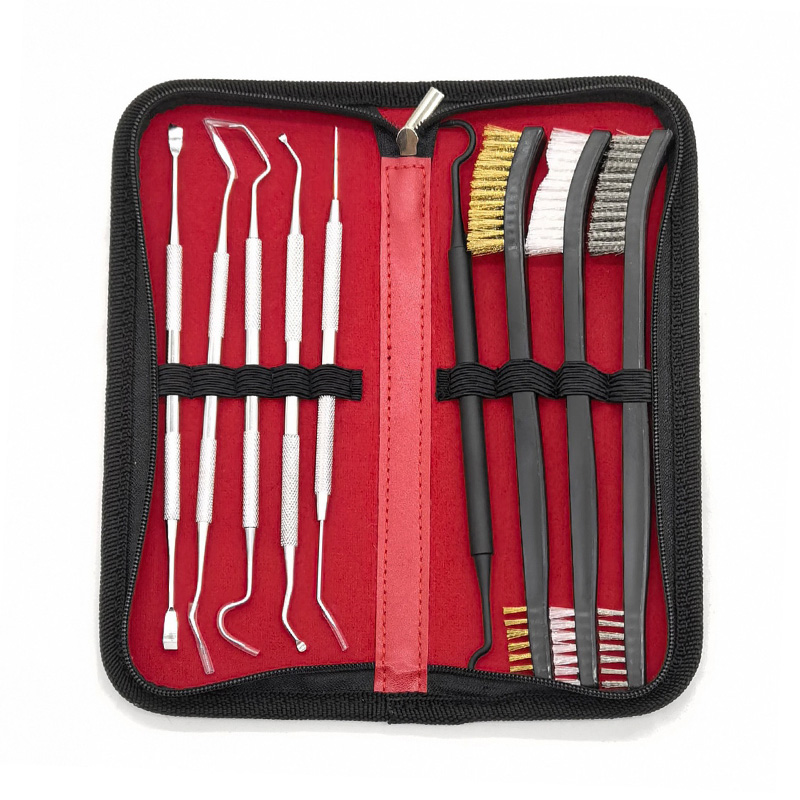
Compared with flat brushes, wiping tools, and highly aggressive metal brushes, this design offers a useful balance of reach, flexibility, and surface protection. It can serve as a stand-alone maintenance tool or as part of a broader cleaning kit containing brass brushes, bronze brushes, cotton mops, patches, cloths, rods, and adapters.
For distributors and brand owners, the product is supported by extensive OEM and ODM capability. Logo printing, laser engraving, custom packaging, barcode labeling, flexible MOQ arrangements, and scalable production make it suitable for international wholesale and private-label programs.
Jinhua Tongshun Tool Factory brings more than 26 years of specialized manufacturing experience, semi-automatic and automated production systems, integrated research and development, and export experience covering more than 50 countries and regions. These strengths provide a reliable foundation for companies seeking durable, customizable, and commercially scalable cleaning tools.
Businesses interested in developing a product range can contact Jinhua Tongshun Tool Factory to discuss dimensions, materials, packaging, branding, sample approval, and production requirements.
Jinhua Tongshun Tool Factory. Product specification information for Nylon Pipe Brush Wire Crevice Rust Removal Factory Supply.
Jinhua Tongshun Tool Factory. Company information, manufacturing capability, OEM and ODM service profile, and export experience.
Internal product data. Reference .22 caliber dimensions: 76 × 5.1 × 6.5 mm; total length: 76 mm; bristle length: 51 mm.
General brush engineering principles concerning nylon bristles, spiral brush construction, controlled abrasion, and cylindrical surface cleaning.
General firearm and industrial equipment maintenance practices concerning correct brush sizing, controlled pressure, chemical compatibility, inspection, and replacement.