English
 русский
 Español
 عربى

HUNTACE HUNTACE HUNTACE HUNTACE HUNTACE
HUNTACE HUNTACE HUNTACE HUNTACE

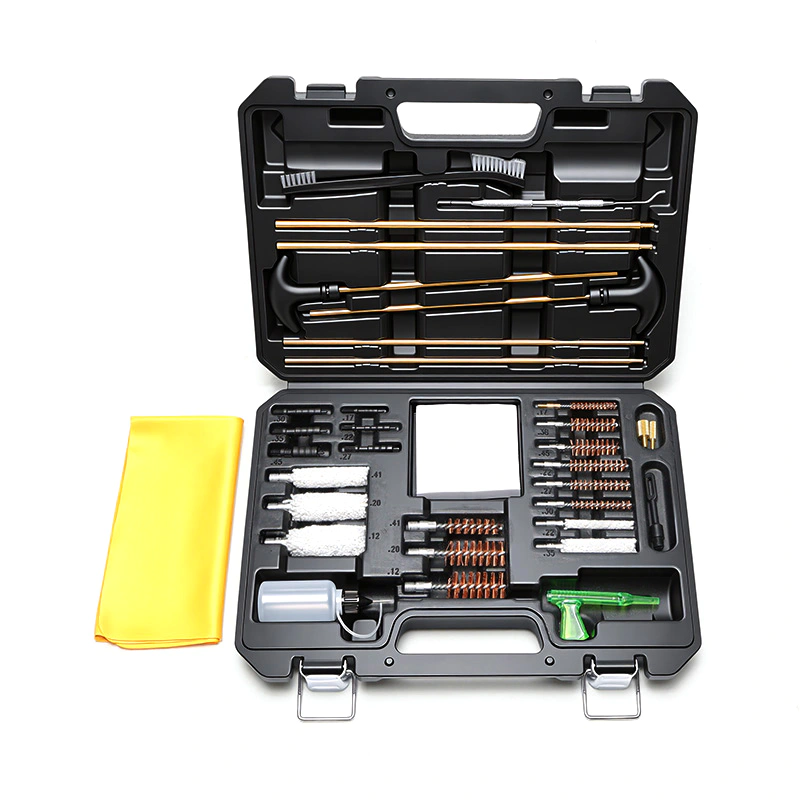
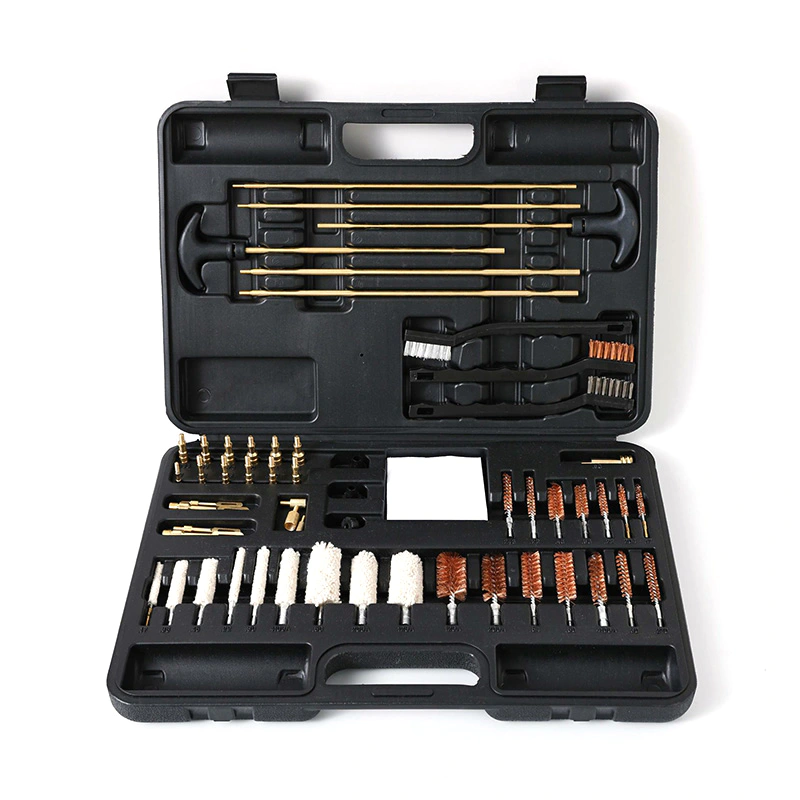
Reliable firearm maintenance depends on having the right tools for the barrel, the correct cleaning sequence, and a storage system that keeps every component protected and accessible. The Brass Bore Brush Gun Cleaning Kit is designed as a practical, multi-caliber cleaning solution for 12-gauge, 16-gauge, 20-gauge, and .410 bore shotguns. It combines a modular cleaning rod with brass, stainless steel, and cotton cleaning components to support routine fouling removal, deeper barrel cleaning, light rust removal, and final bore polishing.
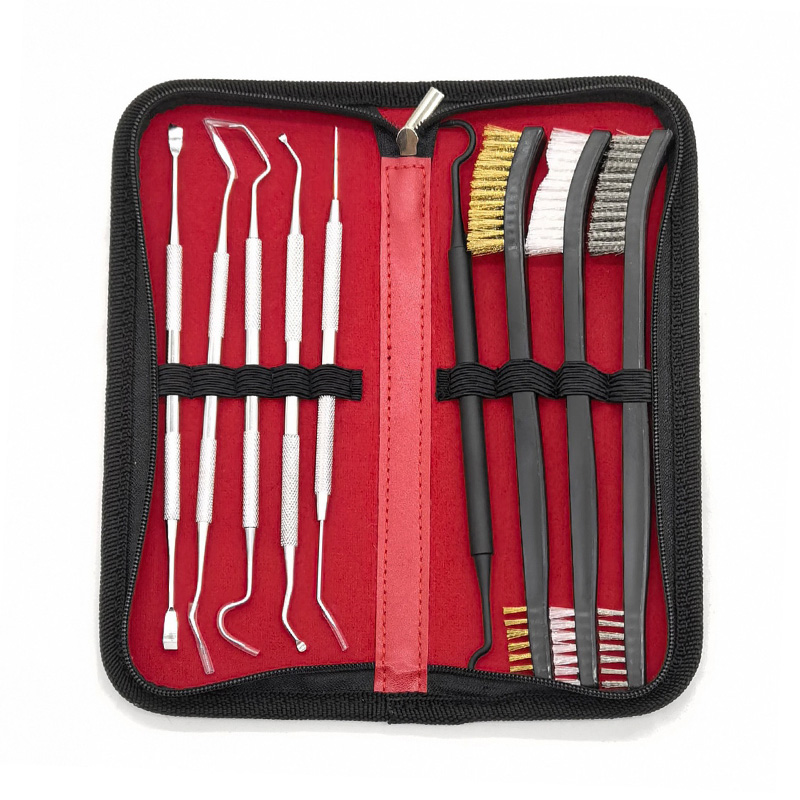
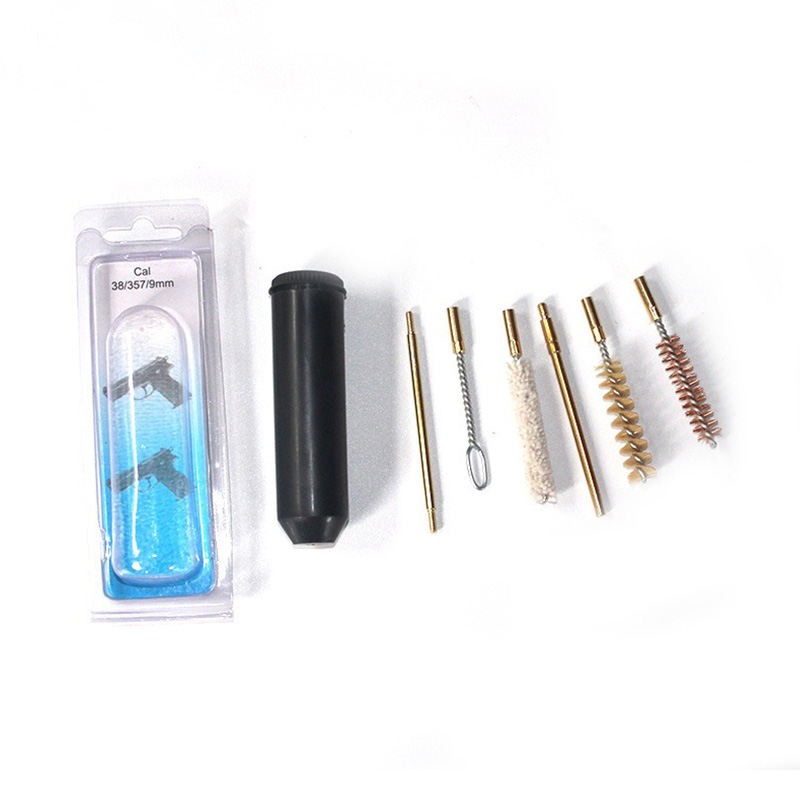
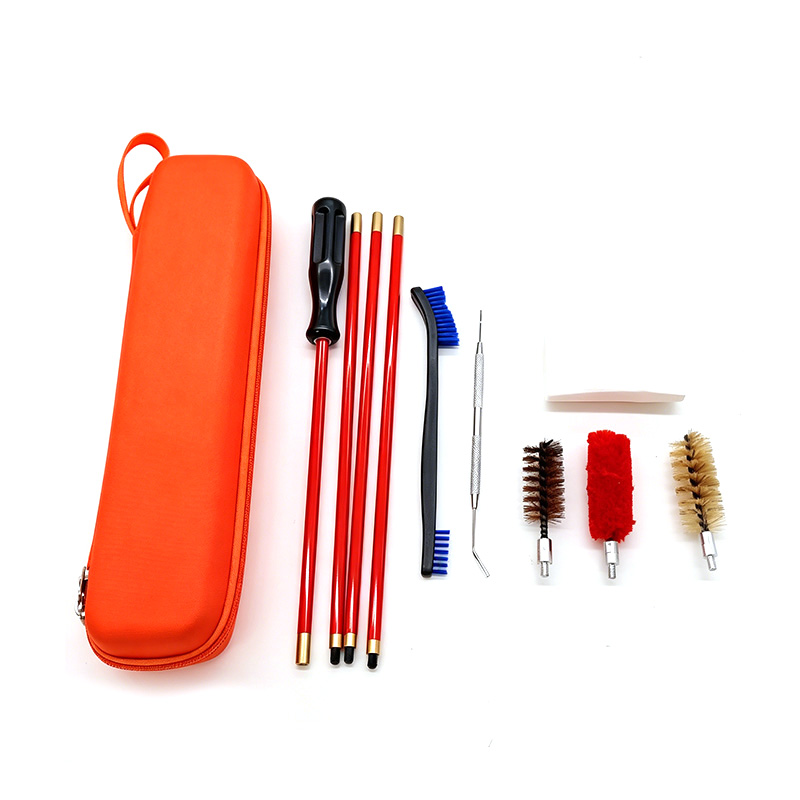
Unlike a basic single-brush set, this kit brings several complementary cleaning functions into one compact case. The brass wire brush is intended for loosening stubborn deposits, the stainless steel brush provides a more intensive cleaning option when appropriate, and the cotton mop helps collect residue and distribute cleaning products during the finishing stage. The segmented red cleaning rod provides a 450 mm modular platform suitable for standard shotgun barrels and convenient field storage.
For retailers, wholesalers, shooting clubs, firearm accessory distributors, and private-label buyers, the product also offers a practical supply advantage. It is produced by Jinhua Tongshun Tool Factory, a China-based manufacturer with experience in gun cleaning kits, barrel cleaning brushes, cleaning rods, patches, cloths, mops, and related accessories. The factory supports OEM and ODM requirements, including customized products, packaging, and logos, while maintaining a focus on stable production and consistent quality control.
Brass Bore Brush Gun Cleaning Kit
The Brass Bore Brush Gun Cleaning Kit is a purpose-built shotgun maintenance set rather than a general-purpose household brush assortment. Its components are selected for contact with the internal surfaces of shotgun barrels and for the different stages of a normal cleaning routine. The kit is available in versions associated with several common firearm calibers and gauges, including 12 GA, 16 GA, 20 GA, .410 GA, .17 caliber, .22 caliber, and .30 caliber configurations.
The standard product description identifies the kit as suitable for 12GA, 16GA, 20GA, and .410 bore shotguns. The listed dimensional options also include product references for 10/12 GA, 16 GA, 20/28 GA, and .410 GA, as well as .17 caliber, .22 caliber, and .30 caliber versions. Buyers should confirm the exact gauge, caliber, thread specification, and component configuration before placing an order, particularly when purchasing mixed assortments or private-label production.
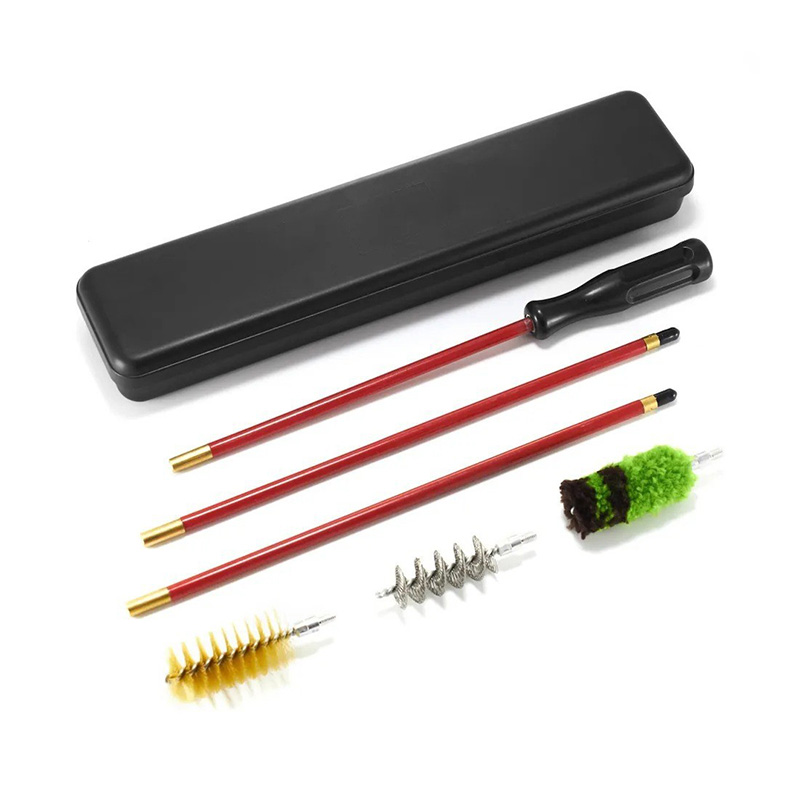
Each set is stored in a black plastic case measuring approximately 30 × 6 × 3 cm. This compact format helps prevent the loss of small accessories and makes the kit easy to place in a shooting bag, range case, workshop drawer, or outdoor equipment box. The case also supports retail presentation by keeping the product organized and providing a defined package size for storage and merchandising.
| Product name | Brass Bore Brush Gun Cleaning Kit |
| Primary application | Shotgun barrel and bore maintenance |
| Compatible standard configurations | 12 GA, 16 GA, 20 GA, and .410 GA |
| Additional listed versions | .17 caliber, .22 caliber, .30 caliber, 10/12 GA, 20/28 GA |
| Cleaning rod length | Approximately 450 mm |
| Rod construction | Segmented modular rod |
| Brush and mop components | Brass wire brush, stainless steel brush, and cotton mop |
| Case material | Black plastic |
| Case dimensions | Approximately 30 × 6 × 3 cm |
| Product color | Black case with red segmented rod |
| Brand listed in supplied specifications | Tongshun |
| Product code reference | 9021 spot |
| Factory service | OEM, ODM, wholesale, and private-label support |
A shotgun bore may accumulate powder residue, carbon fouling, plastic wad deposits, moisture-related contamination, and other material after repeated use or storage. These deposits do not always respond equally to one type of brush. A soft cotton mop may be useful for applying solvent or collecting loosened residue, but it is not intended to perform the same work as a wire brush. Conversely, a firm brush may loosen fouling efficiently but is not the best choice for final wiping or applying a light protective film.
The main advantage of a multi-component kit is that it allows the user to match the accessory to the cleaning stage. The brass brush can be used for controlled mechanical cleaning of deposits. The stainless steel brush offers a different level of firmness for applications where more intensive action is required and where the firearm manufacturer’s maintenance guidance permits its use. The cotton mop can then be used to wipe the bore, apply a suitable cleaning product, or complete the polishing stage.
This separation of functions is more efficient than relying on a single brush for every task. It can also help reduce unnecessary wear on the cleaning accessories because each component is used for its intended purpose. For distributors, the combination gives customers a more complete solution and creates a stronger value proposition than a package containing only one brush and a short handle.
The brass wire brush is the central component of the kit and is designed to help loosen carbon, powder residue, and other deposits from the interior of the barrel. Brass is widely used in firearm cleaning accessories because it provides useful mechanical cleaning strength while being less aggressive than many harder materials when properly selected and used.
Users should always follow the firearm manufacturer’s instructions and use the correct gauge or caliber brush. The brush should be inserted and moved in a controlled manner, without forcing it through an obstruction. A suitable bore-cleaning solvent can be used according to its label, followed by appropriate wiping and drying. The brass brush is not a substitute for inspection, and it should not be used to force a blocked barrel clear.
The included stainless steel brush provides an additional cleaning option for deposits that may require more vigorous mechanical action. Its inclusion makes the kit more versatile than a set containing only a brass brush. However, stainless steel is a firm material, and the brush should be selected and used carefully. It is particularly important to confirm that the brush is appropriate for the relevant barrel and that the cleaning technique will not damage a delicate surface, finish, choke area, or bore treatment.
In a professional maintenance environment, different brush materials can be assigned to different tasks. The brass brush may be used for routine cleaning, while the stainless steel brush may be reserved for carefully controlled work carried out in accordance with the firearm maker’s instructions. Clear labeling and user education are recommended for retailers and private-label buyers so that customers understand the role of each accessory.
The cotton mop completes the set by providing a soft contact surface for the finishing stage. It can help remove loose residue left after brushing, distribute an approved cleaning or protective product, and assist with a final inspection of the bore. Cotton is also useful when the goal is to leave the interior surface clean and dry rather than continue with abrasive mechanical action.
A cotton mop should be kept clean and replaced when it becomes heavily contaminated. Excessive product should be avoided because a saturated mop can make it difficult to judge whether the barrel is properly clean and dry. For long-term storage, the bore should be treated according to the firearm manufacturer’s recommendations, especially in humid environments.
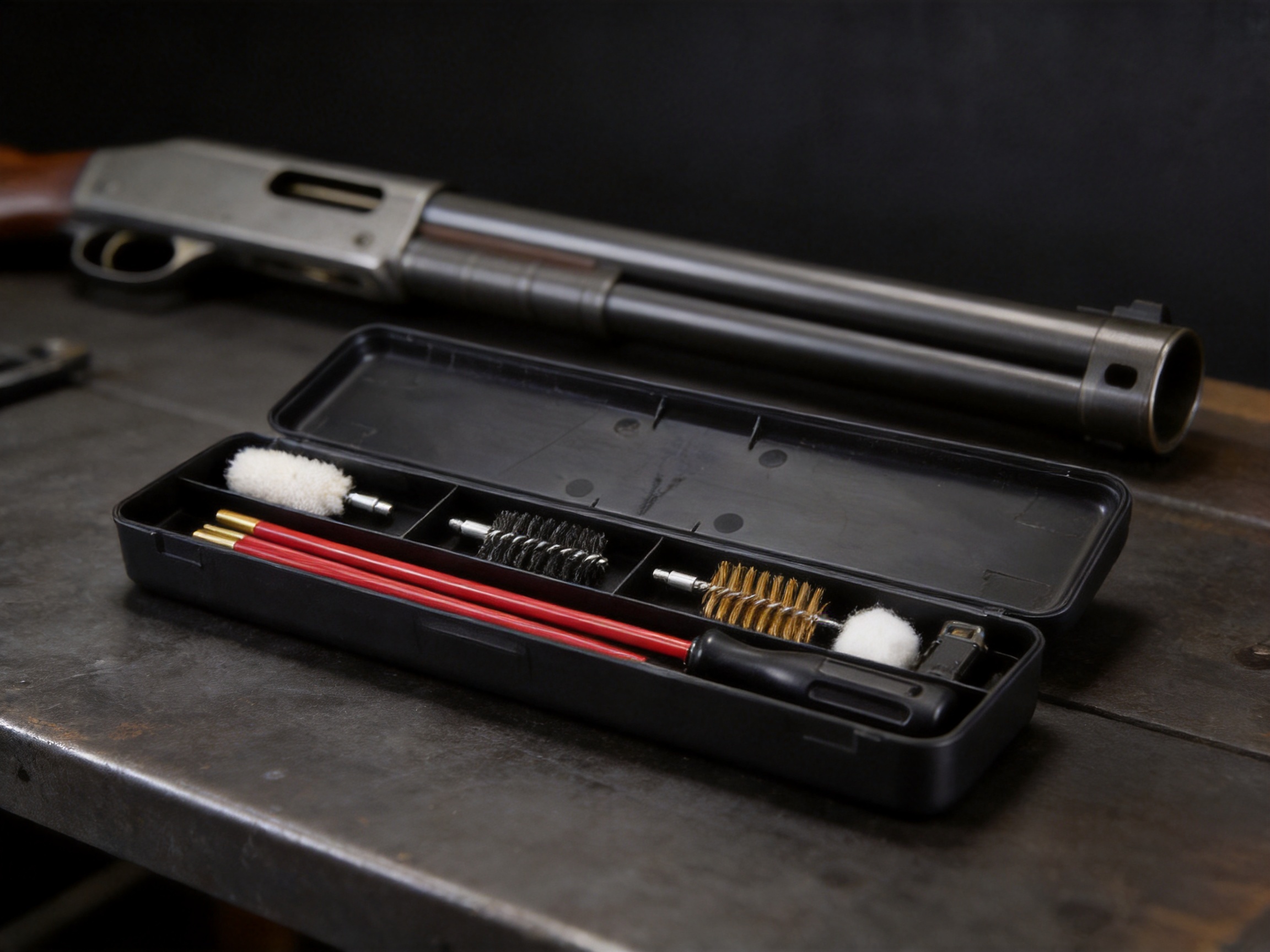
The 450 mm segmented cleaning rod is designed to balance usable length with compact storage. A one-piece rod can be inconvenient to transport and may require a larger case. A segmented rod can be separated into shorter sections, placed inside the supplied case, and assembled when needed. This is particularly useful for field shooting, outdoor activities, range transport, and mobile maintenance.
The modular structure also helps manufacturers and distributors create a compact retail package. A case measuring approximately 30 × 6 × 3 cm occupies limited shelf, warehouse, and shipping space. For e-commerce sellers, compact packaging can simplify inventory organization and reduce the amount of external packaging required for individual orders.
The rod is described as having a stainless steel handle or stainless steel construction element in the supplied product information. Stainless steel is commonly selected for cleaning-tool components because it offers useful resistance to corrosion and provides a durable surface for repeated handling. The red rod sections create visual contrast against the black case and can make the components easier to identify during assembly or use.
Before use, each rod section should be checked for damage, contamination, or damaged connection threads. Sections should be joined securely but should not be over-tightened. The brush or mop should be attached using the correct connection and should be aligned with the bore. The assembled rod should be guided straight through the barrel as far as the design and cleaning procedure allow.
Users should never use a cleaning rod as a tool for clearing a live obstruction or for applying uncontrolled force. The firearm must be unloaded, pointed in a safe direction, and handled in accordance with applicable safety rules before cleaning begins. If there is any doubt about a blockage, damaged component, or unusual resistance, cleaning should stop and the firearm should be examined by a qualified professional.
The product is designed to support three closely related maintenance functions: rust removal, deep cleaning, and surface polishing. These functions should be understood as stages rather than as permission to use maximum force. Effective cleaning is based on the combination of a suitable brush, an appropriate solvent, controlled movement, adequate inspection, and correct drying.
For routine maintenance, the user can begin by confirming that the firearm is unloaded and disassembled as recommended by the manufacturer. A preliminary pass with a suitable cleaning accessory may loosen loose debris. The brass bore brush can then be used with controlled strokes to address residue. After brushing, the cotton mop can help remove loosened material and prepare the bore for inspection.
When deposits are more persistent, a product-specific solvent may be allowed to work for the period stated on its label. The brush can then be used again without excessive pressure. The stainless steel brush should be reserved for situations where its use is appropriate and permitted. The goal is to remove contamination while maintaining the integrity of the bore and any applicable surface finish.
After cleaning, the bore should be examined under suitable lighting. A dry patch, cloth, or cotton mop can help remove remaining solvent and residue. If the firearm will be stored, the user should follow the manufacturer’s instructions for corrosion protection. Before the next firing session, any protective oil or storage compound should be removed as directed so that the bore is in the correct condition for use.
Gauge compatibility is one of the most important purchasing considerations for a bore cleaning kit. A brush intended for a 12-gauge barrel should not be assumed to fit a 20-gauge or .410 bore barrel. The supplied product information identifies several gauge-specific options, allowing the kit to be matched more closely to the firearm being maintained.
The listed options include 10/12 GA, 16 GA, 20/28 GA, and .410 GA configurations. The exact configuration may vary by product code or order specification, so wholesalers and distributors should request a detailed component list when ordering several versions. Product labeling should clearly state the gauge or caliber to reduce customer confusion and returns.
For retailers serving a broad shooting market, offering several size options under one coordinated product family can simplify merchandising. The same case format, color system, and packaging design may be adapted across multiple configurations, while the internal brush and mop specifications are changed to suit the relevant bore.
The supplied information also identifies versions for .17 caliber, .22 caliber, and .30 caliber applications. These options extend the product family beyond shotguns and may help a distributor build a broader firearm maintenance assortment. The dimensions and brush specifications should be confirmed for each caliber before listing the products for sale.
A unified range of shotgun and rifle-caliber kits can offer advantages in catalog management. Retail buyers may be able to source multiple cleaning solutions from one factory, maintain consistent packaging standards, and negotiate consolidated production or shipping arrangements. For OEM customers, the availability of multiple sizes can support a complete private-label cleaning-tool range.
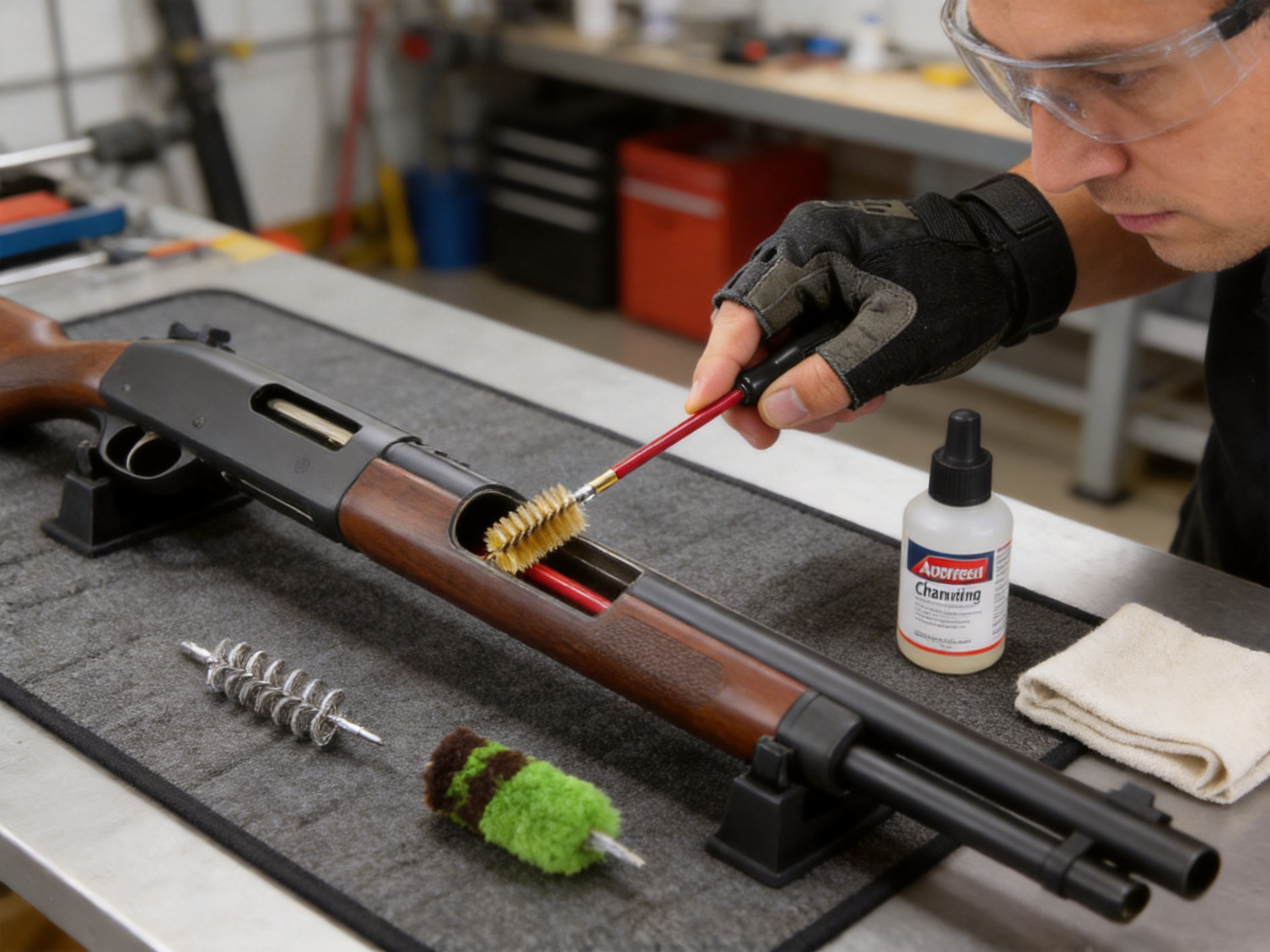
Many entry-level cleaning kits are built around a short handle and one brush. Such products may be sufficient for occasional, light maintenance, but they often provide limited flexibility. The Brass Bore Brush Gun Cleaning Kit is differentiated by its combination of several brush materials, a cotton mop, and a segmented rod in a dedicated case.
The combination of brass, stainless steel, and cotton components allows users to move from mechanical cleaning to wiping and finishing without changing to a separate product. This can improve workflow and reduce the number of individual accessories that must be purchased, stored, and transported.
The fitted black plastic case gives the product an advantage over loose accessory packs. Small brushes and rod sections are easier to misplace when they are sold without a case. A defined storage package supports organized use at the range, in a workshop, or during outdoor travel. It also helps protect the set from dust and accidental mixing with unrelated tools.
The 450 mm segmented rod is suitable for compact packaging and transport. Compared with a long, rigid rod, the modular design can be more convenient for customers who maintain equipment away from a permanent workshop. It can also help reduce retail package dimensions and simplify warehouse handling.
The availability of several gauge and caliber versions allows buyers to select a closer fit for their product range. A supplier offering only one universal brush may not provide the same level of compatibility. The range associated with this kit supports shotgun configurations as well as selected rifle-caliber applications.
For importers and private-label customers, the product is not limited to an off-the-shelf retail format. The manufacturer supports OEM and ODM services, including customized logos, packaging, and products. This can be valuable for firearm accessory brands that need a coordinated appearance across multiple cleaning tools or want to develop a specialized kit for a particular market.
| Evaluation point | Basic single-brush kit | Brass Bore Brush Gun Cleaning Kit |
| Brush material options | Often one material | Brass, stainless steel, and cotton components |
| Cleaning stages | Limited flexibility | Brushing, intensive cleaning, wiping, and finishing |
| Rod format | May be fixed or short | 450 mm segmented modular rod |
| Storage | May use a bag or loose packaging | Compact black plastic case |
| Gauge and caliber range | May be limited | Multiple shotgun and selected caliber versions |
| Private-label potential | Depends on seller | OEM and ODM customization available |
| Supply model | May rely on intermediaries | Factory-direct production and wholesale support |
Jinhua Tongshun Tool Factory was established in 1999 and is described as an enterprise integrating research and development, production, and sales. Its product focus includes gun cleaning kits, barrel cleaning brushes, cleaning rods, bore mops, cleaning patches, cleaning cloths, and related accessories. This specialized scope is important because it indicates experience with the product category rather than production limited to unrelated household or industrial brushes.
The company operates in Jinhua, Zhejiang Province, and has more than 26 years of manufacturing experience based on the supplied company information. It serves customers in more than 50 countries and regions and provides OEM and ODM services. For international buyers, this combination of category specialization and export experience can help simplify communication around packaging, specifications, documentation, and order planning.
An integrated operating model can make it easier to coordinate product development, production changes, quality requirements, and customer feedback. When a buyer requests a modification to a brush specification, case design, label, or package insert, communication between sales and production is important. A factory with internal development and manufacturing capabilities may be better positioned to review such requirements than a trading channel that must coordinate several unrelated suppliers.
For OEM and ODM customers, product development may include changes to the number of components, color selection, case format, package artwork, product code, instruction materials, or logo placement. The feasibility of each request depends on order volume, tooling, component availability, and compliance requirements. However, the manufacturer’s stated focus on customized products and packaging provides a foundation for discussing these projects.
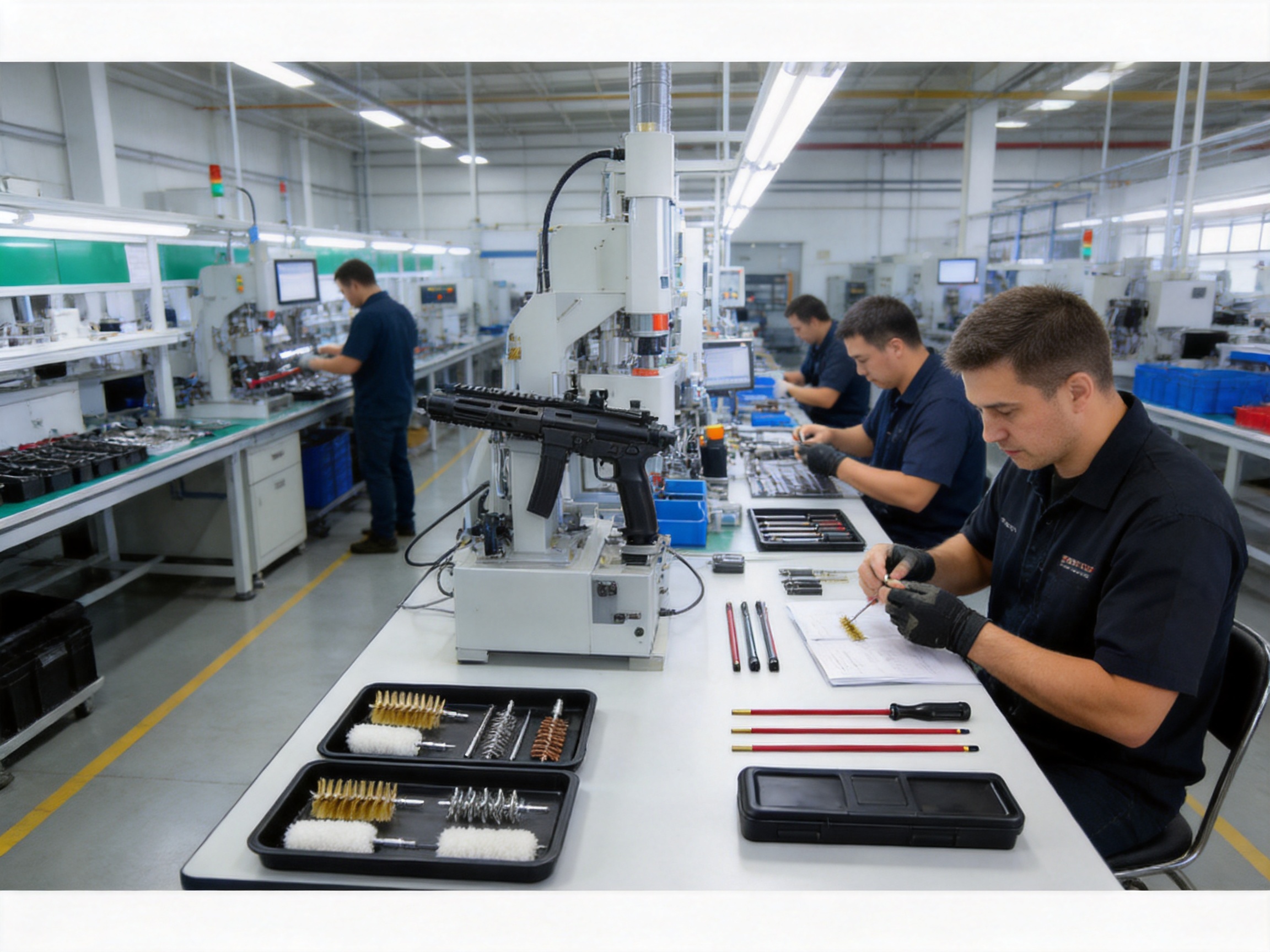
The factory describes its production facility as using semi-automatic and fully automated systems. In brush and cleaning-accessory manufacturing, controlled production equipment can help improve repeatability in processes such as wire forming, trimming, assembly, component fitting, and packaging preparation. Automation does not remove the need for inspection, but it can support stable output when production volumes are high.
Semi-automatic equipment can provide flexibility for different product types, sizes, and order quantities. Fully automated systems may be useful for repetitive operations where consistent positioning and cycle control are important. A combination of both approaches allows a factory to balance efficiency with the adaptability required for multiple calibers, brush materials, and customized product formats.
For wholesale customers, production consistency is often as important as the initial sample. A cleaning kit may contain several small components, and variation in brush dimensions, rod connections, case fit, or packaging can affect customer satisfaction. Structured production systems and documented inspection procedures can help reduce variation from batch to batch.
Quality control for a bore cleaning kit should cover more than appearance. Key inspection points may include brush diameter, bristle attachment, wire security, rod section connection, mop construction, case dimensions, component count, gauge or caliber labeling, and final package integrity. These checks are especially important when several visually similar versions are produced for different firearm sizes.
Brass and stainless steel brushes should be checked for secure bristle retention and suitable finishing. Loose wires can reduce product life and may create an avoidable safety concern. Rod sections should connect smoothly and remain secure during normal controlled use. The cotton mop should be inspected for proper attachment and sufficient material for its intended wiping function.
Wholesale buyers can request pre-production samples, approved reference samples, batch inspection standards, and packaging confirmations. They may also specify acceptable tolerances, labeling language, carton marks, and sampling procedures. These steps help align the factory’s production process with the buyer’s market requirements.
The product is suitable for companies that want to sell a branded cleaning kit without developing every component from the beginning. The factory’s OEM and ODM support can allow the buyer to select a standard configuration or request a modified design. Possible customization areas include the product name, logo, case appearance, rod color, brush arrangement, instruction card, barcode label, retail box, and outer carton markings.
A private-label customer may choose to retain the existing multi-component configuration while applying its own visual identity. This approach can shorten development time compared with designing an entirely new tool. A more advanced ODM project may involve changes to the case layout, a different combination of gauges, additional patches or cloths, or a new kit aimed at a specific retailer or shooting discipline.
Before production, the buyer should define the intended market and use environment. A range-focused product may prioritize compactness and quick storage. A workshop-oriented kit may require more accessories. An e-commerce package may need strong product photography, barcode placement, multilingual instructions, and packaging designed to resist shipping damage.
The black plastic case is already a practical foundation for customization. It provides a compact enclosure, supports component organization, and creates a consistent visual format across different caliber versions. An OEM buyer may request a branded label, molded or printed identification, a color insert, or a retail carton around the case.
Packaging should accurately identify the applicable gauge or caliber and list the included components. It should avoid suggesting that one brush fits every firearm. Clear instructions can also explain safe cleaning practices, the role of each brush material, and the need to follow the firearm manufacturer’s maintenance recommendations.
Wholesale buyers benefit from defining the order structure before requesting a quotation. Important details include the required gauge or caliber, number of kits per carton, retail packaging format, logo artwork, target order quantity, delivery schedule, inspection requirements, and destination market. If multiple versions are required, each should be listed separately to prevent mixed packing.
Because the supplier offers a range of related products, buyers may also consider combining this kit with nylon brushes, bronze brushes, bore mops, cleaning rods, adapters, patches, and cleaning cloths. A broader purchase may help create a complete category assortment and improve container or shipment utilization, subject to the supplier’s minimum order requirements.
The following sequence is a general maintenance framework and does not replace the firearm manufacturer’s instructions. Every firearm must be unloaded before cleaning. Ammunition should be removed from the cleaning area, and the user should maintain safe handling practices throughout the process.
Verify that the firearm is unloaded and that the chamber and barrel are clear. Confirm the exact gauge or caliber before selecting a brush. Check that the rod, brush, and mop connection are compatible. Inspect all components for damage, loose wires, bent sections, or contamination.
Use a stable, well-lit workspace with adequate ventilation when cleaning products are involved. Place a suitable protective mat beneath the firearm and keep the black case nearby so components can be returned after use. Read the instructions for any solvent, oil, or protective product before applying it to the barrel.
Attach the appropriate brass bore brush to the assembled rod. Apply a suitable amount of approved cleaning product if required, then move the brush through the bore with controlled strokes. Avoid forcing the brush, striking the muzzle, or allowing the rod to scrape against the bore entrance. The purpose is to loosen residue rather than apply unnecessary pressure.
If a deposit remains and the firearm manufacturer’s guidance permits the use of a stainless steel brush, use it carefully and only with the correct gauge or caliber. More aggressive cleaning is not automatically better. Excessive force or unsuitable accessories can damage a surface, so the user should stop if resistance is abnormal or if the condition of the barrel is uncertain.
Attach the cotton mop and use it to remove loosened residue or apply an appropriate protective product. Follow with a clean, dry pass when necessary. Inspect the bore under suitable lighting and confirm that no loose fibers, excessive oil, or foreign material remain. Store the components only after they are reasonably clean and dry.
The cleaning kit itself benefits from routine care. Brushes should be shaken or wiped free of loose residue after use. If a chemical cleaning product has been applied, the components should be maintained in accordance with the chemical manufacturer’s guidance. The cotton mop should not be stored while heavily saturated with solvent or oil.
The rod sections should be separated for inspection and storage. Threads and connection points should be kept free from grit. If a section becomes bent, cracked, or difficult to connect, it should be replaced rather than forced into service. The plastic case can be wiped clean and allowed to dry before the components are returned.
Retailers may wish to communicate these care instructions in product literature. Good care can extend accessory life, preserve the appearance of the kit, and improve the customer’s experience. It also reinforces the distinction between a purpose-built maintenance tool and a disposable low-cost accessory.
For individual owners, the kit provides a compact way to keep the essential barrel-cleaning components together. The case can be stored with range equipment or placed in a home maintenance area. The combination of brush types helps users establish a more organized cleaning routine without buying each accessory separately.
Shooting clubs and ranges may need durable, easily identifiable maintenance kits for staff, members, or equipment storage areas. The black case and contrasting red rod can make the set easier to locate. A club purchasing multiple units may also request consistent labeling or a customized package for its members.
The compact case and segmented rod are well suited to users who transport equipment outdoors. A field kit should be protected from moisture, dirt, and excessive impact, and it should be checked before use. The modular design reduces storage space compared with a long rigid cleaning rod while retaining a useful assembled length.
Retailers can position the kit as a practical mid-range or professional-oriented accessory for shotgun owners. Its multi-component structure gives sales staff several clear features to explain: multiple brush materials, cotton finishing capability, modular rod construction, compact case storage, and gauge-specific options.
Distributors may benefit from the supplier’s broader product range and factory-direct communication. They can build a category assortment that includes kits, replacement brushes, mops, patches, cloths, rods, and adapters. This supports repeat purchasing and allows different retail price points without changing the main supplier relationship.
Online product listings should present compatibility information prominently. The title and first product image should identify the firearm type and the applicable gauge or caliber. Product descriptions should explain that different versions are available and should encourage buyers to verify compatibility before ordering.
High-quality listings should show the case, assembled rod, individual brushes, cotton mop, and package dimensions. Buyers should be able to understand what is included without relying on ambiguous images. The supplied image set can support product presentation across product pages, catalogs, wholesale quotations, and packaging approvals.
Search terms relevant to this product category include gun cleaning kits, shotgun cleaning kit, brass bore brush, bronze and brass brushes, bore mop, cleaning rods, nylon brushes, cleaning patches, cleaning cloth, and firearm maintenance accessories. These terms should be used naturally and accurately. Retail copy should not claim universal compatibility or professional performance beyond the tested specifications.
For wholesale listings, additional information may include case dimensions, rod length, available configurations, product codes, packaging details, OEM options, and production capacity. Clear technical information helps purchasing teams compare the product with competing kits and reduces questions during quotation and order confirmation.
Before purchasing, buyers should confirm the exact brush diameter and gauge or caliber. They should also confirm whether the quoted kit includes the brass brush, stainless steel brush, cotton mop, all rod sections, and the plastic case shown in the approved sample. Product names can vary between markets, so the component list is more reliable than the name alone.
For private-label orders, artwork should be approved before production. The buyer should check spelling, product codes, gauge markings, warning information, barcode data, carton labels, and language requirements. A pre-production sample or digital packaging proof can prevent avoidable errors.
Quality inspections should consider both the individual components and the completed package. The case should close correctly, the rod sections should fit, the brushes should be secure, and the correct version should be placed in the correct label or carton. Buyers with strict requirements may establish an inspection plan covering appearance, dimensions, function, quantity, and packaging.
| Purchasing item | Recommended confirmation |
| Compatibility | Exact gauge, caliber, bore size, and connection specification |
| Included accessories | Brass brush, stainless steel brush, cotton mop, rod sections, and case |
| Rod dimensions | Approximate assembled length and section length |
| Packaging | Case dimensions, retail box, inner quantity, and carton quantity |
| Customization | Logo, color, label, instruction card, and packaging artwork |
| Quality control | Sample approval, tolerances, inspection method, and defect standards |
| Shipping | Lead time, destination, carton marks, and export documentation |
| After-sales support | Replacement components and handling of quality claims |
The primary product description identifies it for 12GA, 16GA, 20GA, and .410 bore shotguns. Additional listed versions include 10/12 GA, 20/28 GA, .17 caliber, .22 caliber, and .30 caliber configurations. The exact version should be confirmed before purchase.
The described kit includes a red segmented cleaning rod, a brass wire brush, a stainless steel brush, and a cotton mop. The components are stored in a compact black plastic case. Buyers should confirm the final packing list for the selected gauge or caliber version.
The listed overall length is approximately 450 mm. Because the rod is modular, it can be separated for storage in the case and assembled for use.
The two brush materials provide different levels of mechanical cleaning action. Brass is generally used for controlled routine fouling removal, while stainless steel is intended for more intensive applications when appropriate. Users should follow the firearm manufacturer’s instructions and avoid excessive force.
The cotton mop and brushes may be used as part of a solvent-based cleaning routine when the solvent is compatible with the firearm and the accessory materials. Users must follow the solvent label and firearm manufacturer’s guidance. The kit does not replace the need for proper ventilation, safe handling, and correct drying.
Yes. The segmented rod and compact case make it suitable for transport to shooting ranges, outdoor activities, and field maintenance situations. Users should protect the case from excessive moisture and inspect the components before use.
Yes. The supplied company information states that Jinhua Tongshun Tool Factory supports OEM and ODM services, including customized products, packaging, and logos. Specific requirements, minimum quantities, tooling, and lead times should be discussed with the factory.
The supplied information lists several shotgun gauges and rifle-caliber versions. Buyers can request the available configurations and confirm the product code, brush size, and packaging for each version before placing an order.
The firearm must be unloaded, and the bore must be confirmed clear before cleaning. The correct brush should be attached securely to the rod and moved with controlled pressure. A brush should never be used to force an obstruction out of a barrel. Unusual resistance requires stopping and seeking qualified assistance.
After use, remove loose residue, allow components to dry as appropriate, separate the rod sections, and return all parts to the black plastic case. The case should be stored in a dry environment away from unnecessary heat, moisture, and chemical contamination.
A specialized manufacturer can provide more focused knowledge of brush construction, bore-cleaning accessories, packaging requirements, and caliber-specific product development. This focus can be especially valuable for buyers who need more than a generic tool assortment. The supplier’s product scope covers brushes, mops, rods, patches, cloths, and complete kits, allowing customers to discuss related products through one manufacturing channel.
Manufacturing experience also supports more informed discussions about product positioning. A buyer may need a low-cost promotional kit, a durable retail kit, a field-oriented package, or a customized assortment for a particular distributor. The same basic product platform can potentially be adjusted through component selection and packaging design.
Jinhua Tongshun Tool Factory states that its products are exported to more than 50 countries and regions. International experience may help with common export requirements such as carton identification, product documentation, packaging coordination, and communication with overseas purchasing teams. As with any international order, buyers should confirm all destination-specific requirements independently.
The Brass Bore Brush Gun Cleaning Kit offers a balanced combination of cleaning versatility, compact storage, and manufacturing flexibility. Designed primarily for 12GA, 16GA, 20GA, and .410 bore shotguns, it combines a 450 mm segmented rod with brass, stainless steel, and cotton cleaning components. This allows users to address routine residue, more persistent fouling, wiping, and finishing within one organized kit.
Its advantages over simpler competitor products include multiple cleaning materials, a dedicated black plastic case, modular portability, several gauge and caliber options, and the availability of OEM and ODM customization. For individual firearm owners, it provides a practical maintenance package. For retailers and distributors, it offers a clear product story and opportunities for category expansion. For private-label buyers, it provides a factory-direct foundation for customized packaging, branding, and product configurations.
The supplier’s experience since 1999, specialized product range, modern semi-automatic and automated production systems, export background, and stated commitment to quality control provide useful support for wholesale sourcing. Buyers should confirm exact compatibility, component specifications, packaging requirements, and safety instructions before ordering. When selected and used correctly, this kit can serve as a dependable addition to a firearm maintenance product line.
1. Jinhua Tongshun Tool Factory. Product specifications and supplied technical information for the Brass Bore Brush Gun Cleaning Kit.
2. Jinhua Tongshun Tool Factory. Company profile, manufacturing capabilities, OEM and ODM service information, and export background.
3. General firearm maintenance principles concerning unloaded handling, bore inspection, cleaning-tool selection, and corrosion prevention.
4. General manufacturer guidance for the safe use of brass brushes, stainless steel brushes, cotton mops, cleaning rods, and approved firearm-cleaning products.