English
 русский
 Español
 عربى

HUNTACE HUNTACE HUNTACE HUNTACE HUNTACE
HUNTACE HUNTACE HUNTACE HUNTACE


Reliable cleaning materials are essential to firearm maintenance. Whether a firearm is used for sport shooting, professional duty, hunting, training, or collection, the quality of the cleaning consumable can influence the efficiency of maintenance and the condition of the firearm after repeated use. A poorly made cloth may leave fibers behind, absorb unevenly, tear during use, or spread fouling instead of removing it. A well-engineered cleaning patch, by contrast, supports controlled wiping, lubrication, dust removal, and routine bore care with less residue and better consistency.
The lint-free nonwoven gun cleaning cloth described in this article is a professional-grade cleaning consumable manufactured for firearm maintenance and related hardware-cleaning applications. Made from high-density hydroentangled nonwoven fabric, it combines a compact fiber structure with a soft surface, dependable strength, and low-lint performance. Its rectangular format and multiple size options make it suitable for pistols, rifles, shotguns, firearm exteriors, receivers, metal components, and other precision maintenance tasks.
Produced by Jinhua Tongshun Tool Factory, the cloth is positioned for wholesale distribution, private-label programs, OEM and ODM projects, and cross-border e-commerce. The manufacturer has specialized in gun cleaning kits, barrel cleaning brushes, rods, mops, patches, and related accessories since 1999. Its production experience, semi-automatic and fully automated systems, export capabilities, and customization services make the product suitable for buyers who require more than a basic disposable wipe.
A firearm cleaning cloth is a consumable material used during routine maintenance. It may be passed through a bore with a cleaning rod and jag, used to apply or remove lubricant, or folded for wiping the receiver, slide, bolt, chamber area, barrel exterior, and other metal surfaces. In professional maintenance programs, disposable cloths are often preferred because they reduce the possibility of transferring fouling, old lubricant, moisture, or abrasive particles from one firearm to another.
During normal operation, a firearm may accumulate carbon residue, powder fouling, oil deposits, dust, fingerprints, and environmental contaminants. These materials can collect on internal and external surfaces. A suitable cleaning cloth helps remove contaminants before they harden or contribute to corrosion, friction, or unreliable operation. Although a cloth is only one part of a complete maintenance system, its performance affects the convenience and cleanliness of the entire process.
The product is designed to support three principal maintenance functions: dry cleaning, controlled lubrication, and surface wiping. A dry patch can help remove loose residue from a bore or metal surface. A lightly oiled patch can distribute a thin protective film. A clean, unused section can then be used to remove excess oil or remaining contamination. This sequence is particularly useful for users who want repeatable maintenance results without relying on a reusable rag that may contain previously removed debris.
Unlike ordinary household tissue, paper towels, or low-density cloth, a purpose-made firearm cleaning patch is selected for its fiber structure, size, absorbency, softness, and resistance to shedding. The goal is not simply to wipe a surface. The goal is to clean without introducing new contamination or damaging a precision component.
The primary material is high-density hydroentangled nonwoven fabric. In a hydroentangled structure, fine fibers are mechanically interlaced by high-pressure water jets. This process creates a cohesive sheet without relying on a traditional woven pattern. The result is a material with a soft hand, stable surface, and interconnected fiber network that can perform consistently during wiping.
For firearm maintenance, a compact fiber structure is valuable because loose fibers are less likely to separate during ordinary use. A cloth that sheds heavily can leave lint inside a bore, around a chamber, on a bolt face, or under a slide. Those residues may mix with lubricant and dust, creating additional contamination. The lint-free design of this nonwoven cloth is intended to minimize that problem and leave the cleaned area clearer after use.
Hydroentangled nonwoven fabric also provides a useful balance between softness and durability. The material is gentle enough for routine contact with finished metal surfaces, while remaining strong enough for folding, wiping, patching, and controlled passage through a bore when correctly sized and used with a compatible cleaning rod and jag.
The compact structure supports more uniform contact than a loose, fluffy rag. When folded or attached to an appropriate cleaning accessory, the cloth can maintain contact with the surface being cleaned. This helps the user collect residue instead of simply moving it from one location to another.
Material consistency is especially important for distributors and OEM buyers. When a cleaning consumable is supplied in large quantities, differences in thickness, fiber density, cutting quality, or shedding can create customer complaints and inconsistent end-user experiences. A controlled nonwoven manufacturing process helps reduce variation between production batches.
The product is described as lint-free and anti-static, two characteristics that are useful in precision cleaning environments. Lint-free performance refers to the cloth’s ability to resist leaving loose fibers or visible residue after wiping. No disposable textile should be assumed to produce absolutely zero particles under every condition, but a dense, well-formed nonwoven sheet can significantly reduce shedding compared with unsuitable fabrics or degraded paper materials.
Anti-static behavior is beneficial because static charge can attract dust and fine particles to a cleaned surface. During dry wiping, particularly in low-humidity environments, some conventional fabrics may generate or retain static electricity. A material designed for anti-static performance can help reduce the attraction of airborne dust, supporting a cleaner working surface after maintenance.
This feature is relevant to firearm owners who clean in workshops, armories, shooting facilities, or storage rooms where airborne particles may be present. It is also useful for distributors serving customers in different climates. Dry indoor heating, desert conditions, and low-humidity storage areas can make static-related dust attraction more noticeable.
The practical advantage is not that anti-static performance replaces proper cleaning technique. Users should still work on a clean surface, keep unused patches protected, and avoid placing clean cloths beside removed fouling. Rather, anti-static construction contributes to a more controlled process by reducing one source of unwanted particle attraction.
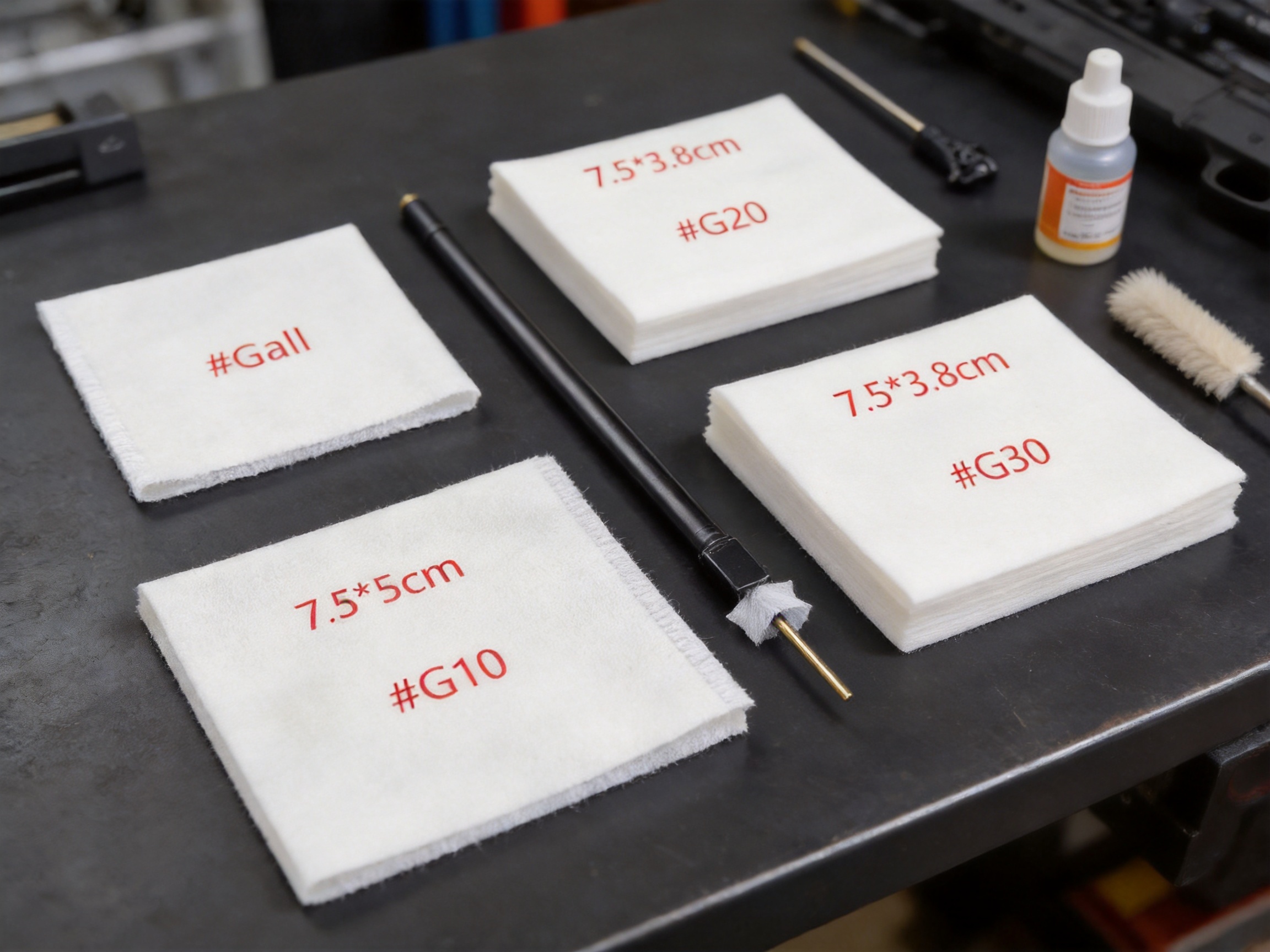
One of the strongest practical features of the product is its selection of sizes. A single cloth dimension is rarely ideal for every firearm. A small pistol bore, a .223 or 5.56 mm rifle bore, a larger-caliber rifle, a shotgun bore, and an exterior receiver all require different amounts of material and different handling methods.
The 7.5 × 3.8 cm size is intended for compact cleaning applications. It is suitable for pistols and for .223 or 5.56 mm rifles when used with a compatible cleaning rod and jag. Its smaller format helps the user control the amount of material placed into the bore. It can also be folded for small metal parts, narrow recesses, or localized wiping tasks.
The 7.5 × 7.5 cm size provides a larger cleaning surface for larger-caliber rifles and shotgun bore maintenance. The increased area allows more contact with the bore or surface and provides additional material for absorbing lubricant and fouling. Users can fold the patch to adjust thickness or use it as a hand wipe for larger components.
The 19 × 19 cm size is designed for broad surface maintenance. It is suitable for receivers, firearm exteriors, metal components, stocks with appropriate surface compatibility, work surfaces, and larger areas requiring dust removal or oiling. It may also be divided or folded according to the application, although users should avoid creating loose fragments and should discard the cloth when it becomes contaminated.
The product information also identifies small, medium, and large variants, generally supplied in packs of 50 sheets. The large format is additionally available in a convenient 10-piece portable pack. This packaging flexibility allows suppliers to serve different customer preferences, from economical workshop packs to compact retail packages intended for individual users.
| Variant | Approximate Size | Typical Application | Standard Pack Information |
|---|---|---|---|
| Small | 7.5 × 3.8 cm | Pistols and .223/5.56 mm rifle cleaning with a rod and jag | 50 pieces per pack |
| Medium | 7.5 × 7.5 cm | Larger-caliber rifles and shotgun bore cleaning | 50 pieces per pack |
| Large | 19 × 19 cm | Receivers, exteriors, metal components, and broad surface wiping | 50 pieces per pack; 10-piece portable option available |
Exact compatibility depends on the firearm, bore diameter, cleaning accessory, and user technique. A patch should not be forced through a bore if it creates excessive resistance. The correct combination of patch size, folding method, jag dimensions, and cleaning rod should always be selected for the specific firearm and manufacturer recommendations.
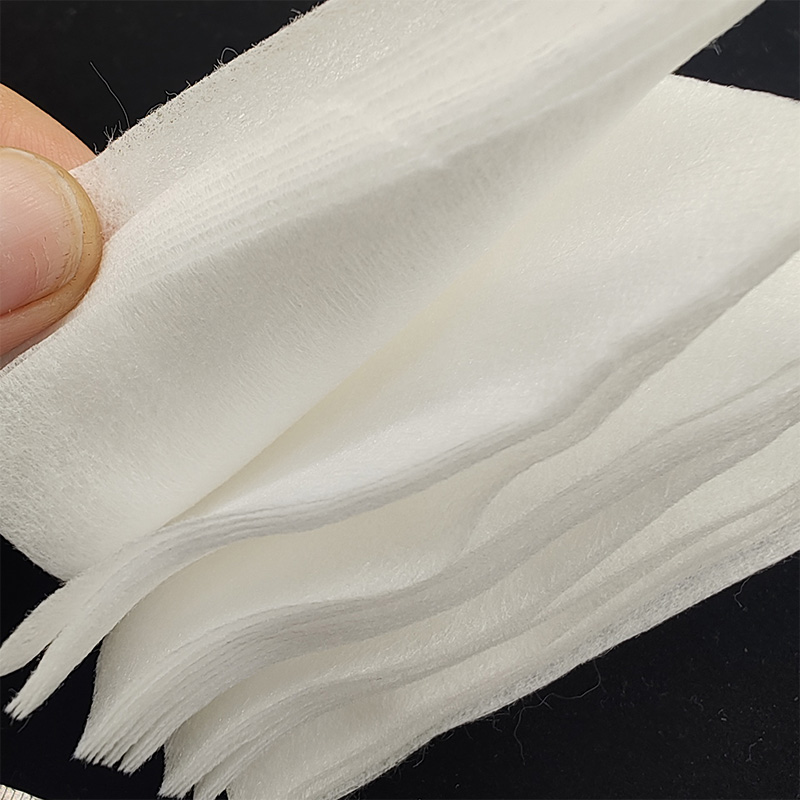
Lint-Free Nonwoven Gun Cleaning Cloth Anti-Static Factory Supply
Many users begin firearm maintenance with household cloth, cotton rags, paper towels, or general-purpose shop wipes. These materials may be convenient, but they are not necessarily optimized for precision cleaning. The nonwoven gun cleaning cloth offers several advantages over those alternatives.
Household fabrics may contain raised fibers, loose threads, or worn areas that separate during wiping. Paper products may tear, ball up, or leave fragments when exposed to oil. The dense nonwoven construction is designed to resist these problems. This is particularly valuable when cleaning narrow passages or bore interiors where loose material is inconvenient to retrieve.
Cut pieces from a general-purpose rag vary in size and shape. A standardized patch gives the user a predictable amount of material for each maintenance step. Consistent dimensions also help distributors create clearer instructions, standardize packaging, and provide customers with a repeatable product experience.
A cleaning patch must absorb enough oil or solvent to perform its task without becoming excessively saturated. The nonwoven sheet can be used to distribute a controlled amount of lubricant and then remove surplus oil. This helps avoid the heavy oil accumulation that can attract dust or migrate into areas where it is not wanted.
Reusable rags can retain carbon, metal particles, dust, old lubricant, and moisture. If they are not washed or replaced properly, they may transfer those contaminants back onto a firearm. A disposable patch provides a clean starting surface for each stage of maintenance. This is especially useful in commercial workshops, law enforcement supply programs, shooting clubs, and high-volume maintenance environments.
The soft nonwoven surface is appropriate for wiping many finished metal components during normal maintenance. It can be used to remove fingerprints, light dust, and excess oil without the rough texture associated with some industrial wipes. Users should still inspect the cloth and the surface before wiping, because embedded grit in any cloth can cause scratching.
The three main size options and multiple pack formats create opportunities for both professional and consumer distribution. A supplier can offer a compact large-patch pack to individual firearm owners, while providing 50-piece packs to workshops, retailers, and institutional purchasers. The product is therefore more adaptable than a single-size patch sold for one narrow application.
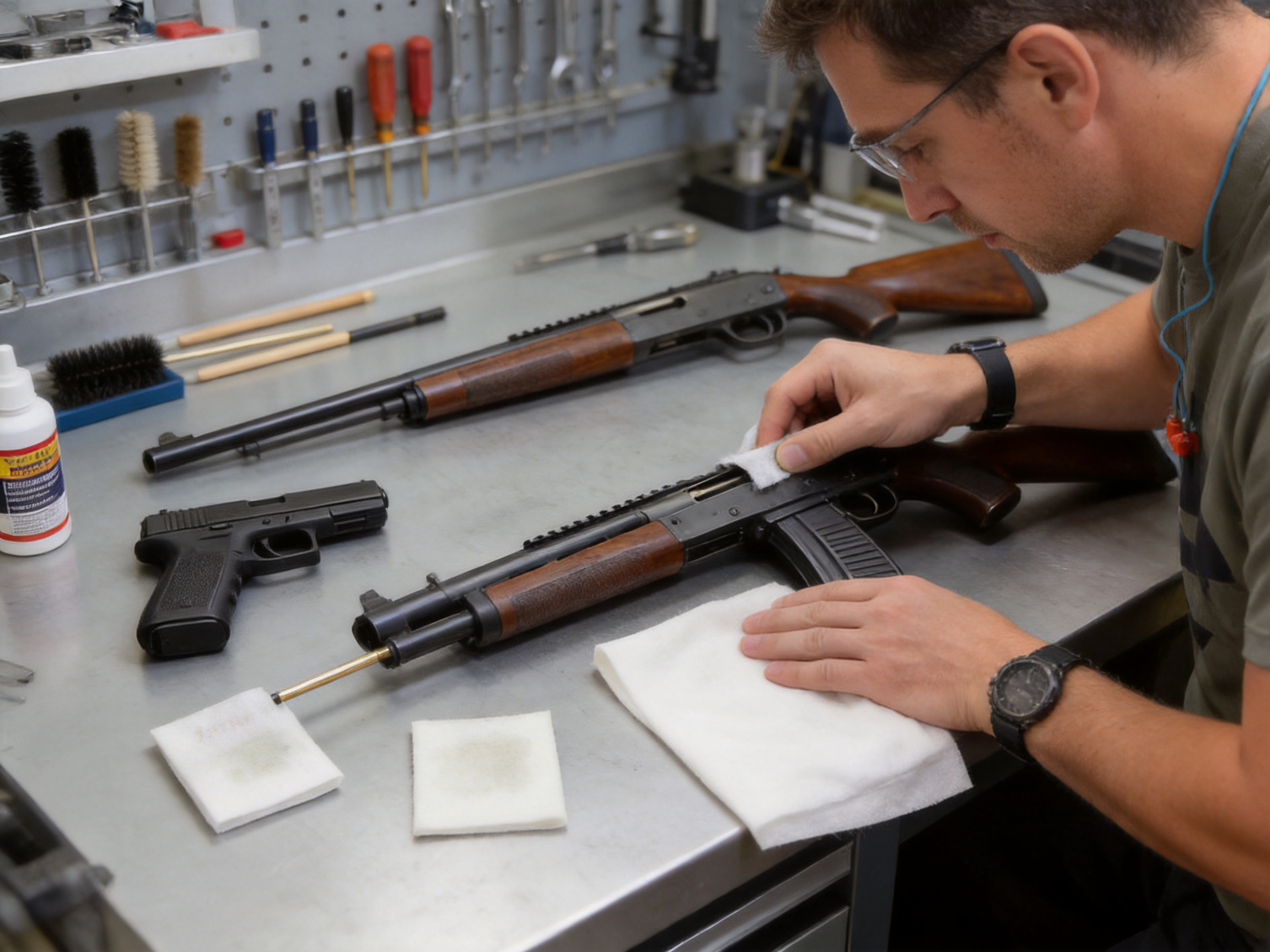
The cloth is suitable for a broad range of firearm maintenance activities when used with appropriate tools and procedures. In pistol care, the small format can support bore cleaning, slide and frame wiping, and removal of excess lubricant from accessible surfaces. The patch can be folded to clean around rails, contact surfaces, and other areas where dust and residue collect.
For rifles, the small size may be used with a cleaning rod and jag for .223 or 5.56 mm platforms. The medium size can support larger-caliber rifle maintenance, while the large sheet can be used to wipe the receiver, bolt exterior, handguard surfaces, and barrel exterior. A separate clean patch should be used when moving from a heavily fouled internal component to a finished exterior surface.
Shotgun maintenance often requires larger material because of the bore diameter and the amount of surface area involved. The 7.5 × 7.5 cm format is intended for shotgun bore cleaning, while the large 19 × 19 cm format is more appropriate for exterior wiping and broad oiling tasks. As with all cleaning accessories, the patch should be matched with a suitable shotgun cleaning rod, jag, brush, or mop.
The cloth can also be used for non-bore tasks, including dust removal from metal components, wiping storage oil, cleaning tool surfaces, and removing fingerprints after handling. Its stated function includes dust removal, while its variant description identifies wiping and oiling. This makes it a versatile addition to a larger cleaning kit rather than a product limited to one operation.
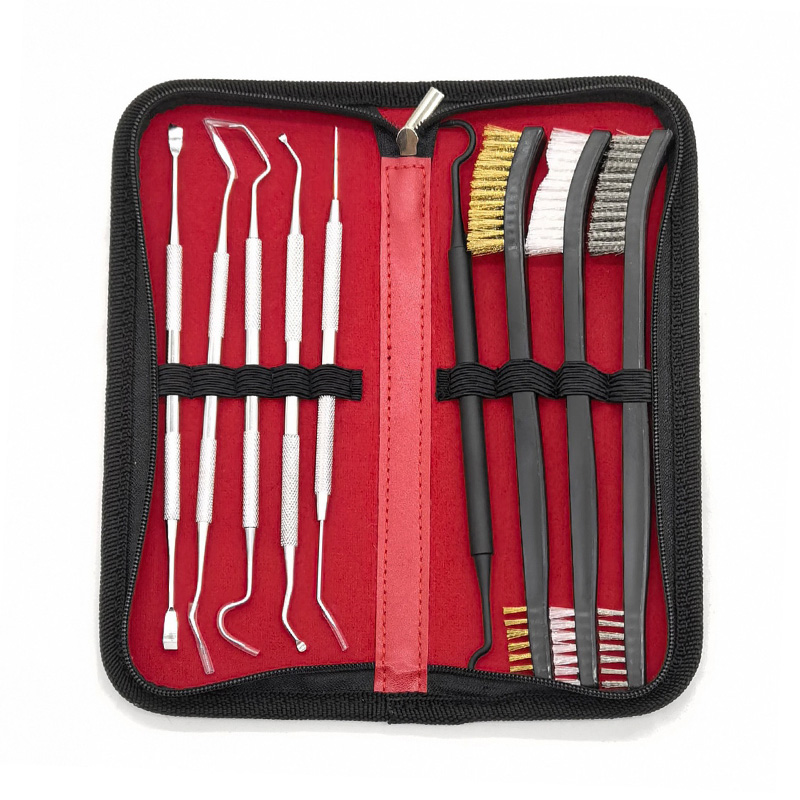
Users should follow the firearm manufacturer’s instructions regarding disassembly, compatible solvents, lubrication points, and cleaning frequency. The cloth itself does not replace a bore brush, nylon brush, bronze brush, cleaning rod, mop, or other specialized accessory. Instead, it complements these tools by providing a clean, low-lint surface for collecting fouling and managing lubricant.
A consistent workflow helps users obtain the best performance from any cleaning cloth. Before beginning, the firearm must be completely unloaded and handled in accordance with applicable safety procedures. Ammunition should be removed from the working area, and the user should confirm the firearm’s condition before disassembly or cleaning.
Use a stable, well-lit surface. Keep clean patches separate from used patches, brushes, solvents, and removed fouling. If the environment is dusty, cover the work area with a clean maintenance mat or suitable protective layer. Organize the cleaning rod, jag, brushes, lubricant, and other required accessories before beginning.
Choose the patch according to the firearm and task. The small size is generally intended for compact bores and narrow areas. The medium size provides more material for larger bores. The large size is designed for receivers, exteriors, and broad surfaces. If using a patch with a jag, test the fit carefully rather than forcing it.
A dry patch can be used after an appropriate brush or other preliminary cleaning step to remove loosened residue. Move the patch in the direction and manner recommended for the firearm and cleaning system. Avoid reversing a cleaning rod while a brush is engaged in the bore unless the accessory manufacturer specifically permits that procedure.
If lubrication is required, apply a small amount to the patch or directly according to the firearm manufacturer’s instructions. The purpose is to create a controlled, thin film rather than saturate the component. A lightly oiled cloth can distribute lubricant evenly across appropriate surfaces.
Use a clean, dry patch to remove surplus oil from areas that should not remain heavily lubricated. Excess oil can attract dust, migrate into unwanted locations, and create handling problems. The lint-free construction supports a cleaner finishing step.
Examine the used patch for heavy fouling, embedded particles, fraying, or damage. Dispose of it when it is contaminated or no longer maintains its shape. Reusing a visibly dirty disposable patch can reduce cleaning effectiveness and transfer contamination back to the firearm.
Product performance depends not only on the selected material but also on manufacturing control. Jinhua Tongshun Tool Factory has operated since 1999 and focuses on firearm cleaning kits, barrel cleaning brushes, gun cleaning accessories, cleaning rods, patches, mops, and related products. More than 26 years of specialization provide an established foundation for understanding the requirements of firearm maintenance distributors and end users.
The company integrates research and development, production, and sales. This integrated structure can help shorten communication paths between product design, manufacturing, quality management, packaging, and customer service. For OEM and ODM buyers, such integration is useful because a custom project often requires coordination across material selection, dimensions, logo application, packaging artwork, production scheduling, and export documentation.
The factory operates semi-automatic and fully automated production systems. Automation can improve repeatability in processes such as material handling, cutting, counting, packing, and other repetitive operations. Semi-automatic equipment can provide flexibility for different product sizes, pack quantities, and customized specifications. Combining both approaches allows the manufacturer to support standard products while also responding to project-specific requirements.
For a disposable cleaning cloth, manufacturing consistency is important in several areas. The sheet should be cut to a practical and repeatable size. Edges should be suitable for normal handling and should not create unnecessary loose fragments. Pack counts should be controlled. Material density and surface quality should remain consistent from batch to batch. These factors influence the customer’s perception of quality even before the product is used.
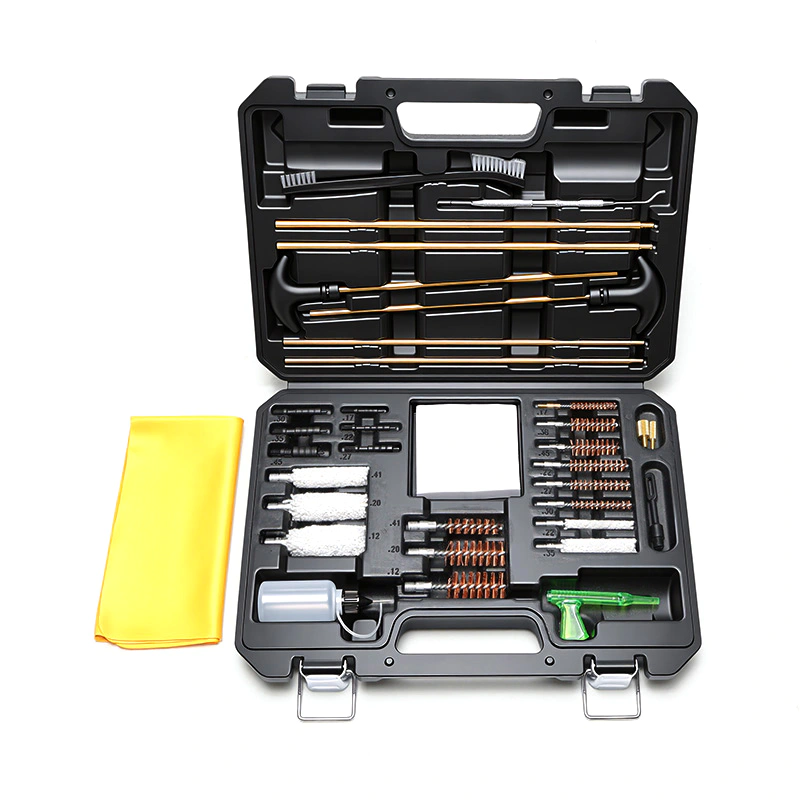
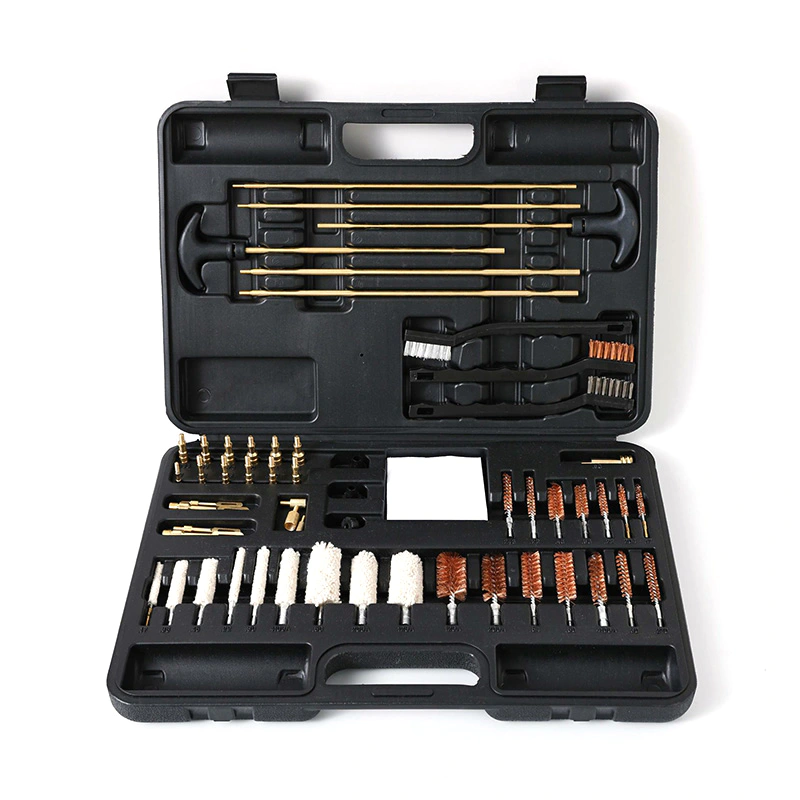
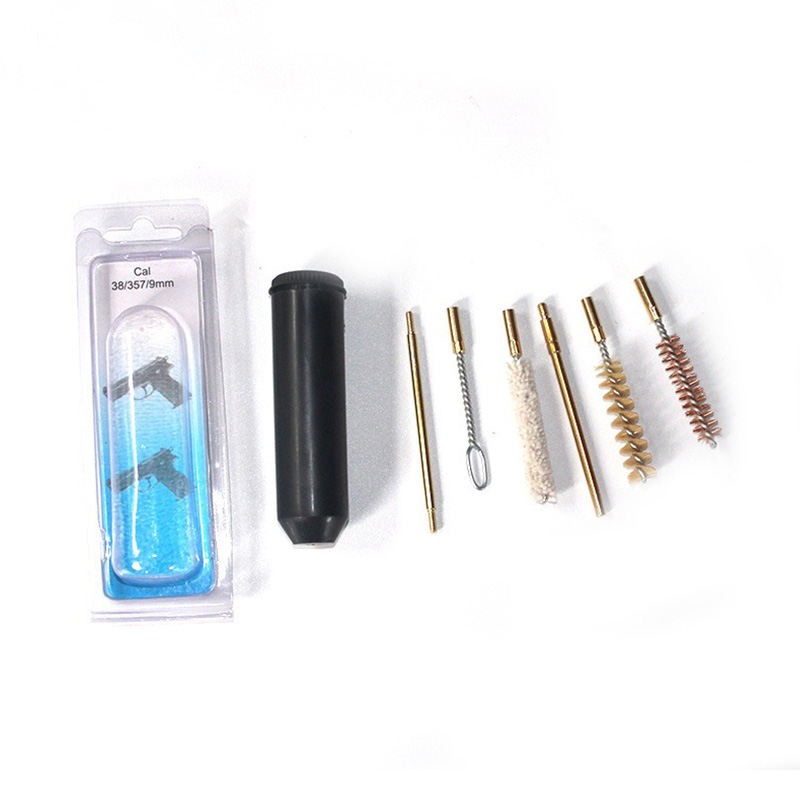
Factory experience with complete gun cleaning kits also gives the manufacturer a broader understanding of how patches are used alongside rods, brushes, jags, mops, and other accessories. This knowledge can support better product matching and more practical kit development. A buyer seeking a complete maintenance package can potentially coordinate the cloth with bronze, brass, nylon, or other brushes, cleaning rods, adapters, and carrying or retail packaging.
Quality control for cleaning cloth should begin with incoming material inspection. The nonwoven fabric should be checked for visible contamination, uneven density, abnormal odor, excessive loose fibers, and damage. Consistent rolls or sheets provide a better foundation for accurate cutting and reliable pack counts.
Cutting quality is another important consideration. The dimensions should correspond to the selected small, medium, or large specification. A clean and stable cutting process helps maintain the rectangular shape described for the product. Consistent dimensions also make it easier for customers to use the cloth with compatible jags or to fold it in a repeatable way.
Surface inspection should examine the cloth for holes, tears, embedded foreign matter, and excessive fuzzing. A product intended for precision maintenance should be visually clean before packing. Internal quality procedures may also include checks for basis weight, thickness, tensile strength, absorbency, and lint or particle release according to the buyer’s requirements.
Pack-count verification is particularly important for wholesale customers. The standard specifications identify small, medium, and large products with 50 sheets per pack, while the large format may also be offered in a 10-piece portable pack. Accurate counting protects the distributor’s reputation and helps prevent inventory discrepancies.
Packaging should protect the cloth from dust, moisture, compression damage, and contamination during transport. Retail packaging may include product information, size identification, usage guidance, and the buyer’s own branding. Bulk packaging may prioritize efficient carton utilization and protection during international shipping.
For OEM projects, buyers can establish an agreed inspection standard before production. This may include acceptable tolerance for dimensions, limits for visible fiber shedding, pack-count verification, packaging approval, carton markings, and sampling procedures. Clear specifications reduce misunderstandings and provide a practical basis for batch acceptance.
The product is suitable for buyers who want to develop their own firearm maintenance range. Customization is identified as available, and the company provides OEM and ODM services for products, packaging, and logos. This creates several possible business models for distributors, online sellers, firearm accessory brands, shooting clubs, and institutional procurement teams.
A private-label buyer may use the existing cloth specifications while applying a proprietary retail identity. This approach can reduce development time because the buyer does not need to create a completely new material or manufacturing process. The supplier can support packaging customization, logo placement, pack quantity selection, and product presentation according to the project requirements.
An ODM project may involve adjustments to size, pack format, material density, labeling, or the way the cloth is combined with other cleaning accessories. For example, a buyer could create a compact pistol-cleaning pack, a rifle bore-maintenance pack, or a broad firearm-care kit containing patches, brushes, rods, lubricant accessories, and storage packaging.
OEM buyers should provide clear information about target markets, required languages, retail channel, package dimensions, annual volume, preferred shipping terms, and any applicable product documentation. Because the main downstream platforms include eBay, Amazon, AliExpress, and independent websites, packaging can be planned for parcel fulfillment, warehouse storage, and direct-to-consumer shipment.
For cross-border e-commerce, pack size and product images are important commercial considerations. The 10-piece large-size option may suit customers seeking a portable maintenance supply, while 50-piece packs may provide stronger value for frequent users. A distributor can offer both formats to address different price points and purchasing habits.
Jinhua Tongshun Tool Factory exports products to more than 50 countries and regions. Its stated sales regions include Africa, Europe, North America, the Middle East, and other markets. This international experience is relevant to buyers who require communication across borders, export-oriented packaging, and products suitable for varied climatic and commercial environments.
The product is identified as being intended exclusively for cross-border export, with major downstream sales platforms including eBay, Amazon, AliExpress, and independent websites. This positioning reflects the needs of online sellers who require compact, relatively lightweight, easy-to-package consumables that can be replenished by repeat customers.
Cleaning patches can be practical products for e-commerce because they are used up and repurchased. A customer who maintains firearms regularly may return for additional packs, especially when the product offers consistent dimensions and reliable lint control. Retailers can also bundle the patches with rods, brushes, solvents, oils, or complete cleaning kits to increase product selection.
International distributors should still verify the import, labeling, packaging, and transport requirements applicable in their destination market. Although the product is a cleaning accessory rather than a firearm, local rules may govern product claims, packaging language, chemical products sold alongside it, or the use of firearm-related terminology in advertising.
Unused cleaning cloths should be stored in their original protective packaging until needed. They should be kept in a clean, dry location away from oil containers that may leak, solvents that may contaminate the material, excessive heat, and direct moisture. Proper storage helps preserve the cloth’s cleanliness and reduces the possibility of dust accumulation before use.
Retailers should use a first-in, first-out inventory method when practical. Cartons should be protected from crushing, and packs should not be stored under heavy loads that may deform the product or damage the retail package. Warehouse staff should handle packs with clean hands or gloves when the product is being prepared for premium retail presentation.
Once a pack has been opened, the remaining patches should be resealed or placed in a clean storage bag or container. The objective is to prevent airborne dust, fibers, and workshop debris from settling on unused sheets. A clean patch should always be selected for final wiping or lubrication work.
Firearm cleaning should always begin with the firearm unloaded, the action open where applicable, and ammunition removed from the work area. Users should follow the firearm manufacturer’s instructions and applicable laws. The cleaning cloth is a maintenance accessory and does not replace safe handling procedures.
When solvents, oils, or other chemical products are used, users should read the instructions and safety information supplied with those products. Adequate ventilation may be required. Solvent-soaked cloths should be handled and discarded according to local safety and waste requirements, particularly where flammable materials are involved.
Users should avoid forcing an incorrectly sized patch through a bore. Excessive resistance can damage the cleaning accessory or complicate removal. If a patch becomes stuck, the user should follow an appropriate manufacturer-approved procedure or seek assistance from a qualified professional. The correct patch size and compatible jag are important for safe and efficient use.
The cloth should be inspected before use. Do not use a sheet that is visibly contaminated with grit, damaged, or mixed with foreign material. Although the nonwoven fabric is designed for soft contact, any abrasive particle caught in a wiping material can potentially mark a finished surface.
Professional buyers often evaluate more than unit price. They need stable supply, repeatable quality, clear specifications, packaging options, and a supplier capable of supporting future product development. This cleaning cloth addresses those requirements through standardized sizes, multiple pack formats, OEM and ODM availability, and the manufacturing experience of a specialized tool factory.
The product’s broad application range can simplify purchasing. A distributor can source one core cloth product for pistols, rifles, shotguns, exterior wiping, and general hardware care, then organize the line by size and pack quantity. This reduces the need to manage several unrelated low-volume cleaning materials.
Its compatibility with complete gun cleaning systems is another commercial advantage. The cloth can be sold independently or included with cleaning rods, brass brushes, bronze brushes, nylon brushes, cotton mops, adapters, and other accessories. A supplier with experience across these categories can help customers create coordinated product assortments.
The company’s long operating history and export focus can also support procurement confidence. Established production experience does not eliminate the need for inspection or buyer specifications, but it provides a practical foundation for long-term cooperation. For wholesale buyers, continuity of supply and responsiveness to repeat orders are often as important as the initial product sample.
In competitive markets, the combination of lint-free material, anti-static positioning, multiple dimensions, disposable convenience, and factory customization gives the product a differentiated value proposition. It is not merely a generic piece of cloth. It is a purpose-oriented maintenance consumable designed to fit into professional cleaning workflows and commercial product lines.
| Cleaning Material | Typical Strength | Common Limitation | Position of the Nonwoven Cloth |
|---|---|---|---|
| Household cotton rag | Low cost and widely available | May shed fibers, vary in size, or retain contamination | More standardized and designed for low-lint firearm maintenance |
| Paper towel | Convenient and disposable | May tear, leave fragments, or become weak when wet | More durable for controlled wiping and oiling |
| General shop wipe | Useful for broad industrial cleanup | May be too rough, oversized, or inconsistent for precision areas | Available in firearm-oriented sizes and formats |
| Reusable microfiber cloth | Can be soft and washable | Requires laundering and may retain particles or chemicals | Disposable use reduces cross-contamination between tasks |
| Traditional loose cotton patch | Absorbent and familiar to many users | Fiber release and variable density may occur | Dense hydroentangled structure supports more consistent handling |
This comparison does not mean that every alternative is unsuitable. Experienced users may prefer different materials for specific tasks. However, the nonwoven cloth is designed to address common complaints associated with unstandardized wipes: lint, inconsistent dimensions, poor durability, and uncertain cleanliness. Its value is strongest when users want a predictable disposable product for repeated maintenance.
For distributors, the product can be positioned as a professional consumable rather than a generic cleaning rag. Product descriptions can emphasize the lint-free nonwoven material, anti-static design, multiple sizes, disposable format, and use with pistols, rifles, shotguns, receivers, and metal components. Clear size guidance can help customers select the appropriate pack.
Online sellers can organize the product range by application. A compact pistol and .223/5.56 mm pack may appeal to handgun and modern sporting rifle owners. A medium pack can be presented for larger rifles and shotguns. The large pack can target users who need exterior wiping, oil distribution, workshop cleaning, or broad surface care.
Bundles can increase convenience. A retailer may pair the patches with a cleaning rod, jag, bore brush, nylon brush, or lubricant. A larger maintenance kit can include all three cloth sizes, allowing the customer to use the small format for narrow bores, the medium format for larger bores, and the large format for exterior surfaces.
Product education is also valuable. Customers should understand that a patch is not necessarily a substitute for a brush or mop. Explaining the sequence of brushing, patching, lubrication, and final wiping can help users apply the product correctly and reduce unrealistic expectations.
For private-label sellers, packaging should present the product as a repeat-use maintenance supply. A clear pack count, size chart, material statement, and basic safety guidance can improve customer confidence. The manufacturer’s ability to customize packaging and logos enables the product to be integrated into a broader brand identity.
The cloth is made from high-density hydroentangled nonwoven fabric. This material has a compact interlaced fiber structure intended to provide softness, durability, and low-lint performance during firearm maintenance.
Yes. The small and medium formats are intended for bore cleaning when used with an appropriate cleaning rod and jag. The correct size must be selected for the bore and accessory, and the patch should never be forced through the bore.
The 7.5 × 3.8 cm small format is identified as suitable for .223 and 5.56 mm rifle cleaning when used with a compatible rod and jag. Actual fit depends on the cleaning accessory and the user’s folding or attachment method.
The 7.5 × 7.5 cm medium format is intended for larger-caliber rifle and shotgun bore cleaning. The 19 × 19 cm large format is more suitable for wiping shotgun exteriors, receivers, and other broad surfaces.
Yes. The product variant includes wiping and oiling applications. A small amount of suitable lubricant can be applied to the cloth for controlled distribution, followed by a clean dry patch to remove excess oil where appropriate.
It is designed as a disposable cleaning consumable. Reusing a heavily contaminated patch can transfer carbon, dust, old oil, or metal particles back onto the firearm. Discard the patch when it is dirty, damaged, or no longer effective.
Standard specifications identify small, medium, and large packs containing 50 sheets. The large-size version is also available in a 10-piece portable pack. Buyers should confirm the final pack configuration for a specific order.
Yes. Customization is available, including OEM and ODM support for product configurations, packaging, and logos. Buyers should provide their required sizes, pack quantities, branding, packaging design, and target-market information.
Yes. The large 19 × 19 cm format is intended for receivers, firearm exteriors, metal components, and larger surface areas. The surface should be checked for embedded debris before wiping, and the user should follow the firearm manufacturer’s care instructions.
No. Anti-static design can help reduce the attraction of dust and fine particles, but it does not replace a clean work area or proper storage. Unused patches should remain protected, and contaminated patches should be discarded.
The cloth may be used as part of a cleaning process involving suitable maintenance chemicals, but compatibility depends on the specific solvent. Users should follow the solvent manufacturer’s instructions, use adequate ventilation, and handle solvent-soaked materials safely.
The product is manufactured in standardized sizes from dense nonwoven material designed for low-lint maintenance. Compared with an ordinary rag, it offers more consistent dimensions, disposable convenience, controlled wiping, and a structure intended to reduce loose fibers.
The product is manufactured by Jinhua Tongshun Tool Factory in Jinhua, Zhejiang, China. The company has operated since 1999 and specializes in gun cleaning kits, brushes, rods, mops, patches, and related firearm maintenance accessories.
The product is positioned for cross-border export and is suitable for distributors, professional suppliers, online sellers, independent websites, and OEM customers serving Africa, Europe, North America, the Middle East, and other regions.
Before placing a wholesale order, buyers should confirm the selected size, material description, pack quantity, retail or bulk packaging, carton dimensions, labeling language, logo requirements, and expected delivery schedule. A written specification helps ensure that the production batch matches the approved sample.
Buyers should also clarify whether they require 50-piece packs, 10-piece large-size packs, or a mixture of formats. If the product will be sold through an online marketplace, packaging dimensions and shipping weight should be reviewed in advance to support accurate fulfillment planning.
For OEM projects, request packaging artwork approval before mass production. Confirm logo placement, color references, barcode information if needed, product codes, safety text, and the correct size identification. Any claims such as lint-free or anti-static should be presented accurately and consistently with the agreed product specification.
It is also advisable to establish a quality inspection process. The inspection may cover appearance, dimensions, material consistency, pack count, packaging integrity, and carton markings. Buyers with recurring orders can use the first approved production batch as a reference standard for subsequent shipments.
The lint-free nonwoven gun cleaning cloth is a practical, versatile, and commercially adaptable consumable for firearm maintenance. Its high-density hydroentangled construction is designed to resist shedding, support soft contact, and provide reliable performance for bore cleaning, lubrication, dust removal, and surface wiping. Anti-static positioning adds value in environments where fine dust attraction can interfere with final cleaning quality.
Its three principal size options allow the product to serve pistols, .223/5.56 mm rifles, larger-caliber rifles, shotguns, receivers, firearm exteriors, and broad metal surfaces. Standard 50-piece packs support workshop and frequent-use applications, while the 10-piece large-format pack offers a portable option for retail and personal maintenance.
Compared with household rags, paper towels, and general-purpose shop wipes, the cloth offers more consistent dimensions, a purpose-oriented material structure, disposable convenience, and reduced risk of lint and cross-contamination. These advantages make it appropriate for individual firearm owners as well as professional shooters, law enforcement suppliers, maintenance distributors, shooting clubs, and cross-border e-commerce sellers.
Jinhua Tongshun Tool Factory strengthens the product offering through long-term specialization, integrated research and development, semi-automatic and automated production systems, OEM and ODM capabilities, packaging customization, and international export experience. For buyers seeking a dependable cleaning consumable and a capable manufacturing partner, this product provides a strong foundation for both standalone sales and complete firearm maintenance kits.
1. Jinhua Tongshun Tool Factory. Product specification information for lint-free nonwoven gun cleaning cloth, model 1211.
2. Jinhua Tongshun Tool Factory. Manufacturing and company profile information, including production capabilities, OEM and ODM services, and export markets.
3. General firearm maintenance principles concerning unloaded handling, bore cleaning, lubrication control, and the use of compatible cleaning accessories.
4. General nonwoven textile manufacturing references concerning hydroentangled fiber structures, material cohesion, absorbency, and lint-control considerations.
5. General industrial quality-control practices for dimensional inspection, material inspection, pack-count verification, and packaging protection.