English
 русский
 Español
 عربى

HUNTACE HUNTACE HUNTACE HUNTACE HUNTACE
HUNTACE HUNTACE HUNTACE HUNTACE

Keeping air-conditioning systems clean is essential for indoor air quality, energy efficiency, equipment performance, and long-term operating reliability. Dust, lint, pet hair, pollen, and other airborne particles can accumulate on blower wheels, air vents, evaporator fins, and internal duct surfaces. When these areas are not cleaned regularly, airflow may become restricted, unpleasant odors may develop, and the air-conditioning system may require more energy to maintain the desired temperature.
The AC Blower Wheel Cleaning Brush for Vent Dust Removal is designed to address these maintenance challenges with a simple, flexible, and cost-effective hand tool. Its cylindrical bristle structure is suitable for reaching narrow internal spaces that are difficult to access with ordinary cloths, flat brushes, or short-handled dusters. The brush can be used for air-conditioner outlets, blower fan blades, vent openings, cooling components, household gaps, and other hard-to-reach areas.
Unlike many general-purpose cleaning brushes that are designed only for exposed surfaces, this product is intended for deep and targeted cleaning. Its elongated shape helps users work between blower-wheel blades and inside ventilation openings without completely dismantling the air-conditioning unit. This makes it especially useful for routine maintenance between professional service visits.
The product is also well suited to wholesalers, distributors, household cleaning suppliers, e-commerce sellers, private-label brands, and businesses looking for a practical HVAC accessory with broad consumer appeal. Available in multiple sizes and colors, it can be adapted for standard retail programs as well as OEM and ODM projects.
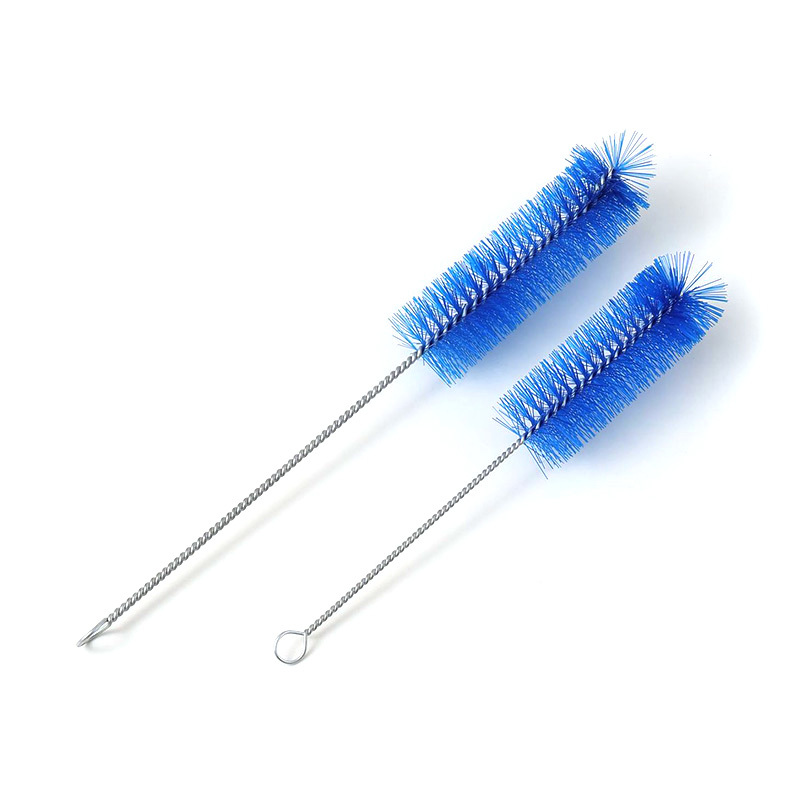
AC Blower Wheel Cleaning Brush for Vent Dust Removal
Air-conditioning equipment continuously draws in air that may contain dust, fibers, soil particles, cooking residue, smoke, and other contaminants. Even when filters are replaced regularly, some particles can pass through or accumulate around the filter housing. Over time, these particles may settle on the blower wheel and surrounding air passages.
The blower wheel is particularly important because it is responsible for moving air through the system. A layer of dust on the fan blades can affect the balance and efficiency of the wheel. Accumulated debris may also reduce the volume of air delivered into a room. In severe cases, the fan can become noisy, the motor may work harder, and the cooling system may deliver less effective performance.
Air vents and outlet grilles are also frequent collection points for dust. The visible portions may be easy to wipe, but the narrow spaces behind the grille and between internal components are more difficult to reach. A suitable brush can loosen these deposits so that they can be removed with a vacuum cleaner, cloth, or other cleaning method.
Regular cleaning is therefore not simply a cosmetic activity. It is part of general HVAC care. For homeowners, landlords, office managers, hospitality businesses, and cleaning service providers, an accessible cleaning brush can make routine maintenance more convenient and less expensive.
The brush is suitable for cleaning a range of air-conditioning and household areas. Typical applications include blower fan blades, air-conditioner vents, outlet grilles, evaporator fin spaces, cooling components, ventilation channels, and narrow gaps around internal housings.
Its narrow cylindrical profile can also be used for other cleaning tasks where a soft, flexible brush is needed. Depending on the user’s cleaning requirements, it may be used around household appliances, small openings, bottles, containers, and other areas identified in the product application information. Users should select the appropriate cleaning method and avoid applying excessive force to delicate fins, electrical components, or fragile surfaces.
The AC Blower Wheel Cleaning Brush combines a long reach, rounded bristle body, resilient synthetic fibers, and a wire-style handle. This combination gives the tool a useful balance of flexibility, cleaning coverage, and control.
The product is available in an approximately 25-centimeter overall length and an approximately 33-centimeter overall length. The shorter model has a bristle section of approximately 9 centimeters, while the longer model has a bristle section of approximately 14 centimeters. Both versions have an approximate 4-centimeter diameter.
The different lengths allow sellers and users to select the most appropriate option for a particular air-conditioning design. A shorter brush may be easier to control in compact spaces, while the longer version can provide additional reach inside deeper vents and larger blower housings. Offering two standard lengths also makes it easier for distributors to create a product family rather than relying on a single universal size.
The brush uses high-quality synthetic bristles described in the product materials as PP/PBT bristles. These materials are valued for their combination of flexibility, resilience, and resistance to routine cleaning wear. The bristles are soft enough for general dust removal while maintaining sufficient spring and structure to enter narrow spaces.
Compared with very rigid metal bristles, synthetic bristles are less likely to scratch ordinary plastic vent parts or leave marks on finished surfaces when used correctly. Compared with very soft fabric dusters, they can provide more direct contact with fan blades and narrow channels. This makes the brush a practical middle-ground solution for HVAC maintenance.
The bristles can loosen dry dust and light debris from surfaces that are difficult to reach with a wipe. Their rounded arrangement also provides contact around curved components and between fan blades. Because the brush is intended for routine cleaning rather than aggressive scraping, users can work with controlled pressure and reduce the risk of damaging sensitive parts.
The product content identifies a durable galvanized steel wire handle. Galvanized steel is commonly selected for its useful balance of strength, rigidity, and resistance to ordinary environmental exposure. The wire structure helps the brush retain a slim profile, allowing it to enter spaces where a thick plastic handle would be difficult to maneuver.
The handle gives the user direct control over the angle and movement of the bristle section. This is important when cleaning blower wheels because the brush may need to be guided between blades, around corners, or along the inner edges of a vent. The elongated handle also allows users to keep their hands farther away from dusty openings.
Product information also lists PBT in the brush handle material field. Since the detailed product description specifies a galvanized steel wire handle and PBT or PP/PBT bristles, buyers ordering commercial quantities should confirm the exact handle and bristle construction for their selected model, color, and customization program before production.
The standard product is lightweight, with listed weights of approximately 12 grams for the 25-centimeter version and approximately 20 grams for the 33-centimeter version. This low weight supports convenient storage, shipping, display, and repeated handling.
A lightweight tool is particularly valuable for cleaning services and household users who may need to work on multiple vents or appliances in one session. It can also reduce packaging and freight requirements for distributors. For online sellers, the compact format may help create economical product bundles and simplify fulfillment.
The following table summarizes the standard specifications supplied for the AC Blower Wheel Cleaning Brush. Dimensions and construction details should be confirmed with the manufacturer for each purchase order, especially when custom sizes or private-label changes are requested.
| Item | Standard Specification | Available Options |
|---|---|---|
| Product type | Vent and blower wheel cleaning brush | Standard or customized design |
| Primary function | Dust removal and routine cleaning | HVAC, household, and narrow-gap applications |
| Overall length | Approximately 25 cm or 33 cm | Custom sizes available by request |
| Bristle length | Approximately 9 cm or 14 cm | Custom bristle lengths available |
| Brush diameter | Approximately 4 cm | Custom diameter available |
| Bristle material | PP/PBT synthetic bristles | Subject to confirmed production specification |
| Handle description | Galvanized steel wire handle | Custom configuration may be discussed |
| Shape | Cylindrical brush strip | Customized formats subject to evaluation |
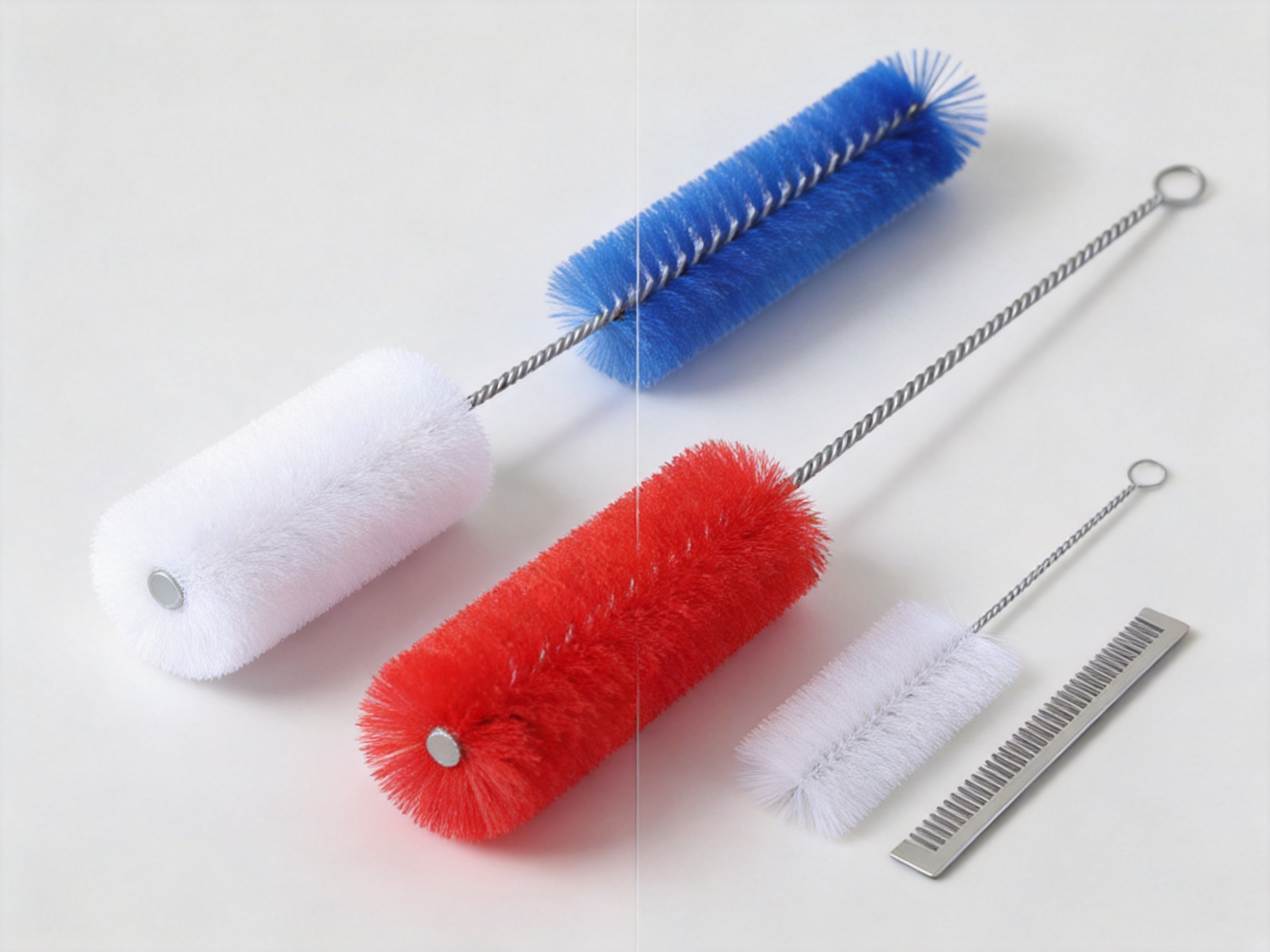
| Colors | White, blue, and red | Custom color programs may be available |
| Approximate weight | 12 g for the 25 cm model; 20 g for the 33 cm model | May vary with customization |
| Product code | G20-Small | Confirm model code before ordering |
| Typical sales channel | Retail, wholesale, Amazon, and distribution | OEM and private-label programs |
The market includes many household dusters, flat vent brushes, disposable cleaning cloths, and general-purpose bottle brushes. Each product category has a useful role, but the AC Blower Wheel Cleaning Brush offers several advantages for specific HVAC cleaning tasks.
Flat brushes are convenient for wiping the face of an air outlet, but their shape may not match the curved spaces between blower blades. A flat brush can also be difficult to insert deeply into a cylindrical or enclosed housing. The rounded bristle body of this product is better suited to working along narrow gaps and around curved surfaces.
The cylindrical shape provides contact on multiple sides of the brush at the same time. As the brush is pushed or pulled through a narrow channel, the bristles can loosen dust from more than one surface. This may reduce the number of passes required for routine cleaning.
Short-handled brushes often require users to place their hands close to the dirty vent opening. This can be inconvenient and may make it harder to reach the center of a blower wheel. The extended wire handle gives the user more distance and leverage, while also allowing access to deeper components.
The longer format can be particularly useful for wall-mounted split air-conditioners, ceiling vents, and other systems where internal parts are not immediately accessible. Users should still follow the equipment manufacturer’s safety instructions and disconnect power before cleaning areas near electrical components.
Metal brushes are effective for heavy-duty scrubbing, but rigid metal bristles can be unsuitable for plastic housings, coated surfaces, delicate fins, or finished vent components. The synthetic bristles in this product offer a gentler alternative for dust removal and routine maintenance.
The brush is not intended to replace a specialized heavy-duty tool for hardened deposits or industrial contamination. Its advantage is controlled, non-abrasive cleaning for ordinary dust and light debris in household and commercial HVAC environments.
Fabric dusters can collect loose surface dust, but they may not enter narrow blower-wheel gaps effectively. Fabric can also become loaded with dust and lose its ability to contact recessed areas. Synthetic bristles maintain a defined shape and can be guided more precisely.
The bristle structure is especially useful where the user must separate or pass between fan blades. It can also be rinsed or cleaned according to the material and application requirements, whereas some disposable or fabric-based tools are designed for limited use.
A reusable brush can offer better long-term value than single-use wipes or disposable dusters. The initial purchase provides a durable tool that can be used during repeated cleaning cycles. This is attractive to households, property maintenance teams, cleaning companies, and professional distributors seeking products with a clear practical benefit.
For sellers, the reusable design also supports marketing based on waste reduction, repeat use, and maintenance convenience. Product claims should remain accurate and should not promise unlimited service life, since durability depends on frequency of use, cleaning chemicals, storage conditions, and handling.

Effective use begins with preparation. The air-conditioning unit should be switched off, and power should be disconnected when cleaning near internal electrical or moving components. Filters, covers, or grilles should be handled according to the equipment manufacturer’s instructions.
The brush can then be guided slowly through the accessible vent or blower-wheel area. Users should avoid forcing the bristles into a space that is too narrow. A steady back-and-forth motion generally helps loosen dust, while a vacuum cleaner can be used to collect dislodged particles. In some applications, a dry brush is sufficient; in others, the brush may be used as part of a broader cleaning process under suitable conditions.
Because the brush has a relatively broad 4-centimeter diameter, it offers a meaningful cleaning area while retaining the ability to enter many narrow spaces. The 25-centimeter and 33-centimeter length options provide different levels of reach. Sellers can present them as complementary choices instead of treating one model as suitable for every air-conditioning system.
The white, blue, and red color options also provide practical benefits. Colors can be used to distinguish different cleaning zones, identify product variations, create retail assortment, or coordinate with a customer’s packaging design. For OEM and private-label programs, color selection can support brand identity and product differentiation.
The product is manufactured by Jinhua Tongshun Tool Factory, a China-based manufacturer located in Jinhua, Zhejiang Province. Established in 1999, the company integrates research and development, production, and sales. Its product focus includes gun cleaning kits, barrel cleaning brushes, and related cleaning accessories, while its brush manufacturing capabilities also support household and HVAC cleaning applications.
More than 26 years of manufacturing experience provide a foundation for process familiarity, supplier coordination, product development, and order management. Experience is especially important for brush products because performance depends on several connected factors, including bristle material, bristle density, forming accuracy, handle strength, dimensional consistency, color control, and final packing.
The factory operates a modern production facility with semi-automatic and fully automated production systems. Automation can improve production repeatability by reducing variation in repetitive operations. It may also support more stable output for large orders and help the manufacturer maintain consistent production schedules.
For a brush such as this one, controlled production processes can help manage the relationship between bristle length, brush diameter, handle alignment, and overall product appearance. Consistency is important for wholesale customers because retail buyers expect products from the same package or assortment to have a uniform look and comparable performance.
Semi-automatic processes can provide flexibility for different specifications, colors, and order quantities, while fully automated equipment can support efficient high-volume manufacturing. This combination is useful for buyers who need both standard products and customized production runs.
Reliable quality control is a central advantage for distributors and private-label customers. Quality checks may include visual inspection, dimensional verification, bristle and handle assessment, color review, packaging inspection, and sampling during production. Specific inspection procedures should be confirmed with the factory for each project.
Consistent quality helps reduce customer complaints, returns, and marketplace quality issues. It also supports repeat ordering because buyers can expect future production to remain close to the approved sample. For e-commerce sellers, consistency in appearance and dimensions is particularly important when product images and descriptions are used to set customer expectations.
The company reports stable production capacity and experience serving customers in more than 50 countries and regions. International order experience can help with export documentation, packaging coordination, communication across time zones, and practical requirements for overseas customers.
Large-scale production capability is valuable for wholesalers that need seasonal inventory, promotional quantities, or recurring replenishment. It also allows distributors to test a standard model first and later expand into color variations, longer sizes, custom packaging, or related cleaning tools.
The factory provides OEM and ODM services, including customized products, packaging, and logos. For the AC blower wheel brush, customization may include size, bristle length, diameter, color, labeling, packaging format, and other specifications subject to technical review.
OEM customization is useful when a seller already has an established brand and wants a ready-to-market version of the product. ODM cooperation can be more suitable when a buyer wants to develop a variation for a particular HVAC system, retail channel, or consumer segment.
Custom projects should begin with a clear specification sheet. The sheet should identify the overall length, bristle length, brush diameter, material requirements, handle construction, color reference, packaging details, logo artwork, carton information, and inspection expectations. Confirming these details before production helps reduce misunderstandings and supports accurate sampling.
The product has several characteristics that make it commercially attractive. It solves a recognizable household problem, is lightweight and easy to ship, has a simple explanation, and can be sold as an individual tool or as part of a broader cleaning assortment.
Many consumers understand that vents and air-conditioners collect dust but do not know which tool to use. A dedicated blower wheel cleaning brush provides a clear answer. Product listings can explain the cleaning problem, show the tool’s elongated shape, and demonstrate how the bristles reach internal gaps.
A clear use case can make the product suitable for online marketplaces, home improvement stores, household goods catalogs, HVAC accessory programs, and professional cleaning supply channels.
The two standard length options allow sellers to offer a basic model and an extended-reach model. White, blue, and red color choices can be sold separately, mixed in a set, or used to create different catalog entries. Custom sizes can further broaden the assortment for specialized customers.
Retailers may also bundle the brush with microfiber cloths, vacuum attachments, filter-cleaning tools, vent covers, or other household maintenance products. Such bundles can increase the perceived value of the product while helping consumers complete a more comprehensive cleaning task.
The brush is compact and lightweight, which supports efficient warehousing. It does not require a large display footprint, and multiple units can be packed into master cartons. The product’s simple shape can also reduce the complexity of retail packaging compared with larger mechanical cleaning devices.
Before finalizing a shipment plan, buyers should confirm carton dimensions, packing quantity, gross weight, and packaging protection. Although the brush is not highly fragile, the bristles should be protected from crushing or permanent deformation during transportation.
OEM and ODM support gives sellers the opportunity to create a branded HVAC cleaning accessory. A private-label product may include a custom logo, instruction card, color scheme, barcode, retail box, hanging card, polybag, or master carton marking.
Private-label buyers should ensure that their packaging instructions are clear and that safety guidance is included. Recommended information may cover power disconnection, safe handling around electrical components, proper brush pressure, cleaning after use, and storage in a dry location.
The brush can be positioned as a routine maintenance accessory rather than a replacement for professional HVAC servicing. This distinction creates accurate expectations and supports responsible use. It is designed to remove dust and light debris from accessible areas, not to repair damaged equipment or eliminate every form of contamination.
For household customers, the main selling points are reach, ease of use, reusable construction, soft synthetic bristles, and compatibility with common air-conditioning cleaning routines. For professional cleaners, the value lies in portability, repeat use, low weight, and the ability to access narrow areas efficiently.
For wholesalers, the product offers an economical addition to a cleaning tools catalog. For private-label companies, it provides a simple platform for customization. For HVAC accessory distributors, it can complement filters, vent covers, cleaning sprays, condensate maintenance products, and other service tools.
A strong product listing should explain the problem before presenting the solution. It can describe how dust accumulates on blower wheels and vents, then show how the long-handled brush reaches narrow internal spaces. Clear dimension information should be displayed so customers can select the appropriate model.
Product images should show the brush from several angles, demonstrate its bristle shape, and illustrate its approximate size. A dimension diagram can help customers understand the difference between the 25-centimeter and 33-centimeter versions. Images and wording should remain consistent with the actual production specification.
Listings should avoid unsupported claims such as guaranteed removal of mold, complete sterilization, permanent odor elimination, or universal compatibility with every air-conditioning unit. Accurate wording helps protect the seller’s reputation and reduces misunderstandings after purchase.
Before cleaning an air-conditioning unit, users should turn off the equipment and disconnect power whenever the cleaning area is near moving parts, wiring, motors, or electrical controls. If the unit is difficult to access or shows signs of damage, professional service may be appropriate.
The brush should be inserted gently. Excessive force can bend the handle, deform the bristles, damage delicate fins, or push debris farther into the equipment. Users should avoid using the brush on energized electrical components and should follow the care instructions of the air-conditioner manufacturer.
After use, loose dust should be removed from the brush. Depending on the cleaning conditions and material specification, the brush may be wiped or washed carefully. It should be dried thoroughly before storage to help preserve the bristles and reduce the risk of odor or material deterioration.
The tool should be stored away from excessive heat, corrosive chemicals, and prolonged compression. Proper storage is especially important for wholesale inventory, because crushed bristles may affect the appearance and performance of the product before it reaches the end user.
Buyers evaluating this product should request a production sample before placing a large order. The sample should be checked for overall length, bristle length, diameter, bristle firmness, handle alignment, color, weight, finish, and packaging compatibility.
If the product is intended for a specific air-conditioning brand or equipment format, buyers should test the brush in the target application. The 4-centimeter diameter may be appropriate for many cleaning tasks, but actual accessibility depends on the design of the vent, grille, blower housing, and internal components.
Buyers should also clarify the material terminology. The product description refers to PP/PBT bristles, while the information table includes PBT in the brush handle material field and the detailed construction describes a galvanized steel wire handle. A commercial specification should clearly separate bristle material from handle material to avoid confusion in packaging, customs documents, and quality inspections.
For OEM orders, buyers should approve a golden sample or signed reference sample. Production can then be compared with the approved standard. The purchase agreement should include tolerances for dimensions, color, bristle alignment, packaging, labeling, and acceptable defect levels.
Brush manufacturing may appear simple, but reliable commercial production requires control over numerous details. The bristle body must be formed consistently, the handle must remain properly aligned, and the finished product must withstand normal handling and shipping. Small inconsistencies can become significant when thousands of units are supplied to retailers or online customers.
Jinhua Tongshun Tool Factory has operated since 1999 and has developed experience in cleaning tools and related accessories. Its integration of research and development, production, and sales can support communication between product design and manufacturing teams. This is useful when a customer wants to modify size, color, packaging, or application details.
The factory’s semi-automatic and fully automated systems are also relevant to commercial buyers. Automated production can support repeatability, while semi-automatic operations may allow practical adjustments for different models and custom orders. Together, these capabilities can help balance volume, consistency, flexibility, and cost.
The company’s export experience across more than 50 countries and regions demonstrates familiarity with international business requirements. Buyers should still confirm all destination-specific standards, labeling rules, packaging requirements, and import obligations for their own market.
The main purpose is to remove dust and light debris from air-conditioner blower wheels, vents, air outlets, evaporator fin areas, cooling components, and other narrow or hard-to-reach spaces. It is designed for routine cleaning and maintenance.
It is designed to help users reach accessible blower-wheel areas without complete disassembly. However, access varies by air-conditioner model. The brush should never be forced into a restricted space, and professional servicing may still be necessary for deep contamination or complicated equipment.
The standard options are approximately 25 centimeters overall length with a 9-centimeter bristle section, and approximately 33 centimeters overall length with a 14-centimeter bristle section. Both are listed with an approximate 4-centimeter diameter. Custom sizes can be discussed with the manufacturer.
The listed standard colors are white, blue, and red. Buyers seeking a different color for private-label or retail purposes should confirm available color matching and minimum order requirements.
The product description identifies the bristles as PP/PBT synthetic bristles. Buyers should confirm the exact material grade and construction for the selected production model, especially if the information will appear on retail packaging.
The detailed product description identifies a galvanized steel wire handle. Another product information field lists PBT in the brush handle material section, so commercial buyers should confirm the final handle specification with the factory before ordering.
The synthetic bristles are intended to provide a softer alternative to rigid metal brushes. Even so, users should apply light pressure, avoid electrical components, and test the brush on a small area when working with delicate surfaces.
Yes. The manufacturer offers OEM and ODM services, and the product information indicates that custom sizes and specifications can be discussed. Customization may include dimensions, colors, packaging, logos, and related product details.
Yes. Its lightweight construction, simple design, multiple standard options, and broad household application make it suitable for wholesalers, distributors, online sellers, cleaning product suppliers, and HVAC accessory businesses.
No. It is a routine maintenance tool for accessible dust and light debris. It does not replace professional inspection, deep cleaning, repair, refrigerant service, electrical work, or treatment of serious contamination.
It should be kept dry and protected from crushing, excessive heat, corrosive substances, and prolonged pressure on the bristles. Proper storage helps maintain the shape and usability of the brush.
Buyers should confirm the final bristle and handle materials, dimensions, color, packaging, logo artwork, product code, order quantity, sampling procedure, inspection standards, carton details, and shipping documentation. A reference sample and written specification are recommended.
The AC Blower Wheel Cleaning Brush for Vent Dust Removal is a focused maintenance tool for cleaning air-conditioning vents, blower wheels, and narrow internal spaces. Its main advantages are the elongated reach, cylindrical synthetic bristle body, multiple size options, lightweight construction, and simple reusable design.
Compared with flat brushes, short dusters, rigid metal brushes, and disposable cleaning products, it offers a balanced approach for routine HVAC dust removal. It is not an industrial scraping tool or a substitute for professional service, but it can make everyday maintenance more convenient and accessible.
For commercial buyers, the product is supported by a manufacturer with more than 26 years of experience, international export exposure, OEM and ODM capabilities, and semi-automatic and fully automated production systems. These strengths can help support standard wholesale supply as well as customized private-label programs.
With careful specification confirmation, suitable packaging, accurate marketing claims, and responsible use instructions, the brush can serve as a practical addition to household cleaning catalogs, HVAC accessory ranges, professional maintenance supplies, and online retail assortments.

1. Product specification and application information supplied for the AC Blower Wheel Cleaning Brush for Vent Dust Removal.
2. Manufacturing and company information supplied by Jinhua Tongshun Tool Factory.
3. General HVAC maintenance principles concerning dust accumulation, airflow, blower-wheel cleanliness, and routine equipment care.
4. General product development practices for OEM and ODM cleaning tools, including sample approval, dimensional verification, packaging review, and quality inspection.
5. General safe-use practices for cleaning around air-conditioning equipment, including power isolation and careful handling of electrical and moving components.