English
 русский
 Español
 عربى

HUNTACE HUNTACE HUNTACE HUNTACE HUNTACE
HUNTACE HUNTACE HUNTACE HUNTACE

Regular firearm maintenance depends on using cleaning materials that are effective against fouling while remaining gentle on the bore. A quality cotton gun cleaning patch is one of the simplest and most important consumables in a complete firearm-care routine. It helps remove carbon, powder residue, excess oil, solvent, and other contaminants from the barrel while supporting lubrication and corrosion protection.
The Cotton Gun Cleaning Patch Set Carbon Removal Bore Kit is designed for shooters, firearm maintenance professionals, distributors, shooting-sports retailers, and private-label buyers who require consistent performance across a broad range of firearms. Made from high-density cotton fabric, the patches combine absorbency, softness, dimensional variety, and disposable convenience. They are suitable for rifles, pistols, shotguns, precision tools, and other metal components that require controlled cleaning and polishing.
Unlike improvised cloth pieces or low-density fabric scraps, purpose-made cleaning patches are produced to provide more predictable contact with the bore and more consistent absorption of cleaning fluids. Their carefully selected cotton construction helps reduce lint, supports efficient contaminant collection, and minimizes the possibility of introducing unwanted debris into the barrel.
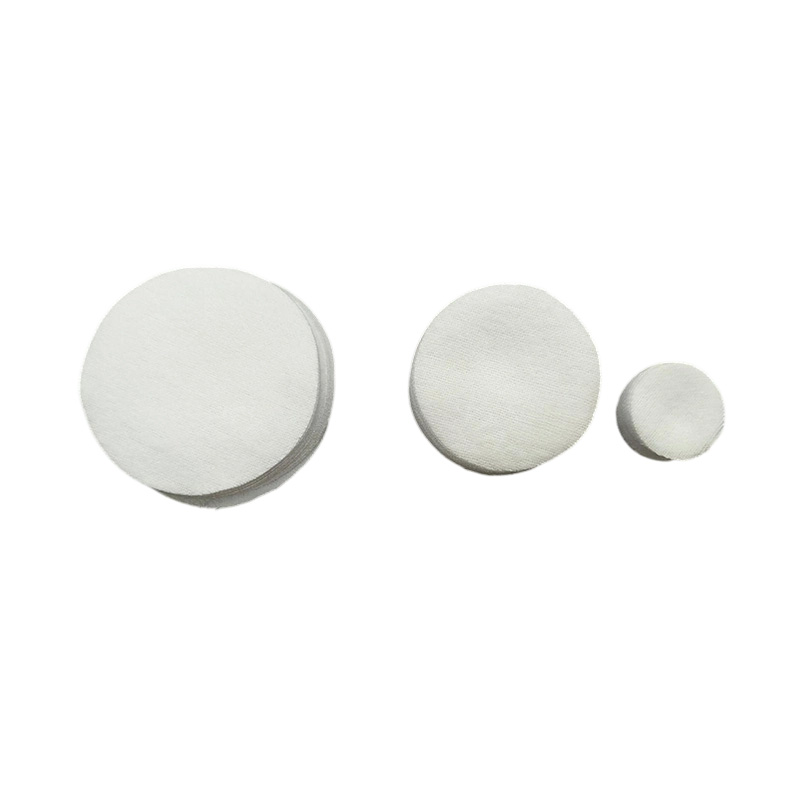
Cotton Gun Cleaning Patch Set Carbon Removal Bore Kit
Firearm cleaning is not limited to removing visible dirt. After firing, the bore may contain carbon fouling, powder residue, copper deposits, lubricant residue, and microscopic particles created by combustion and projectile movement. If these materials are not removed, they can interfere with accuracy, complicate future cleaning, and contribute to long-term surface deterioration.
A cleaning patch provides a controlled interface between the cleaning rod or jag and the internal surface of the barrel. When pushed through the bore with an appropriate solvent, the patch absorbs and lifts contaminants. When used with a small amount of gun oil, it distributes a thin protective film across the metal. A final dry patch can then remove excess liquid before storage or use.
The patch is also valuable because it offers visual feedback. A clean white or light-colored cotton patch makes it easier to see whether carbon, copper-colored residue, powder particles, or excess lubricant remain in the bore. This simple inspection process allows the user to repeat the cleaning cycle until the desired condition is achieved.
For professional users, consistency is especially important. A uniform patch size and material construction makes maintenance procedures more repeatable from one firearm to another. Retailers and distributors also benefit from offering a consumable product that customers can purchase repeatedly as part of their normal cleaning routine.
The primary material used in this gun cleaning patch set is cotton fabric. Cotton is widely used for bore-cleaning applications because it combines softness, absorbency, flexibility, and compatibility with common gun-cleaning liquids. The fabric can conform to the interior surface of a barrel without creating the aggressive scraping action associated with abrasive materials.
The high-density structure helps the patch retain its shape while passing through the bore. This is important because a patch that disintegrates, stretches excessively, or sheds large amounts of fiber may create additional cleaning work. A well-constructed patch should collect residue rather than leave it behind.
Although the patches are soft, they are not designed to replace a brass, bronze, nylon, or other specialized brush when heavy fouling requires mechanical agitation. Instead, they complement brushes and other cleaning accessories. A brush can loosen firmly adhered deposits, while a cotton patch can remove the loosened material and absorb solvent or oil afterward.
The cotton fabric is also suitable for polishing and wiping selected metal components. Users may apply it to bolt surfaces, feed components, external metal parts, tools, and precision-machined items when a soft, absorbent material is preferred. The patch should always be used according to the requirements of the specific component and cleaning solution.
Modern firearm barrels are manufactured with carefully formed rifling and precision-machined internal surfaces. Cleaning materials should therefore be selected with attention to surface protection. Cotton patches provide a soft contact surface that helps reduce the risk of unnecessary scratching during normal cleaning procedures.
The patches are not intended to abrade the bore. Their function is to carry solvent, collect fouling, distribute lubricant, and remove excess fluid. This makes them suitable for routine maintenance between shooting sessions, post-shooting cleaning, inspection, and storage preparation.
All textile materials can potentially release fibers, but fabric density, finishing, cutting quality, and handling influence the amount of loose material. These patches are designed with a lint-minimized texture to help reduce fiber residue inside the barrel. The result is a cleaner maintenance process and less concern about visible fluff remaining after patching.
For the best results, users should inspect the patch after each pass and avoid forcing a patch that is excessively large for the bore. The proper size should provide useful contact without requiring excessive pressure. A suitable jag or adapter should also be selected for the firearm caliber and patch format.
One of the main advantages of this patch collection is the availability of multiple sizes and shapes. The range includes round patches measuring approximately 2.6 centimeters, 5 centimeters, and 6.4 centimeters in diameter, as well as square patches measuring approximately 5 by 5 centimeters. These options support firearm maintenance requirements ranging from small-caliber rifles and pistols to large shotgun bores.
Compatibility is influenced by the patch dimension, the cleaning jag or adapter, the bore diameter, and the preferred cleaning method. A smaller patch may be appropriate for narrow bores, while a larger patch can offer better coverage in shotgun barrels or larger-caliber firearms. Users can select the most suitable size instead of cutting generic fabric by hand.
| Patch Format | Approximate Size | Typical Application | Primary Function |
|---|---|---|---|
| Round cotton patch | 2.6 cm diameter | Small-caliber rifles and pistols | Solvent application, residue removal, and final drying |
| Round cotton patch | 5 cm diameter | Common pistol and rifle maintenance | General bore cleaning and lubrication |
| Round cotton patch | 6.4 cm diameter | Larger calibers and broad bore surfaces | Efficient coverage and fluid absorption |
| Square cotton patch | 5 × 5 cm | General firearm parts and shotgun care | Wiping, polishing, and controlled cleaning |
The stated application range extends from .17 caliber to 12 gauge. Because firearm designs and cleaning systems differ, users should verify the correct patch size for their specific bore and cleaning rod assembly. The availability of several dimensions gives wholesalers and retailers more flexibility when building a complete range for their customers.
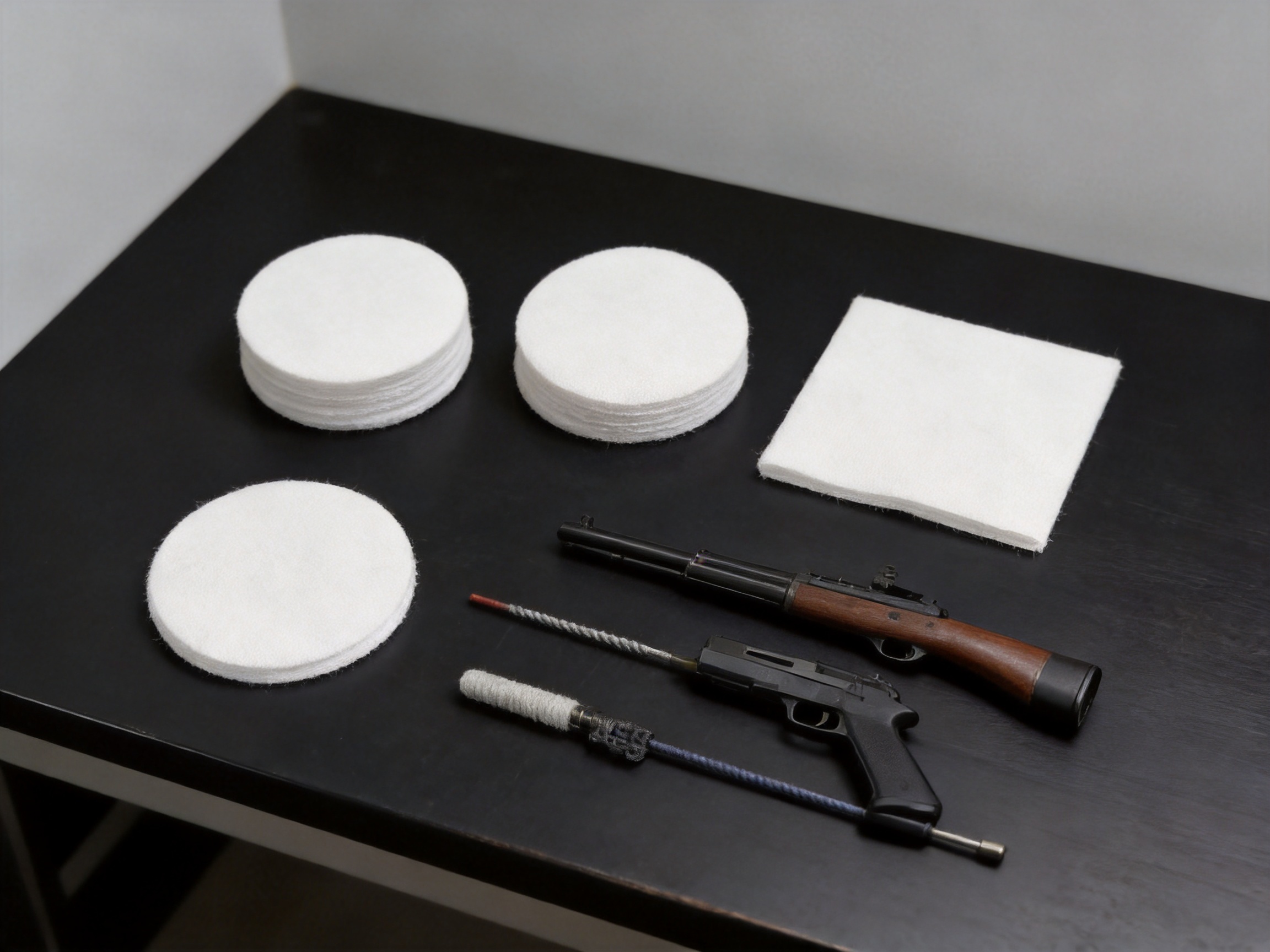
Many firearm owners have used old T-shirts, paper towels, facial tissues, or cut pieces of household fabric for cleaning. These materials may appear convenient, but they often vary significantly in thickness, fiber release, absorbency, and strength. An improvised material may tear inside the bore, leave lint, fail to hold solvent, or become too bulky when folded.
Purpose-made cotton patches offer a more controlled alternative. They are manufactured for maintenance use, supplied in defined formats, and available in dimensions selected for common firearm applications. This improves convenience and reduces the time required to prepare cleaning materials before each session.
Compared with paper products, cotton fabric generally provides better flexibility and durability during passage through a bore. Paper may tear when exposed to solvents or become compacted under pressure. Cotton can absorb and retain liquids while maintaining a usable structure during the cleaning cycle.
Compared with coarse household cloth, high-density cotton patches offer a softer and more predictable surface. Coarse fibers or hard debris embedded in reused fabric may create unnecessary contact with precision surfaces. A dedicated patch is intended to be clean, controlled, and disposable after use.
Compared with reusable rags, disposable patches reduce cross-contamination. A rag used on multiple firearms may transfer carbon, metal particles, old lubricant, or abrasive debris from one surface to another. Using a fresh patch for each cleaning stage helps keep the process organized and improves hygiene.
Not all cotton patches perform identically. Lower-quality products may use loose fibers, inconsistent fabric density, uneven cutting, or materials that absorb liquid too quickly without retaining it. Some may produce excessive lint, while others may be so thin that several patches are required for one cleaning operation.
The high-density cotton construction of this product is intended to provide better structural integrity and more dependable absorption. A patch should remain intact as it passes through the bore, collect residue effectively, and provide a visible indication of the cleaning result.
Size consistency is another important distinction. Uniformly cut patches are easier to match with a cleaning jag and easier to count, package, and distribute. This is valuable for consumers who want predictable maintenance and for wholesalers who need stable product specifications across repeated orders.
The selection of round and square formats also provides an advantage over suppliers offering only one generic size. Round patches can be convenient for bore cleaning systems, while square patches can be useful for wiping components, applying lubricant, polishing, or adapting the fold to a particular cleaning tool.
Cleaning patches are often used together with bore solvents, gun oils, rust-preventive fluids, and other maintenance solutions. Cotton fabric absorbs these liquids and delivers them to the intended surface in a controlled manner. This reduces the need to pour or spray excessive amounts directly into the firearm.
For solvent cleaning, a user may apply a suitable amount of solvent to a patch and pass it through the bore. The solvent helps loosen carbon and powder residue, while the patch collects the softened contamination. Additional dry patches can then be used to remove residue and excess liquid.
For lubrication, a lightly oiled patch can distribute a thin film across the bore. The goal is generally even coverage rather than saturation. After lubrication, a clean patch may be used to remove excess oil if the firearm will be used soon. When preparing a firearm for storage, the correct protective film should be determined according to the firearm manufacturer’s recommendations and storage conditions.
The absorbency of cotton is also useful for removing excess solvent from external metal parts. However, users should prevent cleaning liquids from entering areas where they could damage ammunition, optics, electronic accessories, wood finishes, polymers, or other materials that may be sensitive to the selected chemical.
The disposable design is one of the practical strengths of the product. After a patch has collected fouling, it can be discarded rather than washed and reused. This avoids the difficulty of laundering patches saturated with carbon, copper residue, solvent, and oil.
Fresh patches also help establish separate cleaning stages. For example, one patch can be used to apply solvent, another can remove loosened fouling, and a final patch can be used for drying or light lubrication. The clean-versus-used distinction is easy to identify, supporting a more organized workflow.
For commercial cleaning services, shooting clubs, training facilities, and firearm retailers, disposable patches can simplify inventory management and reduce the labor associated with cleaning reusable cloths. Bulk packaging can be divided into convenient quantities for workshops, customer kits, or service stations.
Used patches should be discarded responsibly, especially when they contain solvent or other regulated substances. Users should follow local disposal requirements and the safety instructions provided for the cleaning chemicals in use.
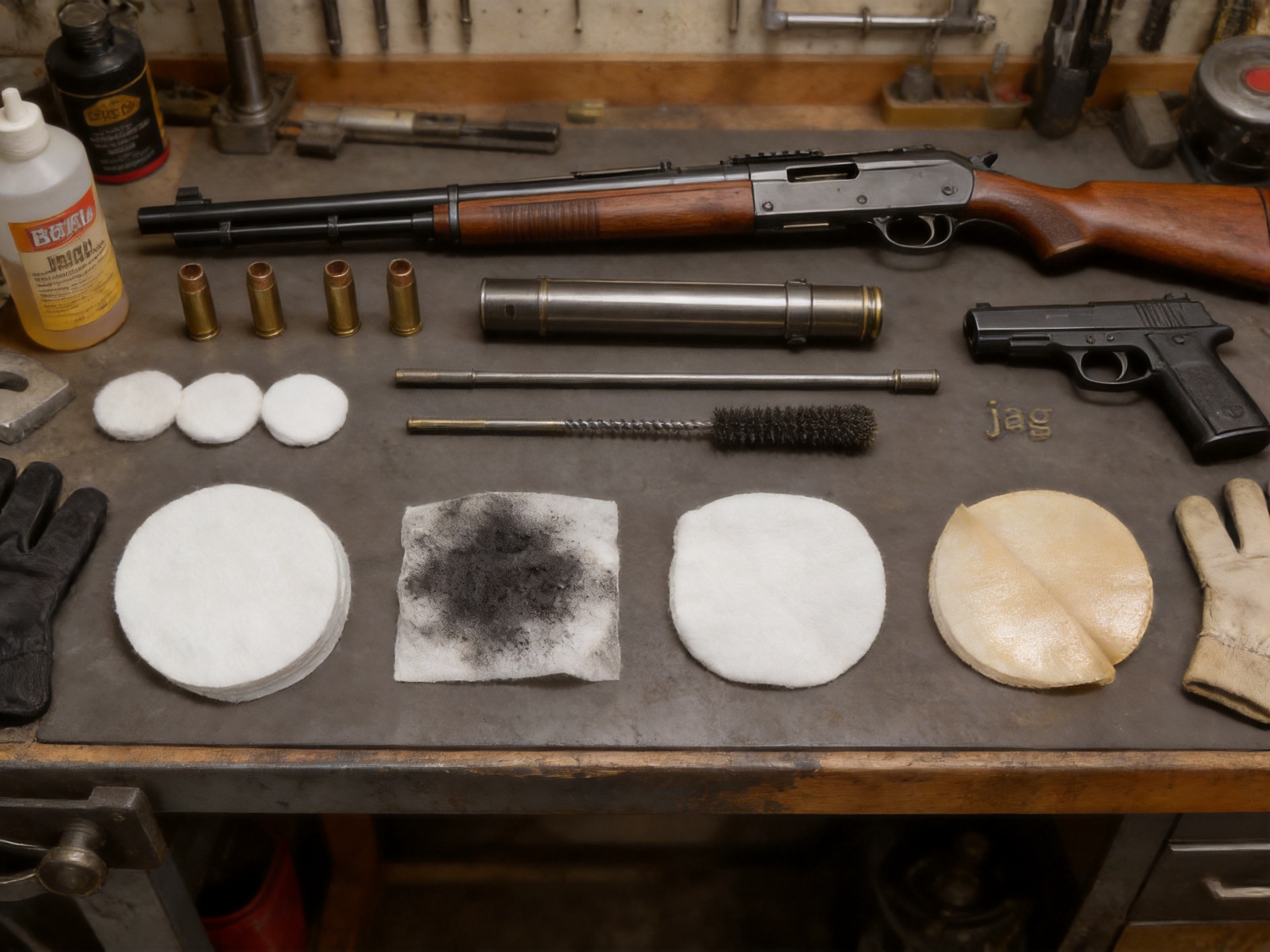
A cotton patch is most effective when it is used as part of a complete and orderly cleaning process. Before beginning, make sure the firearm is unloaded and follow the firearm manufacturer’s safety instructions. Remove ammunition from the work area and confirm the condition of the firearm according to established safe-handling procedures.
Use a stable, well-ventilated work surface with sufficient lighting. Prepare the correct cleaning rod, jag, adapter, brush, solvent, lubricant, and patches. Having the required materials ready reduces interruptions and helps prevent the use of an unsuitable substitute.
Choose a patch size appropriate for the bore and the cleaning tool. A patch should fit securely on the jag without becoming so tight that excessive force is required. If the patch is too loose, it may provide insufficient contact. If it is too tight, it may bunch up, tear, or make the cleaning rod difficult to control.
Apply a suitable amount of bore solvent to the patch or follow the instructions for the selected cleaning system. Avoid unnecessary over-application. Excess liquid can make the work area messy and may move into areas where it is not wanted.
Guide the cleaning rod in the recommended direction and use controlled movements. Do not force the rod or patch. The first patch may emerge with visible carbon, powder residue, or other fouling. Dispose of it and repeat with a fresh patch when additional cleaning is required.
If residue remains firmly attached, a correctly sized brush may be used according to the firearm manufacturer’s cleaning guidance. Bronze, brass, nylon, and other brush materials have different characteristics and should be selected for the application. After brushing, use cotton patches to remove loosened debris and excess solvent.
Once fouling has been removed, use dry patches to reduce remaining solvent. If protection is required, use a lightly oiled patch to apply a controlled film. A final inspection patch can help determine whether excess oil or visible residue remains.
This procedure is a general maintenance framework and should be adapted to the firearm design, ammunition, cleaning chemistry, and manufacturer’s instructions.
Rifle bores may require careful cleaning because barrel condition can influence accuracy and consistency. The patch sizes in this range support small-caliber rifles as well as larger rifle bores. Cotton patches can be used after brushing to remove powder residue and carbon from the bore and to apply a controlled protective film during storage.
Pistols often require frequent cleaning because they may be used for training, competition, duty, or recreational shooting. A suitable round patch can support routine bore cleaning after a range session. Smaller formats may be convenient for compact calibers, while larger formats can be folded or fitted to an appropriate jag for broader bores.
Shotgun barrels have a larger internal diameter and may accumulate powder residue, wad material, plastic deposits, and lubricant residue. The larger 6.4-centimeter round patch and 5-by-5-centimeter square patch can provide useful coverage for shotgun maintenance, including applications up to 12 gauge when matched correctly to the cleaning tool.
Beyond firearm bores, the cotton patches can be used for wiping or polishing selected precision-machined metal components and tools. Their soft texture and absorbency make them suitable for controlled application of cleaning fluids or light protective oils. The user should first confirm material compatibility and avoid transferring abrasive debris to sensitive surfaces.
Jinhua Tongshun Tool Factory, also known as Tongshun Tools, was established in 1999 and specializes in firearm cleaning kits, barrel-cleaning brushes, rods, patches, cloths, and related accessories. More than 26 years of manufacturing experience provide a foundation for product development, process management, and customer support.
The company integrates research and development, production, and sales. This integrated structure can help shorten communication cycles between product design, manufacturing, quality control, and customer requirements. It also supports the development of coordinated product families, including patches, bronze and brass brushes, nylon brushes, bore mops, cleaning rods, adapters, and complete gun-cleaning kits.
Tongshun Tools operates a modern production facility with semi-automatic and fully automated production systems. For a consumable product such as a cleaning patch, production consistency depends on controlled material handling, accurate cutting, efficient packaging, and systematic inspection. Automation can support repeatability in these areas while semi-automatic operations provide flexibility for different dimensions and order quantities.
The combination of automation and adaptable production is particularly valuable for OEM and ODM programs. Buyers may require specific patch dimensions, packaging formats, product quantities, labels, instruction inserts, or coordinated kits. A factory with multiple manufacturing systems can respond to both standard wholesale orders and customized projects.
Patch performance begins with fabric selection. Cotton density, softness, absorbency, surface texture, and resistance to shedding all influence the final product. A professional manufacturing process includes attention to incoming material quality and the consistency of the fabric used across production batches.
Accurate cutting is also important. Round and square patches must maintain reliable dimensions so they can be matched with cleaning jags, organized into kits, and presented with clear specifications. Consistent cutting helps reduce irregular edges and supports a more professional user experience.
The company’s production systems are designed to support large-scale orders. This is important for distributors and retailers who need stable supply rather than occasional small quantities. Scalable manufacturing can assist with inventory planning, promotional programs, seasonal demand, and the inclusion of patches in complete firearm-maintenance kits.
Export experience in more than 50 countries and regions also gives the company familiarity with international customers, product communication, packaging requirements, and cross-border supply arrangements. For importers, this experience may simplify the process of discussing specifications and preparing repeat orders.
OEM and ODM services are available for buyers seeking customized products, packaging, and logos. A customer may request a private-label cotton patch set, a mixed-size assortment, a custom retail box, a branded pouch, or a kit combining patches with rods, brushes, and adapters.
Customization can also extend to the commercial positioning of the product. A distributor serving hunters may prefer a field-maintenance package, while a shooting-sports retailer may request a range-cleaning assortment. A professional gunsmithing supplier may require larger bulk quantities and workshop-oriented packaging.

Cleaning patches are repeat-purchase consumables. Unlike durable cleaning rods or brushes, patches are used during normal maintenance and must be replenished. This creates a practical opportunity for distributors, retailers, firearm accessory brands, and shooting-sports suppliers.
The product can be supplied as an individual patch pack, a mixed-size set, a component within a complete cleaning kit, or a private-label accessory. Multiple formats allow buyers to address different customer groups without changing to an entirely different supplier.
Retail packaging can communicate the key benefits clearly: cotton construction, multiple sizes, bore compatibility, disposable convenience, and suitability for solvent application and residue removal. For online sellers, these features can be presented in product listings, comparison charts, and maintenance guides.
| Buyer Type | Potential Product Format | Commercial Benefit |
|---|---|---|
| Firearm accessory retailer | Retail packs with size and caliber information | Easy product selection for end users |
| Shooting-sports distributor | Bulk cartons and mixed-size assortments | Efficient inventory for multiple customer segments |
| Private-label brand | Customized packaging, logo, and instructions | Improved brand differentiation |
| Gunsmithing supplier | Workshop packs and larger quantities | Lower replenishment frequency and practical service use |
| Complete-kit manufacturer | Cotton patches combined with rods, brushes, and adapters | Expanded product offering from one coordinated source |
Because the patches are compatible with a broad caliber range, buyers can reduce the number of separate patch products required in their catalog. At the same time, the availability of different sizes allows them to offer a more precise choice when customers need a specific format.
For a consumable maintenance product, packaging must protect the patches from dust, moisture, compression, and contamination during storage and transportation. It should also keep different sizes organized and make the contents easy for the user to identify.
Packaging may include the product name, material, patch dimensions, recommended application range, quantity, usage guidance, and storage recommendations. For international distribution, buyers may request multilingual instructions or customized artwork to meet the needs of individual markets.
Quality control should consider fabric appearance, patch dimensions, edge condition, cleanliness, quantity accuracy, package sealing, labeling, and carton protection. These details influence not only product performance but also customer confidence and repeat purchasing.
For OEM and ODM programs, the buyer and manufacturer should confirm specifications before production. Important points may include cotton material grade, patch size tolerance, shape, quantity per pack, packaging material, printing method, logo position, carton dimensions, sampling approval, and inspection standards.
Cotton cleaning patches should be stored in a clean, dry environment away from excessive humidity, direct sunlight, chemicals, and sources of contamination. Keeping the package sealed until use helps maintain cleanliness and prevents the patches from absorbing moisture or unwanted odors.
During use, avoid placing unused patches directly on dirty work surfaces. Take out only the quantity required for the current cleaning session. Keep solvent-treated patches separate from unused patches, and do not return used material to the original package.
Distributors should use appropriate stock rotation practices. Although dry cotton patches are stable under normal storage conditions, organized inventory management helps prevent packaging damage and supports reliable order fulfillment.
The disposable nature of the patches provides convenience and reduces cross-contamination, but responsible disposal remains important. Used patches may contain solvent, oil, carbon, and other residues. They should be handled in accordance with local waste-management requirements and the instructions associated with the cleaning chemicals.
For buyers interested in reducing unnecessary packaging, the manufacturer may be able to discuss packaging optimization through OEM or ODM channels. Options can include consolidated cartons, efficient inner packs, right-sized retail packaging, or mixed assortments that reduce the need for multiple product boxes.
Users should also avoid treating a cotton patch as a universal substitute for every cleaning accessory. A patch is intended for wiping, absorbing, lubricating, and collecting residue. Brushes, mops, rods, jags, and specialized tools may still be required for complete maintenance. Using each tool for its intended purpose improves safety and efficiency.
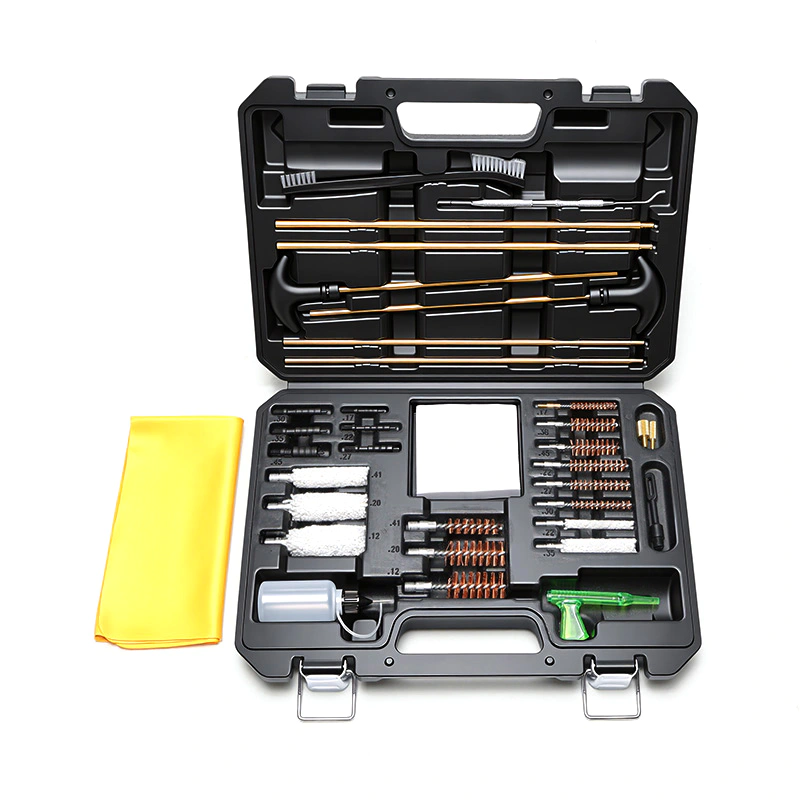
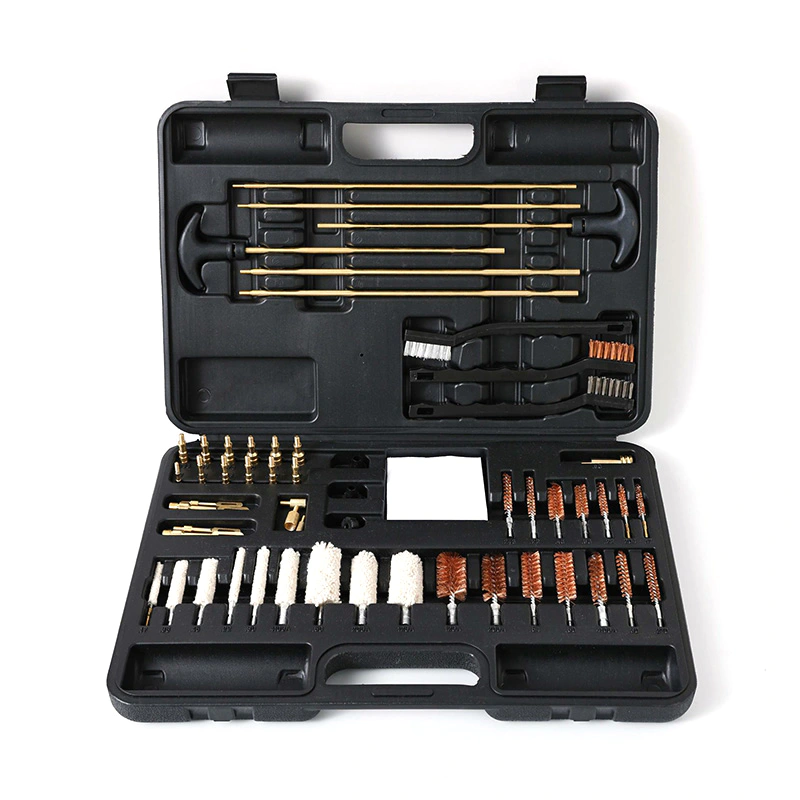
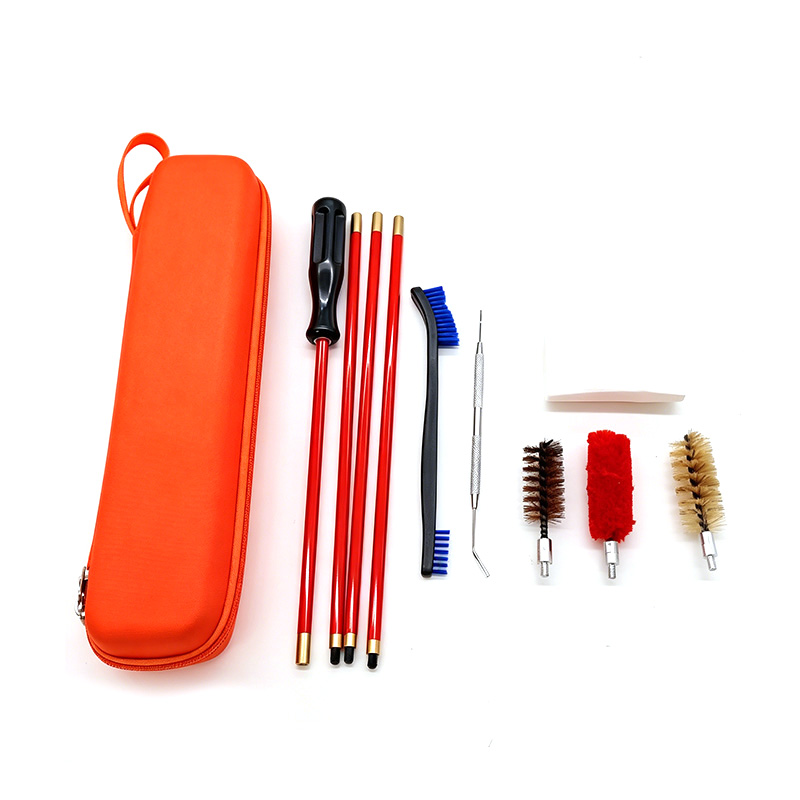
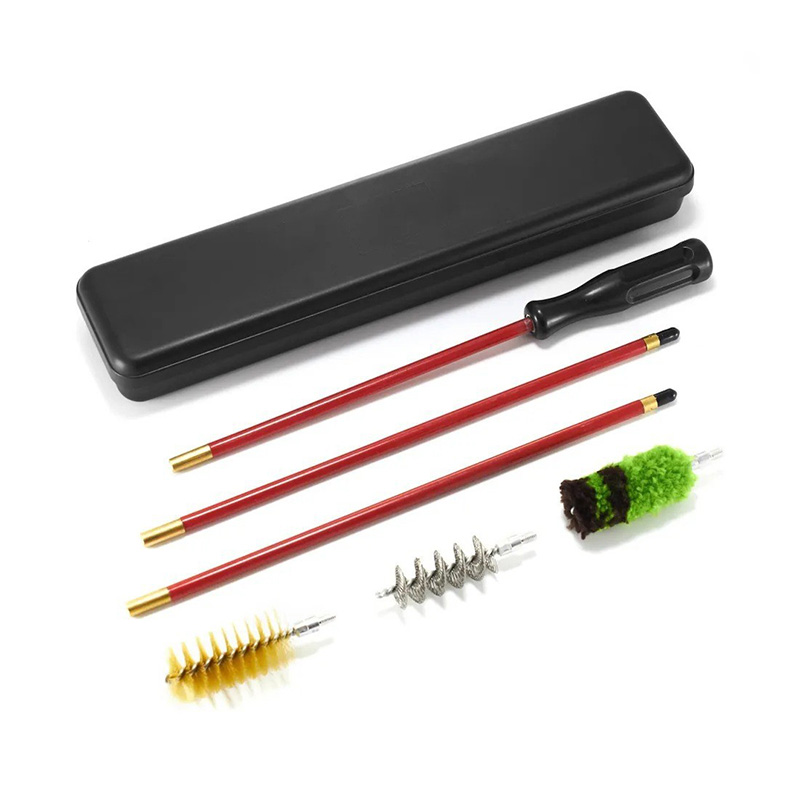
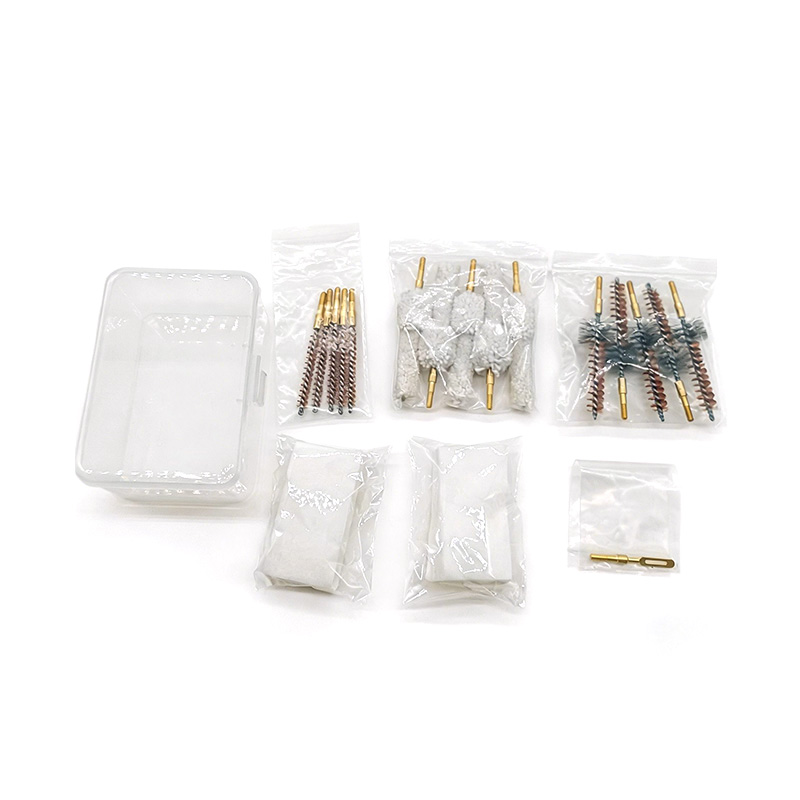
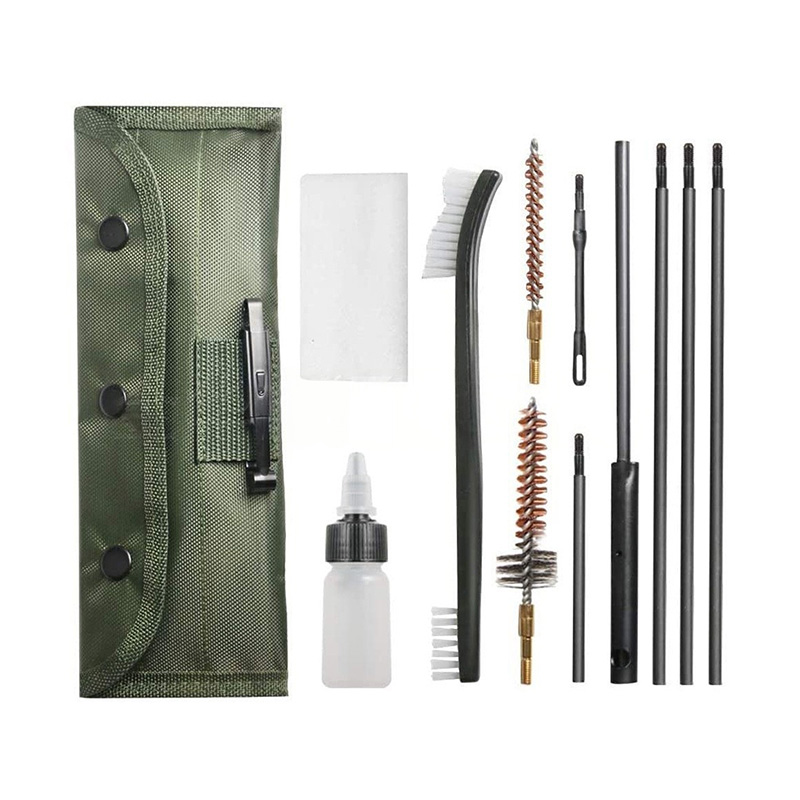
A complete firearm cleaning kit commonly includes a cleaning rod, caliber-specific adapters, bronze or brass brushes, nylon brushes, bore mops, cotton patches, cleaning cloths, and suitable maintenance chemicals. Each component performs a different task.
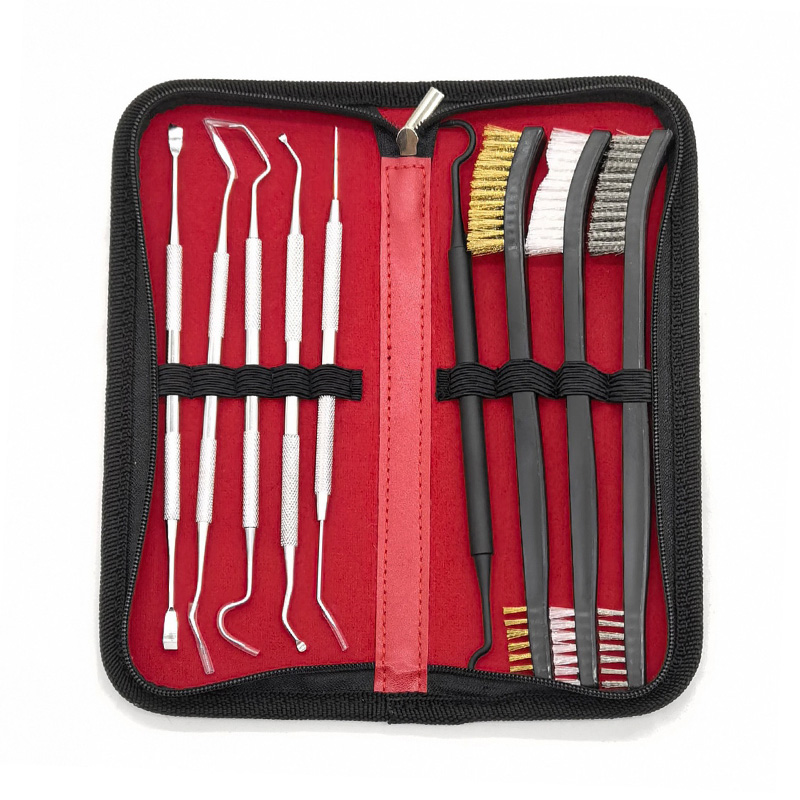
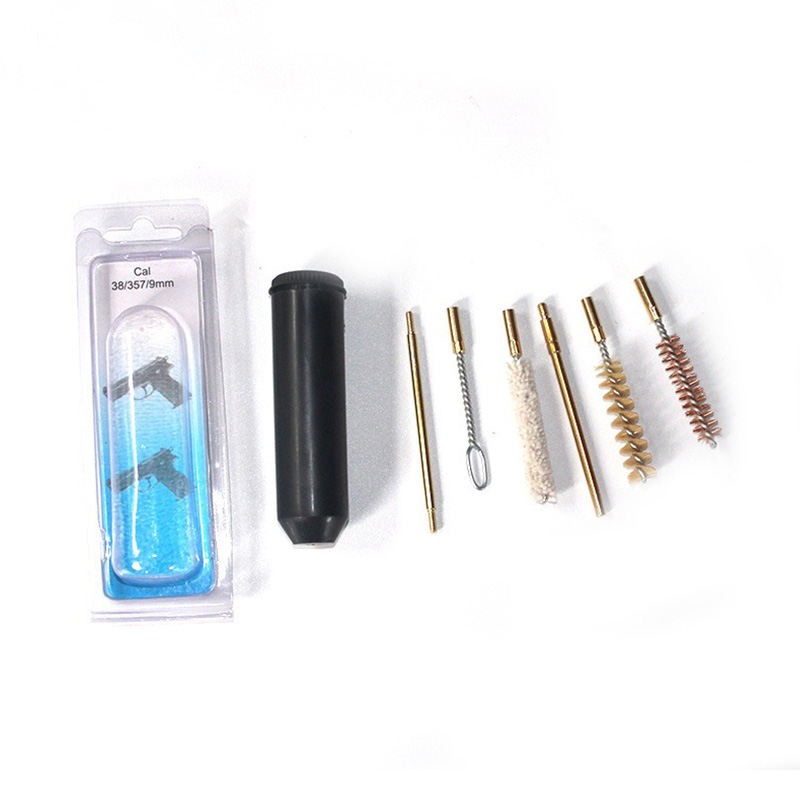
Cleaning rods provide controlled access to the bore. Adapters connect the rod to brushes, jags, or mops. Bronze and brass brushes help loosen deposits through controlled brushing. Nylon brushes can support less aggressive surface cleaning. Bore mops distribute oil or remove loose residue. Cotton patches absorb solvent and fouling, while larger cleaning cloths wipe external surfaces and equipment.
The Cotton Gun Cleaning Patch Set Carbon Removal Bore Kit can therefore be sold independently or integrated into a broader maintenance solution. Its multiple sizes make it a useful central consumable for a kit intended to cover pistols, rifles, and shotguns.
For retailers, bundling patches with a cleaning rod and brush set can increase product value and simplify purchasing for new firearm owners. For experienced users, standalone refill packs offer a convenient way to replenish a frequently used component.
When evaluating cotton cleaning patches, buyers should look beyond the lowest unit price. Material consistency, patch size, packaging quality, production capacity, customization support, and delivery reliability all influence the total value of the order.
First, confirm the material and fabric structure. High-density cotton with a soft, lint-minimized surface is generally preferable for routine bore care. Second, confirm the available shapes and dimensions. A range that includes small, medium, large, and square formats provides greater market flexibility.
Third, review the manufacturer’s experience with firearm cleaning accessories. A supplier already producing brushes, rods, bore mops, and kits may understand how patches interact with the rest of the cleaning system. Fourth, ask about OEM and ODM capabilities if private labeling or custom packaging is required.
Fifth, clarify quality-control procedures, production lead times, sample approval, minimum order quantities, packing details, and export documentation. Clear communication at the beginning of the project helps reduce misunderstandings during mass production.
| Item | Specification |
|---|---|
| Product type | Cotton gun cleaning patch set and bore-cleaning consumable |
| Main material | Cotton fabric |
| Surface characteristic | Soft, absorbent, lint-minimized texture |
| Available shapes | Round and square |
| Available sizes | Approximately 2.6 cm, 5 cm, 6.4 cm diameter, and 5 × 5 cm square |
| Application range | Approximately .17 caliber through 12 gauge, subject to correct sizing |
| Primary uses | Carbon removal, powder-residue collection, solvent application, lubrication, drying, and protective care |
| Firearm compatibility | Rifles, pistols, and shotguns |
| Additional uses | Wiping and polishing selected metal components and precision tools |
| Supply options | Wholesale, OEM, ODM, customized packaging, and private-label programs |
Cotton cleaning patches are used to remove carbon, powder residue, oil, solvent, and other contaminants from a firearm bore. They can also apply a controlled amount of lubricant, dry the bore after solvent cleaning, and wipe selected metal components.
Yes. The available sizes are designed to support a broad application range from approximately .17 caliber to 12 gauge. The correct patch should be selected according to the bore size, cleaning jag, adapter, and firearm manufacturer’s guidance.
High-density cotton provides a balance of softness, absorbency, and structural integrity. It can hold cleaning liquid, collect residue, and remain usable during passage through the bore while helping reduce excessive fiber release.
They are designed as disposable consumables. Reusing a contaminated patch may transfer carbon, metal particles, oil, or solvent back onto the firearm. A fresh patch is recommended for each cleaning stage.
Yes. They can be used with suitable bore solvents, gun oils, and cleaning solutions. Users should follow the instructions for each chemical and avoid applying liquids to areas that may be sensitive to them.
Neither format is universally better. Round patches are convenient for many bore-cleaning jags and rod systems, while square patches provide flexibility for wiping, folding, polishing, and cleaning external components. Offering both formats gives buyers greater versatility.
Patches are effective for absorbing and collecting loosened residue, but firmly adhered fouling may require a correctly sized brush and appropriate solvent first. The patch is an important part of the process rather than a replacement for every other cleaning tool.
Wholesalers should confirm material specifications, patch dimensions, quantity per package, packaging style, carton details, quality requirements, production capacity, minimum order quantity, delivery schedule, and whether OEM or ODM customization is available.
OEM and ODM services are available, including customized products, packaging, and logos. Buyers should provide their intended specifications and approve samples or artwork before mass production.
Jinhua Tongshun Tool Factory is located in Jinhua City, Zhejiang Province, China. The company has specialized in gun-cleaning tools and related accessories since 1999 and exports products to more than 50 countries and regions.
Unused patches should remain in their packaging and be stored in a clean, dry place away from moisture, chemicals, direct sunlight, and dust. Used patches should be separated from unused stock and disposed of responsibly.
The Cotton Gun Cleaning Patch Set Carbon Removal Bore Kit provides a practical, versatile, and professional solution for firearm maintenance. Its high-density cotton construction supports absorbency and controlled cleaning, while the soft, lint-minimized texture helps protect precision-machined bore surfaces during routine care.
The availability of round and square formats in several sizes gives the product broad compatibility across rifles, pistols, and shotguns. Its disposable design supports cleaner workflows, reduces cross-contamination, and allows users to separate solvent application, residue removal, drying, and lubrication into clear maintenance stages.
Compared with improvised cloth, paper products, or inconsistent low-quality patches, purpose-made cotton patches offer more predictable dimensions, improved convenience, and better suitability for organized firearm-care procedures. They can be sold as standalone refill packs, included in complete gun-cleaning kits, or customized for private-label distribution.
Backed by Jinhua Tongshun Tool Factory’s experience since 1999, modern semi-automatic and automated production systems, international export capability, and OEM/ODM support, the product is suitable for both professional users and commercial buyers. For distributors, retailers, shooting-sports suppliers, and cross-border e-commerce sellers, it offers a dependable consumable category with repeat-purchase potential and flexible packaging opportunities.
1. Firearm maintenance principles concerning bore cleaning, lubrication, residue removal, and corrosion prevention.
2. General manufacturer guidance for the safe handling and maintenance of rifles, pistols, and shotguns.
3. Cotton textile characteristics related to absorbency, softness, fabric density, and cleaning applications.
4. Industry practices for the use of cleaning rods, jags, bore brushes, bore mops, patches, and firearm-cleaning accessories.
5. Product specifications and manufacturing information supplied for the Cotton Gun Cleaning Patch Set Carbon Removal Bore Kit.