English
 русский
 Español
 عربى

HUNTACE HUNTACE HUNTACE HUNTACE HUNTACE
HUNTACE HUNTACE HUNTACE HUNTACE

Effective cleaning often depends on access. Large brushes and broad cloths may work well on exposed surfaces, but they cannot reach the narrow channels, internal passages, spouts, nozzles, and small mechanical spaces where residue, limescale, rust, and accumulated debris frequently develop. The Pipe Wire Brush Rust Removal Spout Cleaner is designed for precisely these difficult areas. It combines a reinforced stainless steel twisted core with flexible black nylon bristles to create a compact, durable, and adaptable cleaning tool for industrial, household, maintenance, and equipment-detailing applications.
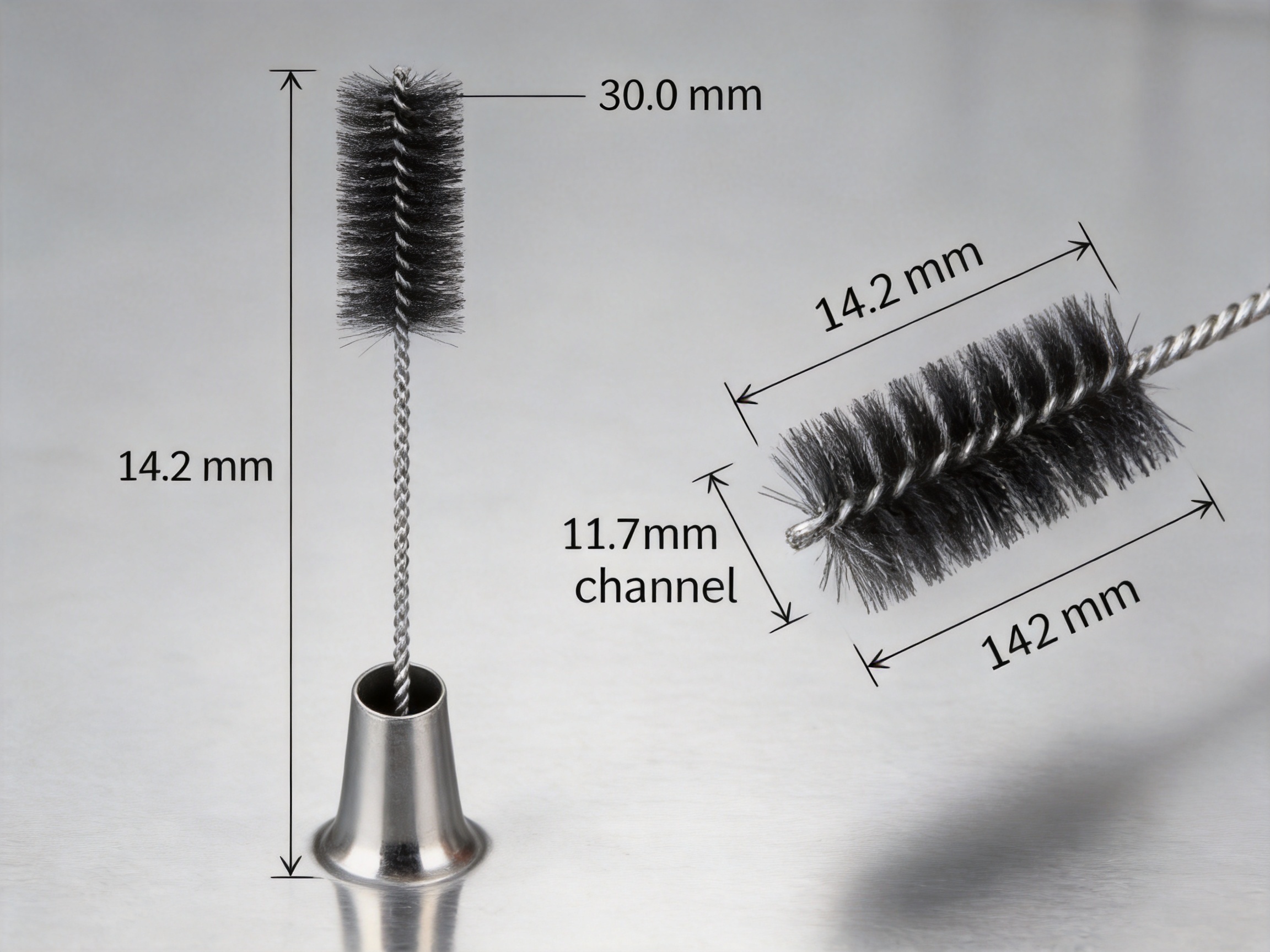
With a 14.2 mm brush head diameter, a total length of 142 mm, and compatibility with inner channels measuring approximately 11.7 mm, this brush provides a practical balance between reach, cleaning contact, flexibility, and control. Its 1.0 mm 304 stainless steel wire core provides structural support, while the 0.3 mm nylon bristles offer effective removal of deposits without the aggressive surface action associated with many hard metal brushes.
The product is also suitable for OEM and private-label programs. Buyers can request customized brush diameters, wire materials, bristle stiffness, handle structures, packaging formats, logos, and labeling solutions. This makes it relevant not only to end users but also to distributors, maintenance-supply companies, online retailers, industrial tool brands, and importers seeking a scalable cleaning accessory with broad market potential.
The Pipe Wire Brush Rust Removal Spout Cleaner is a narrow-channel cleaning brush manufactured for repeated use in areas where conventional cleaning tools are difficult to insert. The twisted-wire construction holds the bristles securely along the central core, creating a spiral cleaning surface that can enter tubular spaces and scrub the inner wall as the brush is pushed, pulled, or rotated.
The brush uses a 1.0 mm 304 stainless steel twisted core. Grade 304 stainless steel is widely selected for general-purpose industrial tools because it provides a useful combination of strength, corrosion resistance, formability, and durability. In a cleaning brush, the core must be rigid enough to maintain the brush shape while still allowing practical handling in narrow channels. It must also resist early deterioration when exposed to moisture, cleaning residues, and ordinary workplace conditions.
The bristles are made from 0.3 mm black nylon. Nylon is valued for its flexibility, resilience, and comparatively non-abrasive cleaning action. The bristle diameter gives the brush enough body to loosen deposits while remaining suitable for surfaces that could be scratched or marked by harder wire filaments. The black color provides a professional appearance and can also make visible residue easier to identify during inspection and cleaning.
The brush head measures approximately 14.2 mm in diameter, and the total brush length is approximately 142 mm. It is intended for use with channels of around 11.7 mm internal diameter, although final suitability should always be checked against the actual geometry, material, depth, and condition of the application. A correct fit helps the bristles contact the inner wall without requiring excessive force.
Applications include bottle and container spouts, tube interiors, pipe openings, nozzle passages, small valves, equipment channels, household fixtures, industrial components, and selected firearm-cleaning situations where a nylon brush is appropriate for the specific maintenance instruction. The product should be used according to the requirements of the equipment manufacturer and with suitable cleaning agents when necessary.
Residue tends to accumulate in places that are difficult to see and difficult to reach. A spout may appear clean from the outside while deposits remain inside the passage. A nozzle may continue to function but gradually lose flow efficiency because of mineral buildup. A tube may retain old residue after ordinary rinsing. In mechanical equipment, small channels can collect oil, dust, oxidation products, and process material.
Using an unsuitable tool can create several problems. A brush that is too large may become stuck or may require excessive insertion force. A brush with overly hard bristles may scratch a delicate surface. A short brush may not reach the full depth of the channel. A weak handle or poorly secured bristle bundle may deform or separate after only limited use. These problems increase cleaning time and can raise replacement costs.
A narrow wire brush solves these issues by combining controlled dimensions with a concentrated cleaning surface. The twisted core provides a slim profile, while the spiral bristles distribute contact around the circumference of the channel. When the operator moves the brush through the passage, the bristles reach residue on multiple sides rather than cleaning only one line of contact.
The Pipe Wire Brush Rust Removal Spout Cleaner is particularly useful where a cleaning tool must be compact but not fragile. Its dimensions are suitable for many small openings, and the stainless steel core helps it maintain its working form during normal manual cleaning. The nylon filament construction also allows the brush to conform to modest internal variations without behaving like an excessively rigid abrasive tool.
The central wire is the backbone of the product. A 1.0 mm 304 stainless steel core offers the stiffness needed to guide the brush into an opening and the tensile support needed to hold the spiral bristle arrangement together. Stainless steel is also more suitable than ordinary unprotected steel for cleaning environments where water, humidity, and residue are present.
The twisted structure is important because it mechanically captures the nylon bristles along the core. Rather than relying on a simple surface attachment, the spiral construction creates a continuous bristle arrangement around the wire. This supports effective contact in tubular passages and helps the brush retain its cleaning profile during normal use.
Compared with a basic single-filament probe, the twisted-core structure offers a larger active cleaning area. Compared with a very rigid solid metal tool, it provides a more forgiving contact surface. The result is a useful middle ground between access, durability, flexibility, and surface protection.
The 0.3 mm nylon bristles are designed for controlled cleaning rather than aggressive material removal. They can loosen dirt, scale, light rust residue, and accumulated deposits while reducing the risk of scratching many common internal surfaces. This is especially valuable for components made from plastic, coated metal, polished metal, glass, or other materials where hard wire contact may cause visible damage.
Nylon also provides good recovery after bending during ordinary use. When the brush is inserted into a narrow passage, the bristles can flex against the inner wall and then return toward their original position. This helps maintain contact and allows the spiral brush pattern to work through uneven or partially obstructed passages.
The appropriate level of cleaning pressure depends on the material being cleaned. Nylon bristles are not intended to replace heavy-duty steel or brass brushes in every rust-removal application. Instead, their advantage is controlled cleaning in areas where the user wants to remove residue without unnecessarily abrading the underlying surface.
The 14.2 mm brush head diameter is large enough to provide useful wall contact in an approximately 11.7 mm internal channel while remaining compact enough for many spouts, tubes, and small openings. The 142 mm overall length gives the user a practical handling area and helps reach into moderately deep passages without requiring an oversized tool.
Dimension control is one of the most important quality factors in narrow-channel brushes. A difference of only a few millimeters can determine whether the brush enters smoothly, cleans effectively, or becomes difficult to remove. For this reason, the manufacturing process must control wire forming, bristle placement, brush diameter, and overall length consistently from batch to batch.
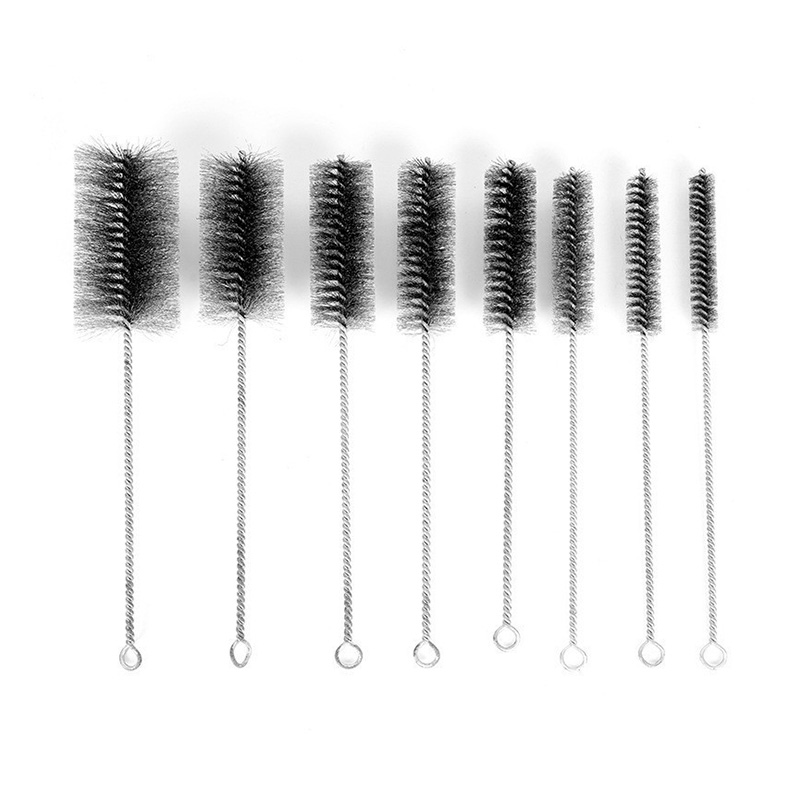
Pipe Wire Brush Rust Removal Spout Cleaner
Cleaning cloths and wipes are effective on external surfaces but cannot normally reach the internal wall of a narrow spout or tube. Even when a cloth is folded or attached to another tool, it may not maintain continuous contact with the passage. The spiral nylon brush is specifically formed to enter the channel and scrub the interior circumference.
This makes the product a more practical choice for internal cleaning tasks. It reduces the need for improvised tools and gives operators a repeatable method for dealing with small openings, recessed channels, and nozzle interiors.
Metal brushes can provide strong abrasion, but they may be unsuitable for soft materials, coated surfaces, polished components, and thin internal walls. The nylon filament provides a less aggressive alternative for routine maintenance and residue removal. It is particularly valuable when the objective is to clean thoroughly while preserving the original surface condition.
This surface-friendly quality can extend the range of applications. A buyer may use the same general brush design for household descaling, equipment maintenance, tube cleaning, and selected firearm accessory cleaning tasks, provided the material and cleaning requirements are appropriate.
A simple plastic pick may reach a narrow opening, but it usually offers limited brushing action and may deform under repeated movement. The stainless steel twisted core gives this product a stronger internal structure. It helps the operator apply controlled pushing, pulling, and rotating actions without treating the tool as a disposable probe.
Many low-cost narrow brushes are produced in only one size and may be suitable for a single opening. The OEM manufacturing program behind this product supports customized brush diameters, wire specifications, bristle stiffness levels, and handle designs. This allows distributors and brand owners to create product families for different channel sizes and cleaning requirements.
Because the brush is compact and easy to handle, it can be included in maintenance kits, industrial cleaning kits, household descaling sets, nozzle service packs, and online retail bundles. Its low unit weight, approximately 10 grams, supports economical packing and shipping. The bulk quantity of 200 pieces per box is also suitable for trade buyers, resellers, service companies, and inventory-based distributors.
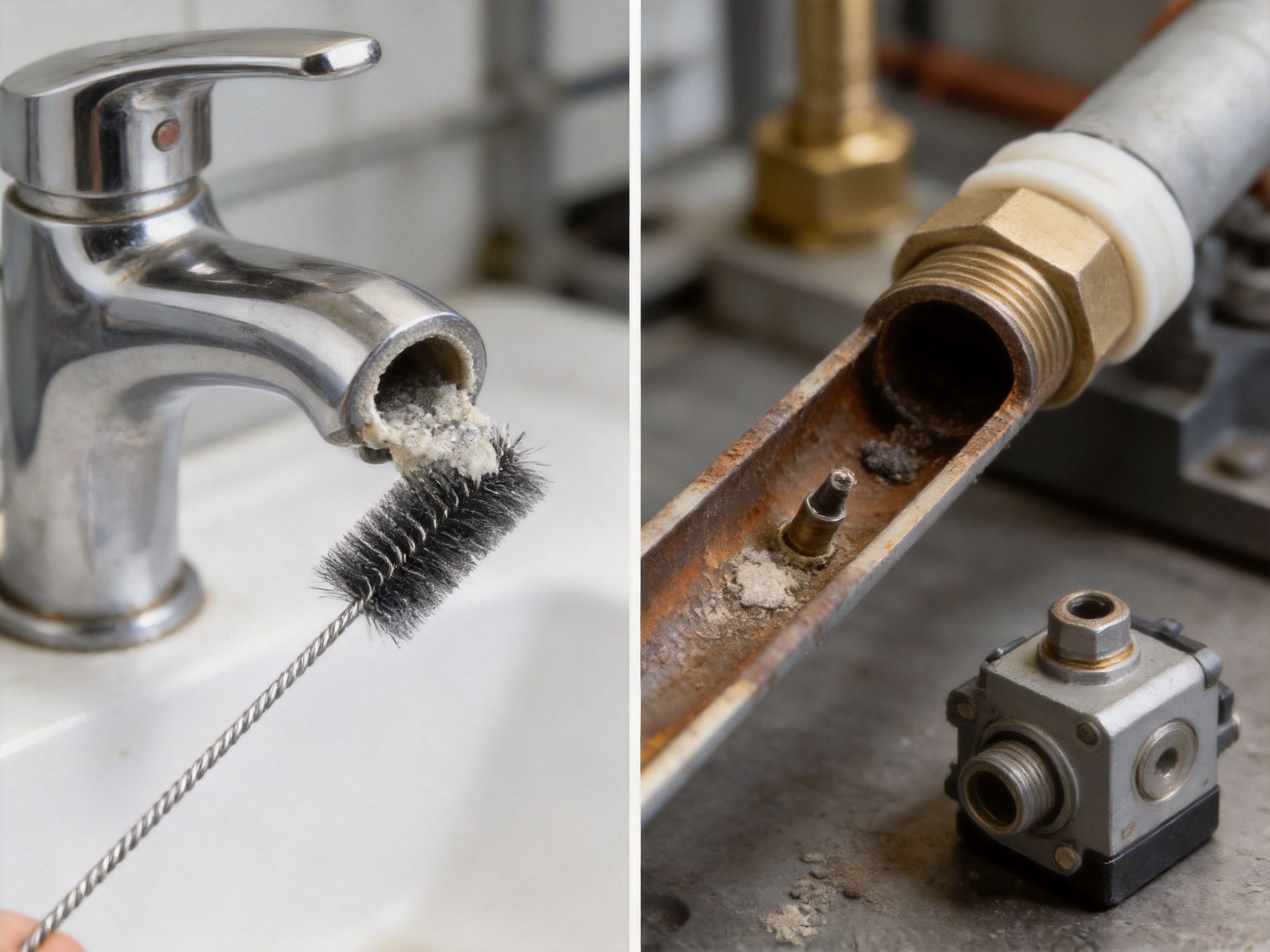
Spouts and nozzles often develop deposits around the outlet and inside the passage. Mineral-rich water can leave limescale, while beverages, detergents, oils, and other substances can create sticky residue. The spiral nylon bristles can be inserted into the opening and moved through the passage to loosen material that rinsing alone may not remove.
For best results, the operator should select a brush that fits the channel without excessive force. Where deposits are heavy, a suitable soaking or cleaning solution may be used before brushing, provided that the solution is compatible with the component. The brush should then be moved gradually rather than forced through a blockage.
Small pipes and tubes can be difficult to clean because their internal surfaces are not visible. The brush’s extended shape supports cleaning in straight or moderately accessible passages. Repeated forward and backward strokes can help dislodge loose material, while slow rotation can improve contact around the inner circumference.
For longer pipes, users may require a longer brush or a brush with a compatible handle extension. The product’s OEM customization options make it possible to develop longer versions, altered diameters, or different bristle densities for specialized programs.
Industrial equipment frequently contains narrow slots, fittings, fluid passages, valve openings, and recessed components. A small nylon brush can help maintenance personnel remove dust, residue, and buildup without bringing a large brush into contact with sensitive surrounding parts.
The product is appropriate for detail-oriented cleaning where control matters. It can be used as part of scheduled maintenance, pre-inspection cleaning, equipment refurbishment, or preparation before assembly. The precise use depends on the equipment manufacturer’s instructions and the chemical compatibility of the cleaning environment.
Household fixtures, faucet aerator areas, bottle spouts, drain components, and small appliance passages may accumulate mineral deposits over time. The brush provides a practical tool for reaching these locations. Its nylon filaments can assist with routine descaling while reducing the likelihood of harsh scratching compared with an all-metal brush.
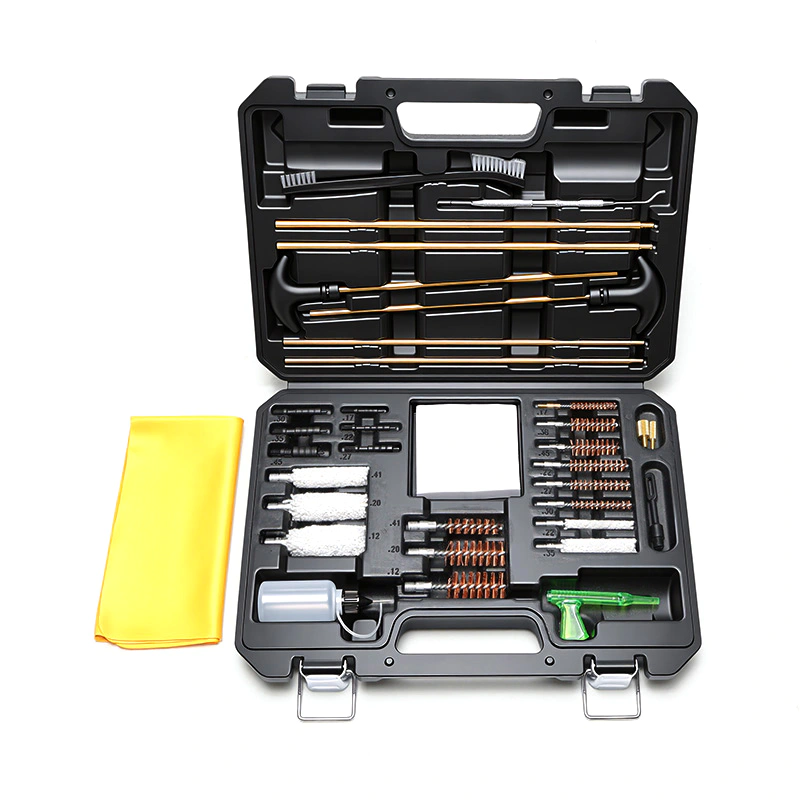
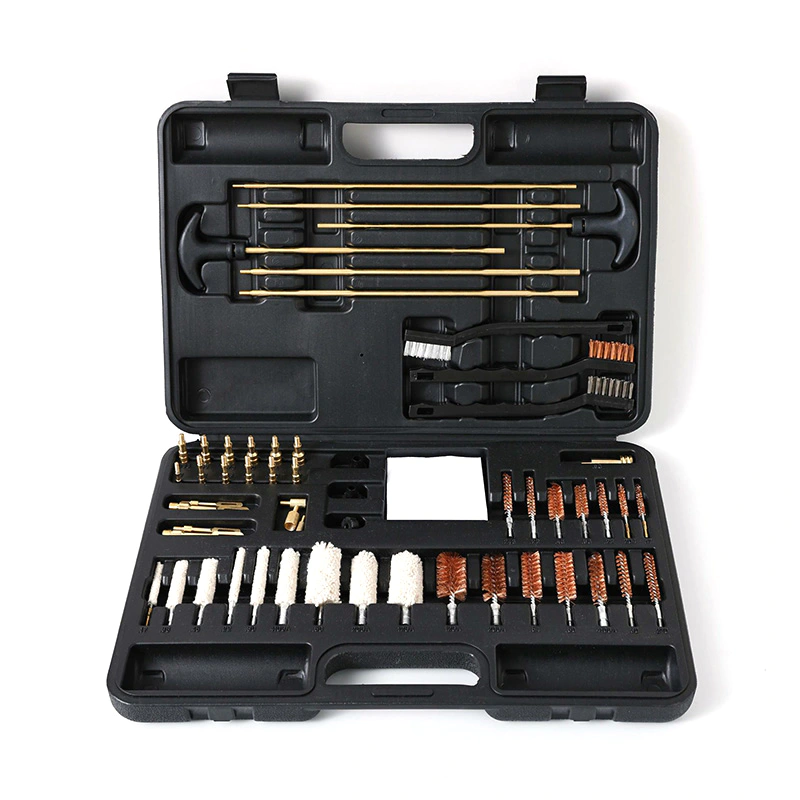
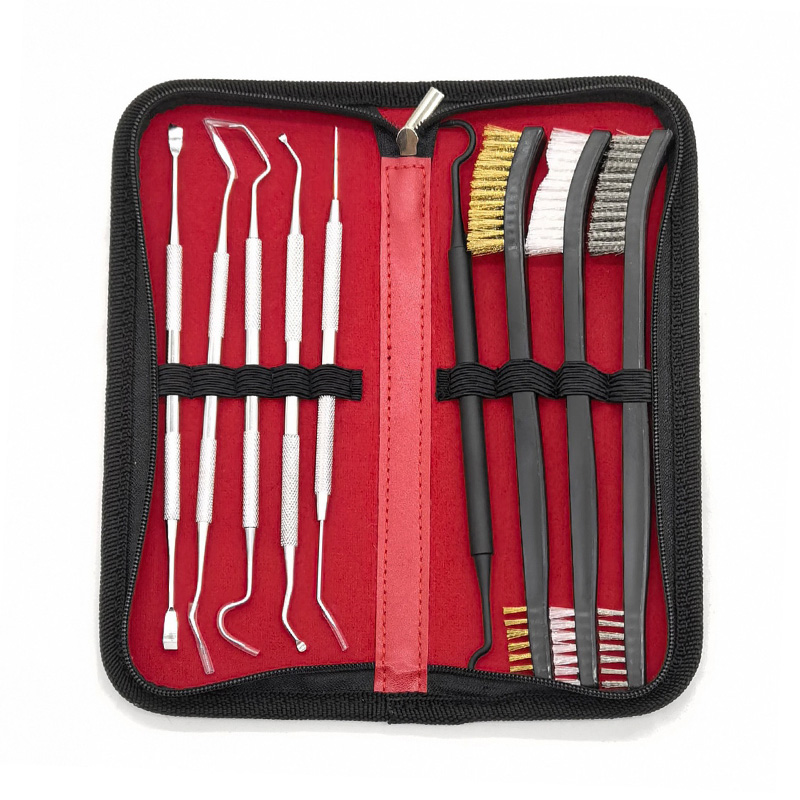
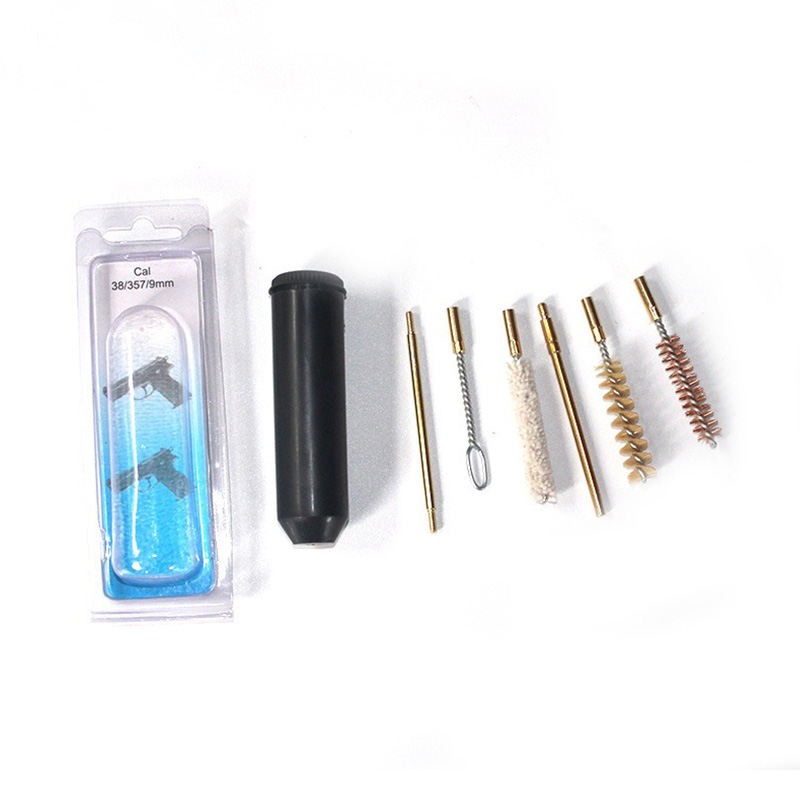
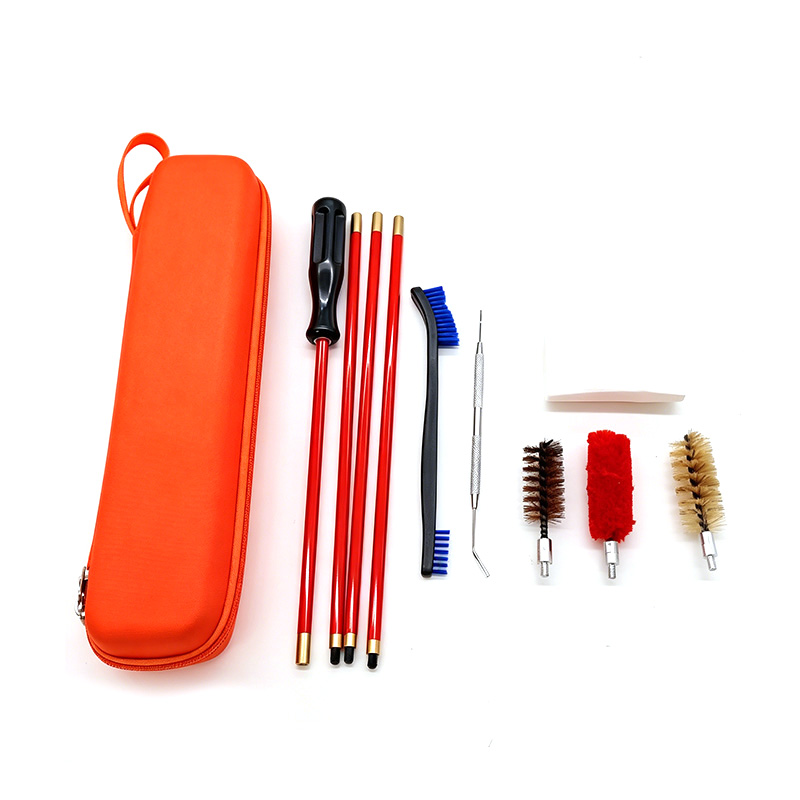
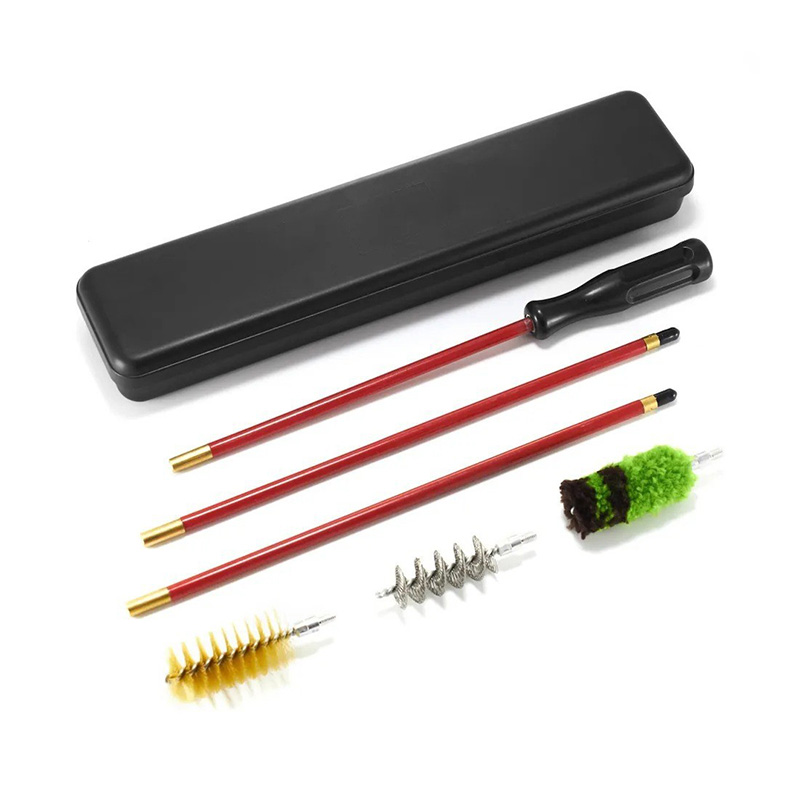
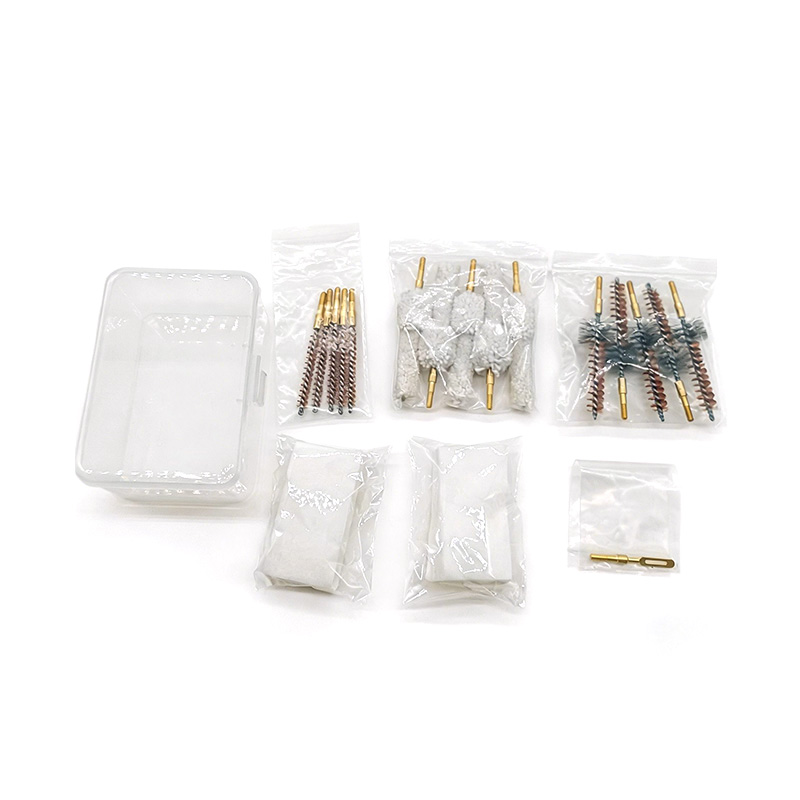
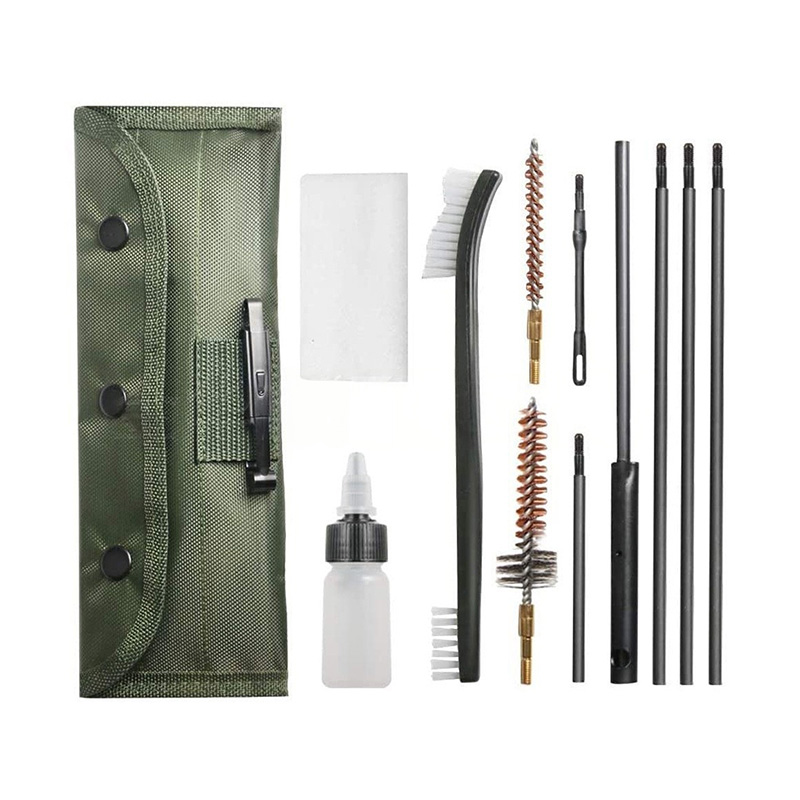
The manufacturer’s wider product range includes gun cleaning kits, bore brushes, cleaning rods, patches, cloths, and related firearm-maintenance accessories. Within that broader category, a nylon pipe brush may be used for suitable narrow cleaning areas when recommended by the firearm or accessory manufacturer.
It should not be assumed that one brush is appropriate for every firearm component. Users should verify the correct brush material and size for the bore, chamber, gas system, magazine component, or other area being serviced. The nylon construction is most relevant where a non-metallic brushing surface is preferred for routine residue removal and surface protection.
Consistent performance in a small brush depends on several production stages working together. A product may appear simple, but its quality is influenced by wire selection, filament preparation, twisting accuracy, dimensional control, trimming, inspection, packing, and batch management.
Production begins with the selection of the wire and nylon filament. The specified core material is 304 stainless steel with a nominal wire diameter of 1.0 mm. The specified nylon bristle diameter is 0.3 mm. Material preparation must ensure that the wire is suitable for forming and that the filaments have consistent thickness and adequate flexibility.
Stable raw-material preparation supports a more uniform finished product. Variations in wire diameter can affect brush rigidity and final dimensions, while variations in filament diameter can influence cleaning feel, density, and durability. A factory serving OEM customers must pay close attention to these inputs because customized orders often require repeat production over extended periods.
The wire is formed and twisted to create the central structure that holds the bristles. The twisting operation must balance secure filament retention with a clean, usable brush profile. If the twist is too loose, bristles may not be held firmly. If it is too tight or inconsistent, the brush may become irregular or unnecessarily rigid.
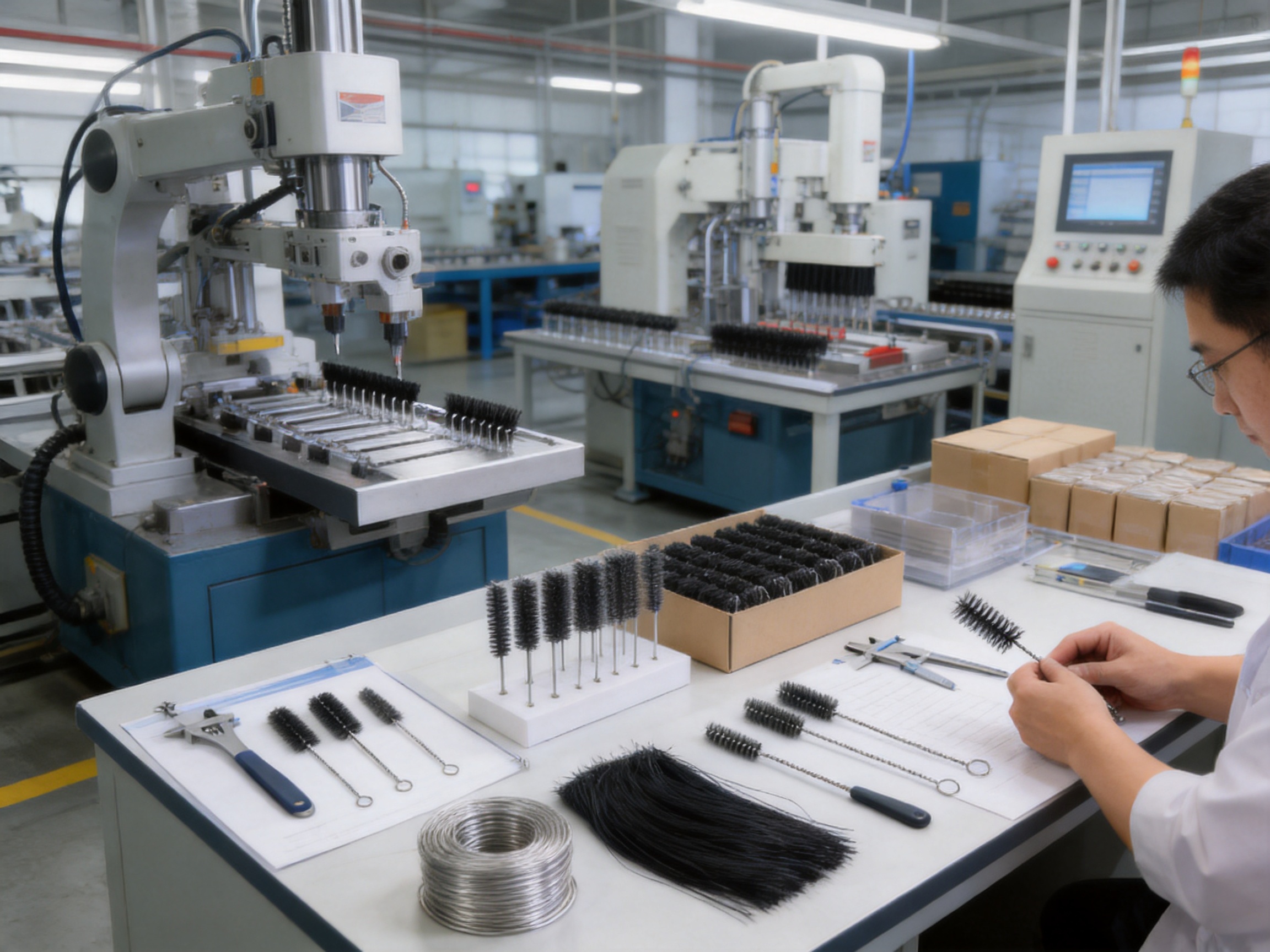
Modern semi-automatic and fully automated production systems can help improve repeatability in wire forming and twisting. Automation also supports more stable output for larger orders, reducing reliance on individual manual handling at every stage. Skilled workers remain important for machine setup, process adjustment, sampling, and quality verification.
Nylon filaments are positioned along the twisted core to form the spiral brush surface. The amount of filament, distribution pattern, and effective bristle length influence the product’s cleaning performance. A balanced arrangement provides sufficient wall contact without creating excessive resistance during insertion.
For OEM programs, the factory can adjust bristle stiffness and other design parameters according to the buyer’s intended market. A softer specification may suit delicate household or coated surfaces, while a firmer grade may be selected for more demanding industrial residue. The correct choice depends on the application rather than on a single universal standard.
After the bristles are secured, the brush is shaped and checked against the required dimensions. The nominal target for this model is a 14.2 mm brush head diameter and a 142 mm total length. Consistent trimming and forming help ensure that the product fits the intended channel and performs predictably.
Dimensional checks are especially important for export orders, private-label products, and multi-size brush sets. A distributor may sell several visually similar brushes for different internal diameters. Clear control of each size reduces confusion in packing and helps the buyer maintain reliable product specifications in catalogs and listings.
Finishing may include trimming loose filaments, checking the wire ends, removing visible production debris, and confirming the overall appearance. Inspectors can review brush symmetry, bristle security, core condition, surface cleanliness, and packaging quantity.
Inspection procedures should be matched to the order requirements. For a standard bulk product, the focus may be on dimensional consistency, appearance, and quantity. For a private-label retail program, additional checks may include barcode accuracy, label placement, packaging integrity, logo quality, and carton identification.
The standard information identifies bulk packaging and a quantity of 200 pieces per box. Bulk packaging is appropriate for industrial buyers, maintenance contractors, distributors, and companies that plan to place the product into their own kits or retail packaging.
The manufacturer also supports customized packaging options, including bulk cartons, retail blister packs, industrial kits, barcode labeling, and FBA-ready packaging solutions. These options allow the product to be prepared for different distribution channels without requiring the buyer to establish a separate repacking process.
One of the strongest commercial advantages of this product is the ability to adapt the design for different markets and use cases. The factory provides OEM and ODM services for global B2B customers, allowing buyers to specify both product features and presentation requirements.
Different tubes, spouts, channels, and maintenance systems require different brush sizes. The manufacturer can develop customized brush diameters so that buyers can build a product range rather than rely on one standard size. A range may include small precision brushes, medium spout cleaners, and larger pipe brushes for broader passages.
Although this model uses a 304 stainless steel core, OEM orders may specify stainless steel, galvanized steel, or brass wire according to the intended use. Stainless steel is suitable for corrosion resistance and general maintenance. Galvanized steel may be selected for certain cost-sensitive applications. Brass can be considered where a softer metallic contact is required, subject to application testing and design review.
Material selection should be based on the surfaces being cleaned, environmental exposure, required stiffness, expected service life, and target price. The factory’s ability to work with several wire materials gives importers more flexibility when developing market-specific product lines.
Bristle stiffness affects both cleaning strength and surface protection. Buyers can discuss different nylon grades, filament dimensions, density, and length to achieve an appropriate balance. A delicate component may require a softer, more flexible brush, while industrial residue may call for a firmer construction.
The basic brush is designed as a compact wire brush, but the factory can support handle-structure customization. Possible development directions include extended handles, grip sections, hanging loops, color-coded handles, kit-compatible ends, or designs intended for use with a specific holder.
Handle customization can improve ergonomics, safety, and retail appeal. It can also help a distributor distinguish its product from visually similar low-cost alternatives. Any new structure should be evaluated for strength, cleanability, packaging efficiency, and compatibility with the intended working environment.
Private-label buyers can request logo marking, custom packaging, barcode labeling, and related presentation services. Laser logo marking may be used where the product structure and order quantity make it suitable. Packaging can be designed for industrial distribution, online retail, hardware stores, maintenance kits, or specialized cleaning sets.
The company also indicates that its own brands are available for licensing. This gives selected partners another route to market, while private-label customers can maintain control over their own branding and sales strategy.
The manufacturing company was established in 1999 and operates in Jinhua, Zhejiang, China. With more than two decades of experience, it specializes in gun cleaning kits, barrel cleaning brushes, and related maintenance accessories. This product knowledge is relevant to the development of narrow brushes because firearm-maintenance tools often require careful control of brush material, diameter, wire construction, and compatibility.
The factory integrates research and development, production, and sales. This integrated structure can simplify communication between product design, manufacturing, packaging, and customer service. For OEM buyers, direct coordination is useful when discussing samples, specification changes, packaging artwork, production quantities, and repeat orders.
The production facility uses semi-automatic and fully automated systems. Automation can improve output consistency, process repeatability, and capacity for larger orders. Semi-automatic systems can provide flexibility for varied designs, while fully automated equipment can support efficient production of stable, high-volume specifications.
The company reports that its products are exported to more than 50 countries and regions. International experience can help a supplier understand the practical needs of overseas buyers, including export packaging, labeling, product documentation, bulk order organization, and communication across different market requirements.
Flexible minimum order quantities are also important for growing brands. A new distributor may want to begin with a manageable trial order, while an established importer may require stable large-scale production. The stated OEM and ODM model is intended to support both development-stage projects and continuing supply programs.
The brush can be marketed across several product categories, including pipe-cleaning tools, nozzle-maintenance accessories, household descaling tools, industrial detail brushes, and selected firearm-cleaning accessories. This broad positioning can help distributors reach multiple customer groups while maintaining one core product design.
With an indicated product weight of approximately 10 grams, the brush is lightweight and economical to store. Its compact form can support efficient carton utilization and lower handling requirements. It is suitable for bulk orders, bundled products, multipacks, maintenance kits, and online fulfillment programs.
The product information identifies eBay, Amazon, and AliExpress among the main downstream platforms. The small size, straightforward use, and clear specification profile make the brush suitable for online listings. Buyers can present dimensions, materials, applications, package quantities, and customization options in product descriptions.
For online retail, packaging quality and product identification are important. Custom labels, barcodes, retail blister packs, and FBA-ready packaging can help reduce the additional preparation required before fulfillment. Retailers should still confirm the packaging rules of the destination platform and market.
The stated sales regions include Europe, Southeast Asia, and the Middle East. These markets include industrial maintenance customers, household tool buyers, hardware distributors, online retailers, and professional equipment-service providers. Demand may vary by application, climate, water quality, industrial sector, and retail format, so localized packaging and product positioning can be valuable.
A buyer can use this model as the starting point for a broader cleaning-tool family. Additional products may include other nylon brush diameters, brass or bronze brushes, bore mops, cleaning rods, adapters, patches, cloths, and complete gun-cleaning kits. A coordinated product family can improve shelf presentation and encourage customers to purchase related maintenance tools from the same brand.
Before use, confirm that the brush diameter is compatible with the opening or channel. The brush should enter with controlled resistance rather than requiring excessive force. If the passage contains hardened buildup, pre-soaking with a compatible cleaning solution may reduce the load on the brush.
Insert the brush gradually and use short forward-and-back strokes. Rotation can improve contact around the internal wall, but aggressive twisting should be avoided if the brush becomes obstructed. After cleaning, rinse or wipe the component as appropriate and inspect the passage to confirm that loose residue has been removed.
After use, clean the brush according to the application. Remove visible deposits and allow the tool to dry before storage. If the bristles become severely deformed, the core is bent, or the bristle bundle is loose, the brush should be replaced. The service life depends on the material being cleaned, chemical exposure, pressure, frequency of use, and handling method.
Users should select cleaning chemicals carefully. Nylon compatibility varies by chemical concentration, temperature, and exposure time. For sensitive equipment, testing on an inconspicuous area or consulting the equipment manufacturer is recommended.
| Item | Specification | Commercial Significance |
|---|---|---|
| Product type | Pipe wire brush and spout cleaner | Designed for narrow and hard-to-reach channels |
| Category | Nylon and other material brushes | Suitable for non-metallic internal cleaning applications |
| Bristle material | Black nylon | Flexible and comparatively non-abrasive |
| Bristle specification | 0.3 mm | Supports controlled contact and residue removal |
| Core material | 304 stainless steel | Provides strength and corrosion resistance |
| Core wire specification | 1.0 mm | Balances rigidity and manageable flexibility |
| Brush head diameter | 14.2 mm | Designed for a compact internal cleaning profile |
| Total length | 142 mm | Provides practical reach and manual control |
| Suggested channel compatibility | Approximately 11.7 mm inner channels | Helps buyers match the brush to the application |
| Color | Black | Professional appearance and easy visual identification |
| Product weight | Approximately 10 g | Supports economical storage and shipping |
| Quantity per box | 200 pieces | Suitable for bulk trade and distributor supply |
| Packaging | Bulk; customized options available | Can be adapted for industrial or retail channels |
| Customization | Diameter, wire, bristle stiffness, handle, logo, packaging | Supports OEM, ODM, and private-label programs |
When comparing suppliers, buyers should evaluate more than the listed price. The quality of a narrow brush depends on dimensional consistency, bristle retention, core strength, surface finish, packaging accuracy, and production repeatability. A low unit price may not provide good value if the brush varies significantly between batches or cannot meet the required channel size.
Sample evaluation is recommended before placing a large order. Buyers should test insertion force, cleaning coverage, bristle recovery, core stiffness, and behavior after repeated use. If the brush will contact chemicals, the buyer should also evaluate chemical compatibility under actual or simulated operating conditions.
OEM customers should provide clear technical information, including channel diameter, channel depth, surface material, residue type, desired cleaning intensity, packaging format, annual demand, and target market. These details help the manufacturer recommend suitable wire, bristle, density, length, and handle specifications.
Packaging artwork should be reviewed carefully before production. Product dimensions, material descriptions, warnings, barcode information, country-of-origin statements, and quantity details should be checked according to the destination market. A professional packaging system can strengthen the perceived value of a simple but highly practical maintenance tool.
The main purpose is to clean narrow internal channels, including spouts, tubes, pipe openings, nozzles, and small equipment passages. It is designed to remove limescale, rust residue, dirt, and other deposits from areas that are difficult to reach with cloths or larger brushes.
The brush uses a 1.0 mm 304 stainless steel twisted wire core and 0.3 mm black nylon bristles. The stainless steel core provides structural support, while the nylon bristles provide flexible and comparatively gentle cleaning contact.
The standard product is identified as compatible with approximately 11.7 mm inner channels. Buyers should compare the brush dimensions with the actual opening and internal geometry before use, because channel shape, depth, bends, and residue conditions can affect suitability.
Nylon is generally less abrasive than many metal brush materials, so it can reduce the risk of scratching on suitable surfaces. However, no brush is appropriate for every material. Users should apply controlled pressure and test the brush when working with polished, coated, painted, plastic, or otherwise sensitive components.
The brush can help remove loose rust, rust residue, scale, and other deposits, but its nylon bristles are intended for controlled cleaning rather than aggressive metal abrasion. For severe corrosion or firmly bonded material, a different bristle material or a pre-treatment process may be more appropriate.
It may be suitable for selected firearm-maintenance areas where a nylon brush is recommended, but users must follow the firearm manufacturer’s maintenance instructions and choose the correct brush size and material for each component. This product should not automatically be treated as a universal firearm bore brush.
Yes. OEM and ODM options include customized brush diameters, bristle stiffness, wire materials, lengths, and handle structures. Buyers can discuss different sizes for different pipe, tube, nozzle, and maintenance applications.
Yes. In addition to stainless steel, the manufacturer indicates that galvanized steel and brass wire options can be considered for customized orders. The selected material should match the required corrosion resistance, stiffness, contact characteristics, and target cost.
Bulk cartons, retail blister packs, industrial kits, barcode labeling, private-label packaging, and FBA-ready packaging solutions are available for discussion. The most suitable format depends on the sales channel, order quantity, and destination-market requirements.
The listed quantity per box is 200 pieces. Buyers should confirm final carton quantity, packaging dimensions, and labeling details when placing an order, especially if the product will be shipped through a specific fulfillment program.
The product is manufactured in Jinhua, Zhejiang Province, China, by a factory specializing in gun-cleaning tools, brushes, and related maintenance accessories.
Buyers can check the brush diameter, total length, core straightness, bristle security, cleaning contact, insertion resistance, recovery after bending, and appearance after repeated use. Testing with the actual component and residue type provides the most useful evaluation.
The Pipe Wire Brush Rust Removal Spout Cleaner is a compact but highly practical tool for internal cleaning tasks. Its 304 stainless steel twisted core provides a durable foundation, while the 0.3 mm nylon bristles offer flexible cleaning performance with a comparatively gentle contact profile. The 14.2 mm brush head diameter, 142 mm length, and compatibility with approximately 11.7 mm channels make the standard design suitable for a variety of spout, tube, nozzle, equipment, household, and selected firearm-maintenance applications.
Its advantages over ordinary cloths, plastic probes, and aggressive metal brushes come from the combination of access, controlled abrasion, structural strength, and repeatable spiral bristle coverage. For distributors and brand owners, the product also offers commercial flexibility through low-weight logistics, bulk packaging, online-market compatibility, and customization options.
The manufacturer strengthens the product proposition through long-term industry experience, integrated research and development, semi-automatic and fully automated production systems, international export experience, and OEM/ODM support. Buyers can request customized diameters, wire materials, bristle stiffness, handles, logos, packaging, barcodes, and retail or industrial presentation formats.
For companies seeking a scalable narrow-channel cleaning accessory, this product provides a strong foundation for both standard distribution and customized product development. Its value lies not only in the brush itself but also in the manufacturing support available behind it, enabling buyers to develop consistent, application-focused cleaning solutions for multiple international markets.
1. Product specification information supplied for the Pipe Wire Brush Rust Removal Spout Cleaner, including dimensions, materials, packaging, and customization options.
2. General technical references concerning 304 stainless steel properties, corrosion resistance, wire forming, and industrial brush construction.
3. General material references concerning nylon filament flexibility, wear behavior, chemical compatibility, and non-abrasive cleaning applications.
4. Manufacturer-provided company information regarding production history, OEM and ODM services, export experience, and automated manufacturing systems.
5. General maintenance guidance for narrow-channel cleaning tools, including controlled insertion, compatible cleaning agents, surface testing, and post-use inspection.