English
 русский
 Español
 عربى

HUNTACE HUNTACE HUNTACE HUNTACE HUNTACE
HUNTACE HUNTACE HUNTACE HUNTACE


Reliable firearm maintenance depends on using the correct tools for the bore, chamber, exterior surfaces, and small mechanical areas of a firearm. For distributors, retailers, gunsmithing suppliers, and cross-border e-commerce sellers, a well-designed cleaning kit must do more than combine several accessories in one package. It must offer consistent cleaning performance, practical compatibility, durable materials, clear packaging options, and dependable factory support.
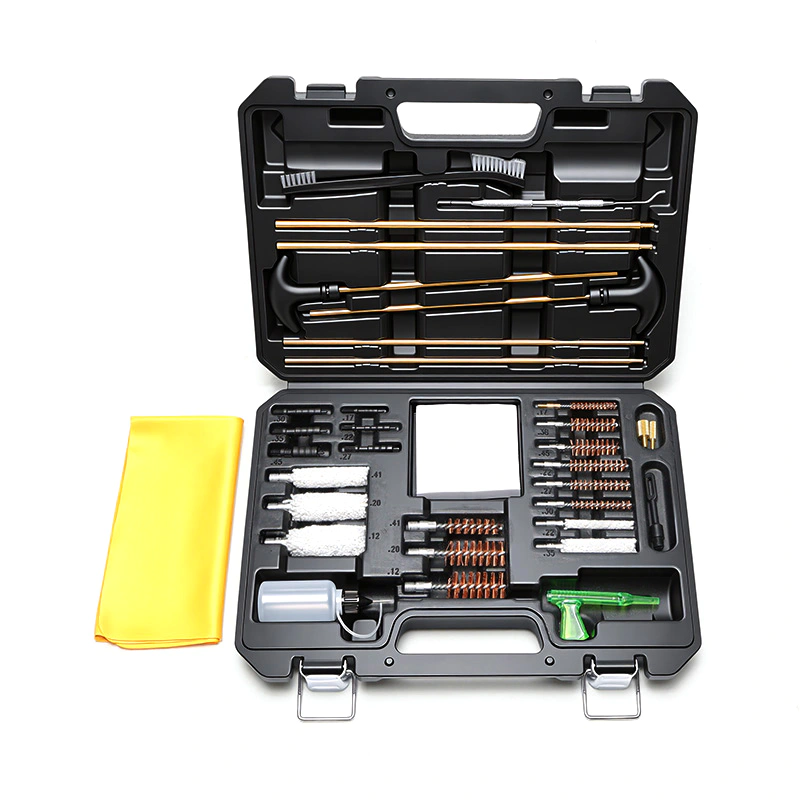
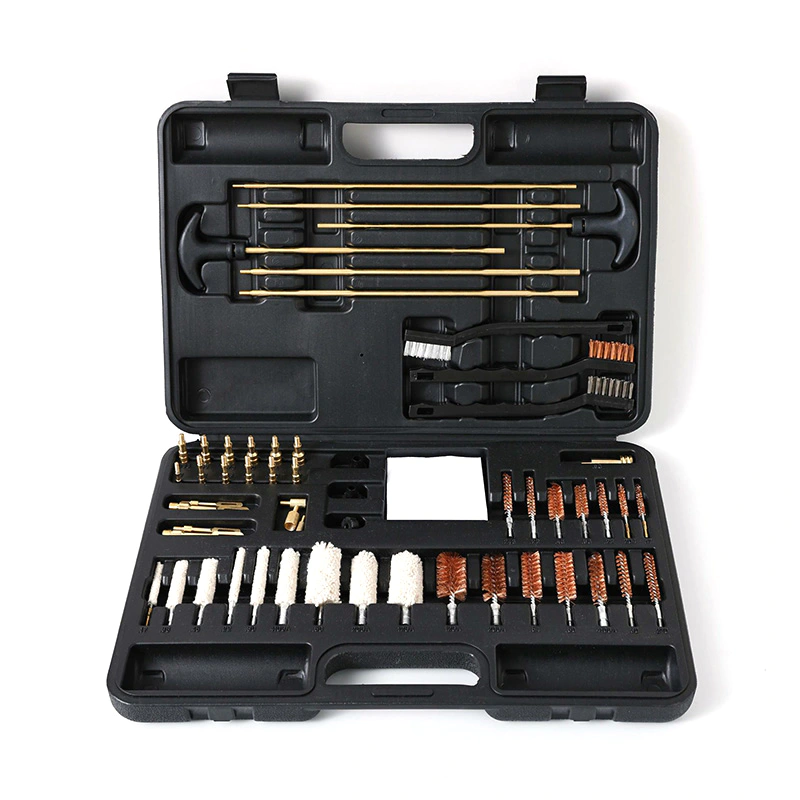
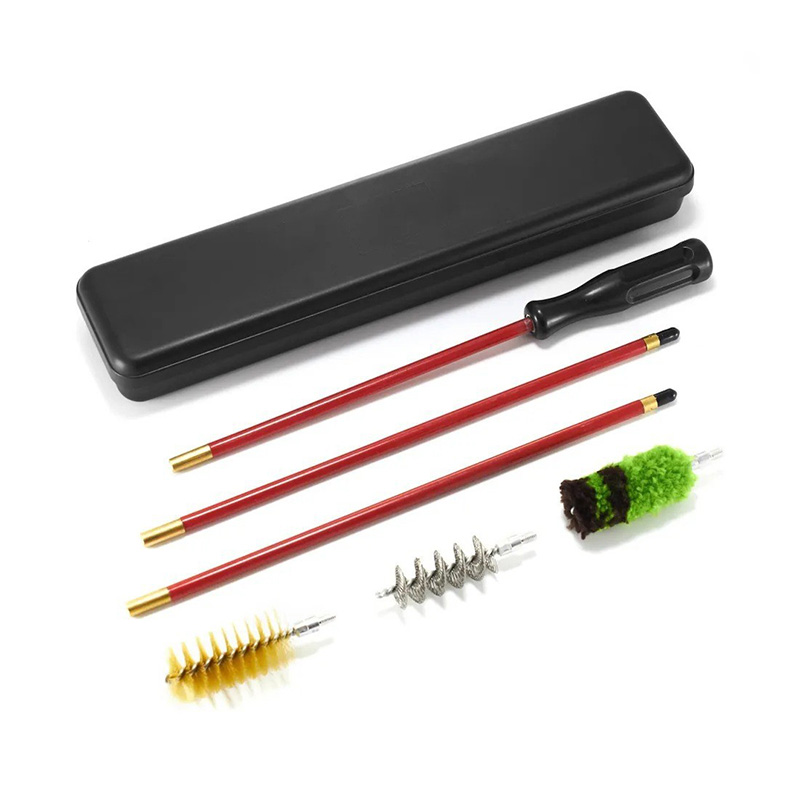
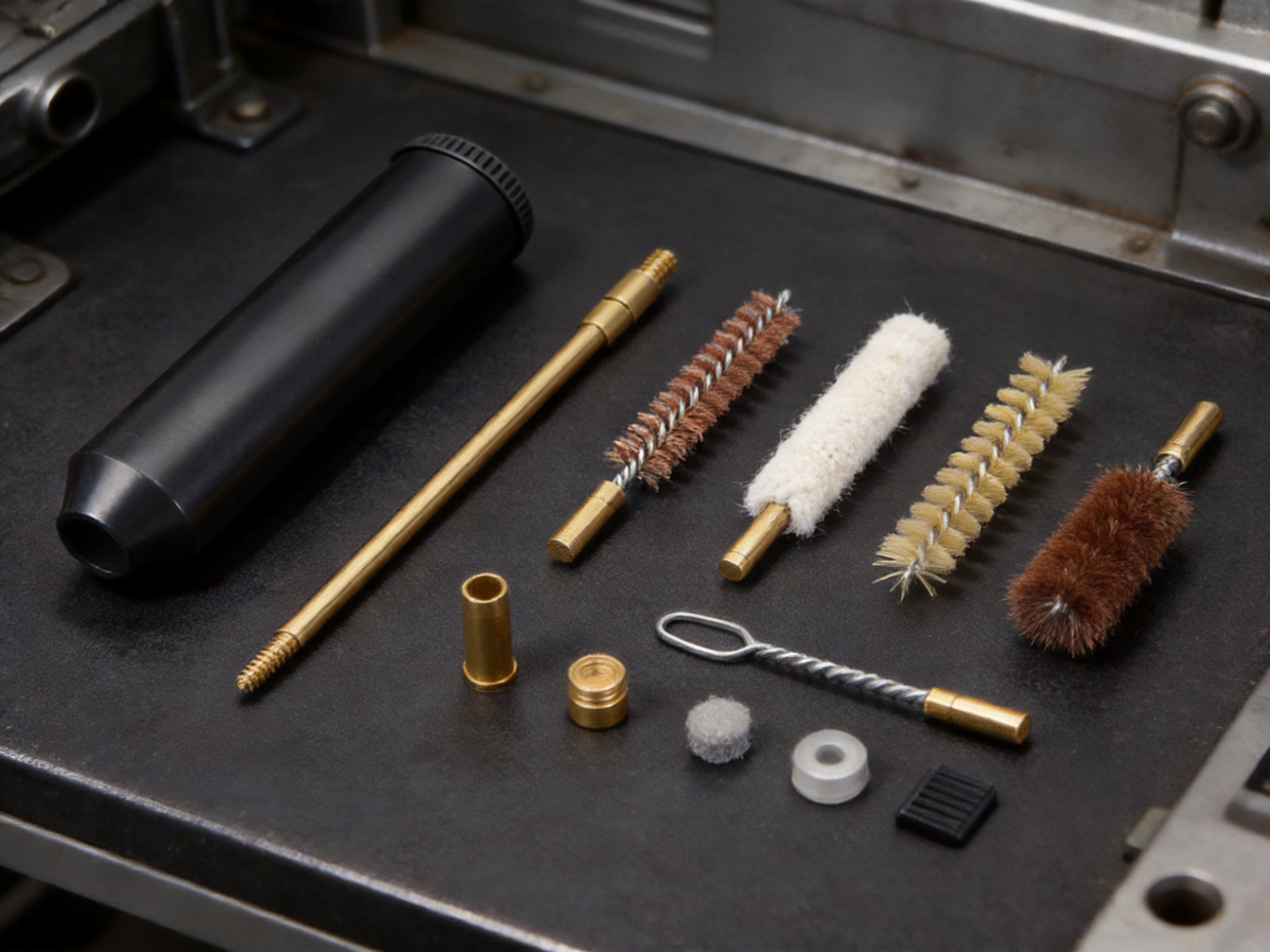
The 9mm Bore Brush Gun Cleaning Kit is designed to meet these requirements. Developed for the North American market, this compact maintenance set combines phosphor bronze wire brushes, cotton mops, boar bristle brushes, and a brass cleaning rod. Together, these components support routine bore cleaning, carbon deposit removal, powder residue removal, rust removal, and general handgun maintenance.
For business buyers, the product is positioned as a versatile and commercially practical solution. It can be supplied in bulk packaging, PE bags, plain white boxes, or retail-ready double blister packs with color cards. OEM and private-label customization are also available, allowing importers and distributors to adjust the presentation to match their brand strategy, target price point, and sales channel.
This article examines the construction, performance, manufacturing strengths, customization potential, packaging flexibility, and commercial advantages of this 9mm cleaning kit. It also explains why the product is suitable for distributors serving North America and other international markets.
The 9mm Bore Brush Gun Cleaning Kit is a multi-component firearm maintenance set identified by product code #7021-1. Its primary purpose is barrel cleaning, with additional applications including carbon deposit removal, rust removal, and routine firearm care.
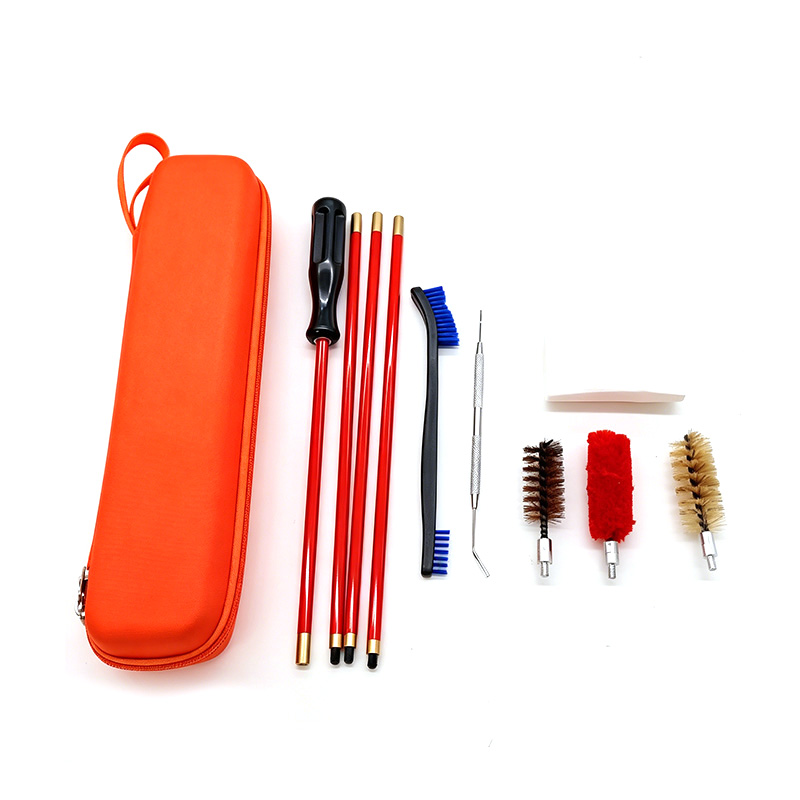
The set includes a brass cleaning rod with a total length of 342 millimeters, along with cleaning accessories made from several material types. Phosphor bronze wire brushes provide a firm yet bore-conscious cleaning action. Cotton mops help distribute cleaning solvent, collect loosened residue, and dry or polish the interior surface. Boar bristle brushes provide a softer brushing option for less aggressive cleaning tasks and surface maintenance.
The combination of materials gives the kit a broader functional range than a single-brush product. A bronze brush can be used to loosen stubborn deposits, a cotton mop can support solvent application and final wiping, and a softer bristle brush can be used when a gentler cleaning step is preferred. This creates a more organized maintenance workflow without requiring the user to purchase several unrelated accessories.
The product has a round brush shape and a black overall color presentation. Its handle and accessory construction incorporates brass, steel wire, and nylon-related materials according to the product configuration. The listed bristle length is 50, while the total cleaning rod length is 342 millimeters. Buyers should confirm detailed dimensional drawings and component quantities before final production or purchase because kit configurations may be adapted for different packaging and market requirements.
| Item | Specification | Commercial Benefit |
|---|---|---|
| Product | 9mm Bore Brush Gun Cleaning Kit | Complete maintenance solution for 9mm handgun platforms |
| Product code | #7021-1 | Convenient reference for quotations and purchase orders |
| Cleaning rod | 342 millimeters total length | Suitable for standard handgun barrel cleaning workflows |
| Brush materials | Phosphor bronze, boar bristle, nylon-related materials | Supports different cleaning intensities and maintenance steps |
| Mop material | Cotton | Useful for solvent application, wiping, and final bore care |
| Rod and fittings | Brass and steel wire components | Provides a durable and practical cleaning structure |
| Primary function | Barrel cleaning | Supports routine maintenance for compatible firearms |
| Additional functions | Rust removal and carbon deposit removal | Expands the product’s retail and professional applications |
| Packaging options | Bulk, PE bag, white box, double blister pack with color card | Fits wholesale, online, and retail distribution channels |
| Customization | OEM and private label support | Allows brand, packaging, and presentation adjustments |
A firearm bore is exposed to heat, pressure, propellant residue, copper or metal fouling, dust, and moisture. Over time, these contaminants can accumulate and make cleaning more difficult. A suitable maintenance kit gives users the tools required to remove deposits before they become more persistent.
Many low-cost cleaning products focus on a single brush or provide accessories that are not well matched to one another. This can create an inefficient maintenance process. The user may need to source a separate rod, separate mops, and additional brushes from different suppliers. For retail customers, this increases purchasing complexity. For distributors, it creates more stock-keeping units, more packaging requirements, and more opportunities for incomplete product selection.
A coordinated 9mm kit simplifies the purchase decision. The buyer receives a rod and multiple cleaning elements designed to work together. The result is a product that can be positioned as a practical starter kit, a replacement kit, a range-bag accessory, a maintenance-room supply, or an add-on product for firearm retailers.
For commercial buyers, a multi-component set can also improve merchandising. A complete kit is easier to explain in a product listing because its value is immediately visible. It can be promoted as a complete cleaning solution rather than as an individual replacement brush. The inclusion of several brush types and a cotton mop gives distributors more useful features to communicate to customers.
Phosphor bronze is widely used in firearm cleaning brushes because it offers a useful balance between cleaning strength, flexibility, and bore-conscious contact. The wire can help loosen carbon fouling, powder residue, and other deposits that may not be removed effectively by a soft mop alone.
Compared with harder steel brushing materials, bronze is generally preferred for applications where the user wants firm cleaning action while reducing the risk of unnecessarily aggressive contact with the bore surface. Correct technique remains important, and users should always follow the firearm manufacturer’s maintenance instructions. The brush should be used with an appropriate solvent and with controlled movement rather than excessive force.
For a 9mm cleaning kit, the bronze brush is one of the most important components because it addresses the residue that accumulates after repeated firing. It also gives the product a professional appearance and supports its positioning above basic economy kits that contain only a plastic rod and a single low-cost brush.
Cotton mops serve a different function from wire brushes. They can be used to apply cleaning solution, spread lubricant in a controlled manner, collect loosened residue, and assist with final wiping. Their softer structure makes them suitable for the finishing stages of a cleaning routine.
A cotton mop also helps create a more complete maintenance workflow. The brush can loosen deposits, while the mop can remove remaining residue and help the user inspect the bore condition. For distributors, the inclusion of cotton mops is a meaningful selling point because it demonstrates that the kit is designed for more than one cleaning stage.
The mop can also improve the perceived value of the package. Customers often recognize that a kit containing both brushes and mops offers more practical utility than a kit consisting of only one brush type. This distinction can be especially useful in online product descriptions, retail packaging, and comparison charts.
Boar bristle brushes provide a softer brushing option for cleaning tasks that do not require the stronger action of bronze wire. They can help remove loose particles, surface residue, and debris from suitable firearm areas. Their softer feel also gives users more flexibility when cleaning around surfaces where a more aggressive brush may not be preferred.
Including a boar bristle brush creates a layered tool system. Rather than relying on one material for every step, the user can select the brush according to the condition of the firearm and the type of residue being addressed. This supports more careful maintenance and contributes to the product’s professional positioning.
The 342-millimeter brass cleaning rod forms the structural foundation of the kit. Its length is engineered for standard handgun barrel cleaning applications, while its brass construction provides a practical balance of rigidity, durability, and corrosion resistance for normal maintenance use.
A cleaning rod must be long enough to pass through the intended barrel while remaining manageable during use and storage. The rod also needs sufficient stability to transfer controlled movement to the brush or mop. The inclusion of a brass rod makes the kit more attractive to buyers who prefer a metal cleaning solution over a basic plastic alternative.
Because the product is intended for 9mm applications, commercial listings should clearly communicate compatibility and should avoid suggesting that one accessory fits every firearm model. Different firearms may have different barrel lengths, threading requirements, or cleaning procedures. Importers and retailers should verify the final configuration and provide suitable usage guidance with the product.
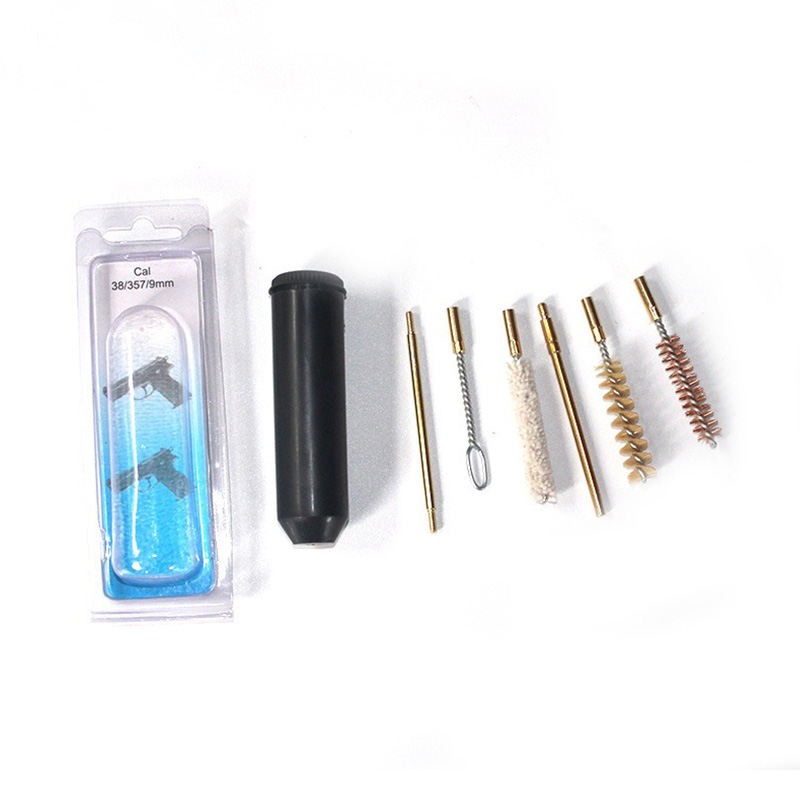
9mm Bore Brush Gun Cleaning Kit
The market contains a wide range of firearm cleaning products, from single replacement brushes to large universal kits with numerous accessories. The 9mm Bore Brush Gun Cleaning Kit occupies a practical middle position: it is focused enough to remain compact and cost-efficient, but complete enough to support several maintenance steps.
A product designed specifically for 9mm bore cleaning can be easier to market than an overly general kit. The customer immediately understands the intended application. This is beneficial for search-based e-commerce listings because the product title, images, and specifications can be aligned around a high-demand caliber category.
Focused positioning also helps distributors organize inventory. Instead of presenting a confusing selection of universal accessories, a retailer can offer a clear 9mm maintenance option alongside products for other calibers. A well-organized caliber-based assortment can improve navigation, product comparison, and customer confidence.
Some entry-level cleaning kits include only one nylon or wire brush. Although a single brush may handle basic residue removal, it does not provide the same flexibility as a kit containing bronze, cotton, and softer bristle components.
The multiple-material structure of this product supports a sequence of cleaning tasks. The user can loosen deposits with a bronze brush, apply or remove solvent with a cotton mop, and use a softer brush for less aggressive maintenance. This functional variety gives the kit a stronger value proposition than a single-material set.
A brass cleaning rod offers a more substantial product presentation than a simple plastic rod. It can improve the perceived quality of the kit and may appeal to buyers who want a durable tool for repeated use. Brass also fits naturally with the product’s bronze and brass brush positioning, creating a coherent materials story.
For retailers, the material specification can be highlighted on packaging and product pages. Customers evaluating two similar cleaning kits may perceive a clear advantage when one includes a brass rod and the other provides only a lightweight plastic accessory.
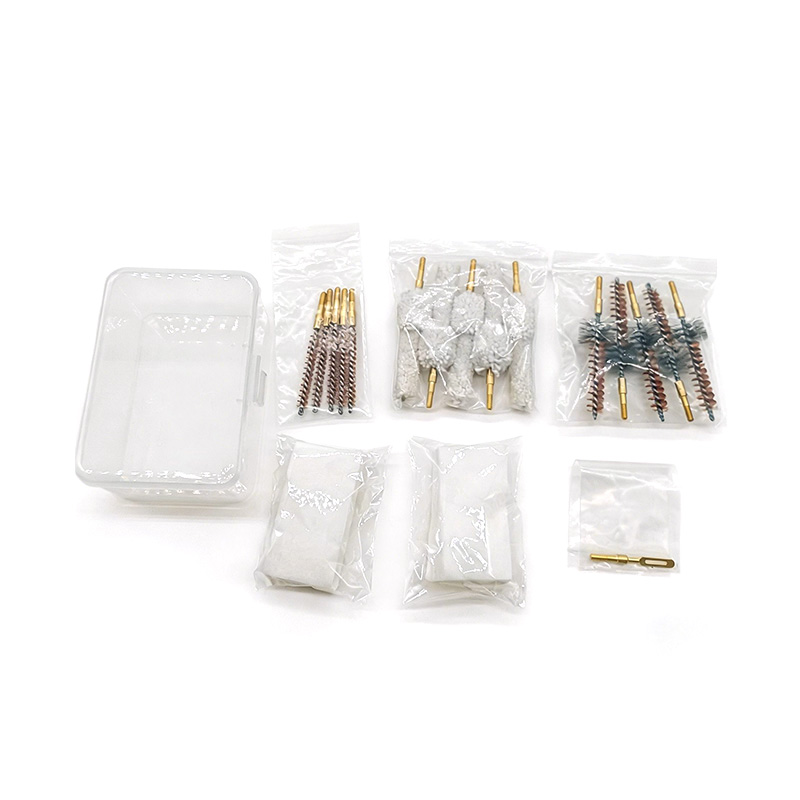
Packaging is a major point of difference in the B2B market. Some suppliers offer only bulk packaging, which may be economical for large industrial orders but unsuitable for retail shelves or e-commerce fulfillment. This product supports several formats, including bulk packaging, PE bags, plain white boxes, and double blister packs with color cards.
This flexibility allows different customers to purchase the same core product for different business models. A distributor can order bulk units for local repacking, while a retailer can select a finished blister pack for direct sale. A private-label customer can use a white box or customized package during market testing before moving to a more developed branded presentation.
OEM and private-label support gives the product long-term commercial value. Buyers can request adjustments to product presentation, logo placement, packaging artwork, color cards, and other approved specifications. This makes the kit suitable for firearm accessory brands, sporting goods companies, shooting range suppliers, and online retailers seeking a differentiated offer.
Private labeling can also help buyers build a consistent product family. The 9mm kit may be sold alongside cleaning kits for other calibers, replacement brushes, cotton mops, cleaning patches, and rods. A consistent package design and naming structure can improve shelf recognition and strengthen repeat purchasing.
Jinhua Tongshun Tool Factory was established in 1999 and specializes in gun cleaning kits, barrel cleaning brushes, and related firearm maintenance accessories. With more than 26 years of manufacturing experience, the company combines research and development, production, and sales capabilities.
The factory operates in Jinhua, Zhejiang Province, and serves international customers across more than 50 countries and regions. Its production model includes semi-automatic and fully automated systems, supporting consistent output for both standard products and larger orders.
Long-term specialization provides a practical advantage in a technical accessory category. Cleaning brushes may appear simple, but their performance depends on details such as wire selection, brush density, attachment quality, rod construction, component matching, and packaging protection.
Experience in this category enables the manufacturer to understand the requirements of distributors and end users. A factory that repeatedly produces barrel brushes and cleaning kits can refine its production methods around durability, fit, appearance, and repeatability. This is particularly important for private-label buyers, who need the same product specification to remain stable across multiple purchase orders.
The company’s integrated structure can simplify communication between product development and manufacturing. Buyers can discuss product requirements, packaging plans, and customization details with a supplier that understands both technical construction and commercial presentation.
For OEM customers, integrated operations can reduce the risk of information loss between separate design and production companies. Product drawings, packaging requirements, color cards, logo files, and quality expectations can be coordinated through a more direct workflow. This may help improve sample approval and production efficiency.
The use of semi-automatic and fully automated production systems supports stable manufacturing capacity. Automation can improve repeatability in processes such as brush assembly, component handling, and production flow management. Semi-automatic processes remain useful when a product requires flexible adjustment, manual inspection, or customized configurations.
A combination of production methods is often more practical than relying exclusively on either manual labor or full automation. Standard components can be manufactured efficiently, while packaging variations and OEM requirements can receive appropriate handling. This balance is valuable for buyers who need both volume capacity and product flexibility.
Quality control is essential for a product that contains several coordinated components. The brush must be securely assembled, the rod must be straight and usable, the accessories must match the agreed specification, and the packaging must protect the set during transport and storage.
Consistent supply is equally important for B2B customers. Distributors often plan promotions, e-commerce inventory, and retail replenishment months in advance. A stable factory source can reduce the risk of stock interruptions and inconsistent replacement shipments.
Buyers should define quality requirements clearly during the quotation and sample stages. These requirements may include material specifications, brush dimensions, rod length, fitting details, color, packaging configuration, printing, carton quantity, and inspection standards. A detailed purchase specification creates a stronger basis for quality control.
Products from the factory are exported to more than 50 countries and regions. International experience can help a supplier understand the importance of export packaging, product documentation, communication, production scheduling, and cross-border logistics.
For North American distributors and e-commerce sellers, export experience may simplify coordination around retail packaging, barcode placement, carton labeling, and shipment preparation. Customers should still confirm all destination-market requirements before placing a commercial order, especially when packaging, labeling, or product claims are subject to local rules.
A professional cleaning kit is the result of multiple production stages. Each stage influences the reliability and presentation of the finished product.
The first stage involves preparing the wire, brass components, cotton materials, bristles, rods, fittings, and packaging materials. Material selection should correspond to the approved product specification. For the 9mm kit, the principal materials include phosphor bronze wire, brass, steel wire, cotton, boar bristle, and nylon-related materials.
Material preparation also involves checking for visible defects, dimensional variation, contamination, or damage before assembly. Early inspection helps prevent unsuitable components from entering later production stages.
Brush forming determines the density, shape, and consistency of the cleaning head. A properly formed brush should maintain its structure during normal use while providing enough flexibility for contact with the bore and other intended surfaces.
Assembly quality is important because loose bristles or an unstable connection can reduce the useful life of the accessory. Production controls should focus on attachment strength, alignment, appearance, and the consistency of each batch. For OEM products, the factory can coordinate these criteria with the customer’s approved sample.
The brass cleaning rod must be formed, finished, and fitted according to the approved design. The rod should remain sufficiently straight for controlled cleaning and should connect properly with the supplied brush or mop components.
Fitting compatibility is a key consideration. If the kit includes threaded connections or adapters, the thread specification should be confirmed during product development. The final configuration should be tested to ensure that the brush and mop remain securely attached during normal cleaning movement.
Cotton mops and boar bristle brushes require careful preparation so that they maintain their intended shape and function. The cotton should be appropriately secured, while bristle components should be evenly arranged and free of excessive loose fibers.
Because these components may be used during solvent application or final wiping, cleanliness during production and packaging is important. Finished accessories should be protected from dust and moisture before they are placed in their retail packaging.
After individual component production, the complete kit is assembled. This is the stage where the factory confirms that the correct brushes, mop, rod, and packaging materials are combined in the correct quantity.
Inspection may include visual checks, dimensional confirmation, connection checks, packaging verification, and random functional assessment. A clear assembly checklist can reduce the risk of missing accessories or mixed configurations in a large order.
Packaging is selected according to the buyer’s sales channel. Bulk packaging may be preferred for industrial distributors, while PE bags and white boxes can support flexible repacking. Double blister packs with color cards are suitable for display-oriented retail and many online fulfillment programs.
Packaging must protect the metal components from damage during transport. It should also keep the brush heads, cotton mop, and rod organized so that the product arrives in a presentable condition. Export cartons should be prepared according to the agreed quantity and shipping requirements.
Bulk packaging is appropriate for importers, wholesalers, and distributors that maintain their own repacking or warehouse operations. It can reduce the packaging cost per unit and provide greater flexibility for local labeling.
Bulk supply may also be useful for businesses that sell cleaning kits as part of service packages, shooting range maintenance programs, or equipment bundles. Buyers using this format should plan their own inner packaging, instruction materials, barcode labels, and inventory controls.
PE bag packaging provides a simple and cost-efficient presentation. It can include a color card to identify the product and communicate basic information. This format is suitable for hardware counters, online listings, warehouse distribution, and buyers who want a lightweight package.
The PE bag can protect the components from dust while keeping the product visible. It is also easier to store in cartons and may help reduce shipping volume compared with larger retail packaging.
A plain white box offers a clean and adaptable presentation. It can be used as a neutral package for distributors or as a base for customer-applied labels and stickers. White boxes are also useful during product testing, when a buyer wants to evaluate market response before investing in fully printed packaging.
For OEM projects, a plain white box can be replaced or upgraded after the product specification has been approved. This creates a staged approach to product launch and can help control initial costs.
The double blister pack with color card is suitable for retail-oriented display. It allows customers to see the main components while keeping the set organized and protected. A color card can communicate the product name, caliber application, material information, and brand identity.
This packaging style is also beneficial for online sellers because it creates a finished product presentation for product photography and fulfillment. Buyers should confirm artwork dimensions, card material, blister size, barcode requirements, and carton packing details before production.
Customization allows business buyers to adapt the kit to a specific brand strategy. The core product can remain based on the approved 9mm configuration, while the outer presentation and selected details are adjusted for the target market.
Potential customization areas include logo printing, color card design, box artwork, package language, barcode placement, product naming, carton marks, and coordinated presentation with other cleaning accessories. Depending on the project, buyers may also discuss brush combinations, accessory quantities, color preferences, or other approved product adjustments.
A successful OEM project begins with a precise product brief. The brief should identify the target customer, sales channel, expected order quantity, required packaging, product color, label information, and quality expectations. It should also specify which features are fixed and which are open to development.
Samples are important before mass production. A buyer should inspect the sample for component completeness, brush construction, rod length, connection quality, packaging appearance, and printed information. Any corrections should be recorded in a written approval document.
Private-label customers may benefit from creating a complete accessory range. The 9mm kit can serve as a core product, followed by caliber-specific kits, replacement bronze brushes, nylon brushes, cotton mops, cleaning patches, cleaning cloths, and rods or adapters. A consistent brand system can encourage customers to purchase related products over time.
The kit is suitable for firearm accessory distributors, sporting goods retailers, shooting range suppliers, gunsmithing supply companies, outdoor equipment sellers, and cross-border e-commerce businesses. Its focused 9mm application makes it easy to place within a product category while its multi-component structure gives it broad practical appeal.
It can be sold as a first cleaning kit for a new firearm owner, a replacement for worn accessories, or an additional kit for a range bag, workshop, or travel case. The same product can therefore serve several customer segments without requiring major changes to the core design.
Online sellers can present the kit through clear feature sections: 9mm compatibility, bronze brush, cotton mop, boar bristle brush, brass rod, 342-millimeter total length, rust removal, carbon deposit removal, and packaging availability.
High-quality product photographs can show the complete set, individual components, packaging alternatives, and close-up details of the brush materials. Clear images reduce customer uncertainty and can lower the likelihood of complaints caused by misunderstood specifications.
Packaging flexibility allows businesses to create different commercial offers. Bulk packaging can support value-oriented wholesale distribution, while retail-ready blister packaging can support a higher presentation standard. OEM packaging can further differentiate the product through design and brand positioning.
The ability to sell one basic configuration through multiple presentation formats can simplify sourcing. Instead of developing a different product for every sales channel, the buyer can select the package that best matches the target market.
Cleaning brushes and cotton accessories are consumable or replaceable items in many maintenance routines. As users continue to clean their firearms, brush heads may eventually wear, and cotton mops or patches may need replacement.
A distributor that supplies the complete kit can also introduce replacement accessories. This can support repeat sales and create a broader product relationship with retail customers. Product information should remain accurate and should not imply a fixed replacement interval because actual service life depends on frequency of use, cleaning method, solvent selection, and storage conditions.
Buyers should distinguish between the cleaning accessory itself and the firearm for which it is intended. The 9mm Bore Brush Gun Cleaning Kit is a maintenance product, not a firearm or weapon component. Nevertheless, importers should check all applicable customs, labeling, packaging, and consumer product requirements in the destination market.
Before ordering, buyers should request or confirm the following information: final component list, brush dimensions, rod length, material specifications, thread or connection details, packaging format, carton quantity, product weight, sample approval procedure, and inspection standard.
Product instructions should encourage safe handling. Users should ensure that the firearm is unloaded and follow the firearm manufacturer’s cleaning instructions. Cleaning should take place in an appropriate location, with suitable ventilation and protective equipment when required by the cleaning solvent manufacturer.
Retailers should avoid exaggerated claims. The kit can be described as supporting barrel cleaning, carbon deposit removal, rust removal, and routine maintenance, but it should not be promoted as a guarantee of firearm performance, accuracy, or safety. Accurate claims help protect the buyer’s reputation and improve long-term customer trust.
A strong product page should begin with the primary application: a 9mm bore brush gun cleaning kit for routine handgun maintenance. The listing should then explain the included components and their functions in simple language.
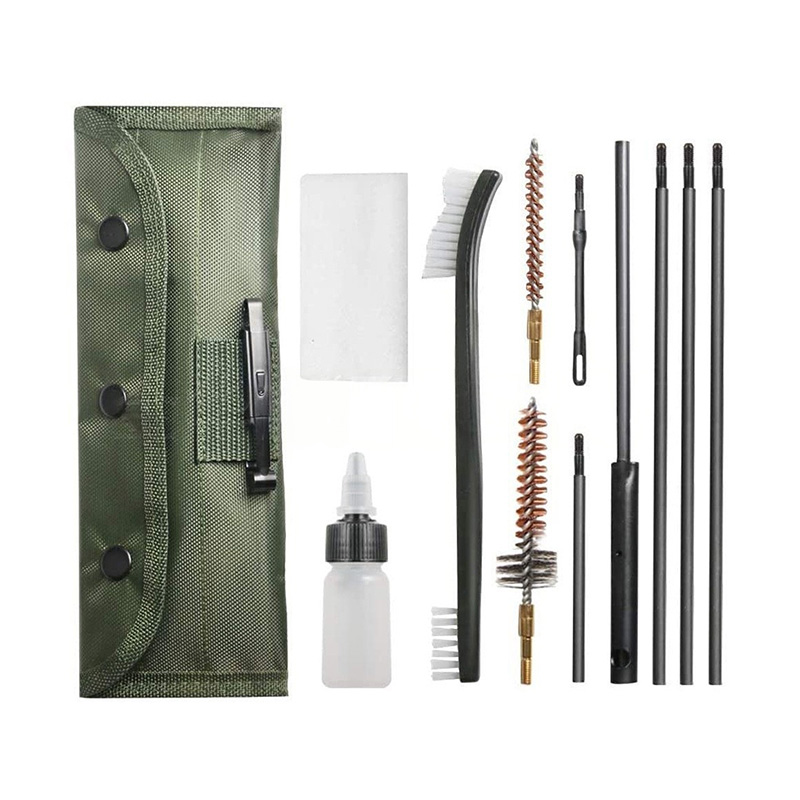
Photographs should show the full kit from several angles. One image can present the assembled package, another can display the rod and brushes separately, and another can show the retail packaging. A close-up image can emphasize the bronze wire, cotton mop, or brush construction.
Product descriptions should include measurable details such as the 342-millimeter rod length and the listed bristle length of 50. If the unit for a secondary measurement is not specified in the final technical document, the seller should confirm it before publication rather than assuming a unit.
Packaging descriptions should be separated from product specifications. For example, the product may remain the same while the customer selects bulk packaging, a PE bag, a plain white box, or a double blister pack with color card. This avoids confusion during quotation and purchase order preparation.
For B2B listings, it is useful to explain OEM and private-label capability, factory experience, export coverage, and production capacity. However, buyers should still receive a formal quotation and sample confirmation for exact pricing, minimum order quantity, lead time, and packaging requirements.
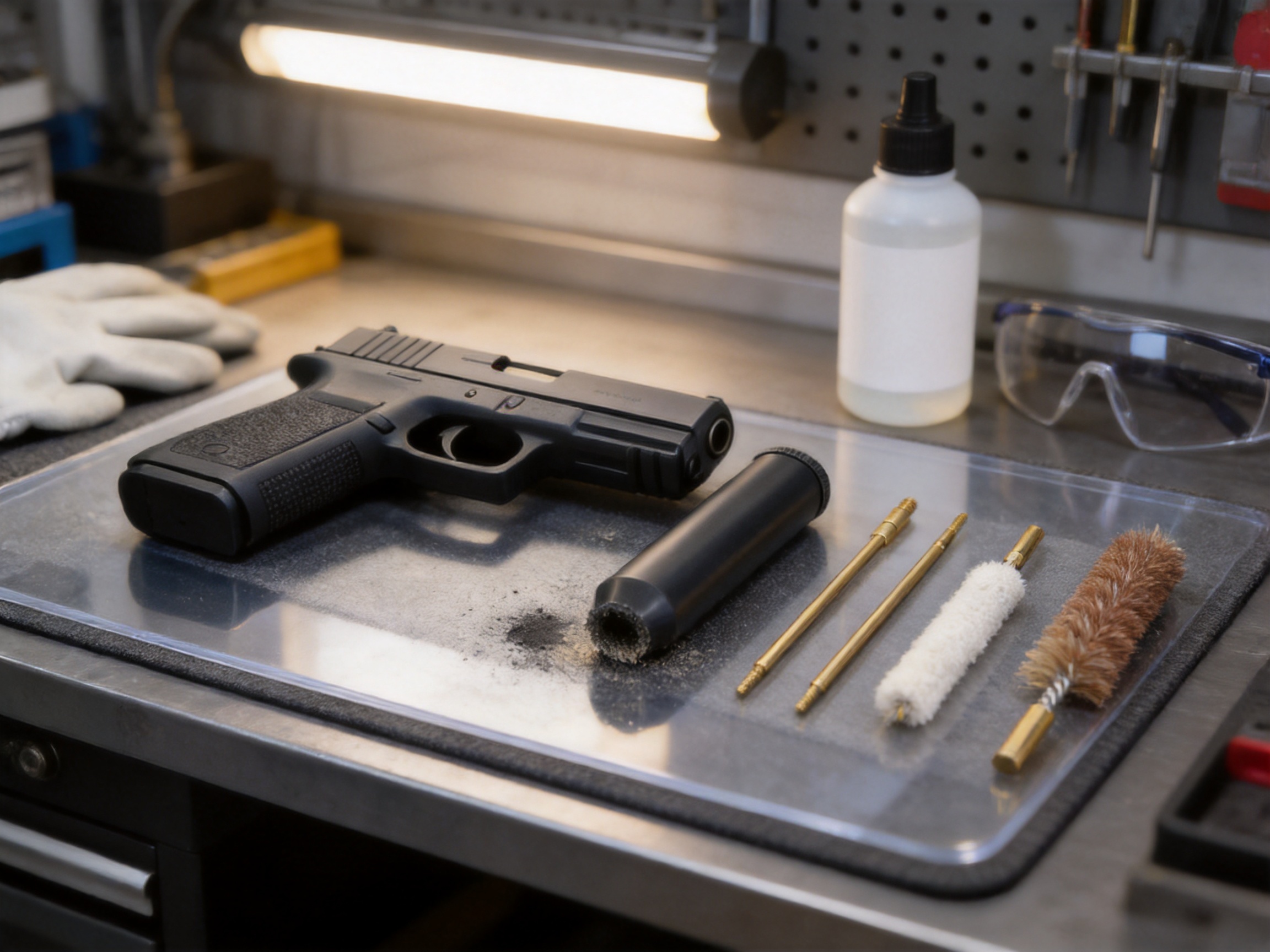
The primary use is barrel cleaning for compatible 9mm handgun platforms. The kit also supports carbon deposit removal, powder residue removal, rust removal, and general firearm maintenance.
The product is described as including phosphor bronze wire brushes, cotton mops, boar bristle brushes, and a brass cleaning rod. Buyers should confirm the final quantity and exact component configuration on the approved quotation or sample.
The listed total length of the cleaning rod is 342 millimeters. Buyers should confirm whether the final production specification includes any additional adapter or fitting dimensions.
Yes. The product is specifically positioned as a 9mm bore cleaning kit. Compatibility should still be checked against the firearm manufacturer’s cleaning requirements and the final accessory dimensions.
Different materials support different maintenance steps. Phosphor bronze helps loosen more persistent deposits, cotton mops assist with solvent application and wiping, and boar bristle brushes provide a softer brushing option.
A brass rod provides a more substantial metal construction and is suitable for repeated routine maintenance when used correctly. Actual service life depends on cleaning technique, storage, solvent exposure, and frequency of use.
Available formats include bulk packaging, PE bags, plain white boxes, and retail-ready double blister packs with color cards. The selected format should be confirmed according to the sales channel and order requirements.
OEM and private-label customization are supported. Logo printing, color cards, box artwork, and other packaging details can be discussed during the project development process.
The product is suitable for distributors, firearm accessory retailers, sporting goods companies, shooting range suppliers, gunsmithing suppliers, and cross-border e-commerce sellers serving North America and other markets.
The factory operates semi-automatic and fully automated production systems and has experience supplying international customers. Exact capacity, minimum order quantity, production schedule, and shipment timing should be confirmed for each project.
The buyer should confirm the component list, dimensions, materials, connection details, packaging format, logo or artwork requirements, carton quantity, inspection standard, delivery terms, and any destination-market requirements.
The firearm must be unloaded before cleaning, and users should follow the firearm manufacturer’s instructions. Cleaning solvents should be used according to their labels, with suitable ventilation and protective measures where required.
The 9mm Bore Brush Gun Cleaning Kit combines a focused application with a complete selection of practical cleaning accessories. Its main advantage is not simply the number of components, but the way those components support a logical maintenance process.
The bronze brush addresses more persistent deposits, the cotton mop supports solvent and finishing work, the boar bristle brush provides a softer option, and the brass rod connects the cleaning process into one compact set. This makes the kit easier to position than a single accessory and more economical to manage than a large universal kit with unnecessary components.
For wholesale customers, the product also offers a strong balance between customization and standardization. The core product can be produced as a stable factory configuration, while packaging and branding can be adapted to individual sales strategies. This is valuable for businesses that want product differentiation without developing an entirely new tool from the beginning.
The manufacturer’s experience since 1999, specialized product focus, international export background, and semi-automated and automated production systems provide a suitable foundation for long-term supply. The combination of factory production capability and OEM support allows customers to move from sample testing to regular replenishment more efficiently.
The 9mm Bore Brush Gun Cleaning Kit is a practical, versatile, and commercially adaptable product for handgun maintenance markets. It brings together phosphor bronze brushes, cotton mops, boar bristle brushes, and a 342-millimeter brass cleaning rod in one coordinated set.
Its advantages include focused 9mm positioning, multiple cleaning materials, a durable metal rod, support for rust and carbon deposit removal, and packaging formats suitable for wholesale, retail, and e-commerce sales. Compared with basic single-brush products, it offers a more complete maintenance workflow and stronger perceived value.
For business buyers, the product is supported by the manufacturing experience of Jinhua Tongshun Tool Factory, a company established in 1999 with expertise in gun cleaning kits, barrel cleaning brushes, and related accessories. The factory’s integrated R&D, production, and sales structure, combined with semi-automatic and fully automated production systems, supports consistent manufacturing and customized supply programs.
With OEM and private-label options, export experience, and several packaging choices, the kit can be developed for a wide range of distribution models. Buyers should confirm the exact component configuration, dimensions, packaging, inspection requirements, and destination-market obligations before ordering. When properly specified and presented, this product can serve as a dependable addition to a professional firearm maintenance product line.
1. Product specification for 9mm Bore Brush Gun Cleaning Kit, product code #7021-1, supplied by the manufacturer.
2. Manufacturer company profile and factory capability information for Jinhua Tongshun Tool Factory.
3. General firearm maintenance principles concerning bore cleaning, residue removal, brush selection, and safe handling.
4. General B2B product development practices for OEM packaging, private labeling, sample approval, and quality inspection.
5. General wholesale packaging considerations for bulk packaging, PE bags, plain white boxes, and blister-pack retail presentation.