English
 русский
 Español
 عربى

HUNTACE HUNTACE HUNTACE HUNTACE HUNTACE
HUNTACE HUNTACE HUNTACE HUNTACE


Effective cleaning is essential for maintaining firearms, hardware components, tools, molds, and mechanical assemblies. Residue, oxidation, loose debris, carbon deposits, and surface contamination can reduce performance, accelerate wear, and make inspection more difficult. For this reason, professional users often require more than a single-purpose brush. They need a cleaning tool that combines appropriate bristle materials, a comfortable handle, useful dimensions, reliable manufacturing, and packaging options suitable for both individual use and commercial distribution.
The 9-Inch Gun Brush Brass Steel Nylon Cleaning Kit is designed to address these requirements through a multi-material approach. Depending on the selected configuration, the product can be supplied with brass wire, stainless steel wire, or nylon bristles. Each material serves a different cleaning purpose, allowing users to select a brush that matches the sensitivity, hardness, and contamination level of the surface being cleaned.
With an overall length of approximately 210 millimeters, a brush head diameter of about 30 millimeters, and bristles measuring approximately 83 millimeters, the tool offers a broad working area without becoming difficult to control. Its plastic handle is designed for a practical grip, while the extended format gives users additional reach when cleaning firearm receivers, barrels, magazines, trigger components, hardware assemblies, molds, and mechanical parts.
This article examines the product’s construction, material options, applications, manufacturing strengths, customization services, packaging formats, and advantages over ordinary single-material cleaning brushes. It also explains how distributors, gunsmiths, retailers, industrial maintenance teams, and private-label buyers can evaluate this type of product for their own markets.
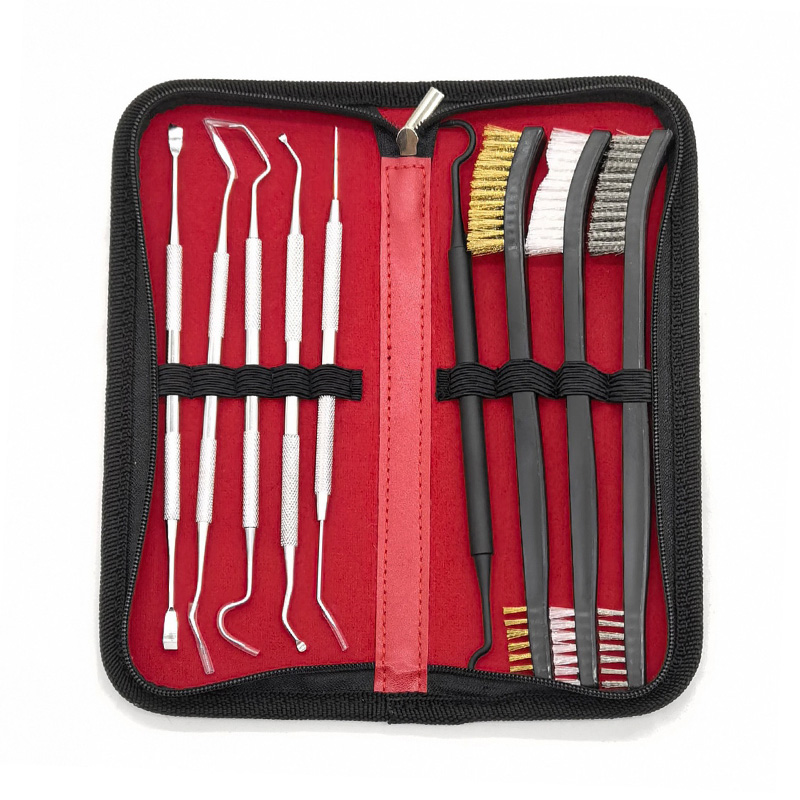
The 9-Inch Gun Brush Brass Steel Nylon Cleaning Kit is a hand-operated brush intended for cleaning and surface maintenance. It is supplied in several versions, including individual bulk brushes and three-piece sets. The three-piece configuration can combine different bristle materials so that users have a softer option for sensitive surfaces, a moderate option for general cleaning, and a more aggressive option for stubborn rust or oxidation.
The main product specifications include an approximate total length of 210 millimeters, equivalent to about 9 inches, a brush head diameter of 30 millimeters, and a bristle length of 83 millimeters. The handle is made from plastic and is typically supplied in black. The handle shape and length provide a useful balance between reach, control, and portability.
The brush is categorized under bronze and brass brushes, although the available specifications also include stainless steel and nylon versions. This broad material selection makes the product more versatile than a traditional brass-only brush. Buyers can order one material for a defined application or select multiple versions for a complete cleaning assortment.
The product is manufactured for hardware cleaning and is also suitable for firearm maintenance. Its applications include cleaning, polishing, and light sanding, depending on the bristle material and the surface being treated. It can be supplied for international distribution, with bulk packaging and retail-ready presentation available for different sales channels.
Not every cleaning surface should be treated with the same brush. The hardness, flexibility, shape, coating, and contamination level of the surface all influence the correct tool choice. A brush that is appropriate for heavily oxidized steel may be too aggressive for a coated component. Conversely, a soft nylon brush may not provide enough mechanical action to remove firmly adhered corrosion.
The product’s three principal bristle choices—brass, stainless steel, and nylon—allow users to match the brush to the job. This approach improves cleaning efficiency while helping reduce the risk of unnecessary surface damage.
Brass wire provides a moderate cleaning action. It is generally softer than stainless steel and is often selected for mild rust removal, residue removal, and maintenance tasks where users want mechanical cleaning without the aggressiveness of a hard steel brush.
For firearm maintenance, brass brushes are commonly used when cleaning suitable metal surfaces and bore-related components according to the equipment manufacturer’s instructions. Their relatively moderate hardness makes them a popular choice for routine cleaning and inspection work. Brass can help loosen powder residue, light oxidation, and deposits while offering a practical balance between cleaning ability and surface care.
Brass wire is also suitable for hardware components, threaded areas, small recesses, and mechanical parts that require more cleaning force than nylon can provide. In commercial maintenance operations, brass brushes are often considered a standard option because they are useful across a wide variety of general-purpose tasks.
Users should still select the correct brush for the specific surface. Cleaning procedures should always follow the firearm or equipment manufacturer’s instructions, and the brush should be tested carefully when working on delicate finishes, coatings, or precision components.
Stainless steel wire is the most aggressive of the three primary material options. It is intended for heavy rust, stubborn oxidation, compacted debris, and difficult deposits that require greater mechanical action.
This version is useful for unfinished or highly durable metal surfaces, workshop hardware, molds, mechanical parts, and industrial maintenance applications. It can help remove contamination that a softer brass brush may not address efficiently. For this reason, stainless steel brushes can reduce the time required for demanding cleaning work.
Because stainless steel wire is more aggressive, it should be used with greater care. It may scratch coatings, painted surfaces, soft metals, polished areas, or sensitive firearm finishes. Professional users should confirm the suitability of stainless steel for the target surface before beginning work. The product’s multi-material format is valuable because it allows the user to reserve stainless steel for appropriate heavy-duty tasks rather than using it indiscriminately.
Nylon bristles provide a non-metallic cleaning option. They are suitable for coated, painted, finished, and sensitive surfaces where a metal brush may create unwanted marks. Nylon can remove loose dirt, powder residue, dust, oil-bound particles, and other contaminants while offering a gentler contact surface.
Nylon brushes are particularly useful for routine cleaning, maintenance between more intensive service intervals, and areas where surface appearance is important. They can also be used on plastics, painted hardware, polymer components, and other materials that require a lower-risk cleaning approach.
Although nylon is less aggressive than metal wire, it remains useful when combined with an appropriate cleaning solution and controlled brushing technique. Its flexibility allows the bristles to reach grooves and irregular surfaces without the sharp scraping effect associated with metal wire.
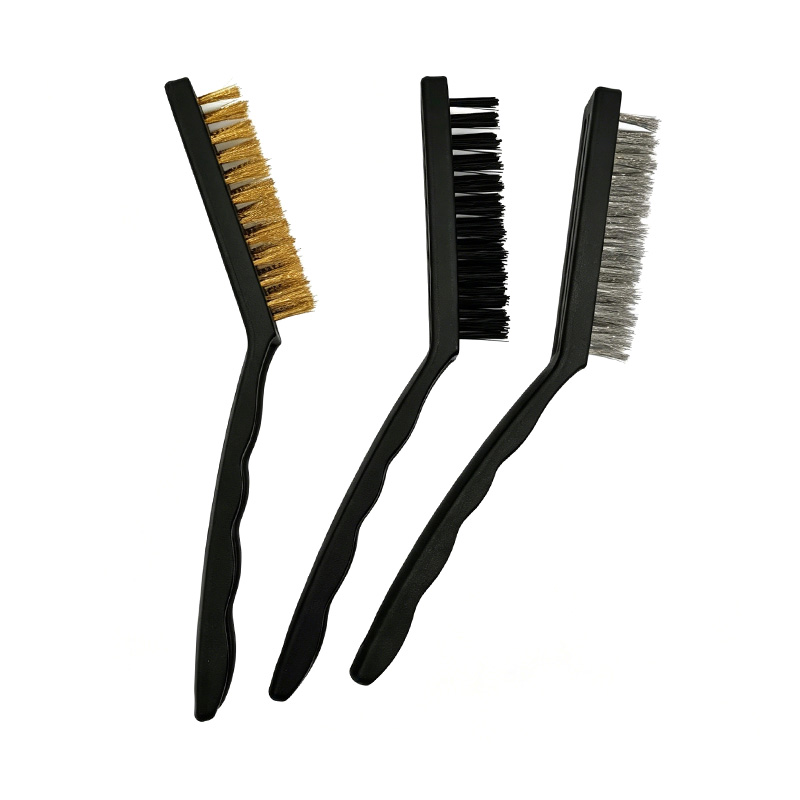
9-Inch Gun Brush Brass Steel Nylon Cleaning Kit
Dimensions have a direct effect on cleaning efficiency. A brush that is too short may limit reach and force the user to work in an uncomfortable position. A brush with an undersized head may require too many passes to cover the target area. The 9-inch format addresses both concerns by combining a relatively long handle with a wide cleaning head.
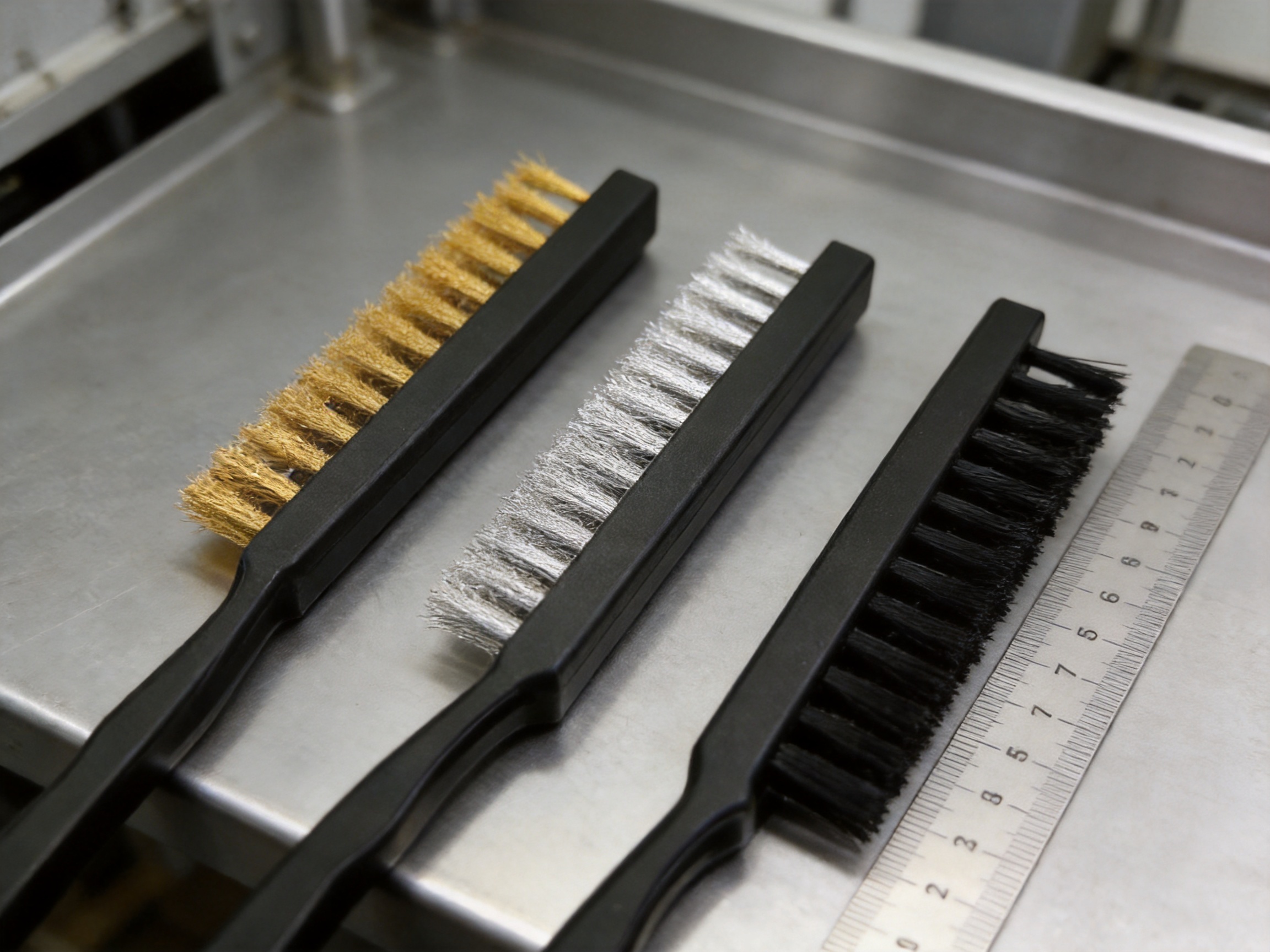
The total product length is approximately 210 millimeters. This extended format provides useful reach around firearm receivers, barrel exteriors, magazines, trigger components, hardware assemblies, and mechanical parts. It also helps keep the user’s hand farther from dirt, lubricant, residue, and cleaning chemicals.
The brush head diameter is approximately 30 millimeters, while the bristle length is about 83 millimeters. The wider head creates a larger contact area than a narrow detail brush. This allows users to cover broad surfaces more quickly, which is especially useful during workshop maintenance or repetitive cleaning operations.
At the same time, the brush remains a hand tool rather than an oversized industrial implement. The user can apply controlled pressure and change the brushing angle as needed. The combination of length and head width makes the product suitable for both targeted cleaning and broader surface work.
Reach is important when cleaning recessed areas, narrow assemblies, or components that are difficult to hold directly. A longer handle can reduce the need to place fingers close to the working surface. This is useful when the surface contains sharp edges, loose rust, oily residue, or cleaning chemicals.
The 9-inch profile also gives users more room to position their hands. A longer grip area can support two-handed control when additional pressure is required, although most routine cleaning can be completed with one hand. The handle is made from plastic and is designed for practical everyday use.
A broad brush head can improve productivity by reducing the number of strokes needed to clean a surface. In commercial environments, even a small reduction in cleaning time can become meaningful when the same operation is repeated across many items.
The wide-head design is helpful for hardware components, mold surfaces, mechanical housings, and firearm parts with accessible external areas. For very narrow grooves or precision passages, users may still require a dedicated small brush, cleaning rod, patch, or other specialized accessory. The 9-inch brush is best understood as a versatile general-purpose tool within a wider cleaning system.
Firearm maintenance requires appropriate tools, a controlled process, and strict attention to safety. Before cleaning, the firearm should be unloaded, the action should be open where applicable, and the user should verify that no ammunition is present in the work area. Manufacturer instructions should be followed for disassembly, cleaning products, lubrication, and reassembly.
Within a proper maintenance routine, the 9-inch brush can support several tasks. Brass or nylon versions may be used for suitable external components, recesses, and areas where residue accumulates. The brush can help clean receivers, magazine components, trigger housings, and other accessible parts. Stainless steel versions may be reserved for durable metal surfaces with heavy oxidation or stubborn contamination.
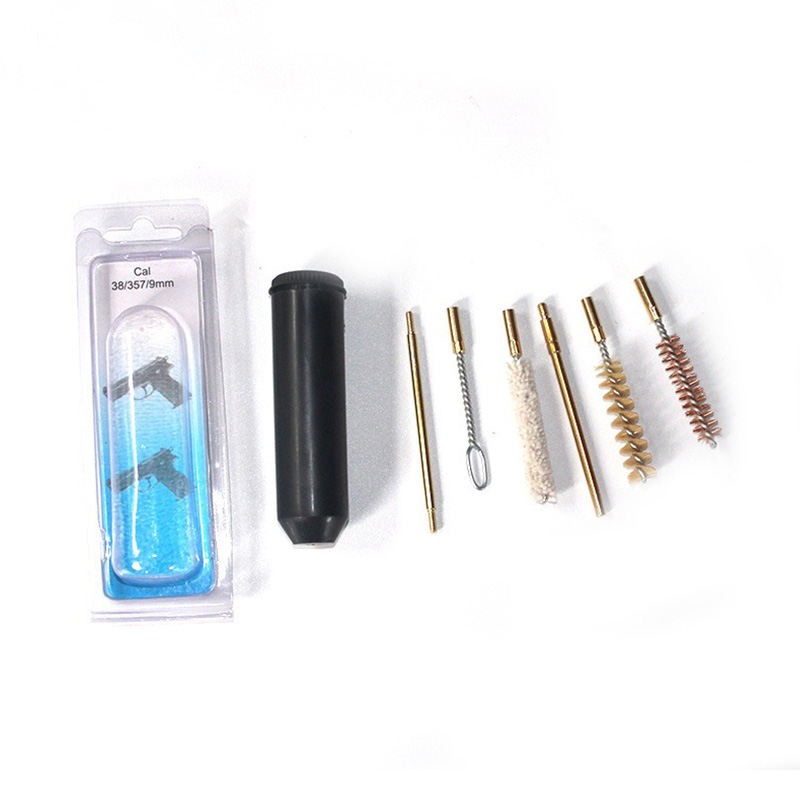
The product is not a replacement for every firearm-cleaning accessory. Barrels and internal passages may require properly sized cleaning rods, bore brushes, patches, cotton mops, or manufacturer-approved tools. However, the 9-inch brush can complement those products by handling general surface cleaning and hard-to-reach exterior areas.
Receivers and frames often contain corners, grooves, recesses, and contact areas where dust, oil, carbon, and debris may collect. A brush with an extended handle can reach around these areas while giving the user enough control to work carefully.
Nylon is suitable when the surface is coated, painted, or otherwise sensitive. Brass can be used for moderate residue and oxidation on appropriate metal surfaces. Stainless steel should be used only when the surface and finish can tolerate its higher level of abrasion.
Magazine bodies, feed-related surfaces, trigger components, and surrounding housings can collect residue during regular use. A brush can help loosen debris before the components are wiped, rinsed, dried, or treated according to the equipment manufacturer’s instructions.
The wide head provides useful coverage on accessible surfaces, while the long handle keeps the user’s hand away from concentrated contamination. Users should avoid forcing bristles into areas where they could become trapped or interfere with sensitive mechanisms.
The brush can also be used on suitable external barrel surfaces, mounting hardware, and other metal areas affected by light oxidation or environmental contamination. Brass may be appropriate for moderate cleaning, while nylon can be chosen for protective finishes. Stainless steel is more appropriate for heavy rust on durable, unfinished surfaces when the user has confirmed compatibility.
For bore cleaning, the correct diameter and firearm-specific cleaning equipment are essential. The product described here should not be assumed to replace a properly sized bore brush or cleaning rod. Product selection should always consider the firearm type, bore dimensions, finish, and manufacturer recommendations.
The product’s usefulness extends beyond firearms. Its design is also suitable for hardware maintenance, workshop cleaning, mold care, and mechanical servicing. Many industrial users need compact hand tools that can remove contamination without relying entirely on powered equipment.
In hardware applications, brass and stainless steel versions can clean fasteners, brackets, hinges, fittings, threaded parts, and metal assemblies. Nylon is useful for painted, coated, or polymer components. The user can select one brush type for a specific maintenance program or keep all three materials available for different conditions.
Molds and production tools can accumulate residue, release-agent buildup, dust, and oxidation. A hand brush allows technicians to clean around edges, channels, seams, and less accessible areas. Nylon can be appropriate for delicate or finished surfaces, while brass may help remove moderate buildup from durable metal components.
Stainless steel can provide greater cleaning force where heavy oxidation or firmly attached material is present. However, technicians should evaluate the hardness and finish of the mold before use. Preventing scratches on precision tooling is often more important than achieving the fastest possible cleaning action.
Mechanical components frequently require removal of grease-bound dirt, rust, scale, and debris. A brush with an extended handle and wide head can help clean housings, brackets, joints, and other parts before inspection or repair.
The brush is particularly useful during preparation for painting, coating, repair, or assembly. Removing loose contamination improves visual inspection and can help technicians identify cracks, wear, corrosion, and damaged threads.
Because the brush can be used for cleaning, polishing, and light sanding, it can support several stages of maintenance. Brass and stainless steel versions provide mechanical abrasion, while nylon supports lower-abrasion cleaning and surface preparation.
The correct brushing pressure is important. Excessive force can shorten bristle life, damage the surface, or deform the brush. Controlled strokes, suitable cleaning agents, and regular inspection of the bristles help users obtain more consistent results.
Many basic cleaning brushes are available with only one bristle material and one packaging format. These products may be adequate for a narrow application, but they can be less flexible for users who maintain different surfaces or handle multiple types of contamination.
The principal competitive advantage of this product is its material selection. Brass, stainless steel, and nylon versions allow distributors and end users to build a more complete cleaning solution. Instead of purchasing several unrelated brush styles with different handles and dimensions, buyers can obtain a consistent 9-inch format across multiple bristle types.
A consistent handle design makes it easier for users to distinguish and organize their tools. The same general size can be used for gentle cleaning, moderate rust removal, and aggressive corrosion removal, with the bristle material providing the primary change in cleaning intensity.
This is useful for professional workshops where operators need predictable tool handling. It is also valuable for retailers that want to offer a coordinated three-piece set rather than several disconnected products.
The approximately 30-millimeter head diameter and 83-millimeter bristle length give the product a broader working area than many small detail brushes. This can increase productivity when cleaning larger hardware surfaces, tool bodies, housings, and accessible firearm components.
A narrow brush remains useful for small slots and precision recesses, but a wide-head brush can handle general cleaning more efficiently. This reduces repetitive strokes and may improve user comfort during extended maintenance work.
Metal-only brush assortments may not be suitable for coated or sensitive surfaces. The inclusion of nylon provides a lower-abrasion alternative, while brass offers an intermediate option between nylon and stainless steel.
This progression—nylon for gentle work, brass for moderate cleaning, and stainless steel for heavy-duty applications—gives users a simple way to select an appropriate tool. It also helps retailers serve a wider range of customers with one product family.
The product can be supplied as a single-piece bulk item or as a three-piece retail set. This is an important advantage for different distribution models. Industrial buyers may prefer bulk packaging to reduce packaging cost and simplify warehouse handling. Retailers and e-commerce sellers may prefer a blister card or color box that presents the product clearly to consumers.
The availability of several packaging forms reduces the need for buyers to source a separate product for each sales channel. It also supports private-label programs in which packaging, logos, product descriptions, and set combinations are tailored to a target market.
Jinhua Tongshun Tool Factory, also known as Tongshun Tools, was established in 1999 and specializes in gun cleaning kits, barrel cleaning brushes, and related cleaning accessories. The company integrates research and development, production, and sales, giving it experience across the product lifecycle rather than focusing only on final assembly.
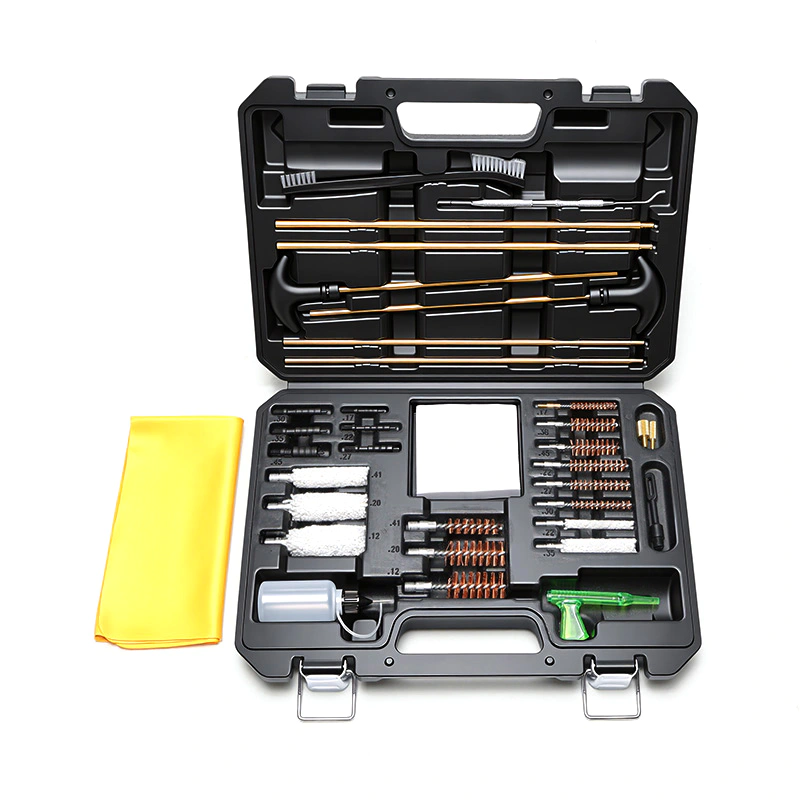
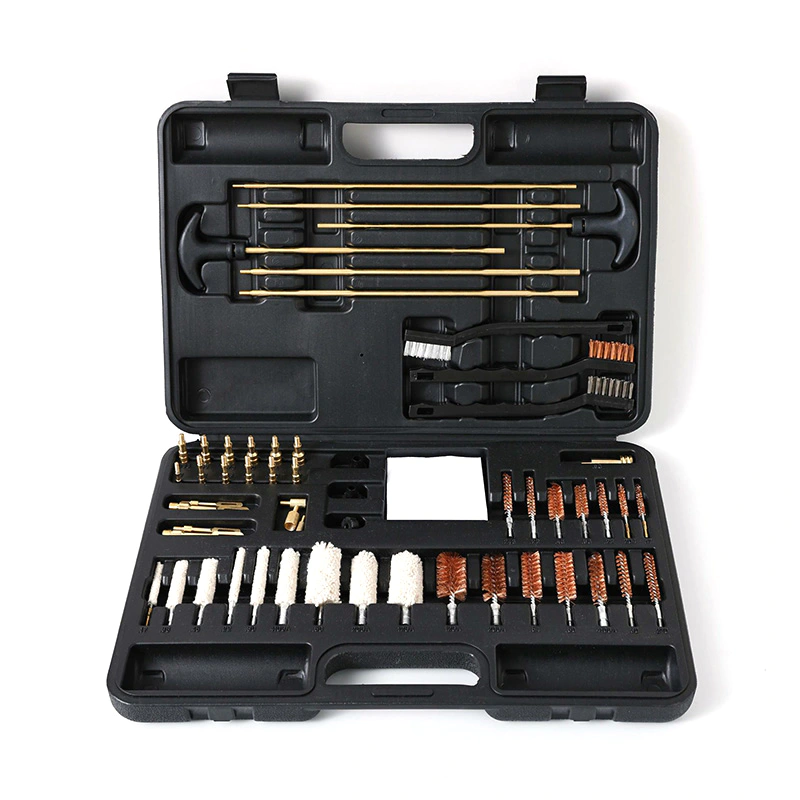
With more than 26 years of manufacturing experience, the factory has developed product knowledge in brush construction, handle production, packaging, and export-oriented supply. Its product range includes gun cleaning kits, brass and bronze brushes, nylon brushes, cleaning rods, bore mops, cleaning patches, cleaning cloths, and associated accessories.
The company operates a modern production facility using semi-automatic and fully automated production systems. These systems are intended to support stable production, repeatable assembly, and larger order volumes. For international buyers, production consistency is particularly important because replacement orders should match the dimensions, materials, appearance, and packaging of previous shipments.
Automation can improve consistency in repetitive production stages. Brush manufacturing involves multiple operations, including preparing the handle, positioning or securing bristles, trimming, inspection, and packaging. The use of semi-automatic and automated equipment can help reduce variation between units when compared with highly manual production.
Automation does not eliminate the need for quality control. Instead, it provides a more stable foundation for inspection and process management. A capable factory combines equipment with experienced personnel who monitor materials, dimensions, appearance, assembly quality, and packaging performance.
An integrated structure allows product development decisions to be evaluated against real production conditions. This is important for OEM and ODM customers because a requested change to a handle, bristle material, set composition, label, or package must be practical to manufacture at the required volume.
Integrated production also supports faster communication between product development, manufacturing, and sales teams. When buyers request customized dimensions, packaging formats, colors, or logos, the factory can review those requirements in relation to tooling, materials, assembly, and shipping.
The company states that it has production capacity for large-scale orders and exports products to more than 50 countries and regions. For distributors, this experience can simplify international purchasing because the factory is familiar with export-oriented documentation, packaging requirements, and communication with overseas customers.
Large-order capability is not only a matter of machine capacity. It also depends on material planning, production scheduling, inspection procedures, packaging coordination, and shipment preparation. A factory with established export operations is better positioned to coordinate these stages for recurring international orders.
The 9-inch brush is suitable for OEM and private-label programs because it can be offered in different material configurations and packaging forms. Buyers may select a bulk single-piece product for industrial distribution or a three-piece set for retail sales.
Customization may include packaging design, printed logos, product labels, color boxes, blister cards, set combinations, and market-specific presentation. The exact scope of customization should be confirmed during quotation and sampling because minimum order quantities, tooling requirements, artwork specifications, and lead times can vary.
A buyer may choose to sell brass-only brushes, stainless steel-only brushes, nylon-only brushes, or a three-piece combination. The preferred selection depends on the target customer. Gunsmithing suppliers may emphasize brass and nylon, industrial maintenance distributors may require stainless steel and brass, and general hardware retailers may prefer a mixed set.
Product codes and descriptions should clearly identify the bristle material. This helps prevent confusion during warehouse operations and gives end users a simple method of selecting the correct brush for a specific task.
Blister card packaging can display the product clearly while offering a compact hanging format for retail shelves. A color box can provide more room for instructions, product specifications, branding, and multilingual information.
Retail packaging should communicate the differences between brass, stainless steel, and nylon. It should also provide appropriate safety information, use guidance, and warnings about selecting the correct bristle type for sensitive surfaces. Clear communication can reduce misuse and improve customer satisfaction.
Bulk packaging is often preferred by professional users, wholesalers, and distributors. It can reduce per-unit packaging cost and simplify warehouse storage. It is also suitable when the buyer plans to repackage the product under its own label or sell it as part of a larger cleaning kit.
For bulk orders, buyers should confirm carton quantities, inner packaging, product protection, carton dimensions, gross weight, and shipping marks. These details affect freight planning and warehouse efficiency.
When evaluating a brush supplier, buyers should consider more than the product photograph. Dimensions, material consistency, handle strength, bristle retention, trimming quality, packaging accuracy, and order repeatability all affect the product’s commercial performance.
The stated dimensions—approximately 210 millimeters overall, 30 millimeters for the head diameter, and 83 millimeters for the bristle length—should remain consistent within reasonable production tolerances. Consistent dimensions are especially important when the product is sold in a fitted retail package or included in a cleaning kit.
Bristles should remain securely attached during normal use. Loose bristles can reduce cleaning performance and may create contamination in mechanical assemblies. Buyers can evaluate retention through sample testing and routine quality inspection.
The plastic handle should be suitable for repeated hand use and should not crack easily under normal brushing pressure. Surface texture and shape also influence grip comfort. An anti-slip form can help users maintain control, particularly when the handle or gloves become exposed to oil or cleaning solution.
Packaging should correctly identify the brush material, quantity, product code, and intended applications. For mixed three-piece sets, each material should be readily distinguishable. Accurate packaging reduces warehouse errors and helps customers select the correct product.
Before using the brush, identify the material and finish of the surface. Choose nylon for sensitive or coated surfaces, brass for moderate cleaning on compatible materials, and stainless steel for durable surfaces requiring more aggressive action. If the surface is valuable, polished, painted, or unfamiliar, test the brush on a small concealed area first.
Use controlled strokes rather than excessive force. Allow the bristles to perform the cleaning work. Heavy pressure can deform bristles, accelerate wear, and increase the possibility of scratching. For rust removal, a suitable cleaning agent may improve results, but the agent must be compatible with the surface and equipment.
After cleaning, remove loosened debris and residue with an appropriate cloth, patch, air stream, or other approved method. Dry components thoroughly where required and apply lubrication or protective treatment according to the equipment manufacturer’s instructions.
Inspect the brush regularly. Replace it when the bristles become excessively worn, contaminated, bent, or loose. Store different material types separately when possible so that a stainless steel brush is not accidentally used on a delicate surface.
Brush life depends on the material being cleaned, brushing pressure, chemical exposure, frequency of use, and storage conditions. After use, remove loose debris from the bristles. If a cleaning solution has been used, follow the chemical manufacturer’s instructions for rinsing or drying the tool.
The brush should be stored in a dry location away from unnecessary heat, moisture, and corrosive substances. Keeping the tool clean helps prevent contamination from being transferred between workpieces.
For professional workshops, a simple color-coding or labeling system can help separate nylon, brass, and stainless steel tools. This is especially useful when several operators share equipment. Clear organization reduces the risk of using an overly aggressive brush on a sensitive component.
The product combines a familiar hand-tool format with several commercially useful features. It is compact, lightweight, easy to understand, and suitable for multiple maintenance markets. Its applications span firearm care, general hardware, industrial cleaning, mold maintenance, and mechanical servicing.
The factory’s export experience and stated sales coverage across more than 50 countries and regions support international sourcing. European and other overseas buyers can select bulk or retail packaging according to their distribution model. OEM and ODM support also allows importers to build a product line that matches their own brand identity.
For e-commerce sellers, the three-piece set offers a clear value proposition because it gives customers several cleaning levels in one purchase. For industrial distributors, the individual brush options make it possible to stock only the materials most relevant to their customer base. For retailers, the compact packaging and broad application range can support multiple sales categories.
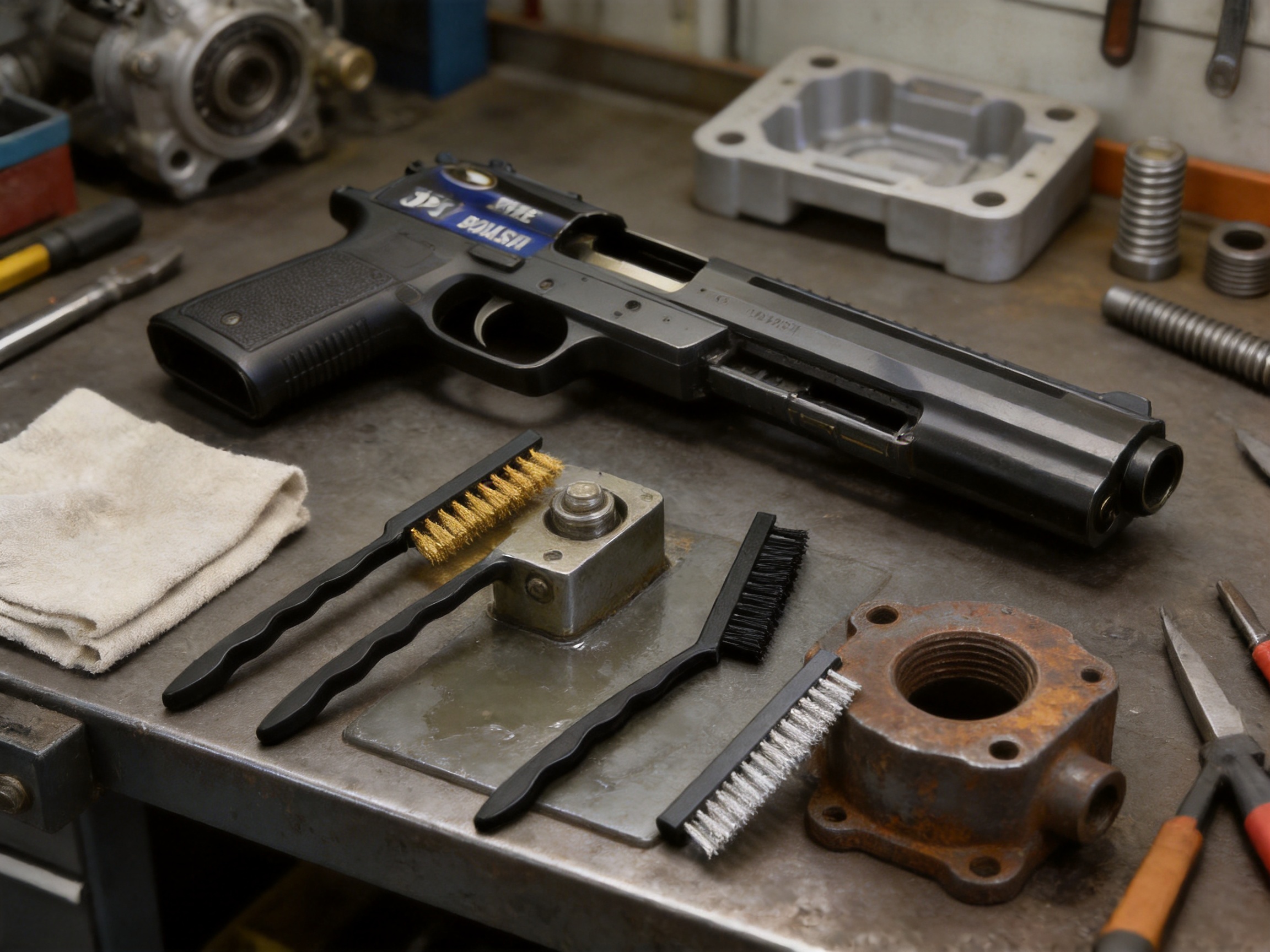
The product can be supplied with brass wire, stainless steel wire, or nylon bristles. Brass is intended for moderate cleaning, stainless steel for more aggressive rust and oxidation removal, and nylon for gentler cleaning of coated, painted, or sensitive surfaces.
The total length is approximately 210 millimeters, or about 9 inches. This extended format provides additional reach during firearm, hardware, and industrial maintenance work.
The brush head diameter is approximately 30 millimeters, and the bristle length is approximately 83 millimeters. These dimensions provide a broad working area for general cleaning tasks.
Yes. The brush is designed for firearm maintenance applications such as cleaning suitable receiver, barrel exterior, magazine, trigger, and hardware areas. Users must select the correct bristle material and follow the firearm manufacturer’s instructions. The brush should not automatically be treated as a replacement for a properly sized bore brush or cleaning rod.
Nylon is generally the preferred option for coated, painted, polymer, or otherwise sensitive surfaces because it provides a lower-abrasion cleaning action. Users should still test the brush on an inconspicuous area when the finish is important.
Stainless steel bristles are intended for durable surfaces affected by heavy rust, oxidation, or stubborn debris. They are more aggressive than brass and nylon, so they should not be used indiscriminately on soft metals, polished finishes, paint, or sensitive coatings.
Yes. The product can be supplied as a three-piece set, with blister card or color box packaging options. The set can include different bristle materials for different cleaning requirements.
Yes. Single-piece bulk packaging is available for wholesalers, industrial users, distributors, and buyers that plan to repackage the product under their own label.
OEM and private-label customization are supported. Buyers can discuss customized logos, packaging, colors, set configurations, and related product requirements with the factory. Minimum order quantities and production conditions should be confirmed before placing an order.
The brush can be used in firearm maintenance, hardware cleaning, mold maintenance, mechanical servicing, workshop repair, industrial maintenance, cleaning, polishing, and light surface preparation.
The handle is made from plastic and is generally supplied in black. Its extended shape supports reach and controlled hand operation.
Buyers should inspect the overall dimensions, handle finish, bristle attachment, bristle uniformity, packaging accuracy, material identification, and cleaning performance. Samples should be tested on the intended surfaces before confirming a large order.
The factory provides export-oriented production and states that its products are supplied to more than 50 countries and regions. It supports bulk orders, retail packaging, OEM, and ODM requirements for overseas buyers.
No. Different surfaces and contamination levels require different cleaning approaches. Nylon, brass, and stainless steel each have distinct advantages. Using the correct material helps improve cleaning results and reduce the risk of surface damage.
The 9-Inch Gun Brush Brass Steel Nylon Cleaning Kit is a versatile maintenance tool built around material choice, extended reach, and broad cleaning coverage. Its brass, stainless steel, and nylon configurations allow users to select an appropriate level of cleaning action for firearms, hardware, molds, mechanical parts, and industrial maintenance applications.
The approximately 210-millimeter length provides useful reach, while the 30-millimeter head diameter and 83-millimeter bristle length support efficient surface coverage. The plastic handle offers a practical grip for repeated hand use, and the availability of bulk and three-piece retail packaging makes the product suitable for multiple distribution models.
Compared with a basic single-material brush, this product family gives users and distributors greater flexibility. Nylon supports gentle cleaning, brass provides a balanced option for general maintenance, and stainless steel delivers stronger action for heavy rust and oxidation on compatible surfaces. The consistent 9-inch format also makes the versions easy to organize, market, and combine into a professional cleaning set.
Behind the product is a factory with a history dating back to 1999, more than 26 years of manufacturing experience, semi-automatic and automated production systems, international export experience, and OEM and ODM capabilities. These strengths make the product suitable not only for individual maintenance users but also for wholesalers, retailers, professional workshops, gunsmithing suppliers, industrial distributors, and private-label brands seeking a dependable cleaning-tool supplier.
For the best results, buyers should select the correct bristle material, confirm dimensions and packaging requirements, evaluate samples, and ensure that the final product matches the intended surface and application. When used as part of a complete maintenance system, this 9-inch multi-material brush can provide a practical balance of cleaning efficiency, handling comfort, product flexibility, and commercial value.
1. Product specification sheet for the 9-Inch Gun Brush Brass Steel Nylon Cleaning Kit, including dimensions, materials, handle construction, packaging options, and applications.
2. Manufacturer-provided company information concerning production history, export experience, OEM services, ODM services, and manufacturing systems.
3. General firearm maintenance principles concerning unloaded equipment, manufacturer instructions, appropriate cleaning tools, and surface compatibility.
4. General industrial brush-selection principles concerning brass wire, stainless steel wire, nylon bristles, abrasion levels, and surface protection.
5. General workshop maintenance practices for rust removal, hardware cleaning, mold care, mechanical-part preparation, tool inspection, and brush storage.