English
 русский
 Español
 عربى

HUNTACE HUNTACE HUNTACE HUNTACE HUNTACE
HUNTACE HUNTACE HUNTACE HUNTACE

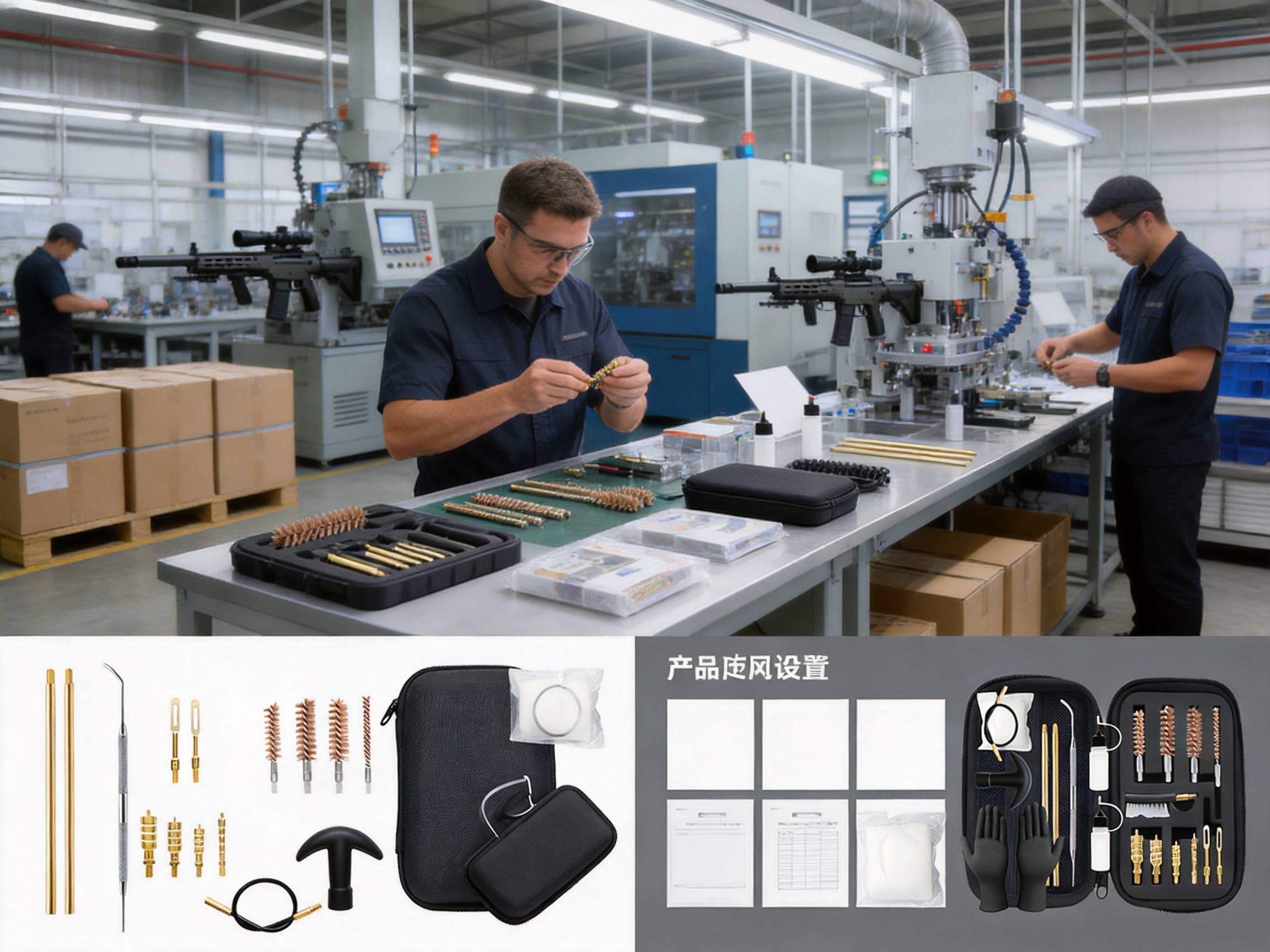
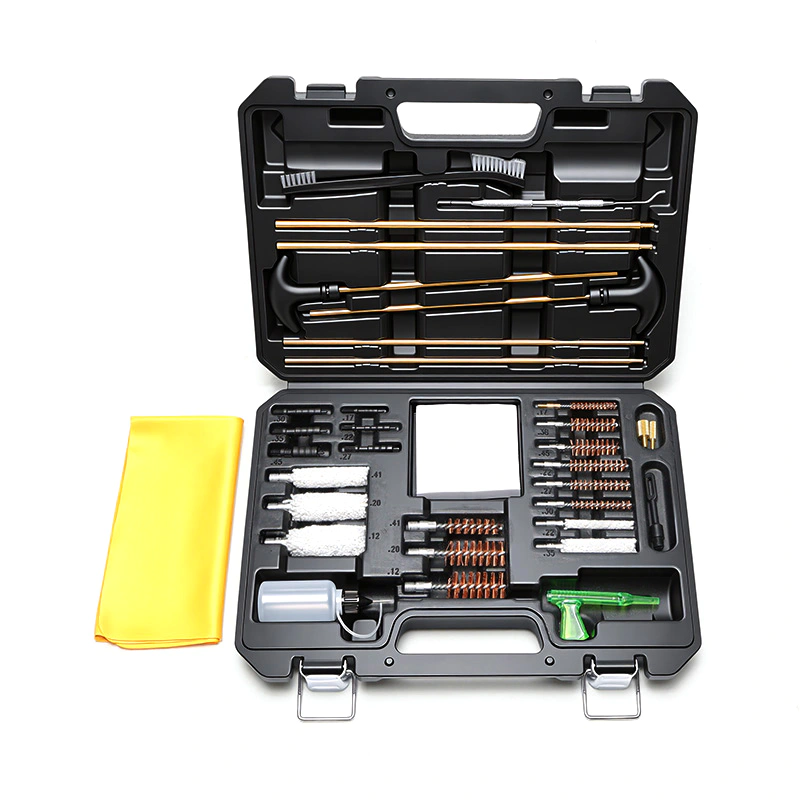
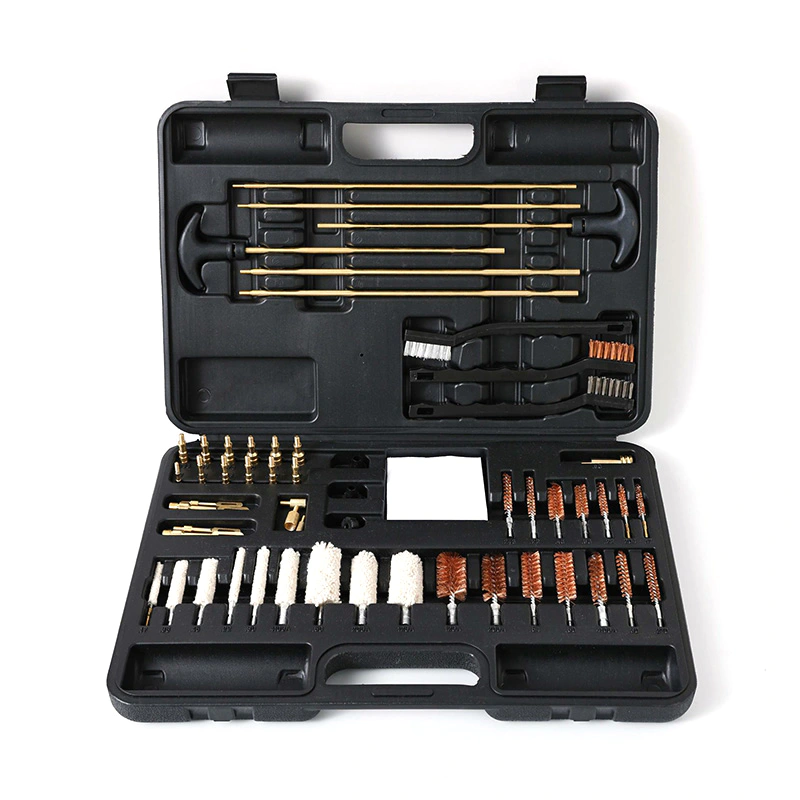
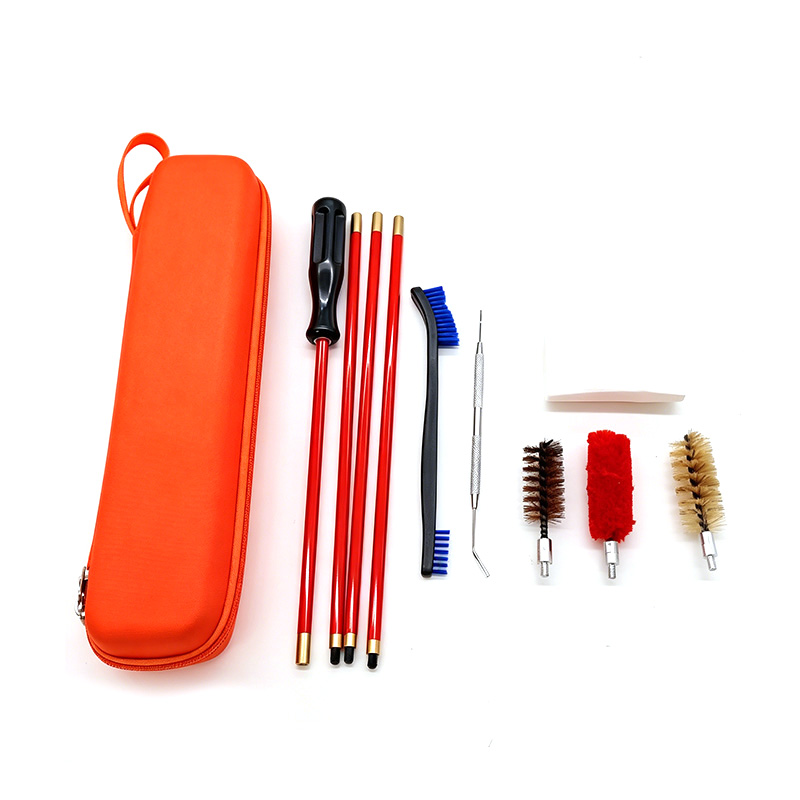
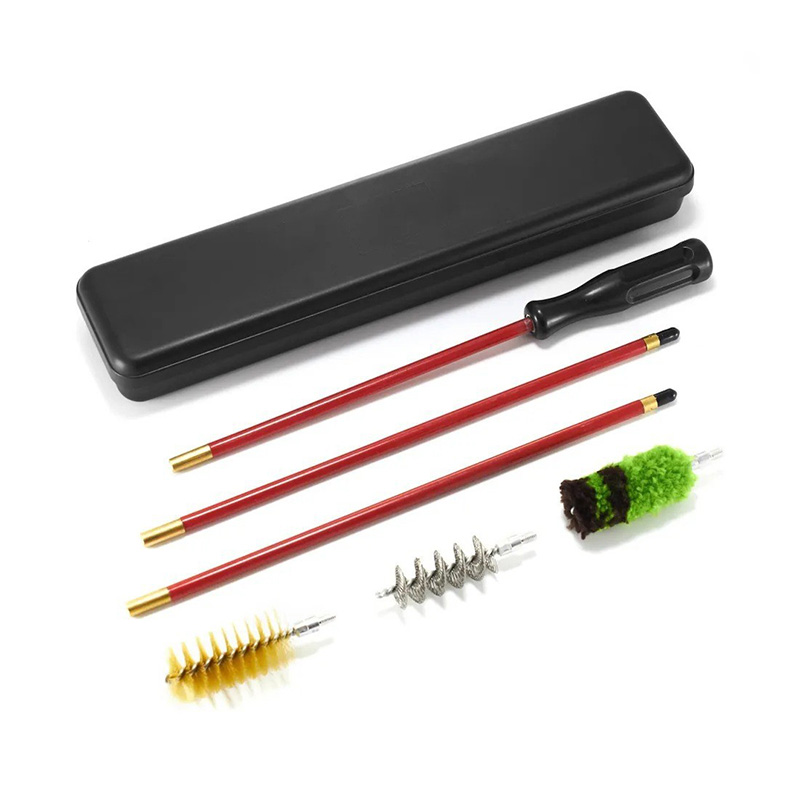
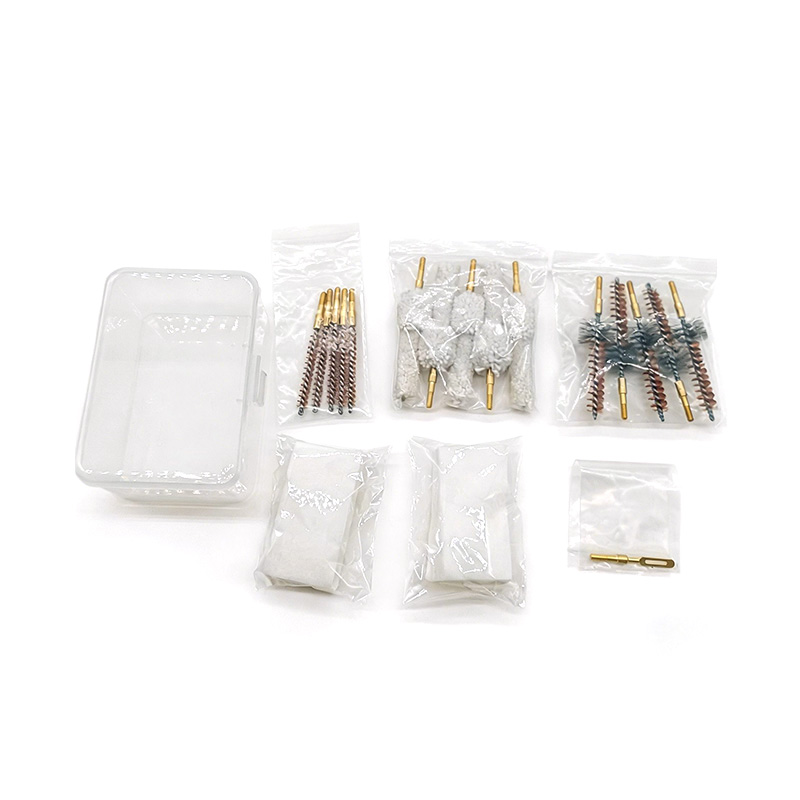
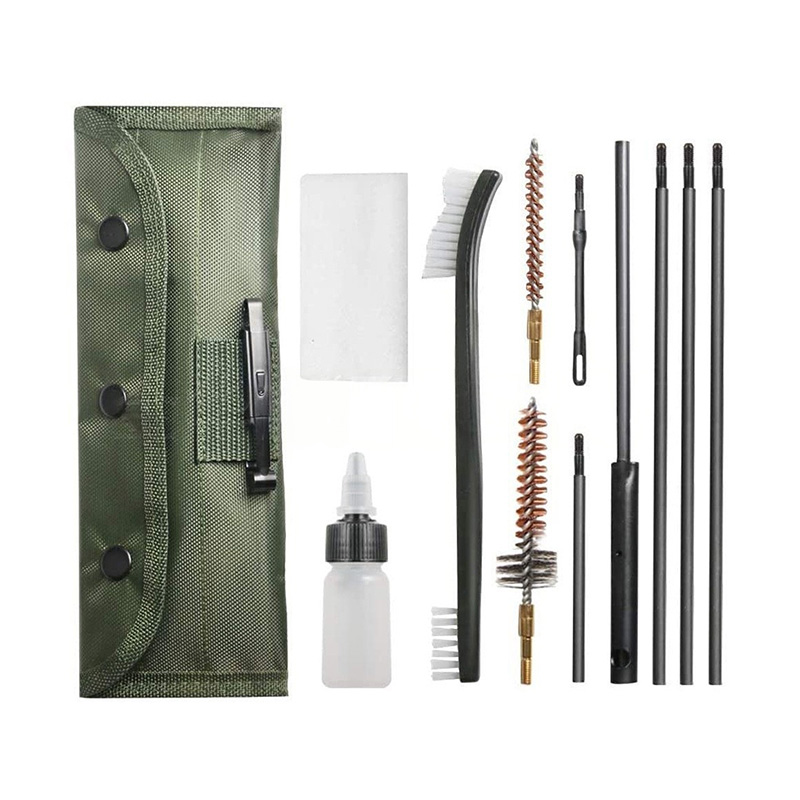
Reliable firearm maintenance depends on using the right tools for the job. A cleaning kit must remove carbon fouling, powder residue, copper deposits, and surface contamination without damaging the barrel, rifling, or other sensitive components. It must also be organized enough for routine workshop use while remaining compact and portable for shooting trips, field operations, travel, and outdoor storage. The Copper Wire Gun Cleaning Kit Set is designed to meet these requirements through a practical combination of phosphor bronze brushes, nylon brushes, a brass cleaning rod, cleaning patches, a hook, a T-handle, and an oil bottle.
Rather than relying on one brush type or a single cleaning method, this set provides several tools for different stages of firearm care. Copper and bronze brush components can help loosen stubborn fouling, nylon brushes are suitable for gentler cleaning and detailed work, and the rod provides controlled access through the bore. The patches and oil bottle support the final wiping, lubrication, and preservation stages. All components are arranged in a compact black carrying case with an EVA foam interior, making the set easy to store, transport, and present as a complete maintenance solution.
For wholesalers, distributors, online sellers, firearm accessory brands, and OEM buyers, the kit also offers commercial advantages. It is supplied by Jinhua Tongshun Tool Factory, a China-based manufacturer with more than 26 years of experience in gun cleaning tools and related accessories. The factory integrates research and development, production, and sales, and supports OEM and ODM programs involving products, packaging, and logos. This combination of a complete product configuration, factory-direct supply, and customization capability makes the kit suitable for a wide range of international business requirements.
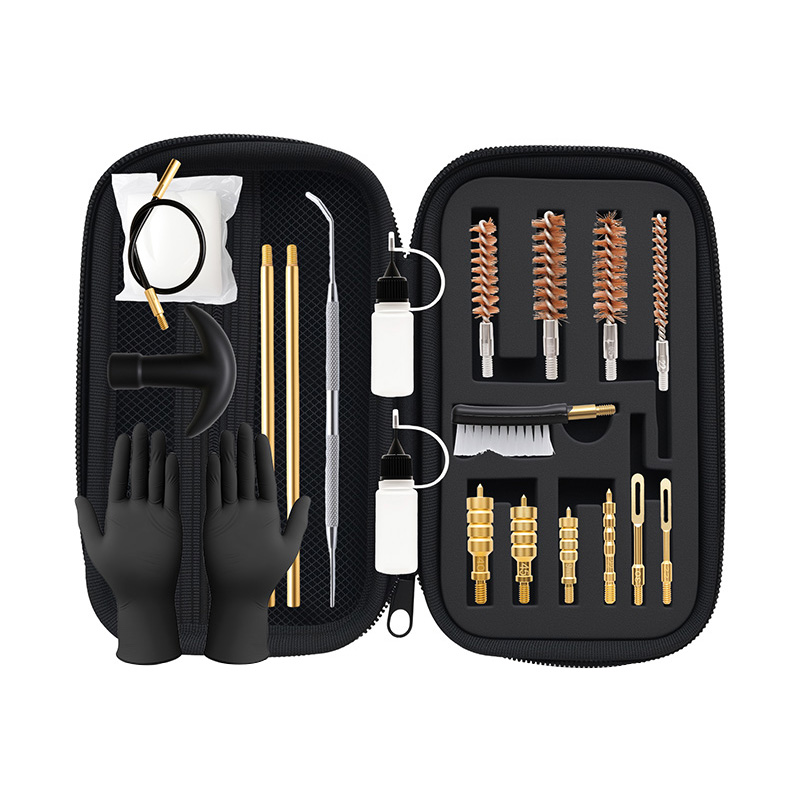
Copper Wire Gun Cleaning Kit Set ( Hot-Seller)
Firearm cleaning is not limited to passing a single patch through the barrel. Different forms of fouling have different physical characteristics, and each stage of maintenance may require a different tool. Powder residue can accumulate in the bore and action. Copper deposits can adhere to the bore surface after repeated firing. Dust, lubricant residue, and environmental contamination can collect around moving parts and external surfaces. A complete kit allows the user to address these conditions in a logical sequence instead of purchasing separate tools from multiple sources.
The Copper Wire Gun Cleaning Kit Set combines coarse and gentle cleaning options in one compact package. The brush assortment helps users select an appropriate tool according to the cleaning task. A metal brush can assist with loosening stubborn residue, while a nylon brush can be used where a softer contact surface is preferred. Cleaning patches provide a convenient way to wipe loosened contamination and check the condition of the bore during maintenance.
The brass cleaning rod offers a firm yet practical support for bore cleaning. Brass is commonly selected for cleaning rods because it provides useful rigidity while being less aggressive than harder steel tools when properly used. The rod also helps the user maintain a controlled cleaning direction and reach the internal barrel surface more efficiently than a short handheld brush alone.
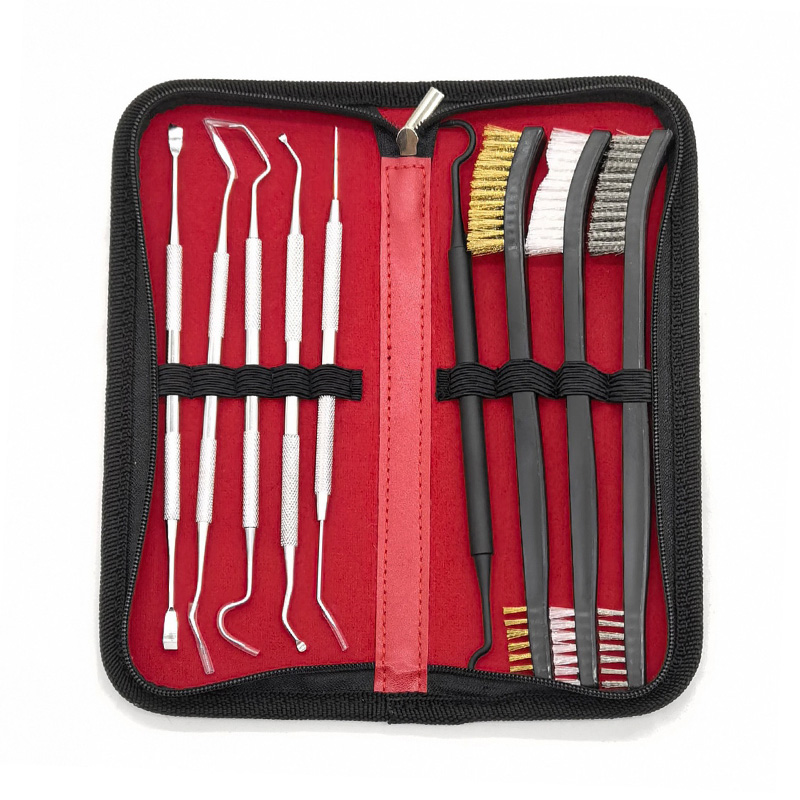
A hook and T-handle extend the functionality of the set. The hook can assist with handling patches, reaching narrow areas, or removing accumulated debris from suitable external components. The T-handle improves grip and control during brushing and patching. Together, these accessories reduce the need for improvised tools and help create a more consistent maintenance routine.
The oil bottle completes the basic maintenance sequence. After cleaning and drying, a suitable firearm lubricant or protective oil may be applied according to the firearm manufacturer’s instructions. The bottle provides a dedicated container for controlled application and helps keep lubricant available in the same case as the other maintenance tools.
The set is identified by product code GK43 and is available in two configuration directions: a brass-based option and a nylon-based option. This gives buyers flexibility when selecting a configuration for a specific customer group, firearm maintenance preference, or market positioning strategy. The brass-focused version is suited to buyers seeking a more traditional metal-brush configuration, while the nylon-focused version provides an option for customers who prefer gentler synthetic bristles for routine cleaning and surface care.
| Product item | Specification or function |
| Product name | Copper Wire Gun Cleaning Kit Set |
| Product code | GK43 |
| Primary category | Gun Cleaning Kits |
| Brush types | Phosphor bronze, copper wire, and nylon configurations |
| Cleaning rod | Brass rod for controlled bore cleaning |
| Additional tools | Cleaning hook and T-handle |
| Consumable accessories | Cleaning patches and oil bottle |
| Storage case | Black case with EVA foam interior |
| Case dimensions | Approximately 11 × 17 × 4 cm |
| Handle material | PP |
| Product color | Black |
| Manufacturing origin | China |
| Customization support | OEM and ODM product, packaging, and logo services |
The compact case measures approximately 11 × 17 × 4 cm. Its relatively small footprint makes it suitable for storage in a range bag, workshop drawer, equipment cabinet, vehicle compartment, or travel case. The EVA foam interior helps hold the components in an organized arrangement, reducing movement during transportation and making it easier to identify missing tools before or after use.
Compact organization is particularly important for commercial buyers. A loose collection of brushes, rods, patches, and small accessories may be difficult to display and easy to misplace. A molded or fitted interior gives the product a more complete retail appearance and helps retailers present it as a finished kit rather than a collection of unrelated components.
One of the principal advantages of this product is the combination of metal and nylon brush options. A single brush material cannot provide the same balance of cleaning strength, flexibility, and surface compatibility across every maintenance task. By offering multiple materials, the kit gives users more control over the cleaning process.
Phosphor bronze and copper wire brushes are widely used in firearm maintenance because their bristles can provide effective mechanical action while remaining appropriate for many bore-cleaning applications when used correctly. They can help loosen powder residue, carbon fouling, and deposits that have become attached to the internal surface. The brush is moved through the bore with a compatible rod and appropriate technique, allowing the bristles to contact areas that a loose patch may not fully reach.
The value of a metal brush is especially apparent when residue has remained in place for an extended period. A patch can remove loose contamination, but hardened deposits often require brushing before they can be wiped away. The metal bristles help break up this material and prepare the bore for subsequent patching.
Phosphor bronze is also valued for its practical balance of resilience and flexibility. It can maintain useful brush action through repeated maintenance cycles while conforming to the general shape of the bore. As with any cleaning accessory, users should select the appropriate brush size and follow safe cleaning procedures for the firearm being serviced.
Nylon brushes provide a softer alternative for routine cleaning, light residue removal, and areas where a less abrasive contact surface is preferred. They are useful for sweeping away loose particles and working around surfaces that may not require a metal brush. Nylon is also suitable for detailed cleaning tasks where flexibility and gentle contact are more important than maximum scrubbing force.
Including nylon options improves the kit’s versatility for distributors serving different user preferences. Some customers may primarily want a soft brush for routine maintenance, while others may prefer a combination of nylon and metal tools. Offering both in a coordinated product family makes it easier for retailers to create product listings, bundles, and configuration choices without sourcing from several suppliers.
A practical cleaning sequence often begins with inspection and dry removal of loose material. A nylon brush can assist with this stage. More persistent residue may then be addressed with a suitable phosphor bronze or copper wire brush. Cleaning patches can be used afterward to remove loosened fouling and check whether the bore is becoming clean. A final dry patch may be followed by the application of an appropriate protective lubricant, depending on storage conditions and the firearm manufacturer’s recommendations.
This staged approach is an important advantage over basic kits containing only one brush and a few patches. It gives the user a greater range of options and supports more controlled maintenance. It can also reduce the temptation to use an overly aggressive tool for a task that could be completed with a softer brush.
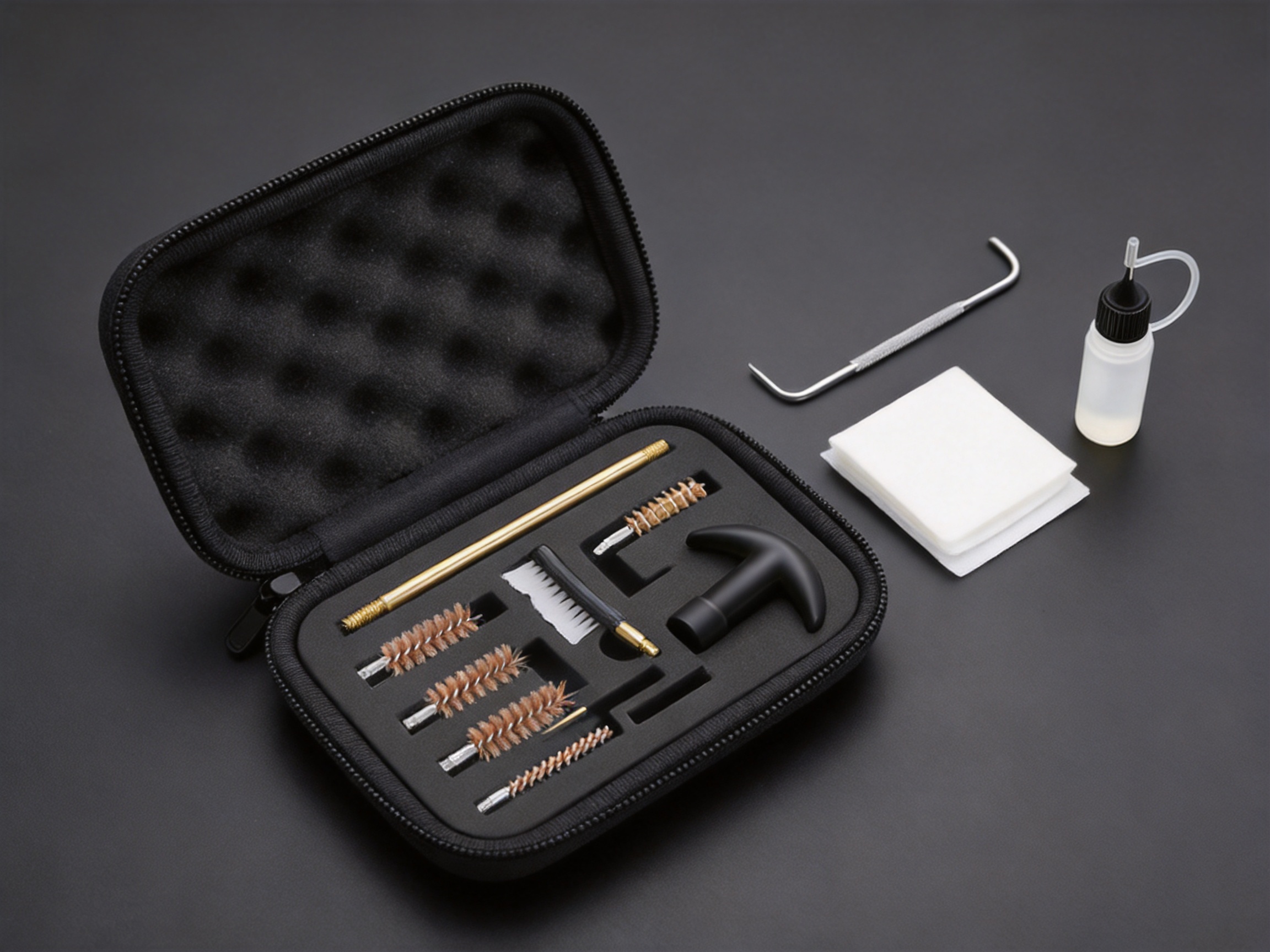
The cleaning rod is a central component of a firearm maintenance kit because it transfers the user’s movement to the brush or patch inside the bore. A rod that is too flexible can make cleaning inefficient, while a rod that is poorly handled can cause unnecessary contact with the barrel crown or internal surfaces. The brass rod included in this set is intended to provide practical rigidity and controlled operation for routine cleaning work.
Brass is commonly used in cleaning equipment because it offers a useful combination of strength, machinability, and relatively moderate hardness. When used with an appropriate brush, correct alignment, and reasonable pressure, it can support effective cleaning while helping users avoid the unnecessary risk associated with unsuitable improvised metal tools.
The rod works together with the T-handle and brush accessories. The T-handle gives the operator a more secure grip, particularly when the brush is passing through resistant fouling. It can also improve control during slow, deliberate patching. Better control helps the user maintain a straight cleaning motion and reduces the likelihood of forcing the tool at an angle.
For safe use, the cleaning rod should be selected and assembled according to the firearm and caliber requirements. Users should verify that the brush and accessory dimensions are compatible before beginning maintenance. The product information identifies the set as GK43 with copper and nylon fitting options, but exact caliber compatibility should be confirmed with the supplier or product packaging for each order configuration.
The bore-safe character of the kit is based on the intended materials and controlled cleaning design. It does not remove the need for proper technique. Users should avoid excessive force, avoid dragging debris unnecessarily through sensitive areas, and follow the firearm manufacturer’s cleaning instructions. These points are important for both product education and responsible retail communication.
Many firearm accessories are used in locations where space is limited. A range bag may already contain ammunition containers, hearing protection, eye protection, tools, targets, and other equipment. A bulky cleaning system can become inconvenient, while loose components can disappear in the bottom of a bag. The compact EVA case addresses both problems by keeping the set small and organized.
The black exterior provides a neutral, professional appearance suitable for retail presentation and private-label branding. Inside, the EVA foam layout helps position the brushes, rod, hook, patches, oil bottle, and handle in a defined arrangement. This arrangement improves accessibility and makes it easier to confirm that all components are present before packing the kit away.
EVA is commonly selected for protective cases because it is lightweight, resilient, and capable of cushioning small tools. The foam interior can help reduce impact and friction during ordinary transportation. It also creates a more premium impression than a simple plastic bag or unstructured carton, which can improve the perceived value of the complete set.
The approximate case size of 11 × 17 × 4 cm supports several use scenarios. A recreational shooter can keep the kit in a range bag. A professional user can place it in a service or field equipment case. A retailer can display the compact package on a shelf without allocating excessive space. For e-commerce sellers, the compact format may also simplify warehouse storage and order fulfillment.
From a wholesale perspective, the product competes through configuration completeness, compact organization, material variety, and factory-direct support. A low-cost brush alone may have a lower purchase price, but it does not provide the same accessory coverage or retail-ready presentation. The GK43 set brings several essential tools together, allowing a buyer to offer a more useful product at a competitive overall value.
The first advantage is product completeness. The set includes cleaning brushes, a rod, a hook, a T-handle, patches, and an oil bottle. Buyers do not need to assemble a basic maintenance assortment from several separate suppliers. This can reduce purchasing complexity, simplify quality communication, and support a more consistent customer experience.
The second advantage is the choice between metal and nylon configurations. Retailers can position one version for deep cleaning and another for routine maintenance, or they can list both versions as options under one product family. This approach supports different price points and customer expectations while using a common case format and product identity.
The third advantage is portability. A compact case is easier to store, transport, display, and ship than a large toolbox-style kit. It is appropriate for online marketplaces, sporting goods distributors, shooting clubs, outdoor retailers, and private-label programs seeking a practical maintenance accessory.
The fourth advantage is factory support. Jinhua Tongshun Tool Factory has experience producing gun cleaning kits, barrel cleaning brushes, and related cleaning accessories. The company reports exports to more than 50 countries and regions and provides OEM and ODM services. For B2B buyers, this can create a more direct communication channel for specifications, packaging development, logo application, and repeat-order planning.
The fifth advantage is manufacturing continuity. A manufacturer with established production systems can be better positioned to support stable supply than a trading source that depends on several unrelated factories. Consistent sourcing is valuable for retailers that need to maintain the same product appearance, packaging, and accessory configuration over time.
| Buyer concern | How the GK43 kit responds |
| Need for a complete maintenance product | Combines brushes, rod, handle, hook, patches, and oil bottle |
| Different customer cleaning preferences | Offers brass-based and nylon-based configurations |
| Storage and transport limitations | Uses a compact case measuring approximately 11 × 17 × 4 cm |
| Retail presentation | Provides a coordinated black case with EVA foam interior |
| Private-label requirements | Supports OEM and ODM product, packaging, and logo customization |
| Supply continuity | Backed by an established factory with large-order production capability |
| International distribution | Designed for wholesale, export, marketplace, and brand-owner applications |
Jinhua Tongshun Tool Factory was established in 1999 and specializes in gun cleaning kits, barrel cleaning brushes, and related maintenance accessories. Its long operating history gives the company experience across product development, component selection, assembly, quality control, packaging, and export coordination. These capabilities are important because a cleaning kit is made up of multiple small parts, and the overall product quality depends on how consistently those parts work together.
The company operates in Jinhua, Zhejiang Province, an established manufacturing region in China. Its facility uses semi-automatic and fully automated production systems to support large-scale orders. Automation can improve repeatability in suitable production steps, while semi-automatic operations allow flexibility when products require configuration changes, manual inspection, or customized packaging.
A mixed production model is especially useful for OEM and ODM work. Standardized machinery can support stable output for common components, while trained production personnel can manage product variations, special packaging instructions, and customer-specific assembly requirements. This balance helps the factory serve both regular catalog products and customized programs.
Quality control begins with incoming materials and components. For a multi-part cleaning kit, the supplier must consider brush wire, nylon bristles, handles, rods, patches, bottles, case materials, and packaging. Each component should be checked for appearance, fit, basic function, and consistency with the approved specification. Component control is important because a defect in one small accessory can affect the perceived quality of the entire set.
During assembly, the factory can verify that the components are correctly matched to the selected configuration. Metal and nylon versions should be packed with the appropriate brush fittings and accessory quantities. The case layout should be checked so that each item fits correctly within the EVA interior. This process reduces the possibility of mixed configurations, missing components, or inconsistent presentation.
Final inspection is also important. The completed kit can be reviewed for case appearance, tool completeness, handle attachment, brush condition, rod finish, patch quantity, bottle condition, and overall packaging quality. For buyers ordering private-label products, final inspection can additionally include logo placement, artwork, barcode information, carton markings, and packaging instructions.
The factory’s experience with export markets provides another operational advantage. International buyers may require different carton labels, documentation, packaging languages, or order quantities. A supplier familiar with global distribution can help coordinate these requirements more efficiently than a manufacturer with only domestic experience.
The GK43 platform can serve as a foundation for private-label development. Buyers may seek to place their own logo on the case, adjust the packaging design, create a branded instruction card, or develop a retail presentation aligned with their existing product range. The factory’s OEM and ODM services are intended to support these requirements.
OEM customization generally begins with an established product configuration. A buyer may use the standard case, brush selection, and accessory set while applying a private label and customized packaging. This route is suitable for brands that want a relatively efficient launch with limited product engineering changes.
ODM development allows a buyer to request broader changes. These may include a different brush combination, alternative case color, modified accessory layout, special logo treatment, revised packaging dimensions, or a market-specific product bundle. The feasibility of each change should be confirmed during the quotation and sampling process.
Packaging customization can improve product positioning. A basic maintenance kit may be marketed toward recreational shooters, professional users, outdoor sports customers, or general firearm owners. Each customer group may respond to different design language, instructions, and package information. A factory capable of coordinating the product and packaging can help buyers maintain a consistent final presentation.
Before mass production, buyers should approve a sample or pre-production specification covering the product code, configuration, materials, dimensions, logo artwork, case layout, accessory quantity, and packaging. Written approval helps minimize misunderstandings and provides a reference for later repeat orders.
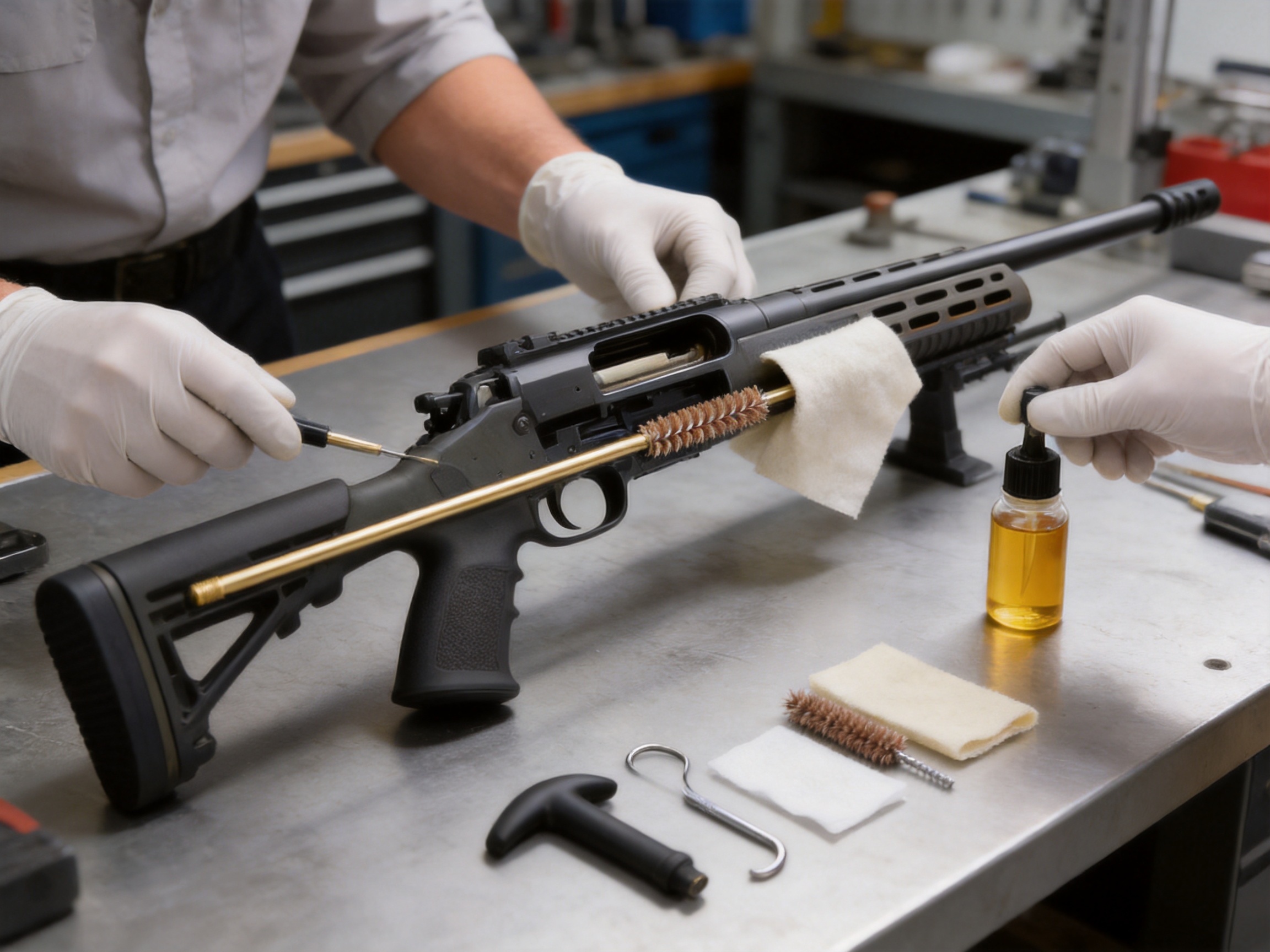
The product is suitable for multiple distribution channels because its compact format and complete configuration are easy to explain to end users. Online marketplaces can present the kit as a portable firearm maintenance solution with clear images of the case and included accessories. Sporting goods stores can place it beside firearm accessories, range bags, storage products, and cleaning chemicals. Wholesale distributors can include it in catalogs for hardware, outdoor, hunting, and shooting equipment buyers.
For marketplace sellers, the product offers several listing advantages. The complete accessory set creates multiple visual points for product photography. The black case gives the listing a coordinated appearance. The brass and nylon configurations can be presented as variations, allowing sellers to test different customer preferences while keeping the same basic product family.
For physical retailers, the case size supports efficient shelf use. The product can be displayed individually or grouped with related maintenance products. Its portable appearance also makes it suitable for end-cap displays, seasonal promotions, shooting-event merchandising, and gift-oriented accessory sections.
For distributors, the factory’s ability to support repeat production and OEM programs can simplify brand management. A distributor may begin with the standard product for market testing and later move to a customized package after demand has been established. This staged approach can reduce initial development risk while preserving a path toward brand differentiation.
The product can also be included in broader maintenance bundles. For example, a retailer may pair the kit with approved cleaning solvents, lubricants, storage cases, protective gloves, or range accessories. Any bundled chemical or firearm-related product should be handled and labeled according to applicable laws, safety requirements, and platform policies.
Although the kit is designed for convenient cleaning, responsible use remains essential. The firearm should be completely unloaded before maintenance begins, and the user should follow the specific instructions provided by the firearm manufacturer. The cleaning environment should be adequately lit, stable, and free from unnecessary distractions.
Users should confirm that the brush, rod, and fittings are compatible with the firearm before use. Cleaning tools should be inserted and withdrawn in a controlled manner. Excessive force should be avoided, especially when a brush or patch becomes difficult to move. The purpose of the kit is to support safe and effective maintenance, not to replace the manufacturer’s technical guidance.
After cleaning, components should be wiped or stored in a condition appropriate to the product materials. Metal accessories should be kept dry when not in use, and lubricants should be stored according to their instructions. The case should be closed after all components are returned to their designated positions. This helps protect the tools and makes the kit ready for the next maintenance session.
Retailers can improve customer satisfaction by including clear instructions on brush selection, rod handling, patch use, and storage. Product descriptions should also distinguish between routine cleaning and specialized gunsmithing work. The kit is intended for maintenance and cleaning applications; it should not be represented as a substitute for professional repair or modification services.
Durability is an important consideration for both end users and commercial buyers. A cleaning kit is expected to withstand repeated handling, assembly, brushing, patching, and transport. The use of metal and synthetic brush options allows users to select the most appropriate tool for each task, which may help reduce unnecessary wear on any single component.
The brass rod and PP handle are selected for practical use in a compact cleaning system. The rod provides a stable cleaning support, while the handle helps the user maintain grip. The case protects the small parts from becoming scattered and supports repeated organization after each use.
Long-term value also depends on replacement and replenishment planning. Cleaning patches and lubricant are consumable or replaceable items, while brushes may eventually wear after repeated use. A factory specializing in cleaning accessories can be well positioned to discuss additional brush fittings, replacement components, or related products for future orders.
For wholesalers, the ability to maintain a product family can be more valuable than a one-time low purchase price. A stable supplier can help preserve packaging consistency, manage repeat orders, and develop related items such as bore mops, cleaning rods, adapters, bronze brushes, brass brushes, nylon brushes, and cleaning cloths. This creates opportunities to expand a catalog around a recognizable maintenance category.
Factory-direct purchasing can provide buyers with more direct communication regarding product specifications, manufacturing capacity, and customization. It may also reduce the number of intermediaries involved in handling technical questions. For a product containing several components, direct communication helps clarify the exact brush materials, case dimensions, accessory quantities, packaging requirements, and configuration names.
Jinhua Tongshun Tool Factory’s product focus allows it to develop experience in a specialized category instead of treating gun cleaning kits as an incidental item. This specialization can support more informed discussions about brushes, rods, patches, bore mops, adapters, and accessory packaging.
The company’s reported export experience and production infrastructure are relevant to buyers planning international distribution. Orders for different markets may require varied cartons, labels, language materials, and packaging formats. These requirements should be discussed during the inquiry stage, but an established export-oriented manufacturer is generally better prepared to coordinate such details.
Factory-direct supply can also support cost efficiency. By consolidating the brush set, rod, case, and accessories into one production program, buyers may simplify purchasing and packaging operations. Final pricing will depend on quantity, configuration, customization, packaging, and shipping terms, so buyers should request a detailed quotation based on their specific requirements.
Before placing an order, buyers should confirm which GK43 configuration is required. The buyer should specify whether the order uses the brass-based version, the nylon-based version, or a combination of both. The brush materials and fitting dimensions should be clearly stated in the purchase specification.
Case details should also be confirmed. Buyers should verify the approximate 11 × 17 × 4 cm dimensions, black case color, EVA interior layout, logo position, and packaging method. If a private label is required, the buyer should provide approved artwork in the requested format and confirm whether the logo will appear on the case, insert card, outer package, or more than one location.
Accessory quantities should be listed. The order specification should identify the number and type of brushes, cleaning rod, hook, T-handle, oil bottle, and patches. This is particularly important when a standard configuration is modified for a private-label program.
Quality requirements should be discussed before production. Buyers may request a pre-production sample, approved reference sample, inspection standard, carton specification, and agreed method for handling nonconforming goods. Clear communication at this stage supports smoother production and reduces uncertainty during delivery.
Shipping and compliance matters should be reviewed according to the destination market. The oil bottle may require special handling if supplied with contents, while an empty bottle may be treated differently. Buyers should confirm the status of any included liquid, labeling requirements, packaging rules, and marketplace restrictions before placing an international order.
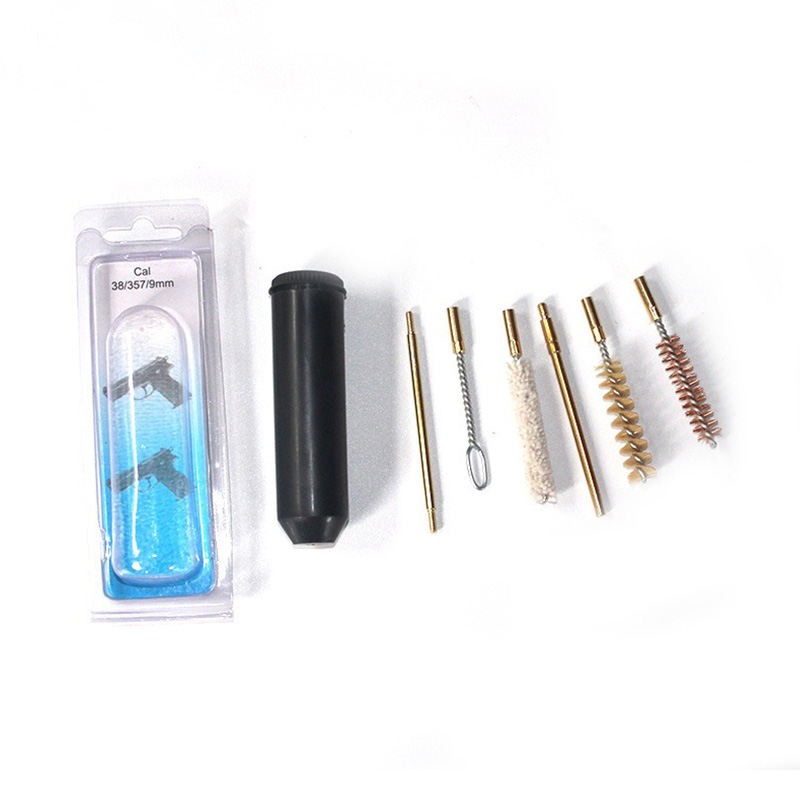
The set includes phosphor bronze or copper wire brushes, nylon brush options depending on configuration, a brass cleaning rod, cleaning hook, T-handle, oil bottle, and cleaning patches. The components are organized in a compact black case with an EVA foam interior.
The product code is GK43. The product information identifies copper fitting and nylon fitting configurations under this code.
Yes. Two main configuration directions are available: a brass-based option and a nylon-based option. Buyers should confirm the precise brush combination and accessory contents when requesting a quotation.
The kit is designed to assist with carbon fouling, powder residue, copper deposits, loose debris, and general contamination associated with routine firearm maintenance. The suitable brush should be selected according to the cleaning task and firearm manufacturer’s instructions.
Compatibility depends on the firearm, caliber, brush fitting, and cleaning procedure. Buyers and end users should confirm dimensions and application requirements before use. The brass rod is intended for controlled bore cleaning, but proper technique remains necessary.
The case measures approximately 11 × 17 × 4 cm. Buyers should confirm final production dimensions if they require a precise retail package size or shipping calculation.
The listed handle material is PP, or polypropylene. The handle is designed to provide a practical grip during routine cleaning tasks.
Yes. The compact black case and EVA foam interior help keep the tools organized and portable. The kit can be stored in a range bag, equipment cabinet, vehicle compartment, or workshop drawer.
Jinhua Tongshun Tool Factory provides OEM and ODM services, including customized products, packaging, and logos. The exact customization options, minimum order quantity, sampling process, and lead time should be confirmed with the factory.
The factory operates semi-automatic and fully automated production systems and reports experience with large-scale orders. It has more than 26 years of manufacturing experience and exports products to more than 50 countries and regions.
The kit is intended for routine firearm cleaning and maintenance. It should not be treated as a substitute for professional gunsmithing equipment, repair services, or technical training. Users should follow the firearm manufacturer’s instructions and seek qualified assistance for specialized work.
Buyers should request a written specification or sample identifying the brush materials, fittings, rod, handle, hook, patches, oil bottle, case layout, packaging, logo treatment, and accessory quantities. This approved reference can be used for production and repeat orders.
The Copper Wire Gun Cleaning Kit Set provides a practical and commercially attractive solution for firearm maintenance. Its combination of phosphor bronze or copper wire brushes, nylon brushes, brass cleaning rod, cleaning patches, hook, T-handle, and oil bottle gives users a more complete system than a basic single-brush product. The compact EVA-lined case improves portability, organization, and retail presentation.
Its main competitive strengths are configuration flexibility, multi-material brush selection, controlled bore-cleaning support, compact storage, and suitability for different sales channels. The product can serve recreational shooters, outdoor users, range customers, maintenance retailers, distributors, and private-label brands seeking a coordinated cleaning accessory.
Behind the product is Jinhua Tongshun Tool Factory, an established manufacturer founded in 1999 and focused on gun cleaning tools and related accessories. Its manufacturing facility uses semi-automatic and fully automated production systems, while its OEM and ODM capabilities support customized products, packaging, and logos. Experience in international export and large-order production further strengthens its position as a factory-direct supply partner.
For buyers seeking a reliable combination of product completeness, portability, customization potential, and supply support, the GK43 kit offers a strong foundation for wholesale and branded firearm maintenance programs. Final specifications, compatibility, packaging, and compliance requirements should always be confirmed before production and distribution.
1. Product specification for Copper Wire Gun Cleaning Kit Set, product code GK43, supplied in the provided manufacturer information.
2. Manufacturer profile for Jinhua Tongshun Tool Factory, including company history, production capabilities, export experience, and OEM and ODM services.
3. General firearm maintenance principles concerning unloaded handling, bore cleaning, brush selection, lubrication, and manufacturer instructions.
4. General materials information concerning phosphor bronze, copper wire, nylon bristles, brass cleaning rods, polypropylene handles, and EVA protective cases.
5. Wholesale product development practices for private-label packaging, pre-production samples, component verification, and international distribution.