English
 русский
 Español
 عربى

HUNTACE HUNTACE HUNTACE HUNTACE HUNTACE
HUNTACE HUNTACE HUNTACE HUNTACE

Narrow passages, bottle spouts, tube interiors, nozzle openings, and small mechanical channels often require a cleaning tool that is more precise than a cloth and gentler than an aggressive metal brush. The Pipe Wire Brush Rust Removal Spout Cleaner is designed for these demanding applications. It combines a 1.0 mm 304 stainless steel twisted core with durable 0.3 mm black nylon bristles to create a compact, flexible, and reliable brush for removing limescale, rust, residue, dust, and other deposits from confined spaces.
Although the brush is small and lightweight, its construction is intended for repeated industrial, commercial, household, and maintenance use. The reinforced spiral structure holds the bristles securely around the wire core, helping the brush maintain its shape during insertion, rotation, and repeated cleaning. At the same time, the nylon bristles provide a non-abrasive alternative to all-metal brushes when the internal surface must be protected from scratching.
This product is especially suitable for buyers seeking a dependable cleaning accessory for pipe maintenance, nozzle care, equipment detailing, household descaling, and specialized cleaning kits. It is also a practical OEM and private-label product for distributors, online sellers, maintenance suppliers, and brands serving Europe, Southeast Asia, the Middle East, and other international markets.
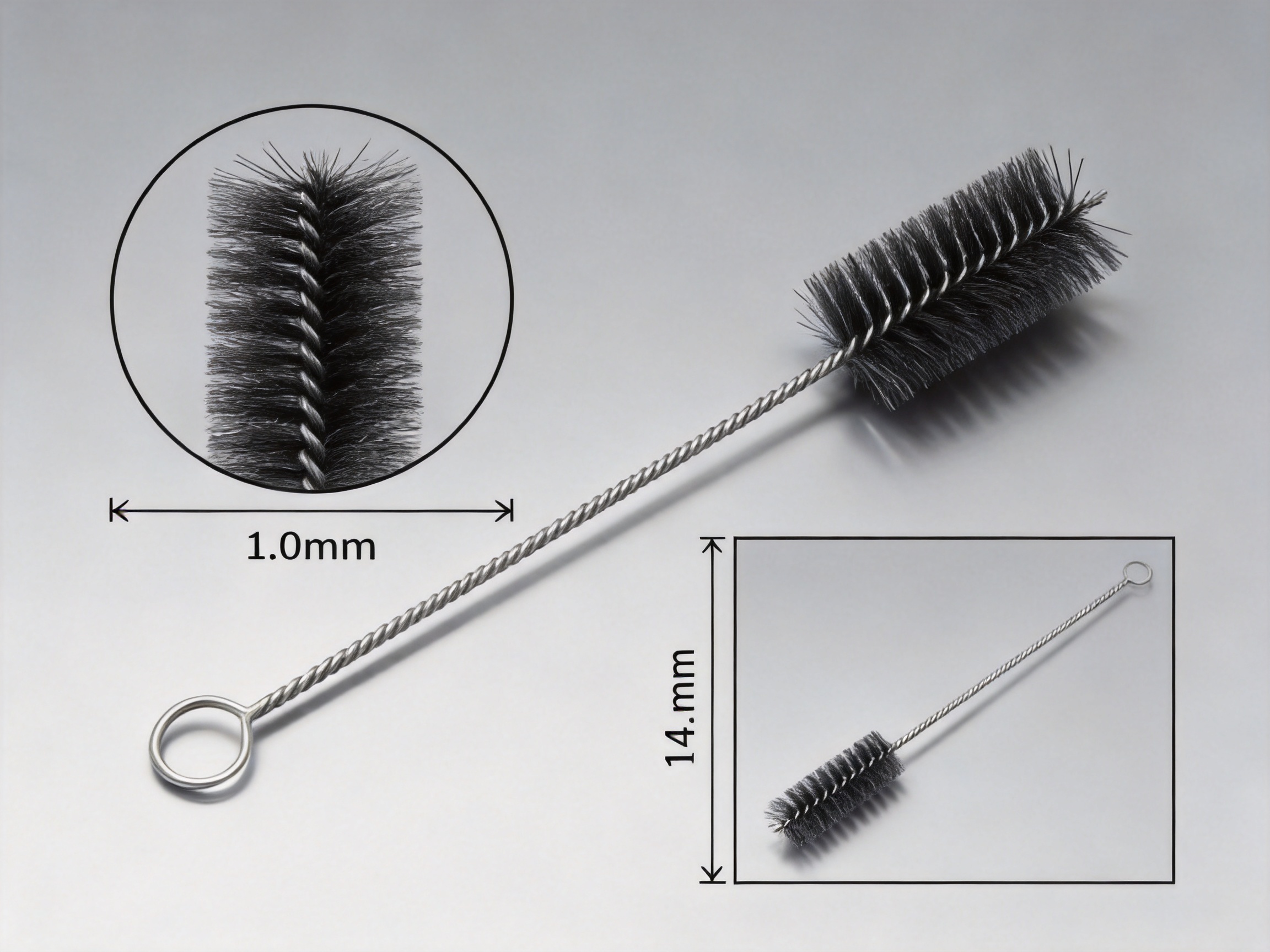
The Pipe Wire Brush Rust Removal Spout Cleaner is a narrow-channel cleaning brush engineered for applications where ordinary brushes cannot reach. Its compact brush head measures approximately 14.2 mm in diameter, while the total length is approximately 142 mm. The design is compatible with inner channels of about 11.7 mm, offering a useful balance between cleaning coverage and insertion access.
The brush uses a twisted stainless steel wire core rather than a simple straight wire. This spiral construction helps lock the nylon filaments into position, improving bristle retention and supporting a consistent cleaning profile. The 304 stainless steel core also offers good resistance to corrosion in ordinary cleaning environments, making it appropriate for contact with moisture, mild cleaning solutions, and mineral deposits.
The black nylon bristles have a specified diameter of 0.3 mm. Their flexibility enables them to conform to curved, threaded, or irregular internal surfaces. Unlike very hard steel bristles, nylon is less likely to mark soft metal, coated surfaces, plastic, ceramic, glass, or finished components when the brush is used correctly. This makes the product suitable for cleaning tasks that demand both effective agitation and surface care.
| Product Feature | Specification or Benefit |
| Product type | Nylon pipe wire brush and spout cleaner |
| Primary function | Cleaning narrow channels, spouts, tubes, nozzles, and internal passages |
| Core material | 304 stainless steel |
| Core wire diameter | Approximately 1.0 mm |
| Bristle material | Black nylon |
| Bristle diameter | Approximately 0.3 mm |
| Brush head diameter | Approximately 14.2 mm |
| Total length | Approximately 142 mm |
| Recommended channel compatibility | Approximately 11.7 mm inner channels |
| Individual product weight | Approximately 10 g |
| Standard packing quantity | 200 pieces per box |
| Standard color | Black bristles |
| Packaging format | Bulk packaging |
These dimensions make the brush practical for both manual cleaning and inclusion in a larger maintenance kit. Its approximately 10 g weight supports economical shipping and convenient handling, while the 200-piece packing quantity can help wholesalers and distributors manage inventory for recurring customer demand.
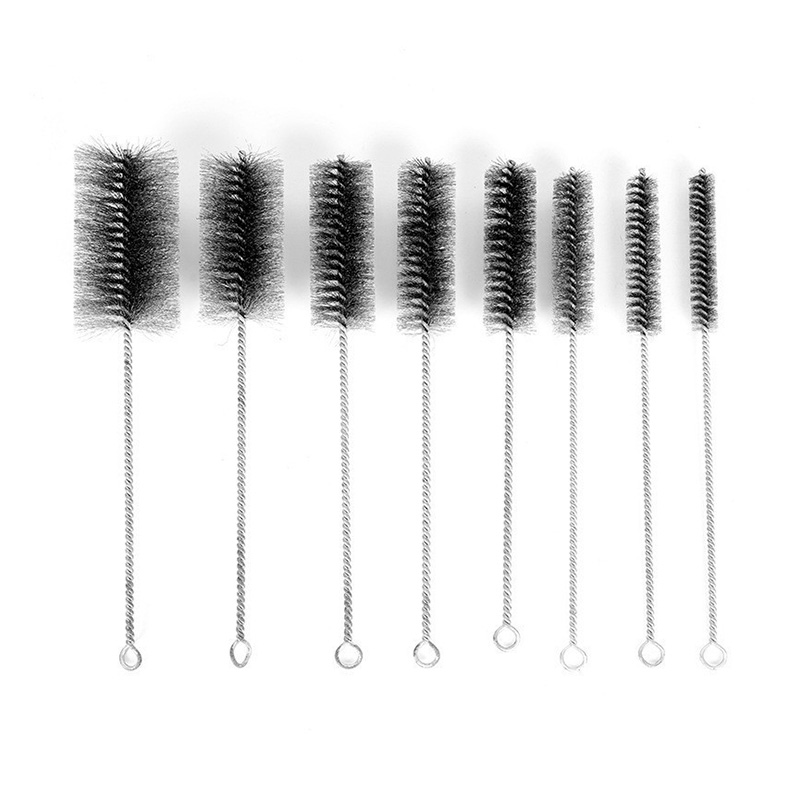
Pipe Wire Brush Rust Removal Spout Cleaner
Choosing the correct bristle material is essential when cleaning narrow passages. A brush that is too soft may fail to remove deposits, while one that is too hard may scratch or deform the surface being cleaned. Nylon occupies a useful middle position. It offers sufficient flexibility and resilience for loosening common residues while remaining comparatively gentle on many internal surfaces.
The 0.3 mm nylon filaments are able to enter small gaps and contact the inner wall of a channel as the brush is pushed, pulled, or rotated. This contact creates mechanical agitation that helps break up loose rust particles, limescale, dust, oil residue, and accumulated debris. Because the filaments flex rather than cutting sharply into the surface, they can be used in applications where a brass, bronze, or stainless steel brush might be unnecessarily aggressive.
Nylon also has practical advantages for repeated maintenance. It is lightweight, resistant to ordinary moisture, and easy to rinse after use. The black color gives the brush a professional appearance and can make visible contamination easier to identify during inspection. For OEM customers, the nylon construction can also be adapted through changes in filament stiffness, diameter, length, or color, depending on the intended market and application.
The brush can be used on a variety of surfaces and components when the operator selects an appropriate cleaning method. Typical examples include plastic spouts, metal tube interiors, bottle openings, small nozzles, drainage passages, valve channels, fittings, laboratory accessories, household hardware, and industrial equipment details.
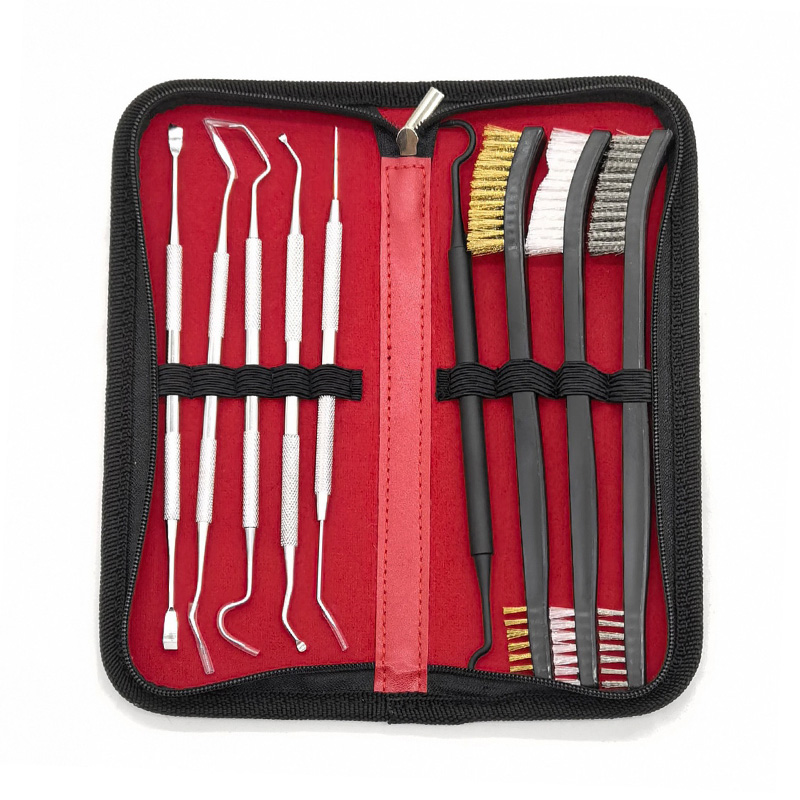
It can also be included in maintenance kits that contain several brush types. For example, a nylon brush may be selected for delicate or coated areas, while a brass or bronze brush may be reserved for more resistant deposits on compatible metal surfaces. Offering multiple materials allows distributors and end users to match the cleaning tool to the surface instead of relying on one brush for every task.
As with any cleaning accessory, the user should test the brush on an inconspicuous area when working with an unfamiliar material. Excessive force, aggressive chemicals, or unsuitable temperatures can affect the surface independently of the brush material. Correct brush selection and controlled technique are important for achieving the intended result.
The twisted core is one of the most important structural elements of this product. In a conventional low-quality brush, loose bristles may fall out quickly, the head may become uneven, or the wire may bend after limited use. A properly formed spiral core helps distribute the bristles along the working section and holds them in a stable arrangement.
The 1.0 mm 304 stainless steel wire provides a combination of strength, flexibility, and corrosion resistance. The core is firm enough to guide the brush through a narrow channel, but it can also accommodate controlled bending for certain curved or difficult-to-reach applications. This balance helps the user reach recessed areas without relying on a bulky handle or a long rigid tool.
Stainless steel is also valuable in environments where the brush may encounter water, damp residue, or mild cleaning liquids. While no tool should be left wet or exposed to harsh chemicals indefinitely, the 304 material offers a stronger resistance to ordinary corrosion than many untreated carbon steel alternatives. This contributes to a longer usable life and a more consistent appearance during storage and transport.
The spiral arrangement supports secure bristle retention by mechanically capturing the nylon filaments between the twisted portions of the wire. This design helps reduce premature shedding during normal use. Better bristle retention is important for both cleaning efficiency and workplace control because it reduces the possibility of loose filaments being left inside a component after cleaning.
Secure retention also helps maintain the working diameter. If bristles migrate or detach unevenly, the brush may no longer contact the full inner circumference of a pipe or spout. A stable bristle structure gives the user a more predictable cleaning action from one product to the next.
The core is not intended to be forced into extremely sharp bends, but its controlled flexibility can be useful when cleaning curved passages or components with offset openings. The user can guide the brush into position while applying moderate pressure. This is more practical than using a completely rigid cleaning rod for many small parts.
The combination of a flexible core and resilient nylon filaments helps the brush follow internal contours. As the brush moves, the filaments can recover their shape and continue contacting the surface. This characteristic is especially helpful when cleaning small channels that are not perfectly straight.
The main performance advantage of this brush is access. Many residues accumulate in areas that cannot be reached with a sponge, folded cloth, cotton swab, or standard household brush. The approximately 14.2 mm brush head is compact enough for narrow openings, while its approximately 142 mm overall length provides additional reach for recessed components.
During use, the brush can be inserted gently into the passage and moved back and forth. A slow twisting motion may improve contact with the inner wall, especially when the channel contains dried residue or mineral deposits. For more stubborn contamination, the user may apply a suitable cleaning solution first and allow it to soften the deposit before brushing.
The brush is suitable for removing common deposits such as light rust residue, scale, dirt, dust, product residue, and buildup from repeated use. It is not designed to replace heavy-duty machining, abrasive honing, or specialized corrosion treatment. Its role is precise mechanical cleaning, particularly where the opening is too small for larger tools.
Spouts and nozzles can collect mineral scale, dried liquids, and particulate matter. These deposits may reduce flow, affect appearance, or create an unsanitary condition. The narrow brush profile allows the operator to clean the internal channel while maintaining better control than a loose wire or improvised object.
For household or commercial spouts, the brush can be used as part of a regular maintenance routine. The operator should choose a compatible cleaning solution, avoid excessive force, and rinse the component thoroughly after cleaning. In industrial settings, the same basic process can be integrated into equipment inspection and preventive maintenance schedules.
Small tubes and pipes often require internal cleaning after cutting, forming, assembly, or prolonged service. Metal filings, dust, oxidation particles, and production residue may remain inside the passage. A narrow nylon brush can help remove this material before the component is installed or returned to service.
The brush may also be used for periodic cleaning of tubing connected to small equipment systems. The exact suitability depends on the tube diameter, the nature of the contamination, and the compatibility of the component with the cleaning method. Buyers can request customized diameters or lengths when the standard dimensions do not match a specific channel.
Industrial equipment frequently contains grooves, holes, channels, and nozzle structures that are difficult to clean with general-purpose tools. A small brush can support detailed maintenance around fittings, vents, threaded openings, and component interfaces. Its lightweight design allows technicians to carry several brushes without adding significant tool weight.
For production environments, the brush can be supplied in bulk and distributed to maintenance teams. A 200-piece box quantity may be appropriate for factories, service organizations, cleaning contractors, and wholesalers that need consistent replenishment. Bulk packaging can also simplify inventory planning for private-label programs.
Buyers often compare nylon brushes with brass, bronze, stainless steel, and low-cost plastic alternatives. Each material has a role, but the nylon pipe brush offers a distinct advantage when the cleaning task requires a combination of flexibility, surface protection, and controlled abrasion.
| Alternative | Typical Strength | Potential Limitation | Where Nylon Can Be Preferable |
| Basic plastic brush | Low cost and soft contact | May lack reach, structure, and bristle retention | When a twisted core and narrow access are needed |
| Brass brush | Stronger removal of certain deposits | May mark delicate or coated surfaces | When non-abrasive contact is more important |
| Bronze brush | Durable metal cleaning performance | Can be more aggressive and heavier | When a lightweight nylon tool is sufficient |
| Stainless steel brush | High mechanical strength | Greater risk of scratching soft surfaces | When cleaning plastic, coated, or finished interiors |
| Cotton swab or mop | Absorption and polishing | May not remove bonded deposits | When agitation and bristle action are required |
| Improvised wire | Easy availability | Poor consistency and possible surface damage | When controlled dimensions and safer handling are required |
The comparison does not mean nylon is suitable for every cleaning challenge. Extremely hard deposits or heavy corrosion may require a more aggressive brush or another treatment method. However, for routine precision cleaning, the nylon construction provides a useful balance that is not always available from metal or low-cost plastic tools.
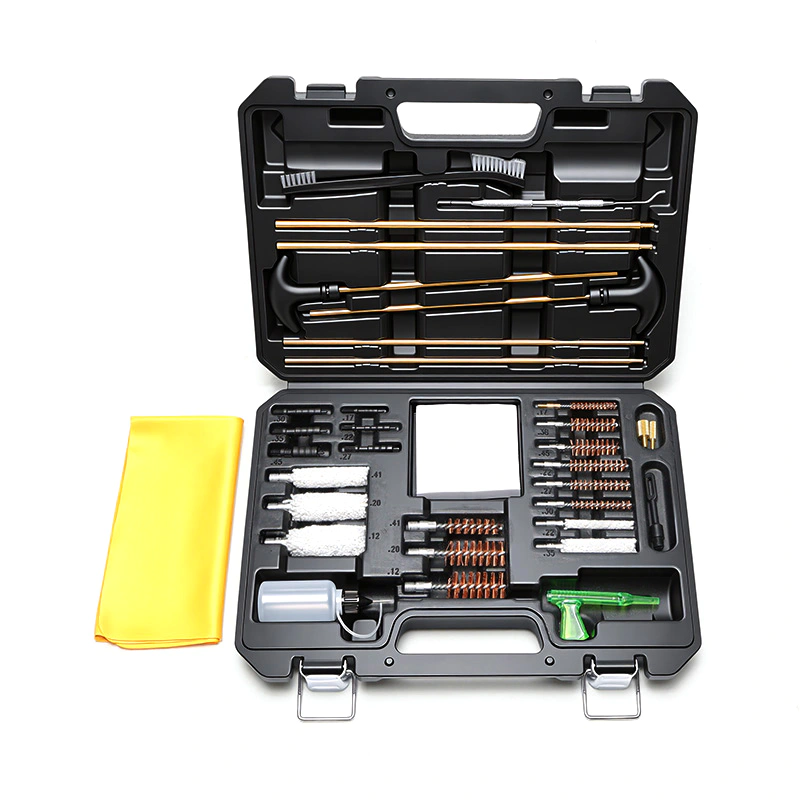
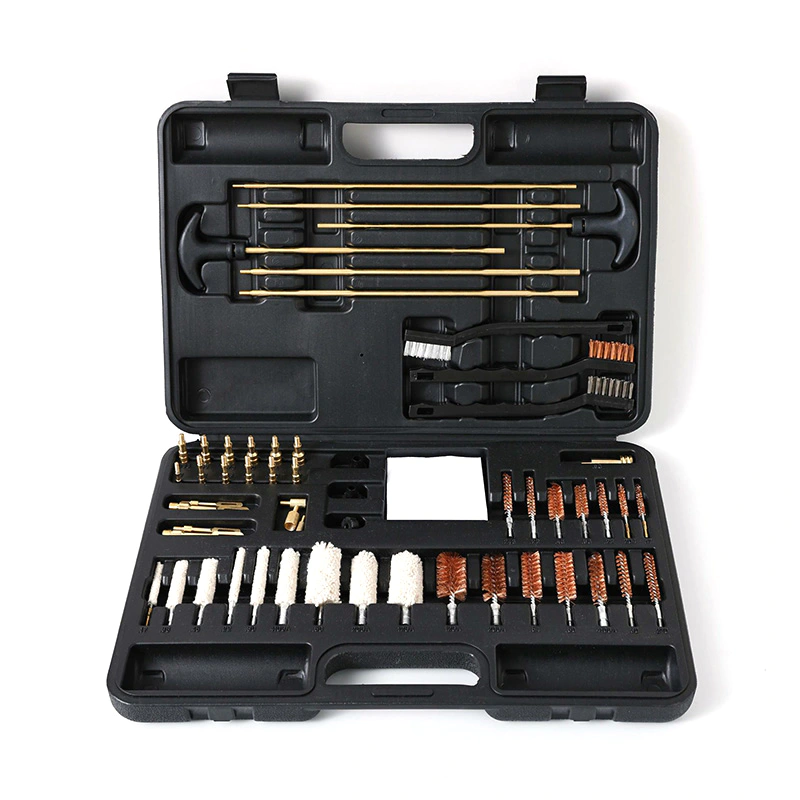
Jinhua Tongshun Tool Factory was established in 1999 and specializes in gun cleaning kits, barrel cleaning brushes, and related maintenance accessories. With more than two decades of manufacturing experience, the company combines product development, production, quality management, and export support in one operation.
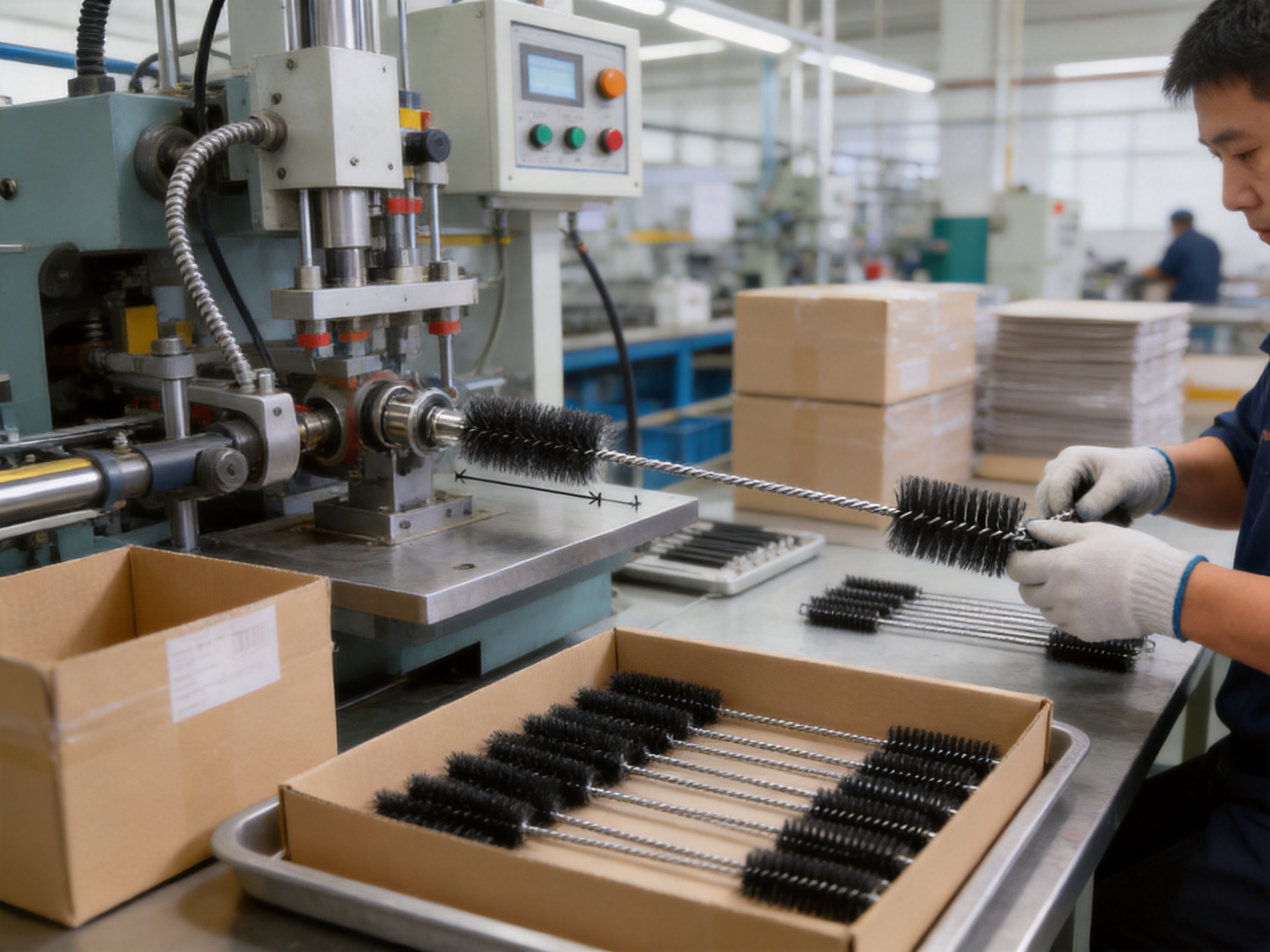
The factory operates production lines supported by semi-automatic and fully automated systems. These systems are important for brush manufacturing because consistency depends on accurate wire forming, controlled bristle placement, stable twisting, and repeatable finishing. Automation can reduce variation between batches while helping production teams meet larger order quantities.
For this pipe brush, manufacturing quality begins with material selection. The stainless steel core must meet the requested wire specification, while nylon filaments must maintain a consistent diameter and adequate resilience. The forming process must hold the bristles securely without creating sharp or irregular sections that could interfere with insertion.
Material inspection helps confirm that incoming wire and nylon filament meet the required specifications. The 1.0 mm stainless steel wire and 0.3 mm nylon bristles are central to the product’s performance. Variation in wire thickness could affect stiffness and flexibility, while inconsistent bristle diameter could change the cleaning feel and working coverage.
Inspection may include visual checks, dimensional verification, sampling, and review of supplier documentation. Maintaining clear material controls supports more reliable production and helps OEM customers receive a product that matches approved samples.
The core-forming stage influences the brush’s strength and bristle retention. The wire must be twisted with suitable tension so that the nylon filaments remain firmly captured. Excessive or insufficient twisting can affect the brush profile, flexibility, and durability.
Production equipment and trained operators work together to control the formation process. Semi-automatic and automated systems can improve repeatability, while manual inspection remains valuable for identifying irregularities such as uneven bristle density, distorted ends, or incomplete twisting.
Dimensional consistency matters because the product is intended for narrow channels. If the brush head is too large, insertion may be difficult or unsafe. If it is too small, the bristles may not contact the internal wall effectively. Maintaining the specified approximate 14.2 mm head diameter and 142 mm total length helps ensure predictable use.
For OEM projects, the factory can adjust dimensions according to the customer’s application. Customized brush diameters, wire materials, bristle stiffness, handle designs, and overall lengths can be discussed during product development. Samples can be evaluated before mass production to confirm fit and cleaning performance.
Before packing, finished brushes should be checked for bristle security, core condition, appearance, and cleanliness. Any loose wire ends, severely uneven bristles, or visible production defects should be removed from the sellable batch. Packing inspection is equally important because the brush may be sold through online channels where consistent presentation supports customer confidence.
The standard product is supplied in bulk packaging, with approximately 200 pieces per box. For export and private-label customers, packaging can be adapted to bulk cartons, retail blister packs, industrial kits, barcode-labeled packages, or fulfillment-ready formats. Packaging design can help protect the bristles during transport and make the product easier to count and distribute.
One of the key advantages for distributors and brand owners is the factory’s ability to support OEM and ODM production. Rather than purchasing only a fixed standard item, customers can develop a brush configuration aligned with their market, equipment, packaging, and price requirements.
Available customization options include brush diameter, brush length, core material, bristle stiffness, handle structure, logo marking, packaging format, barcode labeling, and outer carton design. Core material choices may include stainless steel, galvanized steel, or brass, depending on the application and target cost.
For brands that sell maintenance accessories, a customized nylon brush can be integrated into a broader product family. Matching colors, packaging graphics, labeling systems, and brush dimensions can help create a consistent catalog. Customers may also combine nylon, brass, bronze, and cotton cleaning accessories in a single industrial kit.
Different users require different levels of flexibility and cleaning force. A delicate nozzle may need softer filaments, while an industrial channel with heavier residue may require a firmer nylon grade. The factory can discuss filament diameter, stiffness, density, and working length to create a more suitable configuration.
Customization should be based on the expected channel diameter, residue type, cleaning frequency, and desired service life. A technically appropriate brush reduces the risk of poor results caused by selecting a product that is too soft, too large, or too aggressive.
304 stainless steel is a strong standard choice for moisture resistance and general durability. Galvanized steel may be considered for certain cost-sensitive applications, while brass may be selected for specific performance or appearance requirements. The best core material depends on the working environment, chemical exposure, flexibility requirement, and target price.
By offering several material options, the factory can serve different market segments without limiting customers to a single construction. Technical discussions before production help clarify whether the standard stainless steel version or a customized alternative is more suitable.
Private-label customers can request laser logo marking, printed labels, customized cartons, retail blister packs, and industrial packaging. These options allow distributors to present the product under their own brand while maintaining a professional and consistent appearance.
Barcode labeling and fulfillment-ready packaging can support online sales channels. Properly prepared packaging may simplify warehouse receiving, order picking, and marketplace fulfillment. For customers selling through eBay, Amazon, AliExpress, or regional distributors, packaging flexibility can be an important part of the sourcing decision.
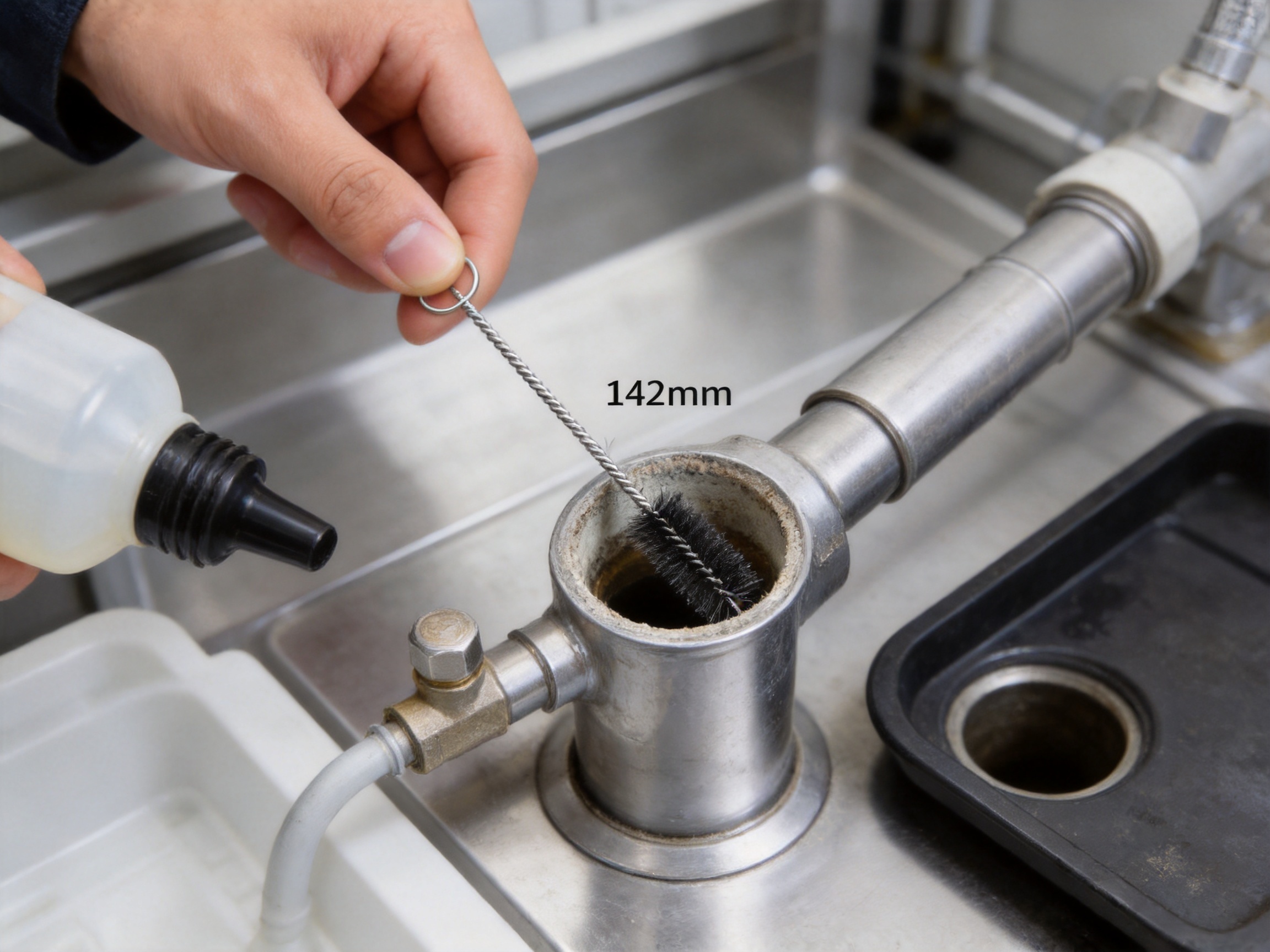
The product has a broad application range because small internal passages appear in many types of equipment. Its compact size, nylon construction, and flexible stainless steel core make it suitable for professional and everyday cleaning tasks.
In homes, the brush can help clean narrow spouts, faucet components, bottle openings, small drains, and appliance channels. Limescale and dried residue often collect in places that are difficult to access with a sponge. A narrow brush can improve the reach of a regular cleaning routine.
Users should follow the cleaning instructions for the specific household item and rinse all components thoroughly. If a component is used for food or drinking water, it should be cleaned with an appropriate method and inspected after brushing.
Small tubes, dispensing nozzles, and spouts used in beverage or food-related equipment may require frequent cleaning. The nylon brush can assist with removing residue from internal areas when the brush is compatible with the equipment and the cleaning procedure.
Commercial operators should establish sanitation procedures that include cleaning solution compatibility, rinsing, drying, brush replacement, and inspection. The product is a cleaning accessory and should be incorporated into the equipment manufacturer’s maintenance instructions where applicable.
Workshops often need small tools for cleaning threaded holes, fittings, nozzles, channels, and component interiors. The brush can help remove dust, oxidation particles, light grease residue, and debris before assembly or inspection.
Because the brush is lightweight, technicians can keep multiple sizes or materials in a toolbox. A nylon version can be used where surface protection is important, while metal brushes may be reserved for compatible heavy-duty applications.
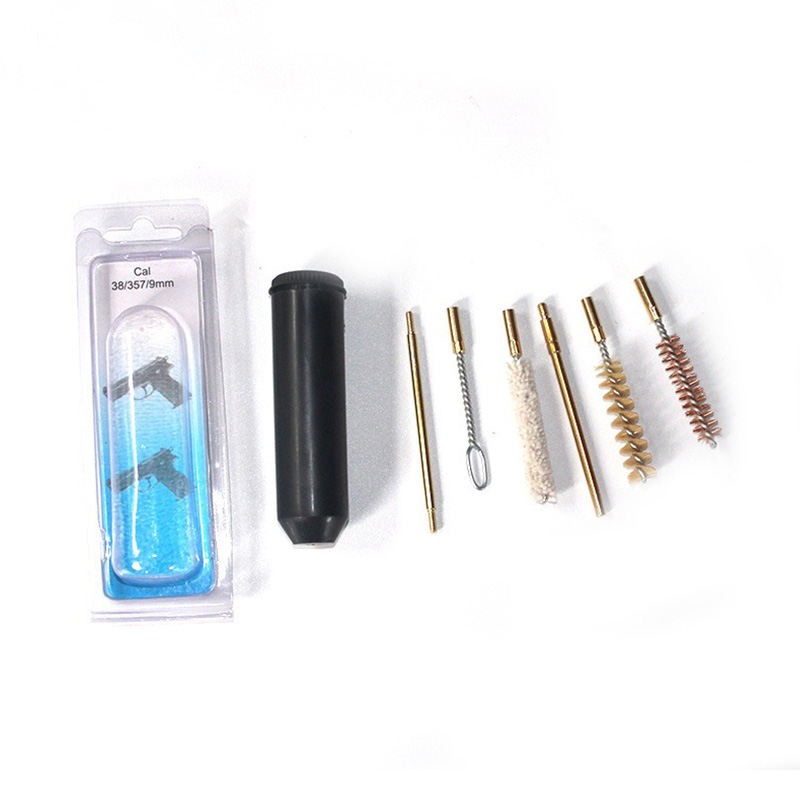
The brush can be sold individually or included in a larger cleaning kit. It may complement cleaning rods, adapters, patches, cloths, cotton mops, brass brushes, bronze brushes, and other nylon accessories. Combining tools allows a kit manufacturer to address both broad surface cleaning and narrow-channel maintenance.
For kit assembly, the compact product is easy to pack and can be arranged in bulk cartons or retail configurations. OEM customers may specify the number of pieces per kit, the brush material, color, labeling, and instruction sheet format.
When purchasing pipe brushes for resale or industrial supply, buyers should evaluate more than the unit price. Material consistency, production capacity, packaging, customization support, export experience, and quality control all affect the total value of the product.
The standard product has a listed price range below five yuan, although actual pricing may vary according to order quantity, customization, packaging, shipping terms, and material selection. Buyers should request a current quotation and confirm technical specifications before placing a production order.
| Purchasing Factor | Why It Matters |
| Brush diameter | Determines whether the brush can enter the intended channel |
| Core material | Affects corrosion resistance, flexibility, and cost |
| Bristle stiffness | Influences cleaning strength and surface protection |
| Total length | Determines access to recessed or deep passages |
| Bristle retention | Supports service life and reduces loose filament risk |
| Packaging quantity | Influences warehouse planning and wholesale distribution |
| Customization | Allows alignment with brand, application, and market requirements |
| Production capacity | Helps support repeat orders and seasonal demand |
| Export support | Can simplify international packaging and documentation requirements |
Distributors should also consider the product’s target market. A retail customer may prefer an individually labeled blister pack, while an industrial buyer may prefer a bulk carton that reduces packaging cost. A fulfillment-oriented seller may require barcode labels and carton dimensions suitable for warehouse handling.
For best results, confirm the channel diameter before inserting the brush. The approximate 11.7 mm inner-channel compatibility should be treated as a guide rather than a universal rule, because actual fit depends on the shape of the opening, internal geometry, residue thickness, and required movement.
Insert the brush slowly and avoid forcing it through a passage that is visibly too small. Use controlled back-and-forth movement, and rotate the brush gently when additional contact is needed. Excessive bending or twisting can damage the core or distort the bristle section.
For hardened limescale or dried residue, pre-soaking with a compatible cleaning solution may reduce the effort required. The cleaning chemical must be suitable for the component being treated and for the nylon and stainless steel materials. After use, rinse the brush, remove loose debris, and allow it to dry before storage.
Inspect the brush regularly for damaged wire, severely bent sections, missing bristles, or contamination that cannot be removed. Replace the brush when its working section no longer provides consistent contact or when continued use could compromise the component being cleaned.
The product competes effectively by combining several practical features in one compact tool. It offers a stainless steel twisted core, flexible nylon bristles, narrow-channel access, a useful working length, and OEM customization potential. Many low-cost alternatives may provide only one or two of these characteristics.
Compared with a basic plastic brush, this product offers better reach and structural support. Compared with a metal brush, it provides gentler contact for many surfaces. Compared with a cotton swab, it offers stronger mechanical agitation. Compared with improvised wire, it provides controlled dimensions, repeatable construction, and a more professional cleaning experience.
The manufacturing background of Jinhua Tongshun Tool Factory adds further value for B2B customers. The company has been producing related cleaning tools since 1999, operates semi-automatic and automated production systems, exports to more than 50 countries and regions, and supports customized products, packaging, and logos.
For wholesalers and brand owners, reliable repeatability is often more important than a one-time low purchase price. A stable supplier can help maintain consistent specifications across reorders, reduce packaging changes, and support product expansion into related cleaning categories.
This product is suitable for importers, distributors, industrial supply companies, maintenance product brands, household cleaning brands, online sellers, equipment manufacturers, and companies assembling cleaning kits.
It may be especially attractive to customers serving European, Southeast Asian, and Middle Eastern markets, where compact maintenance tools can be distributed through hardware channels, cleaning supply stores, e-commerce platforms, and professional service networks.
Small and medium-sized businesses can use the standard product as a low-risk addition to an existing catalog. Larger customers can request customized dimensions, branded packaging, and recurring production schedules. Flexible minimum order quantities can be discussed according to the selected configuration and packaging format.
The brush is designed to clean narrow and hard-to-reach areas, including bottle spouts, tube interiors, nozzle channels, small mechanical passages, and other confined openings. It helps remove limescale, light rust residue, dust, dirt, and stubborn deposits through controlled mechanical brushing.
The standard construction uses a 1.0 mm 304 stainless steel twisted wire core and 0.3 mm black nylon bristles. These materials provide a combination of flexibility, corrosion resistance, bristle retention, and comparatively gentle surface contact.
The brush head is approximately 14.2 mm in diameter, the total length is approximately 142 mm, and it is designed for inner channels of about 11.7 mm. Actual suitability should be confirmed against the specific component because channel shape and residue thickness can affect fit.
Nylon is generally less abrasive than brass, bronze, or stainless steel bristles, so it can be a better choice for many plastic, coated, ceramic, glass, and finished surfaces. However, users should avoid excessive force and test an unfamiliar surface before full application.
It is suitable for removing light rust residue and deposits from narrow areas. Heavy corrosion, thick scale, or strongly bonded material may require pre-treatment, a stronger brush, or a specialized cleaning process. The nylon version is designed to balance cleaning action with surface protection rather than provide maximum abrasion.
Yes. OEM and ODM options may include customized brush diameters, lengths, wire core materials, bristle stiffness, handle structures, colors, logos, packaging, barcode labeling, and fulfillment-ready formats. Customers should provide the intended application and technical requirements for evaluation.
Depending on the project, customers may discuss stainless steel, galvanized steel, or brass wire cores. The appropriate choice depends on corrosion exposure, flexibility, strength, appearance, application requirements, and target cost.
The standard product is supplied in bulk packaging, with approximately 200 pieces per box. Custom packaging may include bulk cartons, retail blister packs, industrial kits, private-label boxes, barcode labels, and packaging prepared for fulfillment operations.
The brush is manufactured by Jinhua Tongshun Tool Factory, a China-based producer established in 1999. The company specializes in gun cleaning kits, barrel cleaning brushes, and related cleaning accessories, and provides OEM and ODM services for international B2B customers.
Yes. It can be combined with cleaning rods, adapters, patches, cloths, cotton mops, brass brushes, bronze brushes, and other nylon tools. Kit contents, quantities, colors, labeling, and packaging can be planned according to the target market.
Users should remove debris from the brush, rinse it when appropriate, allow it to dry, and store it in a clean location. The brush should be inspected regularly and replaced if the core is damaged, the bristles are severely worn, or the tool no longer performs consistently.
The Pipe Wire Brush Rust Removal Spout Cleaner is a compact but capable solution for cleaning narrow internal passages. Its 304 stainless steel twisted core provides structural support and corrosion resistance, while the 0.3 mm nylon bristles deliver effective agitation with a lower risk of scratching many delicate surfaces. The approximately 14.2 mm head diameter and 142 mm length make the brush suitable for spouts, tubes, nozzles, equipment channels, and detailed maintenance tasks.
Its advantages extend beyond the standard product design. Consistent manufacturing, semi-automatic and automated production systems, material control, bulk packaging, and extensive OEM/ODM options make it suitable for international distributors and brand owners. Customers can request modifications to dimensions, materials, stiffness, branding, packaging, and fulfillment preparation.
For buyers looking for a reliable narrow-channel brush, this product offers a practical alternative to ordinary plastic brushes, aggressive metal brushes, cotton swabs, and improvised cleaning tools. It is especially valuable when the cleaning task requires access, controlled flexibility, secure bristle retention, and protection of the internal surface.
1. Product specification data supplied for the Pipe Wire Brush Rust Removal Spout Cleaner, including dimensions, materials, bristle specifications, packaging quantity, and application information.
2. General technical principles of twisted-wire brush construction, nylon filament behavior, and mechanical cleaning performance.
3. Stainless steel material information relating to 304 stainless steel wire, corrosion resistance, and general industrial cleaning applications.
4. Brush maintenance and safe-use practices for narrow-channel cleaning tools.
5. Manufacturer information supplied by Jinhua Tongshun Tool Factory regarding company history, production systems, OEM/ODM services, export experience, and packaging capabilities.