English
 русский
 Español
 عربى

HUNTACE HUNTACE HUNTACE HUNTACE HUNTACE
HUNTACE HUNTACE HUNTACE HUNTACE

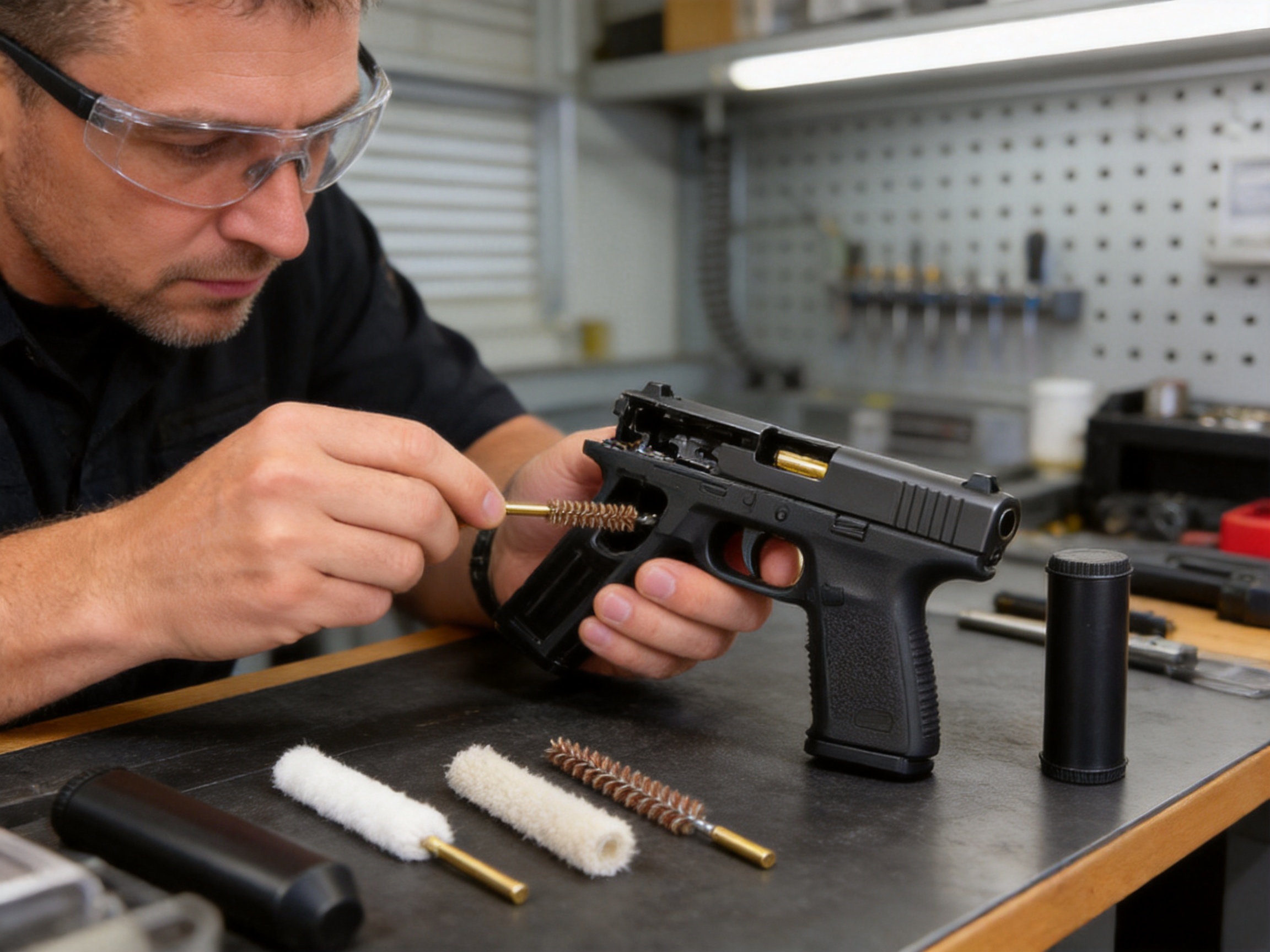
Consistent firearm maintenance depends on using the right tools for the bore, chamber, exterior surfaces, and moving components. A suitable cleaning kit should remove carbon fouling, powder residue, copper deposits, and light rust without creating unnecessary wear on the barrel or rifling. It should also be practical for distributors, retailers, professional users, and cross-border e-commerce sellers who require dependable quality, flexible packaging, and stable supply.
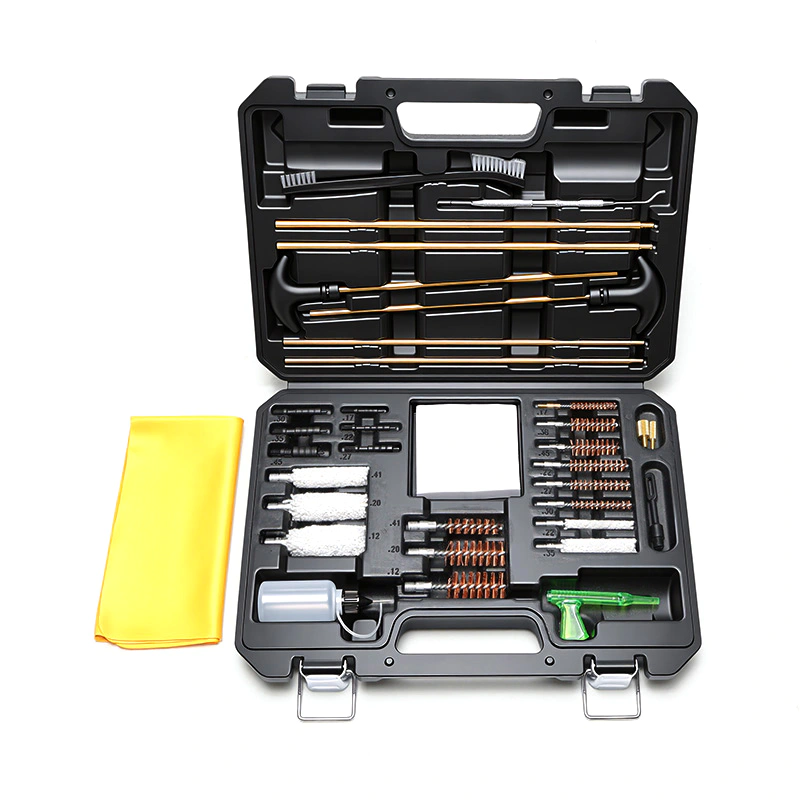
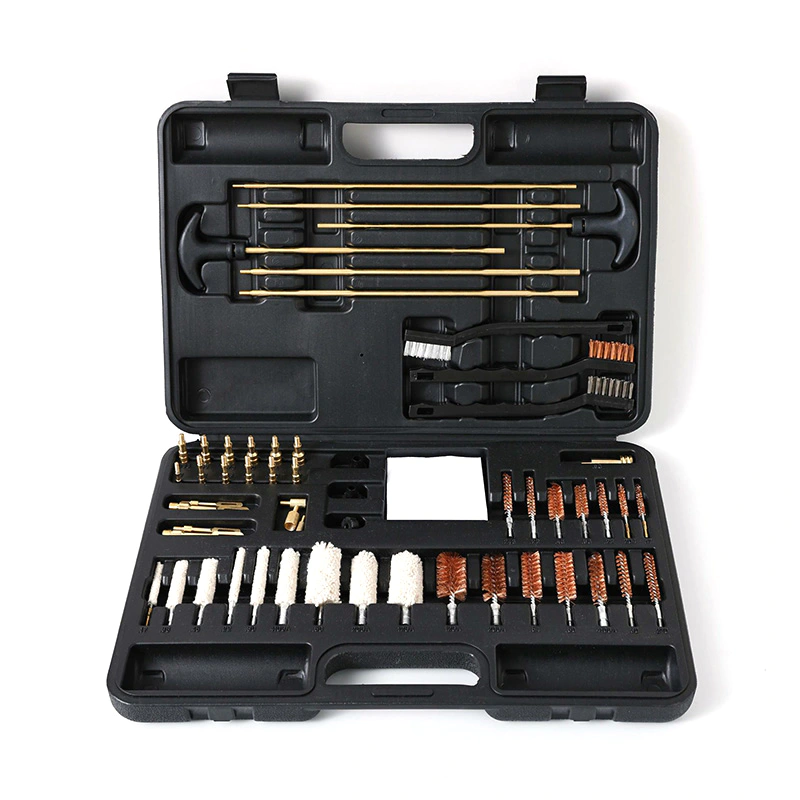
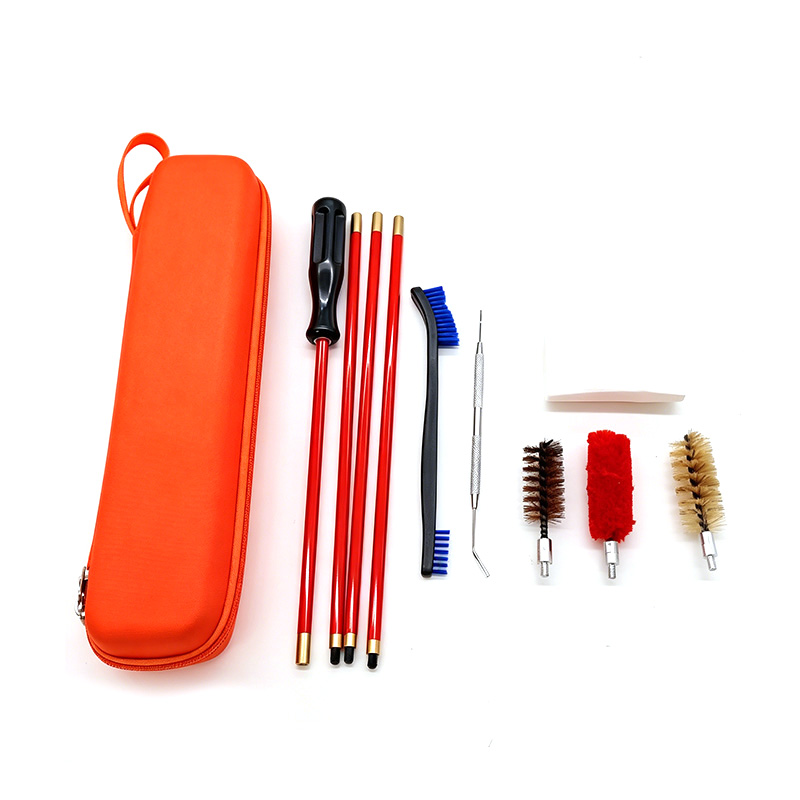
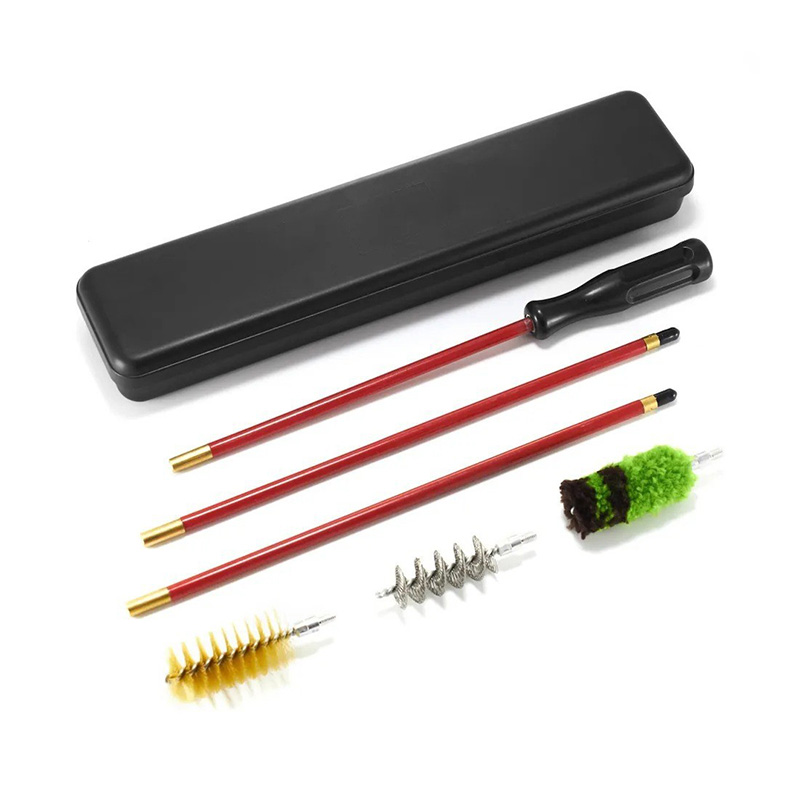
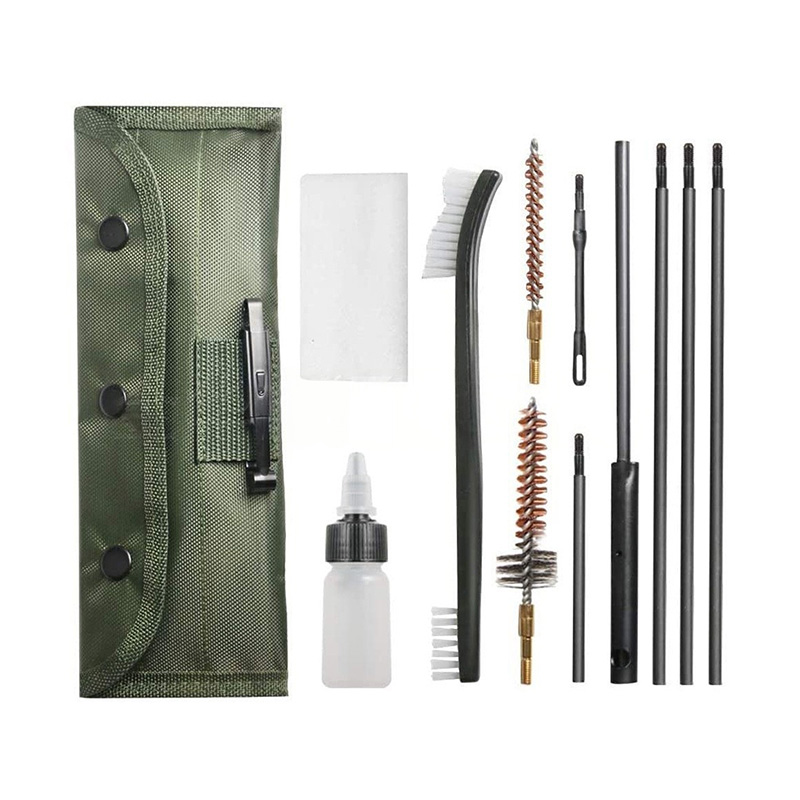
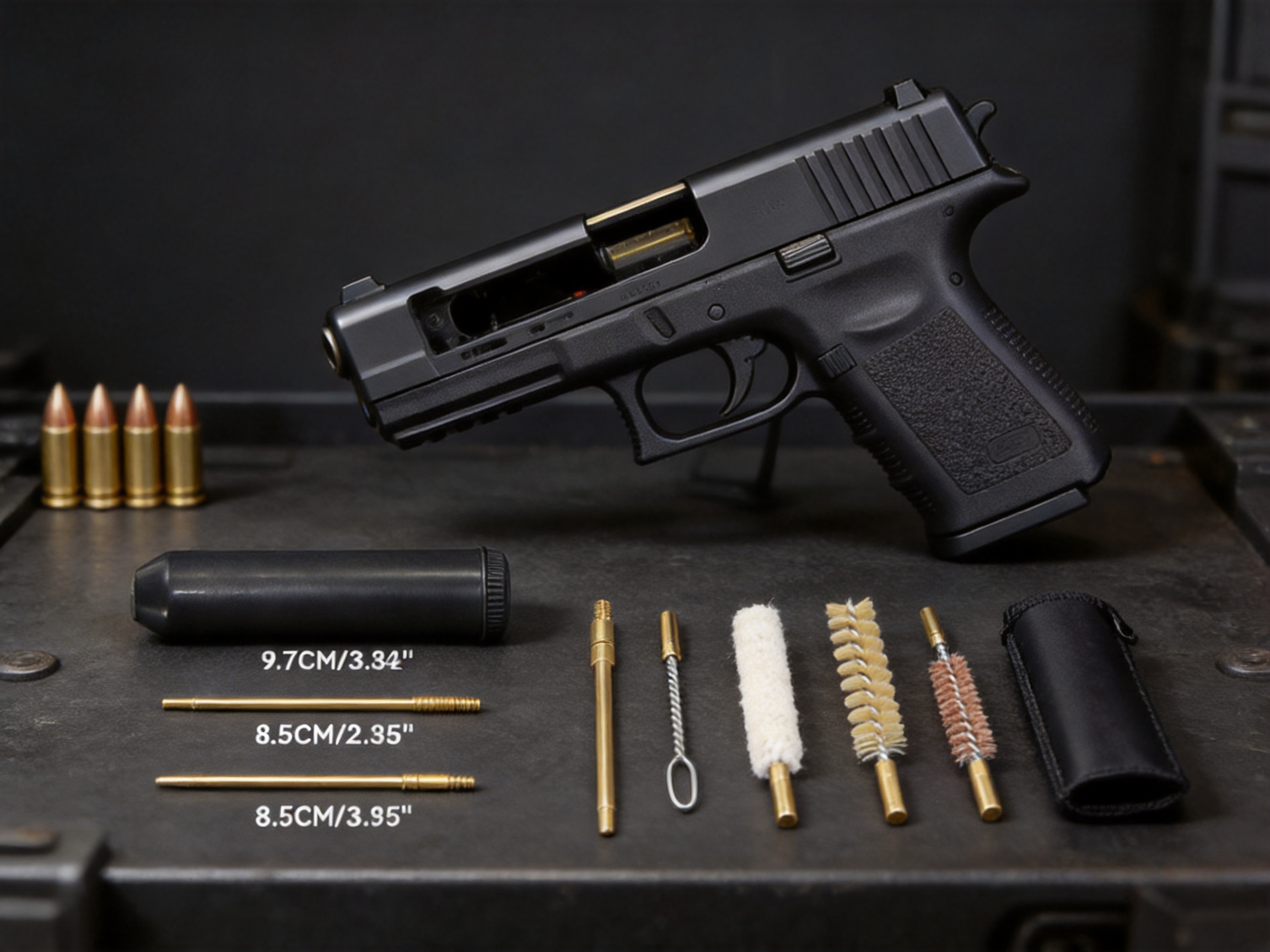
The 9mm Bore Brush Gun Cleaning Kit is designed as a complete handgun bore-cleaning solution for the North American market. It combines several cleaning components in one coordinated set, including phosphor bronze wire brushes, cotton mops, boar bristle brushes, and a brass cleaning rod. With a total rod length of 342 millimeters, the kit is suited to many standard handgun barrel lengths and supports a straightforward cleaning workflow.
Rather than relying on one brush or a single-purpose accessory, the kit brings together tools intended for different stages of routine maintenance. A bore brush can loosen stubborn fouling, a cotton mop can distribute cleaning solvent and collect loosened residue, a softer bristle brush can support surface cleaning, and the rod provides controlled access through the bore. This combination makes the kit suitable for routine maintenance after shooting, inspection before storage, and regular cleaning programs used by retailers, range operators, and firearm owners.
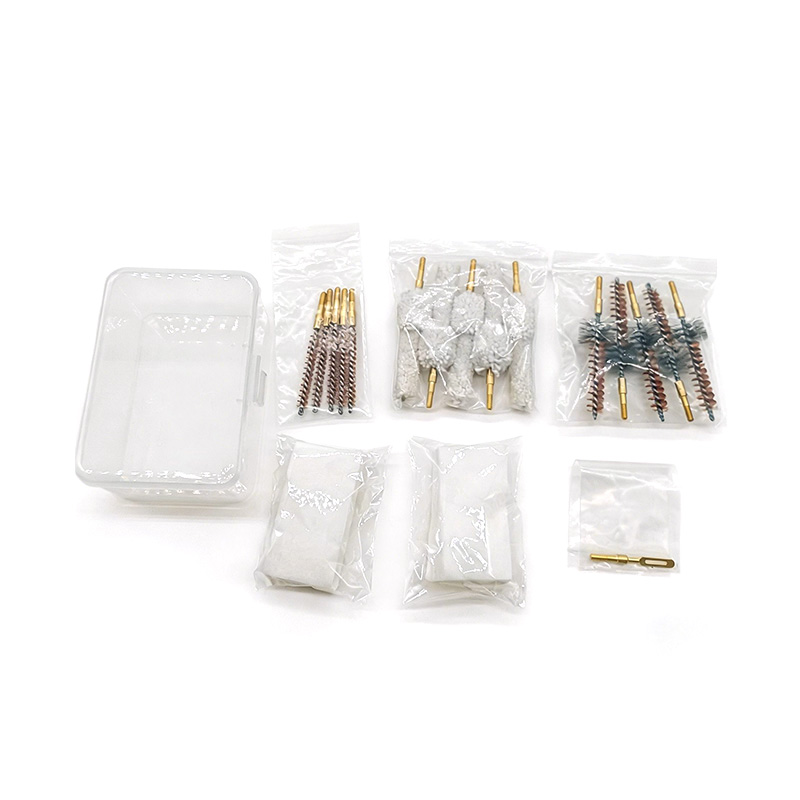
For wholesale buyers, the product offers more than a set of cleaning tools. It provides a flexible private-label platform with multiple packaging formats, factory-level production support, and options for customized presentation. Bulk packaging, PE bags, plain white boxes, and retail-ready blister packs with color cards allow buyers to select an approach that matches their distribution model.
The 9mm Bore Brush Gun Cleaning Kit is a compact maintenance set developed around the cleaning needs of 9mm handguns. The product code is #7021-1. Its principal function is barrel cleaning, with additional applications including carbon deposit removal, powder residue removal, copper deposit removal, and light rust removal from appropriate firearm surfaces.
The kit uses a combination of metal, textile, and polymer-based cleaning elements. Phosphor bronze wire provides effective mechanical action against fouling while offering a practical balance between cleaning strength and bore protection when used correctly. Cotton mops are intended for applying cleaning products and wiping the inside of the barrel. Boar bristle or nylon-style brushes can be used for less aggressive cleaning tasks and for areas where a softer material is preferred. The brass rod supports the controlled movement of the cleaning accessories through the bore.
The round brush form is convenient for cylindrical firearm components, especially the bore and chamber area. The listed bristle length is 50 millimeters, while the total cleaning rod length is 342 millimeters. The product is supplied in black as specified, although the appearance of packaging and accessory combinations may be customized for OEM and private-label projects.
| Product category | Gun cleaning kit |
| Product name | 9mm Bore Brush Gun Cleaning Kit |
| Product code | #7021-1 |
| Primary application | 9mm handgun barrel and bore maintenance |
| Cleaning rod length | 342 millimeters |
| Listed bristle length | 50 millimeters |
| Brush and accessory materials | Phosphor bronze, brass, cotton, boar bristle, nylon, and steel wire components |
| Product shape | Round brush profile |
| Color | Black |
| Primary sales region | North America |
| Packaging options | Bulk packaging, PE bag, plain white box, and double blister pack with color card |
| Customization | OEM, ODM, private label, packaging, and logo customization |
A single brush can remove a certain type of residue, but it rarely provides a complete cleaning workflow. Carbon fouling may require firm mechanical action, while final wiping and solvent distribution are better handled by cotton. External surfaces and sensitive areas may benefit from softer bristles rather than metal wire. A multi-component kit allows users to choose the appropriate accessory for each task instead of using one tool for every stage.
The first stage of a typical cleaning process is inspection and preparation. After confirming that the firearm is unloaded and following the firearm manufacturer’s disassembly and safety instructions, the user can select a suitable bore brush and cleaning solvent. The brush loosens deposits that have adhered to the interior surface. Once the fouling has been disturbed, a cotton mop or patch can help remove residue and distribute a small amount of cleaning product.
A softer brush may then be used around the chamber, slide, frame, feed ramp, or other areas where residue accumulates. The exact application depends on the firearm design and the cleaning instructions provided by the firearm manufacturer. The purpose of the kit is to provide several compatible maintenance tools in one package, reducing the need to purchase separate accessories from different sources.
This coordinated approach is particularly valuable for retail customers. A complete set is easier to understand than a collection of unrelated accessories. It can be presented as a starter kit for new firearm owners, a replacement kit for experienced users, or a practical accessory for range and outdoor retailers. For distributors, the set also simplifies inventory management because several cleaning functions are combined under one product code.
Phosphor bronze is widely used in firearm cleaning brushes because it offers useful stiffness and resilience while remaining suitable for many routine bore-cleaning applications. Its wire structure can reach fouling that a soft cloth alone cannot remove. When used with an appropriate solvent and moderate pressure, the brush can help break up carbon and powder residue that has accumulated after repeated firing.
The value of a bronze brush is not simply its hardness. A well-formed brush must also maintain a consistent shape, retain its bristles during use, and connect securely to the cleaning rod. Irregular wire ends, loose bristles, or an unstable threaded connection can reduce performance and may increase the risk of scratching or uneven contact. Manufacturing control is therefore important in determining whether a brush performs consistently from one production batch to the next.
Compared with some low-cost brushes made with poorly controlled wire or inconsistent crimping, a properly assembled phosphor bronze brush can provide a more dependable cleaning experience. Its value is especially apparent for wholesale buyers who need a product that performs consistently across large quantities rather than only in individual samples.
Users should always select the correct caliber accessory and follow the firearm manufacturer’s cleaning instructions. A brush should not be forced through a barrel, and excessive pressure is unnecessary. The purpose of the brush is to loosen deposits, not to replace safe handling, correct solvent selection, or a proper inspection process.
Brass is used in the cleaning rod and related components because it offers a practical combination of strength, machinability, and relatively gentle contact characteristics. A brass rod can provide the rigidity needed to guide a brush or mop through the barrel while reducing the likelihood of harsh contact associated with harder steel tools.
The 342-millimeter rod length is engineered around the dimensions of many standard handgun barrels. Its length is long enough to support controlled access through the bore while remaining compact for storage, retail packaging, and transport. The correct rod length also makes it easier for a user to maintain a stable grip and guide the accessory in a straight path.
Rod construction is an important quality consideration. A rod that bends too easily may be difficult to control, while a rod with an unfinished surface or poorly formed end may damage accessories or create unwanted contact with the barrel. Consistent machining, smooth finishing, and secure connection points are therefore essential to the product’s practical performance.
Although brass is suitable for many routine applications, users should avoid aggressive scraping, excessive force, and unsuitable attachments. The cleaning rod should be used as directed, and all firearm-specific procedures should take priority over general cleaning recommendations.
Cotton mops serve a different purpose from wire brushes. Instead of focusing on strong mechanical abrasion, they support the application of cleaning solvent and the removal of loosened residue. The cotton fibers can contact the inner surface of the bore and help distribute a cleaning product evenly when the user follows an appropriate maintenance procedure.
A cotton mop is also useful during the finishing stage of cleaning. After a bronze brush has loosened deposits, the mop can collect remaining residue and help the user inspect the condition of the bore. A clean mop may be used to check whether additional fouling remains, while a lightly treated mop can support the application of a suitable protective product before storage, if permitted by the firearm manufacturer.
Including cotton mops in the kit makes the product more complete than a brush-only package. A buyer does not have to source a separate applicator for routine solvent distribution. For retailers, this feature can be highlighted as part of the product’s all-in-one value proposition.
Cotton accessories should be inspected before use. If fibers become loose or the mop shows signs of damage, it should be replaced. Cleaning products should also be used in a well-ventilated area and stored according to their safety instructions.
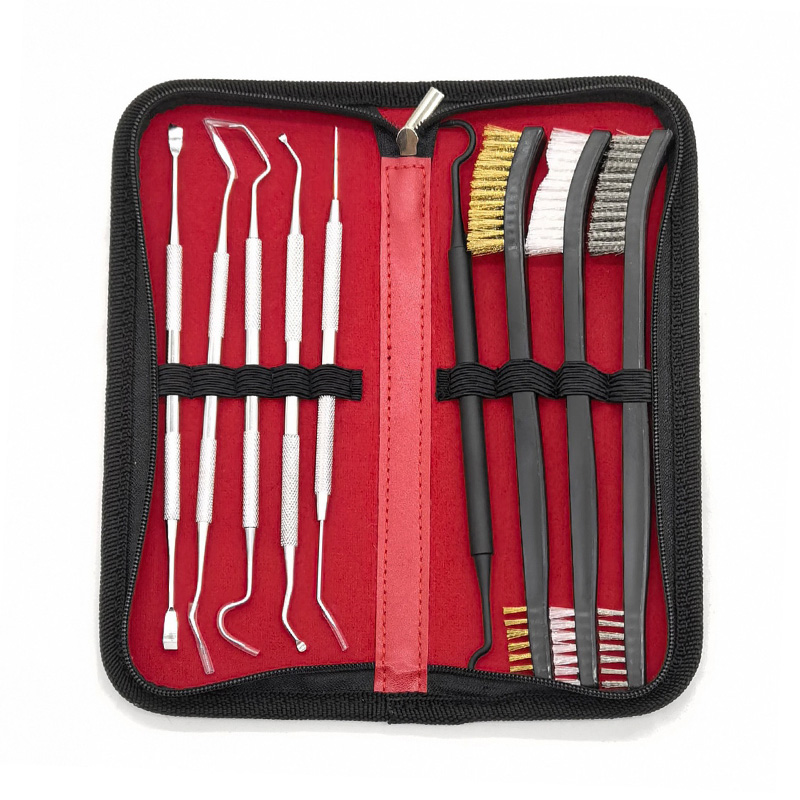
Soft and medium-stiff bristle brushes provide flexibility for parts of a firearm that do not require metal wire. Boar bristle can be useful for removing loose dust, oil residue, and powder particles from external or semi-protected areas. Nylon brushes offer another non-metal option for cleaning surfaces where a softer contact material is preferred.
The presence of different brush materials gives the user more control over the cleaning process. A metal brush is appropriate for carefully loosening deposits inside a bore when the correct size and technique are used. A nylon or natural-bristle brush may be more suitable for cleaning around the frame, slide, grip area, or other components. This division of tasks can reduce unnecessary wear caused by using an overly aggressive tool in the wrong location.
For competing products that include only one type of brush, the multi-material composition of this kit offers a practical advantage. It supports more maintenance situations without significantly increasing the number of separate items the user must purchase or store. The result is a more versatile product for both individual consumers and institutional buyers.
As with every cleaning accessory, users should follow the firearm manufacturer’s recommendations. The brush material should be selected according to the surface being cleaned, the type of fouling present, and the required level of mechanical action.
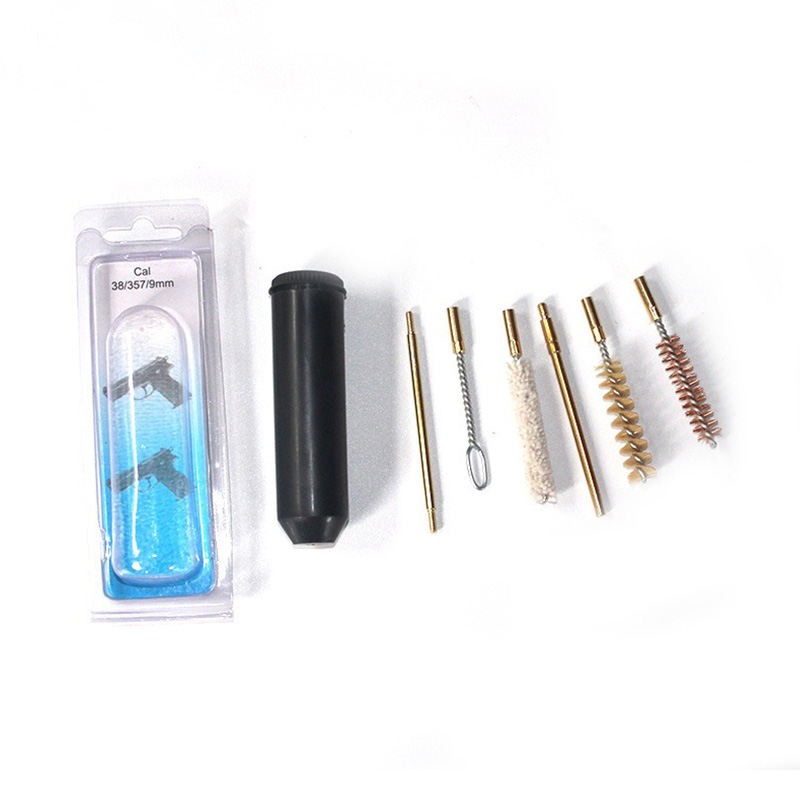
9mm Bore Brush Gun Cleaning Kit
The market includes many cleaning products ranging from single brushes to large universal kits. The 9mm Bore Brush Gun Cleaning Kit occupies a practical position between these two categories. It is more functional than a single-purpose brush while remaining focused enough to avoid unnecessary accessories that can increase cost, packaging size, and inventory complexity.
One major advantage is caliber-focused design. A product developed specifically for 9mm bore cleaning can offer a clearer purchasing decision than a universal kit containing multiple unused brush sizes. The buyer receives components intended for a common handgun caliber and can immediately understand the main use of the product.
A second advantage is the combination of cleaning materials. Bronze wire, cotton, and softer bristles each have different maintenance roles. This is more useful than a kit that relies only on a metal brush or only on disposable patches. The combination can also improve perceived product value on a retail shelf.
A third advantage is the 342-millimeter rod. A rod that is long enough for standard handgun applications but compact enough for retail packaging offers a useful balance between control and portability. It can be included in a branded kit without requiring an oversized package.
A fourth advantage is packaging flexibility. Buyers can select bulk packaging for professional distribution, PE bags for economical retail presentation, plain white boxes for private-label printing, or double blister packs with color cards for finished retail display. Competing suppliers that provide only one fixed package may be less suitable for distributors serving multiple sales channels.
Finally, the product is supported by an established factory with experience in brush production and firearm maintenance accessories. Stable production, quality-control procedures, and OEM support are important differentiators for buyers that must replenish stock regularly.
| Evaluation factor | Focused 9mm cleaning kit | Typical single-brush product | Large universal kit |
| Caliber clarity | Designed around 9mm handgun maintenance | May provide only one cleaning function | May require users to identify the correct accessory among many items |
| Cleaning materials | Bronze, cotton, and softer bristle options | Usually one material | Often includes multiple materials but may add unused components |
| Rod inclusion | 342-millimeter brass cleaning rod | Often not included | May include a longer or more complex universal rod system |
| Retail positioning | Suitable for starter, replacement, and routine-maintenance sales | Limited product value presentation | Higher package size and potentially higher retail price |
| Packaging flexibility | Bulk, PE bag, white box, and blister pack options | Often fixed packaging | May require specialized packaging for many components |
| Inventory management | Focused product code and straightforward assortment | Simple but limited functionality | More complex assortment and replenishment requirements |
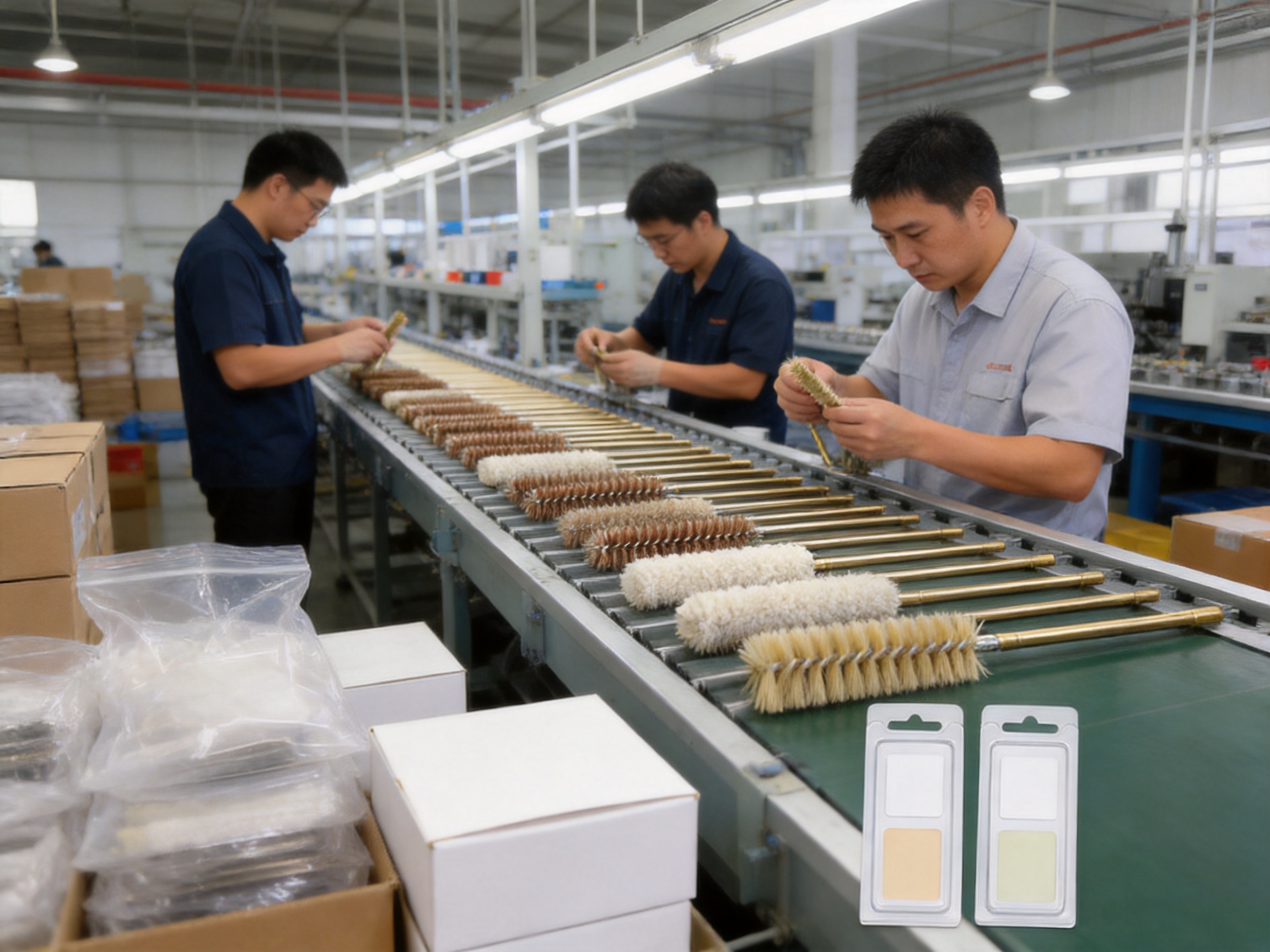
The product is manufactured by Jinhua Tongshun Tool Factory, a comprehensive enterprise integrating research and development, production, and sales. Established in 1999, the factory has more than 26 years of experience in gun cleaning kits, barrel-cleaning brushes, and related accessories.
Long-term manufacturing experience is valuable in this product category because performance depends on many small production details. Brush wire must be selected and formed consistently. Bristles must be secured correctly. Threads and connections must match the intended accessories. Rod surfaces must be finished smoothly. Cotton components must be assembled in a manner that supports reliable use. Packaging must protect the product while also presenting it clearly to end customers.
The factory operates modern production facilities with semi-automatic and fully automated production systems. Automation can improve repeatability in processes such as component forming, brush assembly, wire handling, crimping, and packaging preparation. Semi-automatic systems also allow production teams to manage product variations and customized orders with greater flexibility.
A combination of automated and semi-automatic production is especially useful for OEM and ODM work. Buyers may require different brush combinations, logo placements, color cards, package dimensions, or accessory configurations. A factory that can balance standardization with customization is better positioned to support both high-volume orders and differentiated private-label programs.
Quality control is another important manufacturing strength. For a cleaning kit, quality assurance should cover incoming materials, component dimensions, bristle retention, rod finishing, connection fit, appearance, package accuracy, and final order inspection. Consistent inspection helps reduce complaints caused by missing accessories, incorrect packaging, uneven brush construction, or inconsistent product appearance.
Factory-level production also supports supply stability. Distributors and cross-border sellers need more than a competitive sample. They need repeatable production over multiple purchase cycles. Stable capacity helps buyers plan promotions, maintain marketplace inventory, and reduce the risk of sudden product substitution.
The kit is suitable for buyers that want to build a branded firearm maintenance product line. OEM and private-label services can include customized logos, packaging artwork, color cards, product combinations, and retail presentation. These options allow distributors and retailers to position the product according to their own market strategy.
For a marketplace seller, a branded white box or blister card can create a more coherent product identity than generic packaging. For a professional distributor, bulk packaging may be more efficient because the distributor can add regional labels or combine the kit with other accessories before resale. For retail stores, blister packaging can improve shelf visibility and allow customers to see the main components before purchase.
ODM support may be appropriate when a buyer wants to modify the standard product. Potential changes can include different accessory combinations, additional patches, alternate brush materials, adjusted rod specifications, or a revised package format. Any modification should be confirmed through technical communication, sample approval, and production validation before a large order is placed.
Private-label development should also consider local labeling requirements, product claims, packaging language, barcode requirements, carton marks, and marketplace policies. A professional factory can help coordinate the physical product and packaging, while the buyer remains responsible for confirming the legal and commercial requirements of the target market.
Packaging has a direct effect on freight efficiency, retail appearance, product protection, and customer understanding. The available options for this kit are designed to support several sales models.
Bulk packaging is suitable for importers, wholesalers, professional distributors, and buyers that already operate a secondary packaging system. It can reduce packaging material and support efficient carton utilization. Bulk formats are also practical when products will be repacked into local-language boxes or bundled with other firearm accessories.
A PE bag with a color card provides a relatively economical presentation while keeping the components together. This format can be suitable for hardware stores, outdoor retailers, range suppliers, and online sellers that need a basic retail package without the cost of a rigid box or blister structure.
A plain white box gives buyers a flexible foundation for private-label printing, stickers, or external sleeves. It is useful for companies that want to apply their own brand identity after receiving the goods or that need a neutral package for different sales regions.
A double blister pack can provide a more finished retail appearance. Transparent packaging allows customers to view the main brushes and rod while the color card carries product information, instructions, branding, and sales messaging. This format may be particularly useful for shelf display and retail-ready distribution.
Wholesale buyers should evaluate the product through a structured quality-control process. A pre-production sample can confirm the intended accessory combination, dimensions, materials, color, and package format. Once the sample is approved, the buyer should ensure that the bulk order follows the same specification.
Brush retention is one of the most important functional checks. The wire or bristle bundle should remain secure during normal use, and the brush should maintain its intended shape. Loose or uneven bristles can reduce cleaning performance and lead to customer dissatisfaction.
Connection quality is also critical. The brush, mop, and rod should connect properly without excessive looseness or cross-threading. The connection must be compatible with the accessories included in the same kit. A simple assembly check during inspection can identify problems before shipment.
Rod straightness and surface finish should be checked as well. A rod that is visibly bent, rough, or poorly finished may be difficult to use and can create avoidable concerns about barrel contact. Dimensional consistency is particularly important when the kit is produced in large quantities.
Packaging inspection should verify the number of accessories, printed information, color card, blister alignment, box condition, barcode placement, and carton markings. A product can be functionally correct yet commercially unsuitable if the wrong packaging is used or if a component is missing.
Buyers should also confirm the agreed specifications for material descriptions. Terms such as brass, bronze, steel wire, nylon, cotton, and natural bristle should be clearly defined in the purchase documentation. Clear specifications reduce misunderstandings between the buyer, factory, inspection company, and end customer.
Before beginning any firearm cleaning procedure, the user should point the firearm in a safe direction, remove all ammunition from the firearm and work area, and verify that the firearm is unloaded according to the manufacturer’s safety instructions. The firearm should be disassembled only as far as the manufacturer permits.
The user can then prepare the cleaning area, cleaning solvent, protective cloth, and selected kit components. The correct 9mm brush should be attached securely to the cleaning rod. The brush should be guided through the bore with controlled movement rather than forced through resistance.
After the brush has loosened residue, a cotton mop or appropriate patch can be used to remove fouling and solvent residue. The user may repeat the process as necessary, depending on the firearm’s condition and the cleaning product being used. A softer brush can assist with external or non-bore areas where a metal brush is not appropriate.
After cleaning, the firearm should be inspected for remaining residue, excess solvent, loose fibers, and any signs of damage. If the firearm manufacturer recommends protective lubrication, the user should apply only the appropriate amount and product. Excess oil can attract dust or migrate into areas where it is not wanted.
Cleaning accessories should be wiped, dried, and stored in a clean location. Cotton mops and other consumable or wear-prone components should be replaced when they become damaged or excessively contaminated. The rod and brushes should be checked periodically for bending, loose bristles, or damaged connections.
This product is intended for firearm maintenance and should be used only by individuals who understand safe firearm handling. It is not a substitute for a firearm owner’s manual, a qualified gunsmith, or professional instruction. The kit should be used with a compatible 9mm firearm and with the appropriate cleaning products.
Not every 9mm firearm has identical barrel dimensions, internal geometry, or cleaning requirements. Users should confirm compatibility with the firearm manufacturer’s instructions before use. The cleaning rod and brush should never be forced into a bore, and the user should stop if unusual resistance, damage, or incompatibility is observed.
Cleaning solvents and rust removers may contain chemicals that require ventilation, gloves, eye protection, or special storage. Users should follow the instructions printed on those products. Cleaning should take place away from ammunition, open flames, children, and unauthorized persons.
Retailers and distributors should present safety information clearly. Packaging should avoid exaggerated claims and should communicate that the kit is intended for maintenance rather than firearm operation. Clear instructions can improve customer confidence and reduce improper use.
The product is positioned for North American sales and cross-border export. This makes it relevant to importers, online marketplace sellers, sporting-goods distributors, outdoor retailers, and firearm accessory specialists seeking a focused maintenance product.
For distributors, the kit’s compact format can simplify warehouse storage and carton planning. A single product code can cover a core 9mm cleaning solution while different packaging formats support different customer groups. Distributors can sell the same underlying product through wholesale, retail, and e-commerce channels with appropriate packaging adjustments.
For cross-border sellers, factory support is especially important. Packaging can be adapted to meet the visual requirements of a marketplace or regional sales strategy. OEM branding can help distinguish the listing from generic competitors, while consistent product specifications support repeat orders and customer reviews.
The product also has potential as an add-on item. It can be sold with firearm cases, range bags, shooting accessories, maintenance chemicals, or replacement patches. Retailers may position it as a practical purchase for new firearm owners or as a replenishment item for existing users who need a replacement brush, mop, or rod.
Because the kit combines several maintenance tools, it can offer a stronger average order value than a single brush. At the same time, its focused 9mm orientation avoids the excessive complexity of some large universal systems. This balance can help sellers create a clear product page and straightforward customer message.
Effective product messaging should focus on practical benefits rather than unsupported technical claims. Suitable themes include multi-component cleaning, 9mm handgun compatibility, bronze brush performance, cotton mop support, brass rod construction, compact packaging, and OEM availability.
Retail descriptions should explain what each component does. Customers are more likely to appreciate the value of the kit when they understand the difference between a bore brush, cotton mop, soft bristle brush, and cleaning rod. Clear descriptions can also reduce returns caused by customers expecting a universal kit for every firearm caliber.
For B2B buyers, the strongest commercial points are production consistency, flexible packaging, private-label support, material options, and supply capacity. These points address the concerns of buyers who need to maintain a reliable assortment over time rather than make a one-time purchase.
Product photography and packaging design should show the main components clearly. A color card can display the product name, application, package contents, safety notices, and brand identity. A well-organized package makes the product easier for retailers to sell and easier for end customers to understand.
Jinhua Tongshun Tool Factory has specialized in gun cleaning kits, barrel-cleaning brushes, and related accessories since 1999. Its business integrates research and development, manufacturing, and sales, allowing product design and production feedback to be managed within one organization.
The company’s products are exported to more than 50 countries and regions. International experience can support buyers that require export packaging, consistent documentation, product customization, and communication across different sales channels. It also indicates familiarity with the expectations of overseas distributors and private-label customers.
The factory’s stated core values include quality first, integrity, and mutual benefit. In practical terms, these values should be reflected in clear specifications, realistic lead times, responsible quality control, and communication throughout the order process. For buyers, the most useful approach is to confirm all technical and commercial requirements in writing before production begins.
OEM and ODM services extend beyond applying a logo. They can include customized products, packaging, and branding elements. Buyers can use these capabilities to create a product line that matches their own market position while benefiting from the factory’s existing experience with gun cleaning accessories.
The main purpose is routine cleaning and maintenance of 9mm handgun bores and related firearm surfaces. The components support the removal of carbon fouling, powder residue, copper deposits, and light rust from suitable areas.
The product is described as including phosphor bronze wire brushes, cotton mops, boar bristle brushes, and a brass cleaning rod. The exact package configuration should be confirmed with the supplier for each order, especially when customized OEM combinations are requested.
The listed total length is 342 millimeters. This length is intended to suit many standard handgun barrel applications while remaining compact for storage and retail packaging.
It is designed for 9mm handgun maintenance, but firearm designs can vary. Users should confirm compatibility with the firearm manufacturer’s instructions and should never force a brush or rod through a bore.
Different materials support different cleaning tasks. Phosphor bronze provides stronger mechanical action for bore fouling, cotton helps apply and remove cleaning products, and softer bristles can be used for less aggressive cleaning around suitable firearm surfaces.
Brass provides a useful combination of rigidity and relatively gentle contact characteristics for many cleaning applications. The best choice still depends on correct use, proper sizing, surface finish, and the firearm manufacturer’s recommendations.
Available formats include bulk packaging, PE bags, plain white boxes, and double blister packs with color cards. Buyers can select a format according to their wholesale, retail, e-commerce, or private-label requirements.
Yes. OEM, ODM, and private-label services are supported. Potential customization may include logos, packaging artwork, color cards, accessory combinations, and other agreed product details.
The product is positioned for North American sales and lists Amazon among its main downstream platforms. Online sellers should independently confirm the current marketplace rules, restricted-product policies, labeling requirements, and advertising standards for their target region.
The firearm must be unloaded before cleaning, and ammunition should be removed from the work area. Users should follow the firearm manufacturer’s instructions, use the correct accessory, avoid excessive force, and handle cleaning chemicals according to their labels.
A buyer should approve a sample, confirm the materials and dimensions, inspect brush retention and connection quality, verify the package contents, and establish a written specification before mass production. Pre-shipment inspection can further confirm quantity, appearance, packaging, and carton requirements.
Its focused 9mm application, multi-material accessory set, compact 342-millimeter rod, flexible packaging, OEM support, and factory production experience make it suitable for distributors seeking a practical and repeatable maintenance product.
The 9mm Bore Brush Gun Cleaning Kit offers a balanced solution for handgun maintenance, combining the cleaning strength of phosphor bronze, the application and wiping capability of cotton, the flexibility of softer bristles, and the controlled reach of a 342-millimeter brass rod. Its multi-component structure provides more practical value than a single brush while avoiding the unnecessary complexity of an oversized universal kit.
For end users, the product supports a clear cleaning workflow for routine bore maintenance, residue removal, and suitable surface care. For distributors and retailers, it offers a focused product concept with strong shelf appeal and multiple packaging formats. For cross-border sellers and private-label companies, the factory’s OEM and ODM capabilities create opportunities for customized branding and market-specific presentation.
The manufacturing background of Jinhua Tongshun Tool Factory, its experience since 1999, semi-automatic and automated production systems, international export capability, and quality-control focus provide a solid foundation for stable supply. Buyers can further improve order reliability by confirming technical specifications, approving samples, defining packaging requirements, and conducting appropriate inspections.
As firearm maintenance products continue to compete on reliability, usability, presentation, and supply consistency, a well-organized 9mm kit can serve both practical users and professional sales channels. Its combination of compatible cleaning tools, flexible packaging, and factory customization makes it a suitable option for distributors seeking a dependable addition to their gun-care product range.
1. Product specification sheet for the 9mm Bore Brush Gun Cleaning Kit, product code #7021-1.
2. Manufacturer-provided company information for Jinhua Tongshun Tool Factory, including production capabilities, export experience, and OEM and ODM services.
3. General firearm maintenance and safe-handling guidance provided in firearm manufacturer owner’s manuals.
4. General technical information on phosphor bronze, brass, cotton, nylon, and natural-bristle cleaning materials.
5. General quality-control practices for brush assembly, cleaning-rod production, packaging inspection, and private-label manufacturing.