English
 русский
 Español
 عربى

HUNTACE HUNTACE HUNTACE HUNTACE HUNTACE
HUNTACE HUNTACE HUNTACE HUNTACE


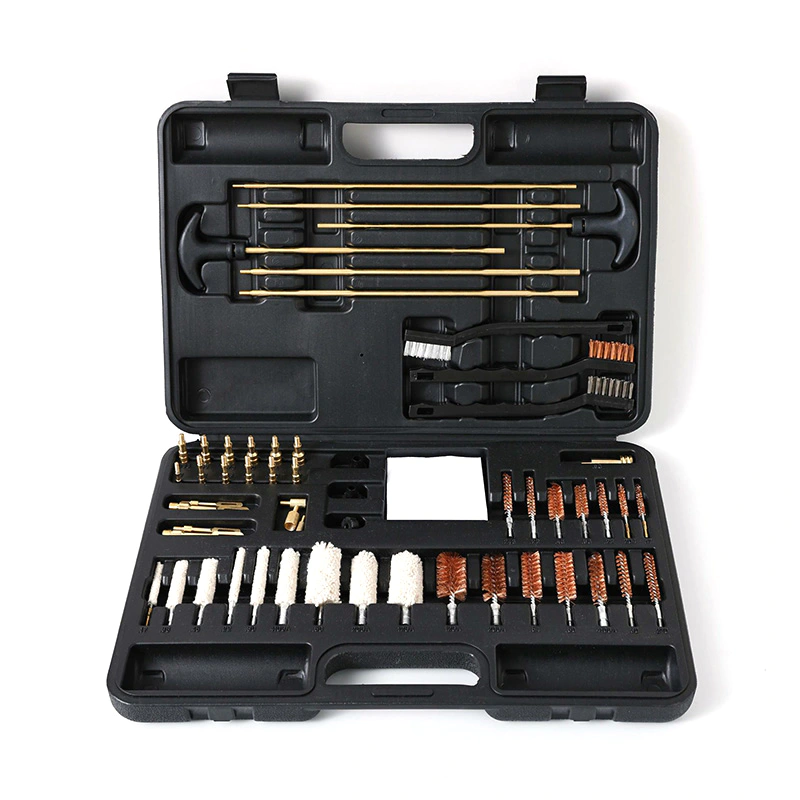
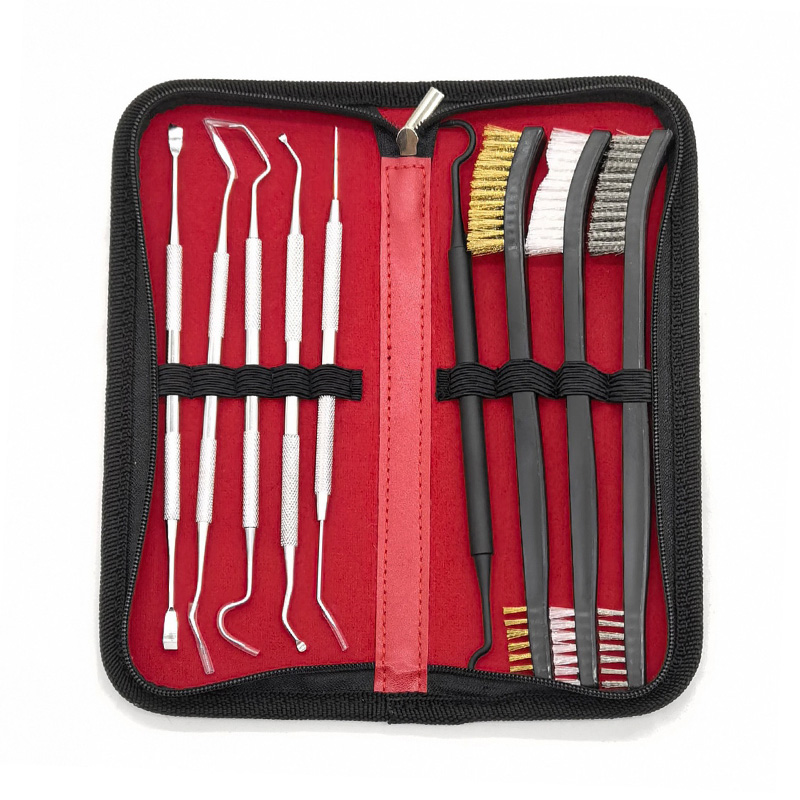
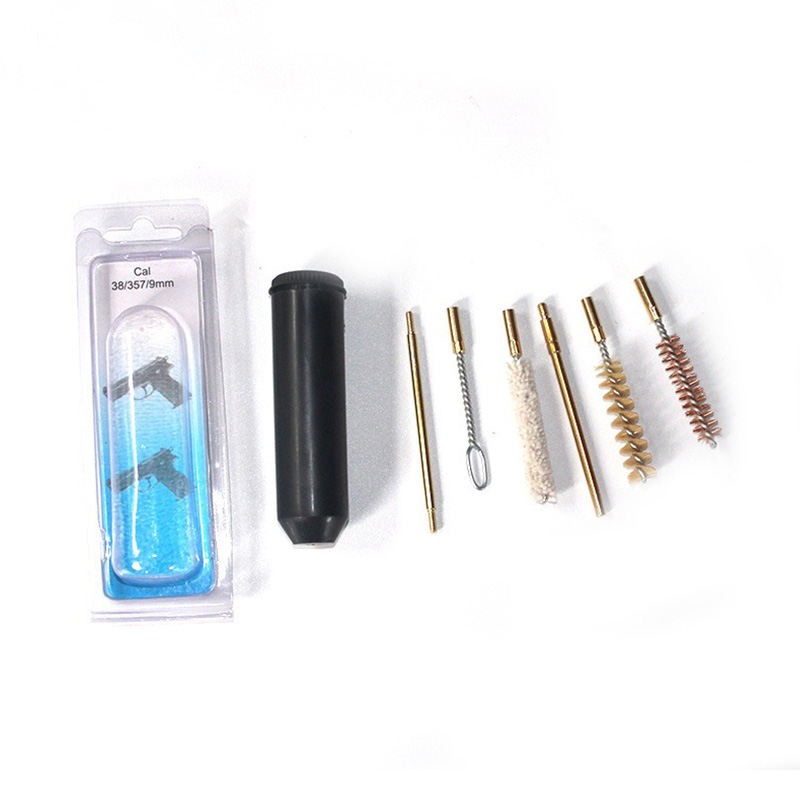
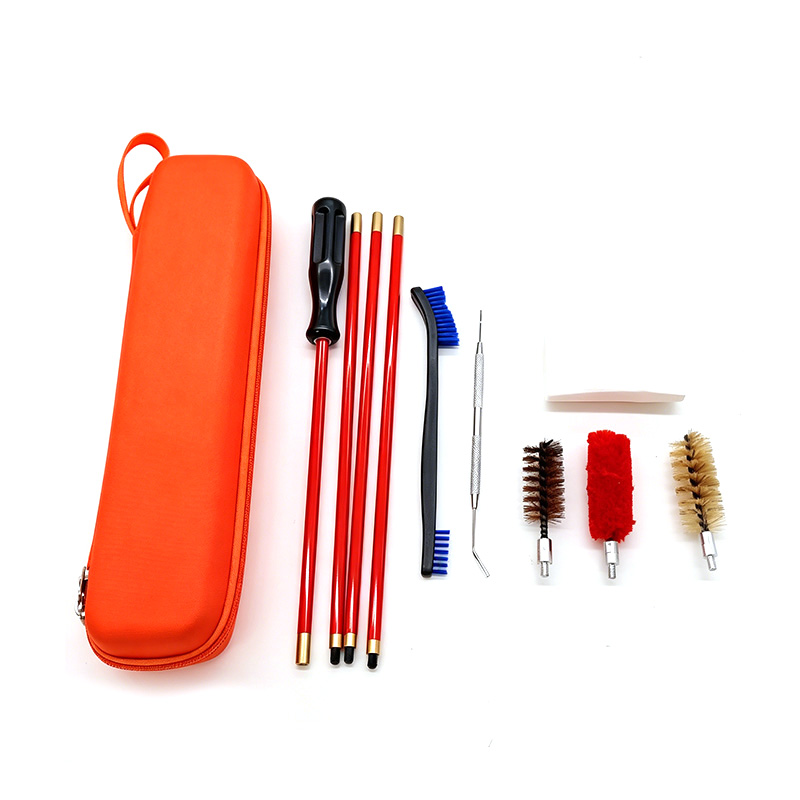
Reliable firearm maintenance depends on having the right cleaning tools organized in a practical, durable, and transport-ready format. The Full Caliber Gun Bore Cleaning Kit is designed to meet that requirement with a complete, structured kit intended for commercial distributors, tactical suppliers, sporting-goods retailers, and international cross-border e-commerce businesses. Rather than presenting a loose collection of individual tools, the kit combines brushes, cleaning accessories, a lint-free suede cloth, a universal chamber light guide, and a purpose-built hard plastic storage case.
Its value is particularly relevant to buyers who need more than a basic consumer cleaning set. Wholesale purchasers often look for stable product quality, consistent packaging, recognizable presentation, customization options, and dependable factory supply. This kit addresses those needs through a newly customized case mold, an organized interior compartment layout, optional private-label branding, and two packaging solutions that can be adapted to different distribution channels.
For end users, the kit offers a convenient approach to routine firearm maintenance. For distributors, it provides a product with a clear identity, strong shelf presentation, practical accessories, and opportunities for differentiation. For OEM and white-label customers, it offers a foundation that can be adapted through logo printing, packaging development, accessory selection, and kit configuration.
The Full Caliber Gun Bore Cleaning Kit belongs to the gun cleaning kits category and is intended for firearm cleaning applications. It is supplied in a boxed format with a green-and-black color scheme and is available in 36-piece copper and 36-piece plastic configurations according to the provided specifications. These configurations allow buyers to select a version that matches their target customer group, pricing structure, and intended product positioning.
The kit is manufactured for export-oriented distribution, with Europe identified as a main sales region and Amazon identified as a major downstream platform. This makes the product suitable for suppliers serving online retail, specialist firearm-accessory stores, tactical equipment businesses, hunting and sporting-goods channels, and international wholesale programs.
A key feature of the product is its full-caliber positioning. Buyers should always confirm the exact contents, thread standards, and firearm compatibility of a selected configuration before use, because firearm designs and accessory requirements vary. Within its intended use as a general firearm cleaning system, the kit is designed to help users manage routine bore cleaning, chamber inspection, surface wiping, and accessory organization in one portable package.
| Product Attribute | Provided Specification |
|---|---|
| Product name | Full Caliber Gun Bore Cleaning Kit |
| Product category | Gun Cleaning Kits |
| Product code | 2021 |
| Brand | Tongshun |
| Primary function | Firearm cleaning |
| Format | Boxed kit |
| Available configurations | 36-piece copper set and 36-piece plastic set |
| Brush head diameter | 22.2 mm |
| Bristle length | 50 mm |
| Handle material | Metal |
| Brush type listed | Copper wire brushes |
| Color | Green and black |
| Primary sales region | Europe |
| Downstream platform | Amazon |
| Customization | OEM, ODM, white-label packaging, and logo options |
Firearm maintenance is easier to perform consistently when the required tools are stored together and can be located quickly. Loose brushes, patches, rods, and cloths are easily misplaced, particularly when equipment is transported between a workshop, range, hunting location, training facility, or service environment. A complete kit reduces that problem by giving users a dedicated storage system for routine cleaning accessories.
A complete kit can also encourage a more orderly cleaning process. A user may begin by inspecting the firearm, selecting a suitable brush or cleaning accessory, working through the bore according to the firearm manufacturer’s instructions, removing residue with appropriate patches or cloth, and checking the result. The case helps keep the tools available for each stage instead of requiring the user to assemble equipment from multiple storage locations.
For commercial customers, completeness is also an important selling point. A well-organized set is easier to explain in product listings and easier for consumers to understand than a collection of unrelated accessories. The inclusion of a hard case, cleaning cloth, and chamber light guide gives distributors multiple product features to highlight in descriptions, comparison charts, packaging copy, and marketplace images.
From a procurement perspective, a kit format can simplify purchasing and inventory management. Instead of sourcing every cleaning accessory separately, buyers can purchase a coordinated product with a defined configuration. This can make it easier to calculate landed cost, prepare retail packaging, establish a recommended selling price, and create a repeatable wholesale program.
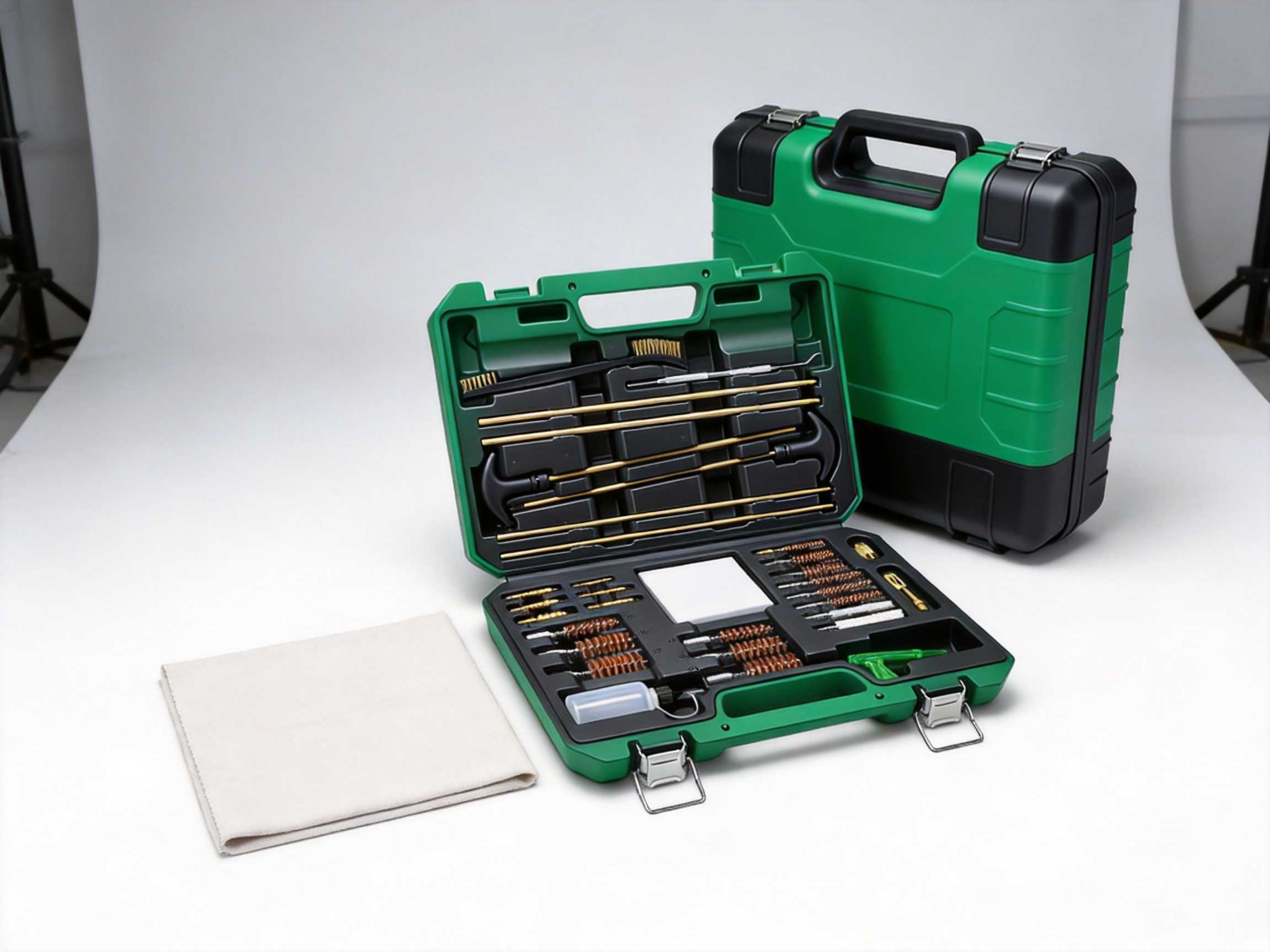
One of the most distinctive advantages of this product is the newly customized hard plastic storage case mold. The case is not merely an interchangeable container selected from a generic catalog. A dedicated mold gives the product a more recognizable physical identity and helps create separation from visually similar cleaning kits in competitive markets.
Product recognition matters in both physical and digital distribution. On a retail shelf, a distinct case shape can make the kit easier to identify. In an online marketplace, the case can serve as a strong visual element in the main product image and supporting gallery. For a private-label customer, the case creates a foundation for a consistent product presentation that can be combined with custom logos, printed labels, inserts, and packaging artwork.
The hard plastic structure also offers practical advantages during transport and storage. Cleaning brushes and metal accessories can be damaged or bent when packed loosely in soft bags. A rigid case provides a more protective environment and can help reduce disorder during shipping. It also gives the finished product a more substantial appearance than a simple plastic pouch or unstructured fabric bag.
The customized case mold can reduce imitation risk by giving the product a recognizable external design. No physical design can eliminate copying entirely, but a distinctive case makes it easier for a manufacturer or private-label customer to establish a recognizable product identity. This is especially useful for distributors that are building a long-term category position rather than competing only on the lowest initial price.
Case development also supports a more controlled packing process. When the internal layout is designed around the accessory configuration, each component can be assigned a defined position. This reduces the likelihood of accessories moving freely inside the package and helps packing staff identify missing components before cartons are sealed.
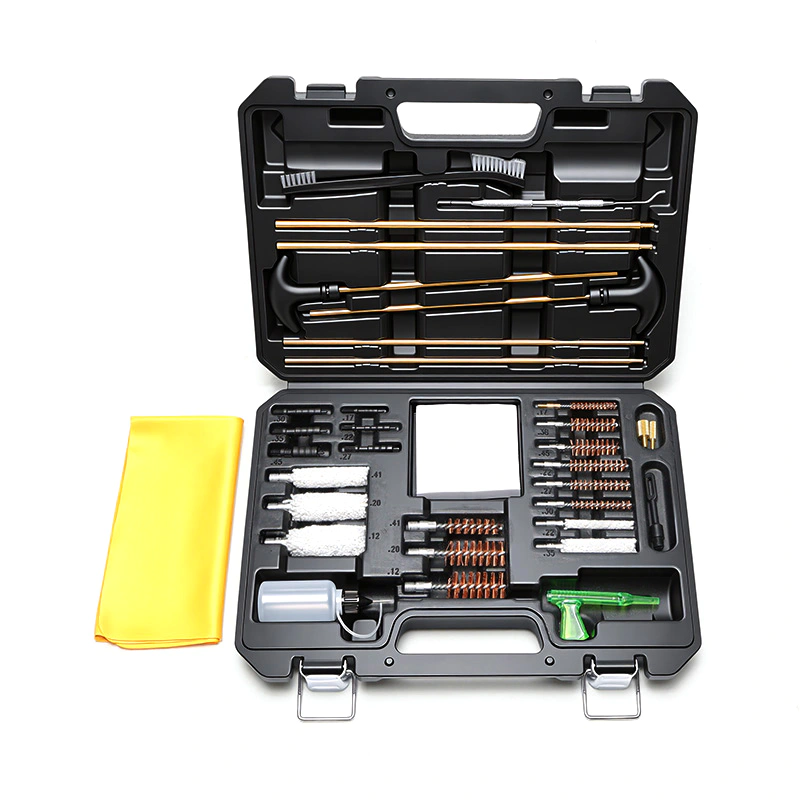
Full Caliber Gun Bore Cleaning Kit
The interior of the case uses a structured compartment layout intended to keep accessories in place during transport and field use. This feature improves the practical experience in several ways. Users can locate a brush or accessory more quickly, identify whether the kit is complete, and return each item to its proper position after cleaning.
Organization is particularly important for professional users and distributors serving demanding environments. Tactical suppliers, training organizations, maintenance teams, and field personnel may need to move equipment frequently. A compartmented case helps reduce the risk of small accessories being lost in a larger equipment bag or left behind at a work area.
A structured layout can also improve perceived quality. When a customer opens the case and sees that every tool has a defined location, the product appears more deliberate and professionally engineered. This first impression can influence product reviews, repeat purchases, and the willingness of retailers to allocate shelf or catalog space to the kit.
For OEM customers, the compartment design provides a useful starting point for customization. Depending on the required order quantity and technical feasibility, the accessory arrangement may be adapted to support a different kit configuration. A buyer may choose to emphasize copper brushes, plastic brushes, patches, rods, adapters, or other accessories based on the needs of a specific sales region or customer segment.
The organized case is also suitable for product photography. Each accessory can be displayed clearly in its assigned position, making it easier for online shoppers to understand what is included. Clear presentation helps reduce confusion over product contents and supports more accurate product listings.
The kit includes a 35 by 35 centimeter lint-free suede cleaning cloth. This cloth is designed to support a smooth, streak-free finish during the final wiping stage of maintenance. A lint-free material is useful when users want to remove surface residue without leaving visible fibers behind.
The generous cloth dimensions provide enough material for repeated folding and controlled handling. Users can create a clean working surface as needed instead of relying on a very small wipe that becomes saturated quickly. The cloth can also help protect finished surfaces from direct contact with rougher materials during routine handling, provided that it is used according to the firearm and finish manufacturer’s recommendations.
Another important commercial advantage is the support for custom logo printing. This gives private-label customers an additional branding surface beyond the box and case. A printed cloth can reinforce brand recognition each time the product is used and can make a standard cleaning kit feel more like a complete branded maintenance system.
For distributors, the cloth is a useful feature to highlight because it is easy for consumers to understand. Product listings can present it as a finishing accessory that complements brushes and other cleaning components. It also increases the perceived completeness of the set without requiring a complicated explanation of technical specifications.
As with all cleaning materials, the cloth should be kept clean and used appropriately. Users should avoid transferring abrasive particles from one surface to another. A responsible product description can recommend following the firearm manufacturer’s maintenance instructions and replacing or washing the cloth when it becomes contaminated.
The kit also includes a universal chamber light guide accessory. Its purpose is to help users inspect barrel and chamber conditions more efficiently. Better visibility can support faster diagnostics by making it easier to identify visible residue, obstructions, moisture, or areas that may require additional attention.
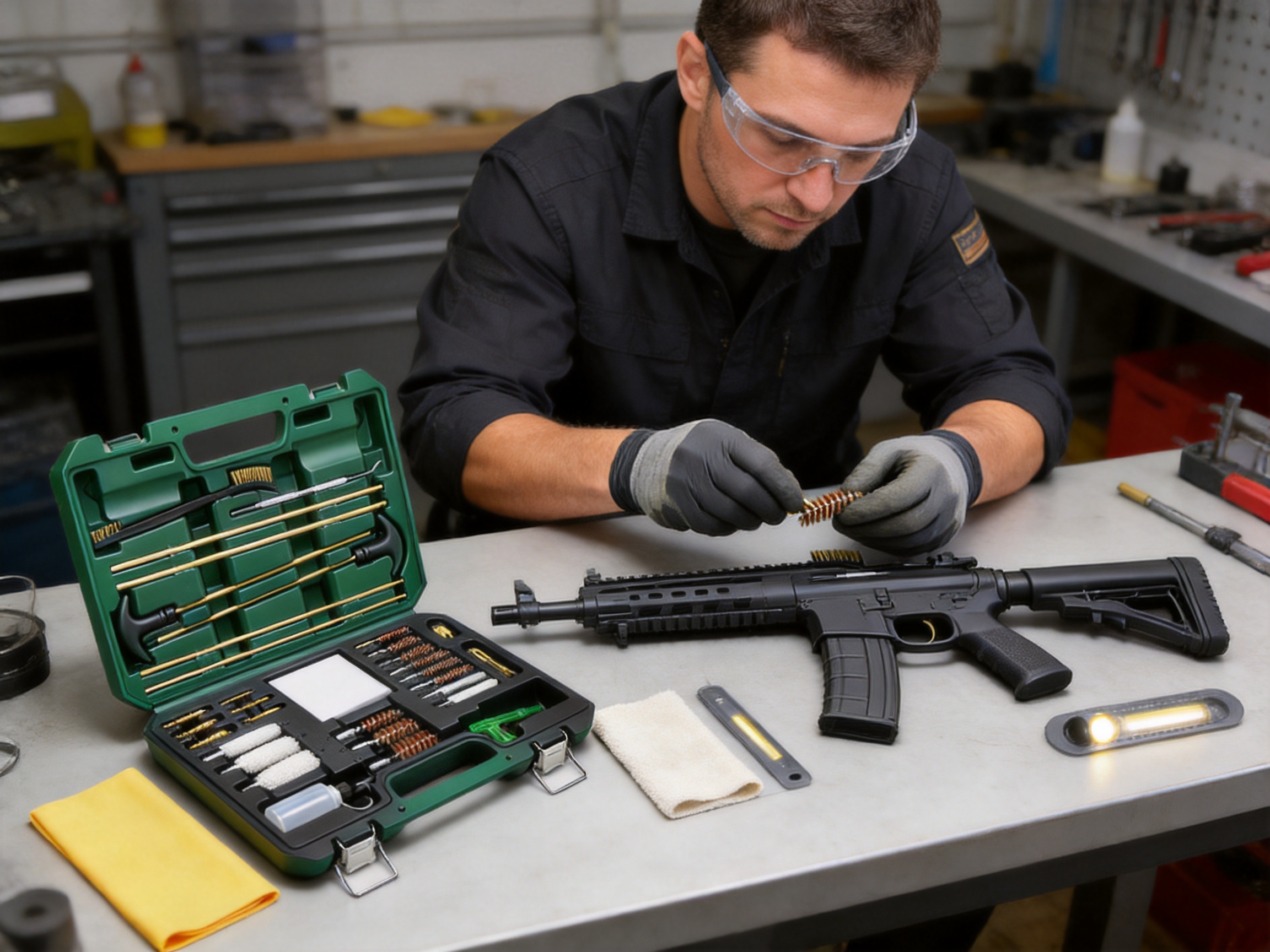
Inspection is an important part of responsible maintenance. Cleaning should not be treated as a purely mechanical process in which brushes are used without observation. A user should first verify that the firearm is unloaded and safe according to established handling procedures, then inspect the relevant areas before and after cleaning. A light guide can support that visual checking process.
The accessory is described as compatible with firearm platforms in a universal format, but users should still confirm suitability for their particular firearm before use. The term universal is useful for commercial positioning, yet individual chamber dimensions, access points, and firearm designs may differ. Retail packaging and product documentation should encourage customers to consult the firearm manufacturer’s instructions.
Including an inspection accessory gives the kit an advantage over basic cleaning sets that contain only brushes and rods. It broadens the product from a collection of cleaning tools into a more complete maintenance and inspection solution. That broader functionality can help distributors create a stronger value proposition for customers who want a practical kit for routine care.
The supplied specifications identify 36-piece copper and 36-piece plastic configurations. This gives buyers the option of offering different versions for different use preferences and price points. Copper or brass-type brush components are commonly selected for applications where controlled mechanical cleaning is needed, while plastic or nylon components may be preferred for gentler brushing and general-purpose maintenance.
Material selection should always be matched to the firearm manufacturer’s recommendations and the surface being cleaned. Users should avoid assuming that every brush material is suitable for every component. The availability of different configurations allows distributors to communicate those distinctions more clearly and serve customers with different maintenance preferences.
The listed brush head diameter is 22.2 millimeters, and the listed bristle length is 50 millimeters. These figures provide useful reference information for procurement teams and product listing departments. However, buyers should request a detailed component list, thread information, dimensional drawings, and compatibility guidance when preparing technical catalogs or marketplace listings.
The kit is associated with copper wire brushes and includes metal handles. A metal handle can provide a solid grip and a durable feel during normal use. The handle diameter and overall length are not specified in the supplied information, so these dimensions should be confirmed for customers who require precise technical documentation or compatibility with particular accessories.
The product category supplied by the manufacturer includes bronze and brass brushes, bore gun barrel cotton mops, nylon and other material brushes, cleaning rods and adapters, cleaning patches and cloth, OEM and white-label customization, and gun cleaning rope. This broader category capability is valuable for buyers who want to build a coordinated product range rather than purchase one isolated kit.
Many cleaning kits compete with similar contents and generic packaging. A customized hard case helps this product establish a stronger visual identity. The case can be incorporated into product photography, retail packaging, trade presentations, and distributor catalogs, giving buyers more opportunities to differentiate their offering.
The structured interior layout presents the kit as a coordinated system rather than a loose assortment. This can improve customer confidence, reduce accessory loss, and make the product more convenient for field use. A well-organized case also supports efficient inspection during packing and receiving.
The inclusion of the lint-free suede cloth and universal chamber light guide expands the kit’s usefulness beyond basic bore brushing. Users can clean, wipe, organize, and inspect with a single product. This broader coverage can help distributors position the item as a complete maintenance kit.
Logo printing on the cloth, custom packaging, and configurable kit contents give OEM and white-label buyers several branding opportunities. A private-label customer can create a more coherent product identity than would be possible with an off-the-shelf generic kit carrying only a removable sticker.
Direct factory supply can simplify communication and reduce dependence on multiple intermediaries. Buyers can discuss product specifications, packaging, quality requirements, and customization with the manufacturing source. This may support more consistent repeat orders and faster resolution of technical questions.
The two available packaging solutions are intended to meet different distribution needs, including B2B procurement, wholesale distribution, and international firearm cleaning product lines. Packaging can be selected according to the customer’s sales channel, shipping requirements, branding strategy, and target price.
Because the manufacturer also supplies individual brushes, mops, rods, adapters, patches, cloths, and cleaning ropes, buyers can create a wider product family around the main kit. A distributor may offer an entry-level set, a full-caliber kit, replacement brushes, specialty accessories, and branded maintenance components from one manufacturing source.
Jinhua Tongshun Tool Factory was established in 1999 and operates as an enterprise integrating research and development, production, and sales. Its stated specialization includes gun cleaning kits, barrel cleaning brushes, and related firearm maintenance accessories. More than 26 years of manufacturing experience provide a substantial base for product development, process improvement, and export-oriented quality management.
The company operates a modern production facility with semi-automatic and fully automated production systems. This combination is significant because different components may require different production approaches. Automated systems can support repeatability and output for standardized operations, while semi-automatic processes can provide flexibility for product variations, customized packaging, and changing kit configurations.
Brush manufacturing requires control over several variables, including wire or filament selection, bristle positioning, attachment security, handle assembly, dimensional consistency, and surface finishing. A systematic factory process helps reduce variation between production batches. For buyers, this is important because inconsistent brush dimensions or loose components can lead to customer complaints and increased quality-control costs.
Case production also benefits from controlled tooling and inspection. The customized mold must be maintained so that case dimensions, closures, internal features, and external surfaces remain consistent. When a case is designed around a specific accessory layout, dimensional control becomes especially important because poorly fitted components can move during shipping or fail to sit correctly in their compartments.
Assembly and packing are additional areas where factory discipline affects product quality. The kit contains multiple pieces, so a missing accessory can compromise the customer’s experience even if the remaining components are manufactured correctly. A structured packing process should include component counting, visual inspection, placement verification, case closure checks, and carton-level documentation.
The company’s integrated R&D, production, and sales structure can support communication between market requirements and manufacturing decisions. Feedback from distributors can be used to refine packaging, adjust accessory combinations, improve product instructions, or develop new versions for specific markets. This is especially valuable for international buyers who need a product adapted to local retail expectations.
Large-scale production capability is also relevant to repeat orders. Distributors often need stable supply over several selling seasons rather than a one-time shipment. A factory with semi-automatic and fully automated systems may be better positioned to support regular production schedules, subject to confirmed capacity, material availability, and order requirements.
Quality control for a gun cleaning kit should address both individual components and the completed package. Brush heads should be checked for secure attachment, consistent bristle placement, and acceptable dimensions. Metal handles should be inspected for visible defects, proper assembly, and a comfortable, usable finish. Plastic components should be checked for molding quality, sharp edges, deformation, and fit.
The case should be inspected for closure function, surface consistency, compartment accuracy, and resistance to ordinary handling during packing and distribution. Since the case is one of the product’s principal differentiating features, visible defects can have an immediate effect on perceived value.
The cleaning cloth should be checked for size, material consistency, edge finishing, cleanliness, and print quality when custom branding is applied. Logo printing should be evaluated for position, legibility, color consistency, and resistance to normal handling. These checks are especially important for private-label customers because branding defects can affect the reputation of the buyer as well as the manufacturer.
The chamber light guide accessory should be inspected for completeness and basic functional condition. Product documentation should clearly state any limitations and should avoid suggesting that the accessory replaces safe firearm-handling procedures or professional inspection when required.
Finished kits should undergo a packing audit to confirm that the correct configuration has been assembled. A copper configuration and a plastic configuration should be clearly identified to reduce the risk of mixed inventory. Carton markings, product codes, quantities, and packaging versions should also be verified before shipment.
International buyers may request pre-production samples, approval samples, inspection standards, batch records, or third-party inspection arrangements. These requirements can be discussed during the quotation and order-confirmation process. Clear quality criteria at the beginning of a project reduce misunderstandings later.
The product is suitable for companies that want to launch or expand a branded firearm maintenance line without developing every component from the beginning. OEM and ODM services can support customized product selection, packaging, logos, and kit configurations. This provides flexibility for distributors that serve different market segments or operate under multiple brands.
Logo printing on the 35 by 35 centimeter suede cloth is one direct branding opportunity. The case, outer box, instruction insert, and shipping carton may provide additional branding surfaces depending on the selected packaging solution and order requirements. A consistent visual identity across these elements can make the product appear more established in online and offline channels.
Customization may also involve selecting between copper and plastic configurations, modifying the accessory combination, changing the color scheme where technically feasible, or creating different package sizes. Buyers should confirm minimum order quantities, tooling charges, sample requirements, production lead times, and artwork specifications before approving a custom program.
For private-label e-commerce sellers, packaging should be developed with product photography and marketplace requirements in mind. The front panel should communicate the core benefit quickly, while side or rear panels can show contents, material information, usage cautions, and brand details. High-quality images of the organized case can help customers understand the value of the kit before purchase.
For wholesale and tactical suppliers, a more technical presentation may be appropriate. Catalogs can emphasize case durability, compartment organization, configuration options, inspection accessories, factory supply, and repeat-order capability. A distributor may also bundle the kit with replacement brushes, cleaning ropes, patches, or additional cloths to create a complete maintenance assortment.
The kit can serve several commercial channels. In specialty firearm-accessory stores, it can be presented as a complete maintenance package for customers who want an organized solution. In tactical supply businesses, the hard case and portable format can be positioned as practical for transport and equipment storage. In sporting-goods channels, the product can complement hunting, shooting, and range equipment.
Online marketplaces require clear, accurate, and visually strong product information. The case should be shown open and closed, the major accessories should be displayed clearly, and the available configurations should be identified without ambiguity. Product copy should state that users must confirm compatibility and follow safe handling procedures.
International distributors may value the product’s export-oriented supply capability and customization options. The manufacturer states that its products are exported to more than 50 countries and regions. This experience can help support discussions about packaging expectations, documentation, carton packing, and market-specific requirements, although buyers should confirm all regulatory and import obligations for their destination country.
For Amazon and similar platforms, the kit offers several content angles: complete accessory organization, hard-case protection, lint-free finishing cloth, inspection light guide, private-label potential, and multiple configuration options. These features can be developed into bullet points, enhanced brand content, comparison charts, and instruction materials, provided that all claims accurately reflect the confirmed product specification.
For B2B procurement, buyers may focus less on consumer-facing language and more on supply reliability, production capacity, quality control, packaging efficiency, product codes, and customization. The factory-direct model can help purchasers communicate directly about these operational requirements.
Firearm cleaning products should be marketed as maintenance accessories, not as substitutes for safe handling, professional gunsmithing, or manufacturer instructions. Product descriptions should remind users to unload the firearm, verify its condition, work in a suitable area, and follow the firearm manufacturer’s maintenance recommendations before beginning any cleaning procedure.
Compatibility information should be presented carefully. The term full caliber indicates broad intended coverage, but it should not be interpreted as a guarantee that every component fits every firearm. Exact thread standards, accessory dimensions, and platform requirements should be confirmed before a product listing states compatibility with a specific firearm model.
Brush materials should also be described responsibly. Copper, brass, bronze, nylon, and other materials have different characteristics. Users should select the appropriate accessory for the surface and cleaning task. Distributors can improve customer satisfaction by including clear instructions and avoiding overly broad claims about universal suitability.
Responsible positioning strengthens the product’s professional image. It shows that the manufacturer and distributor recognize the importance of safe firearm maintenance and accurate technical communication. It also helps reduce returns caused by customers purchasing a product based on an unclear or exaggerated compatibility statement.
The hard plastic case creates a more organized shipping unit than a loose assortment of accessories. When placed correctly inside the case, components are less likely to move freely during ordinary transport. The case can then be placed into retail packaging or shipping cartons according to the selected distribution solution.
Packaging design should balance protection, product visibility, branding, and shipping efficiency. B2B buyers may prefer packaging optimized for carton quantity and warehouse handling, while e-commerce sellers may prioritize presentation, barcode placement, dimensional weight, and resistance to parcel delivery conditions.
Two packaging solutions are available to meet different distribution needs. Because specific packaging details are not provided, buyers should request drawings, dimensions, material specifications, carton quantities, and sample units before final approval. These details are important for freight calculations and warehouse planning.
The product code 2021 can support internal inventory management, provided that buyers coordinate it with their own stock-keeping system. Private-label customers may also assign their own SKU, barcode, and packaging identification while retaining the factory product code for production communication.
Color identification can support inventory differentiation. The listed green-and-black color scheme gives the kit a recognizable appearance, while separate labeling can distinguish the 36-piece copper and 36-piece plastic configurations. Clear carton markings are recommended when multiple versions are shipped together.
A distributor does not need to limit its offering to one complete kit. The manufacturer’s broader product categories support a layered assortment. The Full Caliber Gun Bore Cleaning Kit can serve as the flagship product, while individual bronze and brass brushes can function as replacement or specialty items. Nylon brushes can be offered for customers who prefer a different material approach.
Bore gun barrel cotton mops, cleaning rods, adapters, patches, and cloths can be sold as supplementary items or replenishment products. Gun cleaning rope can provide an additional option for customers seeking a compact maintenance accessory. This product-family approach can improve customer retention because buyers have a clear source for replacement and complementary items.
Retailers can also create good-better-best price structures. A basic accessory pack may target occasional users, the Full Caliber Kit may target customers wanting a complete organized solution, and a customized professional kit may target tactical suppliers or institutional buyers. The exact contents and pricing should be established according to production feasibility and market research.
For OEM customers, different configurations can be assigned to different channels. A consumer-facing version may emphasize simple instructions and attractive retail packaging. A professional version may include more detailed component information and a stronger case. A promotional version may use a branded cloth and simplified accessory selection for a particular campaign.
Before placing a wholesale or OEM order, buyers should confirm the complete component list for the selected configuration. The supplied information identifies 36-piece copper and 36-piece plastic sets, but the exact names, quantities, dimensions, materials, and thread standards of every piece should be documented in a product specification sheet.
Buyers should confirm the case dimensions, material, closure type, internal layout, color options, logo application method, and packaging configuration. They should request a sample of the finished case when the case mold is central to the product’s differentiation.
For the cloth, buyers should confirm the 35 by 35 centimeter size, material composition, edge treatment, logo area, printing method, and color limitations. Sample approval is recommended before mass production, especially when the cloth is intended to carry a prominent private-label mark.
For the chamber light guide, buyers should request product dimensions, operating requirements if applicable, compatibility guidance, and packaging placement. The product listing should use accurate language and avoid unsupported claims about universal fit.
Commercial terms should include minimum order quantity, sample charges, tooling charges if any, production lead time, payment terms, inspection arrangements, carton dimensions, shipping weight, and documentation requirements. Buyers should also clarify whether replacement components can be ordered separately after the initial shipment.
For international markets, importers should review applicable labeling, packaging, consumer-safety, customs, and transportation requirements. The manufacturer can provide commercial and product information, but the importer remains responsible for confirming the legal requirements of the destination market.
A strong retail listing should begin with the product’s main benefit: an organized full-caliber firearm bore cleaning kit in a protective hard case. Supporting points can mention the 36-piece configuration, the choice of copper or plastic set, the lint-free suede cloth, the chamber light guide, the metal-handled brush components, and the structured interior compartments.
The listing should explain that the case helps organize accessories during storage and transport. It should also state that the cloth supports final wiping and that the chamber light guide assists with visual inspection. These statements are specific, understandable, and connected to the actual product features.
Images should show the case closed, the case open with accessories arranged, the cloth and light guide, and the available configuration differences. A contents diagram can be particularly useful for reducing customer uncertainty. Technical claims should be verified against the final production sample before publication.
Instructional content should include safe handling reminders and compatibility guidance. It should not encourage users to disregard firearm manuals or use inappropriate tools on sensitive surfaces. Clear instructions help position the product as a professional maintenance accessory and can reduce avoidable misuse.
The kit is supplied as a firearm cleaning set with multiple brushes and related accessories in a hard plastic storage case. It includes a 35 by 35 centimeter lint-free suede cleaning cloth and a universal chamber light guide accessory. The available configurations are listed as a 36-piece copper set and a 36-piece plastic set. Buyers should request the final component list for the selected version.
Yes. The product is designed for commercial distributors, tactical suppliers, wholesale buyers, and international cross-border e-commerce businesses. Factory-direct supply, configurable packaging, and OEM and white-label services make it suitable for repeat procurement programs.
Yes. The manufacturer provides OEM, ODM, and white-label customization options. Custom logo printing is supported on the suede cloth, and packaging and kit configurations can be discussed according to order requirements.
The supplied specifications identify a 36-piece copper set and a 36-piece plastic set. The exact accessory composition and material details should be confirmed with the manufacturer before placing an order or publishing a detailed retail listing.
The included lint-free suede cloth measures 35 by 35 centimeters. It is intended to support a smooth, streak-free finish and may be customized with a private-label logo.
The chamber light guide helps users inspect visible barrel and chamber conditions more efficiently. It supports visual checking before or after maintenance, but it does not replace safe firearm-handling procedures, professional inspection, or the firearm manufacturer’s maintenance instructions.
No product should be assumed to fit every firearm without verification. Although the accessory is positioned for broad, universal use, customers should confirm dimensions, thread standards, and platform compatibility before use. Retailers should provide accurate compatibility information for the specific configuration they sell.
The supplied specification lists a brush head diameter of 22.2 millimeters. Buyers who require precise technical documentation should confirm the measurement and any related thread or interface details with the factory.
The listed bristle length is 50 millimeters. Additional details such as bristle material, density, and exact brush-by-brush dimensions should be requested when preparing a technical catalog.
The customized hard plastic case is designed to protect and organize the cleaning accessories. Its structured interior layout helps prevent accessory loss during transport or field use and gives the product a distinctive presentation for retail and private-label markets.
The product is manufactured by Jinhua Tongshun Tool Factory in Jinhua, Zhejiang Province, China. The company has operated since 1999 and specializes in firearm cleaning kits, barrel cleaning brushes, and related accessories.
The company operates semi-automatic and fully automated production systems and states that it supports large-scale orders. Actual capacity, lead time, and order scheduling should be confirmed for each project based on configuration, packaging, quantity, and customization requirements.
The company’s product categories include bronze and brass brushes, cotton mops, nylon and other material brushes, cleaning rods and adapters, patches and cloths, and cleaning ropes. Buyers should ask whether specific replacement items are available for their selected kit configuration.
Buyers should confirm the complete contents, dimensions, materials, thread standards, packaging version, logo requirements, minimum order quantity, production schedule, carton information, inspection requirements, and destination-market documentation. A pre-production sample is recommended for customized programs.
The Full Caliber Gun Bore Cleaning Kit combines practical maintenance accessories with a more distinctive and commercially useful product format. Its strongest advantages are the customized hard plastic storage case, structured interior organization, lint-free suede cloth, chamber light guide, multiple configuration options, and support for OEM and white-label development.
For end users, the kit provides an organized way to store and transport firearm cleaning tools. For distributors, it offers clear selling points and a stronger presentation than many generic loose-accessory sets. For private-label customers, it provides multiple branding surfaces and a factory-supported platform for developing a broader firearm maintenance product line.
Jinhua Tongshun Tool Factory adds value through long-term manufacturing experience, integrated research and development, semi-automatic and automated production systems, export experience, and the ability to supply related brushes, rods, mops, patches, cloths, adapters, and cleaning ropes. These capabilities can help buyers establish a consistent, scalable, and differentiated product program.
As with any firearm maintenance accessory, accurate compatibility information and responsible usage guidance are essential. When the product is specified, packaged, and marketed carefully, it can serve as a practical solution for wholesale distribution, tactical supply, international e-commerce, and customized firearm cleaning lines.
1. Product specification materials supplied for the Full Caliber Gun Bore Cleaning Kit, including configuration, dimensions, accessories, and packaging information.
2. Company profile materials supplied by Jinhua Tongshun Tool Factory, including manufacturing history, production capability, export experience, and OEM and ODM services.
3. General firearm maintenance and inspection principles, including safe handling, unloaded-firearm verification, and adherence to manufacturer instructions.
4. General quality-control practices for brush assemblies, molded plastic cases, textile accessories, printed branding, and multi-component retail kits.
5. General wholesale and private-label product development practices for international distribution, packaging approval, inventory control, and marketplace presentation.