English
 русский
 Español
 عربى

HUNTACE HUNTACE HUNTACE HUNTACE HUNTACE
HUNTACE HUNTACE HUNTACE HUNTACE

Firearm maintenance depends on more than cleaning the bore. Small gaps, recesses, slide rails, locking surfaces, trigger-area spaces, metal joints, and other difficult-to-reach locations can collect carbon residue, dust, fouling, oxidation, and old lubricant. If these deposits are left in place, they may interfere with smooth operation, complicate inspection, and accelerate surface deterioration. A compact, durable, and controllable brush is therefore an important part of a complete firearm maintenance system.
The 7-Inch Gun Cleaning Brush Gap and Rust Removal Tool is designed for these demanding cleaning tasks. Its extended handle, interchangeable bristle options, compact brush head, and practical packaging make it suitable for firearm cleaning professionals, shooting-sports retailers, maintenance distributors, tactical equipment suppliers, and general metal-care markets. Available with brass, stainless steel, phosphor bronze, or nylon bristles, the brush can be matched to different levels of contamination and different surface sensitivities.
Manufactured by Jinhua Tongshun Tool Factory in Jinhua, Zhejiang, China, the product is supported by direct-factory production, quality control, OEM and ODM services, flexible packaging, and experience in exporting firearm cleaning accessories to international markets. The combination of functional design and manufacturing capability makes this tool suitable for both retail sales and wholesale distribution.
Firearms contain many narrow spaces that cannot be cleaned effectively with a large cloth, conventional patch, or standard bore brush. These spaces may include the edges of moving components, recesses around mechanical assemblies, grooves in metal parts, and areas where residue accumulates after repeated use. Even when a firearm appears clean from the outside, deposits may remain hidden in these locations.
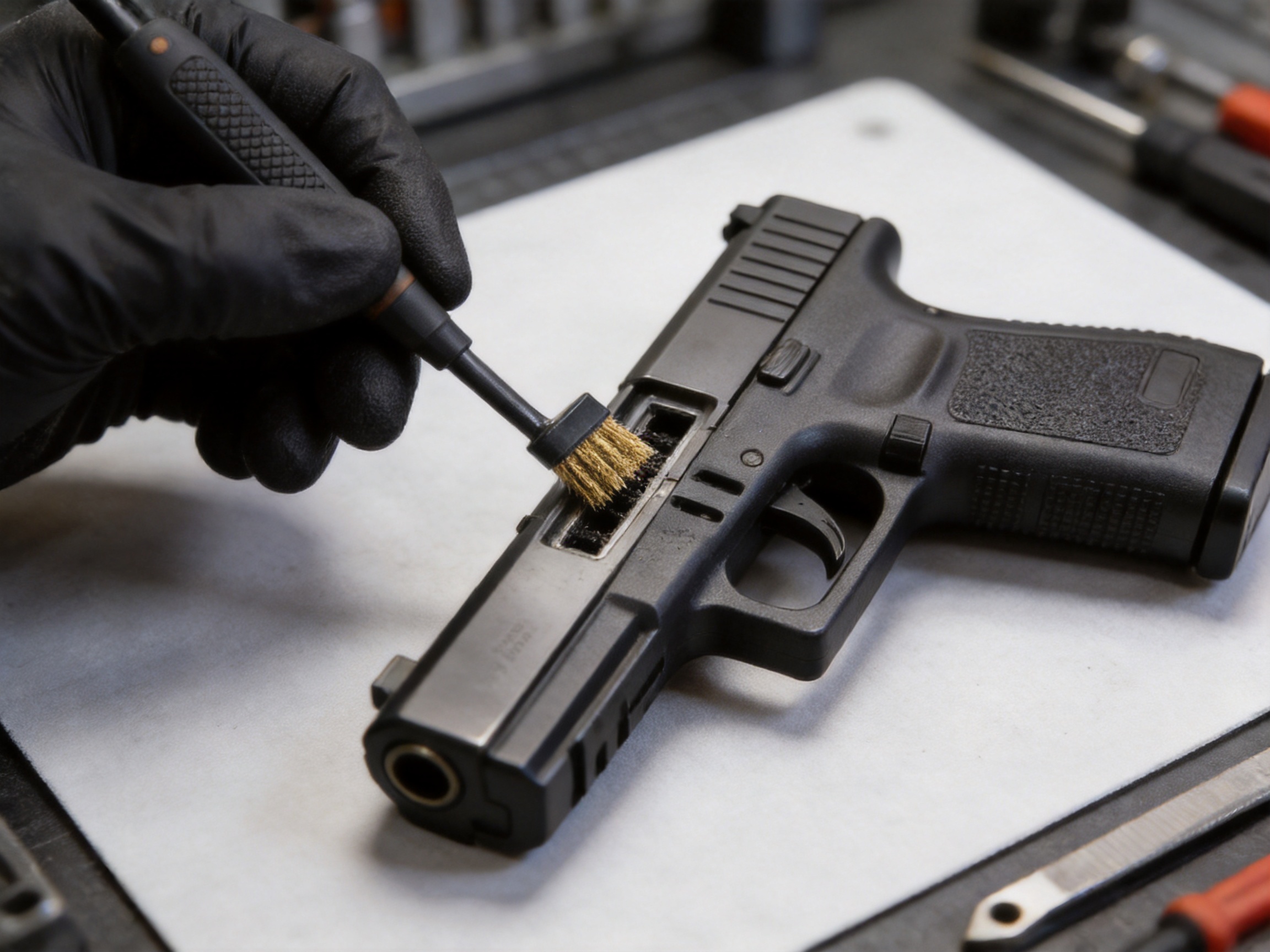
A gap-cleaning brush provides a practical way to loosen and remove material from areas where fingers and larger tools cannot reach. The user can apply controlled brushing pressure to break up residue before wiping or flushing the area with an appropriate maintenance product. This two-step process is generally more effective than attempting to wipe away compacted debris with a cloth alone.
Different surfaces require different cleaning approaches. A delicate coated part may need soft nylon bristles, while moderate oxidation on an unfinished metal component may require brass or phosphor bronze. Heavy rust or firmly bonded deposits may call for stainless steel, provided that the user confirms the material is appropriate for the surface being cleaned. Offering several bristle choices allows distributors and end users to select a suitable brush rather than relying on one universal material for every application.
The 7-Inch Gun Cleaning Brush Gap and Rust Removal Tool has been developed as a compact hand tool for detailed maintenance. The total length is approximately 180 millimeters, or 7 inches, giving the user additional reach while maintaining direct control. The extended format helps keep the hand away from contaminated surfaces and allows access to recessed areas without requiring a long, flexible cleaning rod.
The brush head has a diameter of approximately 20 millimeters, with a bristle length of approximately 12 millimeters. This configuration offers a practical balance between coverage and access. The head is large enough to work across a useful area, but compact enough for detailed cleaning around firearm components and other narrow metal spaces.
The handle is made from plastic and features a thickened, anti-slip design. A secure grip is particularly valuable during rust removal because the user may need to apply repeated strokes or moderate pressure. The handle also improves control during delicate work, helping the operator maintain the intended brushing angle and avoid unnecessary contact with adjacent surfaces.
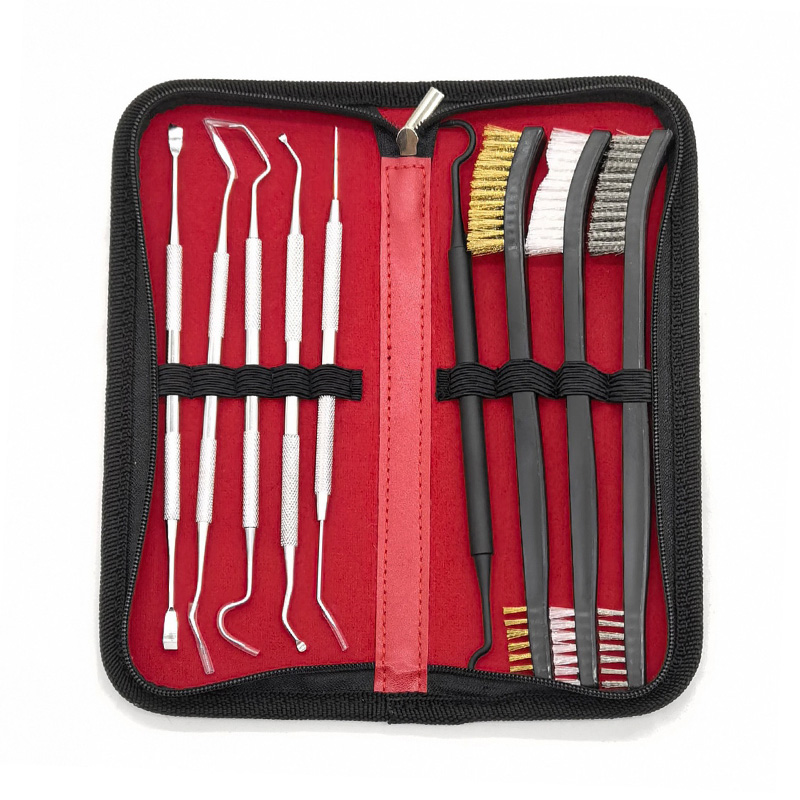
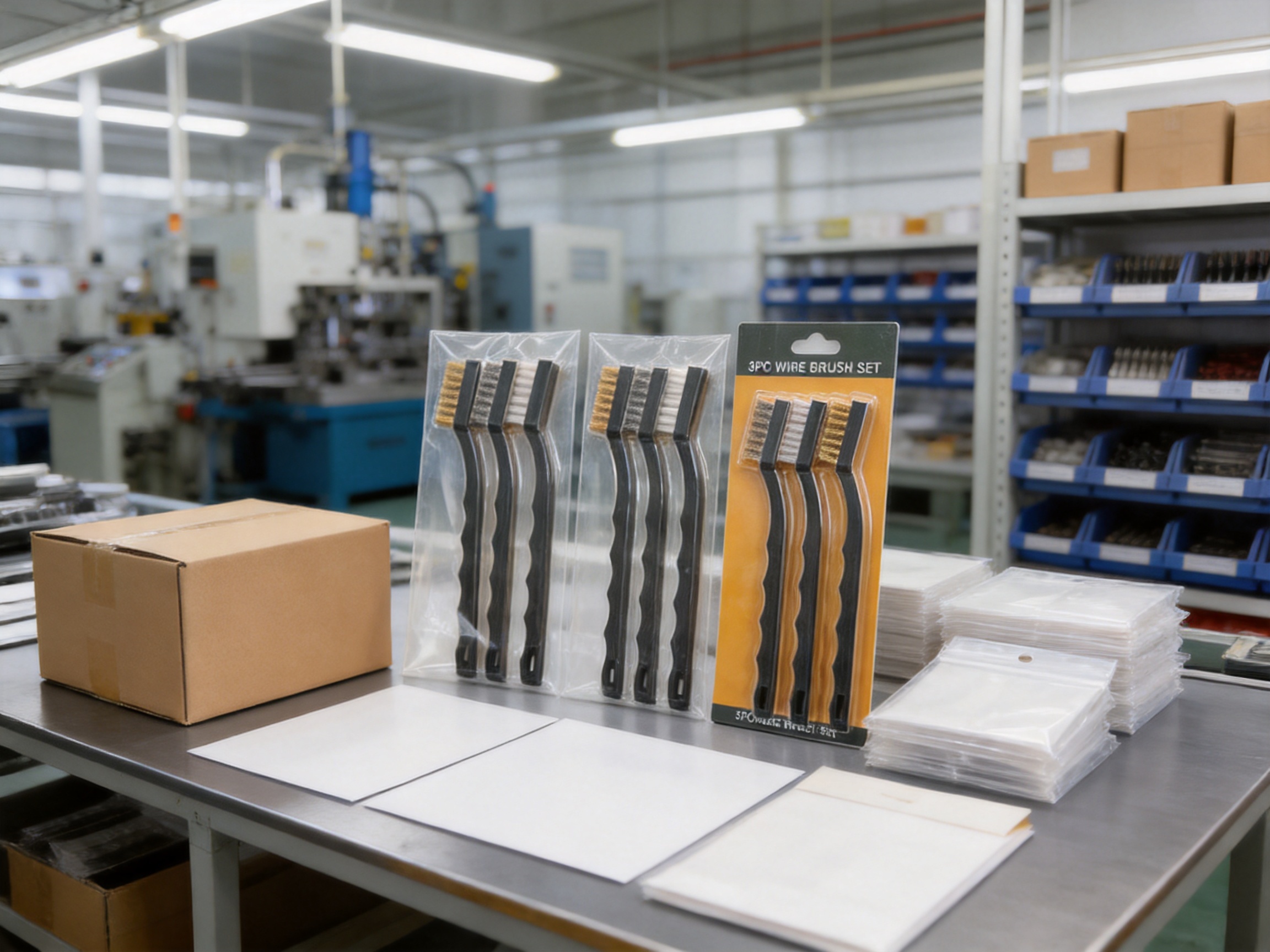
The product can be supplied as a single brush or as a multi-brush combination. Example combinations include nylon, stainless steel, and brass or phosphor bronze options. Transparent bag packaging supports simple product identification and is suitable for retail display, warehouse handling, and wholesale shipment.
| Item | Specification |
|---|---|
| Product type | Gun cleaning gap and rust removal brush |
| Primary application | Firearm cleaning and metal surface maintenance |
| Total length | Approximately 180 mm / 7 inches |
| Brush head diameter | Approximately 20 mm |
| Bristle length | Approximately 12 mm |
| Handle material | Plastic |
| Handle design | Thickened, ergonomic, anti-slip grip |
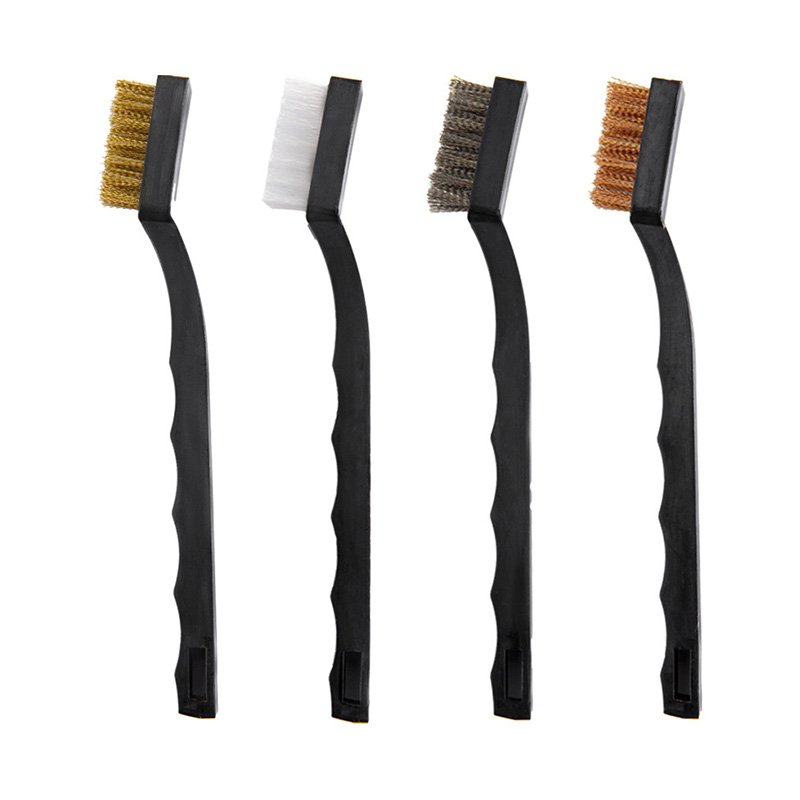
| Bristle options | Brass, stainless steel, phosphor bronze, and nylon |
| Available formats | Single brush or multi-brush combinations |
| Packaging | Transparent bag packaging or customized OEM packaging |
| Origin | Jinhua, Zhejiang, China |
7-Inch Gun Cleaning Brush Gap Rust Removal Tool
One of the most important advantages of this product is the availability of several bristle materials. Cleaning requirements vary according to the type of residue, the condition of the surface, and the level of abrasion that can be safely tolerated. A selection of bristle types enables a supplier to serve different customers and allows an end user to choose a more appropriate tool for each task.
Brass wire is suitable for mild rust removal, residue loosening, and general cleaning where a relatively gentle metal brush is preferred. Compared with harder steel wire, brass is a practical choice for maintenance applications that require controlled abrasion. It can help remove surface deposits while reducing the likelihood of unnecessary scratching when used appropriately.
Brass brushes are often useful for routine firearm maintenance, especially when the operator is cleaning metal components that require more cleaning force than nylon can provide. They can also be used on selected tools, hardware, and general metal surfaces. The brass option gives distributors a familiar product for customers who want a metal brush that is less aggressive than stainless steel.
Stainless steel wire is intended for more aggressive cleaning. It can help loosen heavy rust, oxidation, compacted debris, and stubborn deposits that are difficult to remove with softer bristles. This makes it valuable for restoration, intensive maintenance, and general industrial cleaning.
Because stainless steel is more aggressive, it should be selected carefully. Users should consider the hardness, coating, finish, and condition of the surface before brushing. The tool is best used with controlled pressure and short, deliberate strokes. A professional cleaning kit can include stainless steel alongside softer options so that the operator can select the correct level of abrasion rather than using the strongest brush by default.
Phosphor bronze offers a combination of durability and controlled cleaning performance. It is designed for users who want a long-lasting metal brush for repeated maintenance and industrial-grade use. The material is suitable for cleaning tasks that require more strength than nylon while maintaining a more controlled profile than an overly aggressive steel brush in many applications.
The phosphor bronze option can be positioned as a premium or professional-grade selection within a brush set. Its durability is useful for firearm maintenance distributors, service workshops, tactical equipment suppliers, and buyers who require tools for frequent use. Including phosphor bronze in a multi-brush set can increase the perceived value of the product while giving customers a specialized option for recurring maintenance work.
Nylon is the preferred choice for scratch-sensitive surfaces, coated parts, painted components, and general dust or residue removal. Nylon bristles can loosen light debris without the abrasion associated with metal wire. They are particularly suitable when the user’s priority is surface protection.
A nylon brush can also be used for preliminary cleaning before a stronger brush is selected. For example, an operator may begin with nylon to remove loose particles, then use brass or phosphor bronze for more persistent residue. This staged approach helps reduce unnecessary wear and gives the user greater control over the cleaning process.
Many low-cost brushes provide only a short handle, a single bristle material, or an oversized head. These limitations can reduce usability in firearm maintenance. The 7-inch design addresses several of these common weaknesses through its length, handle profile, head dimensions, and material choices.
A 7-inch handle gives the operator more distance from the working area than a short household brush. This can improve comfort when cleaning contaminated components and make it easier to reach recessed sections. The additional length is also useful when the user is wearing gloves or working around equipment where finger access is limited.
Unlike a flexible cleaning rod, the rigid handle transfers hand movement directly to the bristles. This makes it suitable for focused scrubbing and short back-and-forth strokes. The user can control both the direction and pressure of the brush more accurately than with a tool that bends under load.
The thickened plastic handle is designed to improve grip comfort and control. A narrow, smooth handle can become uncomfortable during repeated brushing, especially when the operator must remove rust or compacted residue. A more substantial grip reduces the need to pinch the tool tightly and supports more stable handling.
The anti-slip surface also has practical value in field and workshop conditions. Cleaning products, oil, moisture, and gloves can all affect grip. A handle designed for secure handling helps the operator maintain control and reduces the chance of the brush slipping into an adjacent component or work surface.
The approximately 20-millimeter brush head is sized for detailed work rather than broad industrial sweeping. It can reach firearm gaps, edges, grooves, and narrow metal areas while still covering enough surface to make cleaning efficient. The approximately 12-millimeter bristles provide working depth without creating an excessively bulky profile.
This size also makes the tool versatile beyond firearms. It can be used for selected hand tools, mechanical parts, hardware, workshop equipment, and other metal-maintenance tasks. This broader application range can help distributors market the brush to customers who need a compact utility brush in addition to a firearm-specific cleaning tool.
For distributors, product value is determined not only by technical function but also by assortment flexibility, packaging, supply stability, and the ability to meet different market requirements. This brush supports these commercial needs through multiple configurations and direct-factory production.
Suppliers can offer a single brass, stainless steel, phosphor bronze, or nylon brush, depending on the market. They can also provide combination packs that group different bristle types together. A three-brush combination, for example, can give the customer a soft, medium, and more aggressive cleaning option in one package.
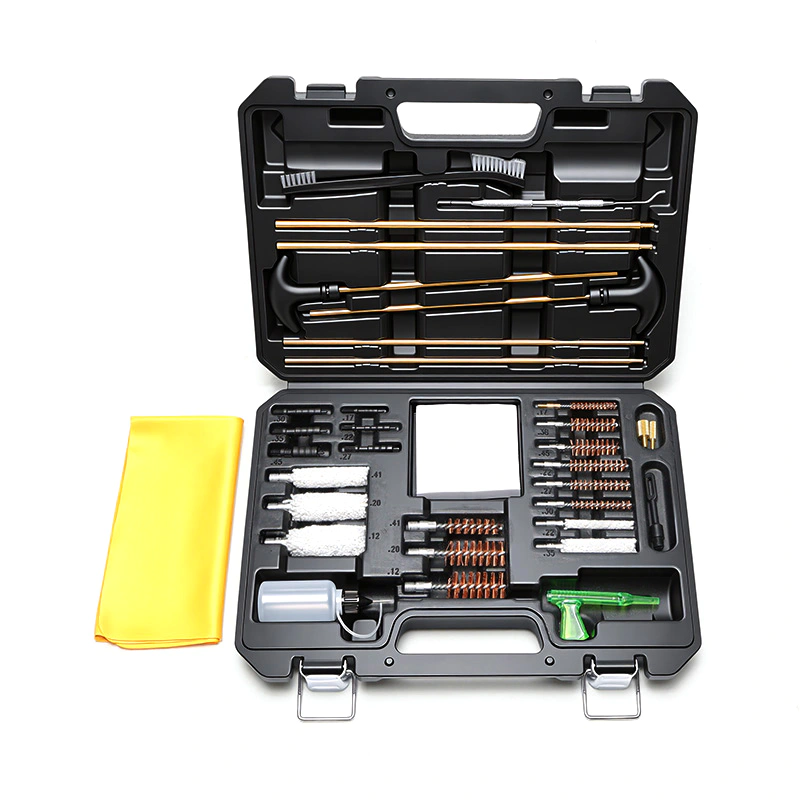
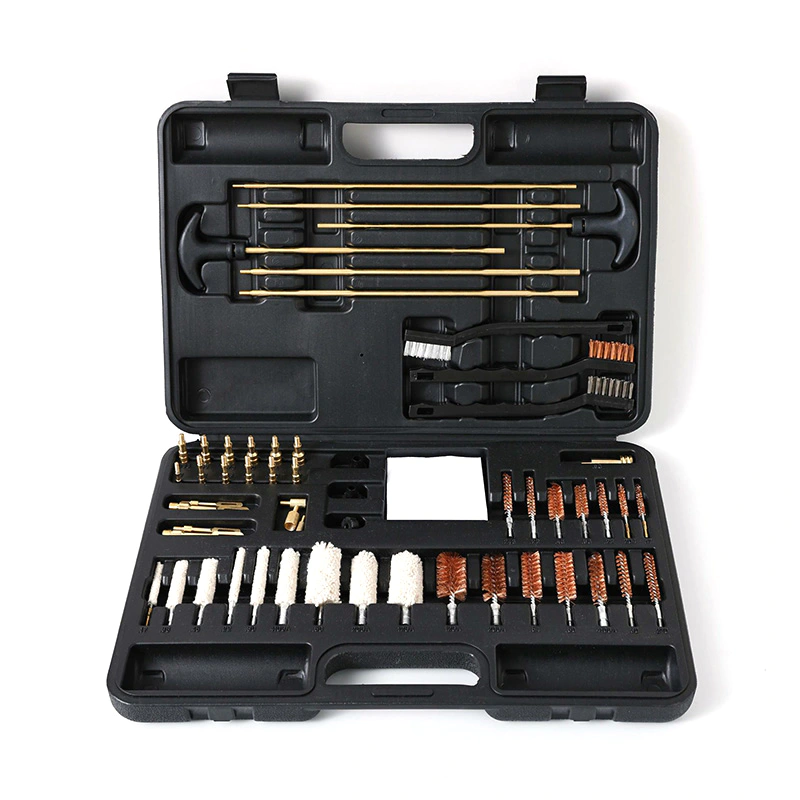
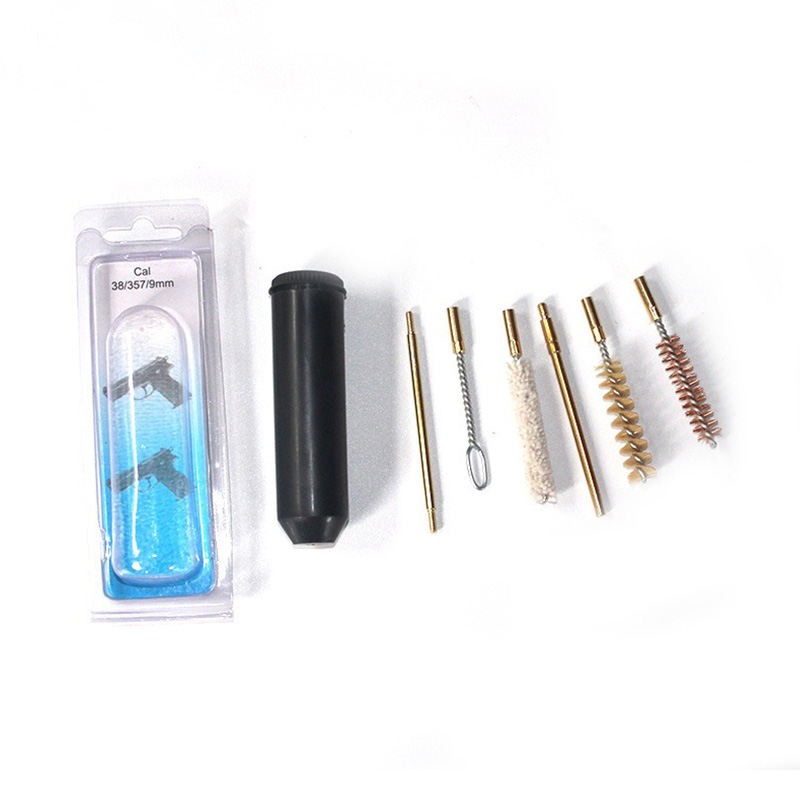
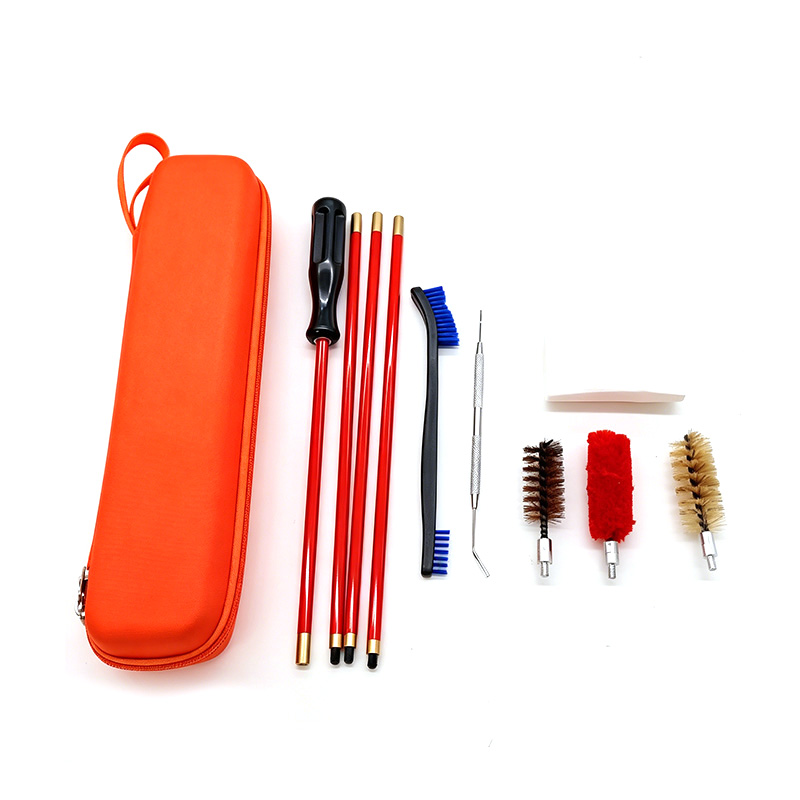
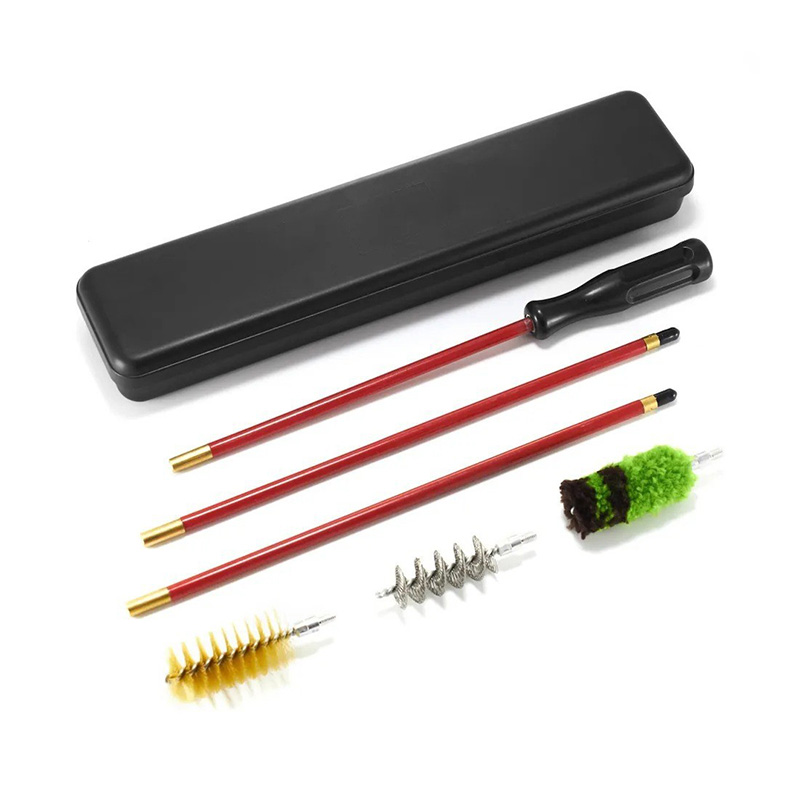
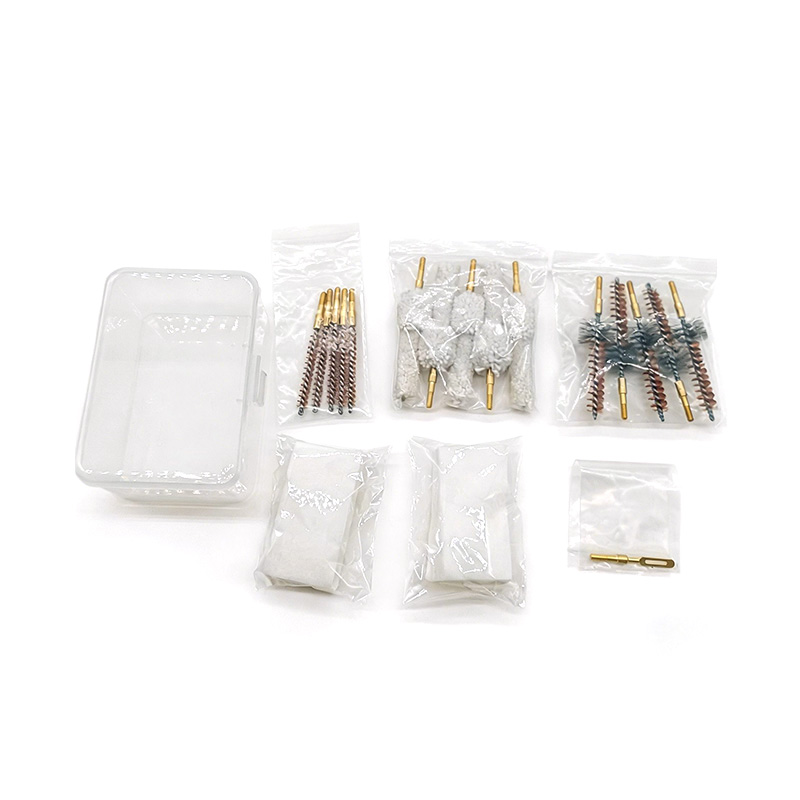
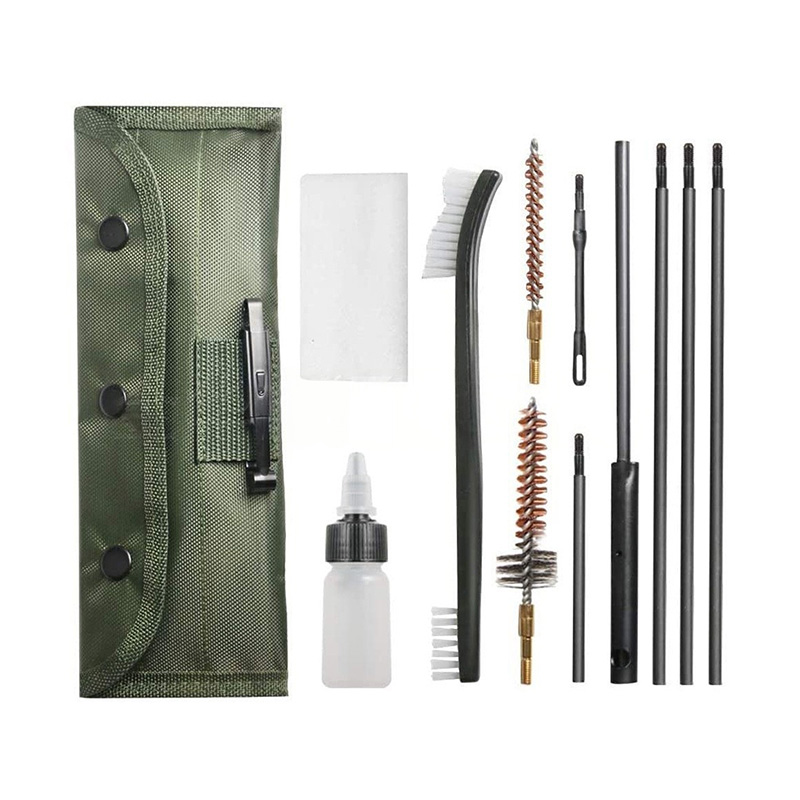
Multi-brush sets are particularly suitable for firearm cleaning kits. They can be combined with bore mops, cleaning rods, adapters, patches, cloths, and other maintenance accessories. This allows distributors to create entry-level, professional, or specialized product ranges without changing the core brush design.
Transparent bag packaging lets customers see the brush type and quantity before purchase. It also simplifies product identification in a warehouse or distribution center. For wholesalers, the packaging can support efficient counting, sorting, and shipment preparation.
OEM packaging is available for buyers who require a private-label presentation. Customized packaging may include a buyer’s logo, product name, barcode, language requirements, instructions, or set configuration, subject to production confirmation. This gives distributors an opportunity to develop a branded cleaning accessory range while sourcing from an experienced manufacturer.
The tool can be positioned for firearm maintenance, tactical cleaning, workshop use, metal surface care, rust removal, polishing preparation, and general equipment maintenance. This wider application profile helps reduce dependence on a single sales channel.
For online marketplaces and specialist retail stores, the product can be listed under firearm cleaning accessories, brass brushes, rust removal tools, detailing brushes, or workshop cleaning tools, provided that the product description remains accurate and complies with the requirements of the relevant marketplace and destination country.
Jinhua Tongshun Tool Factory was established in 1999 and specializes in gun cleaning kits, barrel cleaning brushes, and related firearm maintenance accessories. With more than 26 years of manufacturing experience, the company has developed capabilities in product development, production, packaging, and export support.
The factory operates a production facility using semi-automatic and fully automated systems. The use of automation can improve repeatability in high-volume production, while semi-automatic processes provide flexibility for different brush structures, materials, and packaging requirements. A combination of these systems is valuable for buyers who need both stable quality and product customization.
Brush manufacturing requires attention to several details, including bristle selection, bristle density, insertion or attachment, handle molding or assembly, trimming, alignment, finishing, inspection, and packaging. Inconsistent bristle length or a poorly secured handle can affect the customer’s perception of quality and the tool’s performance in use.
A direct factory with established production systems can coordinate these stages more efficiently than a trading channel that depends on multiple outside suppliers. Centralized production management supports better communication between product development, manufacturing, quality inspection, and packaging teams.
For wholesale buyers, consistency is especially important. Retail customers expect the same dimensions, appearance, and performance from every reorder. Stable manufacturing processes help reduce variation between batches and support long-term product planning.
The company integrates research and development with production and sales. This structure supports customization for customers that require different bristle combinations, handle colors, package quantities, product markings, or private-label presentation.
OEM and ODM services can be valuable to importers and brand owners. OEM production allows a buyer to sell an existing design with customized branding or packaging. ODM cooperation may involve adapting the product specification, set composition, appearance, or packaging concept for a particular market.
Customization should be confirmed according to order quantity, material availability, packaging requirements, and production scheduling. Buyers can request samples before placing a larger order to verify the brush dimensions, bristle behavior, handle feel, and packaging presentation.
The factory’s products are exported to more than 50 countries and regions. This international experience supports communication with overseas buyers and provides familiarity with the practical needs of cross-border distribution, including documentation, packing arrangements, product labeling, and shipment coordination.
The company’s primary sales regions include Europe, while the product is intended for cross-border export markets. International buyers can therefore discuss their destination-market requirements directly with the manufacturer. Product claims, packaging language, and market compliance should always be confirmed for the specific country of sale.
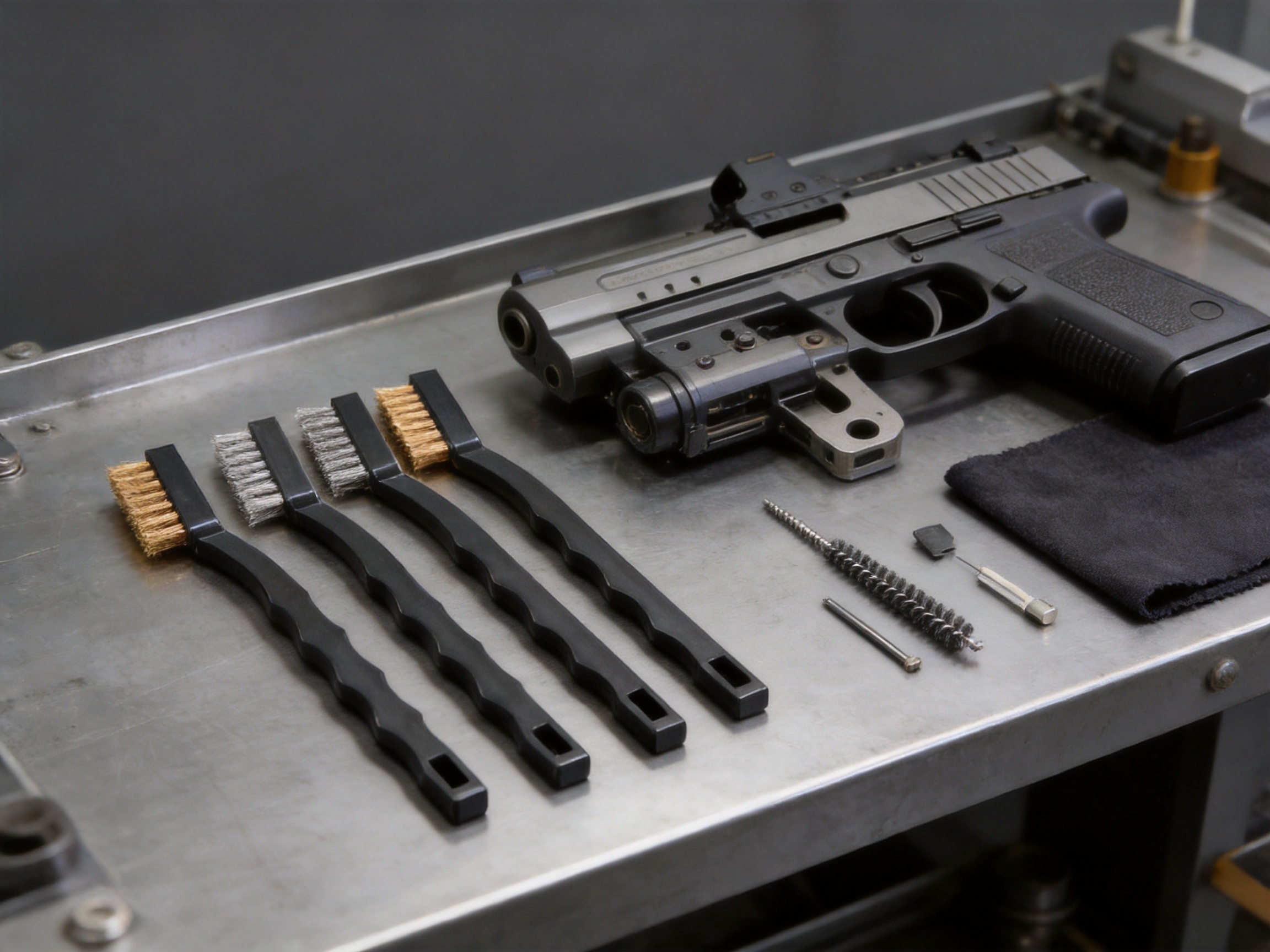
When evaluating a firearm cleaning brush, buyers should consider more than the listed material. Bristle security, handle strength, dimensional consistency, surface finish, packaging quality, and suitability for the intended cleaning task all affect the end-user experience.
Bristles should remain securely attached during normal use. Loose wires or fibers can reduce cleaning efficiency and create inconvenience during maintenance. A controlled manufacturing and inspection process helps identify brushes with insufficient attachment or visible defects before shipment.
The handle should withstand repeated gripping and brushing without excessive flexing, cracking, or separation from the brush head. The thickened plastic design is intended to provide a durable and comfortable working platform for both field and workshop use.
Consistent total length, head diameter, and bristle length are important for product presentation and repeat orders. Accurate dimensions also help distributors create reliable product descriptions and ensure that multi-brush sets are visually balanced.
Different bristle materials should be clearly identified in the product specification and packaging. Brass, phosphor bronze, stainless steel, and nylon each have different use characteristics. Clear labeling helps the customer select the correct tool and reduces the possibility of inappropriate use.
Firearm maintenance should always be performed in accordance with the firearm manufacturer’s safety instructions. The firearm must be unloaded, pointed in a safe direction, and handled in a secure work area before cleaning begins. Users should also use appropriate protective equipment and follow local regulations.
For general cleaning, begin by removing loose dust and debris with a nylon brush or soft cloth. This initial step reduces the amount of loose material that could be dragged across a surface during more intensive brushing.
For moderate residue or mild surface oxidation, select a brass or phosphor bronze brush. Use controlled strokes and avoid excessive pressure. The objective is to loosen the deposit rather than forcefully abrade the base material.
For heavy rust or stubborn debris on a suitable metal surface, a stainless steel brush may be considered. The user should first confirm that the surface can tolerate the greater abrasion. Coated, painted, polished, or delicate components may require a softer brush or an alternative cleaning method.
After brushing, wipe away loosened material with a clean patch or cloth. Inspect the area under adequate lighting and repeat the process only where necessary. Finally, apply appropriate maintenance products according to the firearm manufacturer’s instructions.
| Tool type | Main strength | Common limitation | Role of the 7-inch brush |
|---|---|---|---|
| Short household brush | Low cost and simple handling | Limited reach and often unsuitable bristle material | Provides longer reach and firearm-focused bristle options |
| Standard bore brush | Effective inside a barrel | Designed for bore dimensions rather than external gaps | Complements bore brushes by cleaning recesses and component edges |
| Cleaning cloth | Good for wiping and final removal | Cannot easily reach narrow gaps or break compacted residue | Loosens material before wiping |
| Flexible cleaning swab | Useful in delicate or narrow areas | May lack scrubbing strength for rust and hard deposits | Offers more direct mechanical brushing action |
| Single-material wire brush | Simple inventory management | One abrasion level may not suit every surface | Available in multiple bristle materials and set combinations |
| Large workshop brush | Good coverage on broad surfaces | Bulky for firearm gaps and detailed areas | Uses a compact head for controlled access |
The product is not intended to replace every cleaning accessory. Instead, it fills a specific and important role between broad surface brushes, bore brushes, cloths, and specialized maintenance tools. Its greatest value comes from detailed cleaning where reach, control, and appropriate bristle selection are important.
Demand for firearm maintenance accessories comes from several customer groups, including sporting-goods retailers, firearm service providers, shooting clubs, tactical equipment distributors, outdoor stores, online merchants, and professional maintenance suppliers. These buyers may have different requirements for packaging, quantity, labeling, and product positioning.
A private-label buyer can use the 7-inch brush as a standalone accessory or as part of a broader cleaning range. A basic product line might include a nylon brush and brass brush, while a professional line could add phosphor bronze, stainless steel, bore mops, rods, patches, and storage packaging.
Combination sets can also be tailored to different price levels. A small set may contain one nylon and one brass brush. A more comprehensive set may include nylon, brass, stainless steel, and phosphor bronze options. This tiered approach gives retailers several price points while maintaining a consistent product family.
Customized colors and packaging can help distinguish a product line in competitive online and offline markets. Transparent bags are suitable for economical distribution, while printed cartons, header cards, blister packaging, or branded pouches may be considered for retail presentation. The best format depends on the sales channel, target price, shipping requirements, and buyer’s brand strategy.
As a direct manufacturer, Jinhua Tongshun Tool Factory can support wholesale buyers with product consultation, sample requests, packaging discussions, and production coordination. Free samples are available for evaluation, allowing buyers to inspect the brush before confirming a larger order.
Sample evaluation should include checking handle comfort, bristle firmness, attachment quality, brush dimensions, packaging appearance, and the suitability of each bristle type for the intended market. Buyers may also compare single brushes with multi-brush sets to determine which configuration offers the best commercial value.
For repeat orders, buyers should maintain a clear specification sheet covering bristle material, handle color, total length, head diameter, bristle length, packaging type, quantity per package, carton details, and any branding requirements. Clear specifications help reduce misunderstandings and support consistency from one production batch to the next.
International buyers should also confirm trade terms, minimum order quantities, lead times, payment arrangements, shipping methods, export documents, and destination-market labeling requirements before placing an order. These details may vary according to the order size and customization level.
Proper care can help extend the working life of the cleaning brush. After use, remove loose residue from the bristles and wipe the handle clean. If a cleaning chemical has been applied, follow the chemical manufacturer’s instructions for rinsing, drying, and storage.
The brush should be stored in a dry location away from unnecessary moisture and contamination. Metal bristles should be inspected periodically for excessive deformation, corrosion, or loose wires. Nylon bristles should be checked for melting, fraying, or chemical damage if they have been exposed to strong cleaning agents.
Brushes should not be forced into spaces that are too narrow for the head. Excessive bending or twisting can damage the bristles and handle. Selecting the correct brush size and material is usually more effective than applying additional force.
Working directly with a factory can provide several advantages over purchasing through multiple intermediary layers. Buyers may receive more direct technical communication, clearer customization discussions, better visibility into production arrangements, and more efficient coordination of samples and packaging.
Direct cooperation may also support more competitive pricing, particularly for wholesale quantities. The exact price depends on the bristle material, packaging format, order quantity, customization requirements, and shipping terms. However, reducing unnecessary intermediary stages can help buyers evaluate the overall landed cost more effectively.
Factory cooperation is also valuable when a product line needs to evolve. A distributor may begin with a standard brush and later request a new set combination, private-label packaging, or a different handle color. A manufacturer with integrated production and development capabilities can generally respond more efficiently than a supplier that only resells finished goods.
The brush is suitable for European and other international markets where customers seek compact, practical, and affordable firearm maintenance accessories. Its simple construction makes it easy to explain, display, package, and ship. The multiple bristle options make it adaptable to different user preferences and cleaning standards.
For professional buyers, the main selling points include the extended 7-inch handle, compact 20-millimeter head, 12-millimeter bristles, anti-slip grip, material selection, multi-brush packaging, factory supply, and OEM availability. Product descriptions should present these features accurately and should distinguish between brass, stainless steel, phosphor bronze, and nylon versions.
Retailers can emphasize the brush’s role as a gap-cleaning accessory rather than presenting it only as a general wire brush. This positioning helps customers understand why the product complements bore brushes, rods, patches, mops, and cloths in a complete maintenance kit.
The primary purpose is cleaning firearm gaps, recesses, metal components, and other hard-to-reach areas. It can also be used for rust removal, residue loosening, polishing preparation, and general metal surface maintenance.
The available options include brass wire, stainless steel wire, phosphor bronze wire, and nylon bristles. Each material is intended for a different level of cleaning intensity and surface sensitivity.
Nylon is generally the preferred option for coated, painted, polished, or scratch-sensitive surfaces. Users should always test a small, inconspicuous area first and follow the firearm or component manufacturer’s care instructions.
The brass version is suitable for mild rust removal, routine residue cleaning, and applications where a metal brush is needed but a more aggressive stainless steel brush may be unnecessary.
Phosphor bronze provides a durable metal-bristle option for repeated maintenance and professional or industrial-grade use. It can serve as a premium alternative within a multi-brush set.
No. Stainless steel is more aggressive and should be used only when the surface is suitable for that level of abrasion. It may not be appropriate for delicate coatings, painted components, or surfaces that could be scratched.
The total length is approximately 180 millimeters, or 7 inches. The brush head diameter is approximately 20 millimeters, and the bristle length is approximately 12 millimeters.
The handle is made from plastic and features a thickened anti-slip design intended to improve grip comfort and control during repeated cleaning work.
Yes. The brush is available as a single unit or in multi-brush combinations, such as nylon, stainless steel, and brass or phosphor bronze selections.
Transparent bag packaging is available for standard retail and wholesale distribution. OEM and customized packaging can also be discussed according to the buyer’s requirements.
Yes. Free samples are available for product evaluation. Buyers should confirm sample details, shipping arrangements, and the specific bristle configurations they wish to inspect.
Yes. Jinhua Tongshun Tool Factory provides OEM and ODM support, including customized products, packaging, and logos, subject to order requirements and production confirmation.
The product is manufactured in Jinhua, Zhejiang, China, by Jinhua Tongshun Tool Factory.
The brush can be combined with gun cleaning kits, bore mops, cleaning rods, adapters, patches, cloths, and other firearm maintenance accessories to create a complete product range or private-label kit.
The 7-Inch Gun Cleaning Brush Gap and Rust Removal Tool is a practical addition to firearm maintenance systems and general metal-care product lines. Its extended handle improves reach, the thickened anti-slip grip supports control, and the compact brush head is suitable for detailed cleaning around gaps and recessed components.
The availability of brass, stainless steel, phosphor bronze, and nylon versions gives users a choice of cleaning intensity. This is a significant advantage over basic single-material brushes, because different firearm surfaces and contamination levels require different approaches. Single units and multi-brush sets also provide flexibility for retailers, wholesalers, professional users, and private-label brands.
Supported by Jinhua Tongshun Tool Factory’s manufacturing experience since 1999, semi-automatic and automated production systems, export capabilities, and OEM and ODM services, the product is positioned for stable wholesale supply and international distribution. For buyers seeking a reliable gap-cleaning accessory with customizable product and packaging options, this brush offers a balanced combination of usability, material choice, manufacturing support, and commercial flexibility.
1. Jinhua Tongshun Tool Factory. Product specification and manufacturing information for the 7-Inch Gun Cleaning Brush Gap and Rust Removal Tool.
2. Jinhua Tongshun Tool Factory. Company information regarding manufacturing history, production systems, export markets, and OEM and ODM services.
3. General firearm maintenance principles concerning unloaded handling, controlled cleaning, surface compatibility, and inspection.
4. General tool-material guidance concerning brass, stainless steel, phosphor bronze, and nylon brush applications.
5. General wholesale product development practices for packaging customization, private labeling, sampling, and specification control.