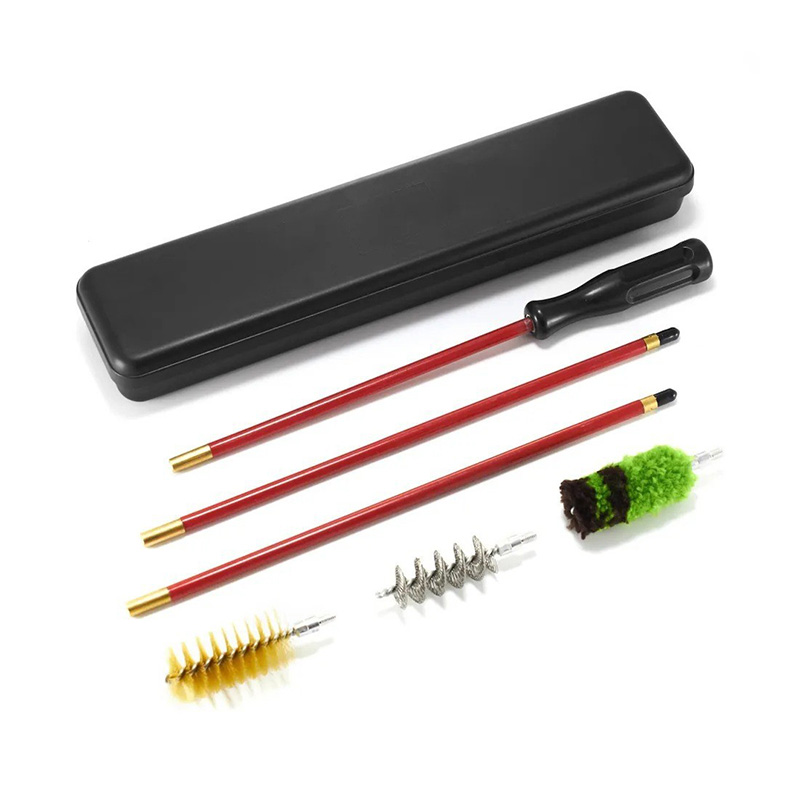
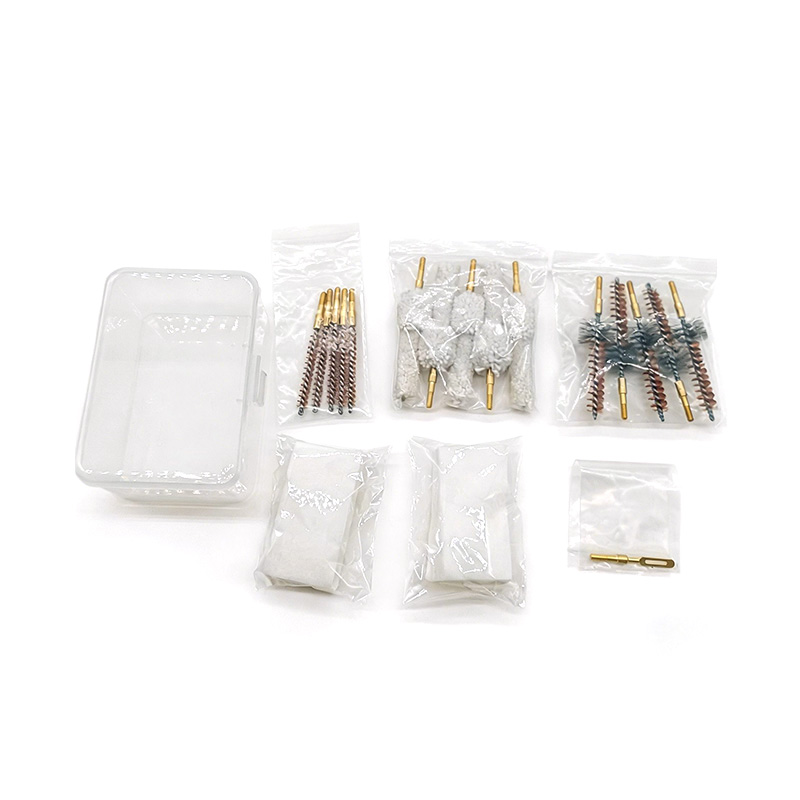
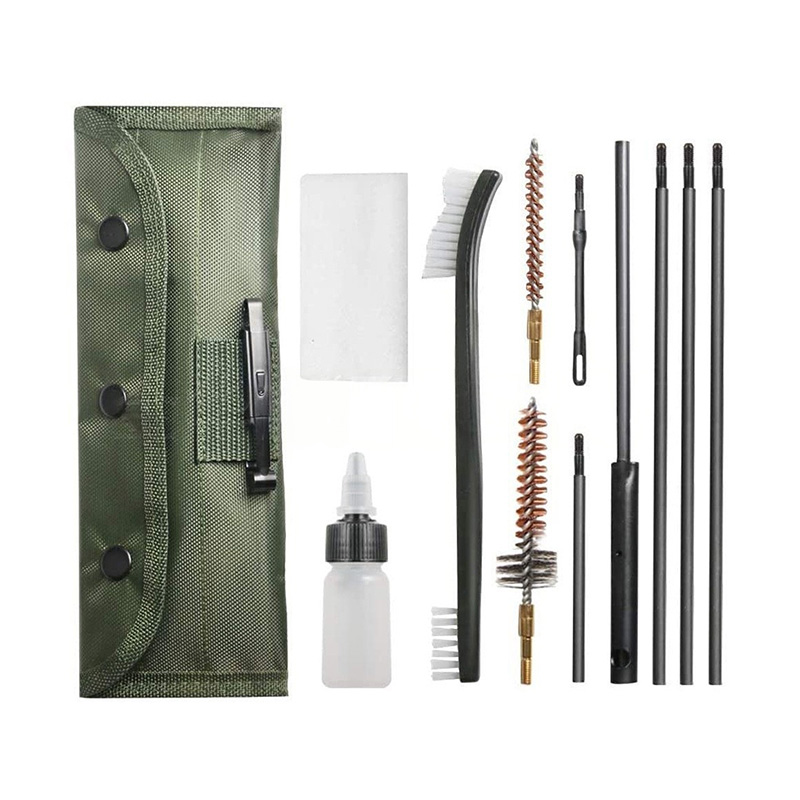
English
 русский
 Español
 عربى

HUNTACE HUNTACE HUNTACE HUNTACE HUNTACE
HUNTACE HUNTACE HUNTACE HUNTACE

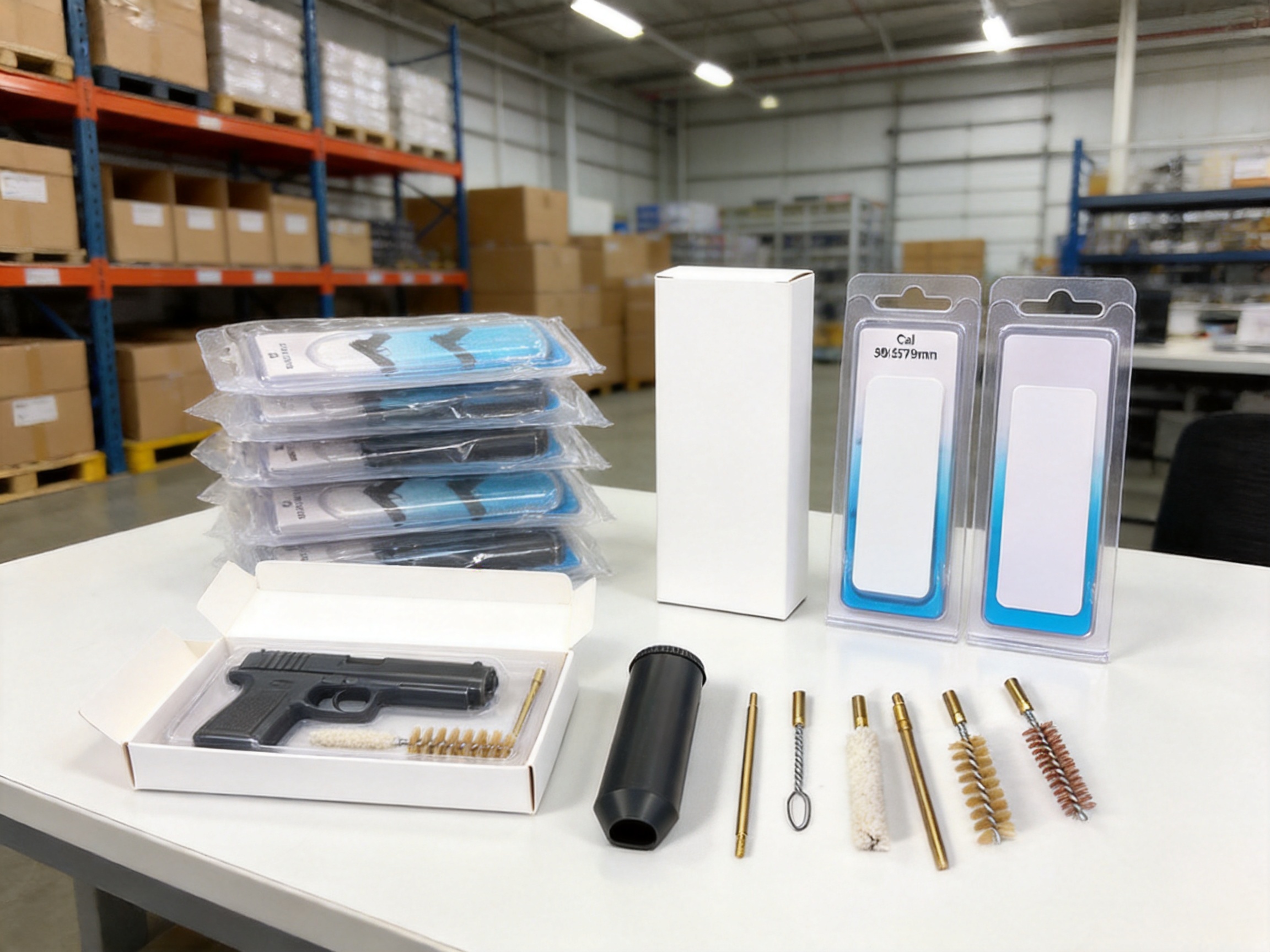
For distributors, retailers, private-label brands, and cross-border e-commerce sellers, a gun cleaning kit must provide more than a collection of individual accessories. It must offer dependable cleaning performance, practical packaging, consistent production quality, and a product configuration that is easy to explain to end users. The 9mm Bore Brush Gun Cleaning Kit is designed around these requirements, combining essential bore-maintenance tools in a compact, retail-ready set.
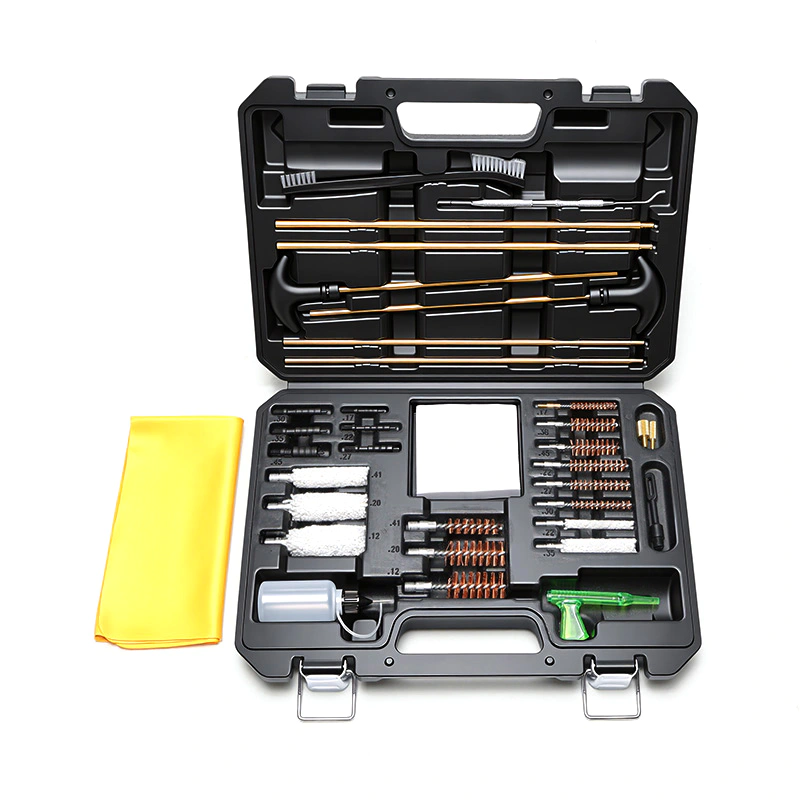
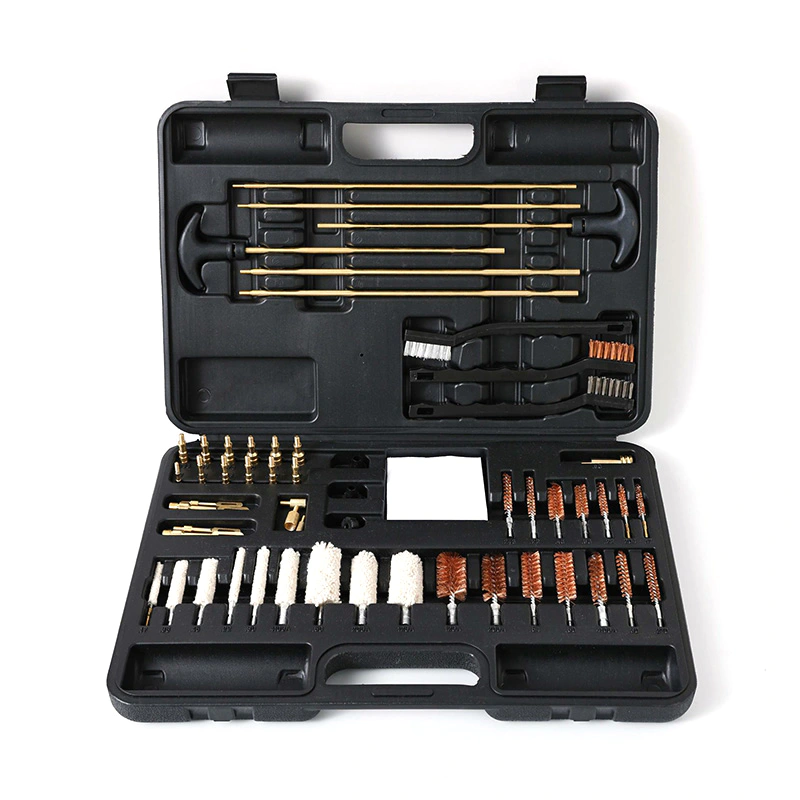
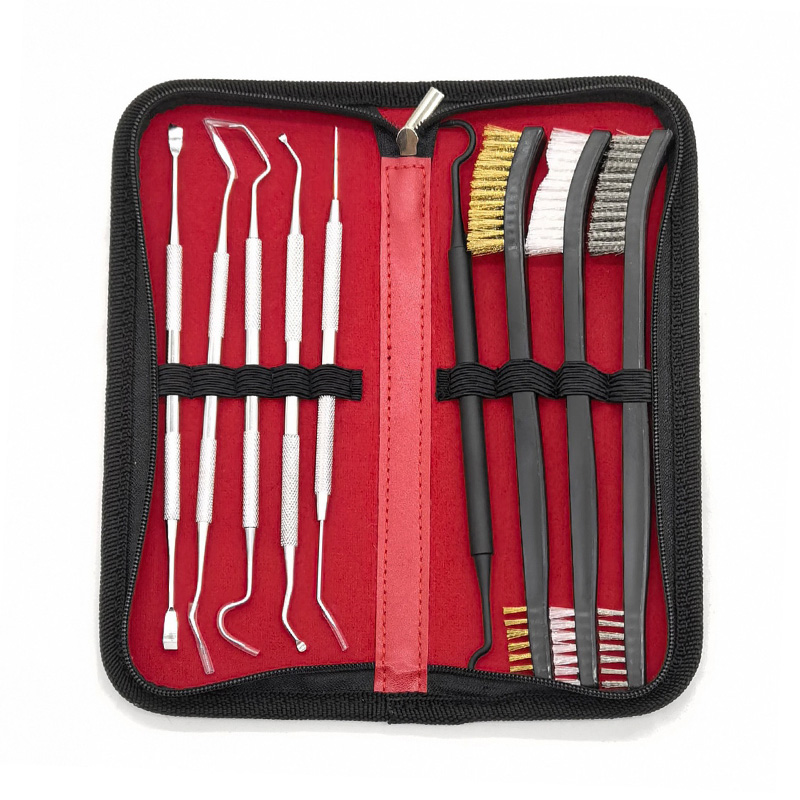
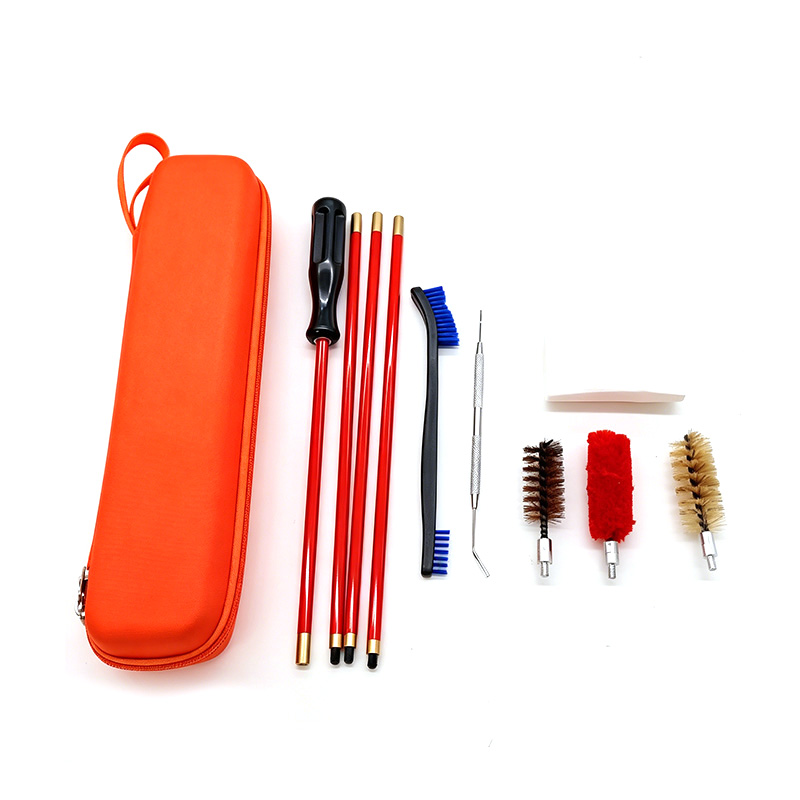
Developed for the North American market, this kit supports routine maintenance for compatible 9mm handguns. Its tool combination includes phosphor bronze wire brushes, cotton mops, boar bristle brushes, and a brass cleaning rod. Together, these components help users address common maintenance tasks such as removing carbon fouling, powder residue, surface rust, and copper deposits from the bore and related areas.
For business buyers, the product also offers a flexible supply solution. It can be supplied in bulk packaging, PE bags, plain white boxes, or retail-oriented double blister packs with color cards. OEM and private-label customization are available, allowing importers and distributors to align the product with their own brand identity, sales channel, and packaging strategy.
The 9mm Bore Brush Gun Cleaning Kit is a compact maintenance set intended for routine cleaning of compatible handgun barrels. The central component is a 342 mm cleaning rod, supported by purpose-selected brushes and mops. The combination is designed to give users a simple workflow: loosen deposits with the bore brush, remove loosened contamination with patches or a mop, and finish the bore with a suitable cleaning accessory.
Unlike a single-purpose brush, the kit is configured to support several stages of basic maintenance. Phosphor bronze wire helps address stubborn fouling, cotton mops assist with applying cleaning solution or removing residue, and boar bristle brushes provide a softer brushing option for less aggressive cleaning tasks. The brass rod provides a firm, reusable support for the attachments while helping create a practical kit for regular maintenance.
The product is identified by product code #7021-1. Its main sales region is North America, and it is intended primarily for cross-border export. The black color and compact set configuration make it suitable for both online product listings and physical retail presentation.
| Item | Product Information |
|---|---|
| Product name | 9mm Bore Brush Gun Cleaning Kit |
| Product category | Gun Cleaning Kits |
| Product code | #7021-1 |
| Primary market | North America |
| Primary application | Routine cleaning and maintenance of compatible 9mm handgun barrels |
| Total rod length | 342 mm |
| Brush type | Phosphor bronze, boar bristle, and nylon-related cleaning accessories |
| Rod material | Brass |
| Other listed materials | Steel wire and nylon |
| Product shape | Round |
| Color | Black |
| Packaging options | Bulk packaging, PE bag, plain white box, and double blister pack with color card |
| Customization | OEM and private-label product, logo, and packaging customization |
Specifications should be confirmed with the supplier before mass production because brush combinations, packaging details, and accessory configurations may be adjusted according to the buyer’s requirements. Buyers should also confirm compatibility between the final accessory thread, cleaning rod, brush size, and the specific firearm platforms targeted in a sales program.
Firearm maintenance often involves more than removing visible residue from the bore. Carbon deposits, powder fouling, copper residue, dust, lubricant buildup, and light surface rust may require different cleaning approaches. A single brush may be useful for one task but insufficient for a complete maintenance routine.
The multi-component configuration of this kit provides a more organized solution. A bronze brush can help loosen deposits, a soft brush can support general cleaning, and a cotton mop can assist with wiping, applying suitable cleaning fluid, or checking the condition of the bore. The cleaning rod brings these components together in one system, reducing the need for users to purchase several unrelated accessories.
For retailers, this creates a clear product proposition. Instead of listing separate brushes, rods, and mops with uncertain compatibility, the retailer can present a coordinated kit designed for one common caliber category. This can simplify inventory management, reduce packaging complexity, and make product education easier for sales staff and online customers.
For distributors, the kit provides an opportunity to serve both first-time buyers and experienced users who need a compact replacement or travel set. The product can be positioned as a routine-maintenance kit, an accessory for new handgun owners, a private-label cleaning solution, or an add-on item for sporting-goods and outdoor-product catalogs.
The phosphor bronze brush is intended to help loosen carbon fouling, powder residue, and other deposits that may accumulate inside a barrel during normal use. Bronze wire offers a useful balance between cleaning strength and bore-care considerations when used correctly and with the appropriate cleaning method.
Compared with very soft fibers, bronze bristles are better suited to working against deposits that do not readily lift with wiping alone. Compared with excessively hard or abrasive materials, a properly selected bronze brush can provide effective mechanical cleaning while reducing the risk of unnecessarily harsh contact with the bore surface.
The brush should always be used according to the firearm manufacturer’s maintenance guidance. Users should avoid forcing a brush through a bore, using damaged accessories, or continuing to use a brush after its bristles have become severely deformed. Correct direction, moderate pressure, and appropriate cleaning chemicals are important parts of safe maintenance.
The cotton mop supports the finishing stages of a cleaning routine. It can help remove loosened residue, distribute an appropriate cleaning product, or provide a visual indication of remaining contamination. Cotton is also useful when a softer contact surface is preferred.
For retailers and distributors, the cotton mop adds visible value to the kit. It shows that the set is not limited to aggressive brushing and that the product is designed around a complete cleaning workflow. The presence of a soft mop can also make the kit easier to explain to customers who are looking for maintenance accessories for routine rather than intensive cleaning.
Boar bristle and nylon cleaning elements offer softer alternatives for general-purpose maintenance. They may be used for areas where a less abrasive brush is preferred, including accessible exterior surfaces and components that require gentle removal of dust or residue.
The inclusion of different bristle materials allows the kit to serve several cleaning preferences. Experienced users may select the brush according to the type of residue and the sensitivity of the surface. New users benefit from having a basic selection in one package rather than needing to identify every accessory separately.
The 342 mm brass cleaning rod is engineered for standard handgun barrel-length applications within the intended product category. Brass provides a rigid and reusable structure for mounting cleaning accessories, while its material characteristics are suitable for a maintenance tool that must withstand repeated handling.
The rod length is an important selling point because it gives buyers a clear specification when comparing products. A defined length can also help distributors organize product listings, technical sheets, and packaging artwork. However, compatibility should always be verified against the intended firearm platform and accessory connection specification.
Many low-cost cleaning products are assembled around a single brush, a short rod, or an assortment of accessories without a clear relationship between the components. Such products may appear inexpensive, but they can create uncertainty for the end user. Missing components, inconsistent sizes, poor packaging, and unclear instructions may result in customer complaints and higher return rates.
The 9mm Bore Brush Gun Cleaning Kit is positioned as a more coordinated alternative. Its product concept is based on a defined caliber category, a specified rod length, multiple cleaning materials, and several packaging options. This gives business buyers a more structured product to present in their catalogs and online stores.
Another advantage is the balance between specialization and practicality. The kit is focused enough to appeal to 9mm handgun owners, but it includes more than one type of cleaning accessory. This combination can be more attractive than a universal kit containing many unrelated parts, especially for customers who want a compact product that addresses a specific maintenance need.
The kit also provides a stronger foundation for private-label development. A generic low-cost assortment may be difficult to differentiate in a crowded marketplace. By contrast, a defined product code, coordinated component set, professional packaging, and customized branding give distributors more opportunities to create a recognizable product line.
The product was specifically developed for the North American market, where 9mm handgun accessories represent an important category within firearm maintenance products. For importers and distributors, market focus can be valuable because it helps align the accessory configuration, packaging, and product language with the expectations of the target customer base.
North American buyers often compare products based on material, caliber compatibility, package contents, rod length, retail presentation, and supplier reliability. The kit addresses these comparison points with a clearly identified 9mm application, a 342 mm rod, multiple brush materials, and packaging choices that can be adapted to different channels.
For Amazon sellers and other cross-border e-commerce businesses, the kit can be presented through a combination of technical specifications and practical benefits. Product listings may emphasize the coordinated accessory set, the intended maintenance application, the available packaging formats, and the manufacturer’s ability to support OEM programs.
All marketplace content should be accurate and should not claim universal compatibility. A responsible product listing should state that the kit is intended for compatible 9mm handgun platforms and that users must verify firearm and accessory specifications before use.
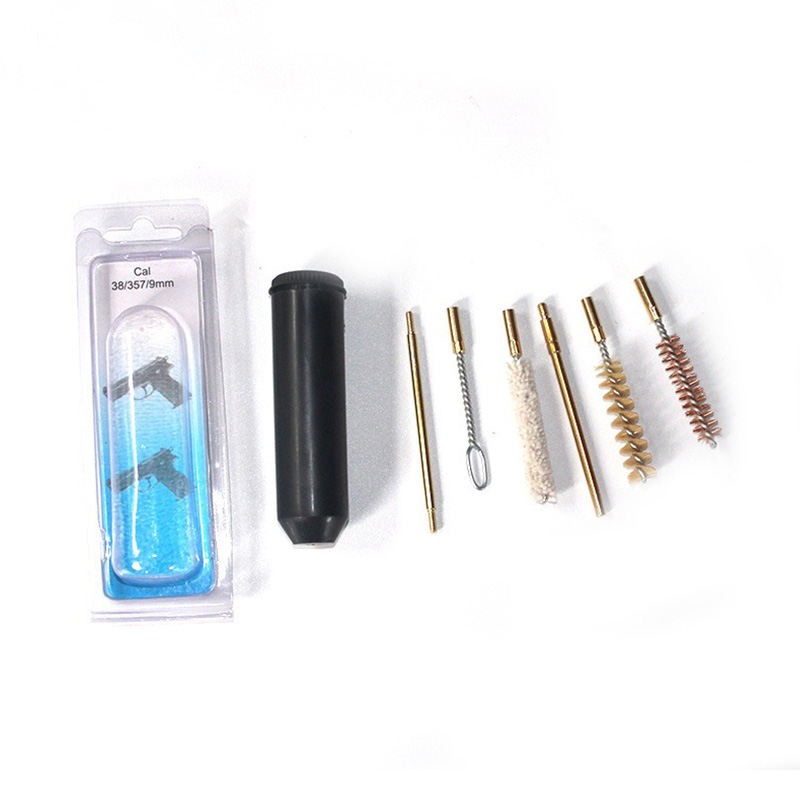
9mm Bore Brush Gun Cleaning Kit
Jinhua Tongshun Tool Factory was established in 1999 and integrates product research and development, manufacturing, and sales. With more than 26 years of manufacturing experience, the company has developed specialized knowledge in gun cleaning kits, barrel brushes, bore mops, cleaning rods, and related maintenance accessories.
The company operates a modern production facility supported by semi-automatic and fully automated production systems. This manufacturing structure is important for buyers who need repeatable quality and stable supply. Production equipment can help standardize processes such as wire forming, brush assembly, rod preparation, component matching, inspection, and packaging.
Automation does not replace quality management, but it can reduce variation in repetitive operations. In a cleaning-kit program, consistency matters because a buyer may order the same product over multiple production cycles. Variations in brush dimensions, bristle density, rod finish, or packaging assembly can affect customer perception and increase the workload for downstream quality-control teams.
The supplier’s production experience also supports large-scale orders. Distributors can discuss forecast quantities, production schedules, packaging requirements, and inspection standards with a factory that is familiar with export-oriented manufacturing. This is especially useful for customers who need a stable private-label program rather than a one-time spot purchase.
Integration between research and development and production can shorten the path from product concept to commercial item. When a buyer requests a change to a brush material, rod length, accessory combination, packaging format, or logo application, an integrated factory can evaluate the request in relation to its actual manufacturing process.
For the 9mm kit, this may include adjusting the combination of phosphor bronze, cotton, boar bristle, and nylon-related components; refining the packaging insert; changing the color card; or preparing a white-label version for a specific sales channel. The practical value is that customization can be discussed with production teams rather than handled only as a trading-office request.
Cleaning tools require consistent assembly. Brush wires must be secured properly, handles and rods should be formed to specification, and components must be packed without damage or omission. A modern manufacturing system, supported by documented inspection procedures, helps maintain product consistency throughout an order.
For B2B buyers, process consistency supports more predictable receiving inspections. It also helps maintain stable online reviews and customer satisfaction. When every carton contains the same accessory configuration and packaging format, distributors can manage inventory more efficiently and reduce the risk of shipment discrepancies.
The company’s products are exported to more than 50 countries and regions. International shipment experience can help a supplier understand the practical requirements of overseas customers, including packaging protection, labeling, carton organization, communication across time zones, and documentation for commercial orders.
Export experience is particularly relevant for cross-border e-commerce sellers. E-commerce products must arrive in a condition suitable for immediate fulfillment or retail sale. Packaging that is too fragile, poorly organized, or difficult to store can create unnecessary costs. The availability of PE bags, plain white boxes, and blister packs gives buyers more control over how the product is prepared for the final channel.
Packaging is a major part of product performance in the B2B market. A distributor may require bulk packaging to minimize cost and repack locally. An online seller may prefer a compact white box that protects the product during parcel delivery. A retail chain may need a blister pack with a color card that can be displayed on a peg or shelf.
This kit supports several packaging approaches:
Packaging selection can influence unit cost, shipping volume, shelf visibility, and the speed of product preparation. Buyers should discuss packaging dimensions, carton quantities, label placement, barcode requirements, color-card artwork, and packing methods before confirming production.
For private-label customers, the plain white box can provide a neutral base for customized stickers, sleeves, or printed cartons. For buyers who want a stronger visual presence, the blister-pack format can showcase the included brushes and rod while allowing customers to see the product before purchase.
Packaging should also communicate responsible use. A label or insert may include the product caliber category, component list, basic care guidance, compatibility notice, and a reminder to follow the firearm manufacturer’s instructions. Such information can improve customer confidence without making unsupported claims.
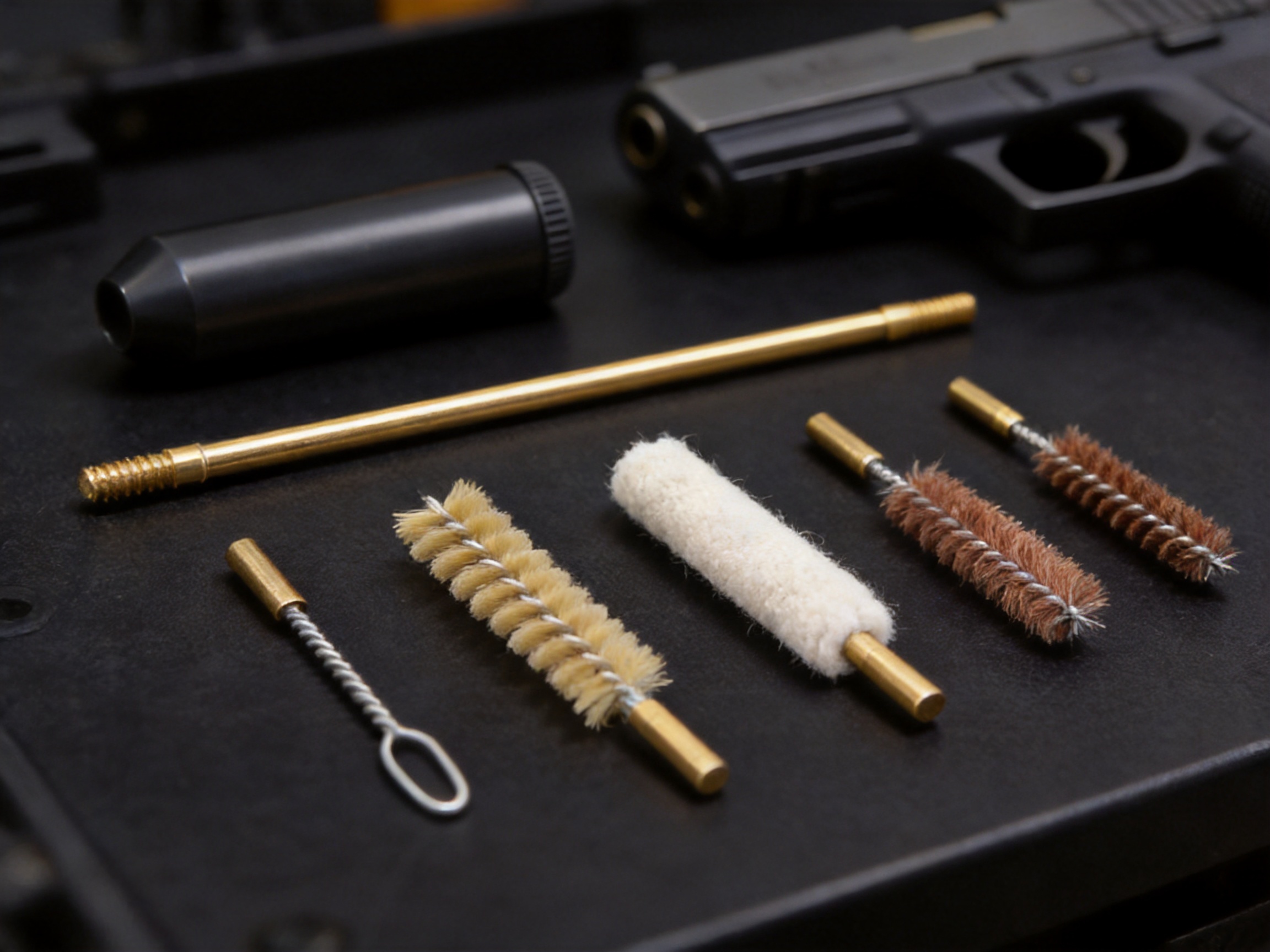
OEM and ODM support gives business buyers more flexibility than purchasing a fixed, unbranded product. OEM projects may involve applying a customer’s logo, changing packaging artwork, adding labels, or preparing a product for a specific distributor. ODM projects may involve modifying the accessory combination, creating a new package configuration, or developing a related cleaning product based on the buyer’s market requirements.
For the 9mm kit, customization may include the following areas:
| Customization Area | Possible Buyer Requirement |
|---|---|
| Branding | Logo application, printed label, or private-label identification |
| Packaging | White box, PE bag, blister pack, color card, or custom carton |
| Component selection | Adjustment of bronze, cotton, boar bristle, or nylon-related accessories |
| Product information | Custom instruction sheet, product code, barcode, or retail copy |
| Color and presentation | Packaging color, printed artwork, and coordinated product-line appearance |
| Order planning | Bulk production based on forecast demand and sales-channel requirements |
Customization should be managed through a sample approval process. Before mass production, the buyer should approve the final accessory list, materials, rod dimensions, packaging artwork, color references, labels, and carton markings. A documented approval sample reduces the possibility of disagreement after production begins.
Private-label buyers may also use this kit as the foundation for a broader maintenance range. The product category includes bronze and brass brushes, bore cotton mops, nylon and other material brushes, cleaning rods and adapters, cleaning patches and cloths, and gun cleaning ropes. A coordinated product family can help retailers build a more recognizable assortment instead of selling isolated accessories.
Buyers should establish quality requirements before placing a production order. A suitable inspection plan may cover raw materials, dimensions, appearance, assembly strength, accessory quantity, packaging accuracy, and carton condition.
For the bronze brush, inspection may include wire material, bristle density, attachment security, and overall shape. The brush should be free from obvious defects that could interfere with normal use. For cotton mops and soft brushes, the buyer may review fiber consistency, attachment quality, and resistance to ordinary handling.
For the brass cleaning rod, relevant checks may include total length, straightness, surface finish, connection compatibility, and resistance to loosening during normal assembly. Buyers should define the acceptable tolerance according to their product requirements and intended market.
Packaging inspection should confirm that every set contains the correct components and that the final package matches the approved artwork or sample. Missing accessories are a common source of avoidable customer complaints, so packing verification is especially important for multi-component products.
A buyer may request pre-production samples, in-process inspection, final random inspection, or carton-level sampling. The precise approach depends on order size, sales channel, compliance requirements, and the buyer’s internal quality policy.
The product can be positioned in several ways depending on the customer segment. For firearm owners, it can be described as a compact 9mm bore-maintenance set. For retailers, it can be positioned as a coordinated accessory item with clear shelf appeal. For distributors, it can be presented as a repeat-order product with flexible packaging and private-label potential.
Potential positioning statements may focus on:
Product descriptions should remain technically accurate. The kit should not be represented as suitable for every caliber or every firearm without verification. Similarly, buyers should avoid promising that the product removes every type of fouling under all conditions. Clear and realistic claims are better for long-term marketplace performance.
The kit is intended for routine cleaning, and users should always begin by following the firearm manufacturer’s safety instructions. The firearm must be unloaded, pointed in a safe direction, and handled in accordance with applicable laws and safety procedures. If the user is unfamiliar with the firearm’s disassembly or maintenance requirements, qualified instruction should be obtained.
A general maintenance workflow may include inspection, brushing, wiping, and final checking. The user can first inspect the bore and accessible surfaces, select the appropriate brush, and apply a suitable cleaning product according to its label. Deposits may then be loosened with controlled brush strokes. A cotton mop or other suitable accessory can be used to remove remaining residue.
Users should not force accessories through the bore or use excessive pressure. A cleaning rod should be kept aligned with the bore, and damaged or heavily worn brushes should be replaced. After cleaning, components should be wiped, dried as appropriate, and stored in a clean location.
This information is general product-use guidance and does not replace the firearm manufacturer’s manual. The correct maintenance method may vary according to the firearm design, finish, barrel construction, and cleaning-product instructions.
Material selection affects cleaning effectiveness, product durability, user experience, and perceived value. Phosphor bronze is suited to mechanical removal of certain deposits. Cotton is useful for wiping and applying or removing cleaning products. Boar bristle and nylon-related materials provide softer options for less aggressive tasks. Brass gives the rod a rigid structure and a professional appearance.
A kit using only one material may be less versatile. A kit that includes several materials can give the user more control over the cleaning process. It also gives the retailer a stronger explanation for the product’s price because each included component has a defined role.
Material variety is also valuable for product development. Different markets may prefer different combinations based on local firearm platforms, cleaning habits, or packaging expectations. The factory’s ability to produce bronze and brass brushes, cotton mops, nylon brushes, rods, patches, cloths, and ropes allows buyers to develop related items through one supplier relationship.

Distributors generally need products that are easy to forecast, easy to store, and easy to sell. The 9mm Bore Brush Gun Cleaning Kit supports these goals through a clearly defined product category and a compact configuration. Its standardized code, black color, stated rod length, and multiple packaging options help buyers create organized product records.
The factory’s ability to handle OEM and ODM projects may also reduce the need for buyers to coordinate several suppliers. A distributor can begin with a standard product, evaluate market response, and later request packaging or component adjustments. This staged approach can reduce initial development risk while preserving the possibility of future differentiation.
Export experience and production capacity are also relevant to supply continuity. A product that sells successfully may require repeat orders, seasonal planning, or multiple packaging runs. Buyers should discuss production lead times, minimum order quantities, sample policies, inspection arrangements, and shipping terms directly with the supplier.
Retailers can benefit from the product’s visible component mix. A blister pack allows customers to see the brush and rod combination before purchase, while a color card can provide concise information about the intended application and package contents.
Online sellers may use the product’s specifications to build a clear listing structure. The title can identify the 9mm application and bore-brush function. Feature sections can explain the different cleaning materials, 342 mm rod, packaging options, and private-label availability. Images can show the complete kit, individual components, packaging, and scale reference.
Because the product is intended for a specific category, sellers should use accurate compatibility language. It is preferable to state “for compatible 9mm handgun cleaning applications” than to imply that every 9mm firearm uses the same accessory connection or maintenance procedure.
Retail and e-commerce sellers should also consider local regulations, marketplace policies, product labeling requirements, and shipping rules. The kit is a maintenance accessory, but the seller remains responsible for ensuring that its product listing and distribution practices comply with applicable requirements.
Jinhua Tongshun Tool Factory is located in Jinhua, Zhejiang Province, China. The company specializes in the research, production, and sale of gun cleaning kits, barrel cleaning brushes, and related firearm-maintenance accessories.
Since its establishment in 1999, the company has built experience in serving international customers. Its product range includes gun cleaning kits, bronze and brass brushes, nylon brushes, bore cotton mops, cleaning rods and adapters, cleaning patches, cleaning cloths, and gun cleaning ropes.
The company’s manufacturing approach combines semi-automatic and fully automated production systems with factory quality control. This combination supports both standard products and customized programs. Buyers can work with the supplier on product configuration, packaging, logo application, and other OEM or ODM details.
The company states that its products are exported to more than 50 countries and regions. Its stated business values include quality first, integrity, and mutual benefit. These principles are relevant to B2B customers seeking a long-term supplier relationship rather than a single transaction.
Before requesting a quotation, buyers should prepare a clear product brief. The brief should identify the intended market, sales channel, target order quantity, packaging type, branding requirements, desired accessory combination, and required delivery schedule.
The following checklist can help organize a project:
| Project Stage | Recommended Confirmation |
|---|---|
| Product selection | Confirm the 9mm application, product code, component list, and rod length. |
| Compatibility | Verify brush, rod, and connection specifications for the intended customer segment. |
| Sample approval | Review physical samples and confirm materials, dimensions, appearance, and assembly. |
| Packaging | Select bulk, PE bag, white box, or blister packaging and approve artwork. |
| Branding | Provide logo files, color references, labels, barcodes, and instruction content. |
| Quality control | Agree on inspection points, tolerances, sampling level, and defect criteria. |
| Production | Confirm minimum order quantity, lead time, payment terms, and shipment plan. |
| After-sales support | Establish communication procedures for replenishment, complaints, or revisions. |
Clear information at the beginning of the project helps reduce delays and prevents avoidable changes after production has started. It also allows the factory to recommend the most suitable manufacturing and packaging method for the buyer’s target price and sales channel.
A single 9mm kit can serve as an entry product in a broader firearm-maintenance range. Once a distributor has established demand, the same supplier can potentially support adjacent categories such as different caliber brushes, brass and bronze brush sets, cotton mops, nylon brushes, cleaning rods and adapters, patches, cloths, and gun-cleaning ropes.
A coordinated range can offer several commercial benefits. It allows retailers to create a dedicated maintenance section, helps distributors consolidate purchasing, and gives private-label brands a consistent visual identity. It may also encourage repeat purchasing when customers prefer to obtain multiple accessory types from one familiar product line.
Product-line development should be based on actual market demand. Buyers can begin with the standard 9mm kit, monitor sales and customer feedback, and then add related products according to the most common requests. The factory’s broad category experience can support this gradual expansion.
The kit is designed for routine cleaning and maintenance of compatible 9mm handgun barrels. It combines brushes, mops, and a cleaning rod to help address carbon fouling, powder residue, copper deposits, and light surface contamination.
The stated configuration includes phosphor bronze wire brushes, cotton mops, boar bristle brushes, and a brass cleaning rod. The exact accessory count and final combination should be confirmed with the supplier for each purchase order.
The listed total rod length is 342 mm. Buyers should verify the final production specification and connection details before ordering for a particular firearm platform.
No universal compatibility should be assumed. The kit is intended for compatible 9mm handgun cleaning applications, but firearm designs and accessory connections can vary. Users should verify compatibility and follow the firearm manufacturer’s instructions.
Phosphor bronze bristles provide mechanical cleaning action for loosening certain carbon and powder deposits. They should be used with appropriate care, moderate pressure, and the cleaning method recommended for the firearm.
A cotton mop can help wipe away loosened residue, distribute a suitable cleaning product, or support the final stage of routine bore maintenance. It provides a softer alternative to a wire brush.
Available formats include bulk packaging, PE bags, plain white boxes, and double blister packs with color cards. The preferred format should be selected according to the buyer’s distribution channel and branding needs.
Yes. OEM and private-label customization are supported. Buyers can discuss logos, packaging artwork, labels, color cards, product information, and other requirements with the factory.
Customization may be possible depending on production requirements, order quantity, and the requested component. Buyers should discuss desired changes during the quotation and sample-development stage.
The product is identified as being aimed at North America and lists Amazon among its main downstream platforms. Sellers must independently confirm marketplace rules, local regulations, labeling requirements, and fulfillment conditions before listing the product.
Buyers may request checks for brush material, bristle density, assembly strength, rod length, straightness, accessory quantity, packaging accuracy, appearance, and carton condition. The final inspection plan should match the buyer’s quality standards and order requirements.
The product is manufactured by Jinhua Tongshun Tool Factory in Jinhua, Zhejiang Province, China. The company has operated since 1999 and specializes in firearm-maintenance tools and related accessories.
The company operates semi-automatic and fully automated production systems and states that it supports large-scale orders. Buyers should confirm current capacity, minimum order quantity, lead time, and production scheduling for each project.
Buyers should provide the desired quantity, packaging format, branding requirements, target market, delivery location, preferred accessory configuration, inspection requirements, and any special labeling or carton specifications.
The 9mm Bore Brush Gun Cleaning Kit is a practical B2B product for distributors, retailers, and cross-border sellers seeking a coordinated handgun-maintenance solution. Its combination of phosphor bronze brushes, cotton mops, boar bristle brushes, and a 342 mm brass cleaning rod gives users several tools for routine cleaning in one compact package.
Its advantages extend beyond the accessory combination. The product offers clear market positioning, multiple packaging choices, OEM and private-label support, and a manufacturing partner with long-term experience in cleaning tools. The supplier’s semi-automatic and fully automated production systems, export experience, broad product range, and integrated R&D and manufacturing capabilities provide a strong foundation for repeat orders and customized product programs.
For business buyers, the most important next step is to confirm the final component list, compatibility specifications, packaging design, quality requirements, order quantity, and delivery schedule. With these details documented and approved, the kit can serve as a reliable addition to a firearm-maintenance product portfolio and a practical foundation for a differentiated private-label line.
1. Product specification sheet for the 9mm Bore Brush Gun Cleaning Kit, product code #7021-1.
2. Manufacturer-provided company information for Jinhua Tongshun Tool Factory, including establishment date, product categories, manufacturing capabilities, and export experience.
3. Manufacturer-provided packaging and customization information for gun cleaning kits, brushes, mops, rods, patches, cloths, and gun-cleaning ropes.
4. General firearm-maintenance principles concerning safe handling, compatible accessories, controlled cleaning methods, and following the firearm manufacturer’s instructions.
5. General B2B product-development practices concerning OEM approval samples, packaging verification, quality inspection, and private-label production.