English
 русский
 Español
 عربى

HUNTACE HUNTACE HUNTACE HUNTACE HUNTACE
HUNTACE HUNTACE HUNTACE HUNTACE


Reliable firearm maintenance begins with the right cleaning equipment. A well-designed cleaning kit should support routine bore care, remove residue without damaging internal surfaces, organize every component in one compact package, and provide enough versatility for different firearm platforms. The 16-Piece Gun Cleaning Kit for .22, .38, and 5.56 caliber firearms is developed as a practical multi-caliber maintenance solution for distributors, retailers, shooting clubs, gunsmiths, range operators, and individual firearm owners.
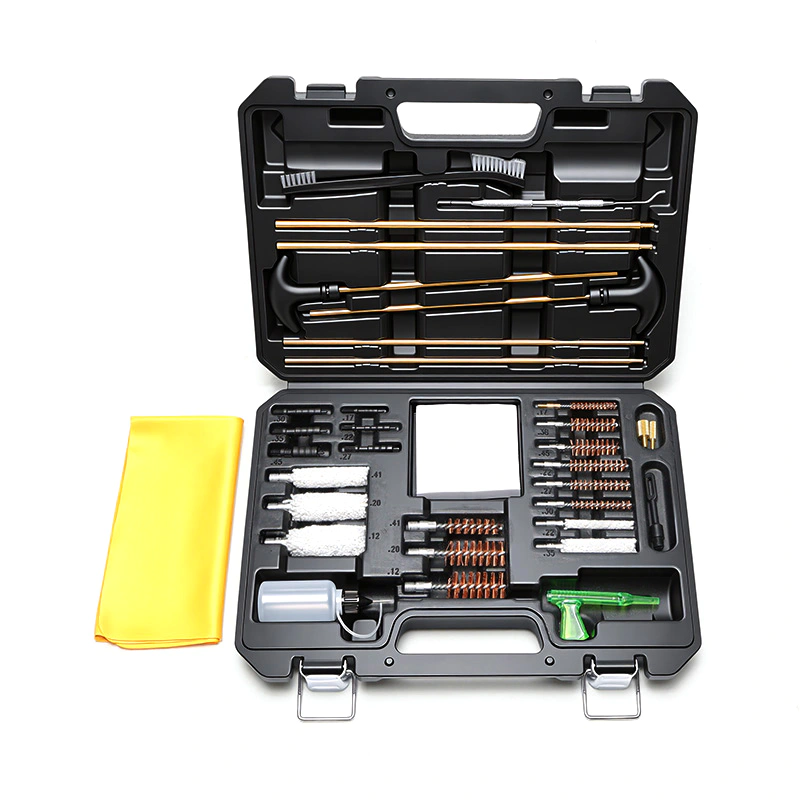
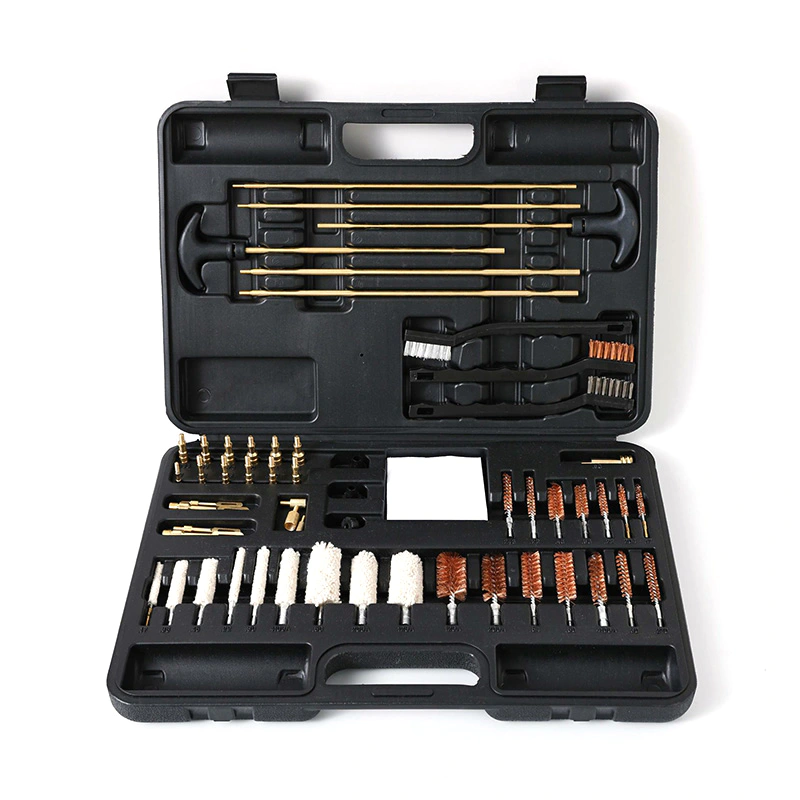
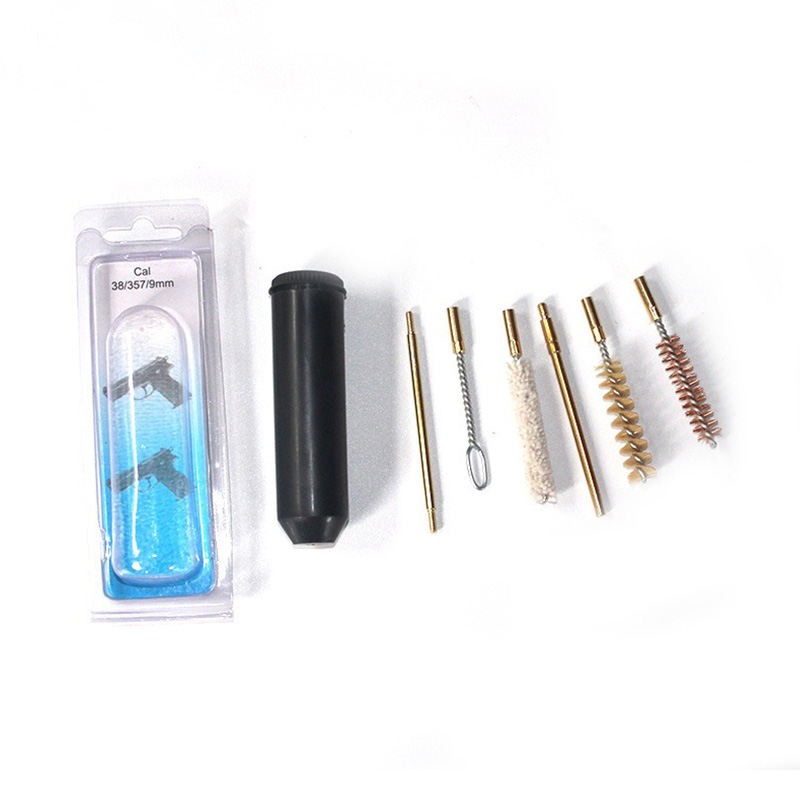
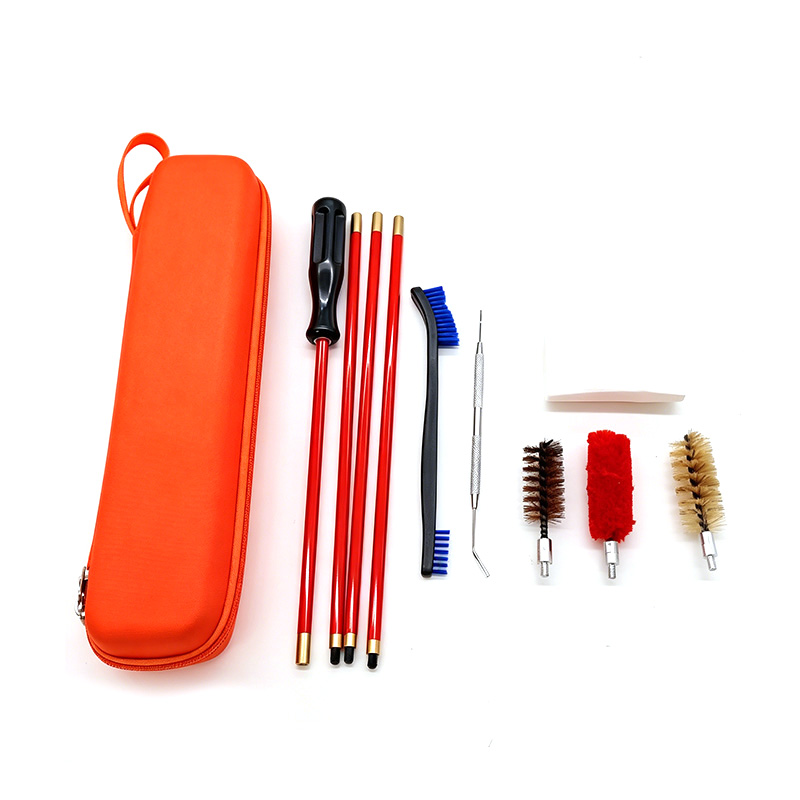
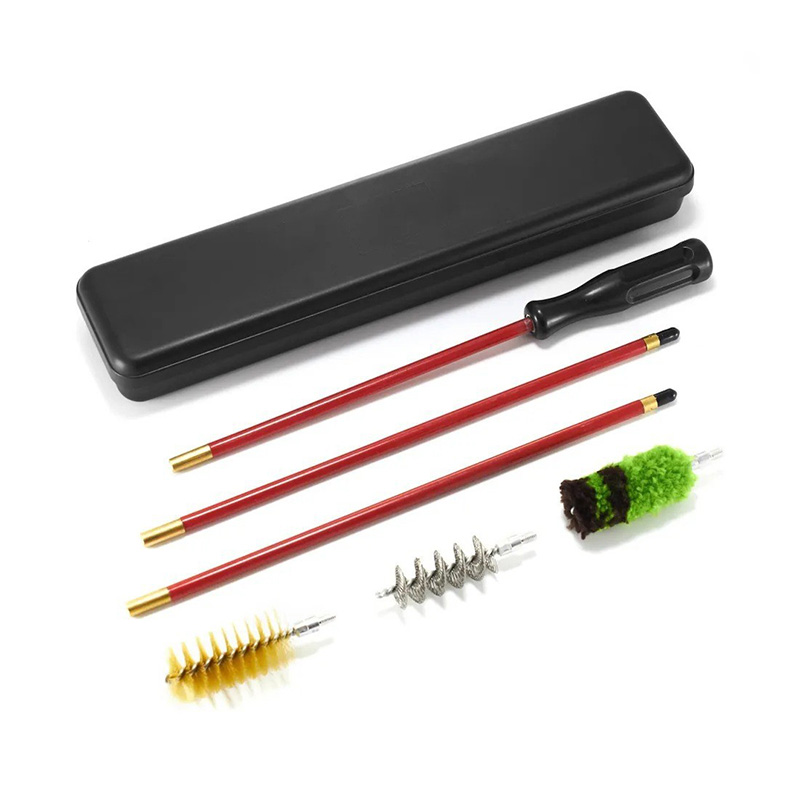
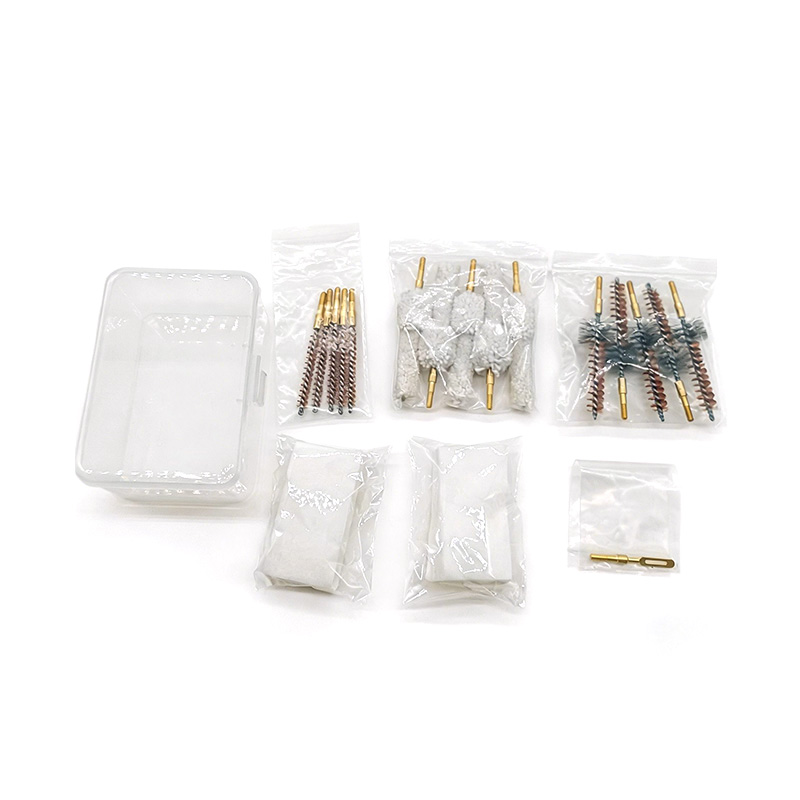
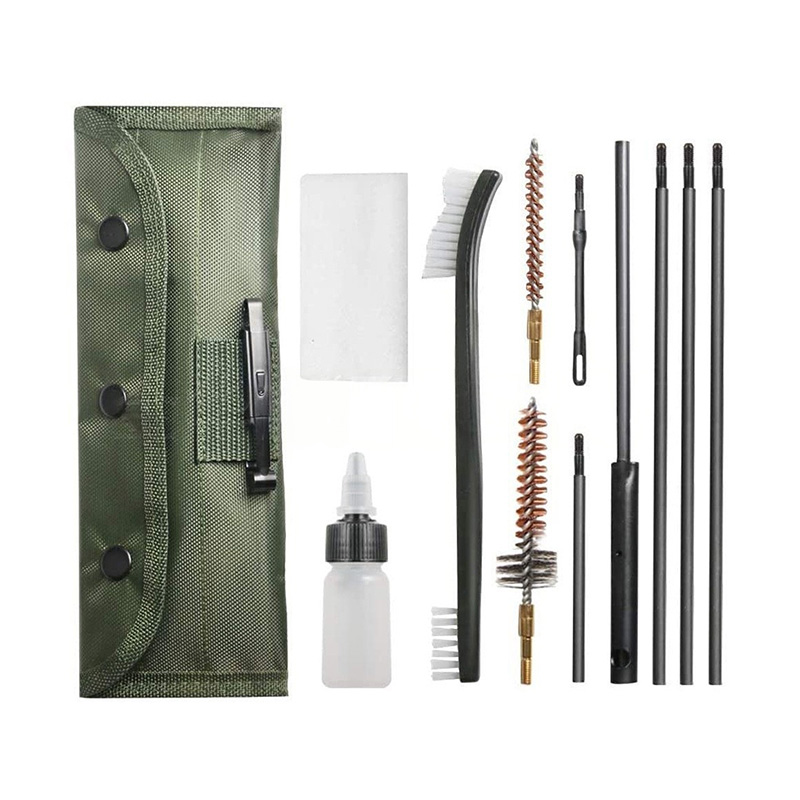
This kit combines brass wire brushes, cotton bore mops, cleaning patches, a brass cleaning rod, thread adapters, and a T-handle in a compact black carrying case. Its configuration is intended to support the cleaning of several commonly used calibers, including .22 caliber, .270 caliber, .38 caliber, .40 caliber, and .45 caliber applications, while its primary product positioning focuses on .22, .38, and 5.56 platforms. By bringing brushing, mopping, patching, residue removal, and surface maintenance tools into one organized set, it reduces the need to purchase several separate accessories.
For business buyers, the product also offers advantages beyond its component list. The kit is manufactured under controlled production conditions, supports OEM and private-label customization, and is supplied in export-ready packaging. These features make it suitable not only for direct consumer sales but also for wholesale programs, marketplace listings, range supply contracts, firearm accessory catalogs, and customized brand portfolios.
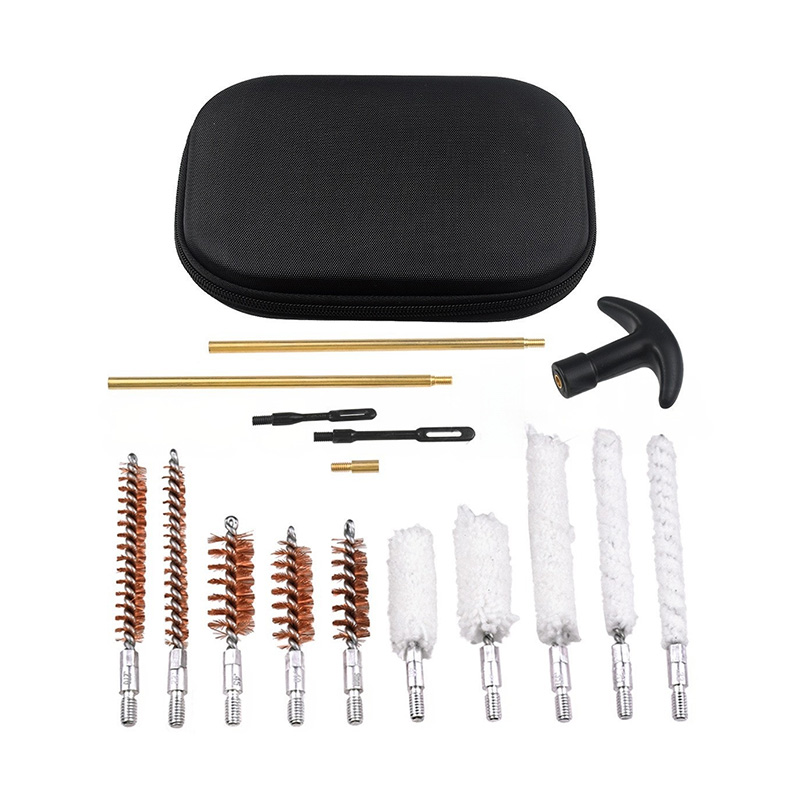
16-Piece Gun Cleaning Kit .22/.38/5.56 Cal
The 16-Piece Gun Cleaning Kit is designed for users who need a flexible cleaning system rather than a single-purpose brush or rod. Multi-caliber firearm owners often maintain more than one platform, and purchasing a separate cleaning kit for every firearm can create unnecessary cost, storage requirements, and inventory complexity. A carefully selected combination of brushes, mops, patches, and rod accessories provides a more efficient solution.
The kit is identified by product code B16 and features a round 16-piece configuration with copper parts intended for firearm maintenance. Its black color and compact case give the set a professional appearance suitable for retail display, online product photography, and private-label packaging. The carrying case measures approximately 20 × 17 × 4.3 centimeters and uses an EVA foam interior to help keep the components separated and protected during storage and transport.
The product is primarily intended for cleaning and rust removal. It uses a mixture of metal and textile cleaning elements so that users can select an appropriate tool for a particular stage of maintenance. Brass or copper wire brushes can help loosen stubborn deposits, cotton mops can distribute cleaning solution and remove remaining residue, and patches can be used for wiping and inspection. The cleaning rod and adapters connect the various attachments and help users reach the bore in a controlled manner.
| Product name | 16-Piece Gun Cleaning Kit .22/.38/5.56 Cal |
| Product code | B16 |
| Primary application | Firearm cleaning and maintenance |
| Primary caliber positioning | .22 caliber, .38 caliber, and 5.56 caliber |
| Additional supported applications | .270, .40, and .45 caliber platforms |
| Set configuration | Round 16-piece cleaning set |
| Brush material | Brass or copper wire, with other brush elements included according to configuration |
| Mop material | Cotton |
| Rod material | Brass |
| Handle material | Plastic |
| Case color | Black |
| Case dimensions | Approximately 20 × 17 × 4.3 cm |
| Case interior | EVA foam organization insert |
| Customization options | OEM configuration, packaging, logo, and private-label support |
One of the main advantages of this kit is its multi-caliber orientation. A .22 caliber firearm, a .38 caliber platform, and a 5.56 caliber rifle have different bore dimensions and cleaning requirements, yet many users prefer a single organized kit that can accommodate their regular maintenance routines. The kit’s selection of attachments and adapters is designed to provide broad compatibility across several common firearm categories.
For distributors, multi-caliber compatibility can simplify product positioning. Instead of offering separate entry-level kits for every caliber, a retailer can present one versatile maintenance kit to a wider customer base. This can reduce shelf-space requirements, simplify stock management, and make the product easier to explain in a catalog or online listing. The product title clearly communicates the main supported calibers while the detailed specification can identify additional compatible applications.
Multi-caliber capability is particularly useful for households, clubs, and shooting ranges where several firearms may be maintained in the same location. A single case can be carried from a workbench to a range bag or service area, allowing the user to keep the essential tools together. The organized layout also helps reduce the risk of losing small adapters or leaving attachments in different storage containers.
Although the kit is versatile, correct attachment selection remains important. Users should always match the cleaning component to the firearm caliber and follow the firearm manufacturer’s maintenance instructions. The product is intended for cleaning and routine care, not for modifying, repairing, or altering firearm components. Its value comes from providing a broad set of appropriate maintenance tools in a controlled and portable format.
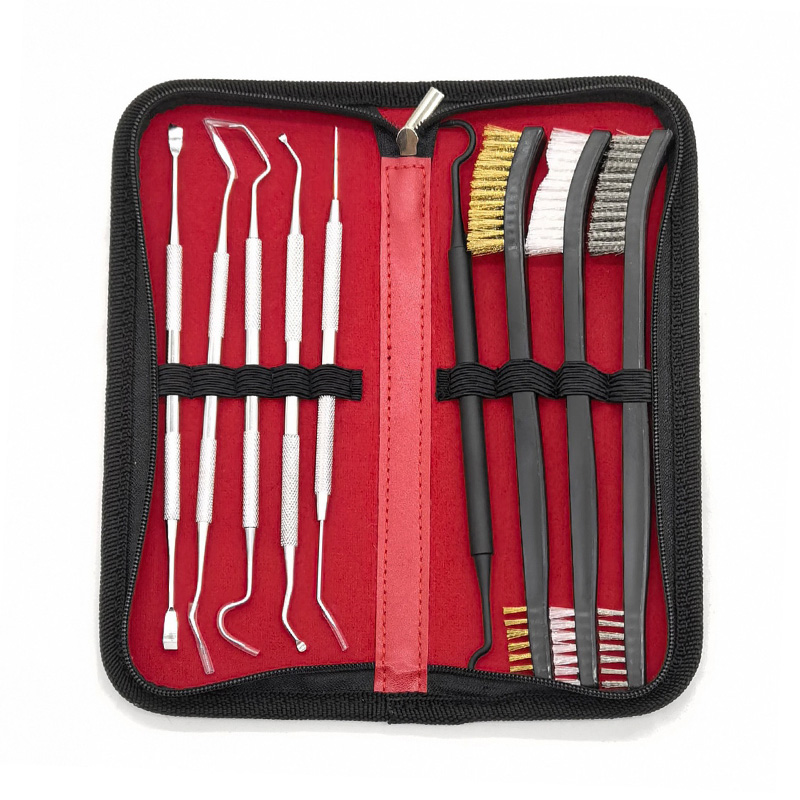
Metal wire brushes are included to assist with the removal of carbon fouling, powder residue, and other deposits that may remain after firing. Brass and copper-based brushes are widely used in firearm maintenance because they offer useful cleaning strength while being more suitable for bore-care applications than unnecessarily aggressive materials. When selected and used correctly, they can help loosen residue without requiring excessive force.
The brushes are also useful for cleaning accessible metal surfaces and removing light rust or residue from suitable areas. Their round form supports contact with cylindrical surfaces and helps maintain consistent movement through the bore when used with the appropriate rod and adapter. The brush construction is intended to provide repeatable performance during regular maintenance, which is important for both individual users and professional buyers looking for durable consumable accessories.
Brush selection should always be based on caliber and firearm manufacturer guidance. A brush that is too large, used incorrectly, or forced through a restricted area can create unnecessary pressure. The best practice is to use the correct size, keep the rod aligned, and avoid excessive force. The kit’s value is therefore not only the inclusion of metal brushes but also the compatibility created by the full accessory system.
Cotton bore mops provide a softer cleaning option for distributing cleaning solution, absorbing loosened residue, and helping dry the bore after wet cleaning. Their textile construction allows them to carry a controlled amount of lubricant or solvent and to contact the bore surface more gently than a metal brush.
A cotton mop can also help users inspect the condition of the bore after brushing. If the mop emerges with visible residue, the user may continue the cleaning process with fresh patches or another suitable pass. This staged approach is more organized than relying on one brush for every cleaning task. It also helps separate the aggressive residue-loosening stage from the wiping, drying, and finishing stages.
For wholesale customers, the inclusion of cotton mops increases the perceived completeness of the kit. A consumer purchasing a maintenance set generally expects more than a brush and rod. By including both metal cleaning elements and soft cotton components, the kit offers a more complete solution for routine care.
Cleaning patches and cloths are practical components for wiping residue, applying cleaning products, drying surfaces, and checking whether the bore is clean. They also help users maintain the exterior of a firearm without relying on household fabrics that may leave lint or lack the desired absorbency.
Patches are useful because they provide a visible indication of cleaning progress. A dark or contaminated patch can show that additional cleaning may be required, while a cleaner patch can indicate that the bore is approaching the desired condition. This simple visual feedback makes the maintenance process easier to monitor.
The combination of patches, mops, and brushes creates a logical workflow. The brush loosens deposits, the mop helps distribute or absorb cleaning materials, and the patch provides wiping and inspection. These separate functions allow the user to avoid overusing one tool and help extend the useful life of the complete kit.
The brass cleaning rod provides the reach needed to guide the cleaning attachments through the firearm bore. Brass is commonly selected for cleaning rods because it offers a practical balance of rigidity, workability, and bore-care suitability. The rod is paired with thread adapters so that different attachments can be connected according to the cleaning task and caliber.
The inclusion of adapters is an important advantage over basic kits that provide only one fixed attachment. Thread compatibility can determine whether a brush, mop, or patch holder can be used effectively. By including adapters, the kit improves flexibility and enables a more complete range of cleaning operations.
The T-handle is designed to improve grip and torque during use. A shaped handle can help reduce hand fatigue and provide better control than attempting to rotate or push a narrow rod directly. For regular maintenance, this ergonomic feature can make the cleaning process more comfortable and consistent, particularly when carbon residue requires several controlled passes.
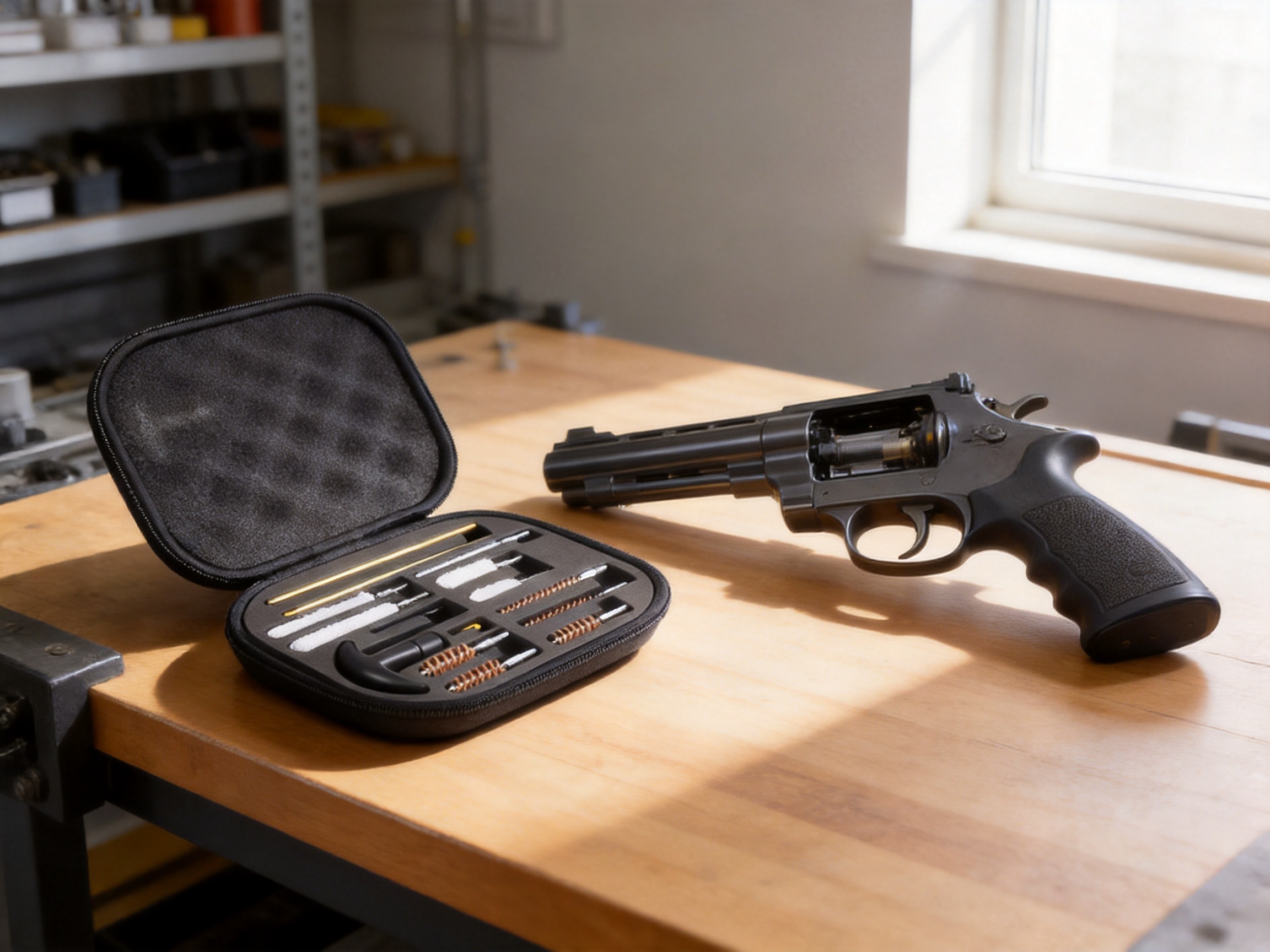
The compact black case is one of the product’s strongest practical features. Many firearm cleaning accessories are small and easy to misplace. Brushes, adapters, patches, and mops can become scattered across a workbench or storage drawer, making it difficult to identify the correct component when maintenance is needed. The EVA foam interior gives each piece a structured storage environment and helps maintain a clear visual inventory.
The case dimensions of approximately 20 × 17 × 4.3 centimeters provide a balance between capacity and portability. It is large enough to hold a multi-component set while remaining compact enough for a range bag, workshop drawer, vehicle storage compartment, or retail shipping carton. A portable kit is especially useful for users who maintain firearms away from a permanent workbench.
The black exterior provides a neutral, professional appearance that can support many retail styles. It is suitable for practical tool positioning, outdoor accessory merchandising, shooting-sports catalogs, and private-label presentation. The compact shape also supports efficient packing and can help reduce unnecessary shipping volume compared with oversized cases containing unused space.
For distributors, packaging organization can influence customer satisfaction. A set that arrives with components arranged in a fitted insert is easier to inspect, store, and reuse. Organized packaging also communicates that the product has been designed as a complete system rather than assembled as a random collection of accessories.
Many entry-level cleaning kits compete primarily on price and include a limited number of universal components. They may provide one brush, a short rod, or a small packet of patches without a structured case. Such products can be adequate for occasional use, but they may not provide the flexibility, organization, or perceived completeness required by more demanding users.
The 16-piece configuration offers several advantages over these basic alternatives. First, it is designed around multiple calibers rather than a single firearm type. Second, it combines different cleaning functions instead of relying on one brush. Third, it includes adapters and a T-handle to improve practical usability. Fourth, it is supplied in a fitted EVA-lined case that supports organization and portability.
| Comparison point | Basic single-purpose kit | 16-piece multi-caliber kit |
| Caliber coverage | Often limited to one caliber or one platform | Designed for .22, .38, 5.56, and additional applications |
| Cleaning stages | Usually centered on one brush or rod | Brushes, mops, patches, rod, and adapters support multiple stages |
| Storage | Loose components or simple pouch | Compact case with EVA foam interior |
| Handling | May lack a dedicated grip | T-handle helps improve control and torque |
| Material selection | May use unspecified or mixed materials | Includes brass or copper wire, cotton, brass rod, and plastic handle elements |
| Business positioning | Usually sold as a low-cost general accessory | Suitable for wholesale, OEM, private label, and professional maintenance channels |
| Inventory efficiency | Several separate kits may be needed | One set can address multiple common caliber requirements |
The product is not intended to compete only through the lowest unit price. Its stronger market proposition is value through completeness, material selection, multi-caliber use, and packaging. For a buyer comparing total product usefulness rather than the number printed on a quotation, these factors can make the kit more attractive than a cheaper but less comprehensive alternative.
Another advantage is the product’s suitability for both consumer and B2B markets. A direct-to-consumer buyer may appreciate the compact case and broad compatibility, while a distributor may value the ability to market the same base configuration through multiple sales channels. This dual-market positioning can improve purchasing flexibility and support different order sizes.
The manufacturer behind the product has operated since 1999 and specializes in gun cleaning kits, barrel cleaning brushes, and related firearm maintenance accessories. With more than two decades of manufacturing experience, the factory has developed product knowledge across brushes, rods, patches, mops, adapters, packaging, and assembled cleaning sets.
This specialization is significant for buyers because firearm cleaning kits require more than the production of individual parts. The components must be selected, sized, threaded, assembled, inspected, and packed as a coordinated system. A factory experienced in related products can better understand the relationship between brush dimensions, rod compatibility, handle design, case layout, and final product presentation.
The company operates production systems that include semi-automatic and fully automated equipment. These systems support repeatable manufacturing for larger orders while allowing the factory to maintain flexibility across different configurations. Automation can improve consistency in repetitive processes, while controlled manual operations remain useful for assembly, inspection, customization, and packaging tasks that require visual judgment.
Stable supply capacity is especially important for distributors and private-label customers. A product may perform well in an initial sales test, but long-term business depends on the supplier’s ability to reproduce the same configuration, maintain component availability, and support replenishment orders. The manufacturer’s production structure is intended to support both standard products and customized programs.
Quality control for a multi-piece cleaning kit should cover individual components as well as the final assembled package. Brush wires should be checked for suitable attachment and appearance. Rods and adapters should be inspected for dimensional consistency and thread compatibility. Cotton mops and patches should be reviewed for material condition and assembly quality. Handles and cases should be checked for fit, appearance, and usability.
Final assembly inspection is also important because a kit can contain high-quality individual parts but still create a poor customer experience if components are missing, incorrectly placed, or packaged in an unsuitable arrangement. A complete inspection process should confirm that the specified number of pieces is present, the case insert is correctly fitted, and the product is ready for shipment.
For OEM orders, quality control extends to logo application, packaging artwork, labeling, carton markings, and configuration accuracy. A private-label customer needs assurance that the approved sample and mass-production goods remain consistent. Clear production specifications and sample confirmation can help reduce misunderstandings before a larger order begins.
Semi-automatic and automated production systems can provide several advantages in volume manufacturing. They can improve repeatability, reduce variation in repetitive operations, and support more predictable production planning. These benefits are valuable when a buyer needs the same product configuration across multiple shipments or markets.
Automation does not replace the need for human quality inspection. Instead, the strongest production model combines controlled machinery with trained personnel who verify materials, assembly, finishing, and packaging. This combination helps balance production efficiency with the flexibility required for different customer specifications.
For global buyers, manufacturing capacity also affects lead-time planning. A supplier with established production resources is better positioned to support regular wholesale replenishment, seasonal demand, promotional programs, and customized packaging projects. Stable capacity can help buyers reduce the risk of stock shortages and maintain continuity across their sales channels.
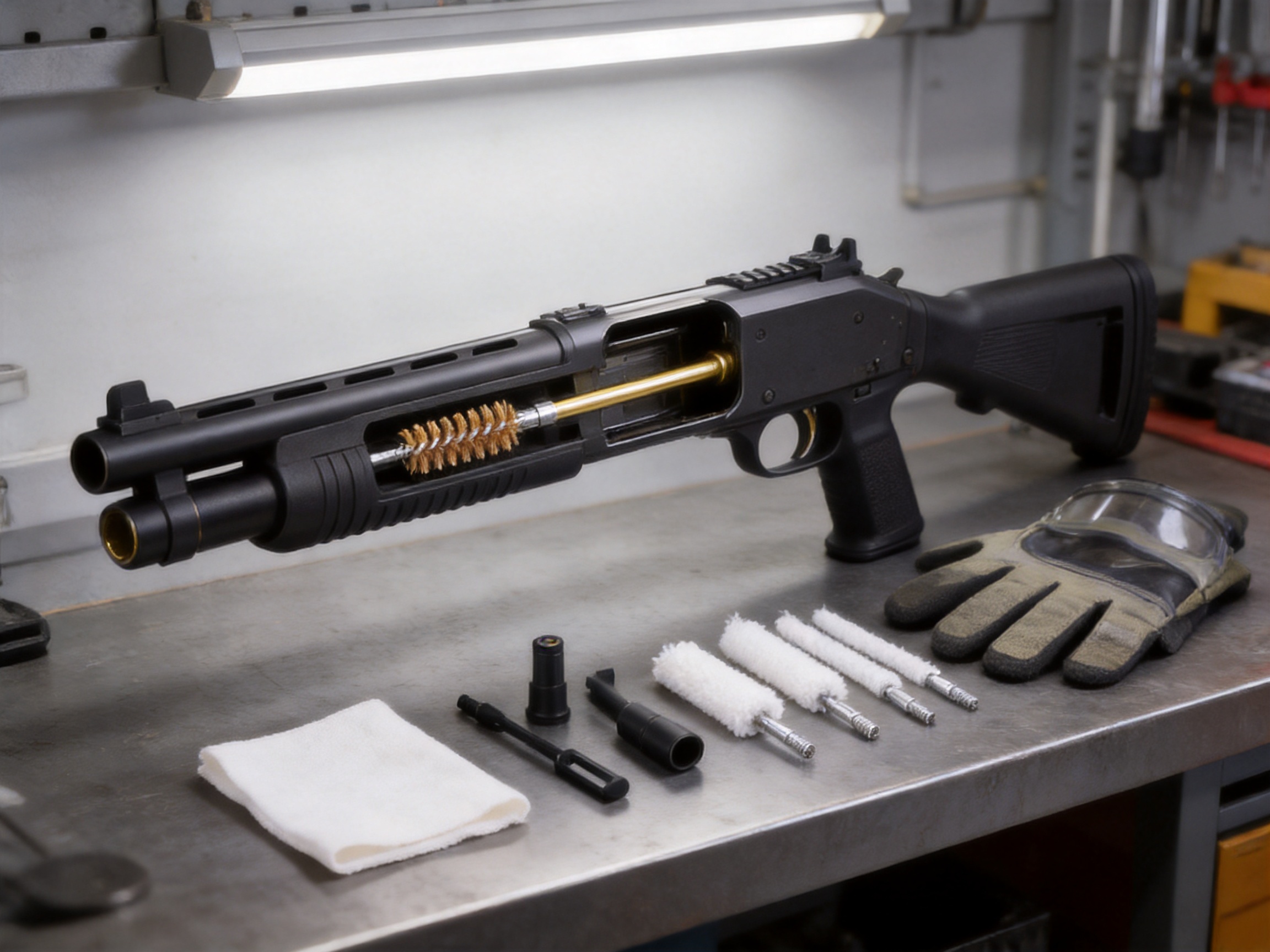
The 16-piece kit can serve as a base platform for OEM and private-label development. Buyers may request customized product configurations, packaging, logos, or other presentation details according to their target market. This flexibility allows distributors to create a product line that fits their own brand identity without developing every component from the beginning.
Configuration customization can include changes to the selection of brushes, mops, adapters, patches, or other accessories. Different markets may prioritize different firearm platforms, handle styles, or packaging formats. A retailer serving recreational shooters may prefer a consumer-friendly compact package, while a professional distributor may require a more technical specification and stronger outer carton arrangement.
Packaging customization can also influence sales performance. Buyers may request printed boxes, branded cases, instruction inserts, barcode labels, language-specific information, or customized carton marks. The product’s export-ready packaging foundation helps provide a starting point for these projects.
Logo customization is useful for firearm accessory brands, shooting clubs, range operators, and wholesalers that want to strengthen brand recognition. A consistent logo and packaging design can help connect the cleaning kit with other maintenance tools, brushes, patches, or accessories in the buyer’s portfolio.
OEM development should be managed through a clear confirmation process. Buyers should define the required caliber range, component list, material expectations, packaging dimensions, logo artwork, labeling language, order quantity, and inspection standard. A pre-production sample or approved reference sample can help establish the final specifications before mass production.
Importers and distributors can position the kit as a core maintenance product within a larger firearm accessory catalog. Its broad caliber coverage makes it suitable for general-purpose retail channels, while the compact case supports efficient warehousing and shipping. Distributors can also use the kit as an entry product for customers who later purchase replacement brushes, patches, mops, or specialized cleaning accessories.
The product’s visual organization is beneficial for online sales. Product photography can show the complete kit, the case interior, the individual components, and the multi-caliber positioning. Clear descriptions can emphasize the 16-piece configuration, brass and copper cleaning elements, cotton mops, cleaning patches, T-handle, adapters, and compact EVA-lined case.
Online sellers should present compatibility carefully and accurately. The primary title can focus on .22, .38, and 5.56 caliber platforms, while the product details can explain additional supported applications. Buyers should be reminded to verify firearm-specific compatibility before use. Clear information can reduce confusion and help establish confidence in the product listing.
Shooting ranges and clubs may need cleaning equipment for shared maintenance areas, equipment storage, or member services. A portable multi-piece kit can be placed in a workshop, carried between stations, or used as part of a maintenance supply program. Its case helps keep the components organized in environments where tools may be frequently moved.
Professional users often require reliable access to different cleaning attachments and materials. Although the kit should be used in accordance with professional procedures and firearm-specific requirements, its combination of brushes, mops, patches, adapters, and rod provides a convenient general-purpose foundation for routine cleaning tasks.
Individual owners who maintain more than one firearm can benefit from the kit’s multi-caliber design. Rather than keeping multiple incomplete cleaning sets, they can store a broader selection of components in one case. This makes it easier to establish a consistent maintenance routine and reduces the chance of starting a cleaning task without the necessary attachment.
For wholesale marketing, the kit should be positioned as a complete, organized, multi-caliber maintenance solution rather than simply a collection of brushes. The most persuasive product benefits are its broad application range, coordinated components, durable metal cleaning elements, soft cotton finishing tools, ergonomic handle, adapters, and portable EVA-lined case.
Product descriptions should explain the sequence of functions without making unsupported performance claims. The kit is suitable for helping remove carbon fouling, powder residue, copper deposits, and light rust from appropriate firearm surfaces. It supports bore cleaning and surface polishing as part of a normal maintenance process. It should not be described as a substitute for professional repair or as a tool for altering firearm performance.
Buyers can also emphasize the product’s value for stock planning. One multi-caliber set can address several customer needs and may reduce the number of separate stock-keeping units required for basic cleaning categories. The product can be sold individually, bundled with firearm accessories, included in range equipment packages, or offered under a private label.
| Sales channel | Recommended positioning | Key selling points |
| Wholesale distribution | General-purpose multi-caliber cleaning kit | Broad compatibility, complete component selection, stable supply |
| Online retail | Portable 16-piece firearm maintenance set | Compact case, visual organization, multiple cleaning functions |
| Range and club supply | Shared-use maintenance equipment | Portability, easy storage, adaptable cleaning accessories |
| Private label | Custom branded cleaning solution | OEM packaging, logo customization, configuration flexibility |
| Outdoor and sporting goods | Field-ready firearm care accessory | Compact dimensions, protective case, multi-platform use |
Firearm cleaning should always be performed in a safe, controlled environment. Before beginning maintenance, the firearm must be unloaded and handled according to the manufacturer’s safety instructions. Ammunition should be kept away from the cleaning area, and the user should verify the firearm’s condition before inserting any tool into the bore or operating any component.
The correct brush, mop, patch holder, and adapter should be selected for the caliber and firearm design. Users should avoid forcing a component that does not fit naturally. The cleaning rod should be kept aligned with the bore, and excessive pressure should be avoided. This helps protect the firearm and reduces the possibility of damaging the tool or leaving a component lodged inside the bore.
Cleaning chemicals should be used according to their own labels and the firearm manufacturer’s recommendations. Different firearm materials and finishes may require different products. Users should also remove excess solvent or lubricant where appropriate and store the firearm only after the maintenance process is complete and the firearm is confirmed safe.
The kit is intended for cleaning, residue removal, rust removal, and routine maintenance. It is not intended for machining, modification, repair of damaged components, or changes to firearm function. When a firearm has a mechanical problem, excessive corrosion, obstruction, or uncertain condition, qualified professional assistance should be sought.
Material selection affects both cleaning performance and user confidence. Brass and copper wire elements provide a practical balance between cleaning strength and bore-care suitability. Cotton mops and patches provide absorbency and a softer contact surface. Brass rods offer a useful combination of rigidity and compatibility for routine cleaning. Plastic handle components help keep the grip lightweight and economical for a compact kit.
A multi-material kit is more useful than a set made entirely from one material because different cleaning stages have different requirements. A stiff brush can loosen residue, but it is not the ideal tool for final wiping. A soft patch can remove remaining contamination, but it may not be effective against firmly attached fouling. Combining materials allows users to select the tool appropriate to the task.
For buyers comparing competing products, the material description is an important purchasing factor. A kit that clearly identifies brass, copper, cotton, brass rod, and plastic handle components gives buyers more information than a generic listing that simply states “cleaning accessories.” Detailed material information can support better product differentiation and more accurate customer expectations.
The product is designed for cross-border export and is supported by standardized packaging suitable for international distribution. Export-oriented packaging helps simplify handling through logistics networks and provides a consistent foundation for distributor labeling, carton planning, and warehouse operations.
The manufacturer exports products to more than 50 countries and regions, demonstrating experience with international business requirements and overseas customer communication. Global distribution can involve different labeling expectations, packaging languages, order quantities, inspection processes, and shipping arrangements. A supplier familiar with these requirements can provide more practical support during procurement.
Stable supply capacity is another benefit for international buyers. A successful product often requires repeat orders rather than a single shipment. Consistency in component quality, packaging, and configuration helps distributors maintain the same customer experience over time. It also supports catalog continuity and reduces the need to repeatedly qualify new suppliers.
Buyers seeking a long-term supply relationship can discuss forecast quantities, production schedules, packaging requirements, sample approval, inspection procedures, and replenishment plans in advance. These steps help align factory capacity with the buyer’s commercial objectives.
Before placing a large order, buyers should review a production sample and confirm the exact component list. The inspection should verify that the kit contains the agreed number of pieces and that the brushes, mops, patches, rod, adapters, and handle match the approved specification.
The case should be checked for dimensions, closure performance, appearance, and insert fit. Each component should remain secure during normal movement and should be easy to remove when needed. Buyers may also inspect the finish of metal parts, the attachment of brush wires, the condition of cotton elements, and the clarity of printed packaging.
For customized orders, artwork and labeling should be approved before production. Buyers should confirm product names, caliber references, warnings, barcodes, logos, carton marks, and language requirements. A written inspection standard can help create an objective reference for production acceptance.
| Inspection area | Suggested verification points |
| Component count | Confirm the full 16-piece configuration and agreed accessory list |
| Brushes | Check size, wire attachment, shape, finish, and caliber identification |
| Mops and patches | Check material condition, cleanliness, stitching or attachment, and quantity |
| Rod and adapters | Check length, straightness, thread compatibility, and surface finish |
| T-handle | Check grip, connection, rotation, and assembly quality |
| Case | Check dimensions, color, closure, EVA insert, and component placement |
| Packaging | Check artwork, labels, carton marks, protective packing, and export readiness |
| Final presentation | Confirm the mass-produced product matches the approved sample |
The kit is primarily designed for .22 caliber, .38 caliber, and 5.56 caliber firearm platforms. The supplied configuration also supports additional applications such as .270, .40, and .45 caliber maintenance, depending on the specific attachment and firearm design. Users should always verify the correct component size before use.
Yes. Its multi-caliber configuration is intended for users who maintain more than one firearm platform. The included brushes, mops, patches, rod, and adapters provide a broader range of applications than a single-caliber cleaning set.
The product includes brass or copper wire brush elements, cotton bore mops, cleaning patches, a brass cleaning rod, a plastic handle, and connecting adapters. The exact component arrangement should be confirmed against the approved product configuration for a particular order.
Yes. The kit is supplied in a compact black case with an EVA foam interior. The case measures approximately 20 × 17 × 4.3 centimeters and is intended to keep the components organized and portable.
The T-handle helps improve grip and control while using the cleaning rod and connected attachments. It can make rotation and controlled movement more comfortable and may reduce user effort during routine maintenance.
The brass or copper wire brushes are designed to help loosen carbon fouling, powder residue, and other deposits from appropriate firearm surfaces. Cotton mops and patches can then assist with wiping, absorbing, drying, and checking the bore.
Rust removal is one of the stated intended uses of the product. However, the cleaning method must be suitable for the firearm’s material and finish. Heavy corrosion, structural damage, or uncertain conditions should be evaluated by a qualified professional.
The kit is designed with a bore-care focus and is intended to support safe routine cleaning when the correct attachment is selected and the rod is used properly. Users should keep the rod aligned, avoid excessive pressure, and follow the firearm manufacturer’s maintenance instructions.
Yes. OEM and private-label support is available for product configuration, packaging, logos, and related presentation requirements. Buyers should confirm customization details, minimum quantities, artwork, and sample approval requirements with the supplier before production.
Yes. The compact case, multi-caliber positioning, standardized packaging, and stable manufacturing capacity make the kit suitable for wholesale distribution, online retail, range supply, sporting goods catalogs, and private-label programs.
Distributors can describe it as a 16-piece multi-caliber firearm cleaning kit with brass or copper brushes, cotton bore mops, cleaning patches, a brass rod, adapters, a T-handle, and a compact EVA-lined case. Product descriptions should clearly state compatibility and recommend verifying the correct attachment before use.
Buyers should confirm the component list, materials, caliber coverage, case dimensions, packaging design, logo requirements, order quantity, production schedule, inspection standard, and shipping arrangement. A pre-production sample is recommended for customized orders.
The 16-Piece Gun Cleaning Kit for .22, .38, and 5.56 caliber firearms is designed as a complete, organized, and adaptable maintenance solution. Its combination of brass or copper wire brushes, cotton mops, cleaning patches, brass rod, adapters, and T-handle supports several stages of routine firearm care. The compact EVA-lined case improves portability and organization, while the multi-caliber configuration broadens its usefulness for owners, ranges, clubs, retailers, and professional service providers.
Compared with simpler competitor kits, the product offers greater functional coverage, better component organization, and stronger potential for wholesale and private-label positioning. Its value is based on the coordination of multiple cleaning tools rather than reliance on a single brush or rod. The product can also help distributors simplify inventory by addressing several common caliber requirements in one package.
Manufacturing experience since 1999, semi-automatic and automated production systems, export experience, quality-control procedures, and OEM capability provide a practical foundation for international buyers. These strengths support consistent production, customized packaging, brand development, and long-term replenishment programs.
For buyers seeking a compact multi-caliber cleaning product with a complete accessory selection and flexible business potential, this 16-piece kit offers a balanced combination of usability, portability, material variety, and manufacturing support.
1. Product specification sheet for the 16-Piece Gun Cleaning Kit .22/.38/5.56 Cal, product code B16.
2. Manufacturer-provided information regarding product materials, case dimensions, intended use, OEM services, and export packaging.
3. Manufacturer company profile describing production systems, manufacturing history, international markets, and customization capabilities.
4. General firearm maintenance guidance concerning bore cleaning, brush selection, cleaning rods, patches, mops, and safe handling procedures.
5. General packaging and quality-control principles for multi-component consumer and wholesale tool sets.