English
 русский
 Español
 عربى

HUNTACE HUNTACE HUNTACE HUNTACE HUNTACE
HUNTACE HUNTACE HUNTACE HUNTACE

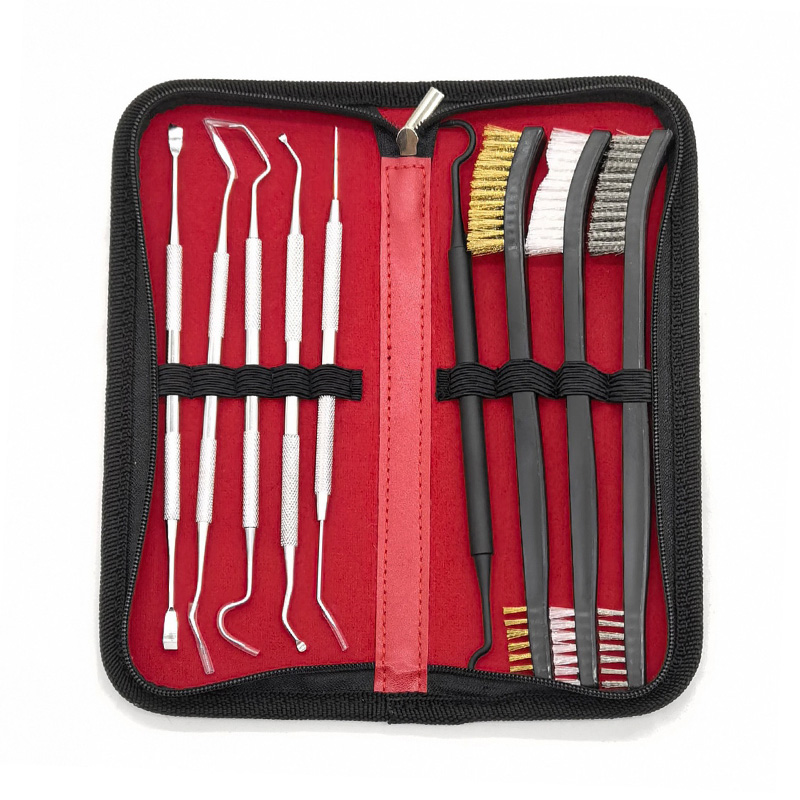
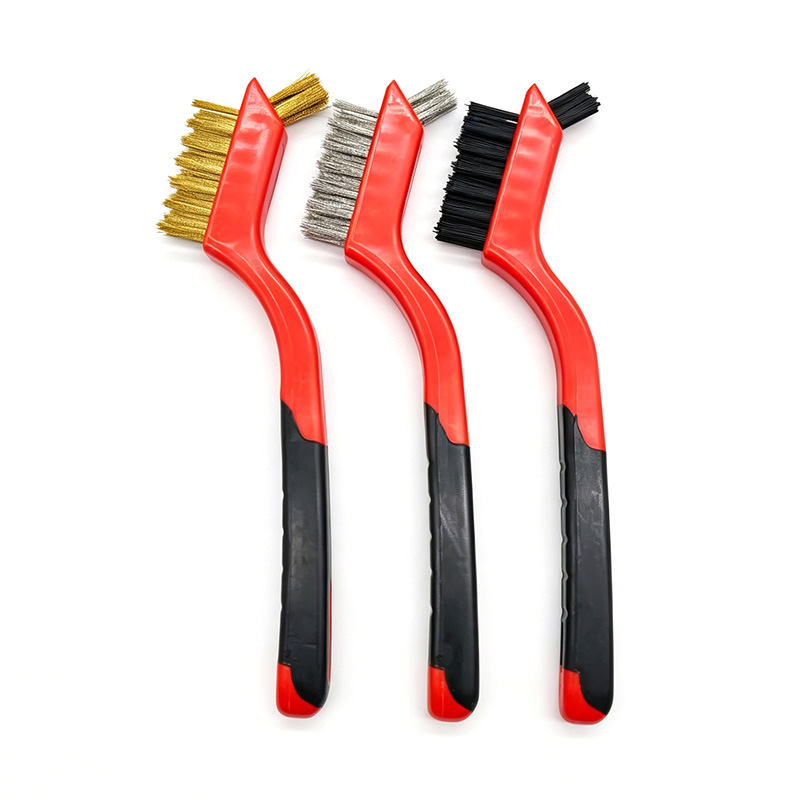
Cleaning narrow gaps, removing stubborn residue, and maintaining metal parts often require more than one type of brush. A soft brush may be safe for delicate surfaces but ineffective against baked-on grease. A rigid steel brush may remove rust quickly but can scratch glass, ceramic, painted finishes, or coated components. The Multi-Purpose Wire Brush Stove Gas Grease Cleaner addresses this common problem by combining brass wire, stainless steel wire, and nylon brush materials in one practical three-piece set.
Designed for kitchen, household, hardware, automotive, and light industrial applications, this compact detailing tool provides users with a choice of brush strength for different surfaces. Its strip-shaped profile, 180 mm overall length, 55 mm bristle length, curved anti-slip handle, hanging hook, and compact head allow it to reach narrow spaces that larger cleaning tools cannot access easily.
The product is suitable for stove gaps, gas burner areas, range hood filters, cookware, hardware parts, automotive components, and other locations where grease, rust, carbon, dust, or residue may accumulate. It is also positioned within the broader professional cleaning-tool category as a useful accessory for distributors, retailers, maintenance suppliers, and private-label brands.
The main advantage of this product is its multi-material construction. Instead of forcing one brush type to perform every task, the set provides three different cleaning options. Each brush is intended for a particular combination of surface sensitivity, contamination level, and required cleaning force.
The brass or copper-colored wire brush is intended for relatively gentle cleaning and polishing of suitable metal surfaces. It can help loosen light rust, surface oxidation, and residue from cookware, stove components, and selected hardware parts. Compared with a very aggressive steel brush, brass wire is generally more appropriate when the user wants effective scrubbing with a lower risk of harsh abrasion on compatible metal surfaces.
The stainless steel wire brush is the heavy-duty member of the set. It is suitable for stubborn grease, burnt residue, rust, and deposits that require stronger mechanical action. Users may select it for range hood filters, robust hardware, metal fixtures, maintenance parts, and other durable surfaces where a stronger brush is appropriate.
The nylon brush provides a non-metallic option for cleaning areas where metal bristles may cause scratching or damage. It can be used on glass, ceramic, coated surfaces, painted components, plastics, and other relatively delicate materials, provided that the user tests a small hidden area first. Nylon is also useful for removing loose dust, crumbs, powder, and light residue from narrow channels.
| Brush type | Primary function | Typical applications | Surface considerations |
|---|---|---|---|
| Brass or copper-colored wire | Gentle scrubbing, polishing, and light rust removal | Cookware, stove surfaces, selected metal hardware | Use suitable pressure and test the surface before full cleaning |
| Stainless steel wire | Heavy-duty removal of grease, rust, and burnt residue | Range hood filters, durable metal parts, hardware maintenance | Not recommended for delicate, painted, coated, or easily scratched surfaces |
| Nylon | Scratch-conscious cleaning and dust removal | Glass, ceramic, coated surfaces, plastic, narrow grooves | Suitable for lighter contamination; inspect the bristles regularly |
This material variety gives the set a practical advantage over single-material brushes. A single brass brush may not provide enough force for heavy deposits. A single stainless steel brush may be too aggressive for sensitive surfaces. A single nylon brush may not remove baked-on grease or rust efficiently. The three-piece configuration allows the user to match the tool to the task rather than compromise between cleaning performance and surface protection.
Many cleaning problems are caused not by a lack of cleaning products, but by limited access. Stove crevices, gas burner surroundings, range hood filter openings, hardware grooves, and automotive component gaps can be too narrow for a sponge or conventional household brush. The compact brush head and strip-shaped design of this product are intended to address these access challenges.
The overall length is approximately 180 mm, while the listed bristle length is approximately 55 mm. This proportion gives the user a useful reach without making the tool excessively large. The brush can be guided into narrow spaces while the handle remains outside the contaminated area, helping reduce direct contact with grease, dust, rust particles, and cleaning solutions.
The curved handle supports a more natural hand position during repetitive brushing. A curved profile can help users apply pressure from different angles, especially when cleaning vertical surfaces, corners, and horizontal gaps. The anti-slip handle is made from PP plastic and is designed to improve grip during wet or greasy cleaning work.
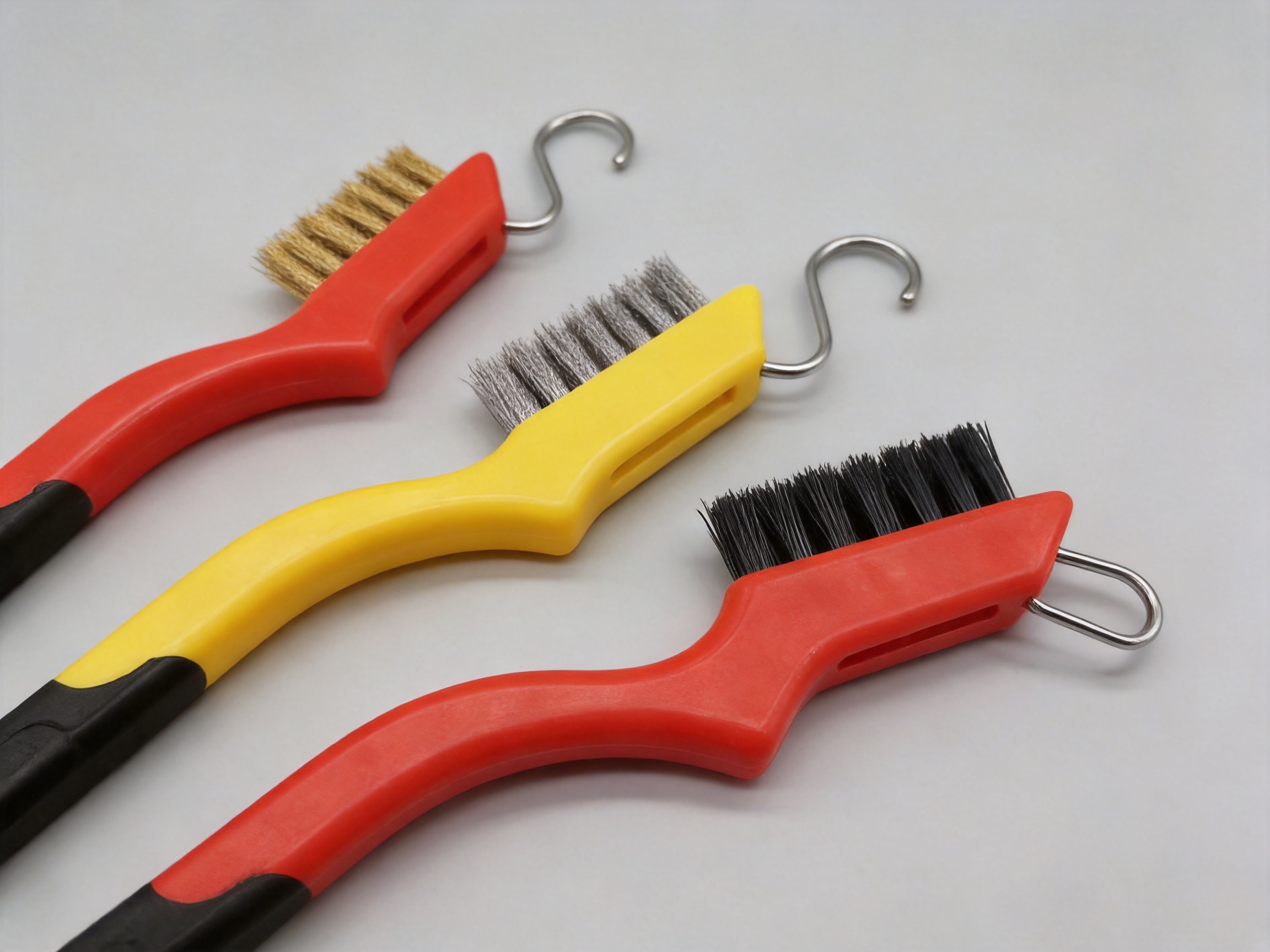
A hanging hook is integrated into the handle for storage. This small feature has practical value in kitchens, workshops, garages, maintenance rooms, and retail displays. The brush can be hung near a work area instead of being left inside a drawer, sink, toolbox, or contaminated cleaning bucket. Hanging storage also helps users locate the correct brush quickly and may support better drying after use.
The compact format is another competitive advantage. Large cleaning tools can be effective on broad surfaces but are inefficient for precise work. This brush is designed for detailing rather than large-area scrubbing. It complements sponges, cloths, mops, and larger brushes by handling the narrow sections that are commonly missed.
Multi-Purpose Wire Brush Stove Gas Grease Cleaner
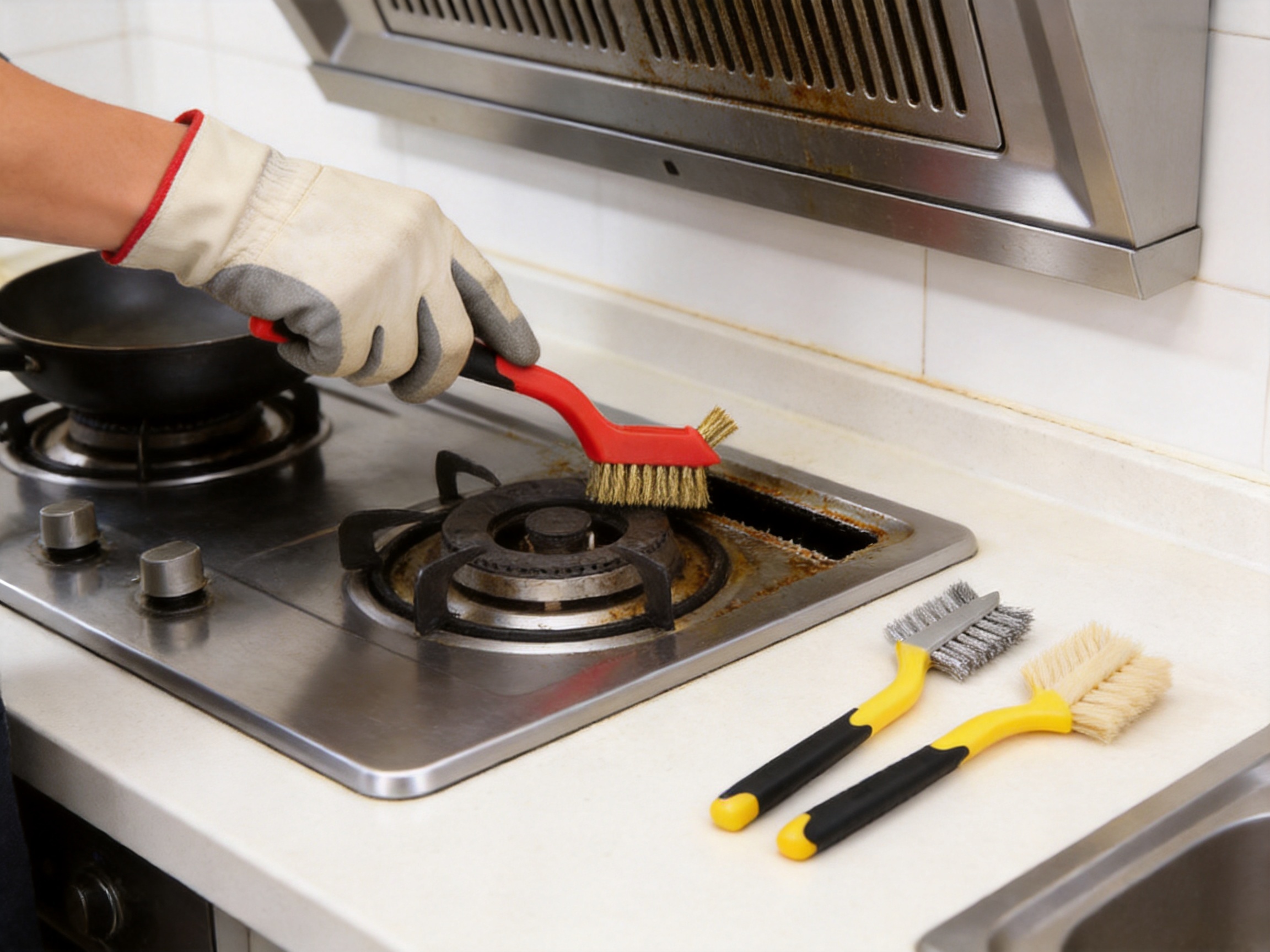
Kitchen cleaning is one of the most important application areas for this product. Cooking produces a mixture of oil, food particles, carbon, moisture, and heat-related residue. Over time, these contaminants can accumulate around burners, stove edges, control areas, range hood filters, and the joints between cooking equipment and work surfaces.
For light residue and surface dust, the nylon brush may be the most appropriate starting point. It can loosen particles from grooves without introducing metal bristles to sensitive surfaces. For compatible metal areas with light oxidation or rust, the brass wire brush may provide more effective mechanical action while remaining gentler than a harder steel brush.
When grease has become hardened or carbonized on a durable metal component, the stainless steel brush can deliver stronger scrubbing force. Users can combine brushing with an appropriate kitchen degreaser or cleaning solution, following the instructions for the surface and the chemical product. Mechanical brushing can help break up deposits, but it should not replace safe handling, ventilation, or correct cleaning procedures.
The tool is particularly useful for stove gaps and burner surroundings because these areas often have irregular edges and narrow channels. A broad sponge may pass over the top of the dirt without entering the gap. The narrow head can be positioned along the edge and moved back and forth to loosen buildup. After brushing, users can wipe away residue with a cloth or suitable cleaning pad.
For range hood filters, the stainless steel brush may be useful on durable metal sections when grease is difficult to remove. However, users should identify the filter material and follow the appliance manufacturer’s cleaning instructions. Some filters, coatings, finishes, or mesh structures may be damaged by excessive pressure or aggressive brushing. The nylon brush may be preferable for lighter deposits or more delicate sections.
The brass wire brush can also be considered for suitable cookware rust-cleaning tasks. It is important to distinguish between cleaning an external metal surface and cleaning a food-contact surface. After any cleaning operation involving wire brushes or chemical cleaners, the item should be thoroughly washed, rinsed, and inspected according to its intended use. Damaged, flaking, or heavily corroded cookware may require replacement rather than aggressive cleaning.
Beyond the kitchen, the product is suitable for general hardware maintenance. Fasteners, brackets, hinges, hand tools, fixtures, and other metal parts may develop surface rust or collect grease and dust during storage or use. The brush set gives maintenance personnel a convenient selection of cleaning strengths.
The brass brush can be used for lighter deposits where controlled abrasion is preferred. The stainless steel brush can address heavier corrosion or compacted dirt on robust metal components. The nylon brush can clean threaded areas, grooves, housings, and nearby non-metal surfaces without relying on metal bristles.
Because the product is compact, it can be kept in a toolbox, repair kit, workshop cabinet, garage, or service vehicle. Technicians often need a small hand tool for final cleaning before inspection, assembly, lubrication, or repainting. A brush that can reach a narrow recess may improve preparation quality and reduce the need to disassemble every component solely for cleaning access.
Rust removal should always be approached according to the material and the desired finish. Not every rusted part should be polished aggressively. Some parts may have protective coatings, plating, paint, or precision surfaces that must be preserved. The three-material design helps users select a lower-abrasion option before moving to a stronger brush, which can support more controlled maintenance.
The product’s stated function includes rust removal, and its application information identifies kitchens and cars as important use areas. It can therefore serve both household users and professional maintenance personnel. Distributors may position it as a general-purpose detailing brush set rather than limiting it to one appliance or one industry.
Automotive maintenance involves many compact parts with irregular shapes. Battery terminals, brackets, fasteners, hinges, engine-bay hardware, tool components, and metal fittings may accumulate oxidation, grease, road dust, or old lubricant. A small three-piece brush set can be useful during cleaning, inspection, and preparation work.
The stainless steel brush is appropriate only for robust surfaces that can tolerate its bristle action. The brass brush may be considered when a somewhat gentler metal-cleaning option is required. The nylon brush can help remove dust and loose residue from plastic housings, coated parts, and sensitive areas where metal bristles should be avoided.
In light industrial settings, the product may be used for maintenance benches, equipment preparation, hardware cleaning, fixture care, and general workshop housekeeping. Its value comes from convenience: one compact set provides three brush materials, allowing workers to keep the tools together and select the appropriate brush quickly.
It is not a replacement for specialized industrial power brushes, precision cleaning systems, or certified equipment used in high-risk environments. Instead, it functions as a manual detailing tool for routine work, small parts, narrow gaps, and final touch-up cleaning.
Competitors in this category may offer single brass brushes, single stainless steel brushes, all-nylon brushes, or larger household cleaning brushes. Each format has a place, but the three-material configuration provides broader usability in one purchase.
First, the set improves task flexibility. Users do not have to choose one bristle material before knowing every cleaning requirement. A kitchen may need gentle cleaning one day and heavy grease removal the next. A workshop may handle painted components, bare metal, and plastic parts during the same maintenance session. The three-piece set supports these changing conditions.
Second, the product reduces the risk of using an unsuitable brush simply because it is the only brush available. When users have access to nylon, brass, and stainless steel options, they can begin with the least aggressive tool likely to work and increase cleaning strength only when necessary.
Third, the uniform handle style and compact format make the set easy to organize. A user can recognize the three brushes as a coordinated kit rather than collecting unrelated tools with different shapes and storage requirements.
Fourth, the product supports multiple sales channels. It can be offered through hardware stores, kitchen accessory retailers, automotive suppliers, maintenance distributors, online marketplaces, and private-label catalogs. Its broad application range may help buyers reach more than one consumer segment.
Fifth, the brush is suitable for detailed work rather than only general scrubbing. Its dimensions, strip-shaped construction, and narrow head make it relevant to cleaning tasks where access is more important than covering a large surface quickly.
Manual brushing can become tiring when it involves repeated strokes, awkward angles, or contaminated surfaces. The curved anti-slip handle is intended to provide a more secure grip and help reduce hand fatigue during routine cleaning.
The PP plastic handle offers a lightweight structure suitable for household and maintenance use. The grip can be held from different positions depending on whether the user is brushing horizontally, vertically, along a corner, or into a narrow channel. The handle also keeps the user’s hand away from the immediate cleaning point.
Ergonomics are especially relevant for professional users who may clean multiple units, appliances, or components in one work period. A practical handle does not eliminate fatigue, but it can make the tool easier to control and more comfortable than a short, straight, or poorly balanced brush.
The hanging hook provides an additional usability benefit. In a workshop or commercial kitchen, storage time matters because tools are frequently moved between cleaning stations. A brush that can be hung on a peg, rail, hook, or display fixture is easier to store and retrieve than one that must be placed on a flat surface.
As with any hand tool, users should wear suitable gloves and eye protection when brushing rust, hardened residue, or contaminated components. Loose particles and bristles can become airborne during aggressive cleaning. Proper ventilation and safe handling remain important regardless of the handle design.
The product is available in several packaging formats, supporting different retail and wholesale strategies. Options include bulk loose packaging, three-piece OPP bag sets, blister card packaging, and hang card packaging. This range allows buyers to choose between cost-efficient bulk supply and presentation-ready retail formats.
Bulk loose packaging may suit industrial distributors, professional maintenance suppliers, and buyers who already operate their own packing lines. It can help reduce unnecessary retail materials when the product is being included in a larger tool assortment or shipped to commercial users.
The three-piece OPP bag set presents the brushes as a coordinated unit while keeping packaging relatively simple. This format may be suitable for online sellers, hardware distributors, and retail buyers who need a compact packaged product with clear visibility of the brush set.
Blister cards and hang cards may be appropriate for pegboard retail displays. The hanging hook on the tool can also support display presentation, while a card can provide space for product information, usage guidance, barcodes, branding, and multilingual instructions.
OEM and white-label support gives buyers the opportunity to customize the product identity and packaging. Customization may include logos, colors, labels, inserts, packaging artwork, and sales-channel requirements, subject to confirmation of order quantities, specifications, and production conditions.
The available colors are red and yellow. Color choices can help private-label buyers distinguish different product lines or coordinate the brush set with an existing brand palette. Buyers should confirm available color matching, packaging details, minimum order quantities, and sample approval procedures before placing a production order.
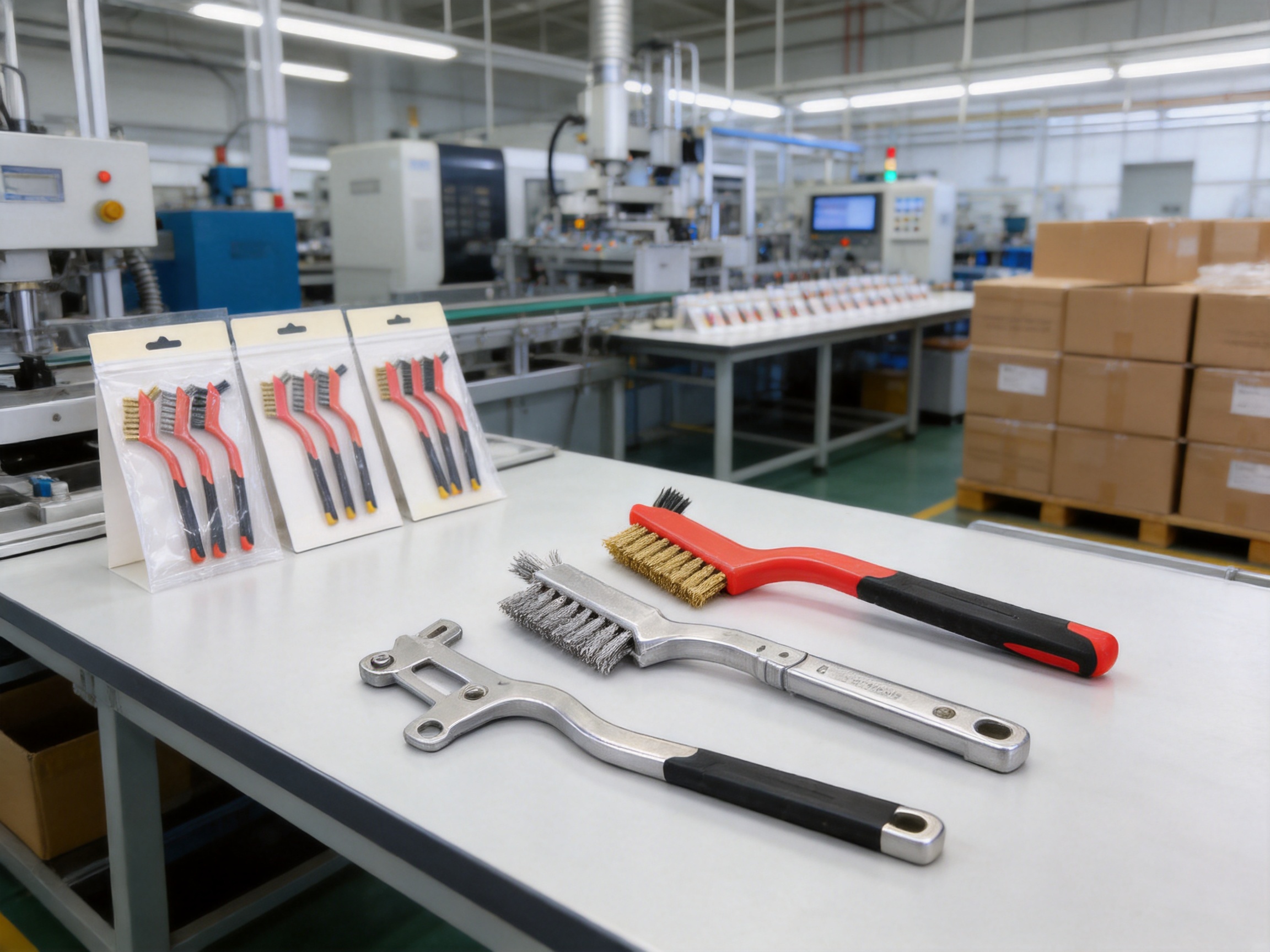
The manufacturer is a China-based tool factory located in Jinhua, Zhejiang, an area with an established manufacturing base for hardware and household tools. The company was established in 1999 and has more than 26 years of experience in research and development, production, and sales.
This long operating history can be valuable to wholesale buyers because brush production requires control over several details at once. The bristle material must be suitable for the intended application. The wire or nylon filaments must be secured properly. The handle must be formed consistently. The final brush must be packaged in a way that protects the product and communicates its intended use.
The company operates a modern production facility with semi-automatic and fully automated production systems. Automation can support repeatability in high-volume orders by helping standardize component handling, assembly, and output. Semi-automatic processes can also provide flexibility for product variations, packaging changes, and customized order requirements.
For a brush set with multiple bristle materials, production coordination is important. Each brush must be identified correctly and packed as part of the intended three-piece combination. A professional manufacturing system can help reduce the risk of incomplete sets, incorrect material combinations, inconsistent colors, or packaging mismatches.
The manufacturer integrates research and development with production and sales. This structure supports communication between product design, manufacturing, packaging, and customer requirements. For OEM and ODM buyers, direct communication with a factory can simplify discussions about dimensions, material selection, labeling, color, packaging, and production scheduling.
The company reports exporting to more than 50 countries and regions. International experience can help a supplier understand the practical requirements of cross-border business, including export packaging, documentation coordination, production planning, and communication with overseas buyers. European markets are identified as an important sales region, while Amazon is listed as a major downstream platform.
Although manufacturing experience is an important advantage, buyers should still request samples, product specifications, packaging approvals, and any quality documentation required for their market. A responsible purchasing process combines supplier capability with order-specific inspection and clear written requirements.
A consistent wire brush depends on more than the visible handle and bristles. The manufacturing process should address raw material selection, bristle cutting, bristle insertion or fixing, handle forming, surface inspection, assembly, cleaning, packing, and final quantity verification.
For brass or copper-colored wire brushes, the material description should be confirmed because market terminology may distinguish between solid brass wire, copper-colored wire, and iron wire with copper plating. The available product information refers to copper wire brushes and also mentions copper-plated brushes made from iron wire with copper plating. Buyers should specify the exact construction required for their application and packaging label.
Stainless steel wire requires attention to wire diameter, bristle density, stiffness, and secure attachment. Nylon brushes require control of filament type, stiffness, length, and trimming quality. These variables influence the user’s experience and the brush’s cleaning behavior.
The listed bristle length is approximately 55 mm, the overall length is approximately 180 mm, and the listed thickness is approximately 10 mm. These dimensions provide a useful starting specification for purchasing, but buyers should confirm tolerances and measurement methods during sample approval.
Handle molding is also important. The PP plastic handle needs a stable shape, a comfortable grip profile, and an appropriate connection to the brush head. The hanging hook should remain usable after molding and packaging. Visual inspection can help identify flash, deformation, sharp edges, weak attachment, uneven bristles, or color inconsistency.
For three-piece sets, packing inspection is particularly important. Each retail unit should contain one brush of each intended material unless an alternative assortment has been agreed upon. Packaging should identify the material differences clearly so the end user can select the right brush for the surface.
Advanced equipment does not replace quality management, but it can improve production capacity and repeatability. The manufacturer’s combination of semi-automatic and fully automated systems provides a foundation for handling both standard wholesale orders and customized programs.
The product offers several advantages for wholesalers. Its three-material format creates a clear product proposition that is easy to explain: one compact set for gentle, heavy-duty, and scratch-conscious cleaning tasks. This message can be used in catalogs, online listings, packaging, and retailer training materials.
The broad application range can also help distributors serve different customer groups. Hardware customers may focus on rust removal and maintenance. Kitchen customers may focus on stove gaps and grease. Automotive customers may focus on component detailing. Household customers may value the compact size and multiple brush types.
For online marketplaces, the product provides several content points: three brush materials, narrow-gap access, ergonomic handle, hanging hook, multiple packaging options, and OEM availability. Product photography can show the three brush colors or materials, the handle shape, the compact brush head, and common use scenarios.
Retailers may position it as an affordable accessory for cleaning kits, kitchen maintenance collections, workshop assortments, or car-care displays. It can also be bundled with degreasers, microfiber cloths, maintenance tools, or general-purpose cleaning products, provided that the bundle complies with the relevant sales and packaging requirements.
Private-label buyers can use the product to extend an existing tool line without developing a completely new brush platform. Custom packaging and branding can help create a consistent shelf presence. Buyers should provide clear artwork, approved samples, product claims, and packaging instructions to reduce the chance of misunderstandings during production.
Select the brush according to the surface and contamination level. Start with the nylon brush for delicate or coated surfaces and light residue. Move to the brass brush for suitable metal surfaces and light rust. Use the stainless steel brush only on durable materials that can tolerate stronger abrasion.
Before cleaning a visible or valuable surface, test the brush in a small, inconspicuous area. Apply moderate pressure first and inspect the result. Excessive force can scratch, dull, remove coatings, or alter the finish even when the brush material is generally suitable.
For kitchen and appliance cleaning, disconnect or cool equipment when necessary and follow the appliance manufacturer’s instructions. Keep water and cleaning chemicals away from electrical components. Do not brush active gas outlets, electrical contacts, or moving machinery while equipment is operating.
After use, remove loose residue from the bristles and allow the brush to dry. Store it using the hanging hook or in a clean, ventilated location. Do not allow different chemical cleaners to remain on the bristles unless their compatibility has been confirmed. Inspect the brush periodically for loose wires, damaged bristles, handle cracks, or contamination.
Users should wear gloves and eye protection for rust removal, heavy grease cleaning, and work that may release particles. The brush is a manual cleaning tool and should be used with appropriate workplace safety procedures.
| Item | Specification |
|---|---|
| Product type | Multi-purpose three-piece wire and nylon brush set |
| Primary category | Bronze and brass brushes |
| Brush materials | Brass or copper-colored wire, stainless steel wire, and nylon |
| Overall length | Approximately 180 mm |
| Bristle length | Approximately 55 mm |
| Listed thickness | Approximately 10 mm |
| Handle material | PP plastic |
| Shape | Strip-shaped |
| Available colors | Red and yellow |
| Key functions | Rust removal, grease cleaning, residue removal, detailing |
| Typical applications | Kitchen cleaning, hardware maintenance, automotive parts, light industrial cleaning |
| Packaging options | Bulk loose, OPP bag set, blister card, and hang card |
| Customization | OEM, ODM, white-label packaging, and logo support subject to confirmation |
| Manufacturing location | Jinhua, Zhejiang, China |
The product’s competitive position is based on practical versatility rather than a single specialized feature. It combines three bristle materials, a compact design, a useful handle, storage support, flexible packaging, and factory customization in one offering.
Compared with a basic single-brush product, it offers more application coverage. Compared with a large multi-tool kit, it remains compact and focused on narrow-gap cleaning. Compared with a disposable or low-utility household brush, it provides a clearer selection of cleaning strength and a more professional maintenance orientation.
The product also benefits from a manufacturer that has operated since 1999 and combines R&D, production, and sales. Its semi-automatic and fully automated production systems are designed to support stable output for larger orders. Export experience in more than 50 countries and regions, along with OEM and ODM support, makes the product suitable for buyers building regional or global distribution programs.
For customers seeking a private-label cleaning accessory, this product offers a practical starting point. The three-piece configuration can be adapted to different retail positions, from kitchen detailing to workshop maintenance. Packaging formats can be selected according to the sales channel, while red and yellow color options provide basic visual customization.
The most important purchasing advantage is the balance between product utility and supply flexibility. Buyers receive a tool with multiple end-use applications while gaining access to a factory capable of supporting bulk supply, retail packaging, and customized branding.
The standard concept includes one brass or copper-colored wire brush, one stainless steel wire brush, and one nylon brush. Buyers should confirm the exact wire construction, especially where the specification distinguishes between solid copper-colored wire and copper-plated iron wire.
Yes. It is designed for stove gaps, burner surroundings, cookware rust cleaning, grease removal, and other kitchen detailing tasks. Users should select the brush according to the surface and should follow appliance safety instructions.
The nylon brush is generally the preferred starting option for glass, ceramic, coated, painted, and plastic surfaces. A small test area should always be checked first because surface finishes vary.
The stainless steel brush is intended for stubborn grease, burnt residue, rust, and durable metal components. It should not be used automatically on delicate or coated surfaces because it may cause scratches or finish damage.
It can help remove light rust and surface oxidation from suitable metal surfaces. The exact result depends on the type of metal, depth of corrosion, cleaning pressure, and whether a compatible cleaning solution is used.
Yes. The set can be used for selected automotive hardware, brackets, fittings, hinges, and other durable components. Users should avoid sensitive finishes and electrical or precision parts unless the cleaning method has been confirmed as suitable.
The listed overall length is approximately 180 mm. The listed bristle length is approximately 55 mm. Buyers should confirm production tolerances during sample approval.
The handle is made from PP plastic. It has a curved anti-slip design intended to improve grip and reduce fatigue during manual cleaning.
Yes. The handle includes a hanging hook for storage and display. It can help users keep the brush accessible in kitchens, workshops, garages, and maintenance areas.
Available formats include bulk loose packaging, three-piece OPP bag sets, blister cards, and hang cards. The best format depends on the customer’s distribution channel, display requirements, and cost target.
OEM, ODM, and white-label support are available subject to order details. Customization may include logos, packaging, labels, colors, and product combinations. Buyers should confirm minimum order quantities, artwork requirements, sampling, and lead time.
The product is manufactured in Jinhua, Zhejiang, China, by a factory established in 1999 with R&D, production, sales, and export capabilities.
The factory uses semi-automatic and fully automated production systems and has experience supplying international markets. Buyers should still agree on specifications, quality standards, inspection procedures, packaging, and delivery conditions before production.
The product is presented primarily as a three-piece set, but customized assortments may be discussed with the manufacturer. Any change to the standard combination should be confirmed for tooling, packaging, labeling, and minimum order requirements.
No. It is a manual detailing brush set for household, hardware, automotive, and light industrial cleaning. Specialized high-risk, high-volume, or precision applications may require dedicated equipment and documented procedures.
The Multi-Purpose Wire Brush Stove Gas Grease Cleaner is a practical three-material brush set designed for the everyday problem of cleaning narrow, dirty, and difficult-to-reach areas. Its brass or copper-colored wire, stainless steel wire, and nylon options allow users to adjust cleaning strength according to the surface. The compact head, 180 mm overall length, curved PP handle, anti-slip grip, and hanging hook support controlled and convenient manual cleaning.
Its applications extend from stove gaps and range hood filters to cookware, hardware, automotive components, and light industrial maintenance. This broad usability gives it an advantage over single-material brushes and makes it suitable for household users, technicians, distributors, online sellers, and private-label brands.
The manufacturing foundation adds further value. A factory established in 1999, equipped with semi-automatic and fully automated production systems, and experienced in international supply can support standard wholesale orders as well as OEM and ODM programs. Flexible packaging, red and yellow color options, and multiple retail formats make the product adaptable to different markets.
For buyers seeking a compact, customizable, and broadly applicable cleaning accessory, this brush set offers a balanced combination of performance, ergonomic design, manufacturing capability, and commercial flexibility.
1. Product specification sheet for the Multi-Purpose Wire Brush Stove Gas Grease Cleaner, including dimensions, materials, colors, packaging options, and applications.
2. Manufacturer company information concerning factory history, R&D capability, production systems, export experience, and OEM and ODM services.
3. General principles of manual brush selection for metal, coated, ceramic, glass, plastic, and nylon-compatible surfaces.
4. General household and workshop guidance for rust removal, grease cleaning, surface testing, tool storage, and personal protective equipment.
5. General product quality-control considerations for wire brushes, nylon brushes, molded plastic handles, retail packaging, and multi-piece set assembly.