English
 русский
 Español
 عربى

HUNTACE HUNTACE HUNTACE HUNTACE HUNTACE
HUNTACE HUNTACE HUNTACE HUNTACE


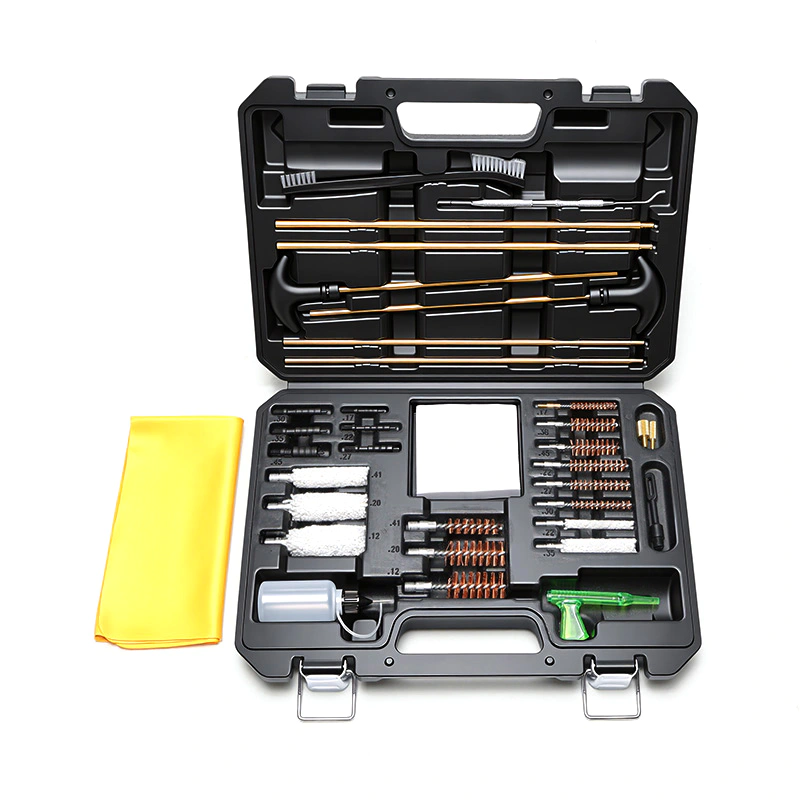
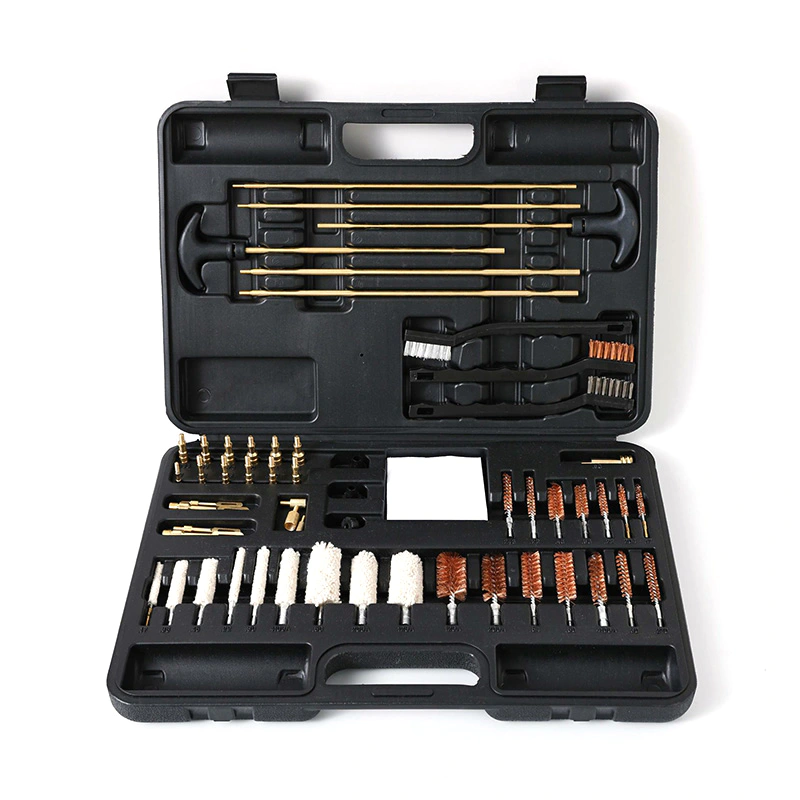
Reliable firearm maintenance depends on using the right accessories for the right caliber, barrel, and cleaning method. The AR15 Gun Cleaning Refill Kit is designed as a practical maintenance set for .22 caliber and 5.56mm systems, as well as .30 caliber and 7.62mm rifles. It combines commonly required cleaning components in a compact package, giving firearm owners, retailers, shooting clubs, distributors, and maintenance professionals a convenient way to replenish existing cleaning equipment.
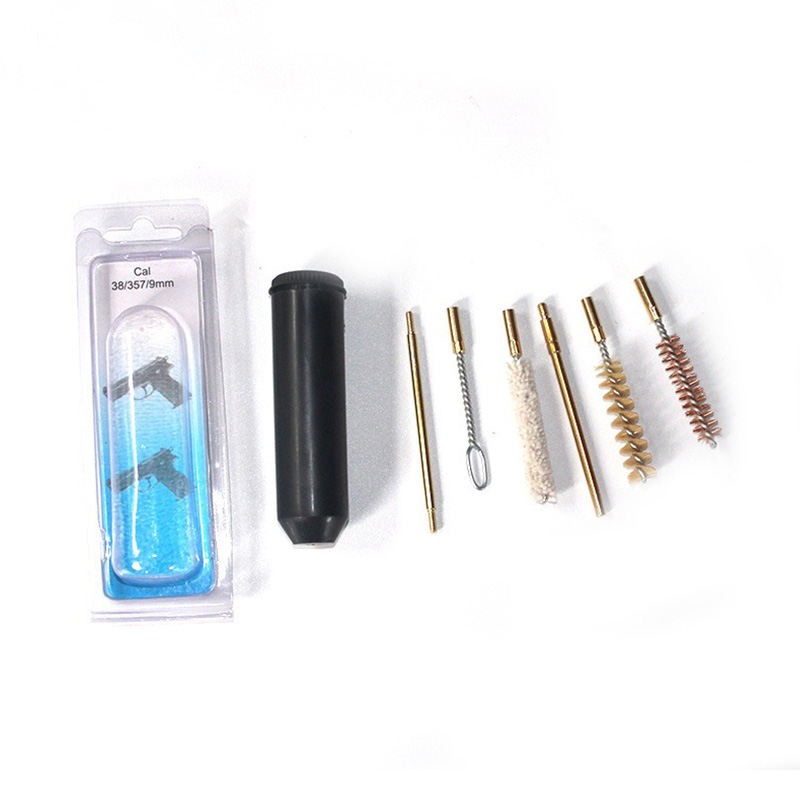
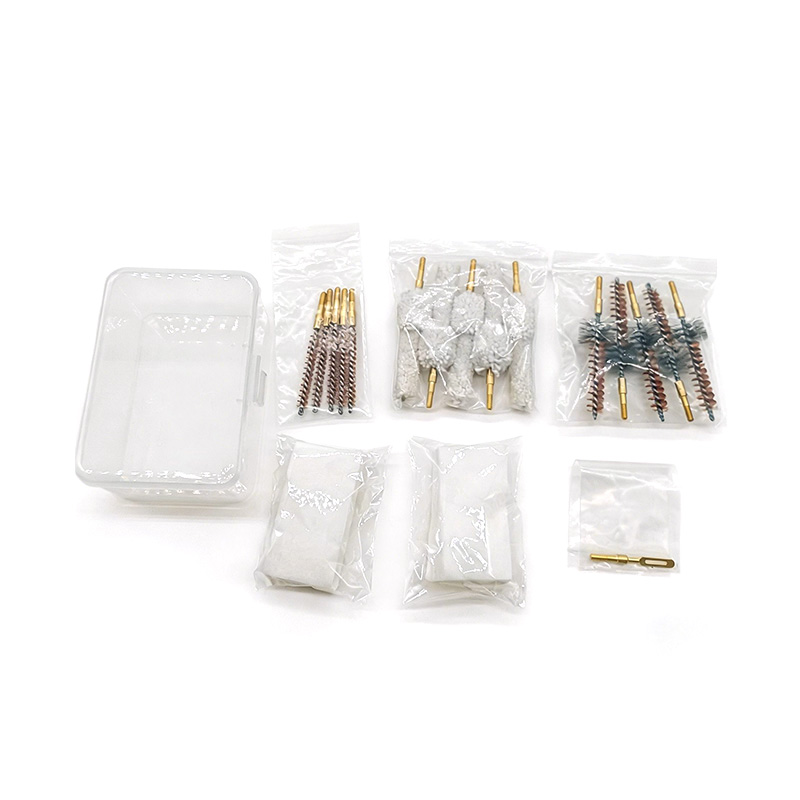
Rather than replacing an entire cleaning case every time a brush wears out or patches are consumed, users can select a refill kit containing the essential bore-cleaning accessories. This approach reduces unnecessary duplication, improves storage efficiency, and helps maintain a consistent cleaning routine. The set includes brass bore brushes, cotton mop brushes, thread adapters, and cleaning patches, supporting several stages of routine barrel care.
The product is also suitable for OEM and private-label programs. Its specifications, packaging, and presentation can be adjusted for different market requirements, making it relevant to both cross-border e-commerce sellers and offline wholesale customers. Manufactured by an experienced Zhejiang-based tool factory, the kit benefits from established production capabilities, semi-automatic and automated manufacturing systems, quality-control procedures, and export experience across more than 50 countries and regions.
An AR15 Gun Cleaning Refill Kit is a compact collection of replacement cleaning components intended for the maintenance of rifle bores and related internal surfaces. The supplied configuration is identified as an M4 Refill Pack and is designed for .22 caliber/5.56mm and .30 caliber/7.62mm specifications, with customization available for selected requirements.
The kit is not limited to a single cleaning action. Its components can be used for loosening fouling, brushing residue from the bore, applying cleaning or protective solutions, and wiping away loosened deposits. By combining brushes, mops, adapters, and patches, it provides a coordinated set of tools for regular maintenance instead of requiring the user to purchase each component separately.
The set is especially useful for owners who already have a compatible cleaning rod or handle but need replacement consumables and accessories. It can also function as a compact standalone maintenance solution when paired with the appropriate cleaning rod and firearm-specific instructions. Because firearm designs vary, users should always confirm thread compatibility, caliber suitability, and the correct cleaning procedure before use.
The product information identifies a transparent boxed presentation, a total set weight of approximately 179 grams, a bristle length of 14 millimeters, and a total brush length of 90 millimeters. The brush handle material is galvanized steel wire, and the brush type is listed as a copper wire brush. These details provide buyers with a clear starting point for evaluating the product against their own maintenance requirements.
Brass bore brushes are designed to help loosen carbon fouling, powder residue, and other deposits that can accumulate inside a barrel after repeated firing. Brass is widely used in firearm cleaning accessories because it provides useful brushing action while being softer than the steel typically used in firearm barrels. When used correctly, a brass brush can offer effective cleaning without the aggressive action associated with harder abrasive tools.
The brush should be selected according to the bore specification. A brush intended for .22 caliber or 5.56mm use should not automatically be substituted for a .30 caliber or 7.62mm brush, because an incorrect diameter may reduce cleaning efficiency or create unnecessary resistance. The availability of both .22/.5.56mm and .30/7.62mm specifications makes the refill kit more adaptable for different rifle platforms.
Brass brushes are particularly valuable during the initial cleaning stage. They can help break up deposits before a cotton mop or patch is passed through the bore. This staged process is generally more efficient than repeatedly forcing dry patches through a heavily fouled barrel.
Cotton bore mops are used to apply cleaning solvent, remove loosened residue, and distribute a light protective film when appropriate. Their soft material makes them suitable for finishing and wiping tasks after brushing. They can also help absorb excess liquid from the bore before storage, provided the user follows the firearm manufacturer’s instructions.
A cotton mop provides a different function from a brass brush. The brush applies mechanical action to loosen fouling, while the mop helps carry cleaning fluid and collect remaining residue. Including both components in one refill set allows users to organize cleaning stages more effectively.
For best results, cotton mops should be kept reasonably clean and should not be reused indefinitely. A contaminated mop can redistribute residue rather than remove it. Replacing worn or heavily soiled mops is one of the main reasons a refill pack is useful for frequent shooters and professional maintenance operations.
Thread adapters connect cleaning accessories to a suitable rod, handle, or other compatible cleaning system. Thread compatibility is essential because different rods and brushes may use different connection standards. The adapters supplied in the kit are intended to improve compatibility across supported cleaning arrangements, but the purchaser should verify the exact thread specification before ordering in volume.
Adapters also make the set more flexible for users who already own a cleaning rod system. Instead of replacing a complete kit, a user may be able to continue using an existing rod while replenishing the working accessories. For wholesalers, this compatibility-oriented design can broaden the potential customer base and make the product easier to position as a replacement or supplemental pack.
Cleaning patches are used to wipe away loosened fouling, excess solvent, and moisture. They are often passed through the bore after brushing and mopping to help achieve a cleaner internal surface. Patches are consumable items, so frequent users can benefit from purchasing them as part of a refill set rather than buying a complete case of tools each time.
The correct patch size and folding method depend on the caliber, patch material, and cleaning rod design. Users should avoid excessive force. A patch that is too large can become difficult to move, while a patch that is too small may not contact the bore sufficiently. Clear use instructions and caliber-specific guidance can improve the customer experience for retailers and online sellers.
The kit is specified for .22 caliber/5.56mm and .30 caliber/7.62mm rifle applications. These specifications cover several widely used rifle bore categories, including AR15-style platforms chambered in 5.56mm and other rifles using 7.62mm or .30 caliber ammunition. However, “compatible” should be understood as a product specification rather than a substitute for checking the exact firearm and accessory requirements.
Caliber selection should be confirmed before use. A .22/5.56mm brush is intended for a smaller bore than a .30/7.62mm brush. Selecting the proper size helps ensure the brush contacts the bore appropriately without creating excessive drag. Retailers should clearly separate specifications in product listings, packaging, and warehouse inventory to minimize picking errors.
For OEM buyers, the stated specifications can be used as a base configuration. Customized selections may be possible depending on production requirements, order quantity, packaging design, and technical confirmation. Buyers should request a pre-production sample or written specification sheet when developing a new private-label product.
The kit may be particularly attractive to online sellers because one product family can serve multiple caliber categories. Separate listings, color coding, printed labels, or clearly marked internal packaging can help customers identify the correct version. Accurate product descriptions are important because firearm maintenance accessories must be matched carefully to the intended application.
A normal bore-cleaning routine begins with firearm safety. The firearm must be unloaded, the chamber checked, and the manufacturer’s safety instructions followed. Ammunition should be kept away from the cleaning area. Users should also work in a well-ventilated space and follow the instructions provided with any solvent or lubricant.
After the firearm has been made safe, the user can inspect the bore and identify the appropriate cleaning direction and disassembly procedure. Some firearms require cleaning from the chamber end, while others may be cleaned differently depending on their design. A suitable bore guide may be used where recommended to help align the cleaning rod and protect the chamber area.
The first cleaning pass may involve a patch or mop lightly treated with an approved cleaning solution. This can help soften residue before brushing. The brass bore brush can then be passed through the bore with controlled, deliberate movements. The brush should not be forced, twisted excessively, or used with a damaged rod.
Once deposits have been loosened, a cotton mop can help remove liquid and residue from the bore. Cleaning patches can follow until the patch shows a suitable level of cleanliness for the intended maintenance cycle. The final step may involve a light protective treatment where appropriate, especially if the firearm will be stored, but excess oil should be avoided unless the firearm manufacturer specifies otherwise.
The refill kit supports this sequence by supplying tools for brushing, application, wiping, and connection. It does not eliminate the need for safe handling, appropriate cleaning chemicals, or a compatible rod. Instead, it provides the working accessories required to perform common maintenance steps with fewer separate purchases.
AR15 Gun Cleaning Refill Kit
A single brush may remove some residue, but it does not provide the complete range of actions required for a practical cleaning routine. The refill kit combines brass brushes with cotton mops and patches, allowing the user to move from loosening to wiping and finishing without sourcing multiple products.
This combination can provide better value than purchasing individual components separately. It also reduces the chance that a user will continue cleaning with a worn brush or contaminated patch simply because a replacement is not available. For high-use environments, organized replenishment can contribute to more consistent maintenance practices.
With a stated weight of approximately 179 grams per set and a transparent storage case, the kit is easy to carry and simple to organize. The transparent case allows users to identify the contents quickly, which is useful in workshops, shooting bags, retail inventory, and field maintenance situations.
Compact packaging can also reduce warehouse space and shipping complexity. Compared with a large universal cleaning case containing many tools that may not be needed, a refill kit is focused on frequently used accessories. This can be attractive to e-commerce sellers seeking a practical product with an easy-to-understand value proposition.
The product can be positioned as a refill for an existing cleaning kit or as a compact accessory set for users assembling their own maintenance system. This dual role gives distributors more opportunities to reach different customer groups. Existing firearm owners may need replacement brushes and patches, while new buyers may want a small selection of essential accessories.
Its flexible positioning also supports different sales channels. Online retailers can market it as a consumable maintenance replenishment product, while physical distributors can sell it alongside firearms, cases, shooting accessories, cleaning chemicals, or rods. Wholesale buyers can create bundled offers according to their market preferences.
The use of brass and cotton reflects a practical balance between cleaning performance and surface protection. Brass provides the mechanical action needed to loosen fouling, while cotton supports wiping and finishing. This is preferable to using unnecessarily aggressive materials for routine bore care.
“Bore-safe” does not mean that careless use is impossible. Any cleaning accessory can cause damage if used with excessive pressure, a bent rod, poor alignment, or an incorrect size. The product’s material selection supports careful maintenance, but correct technique remains essential.
The supplier supports customization of specifications and packaging. This gives importers and distributors the opportunity to develop a product presentation suited to their own brand identity, customer segment, or regional sales channel. Customization may include packaging artwork, labels, product combinations, and selected specifications, subject to technical and order-volume confirmation.
Private-label programs can help sellers differentiate themselves from generic listings. A well-designed package can communicate caliber options, component contents, usage guidance, and safety information more effectively than an unmarked plastic bag. For cross-border e-commerce, professional packaging can also improve customer confidence and reduce confusion during product selection.
The product is manufactured by Jinhua Tongshun Tool Factory, a comprehensive enterprise integrating research and development, production, and sales. Established in 1999, the company has more than 26 years of manufacturing experience in gun cleaning kits, barrel cleaning brushes, and related maintenance accessories.
Long-term experience is valuable in this product category because cleaning accessories must combine appropriate dimensions, material selection, connection design, packaging, and repeatable production quality. A manufacturer familiar with brush construction and accessory assembly can better understand the practical requirements of distributors and end users.
The factory operates production systems that include semi-automatic and fully automated equipment. These systems can improve consistency in repetitive manufacturing operations, support larger orders, and reduce variation between production batches. Automation is particularly relevant for products involving repeated assembly, wire forming, brush insertion, trimming, and packaging.
Automation does not replace quality inspection. A dependable production process normally combines equipment, trained personnel, incoming material checks, in-process monitoring, and final inspection. For brush products, relevant checks may include overall dimensions, bristle distribution, handle condition, thread connection, assembly security, packaging completeness, and appearance.
Stable supply capacity is another advantage for wholesalers. Retailers need reliable replenishment, especially when a product is sold as a consumable or replacement accessory. A supplier capable of handling large-scale orders can help reduce stockout risk and support planned promotional campaigns, seasonal sales, and multi-market distribution.
The company reports that its products are exported to more than 50 countries and regions. International sales experience can support communication about packaging, documentation, labeling, shipping arrangements, and market-specific expectations. Buyers should still confirm all import, product, and firearms-accessory regulations applicable to their destination market.
OEM and ODM services are also available. These services can include customized products, packaging, and logos. A structured development process may involve an initial product brief, technical confirmation, artwork review, sample production, approval, mass production, inspection, and shipment. Buyers can improve efficiency by supplying clear requirements at the start of the project.
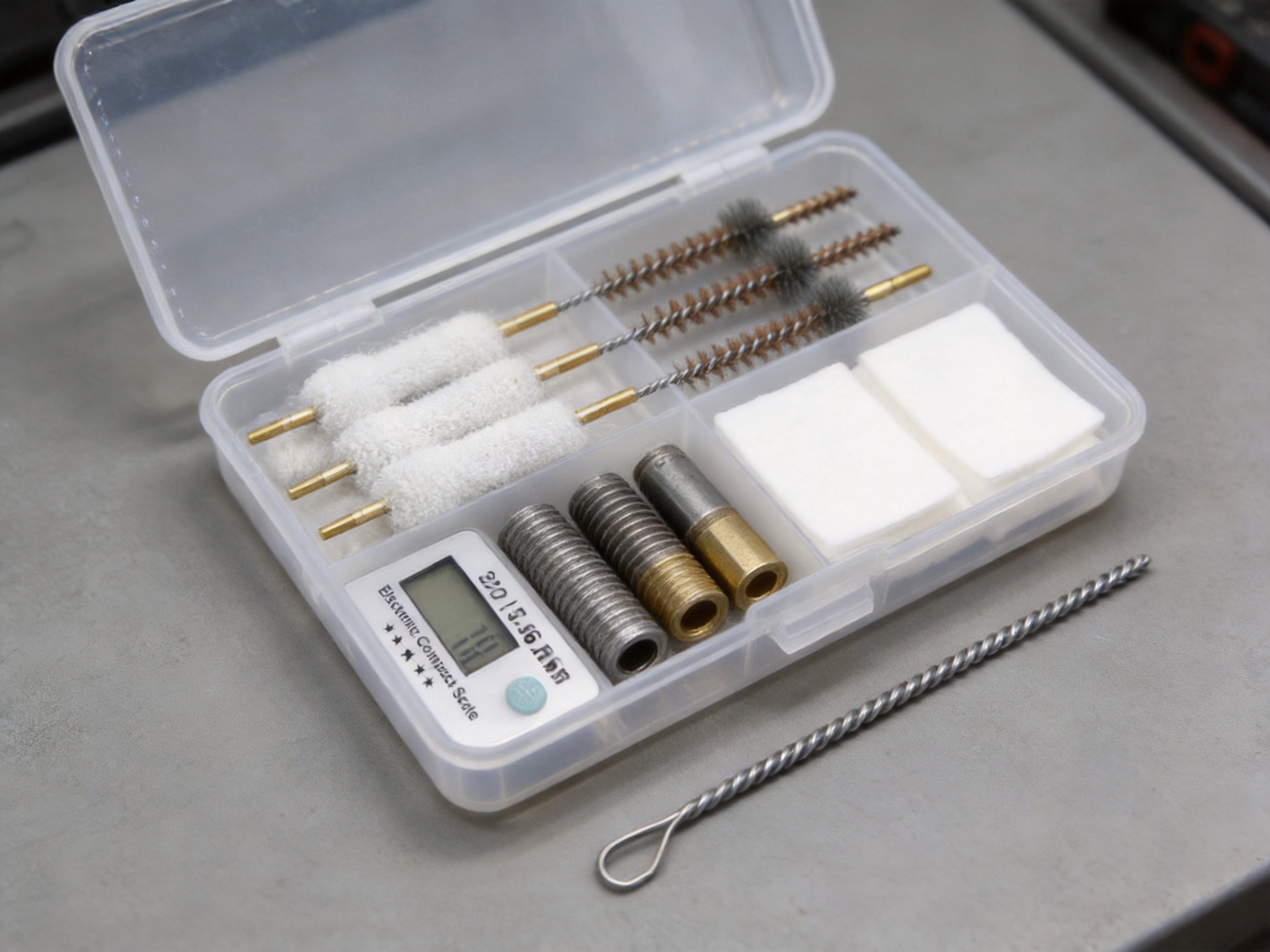
The product information identifies galvanized steel wire as the handle material. Steel wire provides the structural support needed for brush use, while galvanization helps provide a protective surface finish. The handle must remain sufficiently straight and secure during ordinary use, and the accessory should be discarded if it becomes bent, damaged, or loose.
For distributors, handle material is an important specification because it influences durability, appearance, and perceived product quality. It should be presented accurately in technical documents and online listings. Buyers developing private-label packaging may also choose to highlight the handle construction as part of the product’s feature panel.
The product is listed as a copper wire brush, while the product description refers to brass bore brushes. Copper and brass are related nonferrous materials, but they are not identical. For precise procurement, buyers should confirm the exact alloy, wire diameter, brush construction, and intended application with the manufacturer before finalizing technical documentation.
This clarification is especially important for OEM projects. A buyer’s internal quality standard may specify brass, phosphor bronze, copper, or another material. The factory can then confirm whether the requested construction is available and whether it affects price, minimum order quantity, cleaning performance, or lead time.
The supplied configuration includes cotton mop brushes, while the broader product range also covers nylon and other material brushes. Nylon brushes can be useful when a softer or nonmetallic brushing option is preferred. They may be offered as separate products or as part of a customized package, depending on the application and order requirements.
Different materials can be used to create product families for different maintenance preferences. Brass brushes may be positioned for routine fouling removal, nylon brushes for gentler cleaning or special surfaces, and cotton mops for liquid application and final wiping. Product descriptions should avoid implying that one material is suitable for every firearm or every cleaning task.
The transparent boxed presentation gives the kit a practical retail appearance. Customers can see the contents without opening the package, and warehouse staff can identify the product quickly. For online orders, transparent packaging can also be photographed easily for product listings.
OEM packaging may be developed for different sales channels. A basic technical package may suit industrial wholesalers, while a retail package could include product photography, caliber identification, contents, usage reminders, and multilingual information. Packaging should be designed to protect the brushes and patches during transport without adding unnecessary bulk.
Wholesale buyers may consider ordering separate specifications for .22/5.56mm and .30/7.62mm users. Stock planning should reflect the customer base, local firearm ownership patterns, and sales data. A mixed order can provide broader market coverage, but clear outer-carton labeling is important to prevent warehouse confusion.
The product can also be bundled with cleaning rods, thread adapters, lubricants, bore guides, storage cases, or other maintenance accessories. Such bundles can increase average order value and provide customers with a more complete solution. However, each bundle should clearly identify which components are included and which are not included.
For cross-border e-commerce sellers, the compact size and low set weight can be useful for fulfillment calculations. Sellers should verify the final packed dimensions and shipping weight rather than relying only on the approximate product weight. They should also review marketplace rules, customs requirements, and destination-country regulations before listing firearm maintenance accessories.
Before placing a wholesale or OEM order, buyers should request a detailed specification sheet. This document can include caliber, brush type, bristle material, bristle length, total length, handle material, adapter thread, patch quantity, mop construction, packaging format, and product weight.
Samples should be evaluated for brush alignment, wire security, thread fit, surface finish, and packaging completeness. A brush should not shed excessive wire during normal controlled use. Cotton mops should be securely attached, and patches should be clean, consistently cut, and suitable for the specified bore size.
Buyers should also confirm the factory’s batch-control process. Useful questions include how raw materials are inspected, how production dimensions are checked, how finished goods are sampled, and how defective items are handled. For repeat orders, retaining an approved sample can help maintain consistency across subsequent production runs.
Packaging inspection is equally important. Caliber information should be visible, the product code should match the purchase order, and the package should contain the agreed components. For private-label projects, artwork approval should include a review of technical claims, translations, safety statements, and barcode information.
Quality requirements may differ by market. A professional buyer should communicate whether the goods are intended for retail, wholesale, institutional supply, or a specific e-commerce platform. Clear requirements help the factory recommend suitable materials, packaging, inspection standards, and delivery arrangements.
Always confirm that the firearm is unloaded before cleaning. Remove ammunition from the immediate work area and follow the firearm manufacturer’s instructions for disassembly, cleaning direction, and lubrication. If the user is unfamiliar with the firearm, professional instruction should be obtained.
Select the correct brush and accessory size. Do not force a brush, mop, or patch through the bore. Excessive resistance may indicate an incorrect size, an obstruction, a damaged rod, or an unsuitable connection. Stop and identify the cause rather than applying more pressure.
Use only cleaning chemicals that are suitable for the firearm and follow the chemical manufacturer’s instructions. Some solvents require ventilation, gloves, eye protection, or special handling. Cleaning accessories should be washed or replaced when contaminated, worn, or damaged.
Inspect the kit before each use. A bent wire handle, loose brush, damaged thread, or frayed cotton mop should not be used. Keep the components dry after cleaning and return them to the storage case to reduce loss and contamination.
After maintenance, check the firearm according to the manufacturer’s procedures before storage or use. A bore should not contain an unintended obstruction or excessive lubricant. When in doubt, consult a qualified gunsmith or firearm professional.
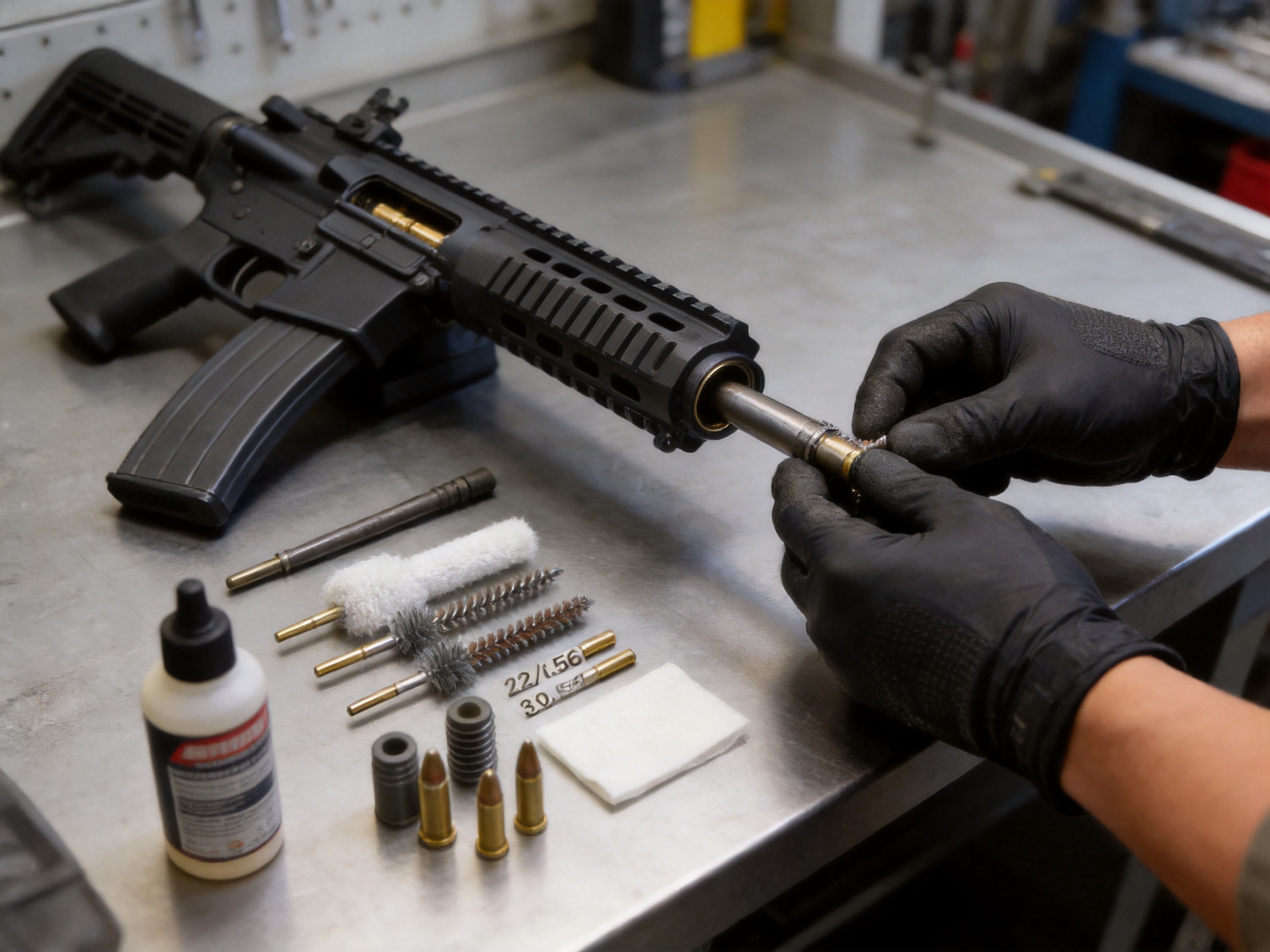
Individual owners can use the kit to replace worn or consumed cleaning accessories without buying a large universal case. The transparent package makes it easy to store in a range bag or workshop, while the two primary caliber options cover common rifle maintenance needs.
Shooting clubs and training facilities often manage equipment used by multiple people. A refill kit can help maintain a predictable supply of brushes, mops, adapters, and patches. Bulk purchasing may reduce the administrative burden of ordering many small items from different suppliers.
Retailers can list the kit as a practical replacement product with clearly defined caliber specifications. Its compact packaging, moderate weight, and multiple component types create a straightforward product proposition. Retailers may also sell the .22/5.56mm and .30/7.62mm versions separately to simplify customer selection.
Distributors can use the product as part of a wider gun-cleaning accessory portfolio that includes bronze and brass brushes, nylon brushes, bore mops, cleaning rods, adapters, patches, and cloths. The supplier’s broader manufacturing scope may make it easier to consolidate different accessory categories into one sourcing relationship.
Private-label brands can customize presentation, product combinations, and selected specifications. This allows them to target different price levels or user groups while working from an established manufacturing platform. A strong OEM program should emphasize accurate technical claims, consistent quality, and clear market positioning.
| Item | Specification |
|---|---|
| Product name | AR15 Gun Cleaning Refill Kit |
| Product code | M4 Refill Pack |
| Primary application | Firearm cleaning and routine bore maintenance |
| Supported specifications | .22 caliber/5.56mm and .30 caliber/7.62mm |
| Main components | Brass bore brushes, cotton mop brushes, thread adapters, and cleaning patches |
| Brush type listed | Copper wire brush |
| Handle material | Galvanized steel wire |
| Bristle length | 14mm |
| Total brush length | 90mm |
| Approximate set weight | 179g |
| Packaging | Compact transparent storage case |
| Customization | Specifications and packaging available for OEM discussion |
| Primary sales region identified | Europe |
| Export positioning | Designed for cross-border export and wholesale supply |
Wholesale buyers should begin by identifying the required caliber mix, order quantity, packaging format, and target market. The same basic refill concept can be presented differently for a professional distributor, an online marketplace, a sporting-goods retailer, or an institutional customer.
Important commercial questions include minimum order quantity, sample availability, production lead time, packaging charges, logo requirements, carton dimensions, shipping terms, and inspection arrangements. Buyers should also ask whether customized brush materials or additional accessories can be included.
For OEM projects, packaging artwork should be submitted in an editable format and reviewed carefully before printing. Technical details should match the actual supplied product. If the package states that a brush is brass, copper, bronze, or nylon, the material should be confirmed with the factory and maintained consistently throughout the production order.
Buyers may also request a component-level packing list. This can be useful for customs documents, marketplace compliance, warehouse receiving, and customer service. A clear packing list reduces disputes and helps identify whether a missing item resulted from production, packing, or transportation.
Because the product is intended for international supply, customers should confirm whether their market imposes special rules on firearm accessories. The refill kit is a maintenance accessory, but import requirements and marketplace policies can vary. Responsibility for compliance should be clearly assigned between the supplier, importer, distributor, and final seller.
The strongest competitive advantage of this refill kit is its balance between functionality and compactness. It is more useful than a single replacement brush, but less bulky than a large universal cleaning case filled with tools that may not match the user’s firearm. The inclusion of multiple accessory types makes the kit appropriate for staged cleaning rather than one isolated task.
Another advantage is the availability of two common caliber categories. Sellers can address a broader rifle-maintenance market while maintaining a recognizable product family. The transparent case, lightweight format, and refill positioning add practical benefits for transport, storage, and repeat purchase.
The manufacturing background provides an additional point of differentiation. More than two decades of experience, automated and semi-automated production, export capability, and OEM support can be important to buyers who require stable supply rather than one-time spot purchasing. Consistent production and responsive customization are especially valuable when products are sold under a private label.
Compared with unverified generic products, a manufacturer-supported kit can offer clearer communication about materials, dimensions, packaging, and order development. Buyers should still conduct their own due diligence, but established technical documentation and sample approval can reduce uncertainty during procurement.
The listed specifications are .22 caliber/5.56mm and .30 caliber/7.62mm. Buyers should select the correct version and confirm the exact firearm and accessory requirements before use.
It can serve as a refill for an existing cleaning system and may also function as a compact maintenance solution when paired with a compatible rod or handle. It should not be assumed to include every tool found in a complete universal cleaning kit.
The described configuration includes brass bore brushes, cotton mop brushes, thread adapters, and cleaning patches. The final contents should be confirmed on the purchase order and packing list, particularly for customized or private-label versions.
The product description refers to brass bore brushes, while the specification table identifies a copper wire brush. Because brass and copper are different materials, buyers should confirm the precise alloy and construction with the supplier before publishing final technical claims.
It is designed as a refill and replacement accessory set, making it suitable for routine maintenance and repeat replenishment. Actual service life depends on cleaning frequency, technique, chemicals, storage, and the condition of the firearm.
The described contents include thread adapters but do not specifically state that a full cleaning rod is included. Buyers should confirm whether a rod is part of a particular configuration before ordering.
OEM and ODM services include customized packaging and logos, subject to production requirements, artwork approval, and order quantity. Buyers should discuss the details with the factory before production.
The product is supplied in a compact transparent storage case intended to organize and transport the components. Buyers requiring a particular plastic type, thickness, closure, or impact standard should request confirmation and a sample.
The broader product range includes nylon and other material brushes. Whether nylon can be included in this specific refill configuration depends on the requested design, order quantity, and technical confirmation.
The buyer should confirm caliber, brush material, thread standard, component quantity, packaging, labeling, minimum order quantity, lead time, inspection requirements, shipping details, and destination-market compliance.
The firearm must be unloaded, ammunition must be separated from the cleaning area, and the manufacturer’s instructions must be followed. Users should select the correct size, avoid excessive force, use suitable chemicals, and stop if an accessory becomes stuck or damaged.
The product is manufactured by Jinhua Tongshun Tool Factory in Jinhua, Zhejiang Province, China. The company specializes in firearm cleaning tools and related accessories and supplies international markets.
The AR15 Gun Cleaning Refill Kit provides a focused solution for routine bore maintenance, combining brass or copper-wire brushing components, cotton mops, thread adapters, and cleaning patches in a compact transparent package. Its support for .22/5.56mm and .30/7.62mm specifications makes it relevant to several widely used rifle categories, while its refill format helps users replace working accessories without purchasing an oversized complete kit.
Its main advantages include multifunctional contents, lightweight storage, convenient transport, flexible refill or standalone positioning, and suitability for OEM packaging programs. The material approach balances mechanical brushing with soft wiping and finishing functions, while the specified galvanized steel wire handles provide a practical construction for the brush components.
For commercial buyers, the product is supported by a manufacturer with experience dating back to 1999, modern semi-automatic and automated production systems, international export experience, and OEM and ODM capabilities. These strengths can help wholesalers, distributors, online sellers, and private-label brands develop a dependable gun-cleaning accessory line.
As with all firearm maintenance equipment, correct caliber selection and safe handling are essential. Buyers should confirm technical details, approve samples, and verify the final component list before mass production. With accurate specifications and appropriate packaging, this refill kit can serve as a practical addition to retail, wholesale, cross-border e-commerce, and professional firearm-maintenance channels.
1. Product specification and technical information supplied for the AR15 Gun Cleaning Refill Kit, including caliber options, components, dimensions, materials, packaging, and intended use.
2. Manufacturer information supplied for Jinhua Tongshun Tool Factory, including company history, production capabilities, export experience, and OEM/ODM services.
3. General firearm maintenance principles concerning unloaded-firearm verification, caliber-specific accessory selection, controlled cleaning-rod use, and safe handling of cleaning chemicals.
4. General product-quality and procurement practices for brush assemblies, cotton mops, cleaning patches, threaded adapters, packaging inspection, and OEM sample approval.
5. General wholesale and cross-border e-commerce considerations relating to product specification accuracy, packaging identification, inventory management, import requirements, and marketplace compliance.