English
 русский
 Español
 عربى

HUNTACE HUNTACE HUNTACE HUNTACE HUNTACE
HUNTACE HUNTACE HUNTACE HUNTACE

Firearm maintenance depends on more than a quality bore brush or cleaning patch. Many of the most difficult deposits collect in narrow gaps, around metal components, beneath moving parts, near fittings, and in areas where a conventional cleaning rod or large brush cannot work effectively. The 7-Inch Gun Cleaning Brush Gap & Rust Removal Tool is designed for these demanding maintenance tasks. Its extended handle, compact brush head, interchangeable bristle choices, and practical industrial construction make it a versatile solution for firearm care, metal-component cleaning, tactical equipment maintenance, and general surface treatment.
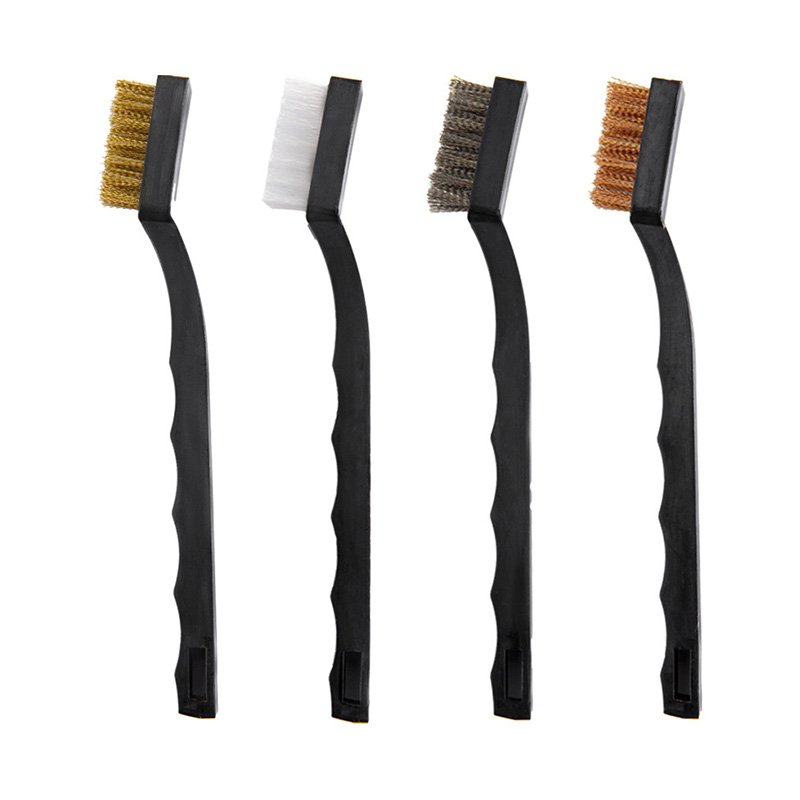
Unlike a single-purpose brush that is limited to one type of surface or residue, this product is available with brass, stainless steel, phosphor bronze, and nylon bristles. Each material provides a different balance of cleaning strength, surface protection, durability, and abrasion resistance. This allows distributors, professional armorers, shooting-sports retailers, maintenance teams, and private users to select the most suitable configuration for a specific firearm or cleaning application.
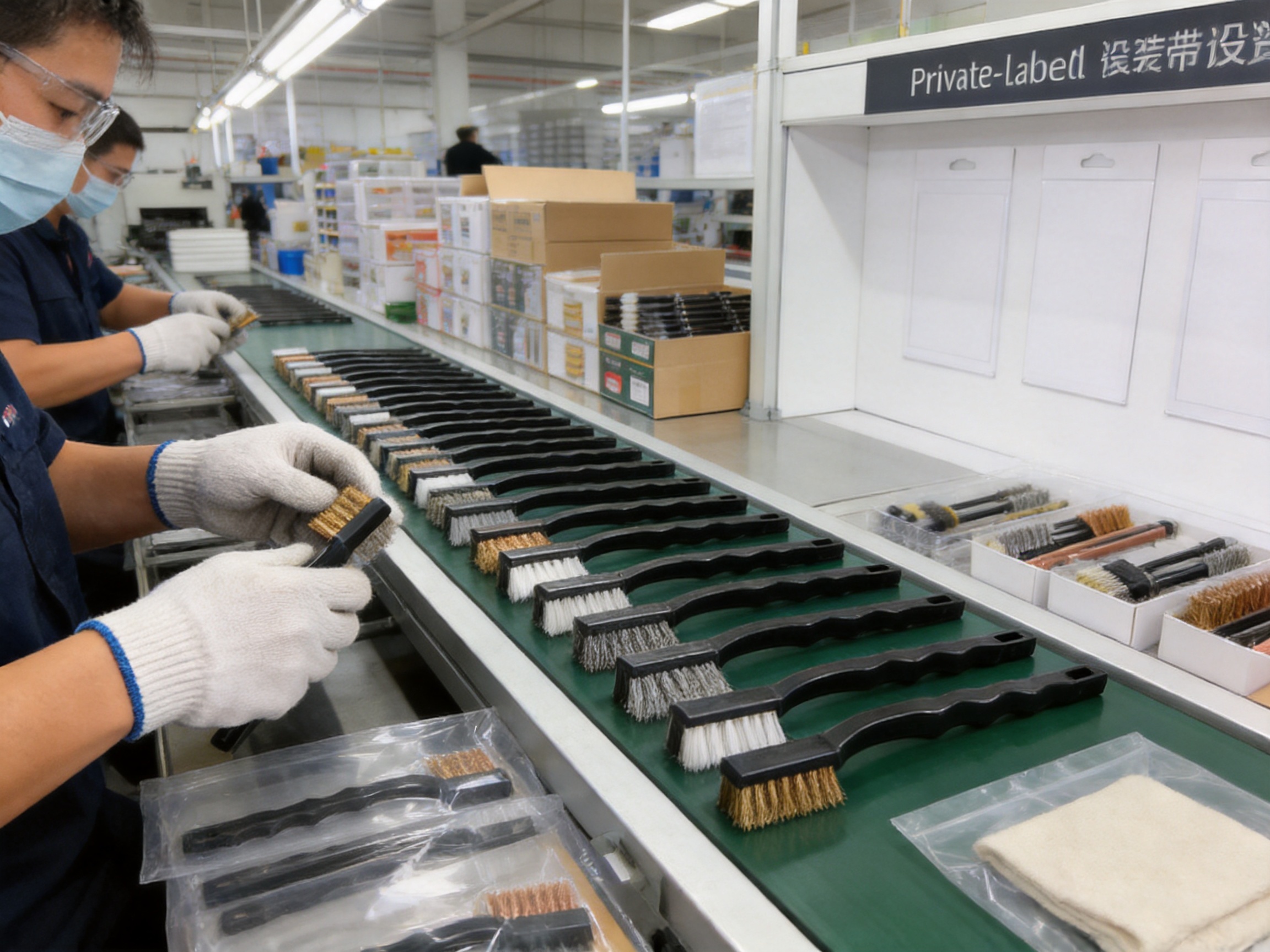
The product is manufactured by Jinhua Tongshun Tool Factory, a China-based factory specializing in gun cleaning kits, barrel cleaning brushes, bore mops, cleaning rods, patches, cloths, and related accessories. With experience dating back to 1999, the factory combines product development, production, quality control, packaging, and export support in one supply system. Its manufacturing capabilities and OEM service make the brush suitable not only for standard wholesale purchasing but also for private-label programs and customized product assortments.
For safety, all firearm maintenance should be performed only after the firearm has been unloaded, cleared, and made safe according to the manufacturer’s instructions and applicable laws. This article discusses the brush as a maintenance accessory and does not replace professional training, an owner’s manual, or local safety requirements.
The 7-Inch Gun Cleaning Brush Gap & Rust Removal Tool is a hand-operated cleaning brush with an approximately 7-inch, or 180-millimeter, total length. Its extended form gives the user more distance from the working area while providing improved access to recessed sections and tight spaces. The handle is made from plastic and is designed with a thicker anti-slip profile to support a secure grip during repeated cleaning movements.
The brush head has an approximate diameter of 20 millimeters, while the bristle length is approximately 12 millimeters. This compact working head is sufficiently narrow for many firearm crevices and metal-component gaps while still providing a practical contact area for removing dirt, oxidation, residue, and light surface corrosion. The rectangular brush shape supports controlled brushing along edges, corners, seams, and flat sections.
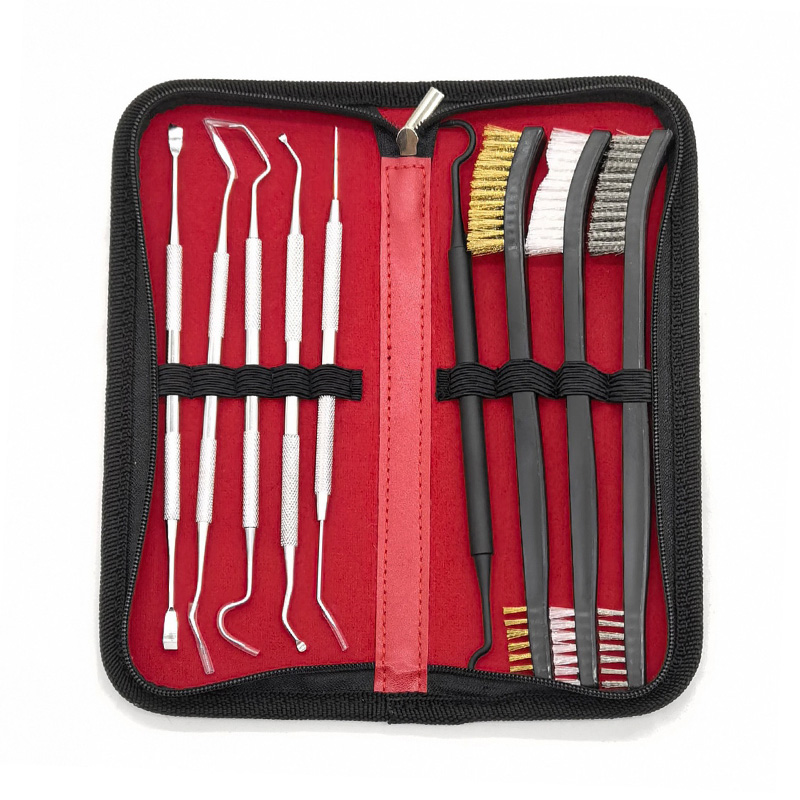
Depending on the selected specification, the brush may be supplied with brass wire, stainless steel wire, phosphor bronze wire, or nylon bristles. Multi-brush combinations can also be supplied, including configurations that combine nylon, stainless steel, brass, or phosphor bronze options. These sets allow one package to cover gentle cleaning, general-purpose brushing, and more demanding rust-removal work.
| Product feature | Specification or option | Practical value |
|---|---|---|
| Product type | Gap cleaning and rust removal brush | Accesses narrow and difficult-to-reach maintenance areas |
| Total length | Approximately 180 mm / 7 inches | Provides useful reach and hand clearance |
| Brush head diameter | Approximately 20 mm | Suitable for compact firearm and metal-component spaces |
| Bristle length | Approximately 12 mm | Supports controlled contact and effective debris removal |
| Handle material | Plastic | Lightweight, practical, and suitable for repeated handling |
| Bristle options | Brass, stainless steel, phosphor bronze, and nylon | Allows users to match cleaning strength to surface sensitivity |
| Handle style | Thickened anti-slip design | Improves grip and control during extended work |
| Packaging | Single unit or multi-brush set in transparent bags | Supports retail presentation and wholesale assortment planning |
| Customization | OEM and private-label support | Enables customized branding, packaging, and product combinations |
Firearms contain numerous surfaces that are difficult to reach with a standard cloth or large brush. Small recesses, corners, slots, contact areas, and component interfaces can retain carbon residue, dust, lubricant buildup, metal particles, and moisture. If these deposits are not removed as part of a regular maintenance routine, they may interfere with smooth operation, attract additional contaminants, or contribute to surface corrosion.
A bore brush is designed primarily for the inside of a barrel. A cleaning rod is intended to guide patches, mops, or brushes through the bore. A cloth is useful for wiping accessible surfaces. None of these tools is optimized for every narrow gap and external component. A dedicated hand brush fills this practical gap in a cleaning kit by allowing users to scrub around the edges and surfaces that other tools may leave untreated.
The 7-inch length is especially useful because it combines reach with direct manual control. A short hobby brush may require the user’s fingers to work close to solvent, residue, or rough metal edges. A very long tool may reduce precision. The extended 180-millimeter handle provides a balanced working distance while retaining the tactile feedback needed for controlled brushing.
The 20-millimeter head diameter and 12-millimeter bristle length also help the brush work in confined areas without presenting an unnecessarily large cleaning surface. The rectangular shape is practical for brushing along rails, edges, slots, and linear sections. It can be directed into corners and pulled across flat areas with a steady motion.
Brass wire is a popular choice for general firearm maintenance because it offers useful cleaning strength while being comparatively gentle on many metal surfaces. It can help loosen carbon deposits, light oxidation, dirt, and residue without the aggressive cutting action associated with harder stainless steel wire. For this reason, brass brushes are commonly selected for routine maintenance and for precision parts where excessive abrasion should be avoided.
The brass configuration is suitable for users who want a dependable everyday brush for cleaning metal components, recessed areas, and firearm gaps. It can also be useful when a maintenance kit needs a balance between effectiveness and surface care. As with any metal brush, the user should follow the firearm manufacturer’s recommendations and avoid applying unnecessary pressure.
Stainless steel wire provides a more aggressive brushing action for heavy rust, stubborn oxidation, and firmly attached debris. It is intended for demanding cleaning situations where a softer bristle may not provide enough mechanical action. This option can be valuable in workshop, industrial, restoration, and heavy-maintenance environments.
Because stainless steel wire is more abrasive than brass or nylon, it should be used carefully and only on surfaces that can tolerate its cleaning action. It is not the default choice for delicate finishes, coated surfaces, or sensitive precision areas. The ability to offer stainless steel as one option rather than making it the only configuration is an important advantage of the product family.
Phosphor bronze combines useful durability with a cleaning performance suited to repeated maintenance work. It is often selected when users require a stronger and longer-lasting wire brush for regular industrial or professional use. The material can provide a practical middle ground between softer brass and more aggressive stainless steel, depending on the specific cleaning task and the pressure applied.
For distributors serving professional users, phosphor bronze can add value to a brush assortment by providing a premium or industrial-grade option. It is particularly appropriate when long service life and consistent brushing performance are important purchasing considerations.
Nylon bristles are designed for scratch-conscious cleaning. They are appropriate for coated, painted, finished, polymer, or otherwise delicate surfaces where metal wire may cause unwanted marks. Nylon can remove loose dust, light residue, particles, and surface contamination without the same level of abrasion associated with wire bristles.
Nylon is also a useful first-step brush. Users can begin with a non-metallic brush to remove loose contamination before deciding whether a stronger material is necessary. In a multi-brush set, nylon provides an important contrast to brass, bronze, and stainless steel options and helps create a more complete maintenance solution.
| Bristle material | Recommended cleaning role | Important consideration |
|---|---|---|
| Brass wire | Routine firearm maintenance, light residue, mild oxidation | Use controlled pressure and follow surface-care guidance |
| Stainless steel wire | Heavy rust, stubborn oxidation, firmly attached debris | More aggressive; avoid delicate finishes and sensitive surfaces |
| Phosphor bronze wire | Repeated professional and industrial-grade cleaning | Suitable when durability and consistent performance are priorities |
| Nylon | Coated, painted, polymer, and scratch-sensitive surfaces | Best for gentle cleaning and loose contamination |
7-Inch Gun Cleaning Brush Gap Rust Removal Tool
One of the main advantages of this product is its multi-configuration design. Many basic brushes are sold with a single bristle material and a short handle. While such products may perform adequately for one task, they can force users to purchase several unrelated tools to address different cleaning conditions. The 7-inch brush platform allows wholesalers and end users to select one material or create a coordinated set according to their needs.
The extended handle is another distinguishing feature. A short brush may provide limited reach, especially when working around recessed firearm components or equipment with narrow access points. The 180-millimeter length gives users more room to position their hand and maintain a comfortable grip. This can be particularly useful during longer maintenance sessions, where a thin or short handle may cause hand fatigue.
The thickened plastic handle offers a practical combination of low weight, convenient handling, and economical production. Its anti-slip form supports control during back-and-forth brushing. A secure handle is important because cleaning often requires repeated strokes, changes in direction, and precise positioning around edges or gaps.
The compact brush head also gives the product an advantage over large utility brushes. A larger brush may cover more area, but it can be difficult to guide into firearm gaps and small component interfaces. The 20-millimeter head diameter is sized for access and control, while the 12-millimeter bristle length provides sufficient working contact without making the tool unnecessarily bulky.
Another advantage is packaging flexibility. The brush can be supplied as a single unit for retail display, or as a multi-brush combination for users who want several bristle types in one package. Transparent-bag packaging provides a simple, economical presentation and allows purchasers to see the brush configuration before opening the package. For wholesalers, this makes it easier to build product assortments for online marketplaces, hardware channels, firearm-maintenance distributors, and professional supply programs.
Although the product is designed for firearm cleaning, its form and bristle options make it suitable for a wider range of maintenance activities. Brass and bronze versions may be used for general metal-component care, workshop cleaning, and light oxidation removal. Stainless steel versions may support more demanding rust-removal tasks on compatible metal surfaces. Nylon versions can be used for cleaning painted or coated equipment where scratch prevention is important.
Potential applications include tactical equipment maintenance, outdoor equipment care, tool refurbishment, machinery cleaning, hardware preparation, and general metal-surface treatment. The brush can help clean seams, grooves, corners, fittings, and other areas where cloths are difficult to insert. Its compact size also makes it practical for toolboxes, range bags, field-maintenance kits, workshop drawers, and retail cleaning assortments.
The brush should always be matched to the surface. A material that is appropriate for untreated steel may not be suitable for a delicate coating or painted finish. Users should test an unfamiliar combination on an inconspicuous area and use the least aggressive bristle that can accomplish the task. This approach supports better surface preservation and helps extend the service life of both the equipment and the brush.
Ergonomics directly affects cleaning quality. When a handle is too short, the user may grip close to the bristles and lose comfort. When the handle is too thin, repeated brushing can create pressure points in the hand. The thickened 7-inch plastic handle is designed to address these practical issues by giving the user a broader gripping area and a useful distance from the brush head.
The anti-slip structure assists with control when the handle is exposed to cleaning solution, oil, dust, or residue. The user can maintain a more stable grip while applying short strokes to a narrow gap or longer strokes along a metal surface. Better control can also reduce the risk of accidentally dragging the brush across an area that should not be brushed.
For professional maintenance teams, an ergonomic handle may contribute to more consistent work across multiple firearms or equipment units. A comfortable tool is more likely to be used correctly and regularly. For retail customers, the handle makes the product easier to understand because its shape clearly communicates that it is designed as a purpose-built hand tool rather than a disposable small brush.
Jinhua Tongshun Tool Factory was established in 1999 and specializes in the research, development, production, and sales of gun cleaning kits and related accessories. Its product range includes gun cleaning brushes, barrel cleaning brushes, bore mops, cleaning rods, adapters, cleaning patches, cleaning cloths, and complete maintenance kits. This specialization allows the factory to understand how individual tools function within a complete firearm-maintenance system.
The company operates in Jinhua, Zhejiang, China, and has developed a production base with semi-automatic and fully automated systems. The combination of manual expertise, semi-automatic operations, and automated production equipment supports consistent output while maintaining flexibility for different product specifications. This is particularly useful for brush products that may require variations in bristle material, handle color, packaging, set composition, and labeling.
Stable manufacturing capacity is important for wholesale buyers. Retailers and distributors need confidence that repeat orders can be supplied with consistent dimensions, materials, and packaging. A factory with integrated production and quality-control processes can reduce the complexity of coordinating multiple suppliers for related cleaning products.
The factory’s experience with export markets also supports international purchasing. The company reports that its products are supplied to more than 50 countries and regions. This international background is relevant to buyers who need communication support, export-oriented packaging, product documentation, and repeat-order coordination for overseas markets.
The manufacturing process begins with product specification and material selection. For this brush, key parameters include total length, handle profile, head diameter, bristle length, bristle material, bristle arrangement, packaging format, and set composition. Defining these details before production helps ensure that the finished product matches the buyer’s intended application.
Plastic handles are formed according to the required shape and dimensions. The thickened profile is designed to provide a substantial gripping area while keeping the tool lightweight. Handle color can be selected according to the standard specification or adjusted for a private-label program when applicable.
Bristle preparation is then matched to the selected configuration. Brass wire, stainless steel wire, phosphor bronze wire, and nylon each require appropriate handling and assembly procedures. The bristles must be positioned securely in the brush head so that they remain stable during normal use. Consistent bristle length helps the brush maintain predictable contact with the working surface.
Quality inspection can include visual checking of handle appearance, bristle alignment, brush-head integrity, total length, head dimensions, and packaging accuracy. For multi-brush sets, inspection also confirms that the correct bristle combinations are placed together. These steps are important because small deviations can affect user experience, product presentation, and customer satisfaction.
Packaging is coordinated with the product specification. Single brushes may be prepared for individual sale, while multi-brush configurations can be grouped in transparent bags. OEM buyers may request customized labels, logos, package inserts, color combinations, or set arrangements. The factory’s integrated approach makes it possible to discuss these requirements directly with the manufacturer.
Automated and semi-automated systems can improve repeatability in high-volume production. When a product is ordered in large quantities, consistent positioning and assembly help reduce variation between batches. Automation can also support production efficiency and improve the factory’s ability to meet wholesale schedules.
At the same time, human inspection and technical oversight remain valuable. Brush products have multiple visible and functional details, including handle finish, bristle security, and set accuracy. A balanced manufacturing system combines equipment efficiency with personnel who understand product quality and customer requirements.
For buyers, this combination can provide several practical benefits: more stable delivery planning, better batch consistency, greater flexibility for customized orders, and a clearer communication path when adjustments are needed. These strengths are particularly relevant to distributors developing a long-term line of cleaning accessories rather than purchasing a one-time shipment.
The brush is suitable for OEM and white-label programs. Buyers may choose to sell the standard product under their own brand or develop a customized assortment for a particular market segment. Customization may involve packaging design, printed logos, handle colors, bristle combinations, product codes, set quantities, and retail presentation.
A distributor serving professional armorers may prefer a premium assortment containing nylon, brass, phosphor bronze, and stainless steel brushes. An online retailer may choose a compact three-piece combination for consumers who want several cleaning strengths in one package. A firearm accessory brand may request packaging that matches its existing cleaning rods, patches, and bore mops.
ODM development can also support adjustments to the handle, brush dimensions, bristle arrangement, or package contents. Buyers should provide clear technical requirements, target markets, expected order quantities, and packaging expectations at the beginning of the project. This helps the factory evaluate tooling, materials, sample production, and delivery schedules.
Free samples are available according to the supplied product information. Sampling is an important step for importers because it allows them to assess handle comfort, bristle stiffness, brush-head size, packaging quality, and compatibility with their own product range before placing a larger order.
For wholesalers, the product offers a practical combination of utility, material choice, compact shipping volume, and flexible packaging. Brushes are relatively easy to store and transport, and the product can be sold individually or in sets. The small package size can also support efficient inventory management and online fulfillment.
The product fits naturally into several sales categories, including gun cleaning kits, bronze and brass brushes, nylon and other material brushes, cleaning accessories, tactical maintenance tools, and general metal cleaning products. It can be listed as an individual accessory or included in a broader kit containing rods, adapters, patches, cloths, and bore mops.
Multi-material sets can increase perceived value because the customer receives a tool for gentle cleaning, general brushing, and stronger rust removal. A retailer can explain the function of each bristle type and position the set as a more complete solution than a single-material brush.
The product also supports market segmentation. Entry-level buyers may prefer a nylon or brass brush. Professional users may select phosphor bronze or stainless steel. Retailers can therefore offer several versions without introducing an entirely different handle design or supply chain. This creates a coherent product family that is easier to display and manage.
Before cleaning, ensure that the firearm is unloaded and safe, and follow the manufacturer’s maintenance instructions. Select the least aggressive bristle material that is suitable for the surface and residue. Nylon is generally appropriate for delicate or coated surfaces, while brass and phosphor bronze can be selected for more demanding metal cleaning. Stainless steel should be reserved for compatible surfaces and stubborn corrosion that requires a stronger brushing action.
Use controlled strokes rather than excessive force. Allow the bristles to perform the work, particularly in small gaps where heavy pressure may cause unnecessary wear or contact with adjacent surfaces. A suitable firearm-safe cleaning solution may be used when recommended by the equipment manufacturer, but the brush should not be stored while saturated with chemicals or moisture.
After use, remove loose residue from the bristles and allow the brush to dry. Store it in a clean, dry location away from excessive humidity. If multiple brushes are used, keeping them separated or clearly identified can help prevent the wrong bristle type from being used on a sensitive surface.
Inspection is also useful. A brush with severely bent, loose, or worn bristles should be replaced. Regular inspection supports more predictable cleaning performance and reduces the possibility of detached bristles remaining in a maintenance area.
| Tool type | Strength | Limitation | Role of the 7-inch gap brush |
|---|---|---|---|
| Short household brush | Low cost and simple availability | Limited reach, inconsistent materials, and less specialized control | Provides purpose-built dimensions and material choices |
| Large utility brush | Fast coverage on broad surfaces | May not fit narrow firearm gaps or compact components | Offers a smaller, more controlled working head |
| Bore brush | Designed for barrel interiors | Not intended for external gaps and irregular components | Complements rather than replaces bore-cleaning tools |
| Cleaning cloth | Gentle wiping and polishing | Cannot easily reach deep grooves or narrow seams | Agitates residue in spaces where cloths cannot reach |
| Single-material wire brush | Consistent performance for one task | May be too aggressive or too soft for other surfaces | Offers brass, stainless steel, bronze, and nylon options |
| Very short detail brush | Compact and easy to carry | Less hand clearance and potentially lower comfort | Provides approximately 180 mm of useful handle length |
The product should not be viewed as a replacement for every other cleaning accessory. Instead, its value comes from filling a specific and common maintenance need. It complements bore brushes, cleaning rods, patches, mops, and cloths by addressing gaps and external surfaces that those products may not clean effectively.
The product is positioned for export and is suitable for European and other international markets. Its compact format, broad application range, and selectable bristle materials make it adaptable to different retail and professional channels. Buyers can choose a standard black-handle configuration or discuss other package and assortment requirements through an OEM program.
Clear product education is important when selling the brush internationally. Product listings should explain the difference between brass, stainless steel, phosphor bronze, and nylon. They should also communicate that the brush is intended for gap cleaning, rust removal, polishing, and general maintenance, while emphasizing that users must select a bristle type appropriate for the surface.
For e-commerce channels such as eBay and other online marketplaces, the 7-inch length, 20-millimeter head diameter, 12-millimeter bristle length, and multi-material options provide useful searchable specifications. High-quality images, accurate package descriptions, and clear set contents can help reduce customer confusion and returns.
For trade distributors, the product can be presented alongside related categories from the same factory. A buyer may source a complete assortment of gun cleaning kits, bore mops, bronze brushes, nylon brushes, cleaning rods, adapters, patches, cloths, and custom-branded products through one manufacturing partner.
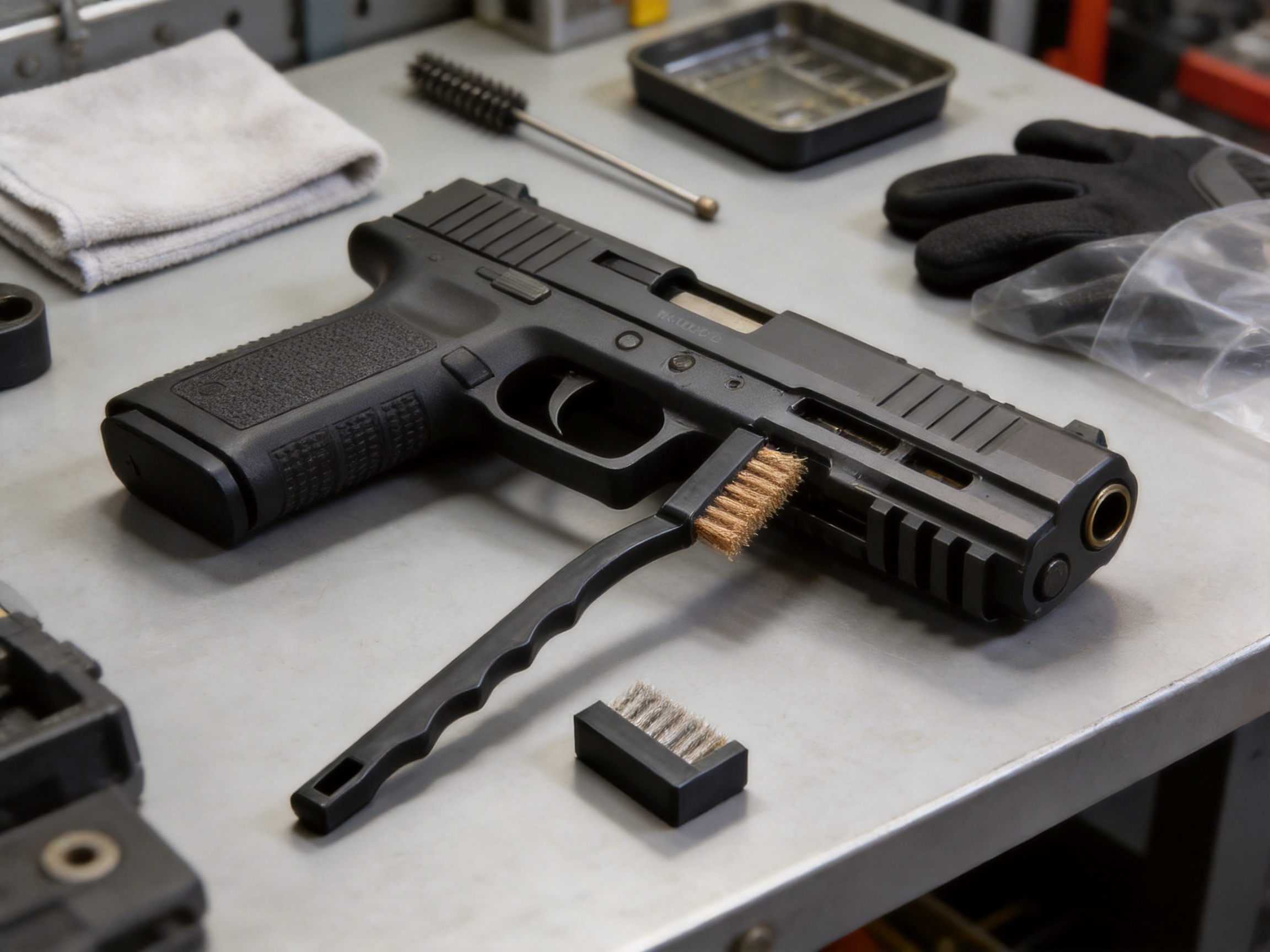
A complete maintenance system normally includes tools for the bore, external surfaces, small gaps, lubrication, wiping, and storage. The 7-inch gap brush addresses the detailed external-cleaning stage. It can be used after loose debris has been removed and before final wiping or lubrication, depending on the maintenance procedure recommended for the firearm.
When combined with a bore cleaning rod and patch system, the brush helps create a more comprehensive workflow. The rod and patch clean the inside of the barrel, while the brush handles external recesses and component interfaces. A bore mop can assist with interior drying or finishing, while a cloth removes loosened residue from accessible surfaces.
This complementary role is useful for both consumers and professional buyers. Consumers receive a more complete kit, while distributors can cross-sell individual accessories. Because the brush is available in different bristle materials, it can also serve as a gateway product that introduces customers to a broader maintenance range.
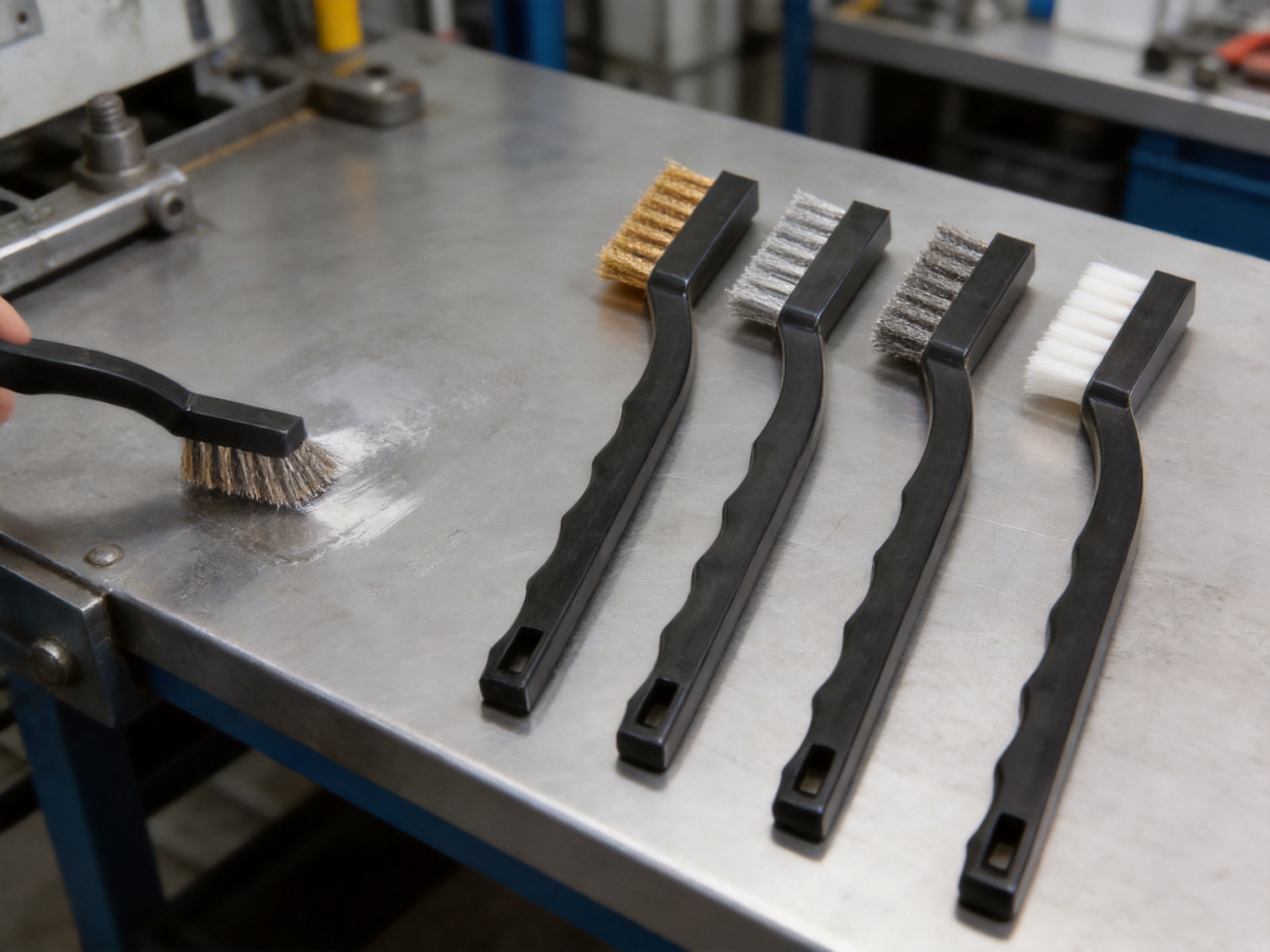
The primary purpose is to clean firearm gaps, external metal components, recessed areas, corners, and other hard-to-reach surfaces. It can help remove dirt, carbon residue, oxidation, light rust, and stubborn debris when used with an appropriate bristle material.
The approximately 180-millimeter handle provides useful reach and hand clearance while preserving direct control. It is longer than many small detail brushes, making it more comfortable for repeated cleaning and better suited to recessed areas.
Brass bristles are generally selected for routine cleaning and mild rust removal where a relatively moderate brushing action is preferred. Stainless steel bristles provide a more aggressive action for heavy rust and stubborn oxidation. Stainless steel should be used carefully and only on surfaces that can tolerate its abrasiveness.
Nylon bristles are suitable for coated, painted, polymer, and other scratch-sensitive surfaces. They can also be used for loose contamination and as a first cleaning step before selecting a metal brush.
Phosphor bronze provides a durable wire-brush option for repeated maintenance and industrial-grade use. It is useful for buyers who want a long-lasting brush configuration between gentle brass cleaning and more aggressive stainless steel work.
Yes. The product can be supplied as a single unit or as a multi-brush set. Example combinations include nylon, stainless steel, and brass or phosphor bronze configurations. Exact set contents should be confirmed when ordering.
The total length is approximately 180 millimeters, or 7 inches. The brush head diameter is approximately 20 millimeters, and the bristle length is approximately 12 millimeters.
No single brush is suitable for every surface. Users should choose the least aggressive material that can complete the cleaning task, follow the firearm manufacturer’s guidance, and test an unfamiliar brush on a discreet area when appropriate.
OEM and white-label customization support is available. Buyers can discuss logos, packaging, color, brush combinations, product codes, and other requirements with the factory. Customization depends on order quantity, technical feasibility, and project specifications.
Yes. The product is designed for international wholesale and export-oriented distribution. It can be supplied in individual or multi-brush packaging and can be integrated into larger firearm-maintenance product lines.
Free samples are available according to the supplied product information. Buyers should confirm sample availability, shipping arrangements, and the exact configuration required for evaluation.
The factory specializes in gun cleaning kits, barrel cleaning brushes, bore mops, cleaning rods, adapters, cleaning patches, cleaning cloths, and OEM or ODM cleaning accessories. This allows buyers to develop a coordinated product range through one supplier.
The 7-Inch Gun Cleaning Brush Gap & Rust Removal Tool is a practical addition to firearm-maintenance equipment because it addresses the small gaps, recessed surfaces, and external components that conventional bore tools and cloths may not reach. Its extended anti-slip handle supports comfort and control, while its compact brush head is suited to detailed cleaning work.
The availability of brass, stainless steel, phosphor bronze, and nylon bristles gives the product a broad performance range. Users can select a gentle nylon brush for delicate surfaces, brass for routine maintenance, phosphor bronze for repeated professional use, or stainless steel for compatible heavy rust-removal applications. Single-unit and multi-brush packaging further increases its value for consumers, retailers, and wholesalers.
Jinhua Tongshun Tool Factory strengthens the product offering through specialized experience, semi-automated and automated manufacturing systems, export capability, quality-control procedures, and OEM or ODM support. Its broader range of firearm-cleaning products allows international buyers to build complete maintenance assortments rather than sourcing every accessory separately.
For distributors seeking a compact, versatile, and customizable cleaning accessory, this brush provides a strong combination of reach, material choice, ergonomic handling, and supply flexibility. When used responsibly and matched correctly to the surface, it can improve the efficiency and completeness of routine firearm and metal-component maintenance.
1. Product specification sheet for the 7-Inch Gun Cleaning Brush Gap & Rust Removal Tool, including dimensions, materials, packaging options, and intended applications.
2. Manufacturer information for Jinhua Tongshun Tool Factory, including company history, production capabilities, export experience, and OEM or ODM services.
3. General firearm maintenance principles concerning safe unloading, surface compatibility, controlled brushing, and the selection of appropriate cleaning materials.
4. General materials information regarding brass wire, stainless steel wire, phosphor bronze wire, and nylon bristle performance in maintenance brushes.
5. General product-development and wholesale-packaging practices for firearm cleaning kits and industrial maintenance accessories.