English
 русский
 Español
 عربى

HUNTACE HUNTACE HUNTACE HUNTACE HUNTACE
HUNTACE HUNTACE HUNTACE HUNTACE

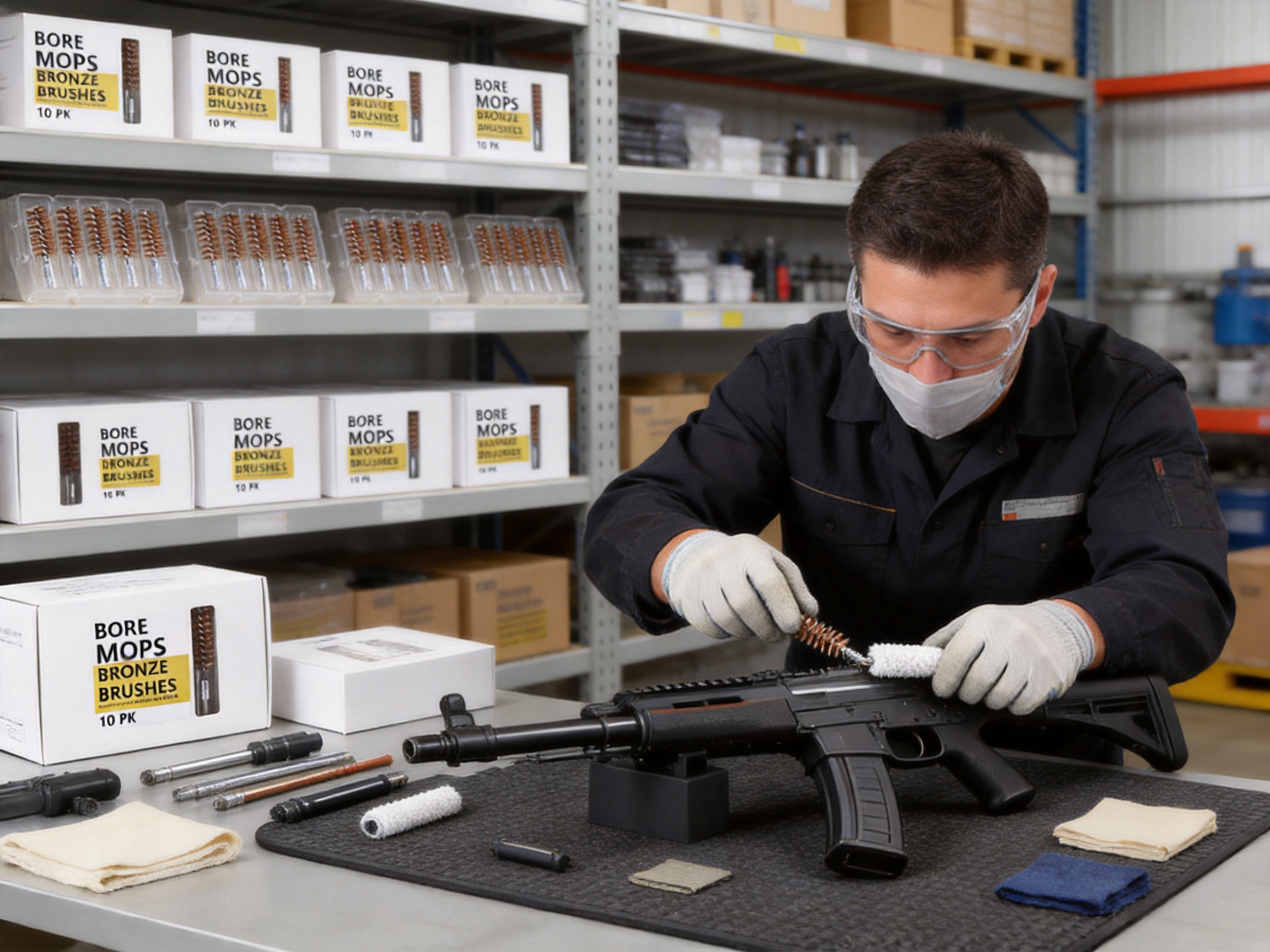
Reliable firearm maintenance depends on using the right cleaning tools for the bore, chamber, and other internal surfaces. A cleaning accessory may appear simple, but the choice of brush material, stiffness, caliber fit, thread compatibility, packaging, and production consistency can significantly affect the user experience. For distributors, wholesalers, private-label sellers, and firearm accessory suppliers, these factors also influence customer satisfaction, product returns, and long-term brand performance.
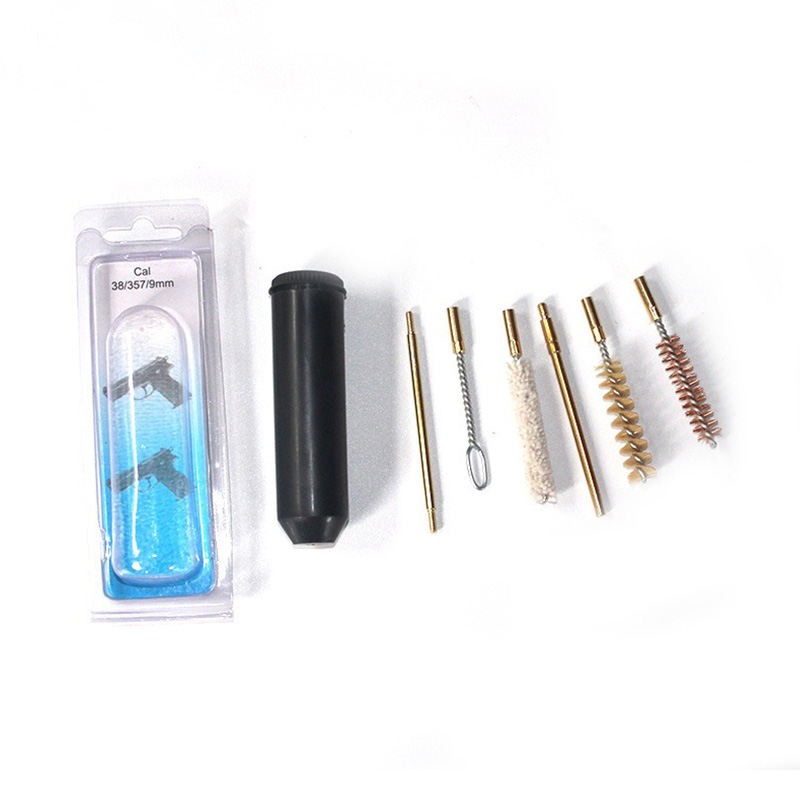
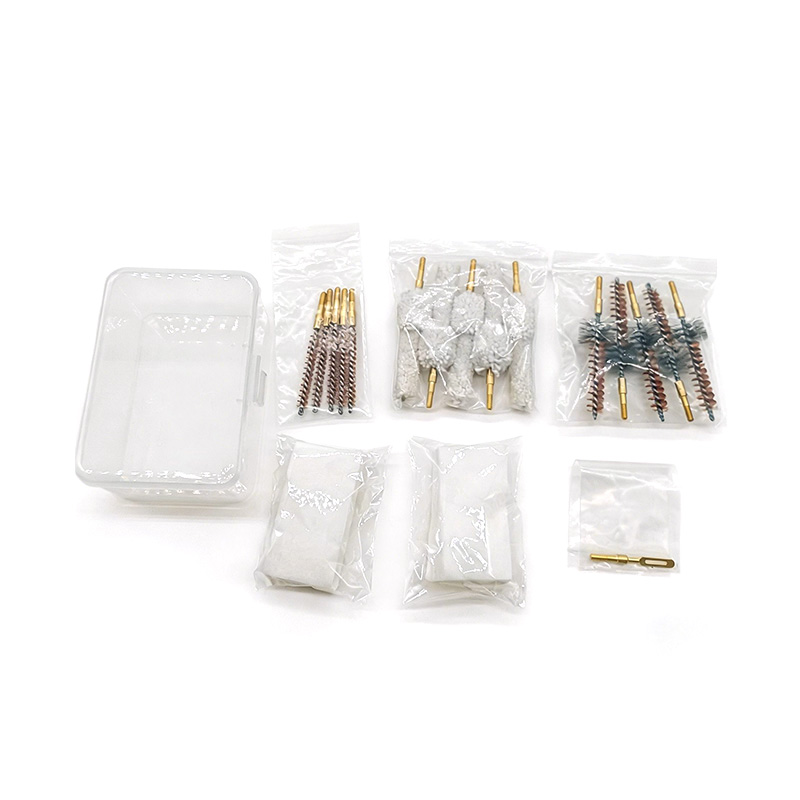
The 10PCS Brass Wire Gun Brush 5.56/7.62mm Replacement Kit is designed as a compact replacement assortment combining brass bore brushes and cotton cleaning mops. The set includes five brass brushes for loosening and removing fouling and five cotton mops for final wiping, polishing, moisture removal, and lubricant distribution. It is available for a broad range of firearm calibers and shotgun gauges, making it suitable for retailers that want one product family to serve rifles, pistols, and shotguns.
This article examines the product’s construction, cleaning performance, caliber range, packaging, customization potential, manufacturing advantages, quality considerations, and commercial value. It also explains how the kit compares with common alternatives and answers practical questions that buyers may ask before placing an order.
The product is a 10-piece firearm bore-cleaning replacement set consisting of five brass wire brushes and five cotton cleaning mops. The combination is intended to support two important stages of maintenance: mechanical fouling removal and final bore conditioning.
Brass brushes provide controlled scrubbing action against carbon residue, powder fouling, copper deposits, and other contamination that can accumulate inside a barrel. Brass is commonly selected for bore-cleaning brushes because it offers useful stiffness while generally being less aggressive than harder steel wire when used correctly on suitable firearm surfaces.
Cotton mops serve a different purpose. Instead of scraping residue, they help wipe away loosened contamination, absorb excess cleaning solvent, remove remaining moisture, and distribute a light layer of lubricant. Using both tools in sequence gives users a more complete maintenance process than relying on a brush alone.
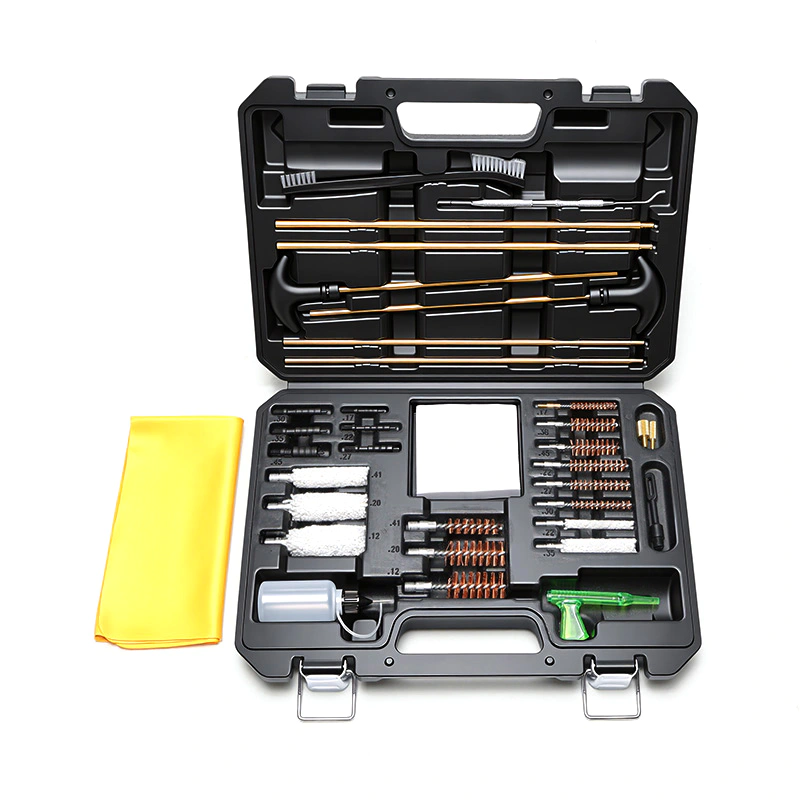
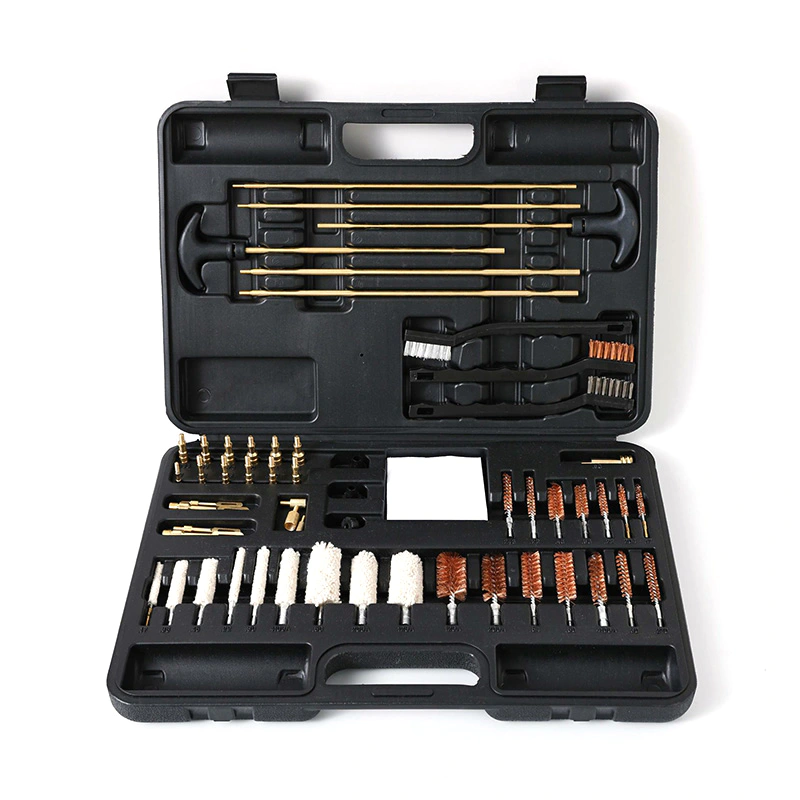
The kit is positioned as a replacement or refill product rather than a complete cleaning system. It can complement cleaning rods, adapters, handles, patches, solvents, storage cases, and other accessories already owned by the end user. This format is convenient for customers who have serviceable rods and handles but need replacement brushes and mops.
| Product feature | Specification or benefit |
| Set quantity | 10 pieces total |
| Brush and mop combination | Five brass bore brushes and five cotton cleaning mops |
| Primary function | Firearm bore cleaning, wiping, polishing, and maintenance |
| Material focus | Brass wire, cotton, steel-wire components, and nylon options within the product range |
| Supported applications | Rifles, pistols, and shotguns |
| Listed caliber and gauge options | .17 cal, .22 cal, .27 cal, .30 cal, .38 cal, .40 cal, .45 cal, 9mm, 12 GA, 20 GA, and .410 bore |
| Packaging | Clean white box |
| Customization | OEM and ODM product, packaging, and logo support |
| Commercial positioning | Replacement kit for distributors, wholesalers, retailers, and private-label sellers |
Barrel maintenance is more effective when different tools are used for different jobs. A bore brush is designed to agitate and loosen deposits. A cotton mop is designed to wipe, absorb, and finish. Combining them in one package reduces the need for buyers to source separate components from different suppliers.
During the first stage, the brass brush passes through the bore with an appropriate cleaning solvent or lubricant. Its bristles reach the grooves and lands of the rifling, helping disturb residue that a soft cloth may not remove. The brush is particularly useful after repeated shooting sessions, when powder residue and carbon have had time to build up.
During the second stage, the cotton mop follows the brush. The mop can collect loosened debris, absorb excess solvent, and help reveal whether additional brushing is needed. It can also be used to apply a small and even amount of maintenance oil when the firearm is prepared for storage or routine protection.
This sequence gives the user a clear workflow. Rather than repeatedly using one tool for every task, the operator can select the appropriate accessory according to the condition of the bore. For retailers, the two-stage concept is easy to explain in product descriptions, packaging copy, online listings, and customer support materials.
The design also supports better inventory efficiency. A replacement set containing both brush and mop types can appeal to a wider customer base than a single-material pack. Some users may primarily need brass brushes, while others may value the cotton mops for finishing work. Combining both provides broader utility without requiring a bulky full cleaning kit.
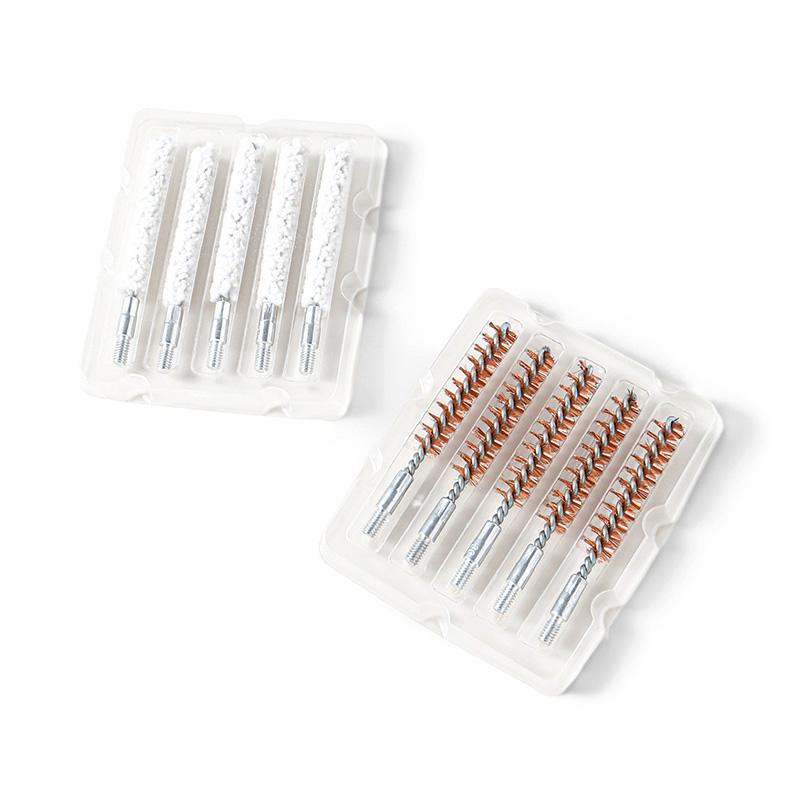
10PCS Brass Wire Gun Brush 5.56/7.62mm Replacement Kit
Brass wire is valued in firearm cleaning because it offers a practical balance between flexibility and cleaning strength. The bristles are firm enough to work against stubborn deposits, yet they are generally more suitable for routine bore cleaning than excessively rigid or abrasive materials when the correct technique is followed.
The brushes in this replacement kit are intended to address several common types of contamination. Carbon buildup may form near the chamber and in the bore after firing. Powder residue can adhere to internal surfaces and become more difficult to remove if left for extended periods. Copper fouling may accumulate when jacketed ammunition is used. A properly sized brass brush helps break up and lift this material so it can be removed with subsequent passes and wiping tools.
Balanced stiffness is another important consideration. A brush that is too soft may fail to loosen residue efficiently. A brush that is unnecessarily aggressive may wear more quickly, damage sensitive surfaces through misuse, or create an unpleasant cleaning experience. The intended value of a brass brush is controlled mechanical action rather than maximum hardness.
Compared with many low-cost generic brushes, a well-produced brass brush should offer more consistent bristle distribution, secure attachment, stable dimensions, and predictable resistance during use. These characteristics matter to end users because uneven bristles can leave untreated areas, while loose or poorly secured wires may shorten the useful life of the accessory.
For commercial buyers, material consistency is equally important. When a distributor orders multiple batches, the brush should maintain a similar appearance, density, and fit. Consistency makes it easier to maintain stable product listings and reduces customer complaints caused by noticeable variation between packages.
Cotton mops complement brass brushes by providing a softer finishing tool. Their fibers are suitable for wiping the inner surface of the bore after mechanical cleaning. They can collect remaining residue and assist with drying after solvent use.
A cotton mop can also help distribute lubricant more evenly than applying oil directly in a concentrated spot. A properly prepared mop carries a small amount of product through the bore, supporting a more uniform maintenance process. Users should always follow the firearm manufacturer’s instructions regarding cleaning solvents, lubrication, and storage conditions.
The cotton component gives the kit an advantage over brush-only replacement packs. Brush-only products may loosen fouling effectively, but they do not provide the same finishing function. A separate mop must then be purchased, and the user may need to verify compatibility between two different suppliers’ products.
For wholesale customers, the combination improves the kit’s perceived value. Ten pieces provide a simple, easy-to-understand quantity, while the split between brushes and mops clearly communicates the intended cleaning sequence. The white-box format also leaves room for customized labels, instruction inserts, barcode stickers, and market-specific packaging.
One of the strongest commercial features of the product family is the range of listed caliber and gauge options. The available specifications include .17 cal, .22 cal, .27 cal, .30 cal, .38 cal, .40 cal, .45 cal, 9mm, 12 GA, 20 GA, and .410 bore.
This range covers many commonly encountered firearm categories. Small-caliber options can serve certain rimfire and small-bore applications. Medium and larger rifle options address popular rifle platforms. The .38 cal, .40 cal, .45 cal, and 9mm choices support common handgun categories. The 12 GA, 20 GA, and .410 options extend the product range into shotgun maintenance.
For distributors, broad coverage makes it possible to build a coordinated product series instead of carrying unrelated cleaning accessories from different manufacturers. A retailer can organize the products by caliber, firearm type, or application and offer customers a consistent visual and packaging system.
Caliber identification remains important. Buyers should select a brush and mop designed for the actual bore or gauge and should confirm thread compatibility with the cleaning rod or handle being used. Product listings should display caliber information clearly, especially when several versions share the same packaging style.
For OEM and private-label projects, the listed range can be organized into individual stock-keeping units or grouped into a multi-caliber assortment. The best format depends on the target market, sales channel, minimum order quantity, and customer expectations.
| Application group | Listed options | Typical commercial use |
| Small-bore applications | .17 cal, .22 cal | Small-caliber rifle and related maintenance segments |
| Rifle applications | .27 cal, .30 cal | General rifle cleaning and replacement accessory sales |
| Handgun applications | .38 cal, .40 cal, .45 cal, 9mm | Common pistol and revolver maintenance categories |
| Shotgun applications | 12 GA, 20 GA, .410 bore | Shotgun bore cleaning and service kits |
A single-brush pack may have a lower unit price, but it provides less functionality. The user receives only one cleaning stage and must purchase a separate mop or cloth for finishing. The 10-piece combination provides a more complete maintenance sequence and may offer better value for customers who want a ready replacement assortment.
Nylon brushes are useful for lighter cleaning, delicate surfaces, and situations where a softer brushing action is preferred. However, nylon may not provide the same mechanical firmness as brass when dealing with hardened carbon or persistent deposits. The present kit is positioned around brass cleaning strength while retaining cotton mops for softer finishing work.
Nylon remains a valuable complementary product rather than a direct substitute in every situation. A comprehensive supplier can offer nylon, brass, and bronze options so customers can choose according to firearm type, cleaning condition, and personal preference.
Steel-wire brushes can offer substantial stiffness, but they may be too aggressive for certain routine bore-cleaning applications if misused. Brass is often selected as a more moderate material for regular firearm maintenance. The product should still be used according to firearm and accessory instructions, with proper sizing and controlled passes.
A complete cleaning kit may include rods, handles, adapters, patches, solvents, containers, and other accessories. Such kits are useful for new firearm owners or customers who need a complete system. However, many experienced users already own those components and only need replacement consumables.
The 10-piece replacement kit meets that replenishment demand. It is smaller, easier to store, simpler to ship, and potentially more economical for users who do not need another rod or case. For retailers, it can also function as an add-on product or repeat-purchase item.
The product is supplied by Jinhua Tongshun Tool Factory, a Zhejiang-based manufacturer established in 1999. The company integrates research and development, production, and sales, with a specialization in firearm cleaning kits, barrel brushes, and related cleaning accessories.
More than 26 years of manufacturing experience provide an important foundation for producing repeat-order items. Brush production requires attention to wire selection, bristle placement, trimming, attachment, sizing, and final inspection. Cotton mop production similarly depends on fiber preparation, winding, shaping, attachment, and consistency. Experience across these stages supports more reliable production planning.
The factory operates semi-automatic and fully automated production systems. This combination allows production methods to be matched to order volume and product complexity. Semi-automatic processes can provide flexibility for different calibers, brush styles, and customized requirements, while automated systems can support efficiency and repeatability for larger orders.
Automation is particularly useful when producing multiple units with similar dimensions. It can help reduce variation in winding, attachment, and assembly while improving output capacity. For wholesalers, this can support more dependable lead-time planning and reduce the risk of inconsistent supply during seasonal demand.
At the same time, manufacturing flexibility remains important for OEM and ODM work. Private-label customers may need different packaging formats, logo placement, label languages, color schemes, assortments, or product combinations. A production system that combines automated capacity with experienced technical personnel is better positioned to manage such variations than a supplier that only offers a fixed catalog product.
The company reports exports to more than 50 countries and regions. International order experience can help a manufacturer understand common requirements related to packaging, product labeling, shipment preparation, communication, and distributor support. Buyers should still confirm the specific documentation and compliance requirements applicable to their destination market.
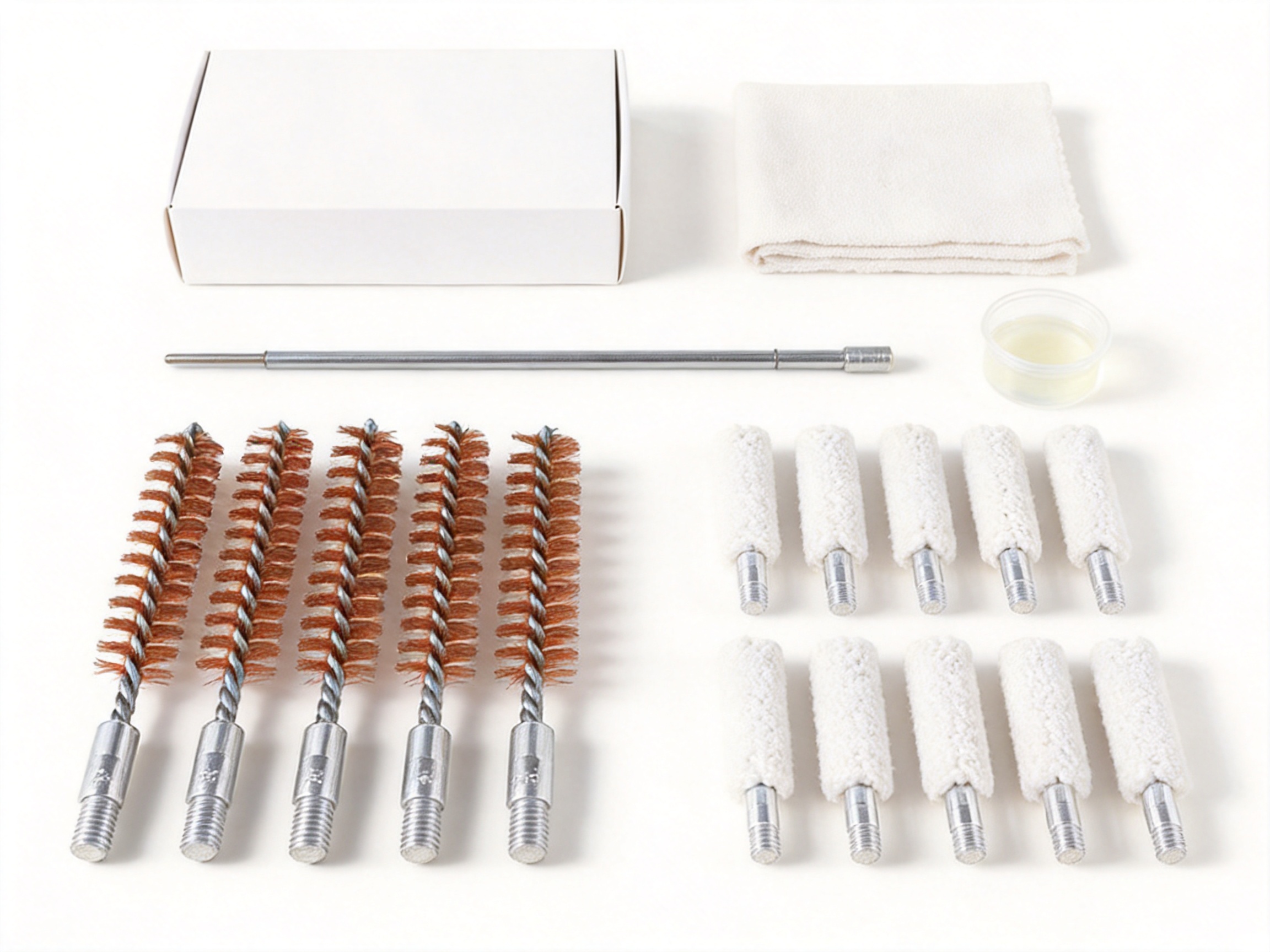
Quality control for bore-cleaning accessories should cover both visible appearance and functional performance. A brush may look acceptable while still having inconsistent density, weak attachment, incorrect dimensions, or compatibility problems. A professional supplier should therefore evaluate the product at multiple points during production.
Brass wire should be checked for suitable diameter, surface condition, and consistency. Cotton should be inspected for cleanliness, fiber quality, and appropriate density. If steel wire or nylon components are used elsewhere in the product range, those materials also require specifications appropriate to their intended application.
The connection between the brush body and the threaded component is important. A secure assembly helps prevent premature separation during normal use. The cotton mop should also be firmly formed so that fibers do not shed excessively during routine passes.
Caliber-specific dimensions should be checked against the production specification. The outside diameter, overall length, thread dimensions, and attachment geometry should remain within the agreed tolerance. These checks are especially important for OEM programs, where the customer may require a specific rod or adapter standard.
Final inspection should identify bent components, incomplete attachment, uneven trimming, excessive loose fibers, contamination, packaging damage, and incorrect labeling. A clean white box can present the product professionally, but the packaging must also contain the correct product information and quantity.
For repeat wholesale orders, consistency between batches is a key quality indicator. The buyer should be able to reorder the same product with comparable appearance, fit, and cleaning performance. Clear specifications, retained samples, production records, and pre-shipment inspection procedures can help support this consistency.
The product is suitable for OEM and white-label programs because the core design is straightforward to customize without changing its primary function. A customer may choose to sell the product under its own brand while using a factory-developed brush and mop configuration.
Potential customization areas include the outer box, logo, product code, barcode, instruction insert, color scheme, language, assortment, and carton markings. Buyers may also request a different division between brass brushes and cotton mops, subject to production feasibility and order quantity.
Packaging customization can be especially valuable for online sellers. A clearly branded white box can be adapted for marketplace requirements, retail shelves, distributor catalogs, or professional service channels. Product information can emphasize the 10-piece quantity, available calibers, brass construction, cotton finishing mops, and replacement-kit positioning.
Private-label buyers should provide artwork in an agreed format and confirm the exact text before mass production. Important details include caliber markings, quantity statements, material descriptions, warnings, storage instructions, country-of-origin information, and any required importer or distributor information.
ODM support may extend beyond packaging. A buyer with a specific market strategy could request a tailored assortment, a different combination of brush materials, a specialized presentation box, or integration with cleaning rods and adapters. The factory’s existing product range, including nylon brushes, bronze and brass brushes, cotton mops, rods, patches, cloths, and gun cleaning kits, provides a foundation for creating broader product families.
The clean white-box format provides a neutral starting point for both wholesale and private-label distribution. White packaging can be printed with a customer’s logo and product information, or it can be used with a label system for flexible inventory management.
For wholesale buyers, packaging should protect the brushes and mops from crushing, moisture, contamination, and loss during transportation. Inner packaging and master cartons should be selected according to the shipment method and expected handling conditions.
Each retail unit should clearly identify the applicable caliber or gauge. If multiple versions are packed in a master carton, outer-carton markings should make it easy for warehouse staff to identify stock without opening every box.
Online retailers can use the product’s compact format as a selling point. Replacement kits are generally easier to store and ship than large boxed cleaning systems. The product can be listed as an accessory for routine maintenance, a refill pack, or an add-on purchase for customers buying cleaning rods and firearm care products.
Wholesale buyers should discuss carton quantity, master-carton dimensions, gross weight, labeling, sample approval, and shipping marks before confirming a large order. These details affect warehouse planning and freight calculations.
The product can be positioned in several complementary ways. First, it can be marketed as a replacement set for customers who already own a cleaning rod. Second, it can be promoted as a two-stage cleaning solution that combines fouling removal and final wiping. Third, it can serve as a private-label accessory for firearm retailers and outdoor equipment distributors.
Useful selling points include the 10-piece configuration, brass-wire construction, cotton mop inclusion, broad caliber and gauge selection, white-box presentation, and OEM or ODM availability. Product descriptions should avoid vague claims and should state exactly what is included.
Retail copy can explain the difference between the brush and mop functions. The brass brush loosens and removes deposits, while the cotton mop wipes, absorbs, polishes, and helps distribute lubricant. This simple explanation can make the product easier for new users to understand.
For professional buyers, the strongest value proposition may be supply flexibility. The manufacturer can support a broader cleaning-accessory portfolio rather than only one isolated item. This allows a distributor to source brush kits, cleaning rods, adapters, patches, cloths, nylon brushes, bronze brushes, and other related products through a coordinated supply relationship.
Users should confirm the firearm manufacturer’s cleaning instructions before using any bore brush or mop. The selected accessory should correspond to the correct caliber or gauge, and the cleaning rod or handle should have a compatible thread or adapter.
The firearm should be unloaded and handled in accordance with applicable safety procedures before cleaning begins. The user should work in a suitable ventilated area and use cleaning chemicals according to their labels. Solvents and lubricants should not be mixed or applied in a way that conflicts with the firearm manufacturer’s recommendations.
A typical maintenance sequence begins with inspection and preparation, followed by solvent application where appropriate. The brass brush can then be passed through the bore in a controlled manner. After brushing, the cotton mop can be used to remove loosened residue and excess liquid. The user may repeat the process if inspection shows that fouling remains.
The brush should not be forced through a passage that is visibly obstructed, and users should avoid excessive pressure or unsuitable tools. After cleaning, accessories should be allowed to dry as needed and stored in a clean, dry place.
These instructions are general product-use guidance rather than a replacement for the firearm manufacturer’s manual. Specific firearms, coatings, finishes, and maintenance requirements may differ.

The product offers several advantages for distributors and retailers seeking practical firearm-maintenance accessories. Its compact size supports efficient storage. Its replacement positioning encourages repeat purchases. Its combination of brass brushes and cotton mops gives it broader utility than a single-function accessory.
The range of available sizes can support multiple customer segments. A retailer can sell rifle, handgun, and shotgun versions while maintaining a consistent product style. A distributor can create assortments for regional markets based on local demand.
The product is also suitable for bundling. It can be paired with cleaning rods, adapters, patch holders, solvent bottles, gun cases, maintenance cloths, or complete cleaning kits. Bundling can help retailers increase average order value while offering customers a more convenient purchasing experience.
For professional firearm accessory suppliers, the factory’s OEM and ODM capabilities can help create a differentiated product line. Instead of competing solely on the lowest price, a seller can build value through packaging, instructions, caliber organization, assortment design, and dependable replenishment.
Before placing a wholesale or OEM order, buyers should evaluate the product and supplier against clear criteria. The following checklist can help structure the purchasing process.
| Evaluation area | Questions for the buyer |
| Product composition | Does the order include five brass brushes and five cotton mops, or is a different assortment required? |
| Caliber and gauge range | Which sizes are available, and are the markings clear and accurate? |
| Thread compatibility | Will the brush and mop attachments fit the intended cleaning rods or adapters? |
| Material quality | Are the brass wire, cotton fibers, and attachment components consistent with the agreed specification? |
| Packaging | Can the white box be customized with logos, labels, instructions, and barcodes? |
| Production capacity | Can the supplier support both trial orders and larger repeat orders? |
| Quality control | Are dimensional, visual, assembly, and quantity checks performed? |
| Customization | Can the supplier support OEM or ODM changes to the product and packaging? |
| Logistics | Are carton quantity, lead time, shipping marks, and export documents clearly defined? |
| After-sales support | Is there a clear process for handling quality questions or order discrepancies? |
Long-term sourcing requires more than a single successful sample. Buyers need confidence that the supplier can reproduce the product, manage raw materials, respond to forecast changes, and maintain communication across multiple orders.
Jinhua Tongshun Tool Factory’s experience since 1999, specialized product focus, and production systems provide a foundation for this type of cooperation. Its product range covers several related categories, including gun cleaning kits, bronze and brass brushes, bore mops, nylon and other material brushes, cleaning rods and adapters, cleaning patches, and cleaning cloths.
This broader capability can simplify supplier management. A customer that begins with the 10-piece replacement kit may later need complementary products for a complete retail range. Working with a supplier that understands the relationship between these categories can reduce duplication in product development and packaging coordination.
The company’s stated export experience across more than 50 countries and regions is also relevant to international buyers. Different markets may require different packaging languages, carton markings, product assortments, and delivery arrangements. A manufacturer accustomed to overseas business is better prepared to discuss these details during order planning.
Professional communication remains essential. Buyers should provide written specifications, approve samples, confirm artwork, and maintain documented records of changes. The supplier should likewise communicate production status, inspection results, packaging details, and shipment information in a timely manner.
The standard configuration includes five brass wire bore brushes and five cotton cleaning mops. Buyers should confirm the exact assortment, caliber, gauge, and thread specification when ordering a particular version.
The brass brushes are designed to help loosen and remove carbon buildup, powder residue, copper fouling, and other deposits from the bore. They provide controlled mechanical scrubbing and should be used with suitable sizing and proper firearm-cleaning technique.
Cotton mops support the finishing stage of cleaning. They can help remove loosened debris and moisture, wipe the bore, and distribute a suitable amount of lubricant when used according to the firearm manufacturer’s instructions.
The listed options are intended for rifles, pistols, and shotguns. Available sizes include .17 cal, .22 cal, .27 cal, .30 cal, .38 cal, .40 cal, .45 cal, 9mm, 12 GA, 20 GA, and .410 bore.
No. It is a replacement or refill set of brushes and mops. Users may also need a compatible cleaning rod, handle, adapter, solvent, lubricant, patches, or cloth, depending on their maintenance method.
Nylon brushes generally provide a softer brushing action, while brass brushes offer greater mechanical stiffness for more persistent deposits. Both materials have useful applications, and the most appropriate choice depends on the firearm, surface, residue, and manufacturer’s recommendations.
Steel wire can be more aggressive than brass. Brass is commonly selected for routine bore-cleaning applications because it offers useful stiffness with a more moderate cleaning profile. All brushes should be used correctly and only for suitable applications.
Yes. The product is supported by OEM and ODM customization services. Buyers can discuss customized packaging, logos, labels, product assortments, instructions, and other requirements with the manufacturer.
A different assortment may be possible depending on order quantity, production planning, and product requirements. Buyers should communicate the desired combination during the quotation and sample-development stage.
The standard product is described as being packaged in a clean white box. This format can serve as a neutral presentation or a starting point for customized private-label packaging.
Buyers should confirm the selected caliber or gauge, thread compatibility, material specifications, product quantity, packaging design, carton quantity, minimum order quantity, lead time, inspection process, and shipping requirements.
The company specializes in a broader range of firearm cleaning accessories, including cleaning kits, brass and bronze brushes, nylon brushes, bore mops, cleaning rods, adapters, patches, and cloths. This may allow buyers to develop a coordinated product range from one manufacturing source.
The 10PCS Brass Wire Gun Brush 5.56/7.62mm Replacement Kit is a practical maintenance accessory built around a simple but useful concept: combine brass brushes for fouling removal with cotton mops for final wiping and conditioning. This two-stage design gives the product broader functionality than a brush-only pack while remaining compact and suitable for replacement sales.
Its available caliber and gauge range supports rifle, pistol, and shotgun markets. The white-box format is suitable for wholesale presentation and private-label development. OEM and ODM options provide additional flexibility for distributors and sellers that want customized packaging, logos, assortments, or product information.
From a sourcing perspective, Jinhua Tongshun Tool Factory offers the advantages of long-term manufacturing experience, specialized product knowledge, semi-automatic and fully automated production systems, international export experience, and a wider family of firearm-cleaning accessories. These capabilities can support both standard replenishment orders and more customized commercial programs.
For buyers, the most important steps are to verify caliber and gauge selection, confirm thread compatibility, review samples, define packaging requirements, and establish clear quality and logistics specifications. When these details are managed carefully, the replacement kit can serve as a dependable addition to a firearm-maintenance product portfolio.
1. Product specification supplied for the 10PCS Brass Wire Gun Brush 5.56/7.62mm Replacement Kit.
2. Manufacturer information supplied for Jinhua Tongshun Tool Factory, including company history, production capabilities, export experience, and OEM/ODM services.
3. General firearm maintenance principles concerning bore brushes, cotton mops, cleaning rods, solvents, lubrication, and safe handling practices.
4. General wholesale product-development practices concerning private-label packaging, dimensional specifications, quality inspection, carton marking, and repeat-order management.