English
 русский
 Español
 عربى

HUNTACE HUNTACE HUNTACE HUNTACE HUNTACE
HUNTACE HUNTACE HUNTACE HUNTACE


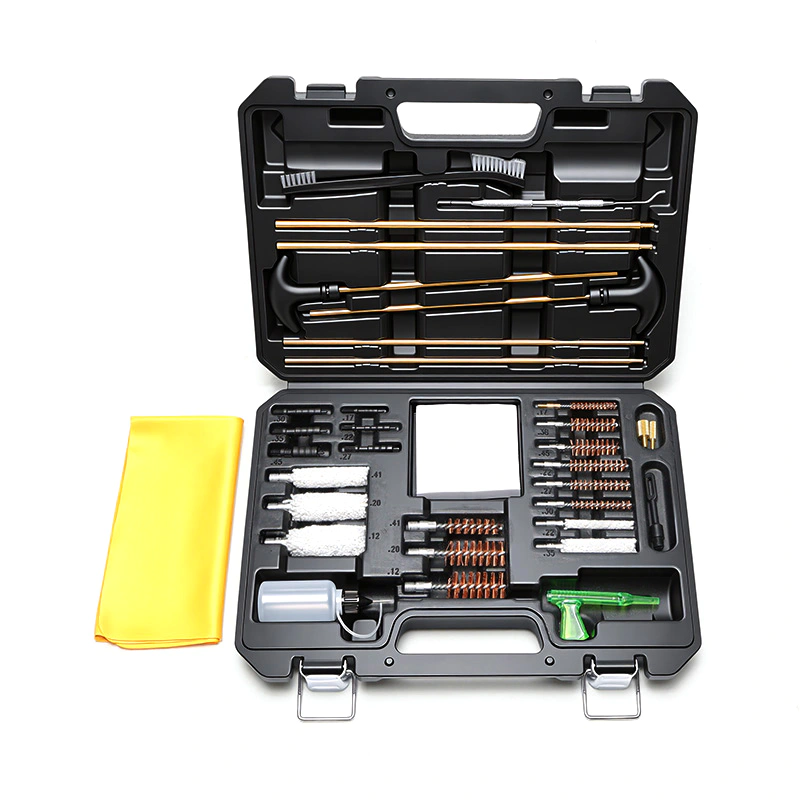
Regular firearm maintenance depends on having the right combination of brushes, mops, patches, rods, adapters, and detail-cleaning tools in one organized system. The 28-Piece Universal Firearm Cleaning Kit is designed to provide that combination in a compact, hard-shell case suitable for home maintenance, range use, professional service, retail distribution, and private-label programs. Rather than limiting users to one brush type or one firearm platform, the kit brings together cleaning components for multiple rifle, pistol, and shotgun calibers.
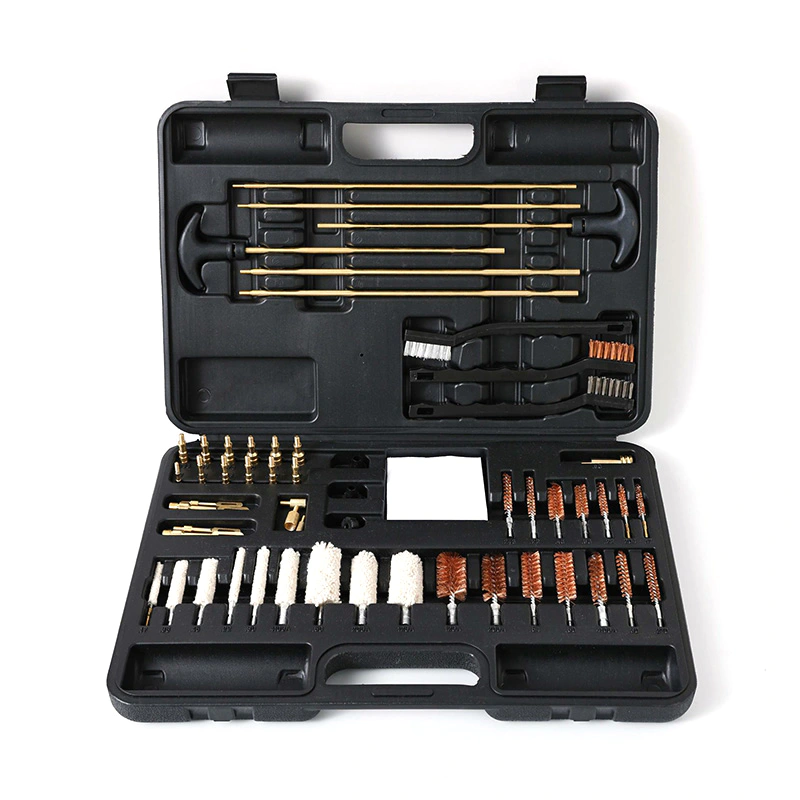
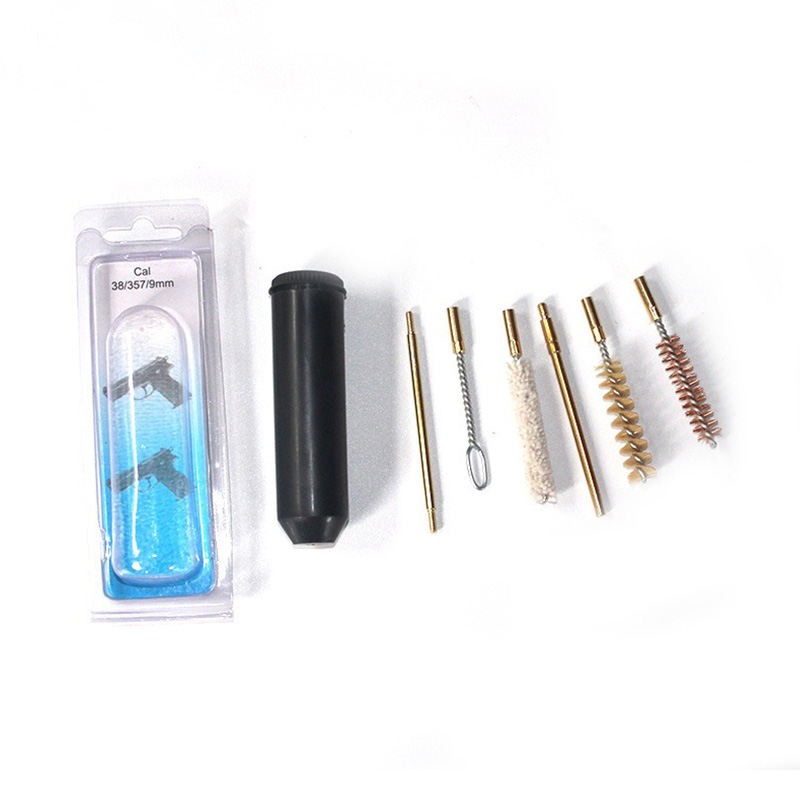
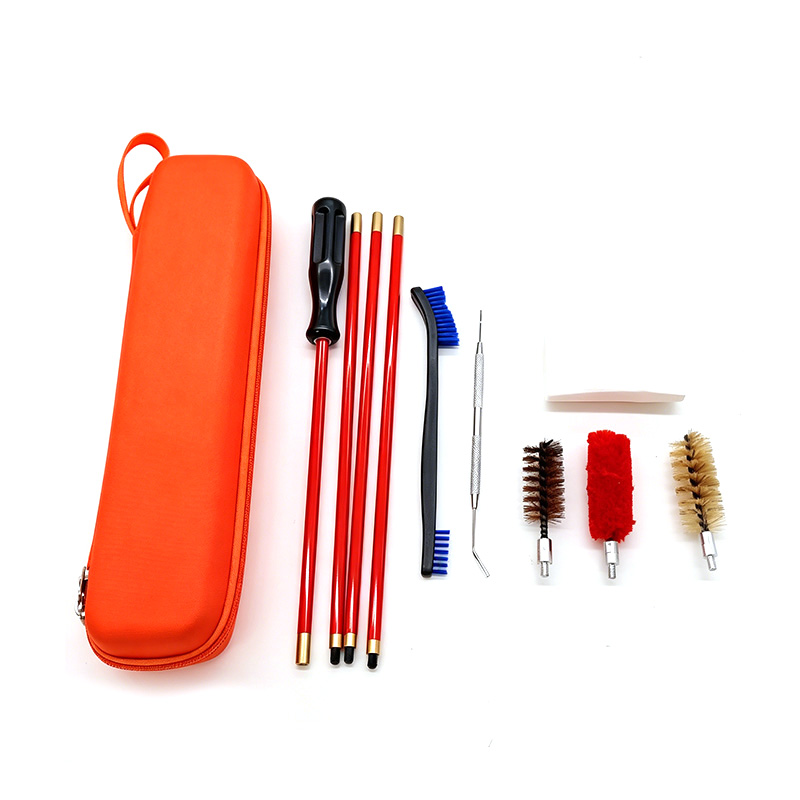
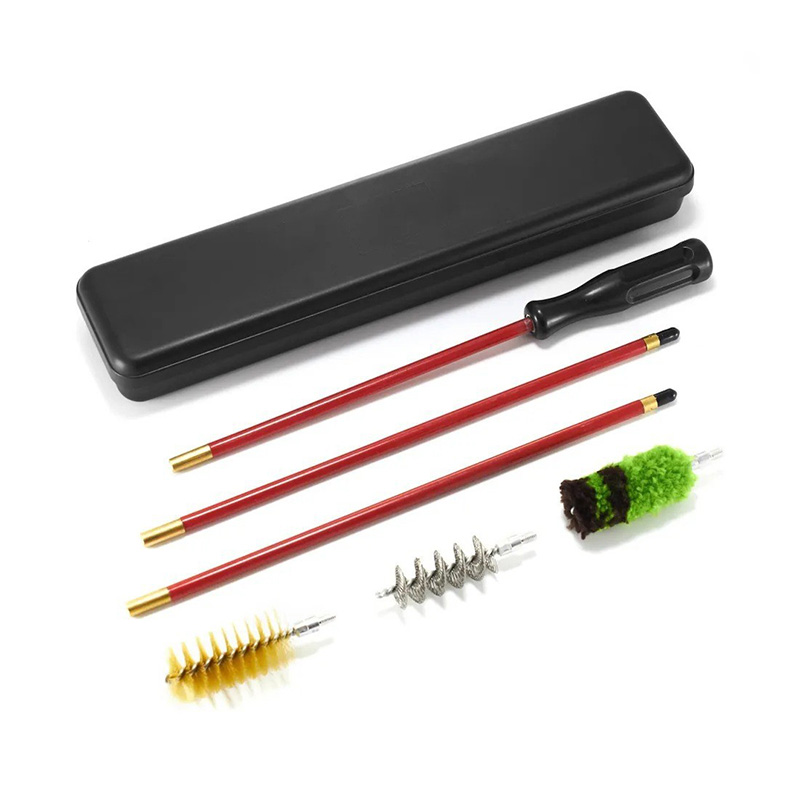
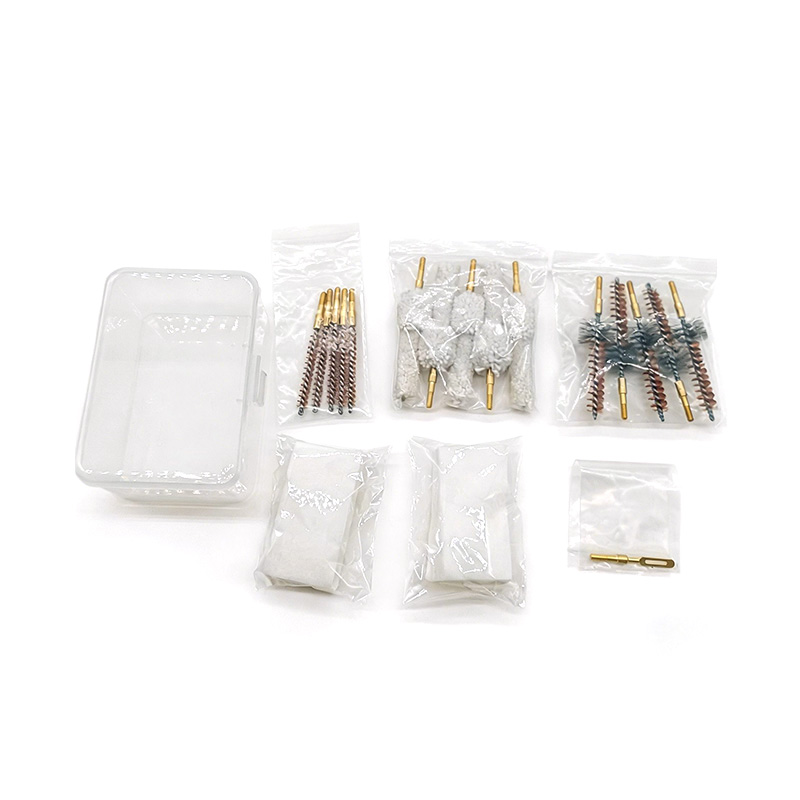
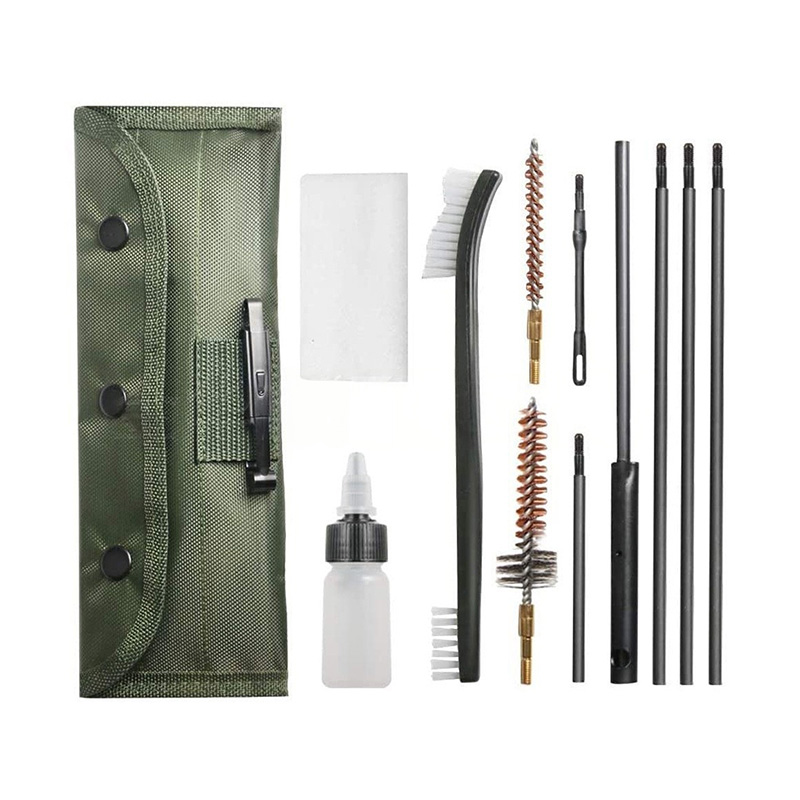
Compatible with .22, .27, .30, .35, .38, and .45 caliber firearms, as well as 12GA, 20GA, and .410 gauge models, the kit is intended to support a broad selection of routine cleaning applications. Its component assortment includes phosphor bronze bore brushes, cotton mops, cleaning patches in multiple sizes, nylon and brass utility brushes, angled double-ended brushes, a sectional cleaning rod, an ergonomic T-handle, and a 5/16-27 to 8-32 thread adapter.
The product is manufactured by Jinhua Tongshun Tool Factory, an experienced Chinese producer specializing in gun cleaning kits, barrel-cleaning brushes, rods, patches, cloths, and related firearm maintenance accessories. Established in 1999, the company combines research and development, production, quality control, packaging, and export support in one manufacturing operation. Its production capabilities and OEM and ODM services make the kit suitable for importers, distributors, sporting-goods retailers, private-label brands, and cross-border e-commerce sellers.
The central advantage of the 28-Piece Universal Firearm Cleaning Kit is its breadth of coverage. A conventional single-caliber cleaning set may serve one firearm type effectively but require the purchaser to buy additional accessories for other platforms. This universal kit is designed to reduce that limitation by combining components for several common handgun, rifle, and shotgun applications.
The kit supports general cleaning tasks such as loosening residue, removing fouling, wiping internal surfaces, cleaning chambers and external details, and reaching narrow or difficult areas. Its contents are organized inside a precision-molded hard-shell case, helping users identify and store the accessories after each maintenance session. The case also provides a practical presentation format for retail shelves, warehouse handling, and export shipment.
Three case colors are available: blue, orange, and green. These options allow distributors and brands to select a standard color for their market or use different colors for product families, sales channels, customer segments, or private-label programs. The hard-shell structure provides a more defined storage solution than a loose fabric pouch, while the molded interior helps keep the components in their designated positions.
For wholesale buyers, the product offers more than a collection of cleaning accessories. It is a ready-to-package maintenance solution with retail packaging, inner cartons, export cartons, documented packing quantities, and customization support. This combination can simplify procurement and reduce the need to coordinate several separate accessory suppliers.
One of the most important purchasing considerations for a firearm cleaning kit is compatibility. A kit that works only with a narrow caliber may be unsuitable for households, shooting clubs, retailers, or distributors serving customers with varied firearm inventories. The 28-Piece Universal Firearm Cleaning Kit is configured for several commonly requested caliber groups.
For rifles and handguns, the stated compatibility includes .22, .27, .30, .35, .38, and .45 caliber firearms. The set also supports 12GA, 20GA, and .410 gauge models. This range gives the kit practical appeal in mixed-firearm environments, where a single user or organization may need to maintain more than one platform.
Compatibility should always be confirmed against the specific firearm, bore dimensions, thread standards, and manufacturer maintenance instructions before use. The universal design is intended to support routine maintenance across the listed platforms, but individual firearm manufacturers may provide specific recommendations regarding cleaning direction, brush selection, solvents, lubrication, and inspection procedures.
For retailers, broad compatibility can make the product easier to position. Instead of creating separate listings for every supported caliber, a distributor can market one multi-application kit with clear compatibility information. This can simplify inventory planning, product photography, catalog management, and customer communication.
| Application group | Supported sizes | Primary maintenance value |
| Small-caliber firearms | .22 caliber | Routine bore and detail cleaning for compatible small-caliber platforms |
| Intermediate and larger-caliber firearms | .27, .30, .35, .38, and .45 caliber | Flexible brush, mop, patch, and rod support for multiple firearm types |
| Shotguns | 12GA, 20GA, and .410 gauge | Maintenance support for several common shotgun gauge platforms |
| External and detail areas | Various firearm platforms | Utility brushes, cloths, picks, and narrow-access cleaning assistance |
A cleaning kit becomes more useful when the accessories are selected to work as a system. The 28-piece configuration combines bore-cleaning elements with general-purpose brushes, wiping materials, rod components, and connection hardware. This helps reduce interruptions during a maintenance session and gives users access to different cleaning methods without purchasing separate accessory packs.
The kit includes high-density phosphor bronze bore brushes. These bristles are precision-wound for durability and consistent contact with internal surfaces during routine cleaning. Phosphor bronze is widely used in bore-cleaning applications because it provides effective mechanical action while being suitable for many standard cleaning tasks when used correctly.
The brush construction is intended to help loosen residue, fouling, and debris from the bore. The dense bristle arrangement allows the brush to maintain contact as it passes through the barrel, supporting a more consistent cleaning action than a sparse or poorly secured brush. The brushes are consumable maintenance accessories, so their durability is particularly important for distributors and users who expect repeated cleaning sessions.
Compared with inexpensive brushes that may shed bristles or lose their shape quickly, a precision-wound phosphor bronze design can provide a more dependable service life. The exact service life will depend on frequency of use, cleaning chemicals, storage conditions, and the firearm platform, but the material and construction are selected for regular maintenance applications.
Cotton mops provide a different function from metal bore brushes. They can be used to distribute cleaning products, wipe internal surfaces, remove loosened residue, or assist with final drying and inspection procedures. Their soft construction makes them useful when a user wants a less abrasive contact surface after brushing.
The inclusion of cotton mops gives the kit a more complete cleaning sequence. A user can begin with a suitable brush to loosen fouling, follow with patches or cloth to remove debris, and use a mop when a broader soft-contact wipe is needed. This multi-stage approach is more practical than relying on a single type of accessory for every task.
Cleaning patches are included in multiple sizes to support different bore and surface requirements. Patches can be used for wiping, applying approved cleaning products, checking residue, and helping confirm that an internal surface has been cleaned adequately.
Multiple patch sizes are especially valuable in a universal kit because the supported firearms are not all the same diameter. A single patch dimension may be too small for one platform or too difficult to use in another. By including more than one size, the kit improves flexibility and gives users a better chance of selecting an appropriate patch for the firearm being serviced.
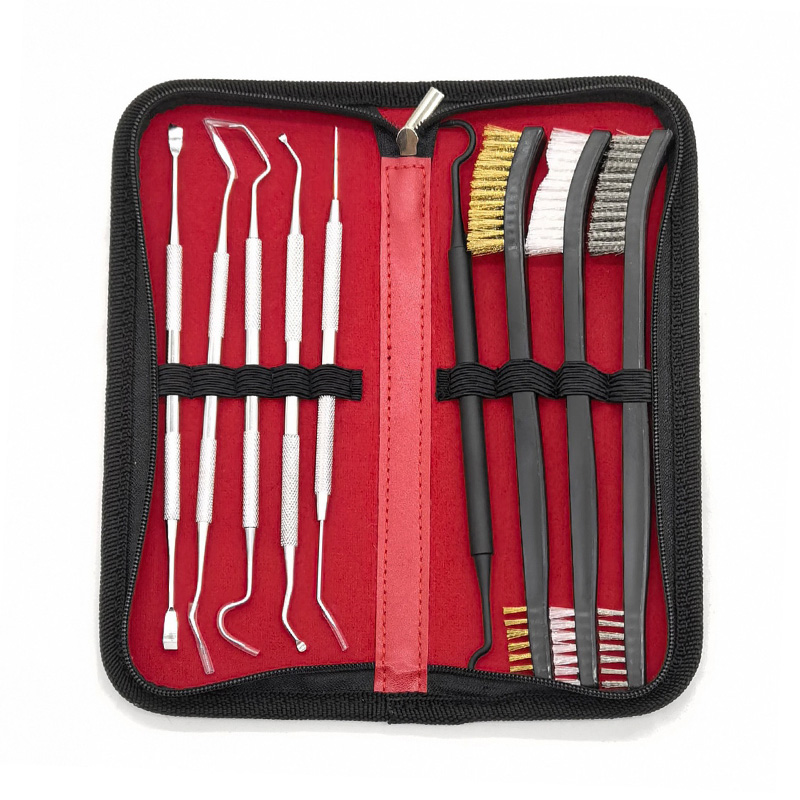
Firearm maintenance involves more than barrel cleaning. Slides, receivers, chambers, breech areas, trigger guards, magazine wells, and other external or semi-enclosed areas may collect dust, residue, or debris. Nylon and brass utility brushes provide different levels of cleaning action for these areas.
Nylon brushes are suitable for tasks requiring a softer brush material. They can help remove loose debris from surfaces where a metal brush may be unnecessarily aggressive. Brass utility brushes provide firmer mechanical action for suitable metal surfaces and stubborn residue. The availability of both materials gives users more control over how they approach different parts of a firearm.
This material variety is an important advantage over simplified kits that include only one general-purpose brush. Different surfaces and residue conditions may require different levels of stiffness. A mixed brush selection allows a user to match the tool to the application rather than applying the same brush to every component.
Angled double-ended brushes are designed to improve access to corners, grooves, recesses, and other areas that may be difficult to reach with a straight brush. The angled configuration can make it easier to approach narrow spaces without placing the user’s hand or wrist in an awkward position.
The double-ended format also provides two cleaning surfaces in one compact tool. This helps increase the functional value of the kit while conserving storage space inside the molded case. For users who clean firearms regularly, detail brushes can be particularly useful because small deposits often collect in areas that are not directly accessible with a bore brush or cloth.
The sectional cleaning rod is designed for compact storage and transport. Instead of requiring a full-length rod that may be inconvenient to pack, the sectional design can be separated into shorter pieces and assembled when needed. This is well suited to a portable hard-shell case and helps keep the overall kit practical for range bags, service benches, workshops, and warehouse retail products.
An ergonomic T-handle is included to provide a comfortable grip during rod-based cleaning tasks. A shaped handle can improve control and reduce the inconvenience of working with a small or poorly balanced grip. The handle also makes the rod assembly easier to manipulate during routine maintenance, subject to the correct procedure for the firearm being cleaned.
The 5/16-27 to 8-32 thread adapter expands the connection options available within the kit. Thread compatibility is an important detail in universal cleaning systems because brushes, jags, mops, and rods may use different connection standards. An adapter helps bridge those standards and allows more of the included components to work together.
Including the adapter within the original package is more convenient than requiring the buyer to source it separately. It also gives distributors a stronger product specification, since the kit is not simply a collection of loose brushes and patches but a coordinated system with connection hardware.
Additional PE cleaning cloths, spunlace wipes, and detail-cleaning picks help users address narrow or hard-to-reach areas. Cloths and wipes can support general surface cleaning, residue removal, and final wipe-down tasks. Detail picks can assist with reaching grooves and confined spaces where a standard brush may not provide sufficient access.
The inclusion of these smaller accessories increases the kit’s practical versatility. A complete maintenance session often involves more than cleaning the bore. The exterior, action area, recesses, and small contact surfaces may also require attention. Providing these items in the same package reduces the need to combine several unrelated products.
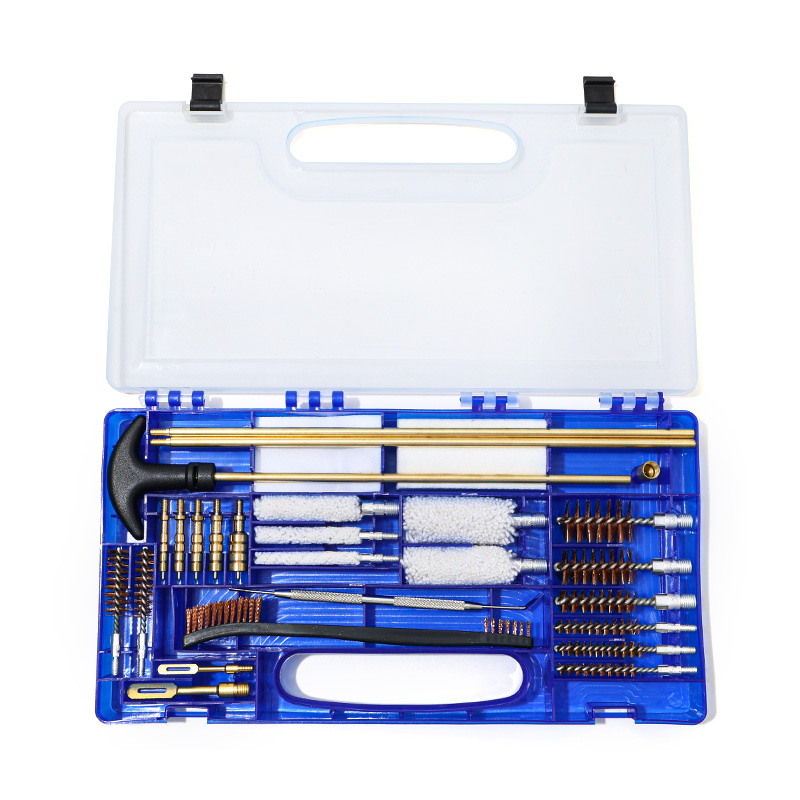
28-Piece Universal Firearm Cleaning Kit
The hard-shell carrying case is a significant part of the product design. Cleaning tools can become difficult to manage when brushes, rods, patches, and small adapters are stored loose in a bag or carton. A precision-molded interior layout helps assign each component a defined position, supporting faster identification and more orderly storage.
For individual users, organization makes routine maintenance more convenient. Components are less likely to be misplaced between cleaning sessions, and the user can quickly identify whether a brush, adapter, or patch supply is missing. For retailers, a molded case creates a more finished presentation and can improve the perceived value of the product compared with a basic assortment packed in an unstructured container.
The case is also useful for transportation. The kit can be moved between a workshop, range, home storage area, or service location while keeping the components together. Its structure helps protect the contents from ordinary handling during storage and distribution, although the product should still be handled according to applicable shipping and storage requirements.
Blue, orange, and green case options provide flexibility for different markets. A distributor may choose blue for a conventional professional appearance, orange for high visibility, or green for a distinctive outdoor-oriented presentation. Brands ordering customized versions can also discuss case color selection as part of an OEM or ODM project.
The competitive value of this product comes from the balance between versatility, organization, component variety, and supply support. Many basic cleaning products focus on one firearm type, one material, or one cleaning stage. The 28-Piece Universal Firearm Cleaning Kit is designed to address more of the routine maintenance process in one package.
A narrow-use kit may be suitable for one caliber but become less useful when the user owns another firearm. This universal configuration covers multiple rifle and handgun calibers along with three shotgun gauges. That broader compatibility can reduce the number of separate kits required by a household, shooting club, retailer, or service operation.
The kit includes tools for brushing, wiping, mopping, detail cleaning, and rod-based access. This gives users a more complete workflow than a package containing only a brush and a few patches. The combination of hard and soft cleaning materials helps users select an appropriate accessory for each stage of maintenance.
Phosphor bronze, brass, nylon, cotton, PE cloth, and spunlace materials each serve different purposes. A kit that includes multiple material types offers greater flexibility than one made with a single brush material. This is particularly important when cleaning both internal and external areas, where different surfaces may require different levels of contact.
The molded hard-shell case gives the product a more organized format than many loose-accessory sets. The case protects the retail presentation, helps with transport, and supports repeated use. For distributors and online sellers, a professional case can also help communicate product value through product photography and packaging design.
Many competing products are available only as finished goods with limited packaging options. This product is supported by OEM and ODM services that can include custom case colors, logo printing, packaging design, and accessory configuration adjustments. These services allow importers and brands to develop a product aligned with their market positioning instead of selling a completely generic item.
The product is supplied with individual retail packaging, standard inner cartons, and export cartons. Defined carton quantities and dimensions make it easier for buyers to plan warehouse space, container loading, freight estimates, and order quantities. This is an important advantage for international buyers who need consistent packing information before placing bulk orders.
Jinhua Tongshun Tool Factory was established in 1999 and has more than 26 years of manufacturing experience in gun cleaning kits, barrel-cleaning brushes, and related accessories. The company operates in Jinhua, Zhejiang Province, an established manufacturing region with access to industrial supply networks, labor resources, packaging services, and transportation connections.
The company integrates research and development, production, and sales. This integrated structure can help shorten communication between product design, manufacturing, quality control, and customer service teams. For OEM and ODM customers, such coordination is valuable because custom requirements often involve several linked decisions, including component selection, brush specifications, case colors, logo placement, packaging artwork, carton configuration, and inspection standards.
Tongshun Tools operates a modern production facility with semi-automatic and fully automated production systems. Automation can support production consistency by helping standardize repetitive operations such as brush assembly, component processing, and selected packaging procedures. Semi-automatic processes retain flexibility for different product configurations, while automated systems can improve repeatability in higher-volume orders.
For a kit containing multiple small components, process consistency is important. A product may include many accessory types that must be correctly assembled, packed, and matched with the appropriate case. Standardized production procedures can help reduce variation between batches and support reliable bulk supply.
The company also emphasizes standardized quality control procedures. Quality control for a cleaning kit can include checks on component quantity, brush construction, rod and handle assembly, thread compatibility, case condition, color consistency, packaging completeness, and carton labeling. The specific inspection plan may be adapted to the customer’s requirements and order specifications.
Stable production capacity is especially important for distributors. A retailer may need regular replenishment rather than a one-time purchase, while a private-label brand may require consistent product appearance across multiple production runs. An established factory with dedicated production systems is better positioned to support repeat orders than an intermediary with limited control over manufacturing.
The company exports products to more than 50 countries and regions. International experience can help a supplier understand the practical requirements of overseas customers, including export packaging, documentation coordination, communication across time zones, product customization, and shipment preparation. This experience is relevant to importers seeking a long-term manufacturing partner rather than a one-time trading arrangement.
A reliable firearm cleaning kit should be evaluated not only by the number of pieces but also by the consistency and usability of those pieces. The performance of a brush depends on bristle density, winding quality, attachment security, dimensions, and compatibility with the intended application. Rods and adapters require suitable threading and secure connections. Patches and cloths should be packed consistently and protected from contamination during storage.
The manufacturing process should therefore address both individual component quality and final kit assembly. Each kit must contain the correct accessories in the correct quantity and be placed properly in the molded case. Packaging must also protect the product during warehouse handling and export transportation.
For OEM and ODM orders, buyers can establish product specifications before production. These specifications may include material requirements, component dimensions, color references, logo artwork, packaging language, carton markings, inspection standards, and sampling procedures. Clear specifications help reduce ambiguity and create a measurable basis for quality review.
Buyers should also confirm compatibility details and intended markets before mass production. Different countries and sales channels may have different product labeling expectations, packaging preferences, and documentation requirements. A coordinated pre-production process can help ensure that the finished kit matches both technical and commercial requirements.
The product is designed for retail and export distribution. Each set is supplied with individual retail packaging, while multiple sets are packed into inner cartons and outer export cartons. The standard configuration is 12 sets per inner box and 24 sets per outer carton.
The outer carton dimensions are 36.5 × 32.5 × 48 centimeters for the blue, orange, and green case versions. The inner box dimensions are 35 × 31 × 23 centimeters. These standardized carton formats assist with warehouse planning and provide a reference for freight calculations.
Net weight varies according to the case color and corresponding configuration. The blue box version has a stated net weight of 503 grams per set, the orange box version has a stated net weight of 461 grams per set, and the green box version has a stated net weight of 366 grams per set. The difference may reflect variation in case or accessory configuration and should be confirmed against the final purchase specification.
| Case version | Net weight per set | Inner carton | Outer carton | Gross weight of outer carton |
| Blue box | 503 g | 35 × 31 × 23 cm; 12 sets | 36.5 × 32.5 × 48 cm; 24 sets | 13.1 kg |
| Orange box | 461 g | 35 × 31 × 23 cm; 12 sets | 36.5 × 32.5 × 48 cm; 24 sets | 12.1 kg |
| Green box | 366 g | 35 × 31 × 23 cm; 12 sets | 36.5 × 32.5 × 48 cm; 24 sets | 9.8 kg |
These packing details are useful for purchasing departments and logistics planners. A buyer can estimate the number of retail sets per carton, calculate approximate warehouse requirements, and compare shipping costs among the available versions. Before shipment, the final order should be checked against the commercial invoice, packing list, approved sample, and confirmed carton specifications.
For export customers, the use of standard inner and outer cartons supports more predictable handling. The hard-shell case also helps preserve the organized product format from factory packing through wholesale distribution. Retailers can receive the kits in a presentation-ready configuration rather than repacking loose accessories themselves.
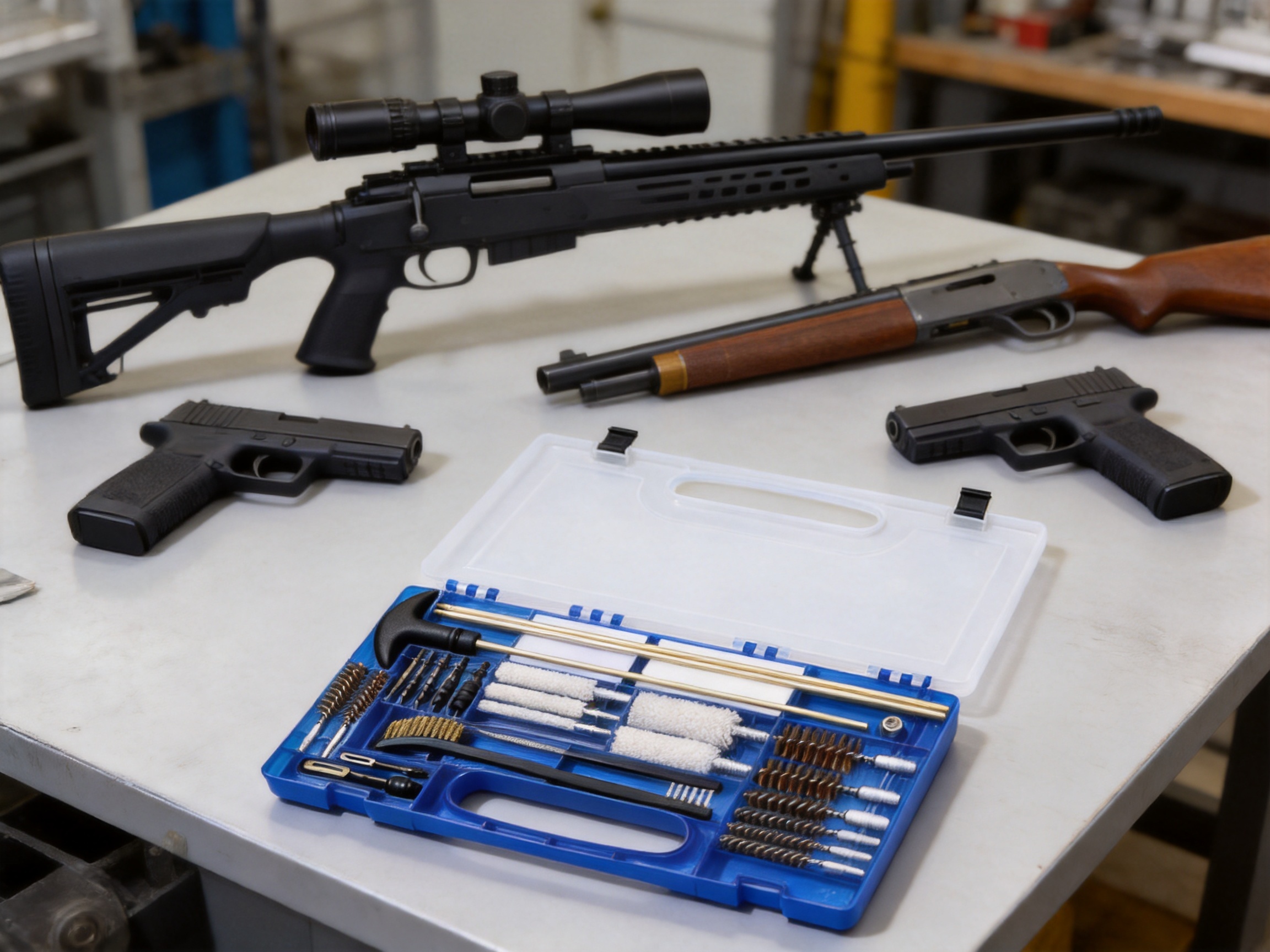
Customization is one of the strongest commercial advantages of the product. Jinhua Tongshun Tool Factory provides OEM and ODM services for customers that want to develop a product under their own brand or adjust the standard kit for a specific sales channel.
Case color is a visible brand element. Buyers can discuss custom colors or select from the available blue, orange, and green versions. A consistent case color can help create a recognizable product family, while multiple colors can distinguish different kit configurations or retail tiers.
Logo printing can help transform a standard cleaning kit into a branded product. The logo may be applied to the case, packaging, labels, or other suitable surfaces according to the approved design and production method. Customers should provide artwork in an appropriate format and confirm the printing position, dimensions, color requirements, and proofing procedure before production.
Packaging can be adapted for different markets and sales channels. Retail boxes may include product specifications, compatibility information, instructions, warnings, barcode areas, brand messaging, and distributor details. Packaging design can also be adjusted for online sales, sporting-goods stores, wholesale clubs, or international distribution.
OEM and ODM customers can discuss adjustments to the accessory configuration based on market demand. A buyer may want to emphasize rifle compatibility, shotgun use, compact portability, professional maintenance, or entry-level retail pricing. Accessory changes should be evaluated together with the case layout, product weight, carton quantity, and final cost.
Customization is most effective when developed systematically. The customer and factory should confirm the target market, intended user, component list, case design, packaging artwork, inspection requirements, order quantity, and delivery schedule. An approved sample or pre-production reference can then provide a clear basis for mass manufacturing.
The kit is suitable for retailers that want a multi-caliber maintenance product with a strong shelf presentation. The hard-shell case provides a clear retail format, while the broad compatibility range can help the product appeal to customers with different firearms. Retailers can offer the kit as a general-purpose maintenance solution rather than carrying several narrow-use sets.
Distributors can benefit from standard carton quantities, export-oriented packaging, and color options. The product can be introduced into regional markets under a factory label or customized for a distributor’s own brand. The combination of factory experience and established export capability supports recurring wholesale programs.
Private-label brands can use the standard kit as a foundation for a branded maintenance line. Logo printing, custom packaging, case color selection, and accessory configuration help create differentiation. A private-label program may also be expanded later with compatible bore brushes, cotton mops, cleaning patches, rods, adapters, or other accessories from the same manufacturing source.
The organized case and broad product description make the kit suitable for online retail. A single listing can communicate compatibility with multiple calibers and gauges, while product images can show the case, component assortment, and color options. Export cartons and individual retail packaging support fulfillment from regional warehouses or direct-to-consumer shipment programs.
Workshops and service operations may value the variety of brush materials and detail tools. Different firearms and maintenance conditions can require different accessories, and a universal kit offers a convenient supplementary set for routine cleaning work. Professional users should still select tools and cleaning procedures according to the firearm manufacturer’s requirements and their own service standards.
Organizations that maintain multiple firearms may prefer a kit that covers several platforms. The labeled and molded storage case can help staff track components, while the broad assortment reduces the need to stock many separate beginner-level kits. Clubs and organizations should establish their own procedures for tool cleaning, replacement, storage, and supervision.
Firearm cleaning should be performed only after the firearm has been unloaded and made safe according to the manufacturer’s instructions. Ammunition should be removed from the immediate work area, and the user should verify the firearm’s condition before beginning maintenance. The product is a maintenance accessory set and is not a substitute for safe firearm handling training or the firearm manufacturer’s service instructions.
Users should select the correct brush, mop, patch, rod, and adapter for the firearm being serviced. Excessive force should be avoided, and components should not be forced through a bore or into a confined area. Cleaning products and solvents should be used only as directed by their manufacturers, with suitable ventilation and personal protection where required.
After use, accessories should be wiped or cleaned as appropriate and returned to the molded case. Brushes, cloths, and patches should be inspected for wear, contamination, or damage. Worn accessories should be replaced rather than used beyond their effective service condition. Proper storage helps maintain organization and extends the practical usefulness of the kit.
Purchasing directly from an experienced manufacturer can provide advantages over sourcing through multiple trading intermediaries. Direct communication gives the buyer clearer access to component specifications, customization options, packaging details, production schedules, and quality expectations.
Factory-direct sourcing can also simplify product development. Because the manufacturer produces cleaning kits, brushes, rods, patches, and related accessories, a buyer can discuss a broader product range with one supplier. This may help create coordinated product families and reduce the administrative burden associated with managing different vendors.
Jinhua Tongshun Tool Factory’s experience since 1999, modern semi-automatic and automated production systems, export activity in more than 50 countries and regions, and OEM and ODM capabilities make it suitable for buyers seeking a long-term supply relationship. The company’s integrated R&D, production, and sales structure provides a foundation for responding to both standard orders and customized programs.
For large-volume buyers, the most important benefits are usually consistency, communication, repeatability, and supply planning. A factory that understands the product at the component level can better support changes to case design, brush materials, packaging, and accessory configuration. This is particularly valuable when a customer wants to build a branded product line rather than purchase an anonymous standard item.
Before placing a wholesale order, buyers should confirm the selected case color, exact accessory list, compatibility statement, retail packaging design, logo requirements, carton quantities, shipping marks, and inspection standards. If the order is customized, an approved sample should be retained for comparison with the mass-production goods.
Buyers should also confirm the applicable net and gross weights for the selected version. The listed blue, orange, and green configurations have different net weights and different outer-carton gross weights. Freight quotations should use the confirmed production version rather than relying on a general estimate.
Packaging artwork should be checked for product names, compatibility descriptions, barcode information, warning statements, importer details, and language requirements. Any market-specific requirements should be discussed before artwork approval. Changes made after production begins may increase cost or affect delivery timing.
For recurring orders, buyers should consider a supply agreement that defines the approved product configuration, acceptable variation, quality inspection process, production lead time, reorder procedure, and communication responsibilities. These measures help maintain consistent product quality across multiple shipments.
The kit is designed for .22, .27, .30, .35, .38, and .45 caliber firearms, along with 12GA, 20GA, and .410 gauge models. Users should confirm the specific fit and follow the firearm manufacturer’s cleaning instructions before use.
The configuration includes phosphor bronze bore brushes, cotton mops, cleaning patches in multiple sizes, nylon and brass utility brushes, angled double-ended brushes, a sectional cleaning rod, an ergonomic T-handle, a 5/16-27 to 8-32 thread adapter, PE cleaning cloths, spunlace wipes, and detail-cleaning picks.
Yes. The kit includes high-density phosphor bronze bore brushes, nylon utility brushes, and brass utility brushes. The different materials allow users to select an appropriate tool for internal bore cleaning, external surfaces, residue removal, and detail work.
The standard case options are blue, orange, and green. Custom case colors may also be discussed for OEM and ODM projects, subject to production requirements and order conditions.
Yes. The hard-shell case includes a precision-molded interior layout intended to organize the components during storage and transportation. It is suitable for retail distribution, warehouse handling, range use, and general maintenance storage.
Yes. OEM and ODM services include logo printing, packaging design, custom case colors, and accessory configuration adjustments. The exact printing process, position, artwork format, and minimum order requirements should be confirmed with the factory.
The standard packing information indicates 12 sets per inner box and 24 sets per outer carton. The inner carton dimensions are 35 × 31 × 23 centimeters, and the outer carton dimensions are 36.5 × 32.5 × 48 centimeters.
No. The stated net weight is 503 grams per set for the blue box, 461 grams per set for the orange box, and 366 grams per set for the green box. The corresponding outer-carton gross weights are 13.1 kilograms, 12.1 kilograms, and 9.8 kilograms. Buyers should confirm the final specification before ordering.
The kit can serve both general consumers and professional or commercial users who need a broad set of routine maintenance accessories. Its suitability depends on the firearm platform, the user’s maintenance procedures, and the requirements of the intended application.
Yes. The factory supports private-label programs through OEM and ODM services. Buyers can discuss logos, packaging, colors, component configurations, and other product details to develop a market-specific version.
The firearm must be unloaded and made safe before cleaning, and ammunition should be kept away from the work area. Users should follow the firearm manufacturer’s instructions, select compatible accessories, avoid excessive force, and handle cleaning chemicals according to their labels and safety requirements.
The 28-Piece Universal Firearm Cleaning Kit combines broad caliber and gauge compatibility with a practical selection of brushes, mops, patches, rods, adapters, cloths, wipes, and detail tools. Its hard-shell case and molded interior improve storage and presentation, while blue, orange, and green options provide flexibility for distributors and brands.
Compared with narrow-use or loosely packed cleaning sets, this product offers a more complete maintenance workflow, a wider range of cleaning materials, organized storage, and stronger wholesale readiness. The inclusion of phosphor bronze bore brushes, cotton mops, nylon and brass utility brushes, multiple patch sizes, a sectional rod, T-handle, and thread adapter gives users more options for routine firearm maintenance across several platforms.
Jinhua Tongshun Tool Factory strengthens the product offering through more than 26 years of manufacturing experience, semi-automatic and fully automated production systems, standardized quality control procedures, export-oriented packaging, and OEM and ODM support. Its ability to customize cases, logos, packaging, and accessory configurations makes the kit suitable for private-label brands, importers, distributors, retailers, and cross-border e-commerce sellers.
For buyers seeking a versatile, organized, and customizable firearm maintenance product, this kit provides a practical foundation for both standard wholesale orders and long-term branded supply programs. Final compatibility, packaging, inspection, and shipping details should be confirmed with the manufacturer before production or purchase.
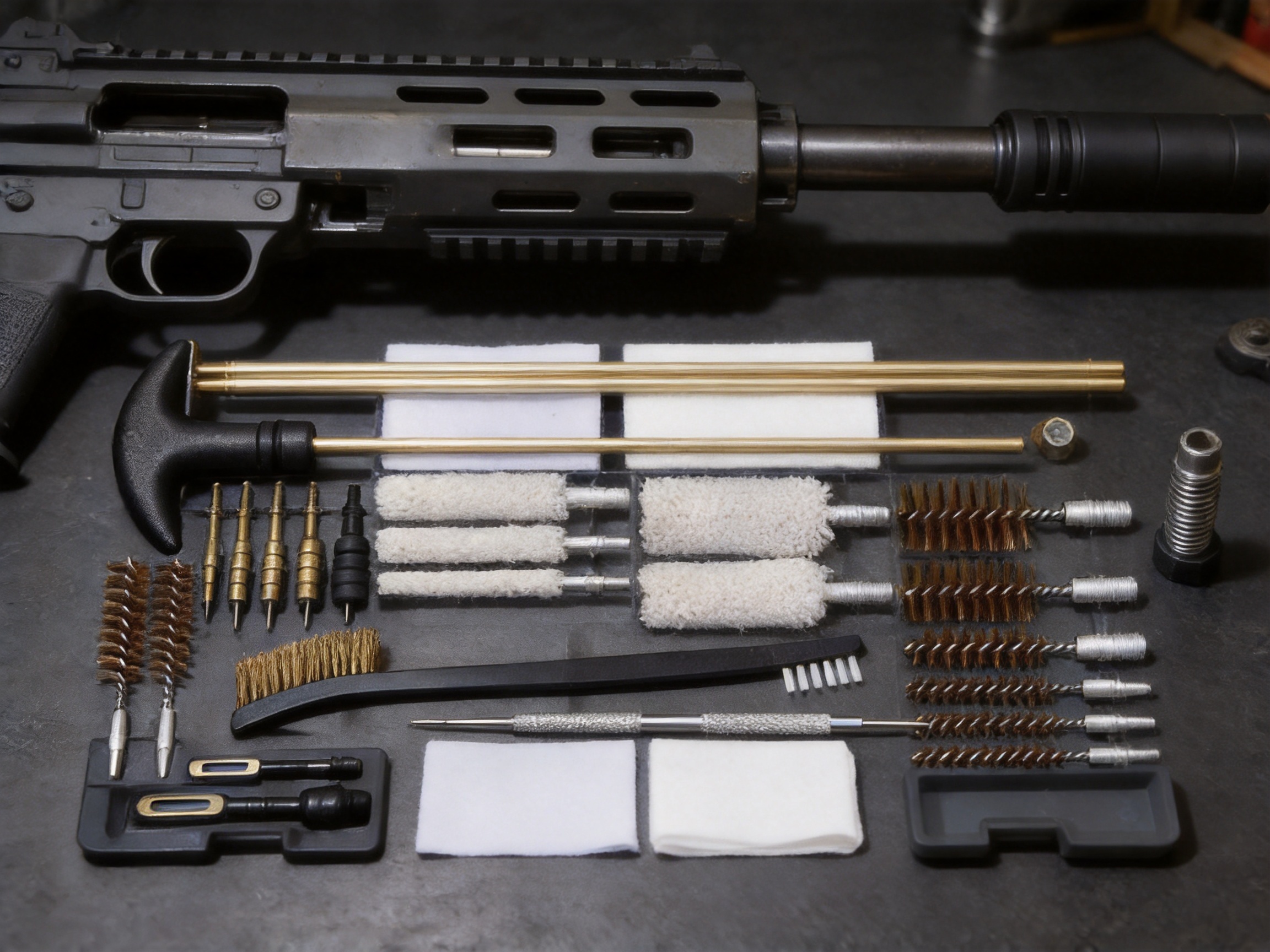
1. Product specification materials for the 28-Piece Universal Firearm Cleaning Kit, including component descriptions, compatibility information, case options, and packaging data.
2. Manufacturing and company profile information supplied by Jinhua Tongshun Tool Factory.
3. General firearm maintenance principles concerning unloaded conditions, manufacturer instructions, compatible cleaning tools, and responsible handling practices.
4. General packaging and export logistics principles for retail products, inner cartons, outer cartons, and wholesale distribution.