English
 русский
 Español
 عربى

HUNTACE HUNTACE HUNTACE HUNTACE HUNTACE
HUNTACE HUNTACE HUNTACE HUNTACE


Effective firearm maintenance depends on using the right combination of cleaning tools, solvents, lubricants, and protective materials. Among these essential consumables, cotton cleaning patches play a central role. They remove loosened fouling, distribute cleaning solutions, absorb excess oil, and help prepare the bore for storage or continued use. A well-designed patch can improve the efficiency of an entire cleaning procedure, while an unsuitable patch may leave fibers behind, absorb unevenly, or fail to make consistent contact with the bore.
The Cotton Gun Cleaning Patch Set Carbon Removal Bore Kit is developed for professional firearm maintenance, wholesale distribution, shooting sports retail, and private users who require dependable cleaning performance. Manufactured from high-density cotton fabric, the patches combine absorbency, softness, practical sizing, and broad caliber compatibility. They are suitable for rifles, pistols, and shotguns, including applications ranging from .17 caliber to 12 gauge.
Rather than functioning as a simple piece of cloth, the product is designed as a specialized bore-maintenance consumable. Its structure supports several cleaning stages, including solvent application, carbon and powder residue removal, lubrication, corrosion-prevention treatment, and final wipe-down. The availability of round and square formats allows users to choose a shape that matches the cleaning method, firearm type, and preferred accessory combination.
Inside a firearm bore, combustion produces carbon fouling, powder residue, and other deposits. Depending on ammunition, usage frequency, storage conditions, and cleaning habits, the bore may also accumulate copper or other metallic deposits. These contaminants can affect the cleanliness of the barrel and make routine maintenance more difficult if they are not removed consistently.
Cleaning patches provide the contact surface that carries solvents into the bore and brings loosened contaminants back out. They are typically used with a cleaning rod, jag, patch holder, or compatible adapter. During the cleaning process, the patch moves through the bore and makes contact with the internal surface. This contact helps collect residue that has already been softened by a suitable cleaning solution.
A cotton patch also has an important role after the main cleaning stage. A lightly oiled patch can distribute a protective film across the bore, helping prepare the firearm for storage. A dry patch can then be used to remove excess oil before the firearm is returned to service, depending on the maintenance procedure and firearm manufacturer’s recommendations.
The quality of the patch influences all of these operations. A patch that is too thin may not absorb sufficient solvent or contact the bore evenly. A patch that is too thick may be difficult to push through the barrel. A patch with excessive loose fibers may leave residue behind. The objective is therefore to achieve a practical balance between absorbency, strength, softness, dimensional consistency, and ease of use.
This cotton cleaning patch set is made from high-density cotton fabric selected for firearm bore-care applications. The material is soft enough to reduce the risk of scratching precision-machined surfaces while remaining absorbent enough to collect oils, solvents, carbon residue, powder deposits, and other contaminants.
The patches are available in several useful formats:
| Format | Available Size | Typical Application | Compatibility Range |
|---|---|---|---|
| Round patch | Approximately 2.6 cm diameter | Small-bore maintenance and controlled solvent application | Small-caliber firearms and precision cleaning tasks |
| Round patch | Approximately 5 cm diameter | General rifle and pistol bore cleaning | Common handgun and rifle calibers |
| Round patch | Approximately 6.4 cm diameter | Larger bores and broader coverage | Large-caliber firearms and shotgun-related applications |
| Square patch | Approximately 5 × 5 cm | Flexible folding, exterior wiping, and general maintenance | Rifles, pistols, shotguns, and metal components |
The listed sizes provide distributors and users with a practical selection for different cleaning procedures. Actual patch selection should always be matched with the appropriate jag, patch holder, cleaning rod, and firearm caliber. The patch should move through the bore with controlled resistance rather than excessive force.
Because the product is disposable, each cleaning cycle can use a fresh patch. This helps prevent contaminants collected during one stage from being transferred back into the bore during another stage. It also supports a more organized maintenance workflow in which separate patches are used for solvent, residue removal, lubrication, and final inspection.
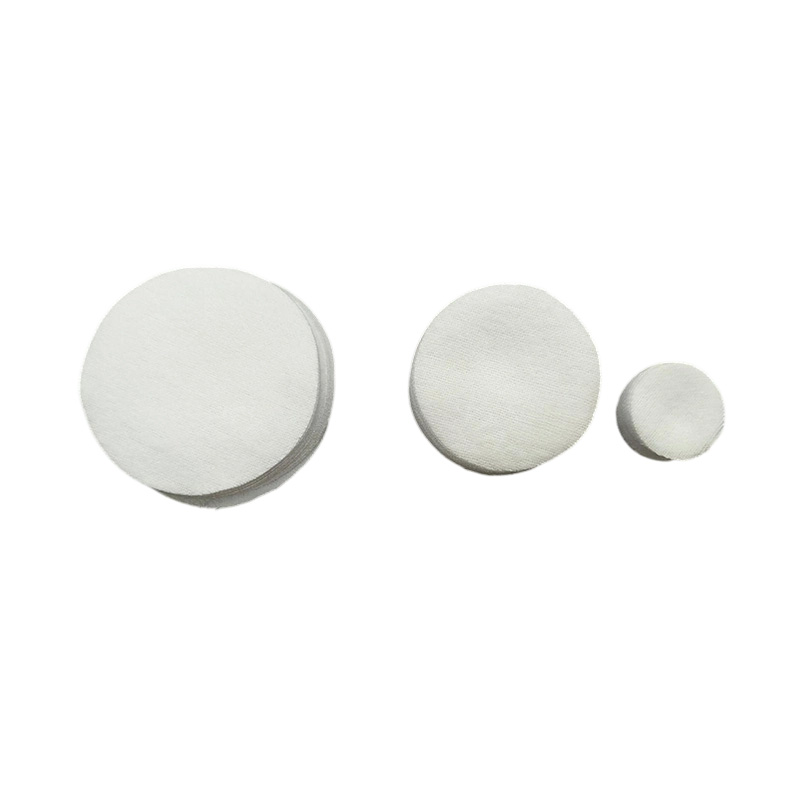
Cotton Gun Cleaning Patch Set Carbon Removal Bore Kit
The primary advantage of this product is its cotton fabric construction. Cotton has long been used in cleaning and maintenance applications because it combines softness with useful absorbency. For firearm care, these characteristics are especially important because the material must interact with precision surfaces without introducing unnecessary abrasion.
The high-density fabric helps the patch retain its shape during use. When pushed through a bore or drawn across a metal surface, a dense patch is less likely to collapse immediately or become difficult to control. It can hold a practical amount of solvent or oil while maintaining sufficient structure to collect loosened fouling.
The soft texture is suitable for use on rifling and precision-machined bore surfaces when the patch is used correctly. Cotton fabric does not replace proper cleaning technique, and users should always follow the firearm manufacturer’s maintenance instructions. However, a soft, purpose-designed patch can reduce the risk of damage associated with unsuitable abrasive materials or rough cloth.
The material is also selected to minimize loose lint. No textile product should be assumed to be completely fiber-free, but a dense, well-finished cotton fabric can help reduce unwanted residue compared with loosely woven household cloths, paper products, or improvised materials. Lower fiber release is valuable because it makes inspection easier and reduces the chance of leaving visible material inside the bore.
Absorbency is one of the most important performance characteristics of a cleaning patch. The fabric should accept a measured amount of bore solvent, gun oil, or cleaning solution without immediately dripping or losing its shape. This allows the user to apply the product in a controlled manner.
During residue removal, the cotton structure helps capture softened carbon, powder fouling, and other contaminants. During lubrication, the same material can distribute a thin film of oil across the interior surface. The patch can also absorb excess lubricant during the final stage, helping the user avoid leaving more oil than necessary.
For professional cleaning operations, predictable absorbency supports repeatability. Retailers, shooting clubs, maintenance departments, and firearm service businesses can establish consistent cleaning procedures when the patches behave similarly from one use to the next.
Firearm bores contain lands, grooves, chambers, and other machined areas that require careful handling. Cleaning accessories must be selected with the surface condition and cleaning method in mind. Cotton patches are useful because they provide a soft contact medium for wiping and solvent distribution.
The patch should not be forced through an obstructed bore. If resistance is abnormal, the user should stop and inspect the firearm, accessory, and patch size. Correct sizing and proper technique are essential to safe maintenance. Within an appropriate cleaning setup, the soft cotton material is designed to support routine bore care without introducing an unnecessarily harsh contact surface.
A major commercial advantage of the patch set is its range of available dimensions. Different firearms require different patch sizes, and a single universal patch is not always suitable for every bore. By providing multiple round sizes and a square option, the product can serve a wider customer base and support more complete product assortments for distributors.
The stated compatibility range extends from .17 caliber to 12 gauge. This broad range makes the product relevant to small-caliber rifles, sporting rifles, handguns, larger-caliber firearms, and shotguns. It also gives wholesalers the opportunity to stock a coordinated selection instead of sourcing several unrelated patch products from different suppliers.
Small round patches are useful where the bore diameter is limited and precise control is important. Medium round patches can support common pistol and rifle cleaning applications. Larger round patches provide greater surface area for larger bores, while square patches can be folded or positioned for exterior wiping, chamber-area cleaning, and general care of metal components.
Compatibility should be understood as a product-selection guide rather than a substitute for checking actual firearm specifications. Patch thickness, jag size, bore diameter, and the condition of the barrel all affect fit. Professional users can select the appropriate patch format based on the specific firearm and cleaning tool in use.
The product can be incorporated into several stages of a standard firearm maintenance routine. Each stage uses the patch for a different purpose, allowing one consumable to support a complete care process.
A clean patch can be moistened with an appropriate bore-cleaning solution and passed through the bore using a compatible cleaning rod and jag. This distributes the solution across the interior surface and helps soften carbon and powder residue. The amount of solvent should be controlled according to the product instructions and firearm manufacturer’s recommendations.
Using a fresh patch for solvent application helps keep the cleaning solution relatively clean. It also avoids carrying large quantities of previously collected residue into another section of the bore.
After the solvent has had sufficient time to work, a fresh cotton patch can be used to remove loosened fouling. The dense fabric helps collect residue as it passes through the bore. Users may repeat this step with fresh patches until the visible contamination is substantially reduced.
The disposable format is especially useful here. Once a patch has become heavily soiled, it can be discarded rather than reused. This makes the cleaning sequence more hygienic and reduces the risk of redistributing carbon and other debris.
After the bore has been cleaned and dried as appropriate, a lightly oiled patch can distribute a thin protective film. This is useful when a firearm is being prepared for storage or when a maintenance procedure calls for corrosion protection.
Oil selection and quantity must be appropriate for the firearm and storage conditions. Excessive oil may attract dust or create operational issues, while insufficient protection may leave metal surfaces vulnerable to moisture. The patch helps deliver a controlled application, but the user remains responsible for choosing the correct lubricant and procedure.
A dry patch can be used for the final pass. This helps remove excess solvent or oil and provides a visual indication of remaining residue. A clean, lightly colored cotton surface can make it easier to observe whether additional cleaning is necessary.
Square patches are also convenient for wiping external metal parts, tools, and precision components. They can be folded into a clean working surface, allowing users to use one section at a time and reduce cross-contamination between areas.
General-purpose cloth may appear to be an economical alternative, but it does not always offer the consistency required for firearm maintenance. Household rags can vary substantially in weave, thickness, absorbency, and fiber release. Some materials may contain synthetic fibers, stitching, dyes, or surface treatments that are not ideal for use inside a bore.
Purpose-made cotton patches offer several advantages:
First, their dimensions are standardized. Users can select a known size rather than cutting an irregular piece of fabric for each cleaning session. Consistent sizing improves compatibility with cleaning accessories and makes routine procedures easier to repeat.
Second, the cotton fabric is selected for a balance of softness and absorbency. A general cloth may be too rough, too loosely woven, or too absorbent in an uncontrolled way. A specialized patch is designed to perform a defined maintenance function.
Third, disposable use improves cleanliness. A fresh patch is free from residue collected during earlier maintenance. This is particularly useful when the user moves from aggressive cleaning to lubrication or final inspection.
Fourth, multiple formats support a broader range of applications. The round and square options allow the product to serve both internal bore cleaning and general wiping tasks.
Finally, professionally manufactured patches are suitable for branded packaging, wholesale presentation, and organized inventory management. This is important for retailers and distributors who need products that can be described clearly and supplied consistently.
In the wholesale market, product consistency is often as important as the initial unit price. Retailers need to know that repeated shipments will maintain similar dimensions, material characteristics, packaging quality, and appearance. Inconsistent patches can create customer complaints, reduce confidence in a product line, and increase the burden on quality-control teams.
The manufacturing capabilities behind this product are structured to support larger orders and repeat supply. The factory operates semi-automatic and fully automated production systems, enabling more efficient processing and greater consistency than purely manual production methods. Automation can help standardize cutting, forming, handling, and batch organization while reducing avoidable variation.
Automation does not eliminate the need for inspection. Instead, it provides a stable production foundation that can be combined with material checks, process monitoring, and finished-product review. This combination is valuable for distributors that require dependable private-label or long-term supply arrangements.
The company’s experience since 1999 also supports production knowledge accumulated over more than two decades. Long-term manufacturing experience can improve understanding of material selection, tooling, product dimensions, packaging requirements, and customer expectations. For buyers, this experience reduces the uncertainty often associated with sourcing from an unfamiliar factory.
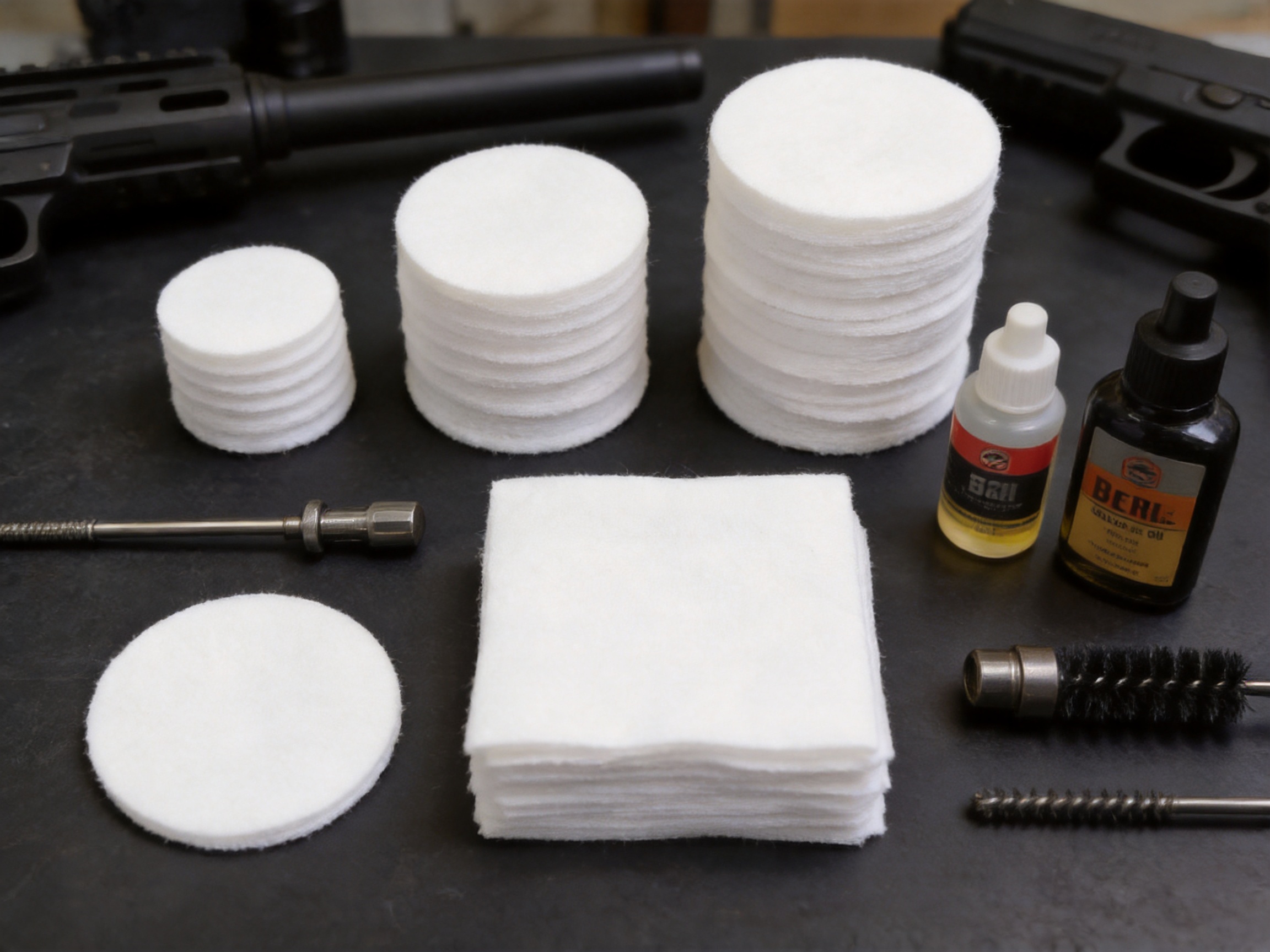
Jinhua Tongshun Tool Factory is a comprehensive manufacturer integrating research and development, production, and sales. Its product scope includes gun cleaning kits, barrel cleaning brushes, cleaning rods, cleaning patches, cloths, and related accessories. This product breadth is useful for buyers seeking to build a complete firearm-maintenance category with one manufacturing partner.
The company was established in 1999 and has more than 26 years of manufacturing experience. Its production base is located in Jinhua, Zhejiang Province, an important manufacturing region with access to industrial supply chains, skilled labor, component suppliers, packaging resources, and domestic logistics networks.
Product development is more efficient when design, material selection, production, and sales teams can communicate directly. An integrated R&D and manufacturing structure allows the factory to evaluate customer requirements and convert them into practical product specifications.
For cotton patches, this may include selecting suitable fabric density, developing different dimensions, adjusting packaging quantities, creating retail-ready presentations, and coordinating the product with cleaning rods, jags, brushes, or complete kits. The same structure supports new product development across bronze, brass, nylon, and other brush categories.
Integrated development is particularly valuable for OEM and ODM buyers. A customer may require a particular patch size, private-label package, assortment combination, logo treatment, or regional market presentation. A manufacturer capable of handling multiple stages internally can make communication more direct and reduce the complexity of coordinating separate suppliers.
The factory uses both semi-automatic and fully automated production systems. This combination provides flexibility. Semi-automatic equipment can be useful for specialized configurations, lower-volume customization, or processes requiring operator judgment. Fully automated systems can support larger production runs, repeatable output, and efficient order fulfillment.
For high-volume consumables, production efficiency has a direct commercial impact. Faster and more consistent processing can help support wholesale quantities while maintaining practical delivery schedules. It can also make it easier to produce multiple sizes or packaging configurations within the same product family.
Automated production is especially beneficial when product dimensions must remain consistent. Patches need to fit cleaning accessories and perform predictably. Standardized production helps reduce variation between batches and supports more reliable product specifications for catalogs, retail listings, and technical documentation.
The factory is equipped to handle large-scale orders for distributors, wholesalers, shooting sports suppliers, and cross-border e-commerce sellers. Bulk supply is not limited to finished standard products. Buyers can discuss customized combinations, packaging arrangements, and branding requirements according to their market position.
Large-order support requires more than production volume. It also involves material planning, production scheduling, packaging coordination, quality review, and shipment preparation. A manufacturer with an established production system can organize these activities more effectively than a small workshop operating without structured processes.
The company exports products to more than 50 countries and regions worldwide. This international experience indicates familiarity with overseas buyers, commercial documentation, packaging expectations, communication requirements, and the practical needs of different distribution channels.
North American and European customers may have different preferences regarding patch sizes, packaging quantities, labeling, product descriptions, and assortment structure. Experience with international markets helps the manufacturer communicate more effectively with buyers and adapt products for different sales environments.
Customization is a major advantage for importers and brand owners that want to differentiate their product range. The cotton patch set can be supplied under a customer’s own brand, with options for customized products, packaging, and logos.
OEM production is suitable for buyers who already have defined specifications and want the factory to produce according to an established design. ODM service is suitable for buyers who want assistance developing an assortment or adapting an existing product for a particular market.
Possible customization areas may include:
• Patch dimensions and assortment combinations.
• Round, square, or mixed-format packaging.
• Number of patches per package.
• Retail box, polybag, blister, or bulk packaging formats.
• Brand logos and printed product information.
• Multi-language packaging for different regions.
• Bundling with cleaning rods, brushes, jags, adapters, or complete kits.
• Special packaging for wholesalers, service businesses, or e-commerce fulfillment.
Customization should be confirmed through technical discussion and sample approval. Buyers can provide target market information, packaging artwork, preferred dimensions, and expected order quantities. The factory can then review feasibility, material availability, production arrangements, and packaging requirements.
Distributors can use the patch set as a core consumable within a broader cleaning accessory portfolio. Because the product is available in multiple sizes, it can be listed alongside cleaning rods, bore brushes, bronze brushes, brass brushes, nylon brushes, and gun-cleaning kits.
A coordinated product range allows distributors to offer complete maintenance solutions rather than isolated accessories. The cotton patches can be sold as replacement consumables for existing kits or as independent products for customers who already own cleaning equipment.
Retail stores and shooting sports suppliers can position the product for routine post-use maintenance, storage preparation, and general firearm care. The disposable format makes it easy for customers to understand the product’s value: patches are used during every cleaning session and must be replenished regularly.
The range of sizes also allows retailers to serve different firearm owners. Small-caliber users, handgun owners, rifle shooters, and shotgun users can select the format that matches their equipment.
Professional maintenance providers can benefit from standardized consumables that support repeatable cleaning procedures. Using fresh patches for different stages can help organize workflow and reduce cross-contamination between firearms or maintenance steps.
Bulk packaging and private-label options may also be useful for service businesses that want branded maintenance supplies or lower per-unit costs.
Online sellers need products that are easy to explain, package, store, and ship. Cotton cleaning patches meet these requirements because they are lightweight, compact, and non-powered. The multiple size options provide opportunities for single-size listings, mixed assortments, refill packs, and bundled cleaning kits.
OEM packaging enables e-commerce sellers to build a recognizable product identity. Clear size information, application guidance, and compatibility notes can help reduce customer confusion and improve listing quality.
Individual users can use the patches for routine maintenance after shooting, periodic cleaning, and preparation for storage. Their disposable design supports a clean and straightforward process without requiring the user to wash or reuse heavily contaminated cloth.
Although the patch material is designed for bore maintenance, correct use remains important. Users should verify that the firearm is unloaded and follow all applicable safety procedures before beginning maintenance. The cleaning rod and accessories should be appropriate for the firearm and used in a way that avoids unnecessary damage to the muzzle, crown, chamber, or rifling.
The selected patch should fit the bore and accessory correctly. A patch that is too large may require excessive force, while one that is too small may not make sufficient contact. Users should never force a patch through an obstruction. If the patch becomes stuck, the firearm should be handled according to established safety procedures and inspected by a qualified professional when necessary.
Solvents, oils, and cleaning chemicals should be used according to their labels. Different chemicals may have different compatibility requirements. Users should avoid mixing products unless the instructions specifically allow it, and they should provide suitable ventilation during cleaning.
Used patches should be discarded responsibly. Patches containing solvent, oil, or combustible residue should be stored and disposed of according to local requirements and the instructions for the chemicals used. The product is intended as a maintenance consumable, not as a substitute for a complete firearm inspection or professional service when a mechanical issue is suspected.
Cotton cleaning patches are simple to store, which is a practical advantage for both industrial buyers and retail customers. They do not require complex equipment, charging, or special installation. When kept in clean, dry conditions, they can be organized by size, packaging format, or intended application.
Distributors can maintain separate stock-keeping units for 2.6 cm, 5 cm, 6.4 cm, and 5 × 5 cm formats. Alternatively, mixed-size kits can provide a more complete solution for customers with multiple firearms. The compact nature of the product supports efficient warehouse use and lower transportation volume compared with bulkier cleaning equipment.
For retailers, refill packaging can encourage repeat purchases. Firearm owners typically consume patches during every cleaning session, so the product naturally supports replenishment sales. It can also be bundled with solvent, oil, brushes, rods, and storage cases as part of a complete maintenance package.
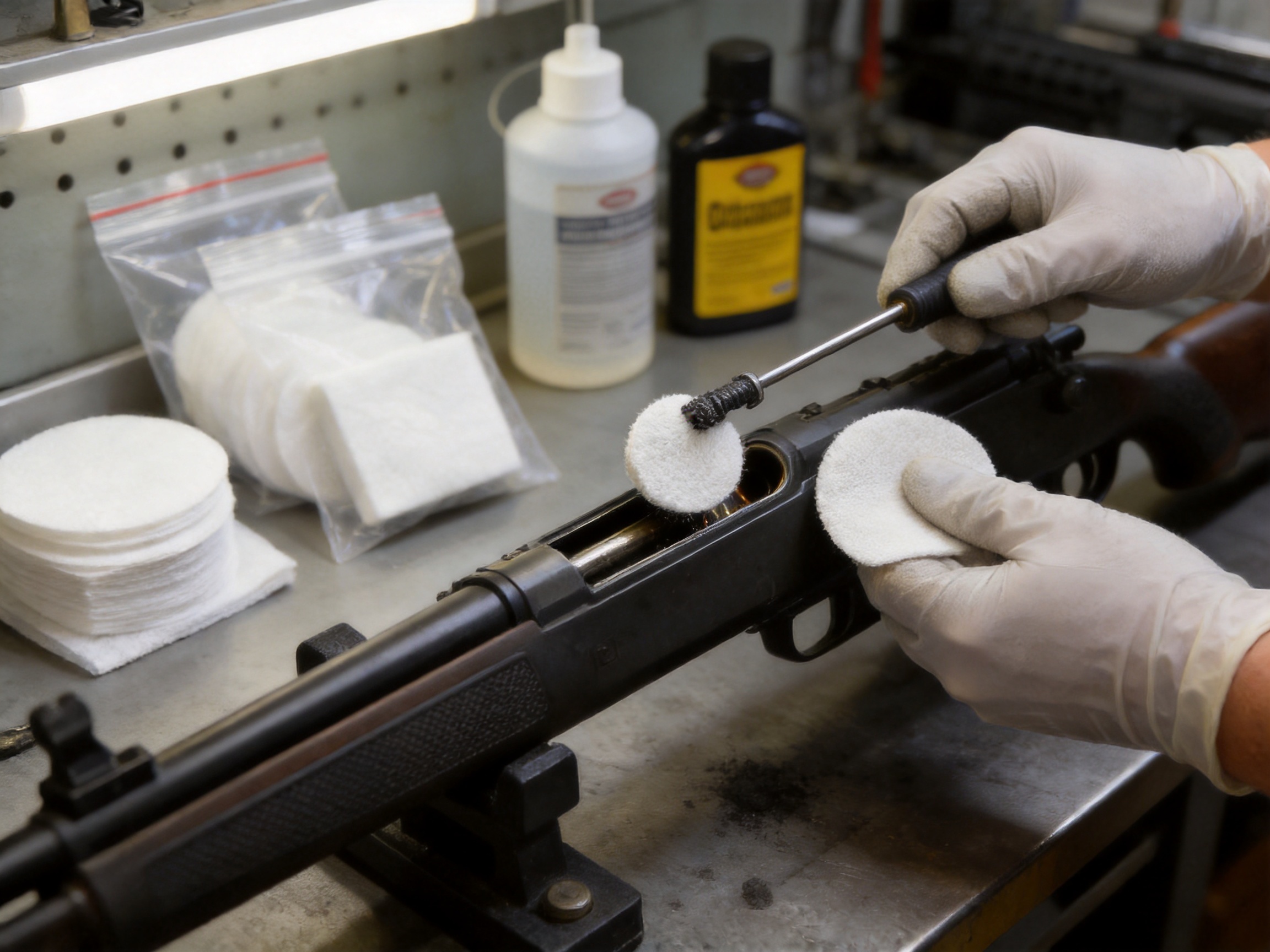
The factory’s broader catalog includes gun cleaning kits, bronze and brass brushes, nylon and other material brushes, cleaning rods and adapters, bore mops, cleaning patches, cloths, and gun-cleaning ropes. This allows buyers to develop a coherent product family around several cleaning functions.
Brushes can loosen carbon and other fouling before patches remove the residue. Cleaning rods and adapters provide the connection between the user and the bore. Cotton patches absorb solvents, oils, and loosened contaminants. Bore mops can support specific cleaning or drying tasks, while gun-cleaning ropes offer a convenient alternative for selected field-maintenance applications.
By sourcing related items from one manufacturer, buyers may simplify communication, packaging development, product photography, quality coordination, and shipment planning. A supplier capable of producing both textile consumables and cleaning tools can also help create matched assortments that are easier to market.
The product competes effectively in the professional cleaning consumables market because it combines several commercially important qualities. It is made from specialized cotton fabric, available in multiple sizes, suitable for a broad caliber range, designed for disposable use, and supported by OEM and ODM services.
Its competitive value is not based only on the patch itself. The manufacturing platform adds further advantages. More than 26 years of experience, automated and semi-automated production systems, international export experience, and a broad accessory catalog provide buyers with a stronger supply partnership.
For wholesale customers, the main comparison points should include:
| Evaluation Factor | Product and Supplier Advantage | Commercial Benefit |
|---|---|---|
| Material | High-density cotton fabric with a soft, absorbent structure | Supports solvent application, residue capture, lubrication, and final wiping |
| Size selection | Multiple round sizes plus a square format | Serves more firearms and allows flexible product assortments |
| Usability | Disposable design for separate cleaning stages | Improves cleanliness and supports repeat purchases |
| Manufacturing | Semi-automatic and fully automated production systems | Supports consistent output and larger order quantities |
| Customization | OEM and ODM products, packaging, and logos | Helps buyers build differentiated private-label lines |
| Supplier experience | Established in 1999 with international export experience | Reduces sourcing risk and supports long-term cooperation |
| Product range | Patches, cloths, brushes, rods, mops, ropes, and complete kits | Enables one-stop sourcing for firearm maintenance accessories |
These factors are particularly relevant when comparing a specialized manufacturer with a general textile supplier or an unstructured trading source. The goal for distributors is not simply to purchase the lowest-cost patch. It is to secure a product that performs consistently, can be replenished reliably, and fits a broader commercial strategy.
Packaging has an important role in communicating the product’s application. A professional package should identify the material, patch format, dimensions, approximate caliber compatibility, intended use, and quantity. It should also provide clear handling information and distinguish the product from ordinary cleaning cloth.
For private-label buyers, the packaging can be designed to match an existing range of cleaning rods, brushes, oils, and kits. Consistent colors, typography, product naming, and size indications can create a more professional shelf or online presentation.
Mixed assortments may be useful for starter kits and multipurpose maintenance packs. Single-size packages may be better for experienced users who regularly maintain a particular caliber. The factory’s OEM and ODM capabilities allow buyers to choose the most suitable approach for their customer base.
Wholesale buyers can improve project efficiency by providing complete requirements at the beginning of the inquiry. Useful information includes target patch sizes, preferred shapes, package quantity, packaging style, branding requirements, estimated order volume, destination market, and desired delivery schedule.
Sample evaluation should focus on fabric density, dimensions, edge condition, absorbency, lint level, packaging appearance, and compatibility with the intended cleaning accessories. Buyers should test the patch with the solvents and oils commonly used by their customers, while following all applicable safety instructions.
Once the sample is approved, the buyer and manufacturer can confirm the production specification. This should include material description, size tolerance, quantity per package, packaging artwork, labeling, carton details, and inspection expectations. Maintaining a written specification helps reduce ambiguity during repeat orders.
For long-term programs, buyers may also consider forecasting demand by size. The 5 cm format may serve a broad general market, while 2.6 cm and 6.4 cm formats address more specialized requirements. Square patches can be positioned as multipurpose maintenance cloths or included in complete kits.
Disposable patches provide cleanliness and convenience, but responsible use is still important. Users should avoid unnecessary waste by selecting a suitable patch size and using only the number required for the cleaning procedure. Heavily contaminated or solvent-saturated patches should be handled according to local disposal requirements.
For commercial buyers, packaging efficiency can reduce unnecessary material use and improve transportation efficiency. Bulk packaging may be appropriate for service businesses, while retail packaging should balance product protection, information, and shelf presentation.
The cotton construction provides a practical natural-fiber option for a product that is intended to absorb oils and cleaning solutions. Buyers seeking specific packaging or material declarations should communicate those requirements during the OEM or ODM development stage.
They are designed to support firearm bore maintenance by applying solvents, removing loosened carbon and powder residue, distributing gun oil, absorbing excess lubricant, and assisting with final wiping and inspection.
The patches are made from high-density cotton fabric. The material is selected for softness, absorbency, and a lint-minimized texture suitable for routine bore-care applications.
Available formats include round patches of approximately 2.6 cm, 5 cm, and 6.4 cm, as well as square patches measuring approximately 5 × 5 cm.
The product range is designed to cover applications from .17 caliber to 12 gauge. The user should select the exact patch size according to the firearm, bore diameter, cleaning accessory, and manufacturer’s maintenance instructions.
Yes. They can be used with suitable bore solvents and cleaning solutions. The solvent must always be selected and handled according to its product instructions and the firearm manufacturer’s recommendations.
Yes. A clean patch can be lightly moistened with an appropriate gun oil and used to distribute a protective film. A separate dry patch may be used afterward to remove excess oil when required.
They are designed as disposable cleaning consumables. Using a fresh patch for different cleaning stages helps reduce cross-contamination and provides a cleaner, more consistent maintenance process.
No. Patches and brushes perform different functions. A brush may help loosen stubborn fouling, while a cotton patch helps apply solutions and remove loosened residue. Many complete cleaning procedures use both products.
Yes. Square patches can be folded for wiping exterior metal surfaces, chambers, tools, and precision components. They are also suitable for general maintenance tasks where a compact cotton cloth is useful.
Yes. OEM and ODM services are available, including customized products, packaging, and logos. Specific requirements should be confirmed with the manufacturer before production.
Yes. The product range includes gun cleaning kits, bronze and brass brushes, nylon and other material brushes, cleaning rods and adapters, bore mops, cleaning cloths, and gun-cleaning ropes.
The factory operates semi-automatic and fully automated production systems. These systems support efficient manufacturing, repeatable output, and the organization of large-scale orders.
The company was established in 1999 and has more than 26 years of manufacturing experience in gun cleaning kits, barrel cleaning brushes, patches, rods, and related accessories.
Yes. Products are exported to more than 50 countries and regions. The company works with distributors, wholesalers, shooting sports suppliers, and cross-border e-commerce businesses.
Buyers should provide the desired patch sizes, shapes, quantities, packaging requirements, branding information, target market, estimated order volume, and any special inspection or delivery requirements.
The Cotton Gun Cleaning Patch Set Carbon Removal Bore Kit is a practical and versatile consumable for firearm maintenance. Its high-density cotton construction provides a useful balance of softness, absorbency, shape retention, and lint minimization. Multiple round and square formats support a broad range of firearms and cleaning procedures, from small-caliber bore care to large-bore and shotgun applications.
The disposable design allows users to separate solvent application, fouling removal, lubrication, and final wiping into organized stages. This improves convenience and helps reduce the risk of transferring contamination back into the bore. Compared with general-purpose cloth, the purpose-made dimensions and material characteristics provide greater consistency for professional and retail applications.
For distributors and brand owners, the product is supported by a manufacturing organization with more than 26 years of experience, semi-automatic and fully automated production systems, international export capability, and a broad selection of complementary firearm cleaning accessories. OEM and ODM services further allow buyers to develop customized products, private-label packaging, mixed assortments, and coordinated maintenance ranges.
As a result, the product is suitable not only for individual firearm owners but also for wholesalers, shooting sports retailers, service providers, importers, and cross-border e-commerce sellers. Its combination of material performance, size flexibility, repeat-use convenience, manufacturing support, and customization potential makes it a dependable option for building a professional firearm maintenance product line.
1. Product specification materials for the Cotton Gun Cleaning Patch Set Carbon Removal Bore Kit, including cotton fabric construction, available sizes, application range, and OEM/ODM capabilities.
2. Manufacturer information for Jinhua Tongshun Tool Factory, including company history, production capabilities, export experience, and firearm cleaning accessory categories.
3. General firearm maintenance principles concerning bore cleaning, solvent application, lubrication, patch selection, and safe cleaning procedures.
4. General textile-material considerations concerning cotton absorbency, fabric density, softness, lint minimization, and disposable maintenance applications.
5. General wholesale sourcing principles concerning product consistency, OEM packaging, private-label development, production scheduling, and quality coordination.