English
 русский
 Español
 عربى

HUNTACE HUNTACE HUNTACE HUNTACE HUNTACE
HUNTACE HUNTACE HUNTACE HUNTACE

Reliable firearm maintenance depends on having the right tools for the job. A cleaning kit must do more than collect several brushes and a rod in one pouch. It should provide effective removal of carbon fouling, powder residue, copper deposits, dust, and other contaminants while helping protect the bore, rifling, and other finished surfaces. It should also be organized, portable, adaptable to different firearm calibres, and suitable for both individual users and professional or retail applications.
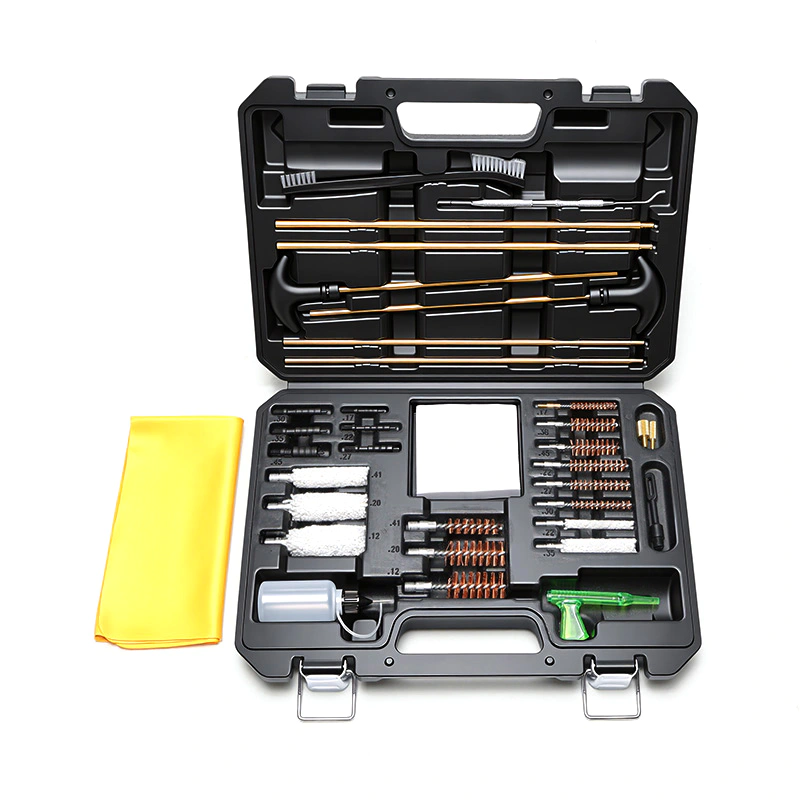
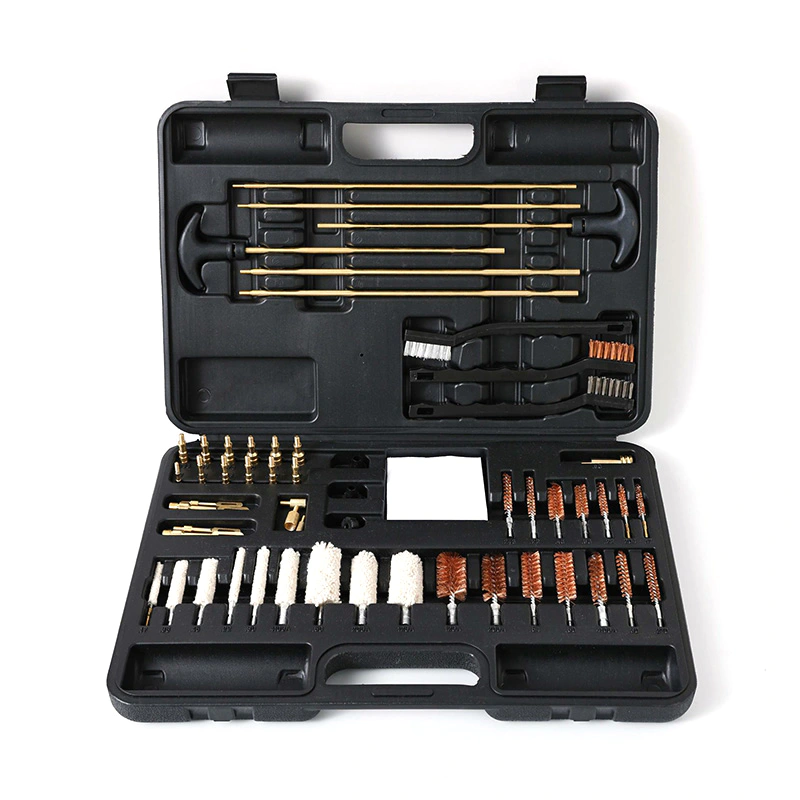
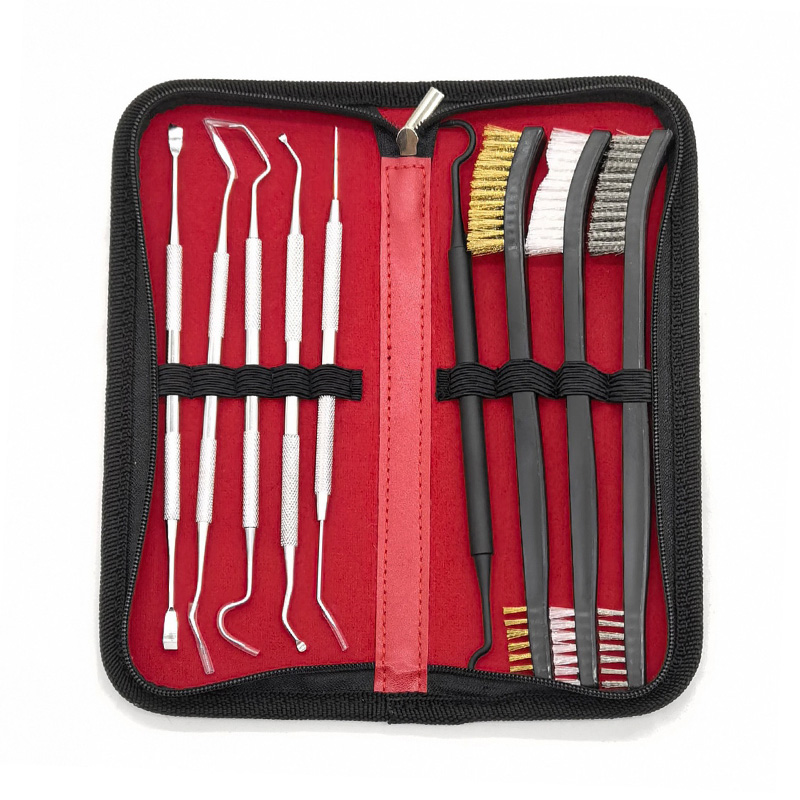
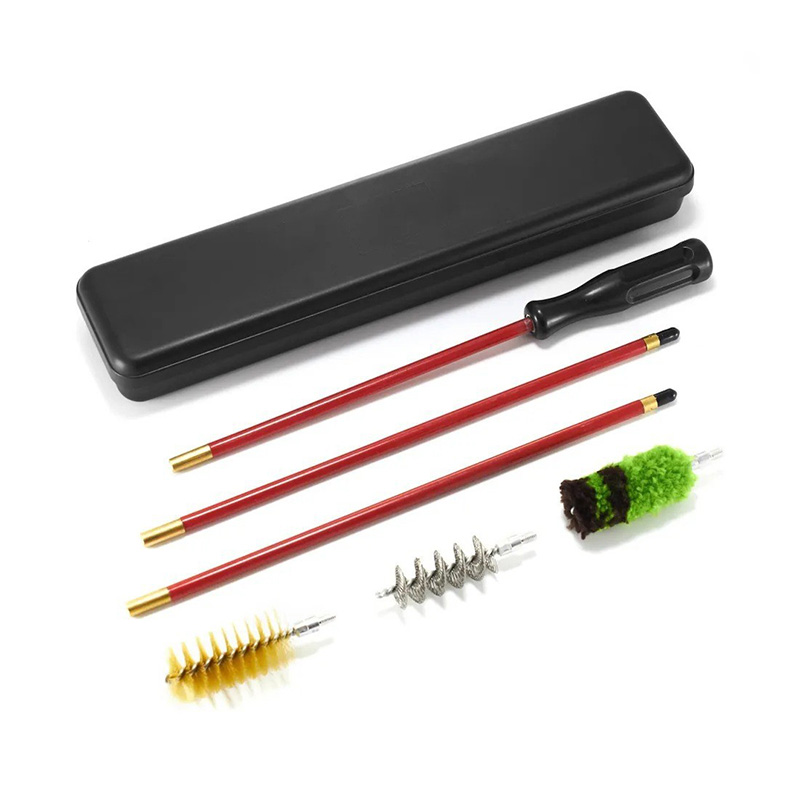
The Gun Cleaning Brush & Tool Kit is designed around these practical requirements. Its enhanced brush-head construction uses increased bristle density to improve contact with fouled surfaces and support more efficient cleaning. The set combines brass wire brushes, dual-head cleaning brushes, a long red cleaning rod, and supporting accessories in a durable zipper pouch. The result is a compact maintenance solution intended for routine cleaning, field transport, workshop use, and private-label distribution.
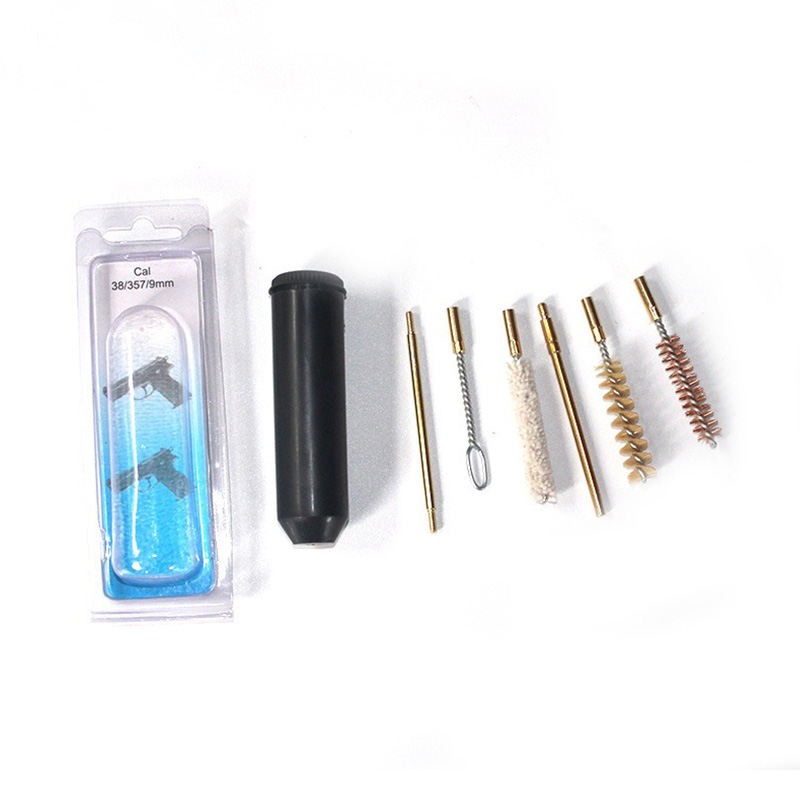
With an assembled rod length of up to 870 mm, the kit is suitable for applications requiring extended reach, including long-barrel rifles. Different configurations are available for 12-gauge, .223/5.5 calibre, and .38/9 mm calibre applications. The kit is also available in several color options and can be customized for OEM and private-label programs.
Firearm maintenance involves several different cleaning tasks. Deposits inside a bore may include carbon, powder residue, copper or other metal fouling, dust, oil residue, and environmental contamination. No single brush material or accessory is ideal for every surface and every type of deposit. A practical kit therefore needs to combine complementary tools.
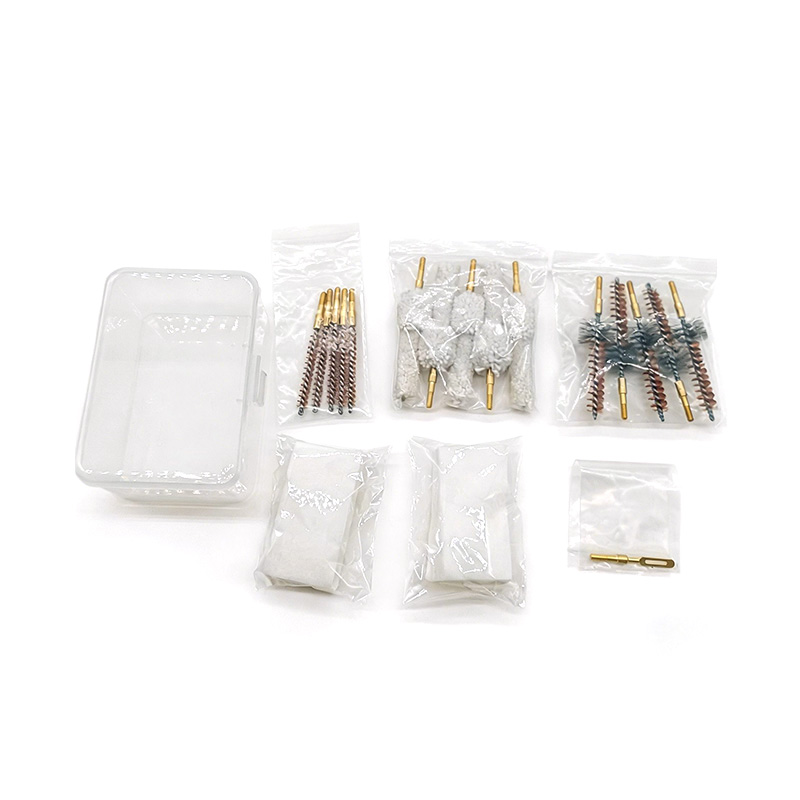
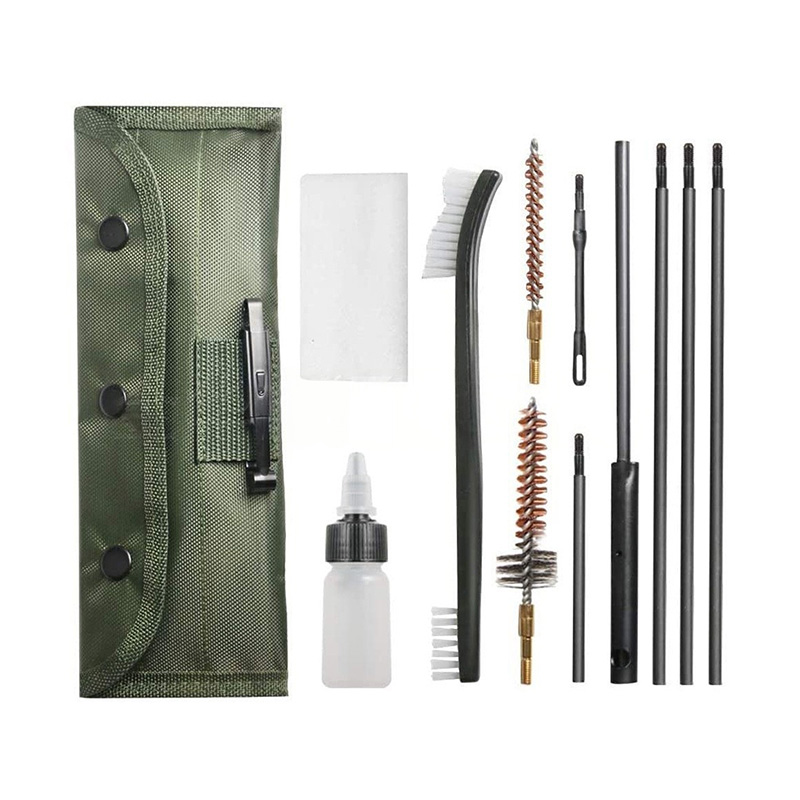
A bore brush can loosen deposits from the internal surface of the barrel. A softer or more flexible brush can help clean surrounding components and difficult-to-reach areas. A cleaning rod provides controlled reach, while patches and cloth help remove loosened residue and distribute suitable cleaning or protective products. When these tools are supplied together, users do not need to assemble an assortment of unrelated accessories before beginning routine maintenance.
The Gun Cleaning Brush & Tool Kit is built as an integrated set rather than a collection of disconnected items. Its brush selection supports different cleaning stages, while the rod provides the necessary extension for longer barrels. The zipper pouch keeps the components together and reduces the risk of losing small accessories during storage or transport.
For retailers, a complete kit is also easier to present as a practical maintenance solution. Instead of selling individual brushes with limited application information, a complete set can be positioned for firearm owners, shooting clubs, outdoor users, maintenance professionals, and customers seeking a portable cleaning system.
One of the principal improvements in this cleaning kit is the increased bristle density on the brush heads. A denser brush can place more bristles in contact with a contaminated surface during each pass. This supports more consistent mechanical action when loosening carbon fouling, powder residue, and copper deposits.
Brush density also contributes to the working efficiency of the cleaning process. A standard brush with widely spaced bristles may require additional passes to reach the same level of contact. A more densely filled head can help cover the working area more evenly, reducing missed sections and supporting a more uniform cleaning routine.
The increased density is particularly useful when cleaning grooves, corners, and surfaces where residue may accumulate. As with any firearm maintenance product, the user should select the correct brush type for the relevant surface and follow the firearm manufacturer’s care instructions. The purpose of the enhanced design is to improve cleaning performance without encouraging excessive force or unsuitable use.
Compared with basic low-density brush sets, this design offers a more purposeful balance between coverage, cleaning action, and repeatability. It is intended to help users achieve effective results with a controlled cleaning method rather than relying on aggressive pressure.
The kit includes brass wire brush configurations intended for removing stubborn fouling from appropriate firearm surfaces. Brass is commonly selected for cleaning applications because it offers useful mechanical strength while being more suitable for many firearm-maintenance tasks than harder, more abrasive materials. The brush construction is designed to support efficient cleaning while helping reduce the risk of unnecessary damage when used correctly.
The product information also identifies metal and tungsten-wire material options within the specification structure. Because specific brush materials may vary by configuration, buyers should confirm the selected model and intended application before placing an order. This is especially important for distributors serving multiple markets or offering several calibre-specific variants.
The brushes are described as round and are designed for cleaning applications. Their shape supports access to cylindrical internal surfaces and other areas requiring a compact, controlled brush profile. The combination of brush density and appropriate material selection is a central feature of the kit’s performance design.
Dual-head cleaning brushes extend the usefulness of the kit beyond a single bore-cleaning function. Different ends can be used for different maintenance tasks, such as reaching narrow areas, cleaning around components, or handling residue in locations where a larger brush is less convenient.
A double-ended format also reduces the number of separate tools a user must carry. This is valuable for field users, shooting clubs, technicians, and retailers seeking a compact kit with broad utility. The dual-head brush can be stored inside the pouch with the other components, helping keep the set organized without increasing its overall footprint significantly.
The red cleaning rod is one of the most distinctive components of the kit. When assembled, it reaches a maximum length of up to 870 mm. This extended dimension is suitable for longer barrels and provides the reach needed for rifle-cleaning applications where a short rod may be inconvenient.
A long rod can help users maintain a more controlled cleaning position and reduce the need to work at awkward angles. It also allows the kit to serve more than compact firearm applications. For buyers managing several firearm categories, the extended rod may provide greater versatility than a short, basic rod included in a general-purpose set.
The rod is described as a cloth-covered red shaft in the product information. This construction and color combination gives the product a recognizable appearance while supporting visual differentiation among stored tools. The cloth-covered design may also provide a more comfortable handling surface during routine maintenance, subject to the specific configuration and user conditions.
When using any cleaning rod, proper alignment and controlled movement are important. Users should follow the firearm manufacturer’s cleaning instructions, confirm that the firearm is unloaded, and avoid forcing a rod through an obstruction. The extended length is intended to improve access and convenience, not to replace careful handling.
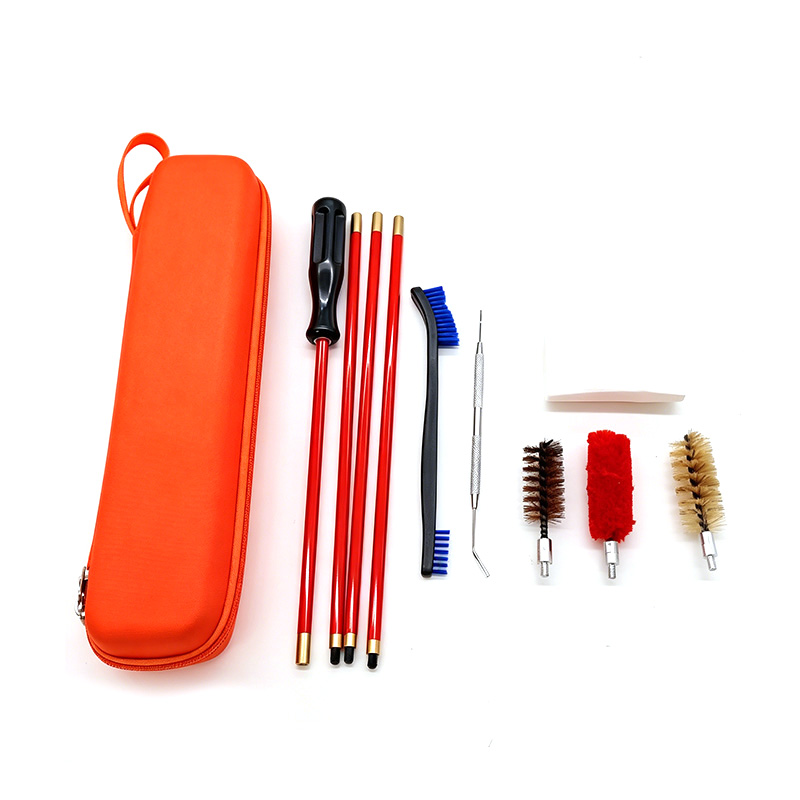
Gun Cleaning Brush & Tool Kit
The product range includes multiple specifications to support different firearm applications. Listed configurations include 12GA, .223/5.5 calibre, and .38/9 mm calibre options. The specification list also identifies a 12GA configuration with a 7 mm shaft, steel frame, and double-ended brush.
Offering several variants allows distributors and retailers to match the kit more closely to customer requirements. It also reduces the need to market one universal configuration that may not be appropriate for every firearm. Buyers should select the version that corresponds to the firearm type and cleaning accessories required.
| Configuration | Typical Application | Notable Specification |
|---|---|---|
| #8021 | 12GA cleaning application | Listed as a 12GA variant; maximum assembled rod length up to 870 mm |
| #8022 | .223/5.5 calibre cleaning application | Calibre-specific configuration for compatible firearms |
| #8023 | .38/9 mm calibre cleaning application | Calibre-specific configuration for compatible firearms |
| #8021-12GA | 12GA configuration with additional structural specification | 7 mm shaft, steel frame, and double-ended brush |
The variants shown above should be treated as product-selection references rather than universal compatibility guarantees. Firearm designs can differ, and the correct accessory depends on the bore, chamber, threading, and maintenance requirements of the specific firearm. Professional buyers can request detailed configuration information, dimensions, packaging specifications, and sample confirmation before finalizing a purchase.
A cleaning tool should help users maintain a firearm without unnecessarily compromising the condition of its internal surfaces. The kit is designed around a bore-safe approach, combining suitable brush options with a controlled rod system. The goal is to remove contaminants while helping preserve rifling integrity and supporting long-term firearm service life.
Bore safety depends on more than the material of the brush. Correct calibre selection, proper alignment, suitable cleaning direction, moderate pressure, and regular inspection all affect the result. Users should replace worn or damaged brushes, avoid using an unsuitable tool for a particular surface, and follow the recommendations provided by the firearm manufacturer.
The kit’s variety of brush types helps users choose a tool appropriate to the cleaning task. Brass wire brushes can address more persistent fouling where appropriate, while other brush types can support less aggressive cleaning or external maintenance. This selection is more useful than a single-material kit because it allows users to adapt their approach to the condition of the firearm.
Routine maintenance should always begin with safe handling. The firearm must be unloaded, ammunition should be removed from the work area, and the user should work in a well-ventilated location with suitable protective equipment. The cleaning kit is a maintenance accessory and should be used according to applicable laws, manufacturer instructions, and established safety procedures.
Tool organization is a practical advantage that is often overlooked. Small brushes, rods, adapters, patches, and cloths can become difficult to manage when stored separately. The included zipper pouch provides a dedicated location for the components and helps keep the kit ready for use.
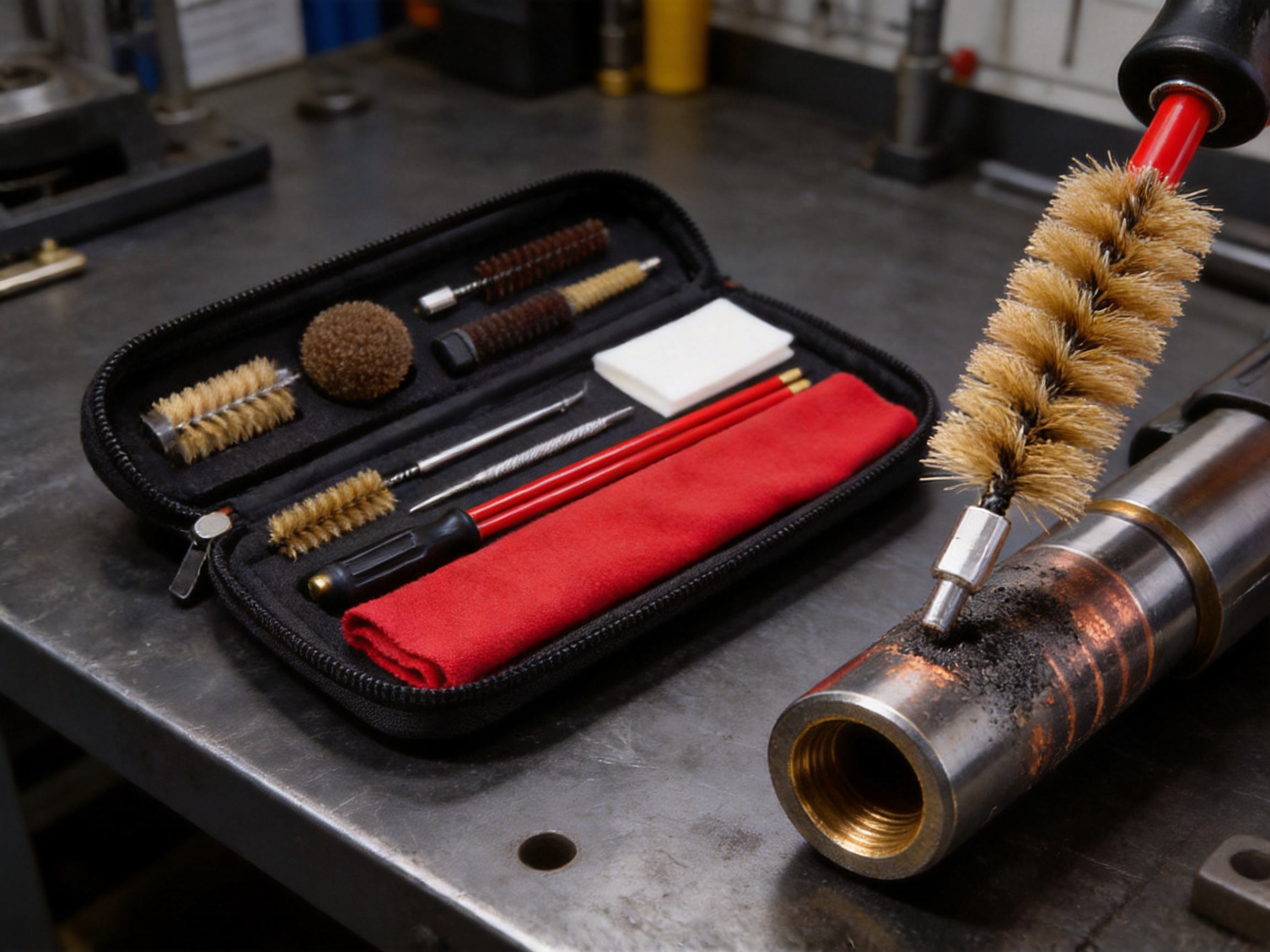
The pouch is described as durable and wear-resistant, with a structured internal layout. This design supports easier access and helps reduce movement among the tools during transport. A structured interior is especially useful for users who carry the kit to a shooting range, workshop, field location, or service area.
Organized storage also supports inventory control for retailers and professional users. Each set can be checked more efficiently, and missing components can be identified before shipment or use. For private-label products, the pouch can become an important part of the customer experience because it presents the kit as a complete, carefully planned product rather than a loose group of accessories.
The compact pouch format may also reduce packaging complexity. A complete set can be stored, displayed, and shipped as one unit, helping simplify warehouse handling and product presentation. Exact pouch dimensions, internal layout, and packaging details can be confirmed during OEM or wholesale discussions.
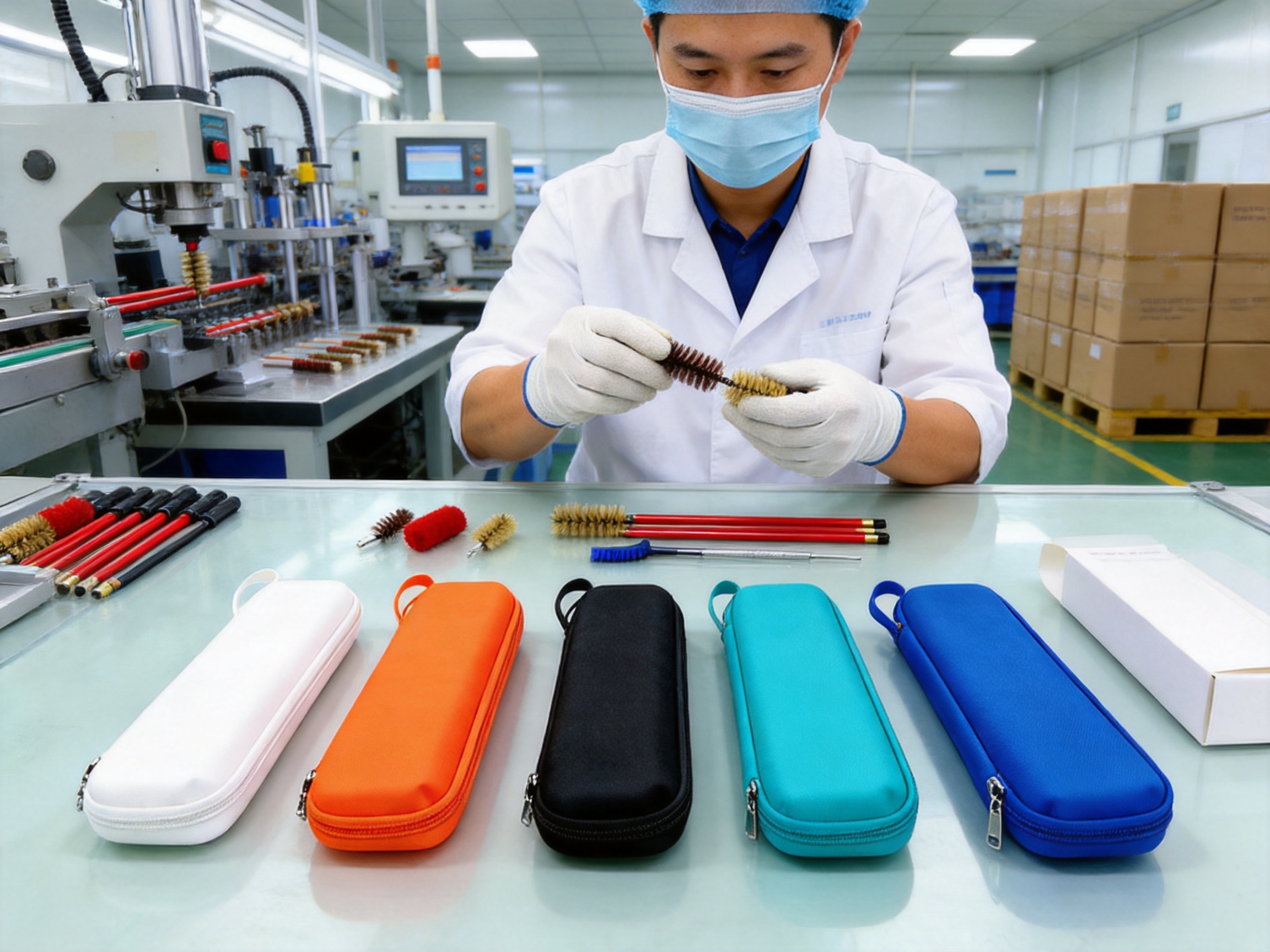
The kit is available in multiple colors, including white, orange, black, and lake blue. The supplied product information identifies an orange cloth cover for one configuration. Color selection can help retailers distinguish different variants, create a consistent visual identity, or coordinate the product with a broader outdoor and maintenance accessory range.
Color options may also support practical organization. For example, a distributor may assign different colors to different calibre configurations or product lines. This can make stock identification faster and reduce confusion when several similar cleaning sets are stored together.
For OEM and private-label customers, color is one of several customizable product presentation elements. Packaging, logos, labels, and product combinations may be developed according to the customer’s market positioning. The availability of multiple base colors gives buyers more options without requiring a completely new product concept.
The product is manufactured by Jinhua Tongshun Tool Factory, an established Chinese manufacturer specializing in gun cleaning kits, barrel cleaning brushes, and related maintenance accessories. The company was established in 1999 and has more than 26 years of manufacturing experience.
The factory integrates research and development, production, and sales. This integrated structure can support closer coordination between product design, material selection, manufacturing, inspection, packaging, and customer service. For buyers seeking a stable long-term supplier, the ability to manage several stages internally can be an important advantage.
The company operates a modern production facility with semi-automatic and fully automated production systems. A combination of semi-automatic and automated processes allows the factory to balance flexibility with production consistency. Semi-automatic operations can support configuration changes and customized orders, while automated systems can improve repeatability for higher-volume production.
Consistent brush dimensions, bristle placement, shaft assembly, pouch preparation, and packaging are important to the quality of a cleaning kit. Production systems that support repeatable processes can help reduce variation between batches. This is particularly relevant for wholesalers and private-label customers, who need subsequent orders to match approved samples as closely as possible.
The company’s research and development capability supports the creation and refinement of cleaning tools for different firearm applications. Product improvement can involve brush density, material selection, rod length, handle design, pouch structure, accessory combinations, and packaging format.
The enhanced bristle-density design reflects this type of product-development approach. Rather than simply reproducing a basic brush set, the product has been adjusted to improve cleaning contact and overall utility. The extended 870 mm rod and multiple brush configurations further demonstrate an effort to address practical user requirements.
R&D support is also valuable for OEM customers. A buyer may require a specific color combination, logo placement, packaging style, brush set, or calibre configuration. A supplier with internal development capabilities can evaluate these requirements more efficiently than a trading company that only sources finished goods.
Quality control is essential for cleaning tools because the product must perform consistently while remaining suitable for careful firearm maintenance. The company emphasizes stable production capacity and consistent quality control. These capabilities are relevant to both standard catalogue orders and customized programs.
Quality checks may be applied to incoming materials, brush construction, rod assembly, accessory completeness, pouch sewing, color consistency, labeling, and final packing. The precise inspection plan can be agreed with the buyer according to product requirements and order volume.
For professional purchasers, a clear quality-control process helps support predictable procurement. Buyers may request pre-production samples, production samples, packaging confirmation, inspection records, or third-party inspection arrangements when appropriate. These steps can be especially useful for large orders or products sold under a private label.
The market includes many low-cost cleaning sets that combine a short rod with a small number of generic brushes. While these products may satisfy occasional users, they may not provide the same level of reach, organization, brush coverage, or customization potential as this kit.
The first advantage is the enhanced bristle density. More densely filled brush heads can provide broader contact and support more efficient removal of common firearm fouling. This feature addresses a practical performance issue that is often not emphasized in basic sets.
The second advantage is the extended rod length. With an assembled length of up to 870 mm, the kit is better suited to long-barrel applications than many compact cleaning kits. This can reduce the need for separate long-rod purchases and improve the value of the complete set.
The third advantage is the combination of brush types. Brass wire brushes and dual-head brushes offer more flexibility than a single brush design. Users can select the appropriate tool for the cleaning task instead of applying one brush to every surface.
The fourth advantage is organized storage. The wear-resistant zipper pouch with an internal layout helps protect the components and makes the kit easier to transport. A well-organized set can also present a more professional appearance at retail.
The fifth advantage is the availability of OEM and private-label services. Many basic cleaning kits are sold as fixed products with limited branding options. This product can support customized logos, packaging, color selections, and product combinations, giving distributors more control over market positioning.
| Feature | Basic Generic Set | Gun Cleaning Brush & Tool Kit |
|---|---|---|
| Brush density | May use standard or widely spaced bristles | Enhanced bristle density for improved contact |
| Rod reach | Often designed for compact applications | Maximum assembled length up to 870 mm |
| Brush selection | Limited number of generic brushes | Multiple brush types, including brass and dual-head designs |
| Storage | Basic bag or loose packaging may be used | Durable zipper pouch with structured internal layout |
| Configuration | May offer one general-purpose version | 12GA, .223/5.5, and .38/9 mm options listed |
| Customization | Often limited | OEM, private label, color, logo, and packaging support |
| Supplier capability | May rely on external sourcing | Integrated R&D, manufacturing, and sales structure |
These advantages do not mean that every user requires the same configuration. Product selection should always be based on the firearm, cleaning routine, intended frequency of use, and applicable instructions. However, the combination of performance-focused design and manufacturing support gives this kit a strong position in the wholesale and retail market.
The product is suitable for businesses that want to build or expand a firearm-maintenance accessory line. OEM and private-label services can include customized product combinations, colors, logos, packaging, and labels. These services allow buyers to offer a differentiated product without developing an entirely new cleaning system from the beginning.
A retailer may choose to preserve the standard kit while adding a logo and branded pouch. A distributor may request a different combination of brush types for a particular market. An outdoor equipment company may coordinate the kit’s colors and packaging with its existing product range. A large e-commerce seller may require optimized photography, barcode labeling, carton specifications, and marketplace-ready packaging.
ODM cooperation can go further by modifying the product structure or accessory selection. Potential development areas include rod length, handle configuration, pouch layout, brush density, brush materials, and calibre-specific components. Such projects should be evaluated through technical discussions and sample approval before mass production.
Private-label buyers should provide clear requirements covering logo artwork, printing method, color references, packaging language, carton marks, warning information, product dimensions, and inspection standards. Early confirmation helps reduce delays and ensures that the finished product matches the intended market presentation.
The product is suitable for major e-commerce channels and cross-border sales programs. Its complete-kit format is easy to explain to consumers because the key benefits are straightforward: multiple brush options, extended reach, organized storage, and several calibre configurations.
E-commerce sellers can present the product through clear variant selection. The 12GA, .223/5.5, and .38/9 mm options should be labeled carefully so customers can choose the correct version. Product pages should also explain that compatibility depends on the specific firearm and that users must follow the firearm manufacturer’s instructions.
The color options may help create multiple stock-keeping units, although sellers should avoid creating unnecessary confusion. A clear chart showing calibre, color, included accessories, rod dimensions, and packaging details can improve purchasing confidence.
For cross-border distribution, packaging should be designed to withstand handling and transit. The zipper pouch provides a practical primary container, while outer cartons should protect the product from compression, moisture, and abrasion during shipment. Packaging specifications can be discussed with the factory during order planning.
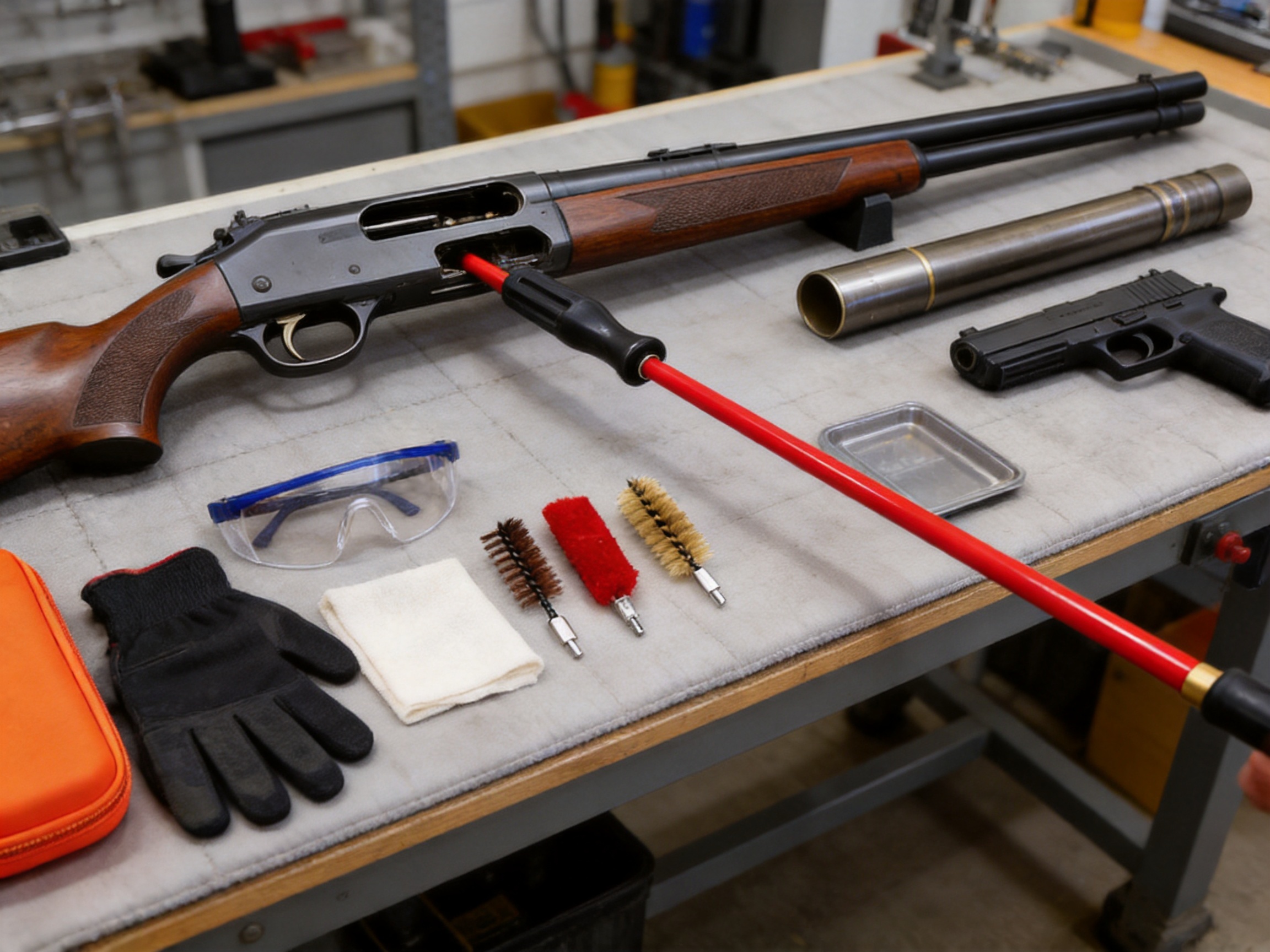
The kit is intended to support a controlled, step-by-step maintenance process. Before cleaning, the user should confirm that the firearm is unloaded and that the working area is safe. The firearm should be positioned according to the manufacturer’s instructions, with ammunition kept away from the cleaning area.
The user can begin by selecting the correct brush and rod configuration for the firearm. The rod should be assembled securely and checked for damage or contamination. The appropriate brush should be attached according to the kit’s design, and the user should confirm that the accessory is suitable for the bore and firearm type.
Initial passes should be controlled and moderate. The purpose is to loosen and remove residue without applying unnecessary force. The user may then use suitable patches or cloths to remove loosened contamination and inspect the result. More persistent fouling may require a cleaning product approved for the firearm, used according to its label and the firearm manufacturer’s recommendations.
External surfaces and hard-to-reach areas can be addressed with the dual-head brush or another suitable accessory. Different brush materials should not be treated as interchangeable for every surface. The user should select the least aggressive tool that can perform the required task effectively.
After cleaning, the tools should be wiped, inspected, and returned to the storage pouch. Brushes that show excessive wear, deformation, or damage should be replaced. Keeping the kit clean and organized helps maintain its usefulness and makes it easier to identify missing accessories before the next maintenance session.
| Item | Specification |
|---|---|
| Product name | Gun Cleaning Brush & Tool Kit |
| Product category | Gun Cleaning Kits |
| Product code | #8021 series |
| Available variants | #8021 12GA, #8022 .223/5.5 calibre, #8023 .38/9 mm calibre |
| Maximum assembled length | 870 mm |
| Rod description | Cloth-covered red shaft |
| Brush types | Brass wire brushes, dual-head cleaning brushes, and related configurations |
| Brush shape | Round |
| Primary function | Cleaning and dust removal |
| Storage | Wear-resistant zipper pouch with structured internal layout |
| Color options | White, orange, black, and lake blue |
| Customization | OEM, ODM, private label, logos, packaging, and selected product details |
| Main sales channels | Wholesale, retail, Amazon, AliExpress, and cross-border e-commerce |
| Country of manufacture | China |
Dimensions, net weight, handle details, bristle thickness, bristle length, and specific component combinations may vary by configuration. Buyers should request the latest technical sheet or sample confirmation for the exact model intended for purchase.
Wholesale buyers should evaluate the cleaning kit from both a product and supply-chain perspective. The product’s configuration, packaging, minimum order quantity, lead time, production capacity, and inspection arrangements should be confirmed before the order is placed.
Sample approval is recommended for new customers or customized programs. A sample allows the buyer to check brush density, rod assembly, pouch quality, color, logo placement, accessory completeness, and overall presentation. It also gives the factory a clear reference for mass production.
Buyers should identify whether the order requires a standard catalogue configuration or a customized combination. A standard configuration may offer a faster production schedule, while customized packaging or product changes may require additional development time. The factory can provide more precise information after receiving the desired quantity, destination market, and customization details.
Importers should also review local regulations relating to firearm accessories, product labeling, packaging, and online sales. Although the kit is a maintenance product, regulatory requirements can differ between countries and sales channels. Proper documentation and accurate product descriptions support smoother distribution.
A durable cleaning kit can reduce the need for frequent replacement and help users maintain a consistent maintenance routine. The wear-resistant pouch protects the components during storage, while the metal brush construction is intended for repeated cleaning use when handled correctly.
Durability depends on proper care. Brushes should be cleaned after use, moisture should be removed, and the pouch should be stored in a dry location. Tools should not be left wet or contaminated for extended periods. Users should also inspect the rod, brush connections, and pouch seams periodically.
For commercial buyers, durable construction can support customer satisfaction and reduce complaints related to premature wear. A complete, organized set may also encourage users to perform maintenance more regularly, which increases the perceived value of the product beyond its individual components.
The kit includes a long red cleaning rod, brass wire brush configurations, dual-head cleaning brushes, and related cleaning accessories arranged in a zipper storage pouch. The exact contents depend on the selected variant, so buyers should confirm the packing list before ordering.
The rod can reach a maximum assembled length of up to 870 mm. This extended length makes the kit suitable for long-barrel applications, including many rifle-maintenance requirements.
The listed configurations include 12GA, .223/5.5 calibre, and .38/9 mm calibre versions. The correct variant should be selected according to the specific firearm and accessory requirements.
Yes. The product range includes brass wire brush configurations. Buyers should verify the precise brush material and included accessories for the selected model, especially when ordering a customized kit.
The extended rod, with a maximum assembled length of up to 870 mm, is intended to provide useful reach for long-barrel applications. Compatibility must still be confirmed against the firearm manufacturer’s cleaning instructions and the specific firearm design.
Yes. OEM, ODM, and private-label support is available. Customization may include colors, logos, packaging, labels, accessory combinations, and selected product specifications. Requirements should be discussed and approved before production.
Available color options include white, orange, black, and lake blue. The exact color may depend on the selected configuration and order requirements.
Yes. The tools are organized in a durable, wear-resistant zipper pouch with a structured internal layout. The pouch helps with storage, transport, and product presentation.
The main advantages are increased brush density, an extended 870 mm rod, multiple brush types, organized pouch storage, several calibre configurations, and OEM customization support. These features provide greater versatility than many basic short-rod sets.
The product is suitable for wholesale, retail, and cross-border e-commerce distribution. Sellers should provide accurate variant information, compatibility guidance, safety notices, and packaging details in accordance with the requirements of their chosen marketplace.
Users should choose the brush based on the firearm type, bore, surface, and cleaning instructions provided by the firearm manufacturer. The least aggressive suitable tool should be used, and excessive pressure should be avoided.
Buyers should confirm the exact model, calibre, brush materials, accessory list, rod dimensions, pouch design, colors, logo requirements, packaging, minimum order quantity, lead time, inspection standards, and shipping documents.
The Gun Cleaning Brush & Tool Kit is designed as a complete and adaptable solution for firearm maintenance. Its enhanced bristle density supports improved cleaning contact, while the combination of brass wire brushes, dual-head brushes, and an extended cleaning rod provides greater flexibility than many basic cleaning sets.
The maximum assembled rod length of 870 mm makes the kit suitable for longer barrels, and the available 12GA, .223/5.5, and .38/9 mm configurations allow buyers to select more appropriate variants for different applications. The durable zipper pouch improves organization and portability, while the color options support retail differentiation and private-label presentation.
From a supply perspective, the product benefits from an experienced manufacturer with integrated R&D, production, sales, semi-automatic and automated manufacturing systems, OEM capabilities, and export experience across more than 50 countries and regions. These strengths make the kit suitable for retailers, wholesalers, distributors, shooting-supply businesses, and e-commerce sellers seeking a reliable branded or private-label maintenance product.
For the best results, users should select the correct configuration, follow firearm manufacturer instructions, use safe handling procedures, and maintain the tools after each cleaning session. For commercial buyers, sample approval and detailed specification confirmation are recommended before mass production.
1. Product specification sheet for the Gun Cleaning Brush & Tool Kit, including model, calibre, rod-length, brush, color, and packaging information.
2. Manufacturer profile and company information for Jinhua Tongshun Tool Factory, including manufacturing history, production systems, OEM services, and export capabilities.
3. General firearm maintenance principles concerning unloaded-firearm verification, bore cleaning, tool selection, and manufacturer instructions.
4. General materials guidance concerning brass wire brushes, metal bristles, cleaning accessories, and controlled mechanical cleaning.
5. General wholesale and private-label product-development practices covering sample approval, packaging review, quality control, and production consistency.