English
 русский
 Español
 عربى

HUNTACE HUNTACE HUNTACE HUNTACE HUNTACE
HUNTACE HUNTACE HUNTACE HUNTACE

Industrial cleaning brushes need to fit the equipment and the working area where they will be installed. For this reason, dimensions are an important part of the purchasing process. A brush can have the correct filament material but still be unsuitable if its diameter, length, shaft, or mounting structure does not correspond with the machine.
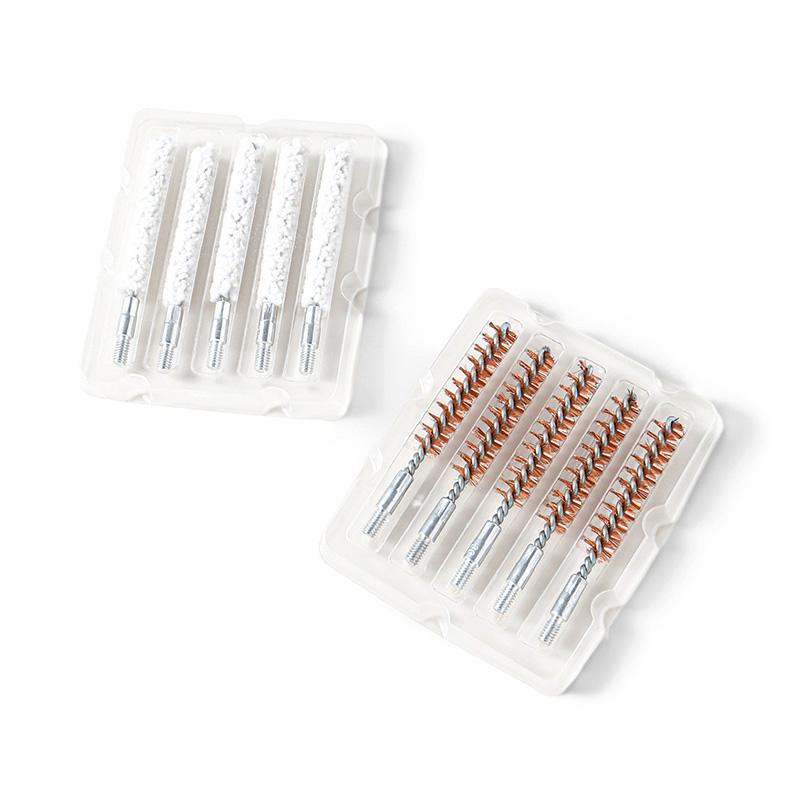
Common specifications include brush diameter, overall length, working width, trim length, core diameter, and shaft diameter. The relevant dimensions depend on the brush type.
For a roller brush, the outside diameter and working length are important because they determine the contact area with the production surface. For a strip brush, the channel dimensions, overall length, trim height, and mounting configuration need to correspond with the equipment. Tube brushes require attention to the brush diameter and shaft length so that the brush can reach the intended internal area.
Clear dimensional information can help buyers compare a standard brush with an existing machine or replacement component.
Brush density describes how closely the filaments are arranged within the brush structure. Density can influence surface coverage, contact pressure, flexibility, and material movement.
Filament diameter is also important. Fine filaments can provide many contact points and may be suitable for light particles or delicate surfaces. Thicker filaments provide greater stiffness and can be used where stronger brushing contact is needed.
Trim length affects the amount of filament movement during contact. Longer filaments generally have more flexibility, while shorter filaments can provide a firmer brushing response.
These specifications should be selected according to the surface, cleaning material, machine movement, and desired brushing action. A production line handling fine dust may require a different brush configuration from equipment dealing with compacted residue.
Mounting requirements can vary widely between industrial cleaning brushes. Some roller brushes are installed on shafts, while disc brushes may use hubs, arbor holes, or other mounting systems. Strip brushes can use metal or plastic channels with different fixing methods.
The machine interface should be reviewed before ordering. Shaft diameter, mounting hole arrangement, thread type, core dimensions, flange structure, and available installation space can all affect compatibility.
For automated production equipment, the brush also needs to work with the machine's movement. Rotary brushes should correspond with the equipment's rotation system, while stationary brushes should fit the path of the passing product or surface.
Installation requirements can also influence the choice of brush material. A stainless steel core may be considered for wet environments, while other backing materials may suit dry indoor machinery.
Custom industrial cleaning brushes can be developed when a standard product does not match the machine or application. Customization may involve brush diameter, overall length, trim length, filament material, filament density, core construction, shaft dimensions, or mounting arrangement.
Roller brushes can be produced around a specific shaft and working width. Strip brushes can be supplied with a particular channel size, filament height, and overall length. Disc brushes can be configured around the required diameter, hub, fill pattern, and mounting system.
Custom brush design can also involve special filament arrangements. Different areas of one brush may require different filament densities or materials when the production process has several contact requirements.
A sample, equipment drawing, existing brush, or dimensional specification can help communicate the required structure. Clear technical information reduces the chance of receiving a brush that does not fit the intended machine.
What Buyers Should Confirm Before Ordering
Before purchasing industrial cleaning brushes, buyers can prepare information about the cleaning application, surface material, brush movement, operating environment, brush dimensions, filament material, and mounting method.
Replacement projects should also consider the reason for replacing the previous brush. Filament wear, incorrect stiffness, core damage, unsuitable dimensions, or mounting problems can provide useful information for a revised specification.
For custom projects, buyers can also provide drawings, samples, photographs, installation dimensions, or machine interface details. These materials help clarify the required brush structure and reduce uncertainty during product development.
A clear specification covering dimensions, filament characteristics, core or backing construction, and mounting requirements creates a practical basis for selecting or developing industrial cleaning brushes for production equipment.