English
 русский
 Español
 عربى

HUNTACE HUNTACE HUNTACE HUNTACE HUNTACE
HUNTACE HUNTACE HUNTACE HUNTACE

In manufacturing workshops, food processing facilities, and maintenance departments, cleaning problems often come down to small details. Residue left in narrow gaps, dust trapped around machine parts, or uneven surface cleaning can affect product quality and daily operations. As a manufacturer, we understand that industrial cleaning brushes need to match the actual working environment, not just the appearance of the surface being cleaned.
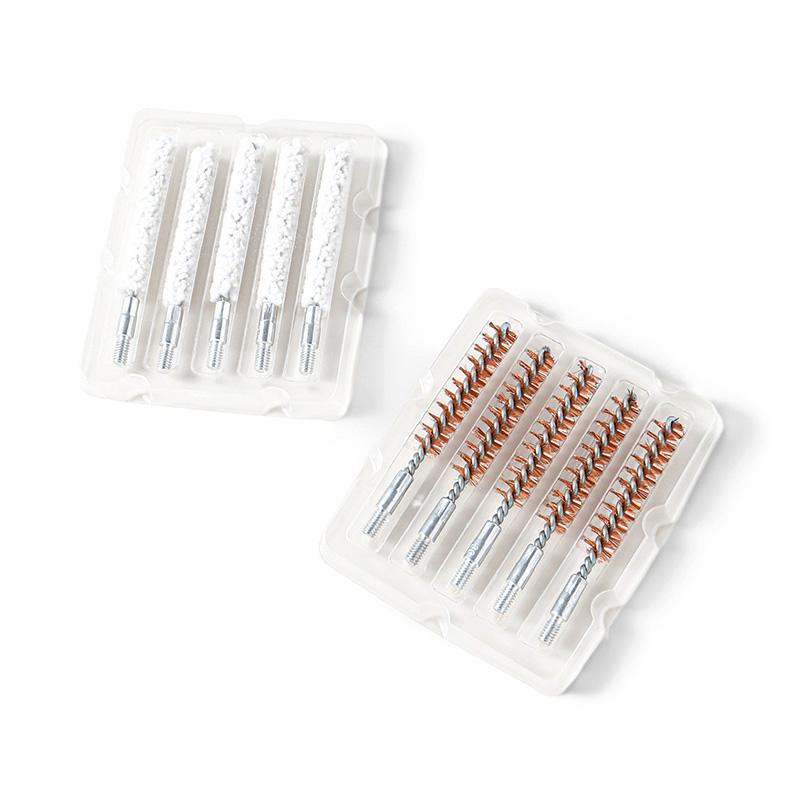
Brush filament material affects cleaning performance, wear resistance, and surface protection. Using an unsuitable brush can cause premature wear or unwanted scratches. Nylon filaments are commonly used for general-purpose cleaning, while stiffer materials may be appropriate for removing stubborn deposits from durable surfaces. The right choice depends on the material being cleaned, the type of contamination, and the required cleaning intensity.
When selecting industrial cleaning brushes, buyers should also consider moisture, cleaning chemicals, operating temperature, and contact pressure. These factors help determine whether a brush can maintain its performance during repeated use.
Conveyor rollers, threaded components, machine grooves, and internal channels can be difficult to clean with ordinary tools. Brushes designed for confined spaces help operators reach areas where cloths and flat cleaning pads are less effective. For production equipment, the brush diameter, filament length, and overall shape should correspond to the area being cleaned.
A brush that is too large may not reach recessed sections, while one that is too small can require unnecessary passes. We recommend checking the dimensions of the target area before selecting a brush for routine maintenance.
In industrial environments, brushes may be used repeatedly throughout a shift. Filaments can bend, wear down, or collect debris, gradually changing how the brush contacts a surface. Selecting a suitable filament stiffness and brush construction helps maintain consistent contact without applying excessive force.
Operators should inspect brushes for loose filaments, damaged bases, and uneven wear. Replacing worn brushes at the appropriate time can help prevent cleaning inconsistencies and reduce the risk of detached bristles entering sensitive production areas.
Automated production lines often require brushes to fit specific machine structures and operating conditions. Strip brushes, roller brushes, and cylindrical brushes serve different purposes, from guiding materials and removing dust to cleaning moving surfaces. Dimensions, mounting methods, rotation speed, and contact pressure should be evaluated together.
For buyers sourcing industrial cleaning brushes for machinery, confirming installation requirements early can reduce fitting problems during equipment setup. Samples or technical drawings can also help verify compatibility before an order moves into production.
A brush that performs well technically should also be practical for daily use. Handle design, brush weight, access angle, and ease of replacement all influence how conveniently workers can complete routine cleaning tasks. In maintenance departments, choosing the right design can make repetitive work easier and help establish a consistent cleaning procedure.
For manual applications, consider whether operators need a straight brush, an angled head, or a narrow profile. For machine-mounted applications, focus on stable installation and straightforward replacement during scheduled maintenance.
For distributors and industrial buyers, product consistency matters across repeat orders. Differences in filament distribution, trimming, dimensions, or base construction may affect the way brushes perform in actual use. As a manufacturer, we focus on matching product specifications to the intended application and confirming important requirements before production.
Buyers should communicate the working environment, target surface, contamination type, required dimensions, and expected usage frequency. Clear specifications make it easier to assess samples and determine whether a brush design suits the intended operation.
The right cleaning tool depends on the task, equipment, and maintenance routine rather than a single specification. By evaluating filament material, brush geometry, wear behavior, and installation requirements, businesses can make more informed sourcing decisions. Our industrial cleaning brushes are developed around practical cleaning needs, helping industrial customers identify suitable options for their equipment, production processes, and ongoing maintenance requirements.