English
 русский
 Español
 عربى

HUNTACE HUNTACE HUNTACE HUNTACE HUNTACE
HUNTACE HUNTACE HUNTACE HUNTACE

Reliable firearm maintenance depends on more than solvent and a cleaning rod. The connection between the rod and the cleaning accessory also plays an important role in how smoothly, safely, and consistently a bore can be cleaned. A poorly fitted adapter may allow patches to slip, brushes to move off-center, or cleaning accessories to catch at the chamber or muzzle. By contrast, a well-designed spike tip adapter provides a controlled connection for patches, mops, and brushes while helping the user guide the accessory through the barrel.
The Gun Cleaning Accessories Spike Tip Adapter Parts Tool Kit is designed as a practical, precision-engineered component for firearm maintenance. It is available in brass and nylon versions and supports a broad range of firearm calibers, from .17 caliber through .50 caliber, together with selected shotgun applications. Standard 5-40 and 8-32 thread specifications make the adapters suitable for many cleaning rods used in North American, European, and international markets.
Manufactured by Jinhua Tongshun Tool Factory, the product is intended for distributors, gun cleaning kit brands, shooting accessory suppliers, OEM and ODM customers, and cross-border e-commerce sellers. Its combination of material options, broad caliber coverage, functional geometry, and scalable manufacturing makes it suitable for both individual maintenance kits and large-volume commercial programs.
The adapter is not merely a small replacement fitting. It is a working interface between the cleaning rod and the bore-cleaning accessory. Its tapered profile helps guide the attachment into the barrel, while the centering groove supports more controlled positioning of a patch, mop, or brush. These characteristics help reduce unnecessary resistance and improve the consistency of routine cleaning.
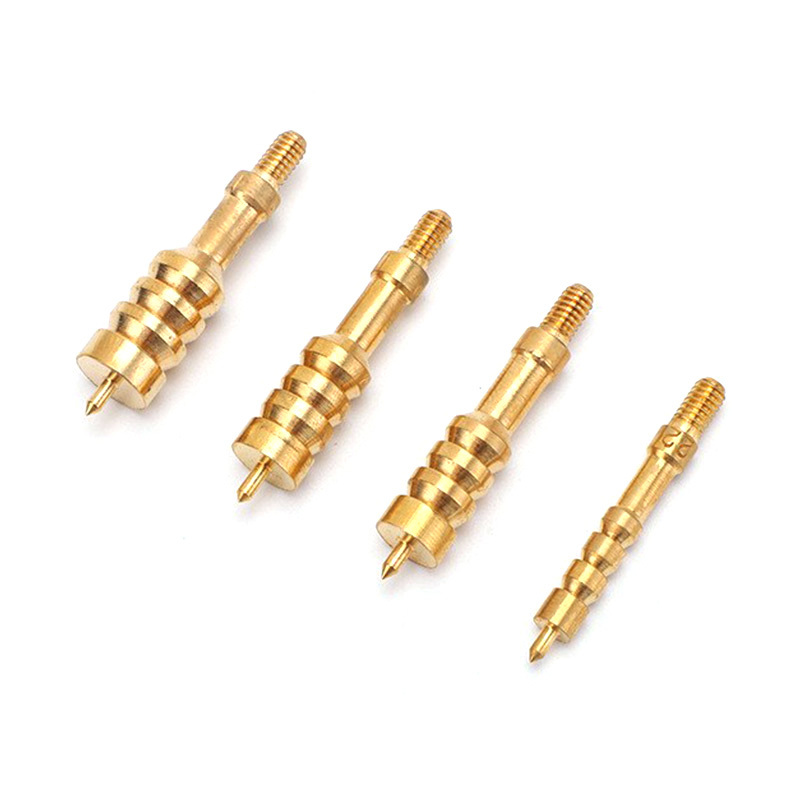
Gun Cleaning Accessories Spike Tip Adapter Parts Tool Kit
A spike tip adapter is a small firearm cleaning accessory fitted to the end of a cleaning rod. Its pointed or tapered shape helps introduce a cleaning patch, mop, or compatible brush into the bore. Depending on the design, the accessory may be pushed through the adapter, wrapped around it, or secured using the adapter’s groove or tip profile.
The adapter performs several important functions. First, it creates a compatible connection between a threaded cleaning rod and a cleaning material. Second, it helps guide that material through the bore without requiring excessive force. Third, it keeps the cleaning attachment more centered as it travels through the barrel. These functions are especially useful when a user is removing carbon fouling, powder residue, oil, dust, and other contaminants from a firearm bore.
Many cleaning rods use standardized thread systems. The 5-40 thread is commonly associated with smaller-caliber cleaning equipment, while the 8-32 thread is widely used on general-purpose firearm cleaning rods. Offering both thread specifications allows a supplier to configure the product for different cleaning systems rather than limiting it to one rod format.
Although the adapter is compact, its dimensions, thread quality, surface finish, and material hardness all affect the user experience. A thread that is poorly formed can cause wobble or difficult assembly. A surface that is too rough may catch a patch. A tip that is too aggressive may be unsuitable for delicate bore surfaces. The product is therefore designed around controlled geometry and material selection rather than simply serving as a basic threaded connector.
The product is available in brass and nylon. These materials provide different performance characteristics and allow distributors or end users to select a suitable option for their cleaning method.
The brass version offers a useful balance of strength, durability, machinability, and corrosion resistance. Brass can be precision-machined to produce clean threads and a consistent tapered profile. Its moderate hardness makes it more durable than many soft plastics while remaining suitable for careful bore-cleaning work. For users who clean firearms frequently or require a robust accessory for a professional kit, the brass version is a practical choice.
The nylon version is lightweight and non-abrasive. It is appropriate for users who place a high priority on minimizing the possibility of scratching or marking sensitive surfaces. Nylon is also resistant to many common cleaning chemicals and is comfortable to handle in compact cleaning kits. Because it is lighter than brass, it can help reduce the overall weight of portable maintenance equipment.
Offering both materials is a competitive advantage over suppliers that provide only one type of tip. Some customers prefer the longevity and firm feel of brass, while others prefer the low weight and softer contact characteristics of nylon. A product line that includes both versions can serve retail customers, professional users, kit assemblers, and private-label brands with different specifications.
The adapter range covers a broad selection of commonly used calibers. Listed options include .17 caliber, .22 caliber, .243 caliber, 6 mm, .25 caliber, 6.5 mm, .270 caliber, 7 mm, .30 caliber, .338 caliber, 8 mm, .357 caliber, 9 mm, .375 caliber, .40 caliber, .416 caliber, .44 caliber, .45 caliber, and .50 caliber. Additional listed applications include .410 caliber and 12 gauge cleaning requirements.
This broad coverage simplifies sourcing for wholesalers and kit manufacturers. Instead of purchasing from several specialized suppliers, a customer can consolidate multiple caliber configurations within one product family. This can make inventory planning easier and can support the assembly of multi-piece cleaning kits for rifles, pistols, shotguns, and general firearm maintenance.
Caliber matching remains important. A cleaning tip should be selected for the intended bore size and used with the correct cleaning accessory. The broad range offered by the manufacturer does not mean that one adapter is suitable for every caliber. Rather, it provides a structured selection so that a distributor or end user can choose the correct size for each firearm platform.
Compatibility with common cleaning rods is one of the most important practical considerations in this product category. The adapter is offered with 5-40 and 8-32 thread specifications. These thread options support many cleaning rod systems used in firearm maintenance markets worldwide.
Standardized threads reduce the need for special connectors and help users integrate the adapter into existing cleaning equipment. For kit manufacturers, common threads also make it easier to create a consistent accessory system in which rods, brushes, jags, mops, and tips can be exchanged as required.
Thread machining quality is particularly important for a small metal component. Clean thread engagement helps reduce looseness and cross-threading during assembly. It also supports a more stable connection while the rod is moved through the bore. The brass version is especially suitable for precision machining, while the nylon version provides a lightweight alternative when the user’s priority is low-contact and non-abrasive cleaning.
The tapered tip is designed to guide the cleaning accessory smoothly into the bore. A gradual profile can reduce sudden contact between the cleaning attachment and the entrance of the barrel. This is useful when the user is working in limited lighting, assembling a cleaning kit in the field, or using a tight-fitting patch.
A tapered guide can also make the cleaning process more predictable. Instead of presenting a blunt or irregular edge to the bore, the tip helps lead the accessory forward in a controlled direction. This does not eliminate the need for careful handling, correct caliber selection, or proper rod alignment, but it provides a more refined interface than a simple flat connector.
The integrated centering groove helps keep patches and other cleaning materials aligned around the adapter. Alignment is important because an off-center attachment may create uneven contact with the bore surface. It may also increase friction, cause the patch to fold unpredictably, or make the cleaning stroke less efficient.
By supporting a more centered position, the groove helps distribute cleaning contact more evenly. This is beneficial when removing residue from the bore because the cleaning material can maintain more consistent contact with the internal surface. It can also reduce unnecessary lateral movement that may contribute to uneven wear on the cleaning accessory.
The groove is a functional detail that distinguishes the product from generic threaded fittings. A basic connector may attach to a rod, but it may not provide the same degree of control over how the patch or mop sits on the tip. For buyers comparing products, the combination of thread compatibility, a tapered guide, and a centering feature provides a stronger value proposition than thread compatibility alone.
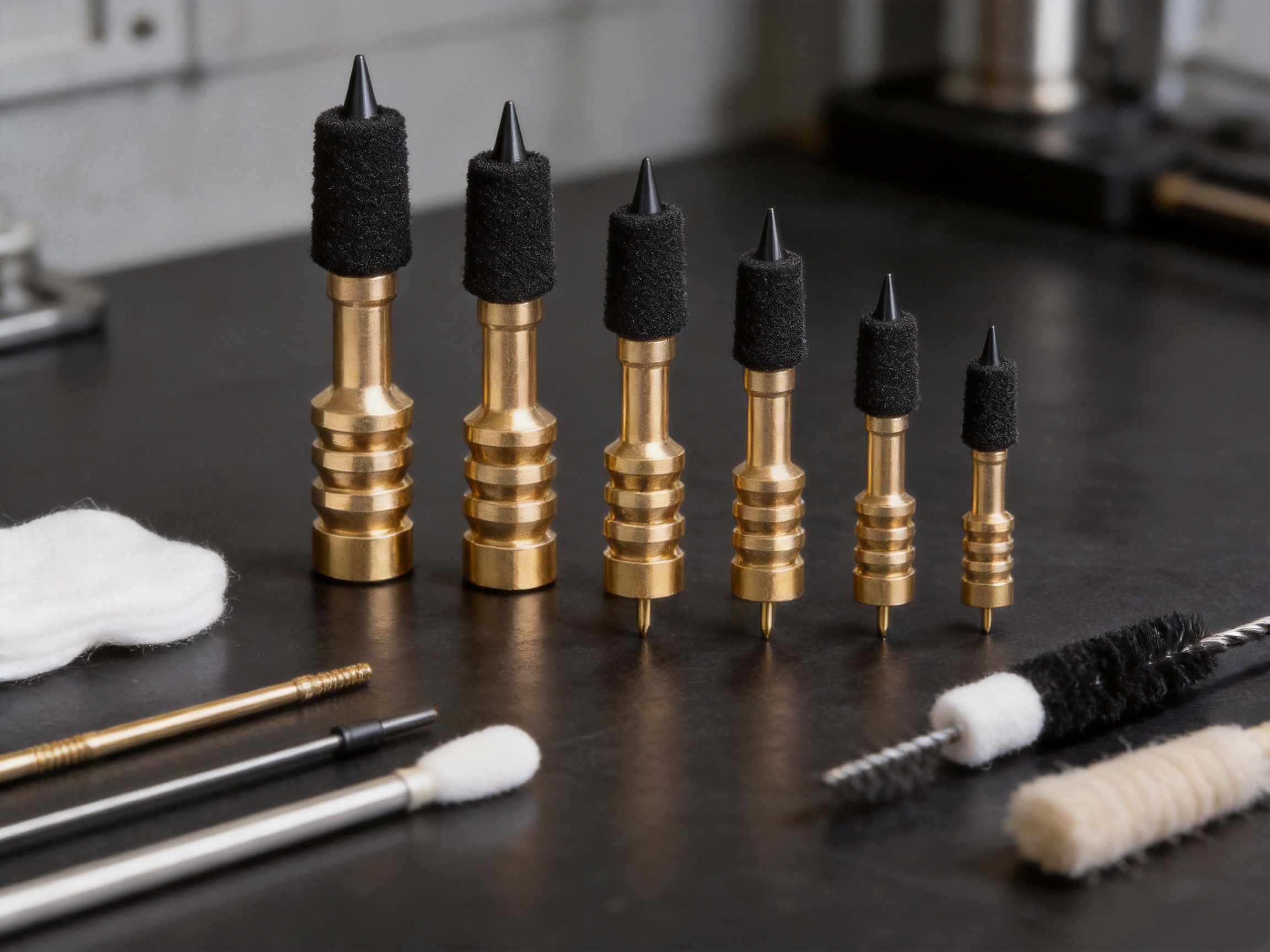
| Feature | Brass Spike Tip | Nylon Spike Tip |
|---|---|---|
| Primary characteristic | Rigid, durable, and precision-machined | Lightweight, durable, and non-abrasive |
| Recommended priority | Frequent use and long-term service | Low weight and gentle contact |
| Thread performance | Firm metal thread engagement | Lightweight threaded connection |
| Corrosion considerations | Good corrosion resistance under normal maintenance conditions | Resistant to many common cleaning environments |
| Typical kit position | Premium, professional, or heavy-use kits | Portable, general-purpose, or non-abrasive kits |
| Available applications | Multiple rifle, pistol, and shotgun calibers | Multiple rifle, pistol, and shotgun calibers |
The brass and nylon versions should not be viewed as competing products in every application. They are complementary choices. Brass is often selected when a user wants a firm, durable tip that can withstand repeated assembly and cleaning operations. Nylon is often selected when the user prefers a lighter accessory with a softer contact profile.
For professional cleaning kits, a supplier may offer both materials as separate options or include each in different product packages. A premium kit could use brass for the main cleaning system and nylon for applications where non-abrasive contact is especially desirable. A compact travel kit may favor nylon to reduce weight. A retailer can therefore address different customer expectations without changing the basic accessory format.
Material selection should always be considered together with cleaning technique. The user should avoid forcing any accessory through a bore, should select the correct caliber, and should keep the cleaning rod aligned with the barrel. The adapter improves control and convenience, but correct maintenance practice remains essential.
The product range is suitable for a wide variety of firearm maintenance applications. Rifle users can select small-caliber options for rimfire and centerfire platforms or larger versions for powerful rifle calibers. Pistol users can choose tips for common handgun calibers such as .22, .357, 9 mm, .40, and .45. Shotgun-related cleaning applications may use the listed .410 and 12-gauge configurations when matched with appropriate rods and cleaning materials.
Different firearm platforms present different cleaning requirements. A small-caliber bore may require a compact tip and a carefully sized patch. A larger rifle bore may require a more substantial mop or brush. A shotgun barrel may need a larger cleaning attachment and a rod system designed for the bore length. The availability of multiple sizes allows the product family to be incorporated into specialized kits rather than treated as a one-size-fits-all component.
For distributors, the wide application range can support a more complete product catalog. Retail listings can be organized by caliber, material, thread specification, or firearm platform. For OEM customers, the same basic product family can be packaged into different kits for hunting, target shooting, law enforcement maintenance, sporting use, or general firearm care, subject to applicable market requirements.
Jinhua Tongshun Tool Factory was established in 1999 and has more than 26 years of experience in the development and manufacture of gun cleaning kits, barrel cleaning brushes, rods, patches, mops, and related accessories. This long operating history gives the company practical knowledge of product design, component compatibility, material selection, packaging, and international customer requirements.
Experience is particularly valuable in firearm maintenance accessories because small dimensional differences can affect compatibility. A company that has supplied many types of brushes, rods, tips, and complete kits is better positioned to understand how individual components interact. This background supports the development of adapters that can be integrated into broader cleaning systems instead of being treated as isolated parts.
The company combines research and development, production, and sales. This integrated structure can shorten communication between product design and manufacturing teams. It also allows customer feedback from distributors and OEM buyers to be considered when developing new specifications or adjusting existing products.
The factory operates modern production facilities with semi-automatic and fully automated production systems. Automation is valuable for repetitive operations such as forming, machining, threading, assembly, surface treatment, sorting, and packaging. When properly managed, automated equipment can improve repeatability and help maintain consistent output across large production runs.
Semi-automatic equipment also has an important role. It can provide flexibility for different caliber sizes, material options, custom specifications, and smaller batch requirements. A combination of automated and semi-automatic systems allows the factory to balance efficiency with customization rather than relying entirely on one production method.
For buyers, this combination supports both standard catalog products and OEM or ODM projects. A standard adapter can be produced in volume for regular wholesale orders, while a customized version can be developed with a different logo, package design, material, thread, or caliber configuration. Production flexibility is a significant advantage for private-label customers that need differentiated products without establishing their own tooling and manufacturing resources.
Manufacturing a small adapter requires attention to several process details. The material must be properly formed or machined. The thread must be sufficiently clean for connection to the rod. The tapered tip must maintain the intended geometry. The groove must be positioned consistently. The finished component must be checked for burrs, sharp unwanted edges, contamination, and packaging damage.
A professional factory can establish inspection points throughout production rather than depending only on final visual inspection. Incoming material checks help confirm the selected brass or nylon specification. In-process checks can monitor dimensions and thread performance. Final checks can verify appearance, assembly, and packaging. These steps help reduce variation between batches and support more dependable wholesale supply.
For an adapter used inside a bore, surface condition deserves particular attention. The product should be smooth and properly finished so that it does not introduce unnecessary resistance or catch on a patch. Precision manufacturing and appropriate inspection procedures help support this requirement.
Jinhua Tongshun Tool Factory provides OEM and ODM services for customers that require customized products, packaging, and logos. This is useful for gun cleaning kit brands, wholesalers, sporting goods distributors, online retailers, and importers that want to sell products under their own identity.
Customization can involve a private-label logo, color or material selection, retail packaging, kit composition, label language, barcode information, instruction inserts, and product assortments. Depending on project requirements, buyers may also request specific caliber combinations, thread configurations, or a tailored package containing brass and nylon versions.
OEM and ODM support can reduce the number of suppliers involved in a product launch. A buyer may source the adapters, brushes, rods, patches, mops, and complete cleaning kits through one experienced manufacturer. This can simplify product coordination, packaging development, sample approval, and shipment planning.
The company’s products are exported to more than 50 countries and regions. Its main sales regions include Europe, South America, and North America, while its products are also offered through cross-border e-commerce channels and independent websites. International experience can help a supplier understand the need for clear specifications, stable packaging, repeatable quality, and communication across different time zones and markets.
The product is suited to downstream platforms such as Amazon, AliExpress, and independent e-commerce stores. For online sellers, accurate variant organization is essential. Caliber, material, thread, quantity, and kit contents should be presented clearly to help customers select the correct product. A manufacturer experienced in cross-border supply can assist buyers in preparing product information and packaging for international distribution.
The market includes many low-cost cleaning accessories that may appear similar at first glance. However, performance differences often become noticeable during assembly and repeated use. Generic products may provide limited caliber choices, use inconsistent threads, lack a centering feature, or offer only one material. The Gun Cleaning Accessories Spike Tip Adapter Parts Tool Kit addresses these common limitations through a broader and more structured design.
A simple threaded connector may attach a rod to a cleaning accessory, but it may not guide the attachment effectively or help maintain alignment. The tapered spike profile and integrated centering groove give this product a more purposeful role in the cleaning process. The design supports smoother entry and more even positioning than an undetailed, flat-ended fitting.
Competitors may offer a metal tip without a nylon alternative, or a plastic tip without a durable metal option. Providing both materials enables buyers to match the product with their preferred cleaning style. It also allows a brand to create different product tiers, from lightweight general-purpose kits to premium professional packages.
Many customers need adapters for several firearms. A narrow product range can force them to purchase multiple brands or suppliers. The broad caliber selection in this product family supports more complete sourcing. A distributor can build a coherent catalog around the same design concept, while a kit assembler can include the necessary sizes for a specific group of firearms.
Individual consumers may purchase one adapter, but commercial customers often require hundreds or thousands of pieces. A factory with semi-automatic and automated production capability is better positioned to manage repeat orders and larger volumes. Manufacturing experience, OEM support, and export capability further strengthen the product’s suitability for wholesale and private-label business.
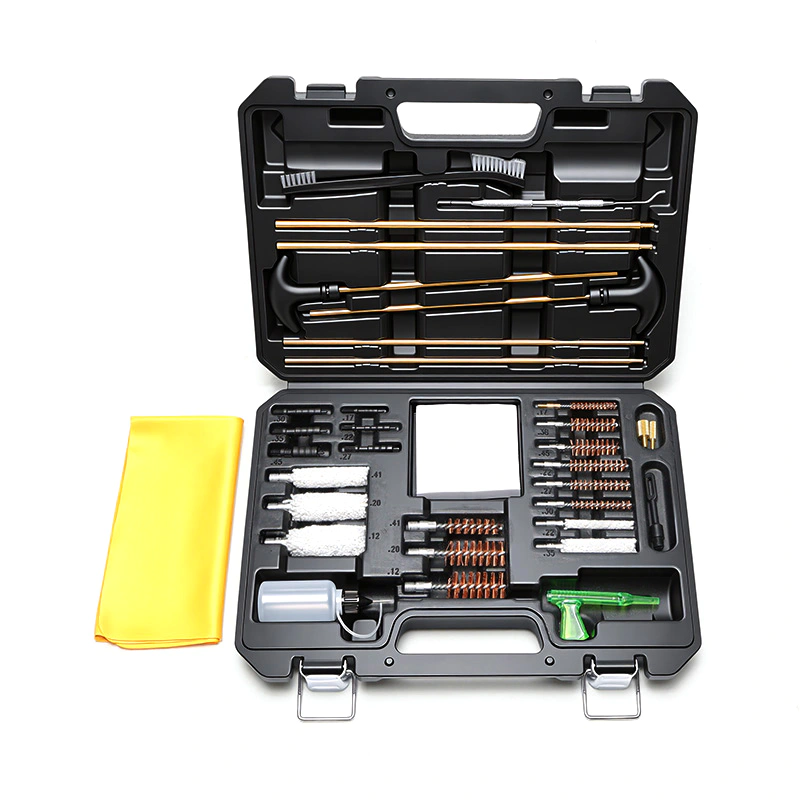
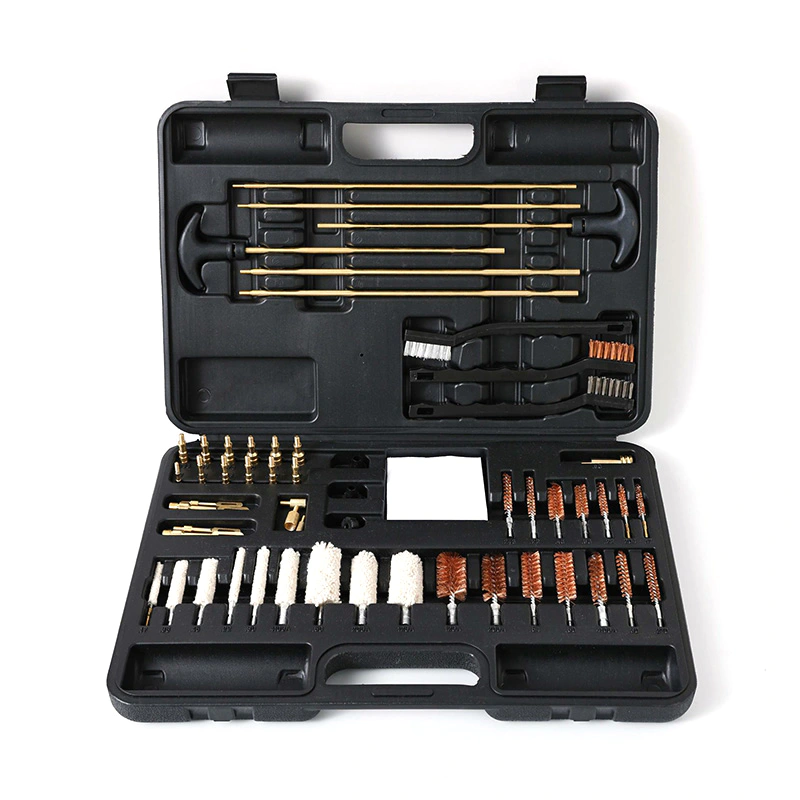
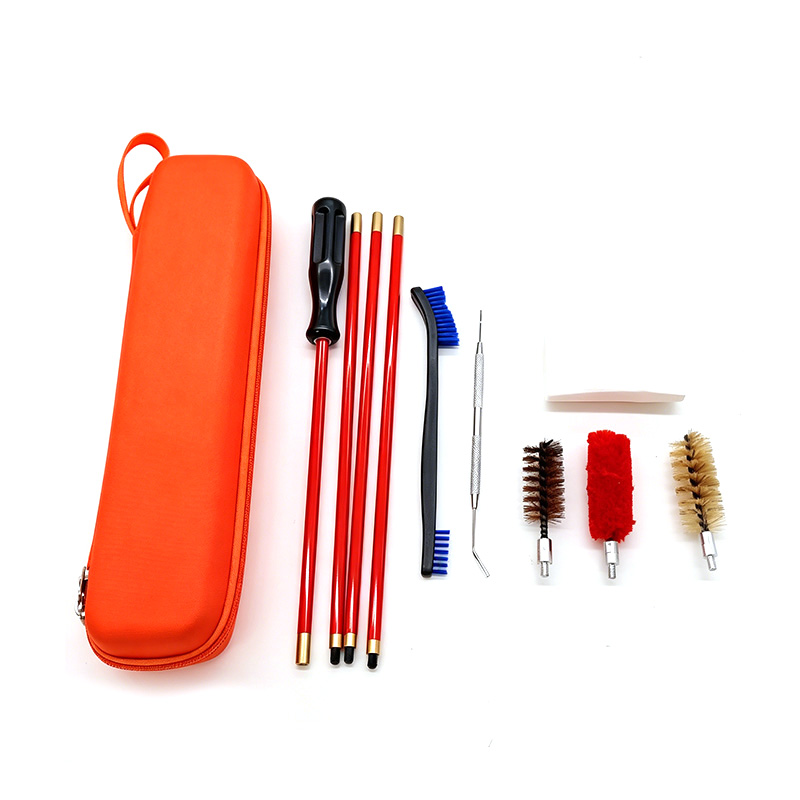
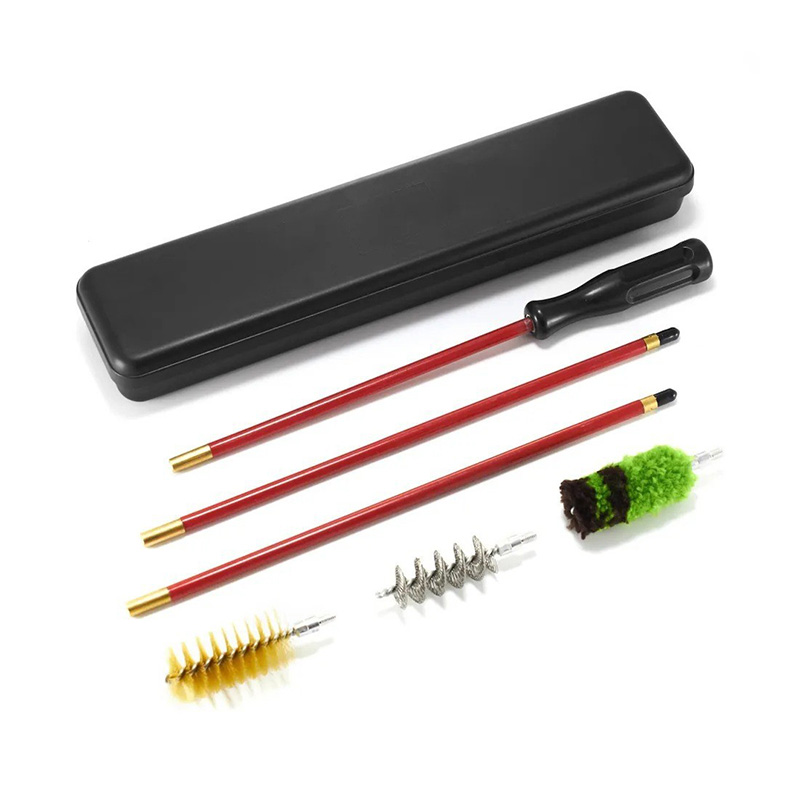
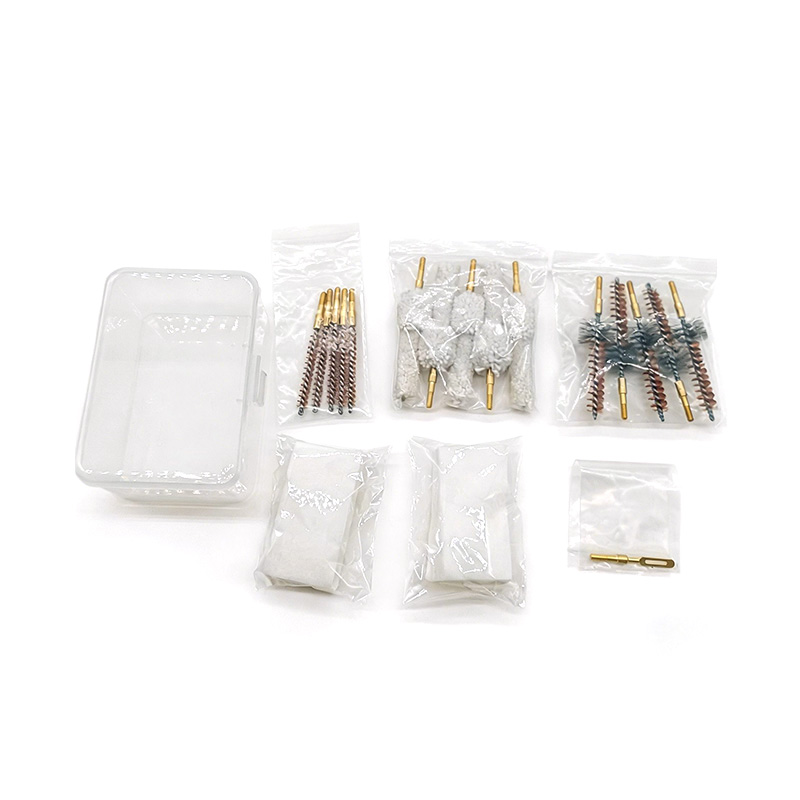
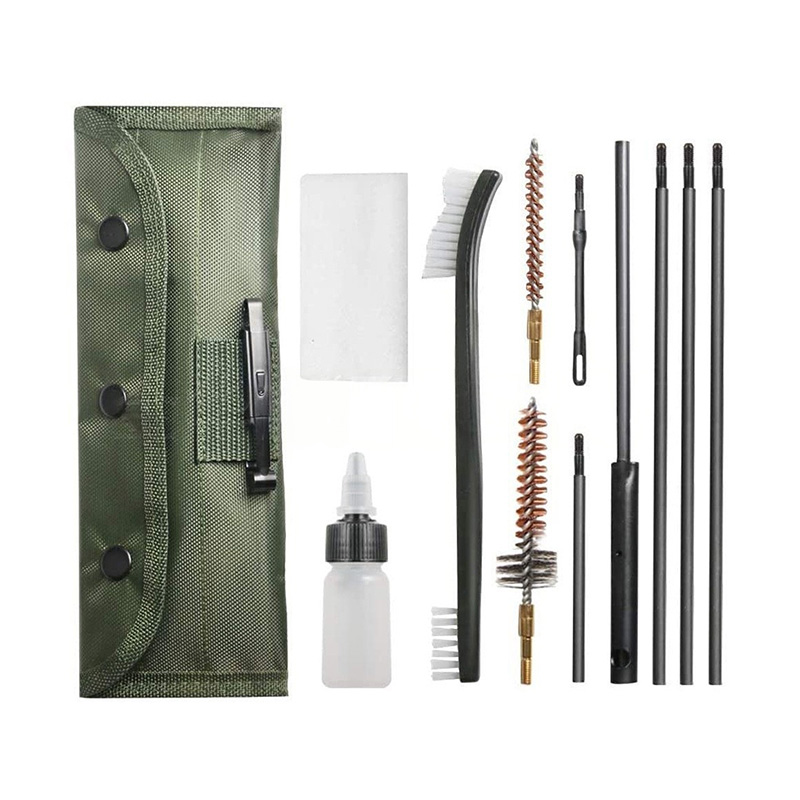
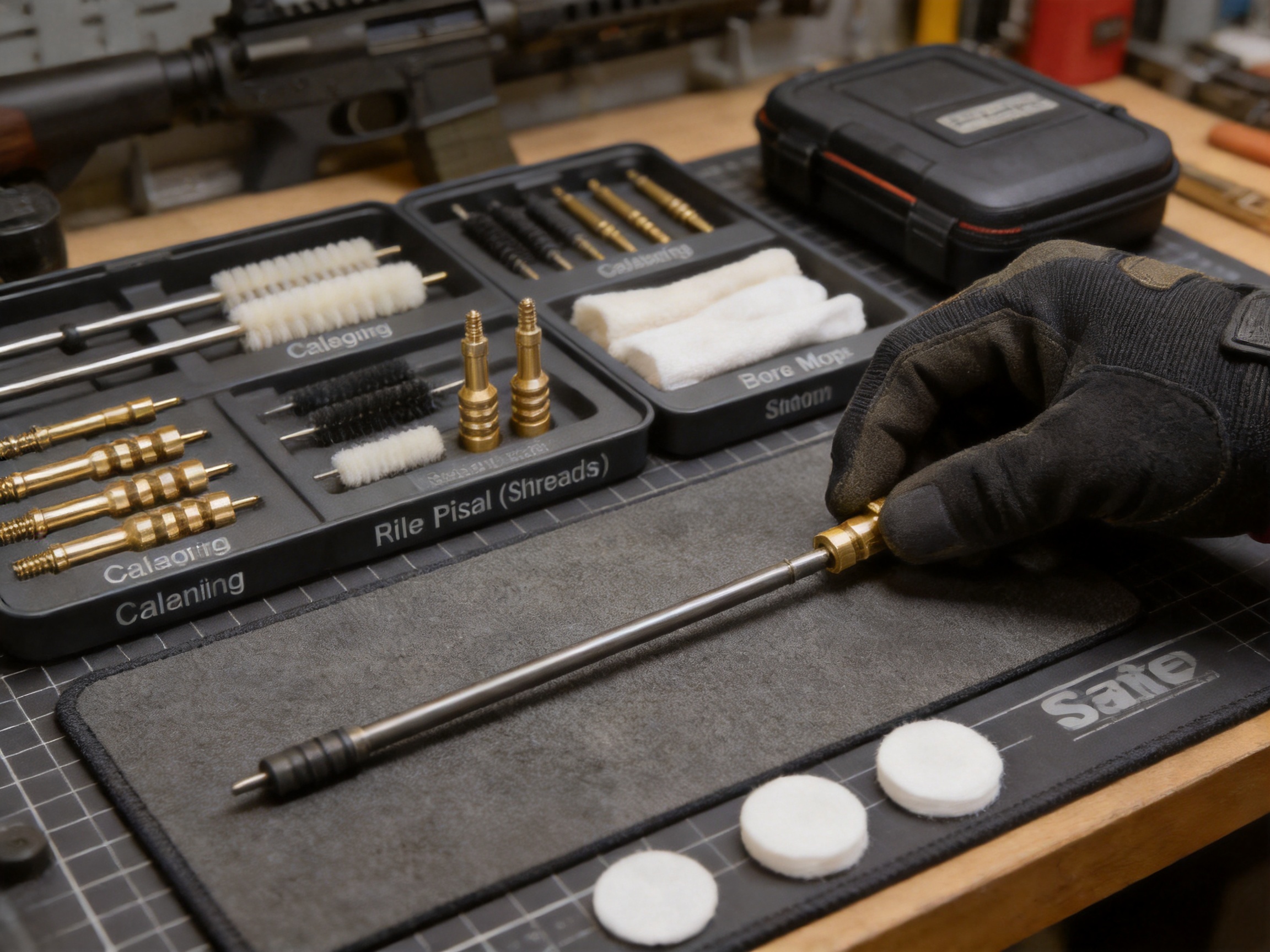
The spike tip adapter can be used as part of a complete gun cleaning kit or sold as an individual replacement component. A standard kit may include a cleaning rod, adapter, brushes, patches, cotton mops, solvent container, and storage case. The adapter connects the rod to the selected cleaning material and helps the user move that material through the bore.
In a rifle cleaning kit, the product can be paired with caliber-specific bronze, brass, nylon, or other material brushes. It can also be used with cotton patches and bore mops for removing residue or applying a light protective film after cleaning. In a pistol kit, the compact size and common thread options make it suitable for portable maintenance equipment. In a shotgun kit, the larger configurations can be paired with appropriate shotgun brushes and mops.
For professional cleaning services and shooting facilities, replacement adapters can help extend the useful life of a cleaning system. A worn, lost, or damaged tip does not necessarily require replacement of the entire kit. Purchasing individual adapters can lower maintenance costs and reduce unnecessary waste.
For OEM brands, the product can serve as a modular component. A brand may offer a small-caliber kit, a pistol kit, a rifle kit, and a universal maintenance kit using the same general adapter platform. This can create consistency across product lines and make replacement parts easier for customers to identify.
| Customer segment | Suggested configuration | Key selling points |
|---|---|---|
| General retail | Common .22, 9 mm, .30, and .45 options with 8-32 threads | Broad compatibility and easy product selection |
| Professional maintenance | Brass versions in multiple calibers with replacement components | Durability and repeated-use performance |
| Portable cleaning kits | Nylon versions with compact rods and patches | Low weight and non-abrasive contact |
| Rifle-focused brands | .17, .22, .243, .270, .30, .338, and .50 caliber options | Coverage of common rifle bore sizes |
| Pistol-focused brands | .22, .357, 9 mm, .40, and .45 caliber options | Suitable selection for handgun maintenance kits |
| OEM and ODM programs | Custom logo, packaging, material, thread, and assortment | Private-label differentiation and scalable sourcing |
Distributors should organize the product by the specifications most relevant to the customer. Caliber is usually the first selection point, followed by thread type and material. Product photographs and packaging should make these distinctions clear. If a product is sold online, each variant should include the correct compatibility information to reduce customer confusion and returns.
Wholesale customers may also consider offering multipacks. A multipack can include several caliber-specific tips, both brass and nylon options, or replacement units for high-use cleaning kits. The correct assortment depends on the target market and the firearm platforms most common in that region.
Correct handling helps users obtain the best performance from any bore-cleaning adapter. The user should first confirm that the adapter thread matches the cleaning rod. The selected tip should correspond to the bore size, and the patch, mop, or brush should be appropriate for that caliber.
The cleaning rod should be kept as straight and aligned with the bore as practical. Excessive force is unnecessary and may damage the cleaning material or complicate removal. If resistance becomes unusually high, the user should stop and check whether the patch is oversized, the accessory is incorrectly selected, or the adapter and rod are properly assembled.
After use, the adapter should be wiped clean and inspected. Brass versions should be kept free from residue and moisture. Nylon versions should also be checked for embedded debris or damage. Threads should be kept clean so that the adapter can be attached smoothly during the next maintenance session.
Storage is also important. Small accessories can easily be lost in a large toolbox, so a compartmented case or labeled holder is recommended. Keeping tips organized by caliber and thread specification helps prevent incorrect assembly and improves the efficiency of routine maintenance.
Gun cleaning accessories are well suited to private-label retail because they are compact, practical, and easy to combine with complementary products. A brand can package the spike tip adapter as an individual replacement part, a two-material comparison set, a caliber-specific accessory, or part of a complete firearm maintenance kit.
Packaging can communicate the most important purchase information: material, caliber, thread, quantity, compatible applications, and safe-use instructions. Clear labeling is especially important when several adapters have similar appearances but different dimensions. A manufacturer with OEM and ODM experience can help coordinate product packaging and logos to match a customer’s brand identity.
For e-commerce sellers, the product can be positioned around practical benefits rather than exaggerated claims. Useful selling points include broad caliber availability, brass and nylon material options, standard thread compatibility, a tapered guide, a centering groove, and suitability for replacement or kit assembly. These benefits are easy for customers to understand and can be supported by clear technical specifications.
For wholesale buyers, packaging consistency can be as important as the product itself. Uniform labels, secure inner packing, and accurate quantity control help reduce handling issues during export and warehouse operations. The company’s experience with international sales and cross-border supply supports these commercial requirements.
Buying a small accessory from an experienced factory provides advantages beyond the individual component. A specialized manufacturer can offer related products, coordinate compatible parts, and support future product expansion. This is particularly valuable for businesses that want to develop a complete firearm maintenance range rather than sell one isolated adapter.
Jinhua Tongshun Tool Factory specializes in gun cleaning kits, barrel cleaning brushes, and related accessories. Its product knowledge covers bronze and brass brushes, nylon brushes, cotton mops, cleaning rods, patches, cloths, and other maintenance products. This wider portfolio allows customers to build coordinated product lines with compatible components.
The company’s manufacturing base in Zhejiang supports large-scale production, while its OEM and ODM capabilities support brand customization. Its more than two decades of experience, export presence in over 50 countries and regions, and combination of semi-automatic and automated production systems make it suitable for both established distributors and new private-label projects.
Another advantage is communication efficiency. When a buyer sources related components from one factory, it may be easier to coordinate samples, specifications, package design, and production schedules. Product compatibility can also be reviewed across the complete kit, reducing the risk that a rod, brush, patch, or adapter will not work properly together.
Before ordering, buyers should define the target calibers. The product range includes small-caliber, pistol, rifle, and shotgun-related options, but the required assortment depends on the intended market. A distributor serving hunters may need a different range from a retailer focused on handgun maintenance.
Next, buyers should select the material. Brass is appropriate when durability and a firm machined feel are priorities. Nylon is appropriate when light weight and non-abrasive contact are priorities. Some brands may benefit from offering both versions.
Thread specification should then be confirmed. The available 5-40 and 8-32 options cover many cleaning rod systems, but buyers should verify the thread used in their existing kit or planned product design. Selecting the correct thread at the beginning helps avoid compatibility problems later.
Buyers should also decide whether they require individual adapters, multipacks, replacement assortments, or complete kits. OEM customers should prepare logo, packaging, labeling, and instruction requirements before sample approval. Clear specifications make it easier for the factory to provide an accurate quotation and production plan.
The adapter connects a cleaning rod with a patch, mop, or compatible brush and helps guide that cleaning material through the firearm bore. Its tapered tip supports smoother entry, while the centering groove helps keep the attachment aligned.
The product is available in brass and nylon. Brass provides a durable, precision-machined option with a firm feel. Nylon is lightweight and non-abrasive, making it suitable for users who prefer a softer contact material.
Available options include .17, .22, .243, 6 mm, .25, 6.5 mm, .270, 7 mm, .30, .338, 8 mm, .357, 9 mm, .375, .40, .416, .44, .45, and .50 caliber. The listed range also includes .410 caliber and 12-gauge applications. Buyers should select the exact size that corresponds to the intended bore and cleaning accessory.
The product is available with standard 5-40 and 8-32 thread specifications. Customers should confirm the thread of their existing cleaning rod before ordering.
Yes. The product family includes sizes suitable for many rifle and pistol calibers. It can also support selected shotgun cleaning applications when the correct size and compatible rod system are used.
The brass version is designed for firearm maintenance and offers a balanced hardness for controlled cleaning. Users should still select the correct caliber, keep the rod aligned, and avoid forcing the accessory through the bore. Proper cleaning technique is important with any material.
Nylon is a suitable choice when low weight and non-abrasive contact are priorities. It is useful for portable kits, general-purpose maintenance, and applications where the user prefers a softer material.
Yes. The manufacturer provides OEM and ODM services, including customized products, packaging, and logos. Buyers can discuss material, caliber assortments, thread specifications, packaging formats, and private-label requirements.
Yes. It can be supplied as an individual replacement component or integrated with cleaning rods, brushes, patches, cotton mops, and other accessories in a complete gun cleaning kit.
Wholesale buyers should confirm material, caliber, thread specification, quantity, packaging, logo requirements, labeling, sample approval, and target market. It is also helpful to define whether the order is for retail replacement parts, a private-label kit, or a larger OEM program.
The Gun Cleaning Accessories Spike Tip Adapter Parts Tool Kit is a small but important component for controlled firearm bore maintenance. Its tapered guide and centering groove help improve the way patches, mops, and brushes enter and move through the barrel. Brass and nylon material options serve different cleaning preferences, while the wide caliber range supports rifles, pistols, and selected shotgun applications.
Standard 5-40 and 8-32 threads provide compatibility with many cleaning rod systems. Compared with generic adapters, the product offers greater flexibility through multiple materials, broad caliber coverage, a purposeful guiding profile, and a design intended for integration into complete cleaning systems.
Behind the product is Jinhua Tongshun Tool Factory, an established manufacturer with more than 26 years of experience in gun cleaning tools and accessories. Its semi-automatic and automated production systems support consistent volume manufacturing, while its OEM and ODM services enable custom logos, packaging, product assortments, and private-label programs. Export experience across more than 50 countries and regions further supports international wholesale and cross-border e-commerce requirements.
For distributors, kit manufacturers, shooting accessory brands, and firearm maintenance suppliers, the adapter provides a practical foundation for developing reliable cleaning products. By combining suitable material selection, standardized threads, precision-oriented design, and scalable factory support, it can serve both replacement-part demand and complete OEM cleaning kit programs.
1. Product specification information for the Gun Cleaning Accessories Spike Tip Adapter Parts Tool Kit, including material options, thread specifications, caliber range, and application information.
2. Manufacturer information for Jinhua Tongshun Tool Factory, including establishment history, product categories, production capabilities, export experience, and OEM and ODM services.
3. General firearm maintenance principles concerning bore cleaning, cleaning rod alignment, caliber matching, accessory selection, and routine equipment inspection.
4. General manufacturing principles for small threaded components, including material selection, dimensional consistency, thread inspection, surface finishing, and packaging control.