English
 русский
 Español
 عربى

HUNTACE HUNTACE HUNTACE HUNTACE HUNTACE
HUNTACE HUNTACE HUNTACE HUNTACE


Reliable firearm maintenance depends on having the right tools available in the right sequence. A cleaning kit must do more than place several brushes and accessories in a case. It should support routine cleaning, fouling removal, rust treatment, organized storage, safe transport, and repeatable maintenance across different firearm platforms. For distributors, wholesalers, retailers, and cross-border e-commerce sellers, it must also deliver consistent quality, practical packaging, stable supply, and sufficient customization potential for different markets.
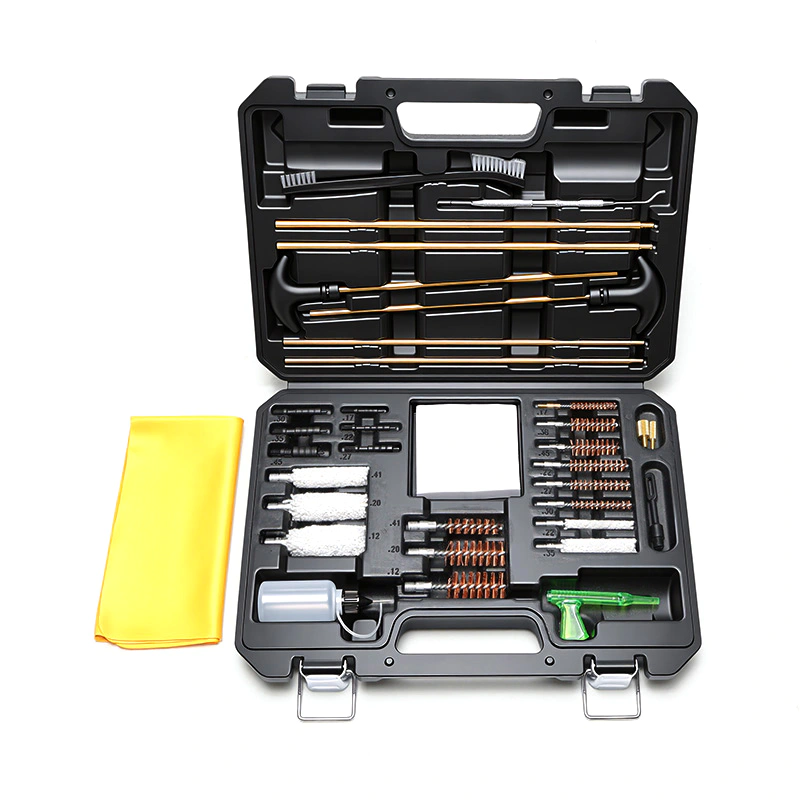
The 58-Piece Gun Cleaning & Maintenance Kit is designed around these commercial and practical requirements. It combines nylon, brass, and phosphor bronze cleaning tools with rods, adapters, patches, cloths, oil bottles, and other maintenance accessories. The complete configuration is housed in a portable hard case with structured compartments, helping users keep the components organized and reducing the risk of misplaced accessories.
For B2B buyers, the product represents more than a ready-to-sell cleaning kit. It is a flexible platform that can be configured with different material combinations, colors, packaging specifications, manuals, and private-label elements. This makes it suitable for established brands, importers, sporting-goods distributors, hardware suppliers, and online sellers looking for a dependable firearm maintenance product with broad market potential.
The 58-piece format provides a balanced combination of breadth and portability. Instead of requiring customers to purchase separate brushes, rods, adapters, patches, and storage solutions, the kit brings the main maintenance components together in one coordinated package. This simplifies purchasing for end users and gives distributors a product with a clear, easy-to-understand value proposition.
The kit is positioned for global distribution, wholesale procurement, and cross-border e-commerce. Its configuration can support multiple firearm platforms and a range of maintenance tasks, from removing loose dust and residue to addressing more stubborn fouling and light rust. The inclusion of different brush materials is especially important because no single brush type is ideal for every surface or cleaning requirement.
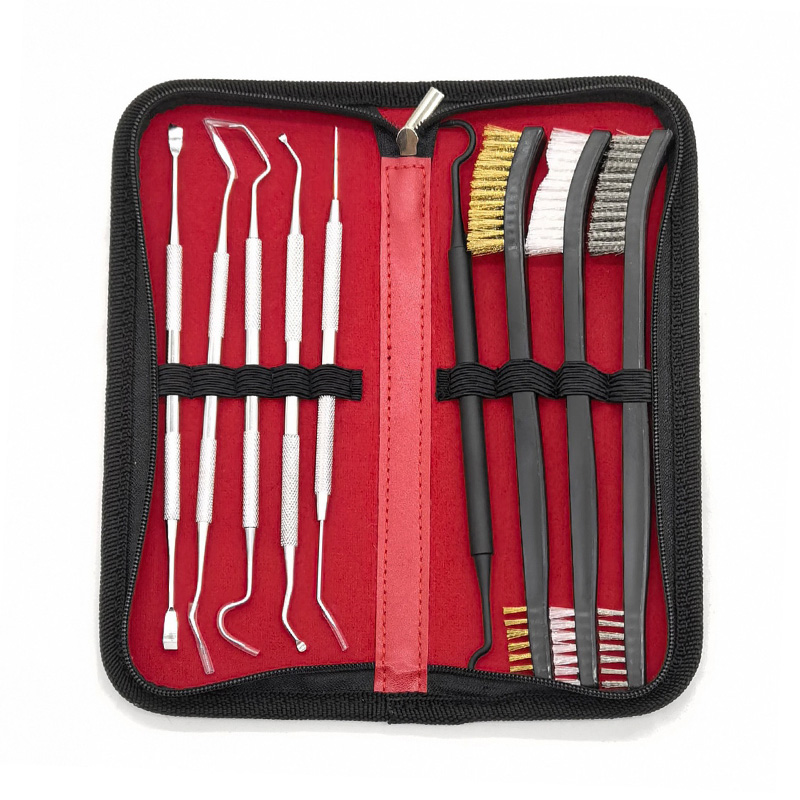
Nylon brushes are useful for general-purpose cleaning and for applications where a softer contact material is preferred. Brass brushes provide greater mechanical action for stubborn residue, while phosphor bronze brushes offer another durable option for removing fouling. The combination gives buyers greater flexibility than a kit containing only one type of brush.
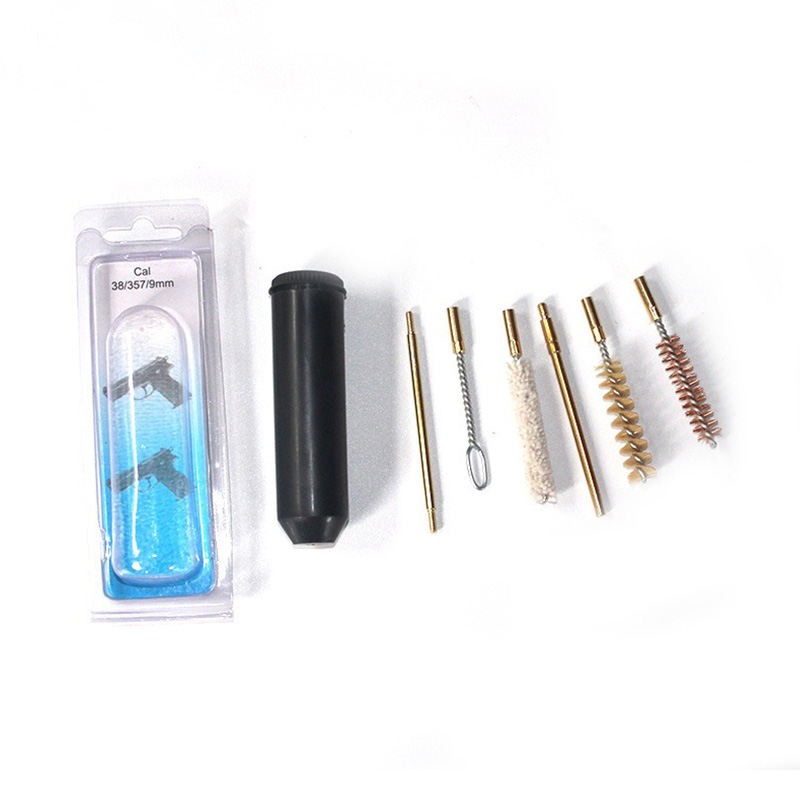
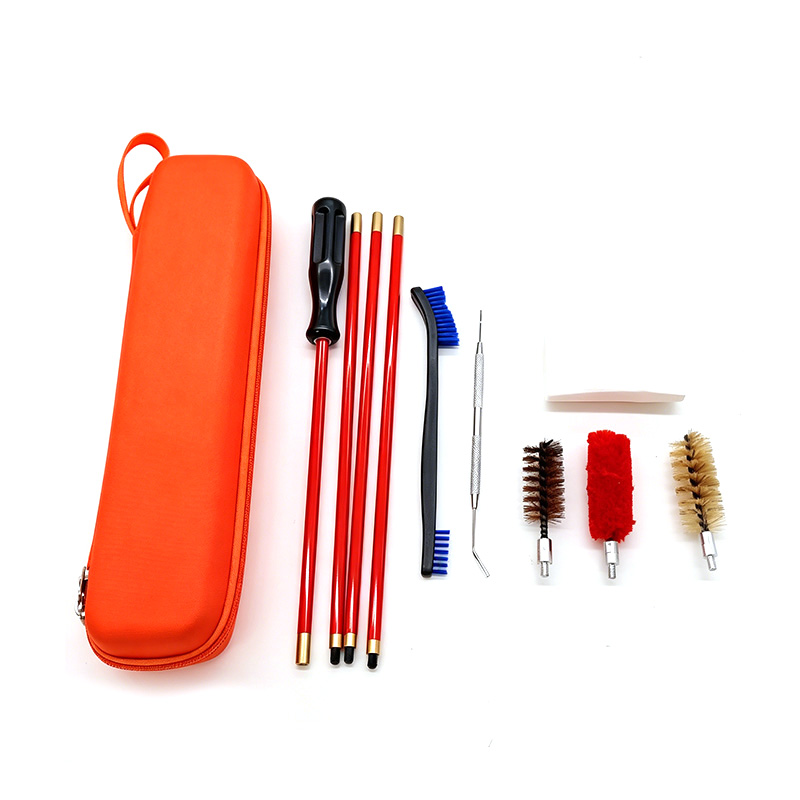
The product also includes brass cleaning rods, thread adapters, cleaning patches, cloths, and oil bottles. These elements help turn the package into a complete maintenance solution rather than a simple brush assortment. For retailers, this makes the item easier to merchandise as a comprehensive kit. For private-label customers, the range of components provides multiple opportunities to create market-specific configurations.
| Product name | 58-Piece Gun Cleaning & Maintenance Kit |
| Product category | Gun Cleaning Kits |
| Product code | 5021 |
| Primary application | Gun cleaning and maintenance |
| Brush materials | Nylon, brass, phosphor bronze, and other specified configurations |
| Accessory types | Cleaning rods, thread adapters, patches, cloths, oil bottles, brushes, and storage case |
| Available colors | Green, blue, and black |
| Case type | Portable hard case with structured internal compartments |
| Customization | OEM, ODM, private labeling, packaging, logo, manual, and configuration customization |
| Typical business channels | Wholesale, distribution, Amazon, cross-border e-commerce, and private-label retail |
| Manufacturing location | Jinhua, Zhejiang, China |
Consumers often prefer a product that provides immediate usability without requiring multiple additional purchases. A compact brush set may be inexpensive, but it can leave the user needing rods, adapters, patches, oil, or storage. A large professional assortment may offer more components than many customers need and may be difficult to organize. The 58-piece configuration occupies a useful middle position by offering broad functionality in a portable format.
For distributors, the format is also commercially efficient. A complete kit can be marketed under several product descriptions, including firearm maintenance kit, gun cleaning set, range maintenance accessory, sporting-goods cleaning kit, or private-label firearm care package. This creates flexibility across retail channels while preserving a consistent underlying product.
The kit can also serve different levels of users. New firearm owners benefit from having the principal maintenance tools presented in one package. Experienced users may value the combination of brush materials, replacement accessories, and organized storage. Retailers can therefore present the item as a practical entry-level product while also positioning it as a convenient supplementary kit for more experienced customers.
Another advantage is the relationship between component variety and shelf value. When buyers compare similar products, they frequently examine the number of pieces, the material of the brushes, the quality of the case, and the presence of accessories such as adapters and patches. A 58-piece configuration allows sellers to communicate a substantial package without relying solely on a low price.
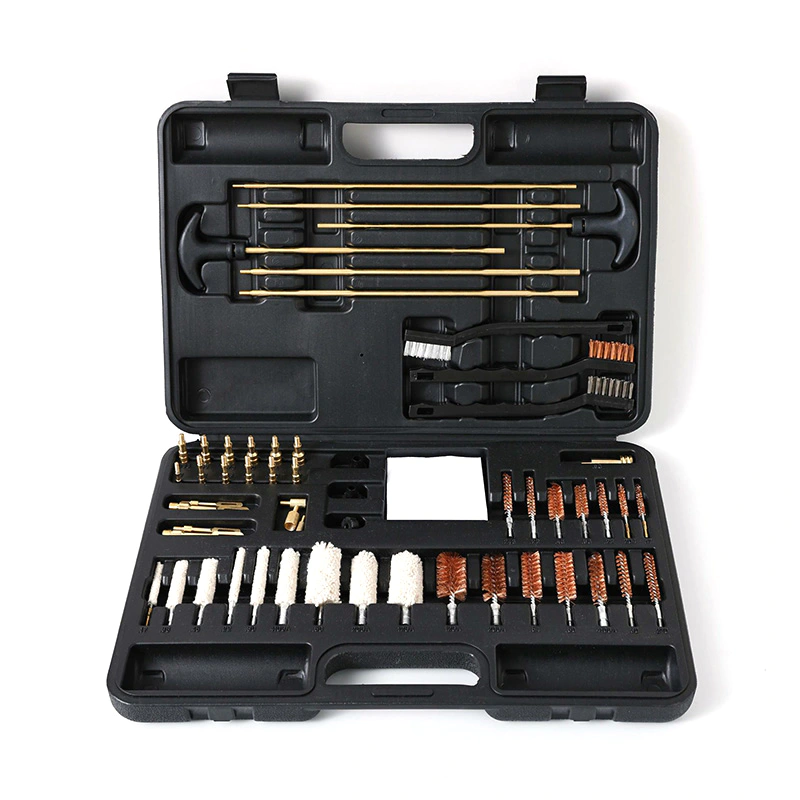
58-Piece Gun Cleaning & Maintenance Kit
One of the strongest product advantages is the use of multiple brush materials. Cleaning tasks differ according to the type of residue, the surface being treated, and the desired level of mechanical action. A kit containing nylon, brass, and phosphor bronze brushes gives users a broader range of options than a basic set based on only one material.
Nylon brushes are suitable for routine cleaning, loose residue, dust removal, and areas where a less aggressive brushing action is preferred. They are also useful for maintaining small parts and recessed areas that may be difficult to reach with larger tools. Because nylon is lightweight and versatile, it works well as a general-purpose component in a multi-function cleaning kit.
For B2B buyers, nylon components can also help control product weight and cost. They provide a practical option for configurations that require a larger number of tools while maintaining reasonable shipping and retail economics. Plastic and nylon components may be combined with brass accessories to create different price tiers without changing the overall product concept.
Brass brushes offer a higher level of mechanical cleaning action than nylon brushes. They are commonly selected for more persistent fouling and residue where a stronger brush is appropriate. Their inclusion gives the kit a more complete maintenance profile and helps distinguish it from entry-level assortments that contain only soft synthetic brushes.
Brass components also contribute to the perceived value of the kit. Buyers often associate metal cleaning tools with durability and professional functionality. When presented in a structured case alongside rods, adapters, patches, and oil bottles, brass brushes help create a product that appears complete, substantial, and suitable for repeated use.
Phosphor bronze brushes provide another metal-bristle option for cleaning applications that require durability and effective residue removal. Including both brass and phosphor bronze choices enables the end user to select an appropriate brush for a particular maintenance task rather than using one tool for every situation.
The combination of nylon, brass, and phosphor bronze demonstrates a more considered product design. It reflects the practical reality that firearm maintenance involves different surfaces and different levels of residue. For distributors, this multi-material approach is a clear selling point that can be explained in product listings, catalogs, packaging, and sales presentations.
The value of a cleaning kit depends on how well its components work together. Brushes alone cannot provide a complete maintenance process. Rods are needed to guide accessories through the barrel, adapters help connect different tools, patches and cloths assist with wiping and residue removal, and oil bottles support lubrication and protective care.
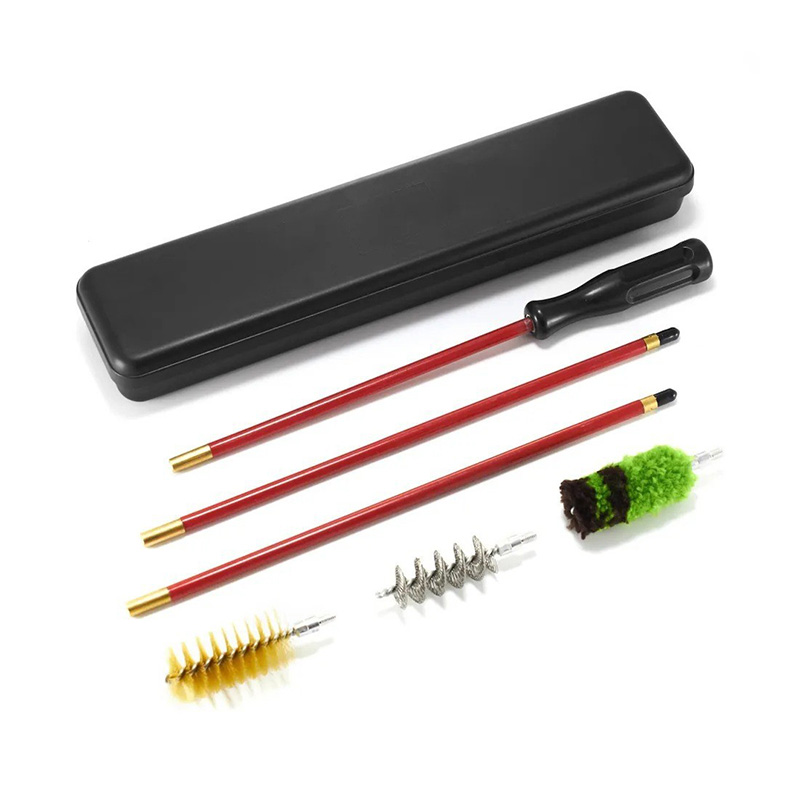
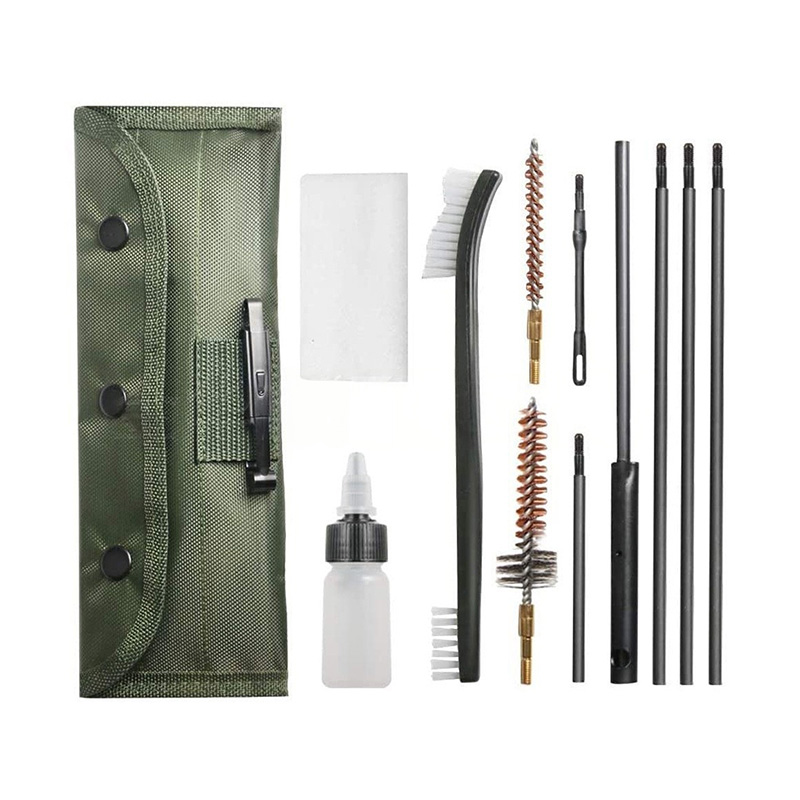
This kit is designed to bring these functions into one package. The cleaning rods provide a practical foundation for barrel maintenance, while thread adapters help accommodate different accessory connections. Cleaning patches and cloths support wiping and finishing tasks. Oil bottles provide a convenient way to include maintenance fluid in selected configurations, while felt pads and related accessories can be added depending on the chosen specification.
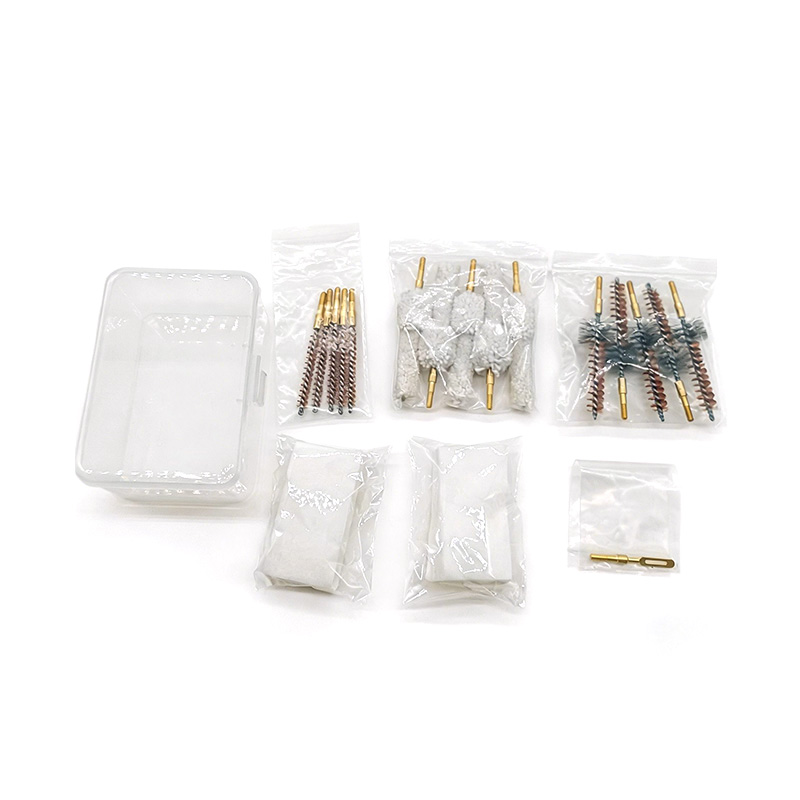
The listed configurations include options such as a brass component set, a plastic component set, brass tips with a gun guard and 30ml oil bottle, plastic components with two types of cleaning cloths, and other combinations. This modular approach is valuable for importers because it allows them to select the balance of metal, plastic, cloth, oil, and accessory content that best fits their target market.
Cleaning rods are among the most important structural components in a firearm maintenance kit. They provide reach and support the use of patches, brushes, and other attachments. The inclusion of brass rods or brass rod components can enhance durability and product value, while plastic components may help create lighter or more cost-sensitive versions.
Thread adapters increase the versatility of the kit by allowing different accessories to be connected. This is particularly useful in a multi-platform product designed for international sales. Because customers may maintain different types of firearms, an adaptable accessory system can be more commercially attractive than a narrowly configured kit.
Cleaning patches and cloths are essential consumable or semi-consumable items in many maintenance routines. They help remove loosened residue, wipe surfaces, apply small amounts of maintenance fluid, and complete the final cleaning stage. Including them in the kit improves convenience and gives the user materials that can be used immediately after opening the package.
Different versions may include two types of cleaning cloths or a felt pad, depending on the selected configuration. These options enable buyers to tailor the product for different retail positions. A premium configuration may emphasize metal components and additional finishing accessories, while a value-oriented version may focus on a practical combination of plastic tools, cloths, and essential brushes.
An oil bottle adds practical completeness to the product. In selected specifications, the kit includes a 30ml oil bottle, allowing the package to address not only cleaning but also basic maintenance and protective care. It also creates a stronger visual impression in retail packaging because the customer can immediately see that the kit contains more than dry tools.
Importers should confirm regional requirements for any included maintenance fluids, labeling, transport, and customs documentation before placing an order. The configuration can be adjusted when a market does not permit or prefer the inclusion of an oil bottle. This flexibility is an important benefit of working with a manufacturer that offers multiple specifications rather than a single fixed retail package.
A common weakness in low-cost cleaning sets is poor storage. Loose brushes and adapters can be difficult to identify, and small components may be lost after only a few uses. The hard case included with this product addresses that problem by providing structured internal compartments for organized storage.
The case helps users access the required tool quickly and return it to the correct position after use. It also supports transport between a home storage area, workshop, range, or service location. For retailers, the case improves product presentation and helps the kit look like a finished consumer product rather than a collection of unorganized accessories.
Protection during shipping is another commercial consideration. A structured case can help hold components in place during normal handling and reduce the chance that small accessories will move freely inside the outer package. Packaging design remains important, but the internal case contributes to a more orderly product experience from delivery through long-term use.
Available case colors include black, military green, and sky blue, with the supplied information also identifying green, blue, and black as available color choices. Color selection can help distributors differentiate product tiers, match existing brand systems, or create separate listings for different customer preferences.
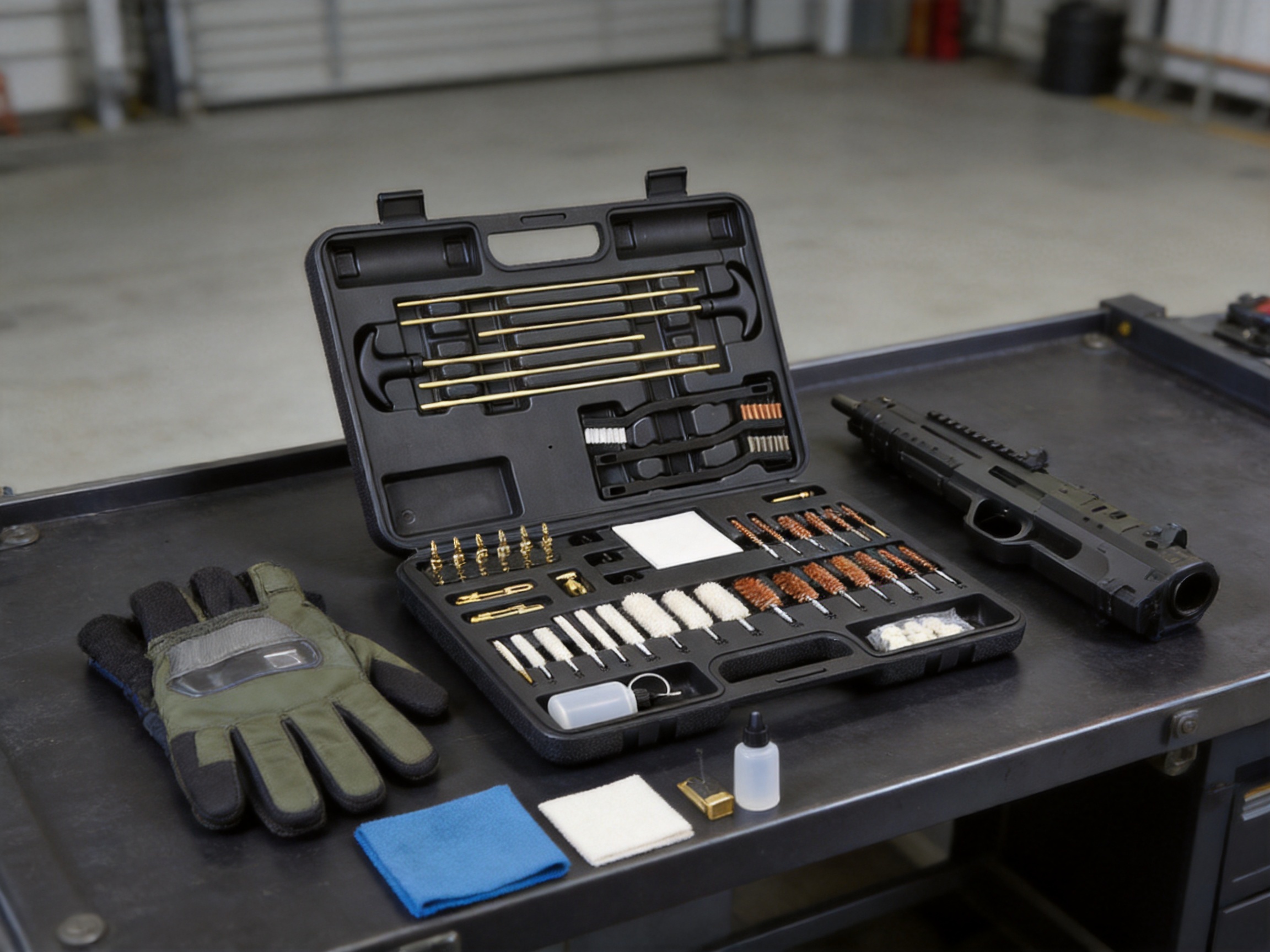
The market contains many firearm cleaning products, but not all kits offer the same combination of materials, accessories, storage, and supply flexibility. The 58-piece kit has several advantages over simpler competing products.
Many basic kits focus on a small number of brushes and a short rod. They may be adequate for occasional light cleaning but can require users to purchase additional patches, adapters, cloths, or storage separately. This product is designed as a broader system that brings those elements together, improving convenience and reducing the number of separate purchases.
A single-material kit limits the user’s ability to match the brush to the maintenance task. The inclusion of nylon, brass, and phosphor bronze options gives users greater choice. This is also beneficial for sellers because the multi-material design provides a stronger product story and more detailed content for packaging and online listings.
Products supplied in bags or loosely packed boxes may be difficult to store and may suffer from accessory loss. The portable hard case with dedicated compartments offers a more professional presentation and a better long-term user experience. It can also make the kit more attractive as a gift, starter package, or bundled retail item.
Some suppliers offer only one standard kit. In contrast, the available specifications allow buyers to select brass or plastic component sets, different cloth combinations, oil bottle options, and other accessory arrangements. This helps distributors avoid paying for components that are not suited to their market and supports the development of differentiated private-label products.
For branded sellers, the ability to customize packaging, logos, manuals, and product combinations is a significant advantage. A standard factory product can become a market-specific offering through customized labeling and documentation. Bilingual manuals can support international distribution, while private-label packaging can help sellers build recognition and improve control over their product presentation.
Direct factory supply can simplify communication between the buyer and the production source. It may provide better access to customization, technical clarification, sampling, production scheduling, and quality-control information. For wholesalers and distributors, this can be more efficient than purchasing through multiple intermediary layers.
The manufacturer behind the product was established in 1999 and has more than 25 years of manufacturing experience, with company materials describing more than 26 years of activity. This long operating history is relevant to B2B buyers because it indicates familiarity with product development, production planning, export requirements, and repeat-order management.
The company operates in Jinhua, Zhejiang, and integrates research and development, production, and sales. Its manufacturing focus includes gun cleaning kits, barrel cleaning brushes, and related cleaning accessories. This specialization supports a deeper understanding of brush materials, component combinations, assembly requirements, packaging, and market-specific product configurations.
Production uses semi-automatic and fully automated systems. These systems can support larger order volumes while improving consistency in repetitive manufacturing operations. Automation does not replace the need for inspection and process management, but it can help reduce variation in tasks such as component production, brush assembly, packaging preparation, and repeat-order execution.
For international buyers, consistency is often as important as the first sample. A successful supplier must be able to reproduce the approved configuration across multiple production runs. An established factory with organized equipment and experience in export-oriented manufacturing is better positioned to support this requirement than a trading source with limited control over production.
Quality control for a multi-component kit should address both individual parts and final assembly. Brush heads should be checked for proper attachment and acceptable bristle distribution. Rods and adapters should be reviewed for connection compatibility. Patches, cloths, bottles, and small accessories should be counted and matched to the approved specification.
The case should be evaluated for fit, closure, color consistency, and internal organization. Packaging should be checked for correct labeling, quantity information, manuals, logos, and market-specific details. A final inspection should confirm that the complete kit contains the agreed number and type of components.
Buyers can strengthen quality control by approving a reference sample before bulk production, defining the exact configuration in a purchase specification, and requesting pre-shipment inspection when appropriate. The manufacturer’s experience and production capabilities provide a useful foundation, but clear buyer-supplier communication remains essential for every customized order.
Customization is a major part of the product’s commercial value. Different markets may have different preferences for case color, material combinations, accessory quantities, manuals, language, branding, and packaging size. A flexible manufacturing partner can adapt the product without requiring the distributor to develop an entirely new cleaning system from the beginning.
Buyers may choose between brass and plastic component combinations depending on target price, positioning, weight, and customer expectations. Some configurations can include brass tips, gun guards, oil bottles, felt pads, cleaning cloths, or other accessories. This creates opportunities for good-better-best product lines under the same brand.
For example, an entry-level version may emphasize plastic components, nylon brushes, cloths, and essential adapters. A mid-range version may combine plastic accessories with selected brass parts and an oil bottle. A premium version may use a larger proportion of brass components and include additional finishing accessories. The exact contents should be confirmed through an approved specification and sample.
Private-label packaging allows sellers to control the product’s visual identity and market message. Packaging can be designed for hardware stores, sporting-goods retailers, online marketplaces, or distributor catalogs. Logo application and customized product information can help establish brand continuity across a broader range of maintenance products.
Two packaging specifications are available to support different logistics and warehousing requirements. This may help buyers select a format that balances retail presentation with carton efficiency. Packaging decisions should consider product protection, shipping dimensions, warehouse space, labeling rules, and the intended sales channel.
Customized bilingual manuals can make the product more suitable for international markets. Clear instructions can explain the purpose of the major components, storage recommendations, general maintenance workflow, and safety reminders. Buyers should ensure that manuals are reviewed for local language quality, regulatory expectations, and appropriate product terminology before mass printing.
Documentation is especially important for cross-border e-commerce. Customers may not be familiar with every accessory in a multi-piece kit. A concise, well-organized manual can reduce confusion, improve customer satisfaction, and reduce unnecessary support inquiries.
The product is identified as being exclusively for cross-border export, with Europe listed among the main sales regions and Amazon identified as a principal downstream platform. This market orientation means the kit can be considered for international wholesale, marketplace sales, import distribution, and private-label programs.
International buyers should evaluate the product according to the requirements of their destination market. These may include packaging language, product labeling, customs classification, restrictions involving maintenance fluids, marketplace policies, consumer-safety documentation, and country-specific requirements for firearm-related accessories. The manufacturer can support product and packaging customization, while the importer remains responsible for confirming local compliance.
For European and other international markets, clean packaging, accurate component descriptions, multilingual information, and dependable carton preparation can influence both customs handling and customer perception. A complete product specification should identify materials, dimensions where relevant, included accessories, color, packaging type, and any optional components.
Cross-border sellers may also benefit from the kit’s compact case format. A portable package is easier to display in product images, simpler to describe in online listings, and potentially more convenient for fulfillment. Shipping performance should still be verified through carton testing and logistics trials, particularly when the selected specification includes oil bottles or other items requiring special handling.
A professional B2B order typically begins with configuration selection. The buyer identifies the target market, expected retail price, preferred materials, case color, accessory combination, branding requirements, packaging format, and manual language. The manufacturer can then prepare a product specification and sample for review.
After sample approval, the buyer and factory should confirm the purchase order, component list, packaging artwork, logo placement, color references, carton details, inspection method, and delivery schedule. This stage is important because a 58-piece product contains many individual items. A small change in one accessory can affect the product cost, packaging layout, and final counted quantity.
During production, raw materials and components are processed through the factory’s semi-automatic and automated systems, followed by assembly, inspection, packing, and final preparation. The buyer may request progress updates or third-party inspection according to the order arrangement.
Before shipment, the finished goods should be checked against the approved sample and written specification. Important checkpoints include the number of pieces, brush materials, rod and adapter connections, case color, packaging artwork, manual language, oil bottle inclusion if applicable, and carton markings.

When comparing this kit with competing products, buyers should evaluate more than the headline piece count. The following checklist can help importers and distributors make a more informed purchasing decision.
Confirm the exact definition of the 58 pieces and identify whether consumables are counted individually.
Confirm which brush materials are included in the selected configuration.
Check whether the order uses brass rods, plastic rods, or a combination of components.
Verify the thread standards and compatibility of the adapters.
Confirm whether patches, cloths, felt pads, and oil bottles are included.
Review the case dimensions, color, closure, and internal compartment layout.
Request a pre-production sample for private-label orders.
Approve all packaging artwork and manuals before mass production.
Clarify minimum order quantities, lead times, carton quantities, and shipping terms.
Confirm destination-market requirements before importing or listing the product.
This checklist helps prevent misunderstandings and makes it easier to compare the product fairly with competing kits. In particular, the piece count should not be evaluated separately from material quality, accessory usefulness, storage design, and after-sales support.
Distributors can position the kit as a complete maintenance solution rather than a collection of low-cost accessories. The product story should emphasize its multi-material brush system, portable hard case, broad accessory coverage, configurable specifications, and factory-direct OEM capability.
For hardware and sporting-goods retailers, the product can be presented as a practical maintenance package for firearm owners. For online marketplaces, product images should clearly show the organized case, brush variety, rods, adapters, patches, cloths, and optional oil bottle. Listings should use accurate descriptions and avoid implying that every configuration contains every optional accessory.
For private-label brands, the kit can serve as a foundation for a complete firearm-care product range. A brand may begin with one standard configuration and later introduce versions with different case colors, brass content, cloth types, or packaging styles. This approach allows product-line expansion while maintaining a recognizable design language.
For wholesalers, the product’s configuration flexibility can support multiple customer groups. A wholesaler may offer a cost-sensitive plastic component set to one retailer and a brass-oriented set to another. Both can be sourced from the same manufacturing platform, simplifying procurement and technical communication.
A cleaning kit should be used only for appropriate maintenance tasks and according to the instructions supplied with the product and the firearm manufacturer’s guidance. Before any maintenance activity, the firearm should be completely unloaded and checked in accordance with applicable safety procedures. The kit is a maintenance accessory set, not a substitute for formal training or professional gunsmithing advice.
Users should select the brush material and accessory appropriate to the surface and task. Tools should be inspected for damage before use, and worn or damaged components should be replaced. After cleaning, accessories should be wiped as needed, allowed to dry where appropriate, and returned to the organized case.
The hard case should be stored in a clean, dry location. If an oil bottle is included, it should remain properly closed and be stored in accordance with the product label and local requirements. Distributors can include these basic reminders in customized manuals to support responsible product use and reduce avoidable customer complaints.
The kit is designed to include a broad selection of nylon, brass, and phosphor bronze brushes, cleaning rods, thread adapters, patches, cloths, oil bottles, and related maintenance accessories. The exact contents depend on the selected specification, so buyers should confirm the final component list before ordering.
The kit is designed with a range of accessories and adapters to support multiple firearm maintenance applications. Compatibility depends on the specific firearm, accessory connection, and selected configuration. Buyers should review the thread and accessory specifications for their target market.
Different brush materials provide different levels of cleaning action and flexibility. Nylon is useful for general cleaning and softer-contact applications, while brass and phosphor bronze provide stronger mechanical action for more persistent residue. The combination allows users to select a suitable brush for the task.
Yes. The kit is housed in a portable hard case with structured internal compartments. The case helps organize the components, improve portability, and reduce the risk of losing small accessories.
Available colors include black, green or military green, and blue or sky blue, subject to the selected specification and production confirmation. Buyers requiring a precise color should approve a sample or color reference before bulk production.
Yes. OEM and ODM services are available, including customized logos, private-label packaging, bilingual manuals, and selected product configurations. Buyers should provide artwork and confirm technical requirements before production.
Yes. The listed specifications include brass component sets, plastic component sets, and mixed configurations. The appropriate choice depends on the intended retail price, product positioning, weight, and customer expectations.
No. The oil bottle is included in selected configurations, such as versions that specify a 30ml oil bottle. Buyers should confirm whether oil is part of the chosen configuration and review destination-market requirements before importing.
The product is suitable for global distributors, wholesalers, cross-border e-commerce sellers, sporting-goods retailers, hardware suppliers, and private-label brands. It can also be marketed to firearm owners who want a complete and organized maintenance package.
The product is manufactured in Jinhua, Zhejiang, China, by a factory established in 1999 with more than 25 years of experience in gun cleaning tools and related accessories.
Yes. The manufacturer offers private-label packaging and supports different packaging specifications for logistics and warehousing needs. Packaging artwork, language, logos, and carton information should be confirmed before production.
Buyers should confirm the exact piece list, brush materials, rods, adapters, patches, cloths, oil bottle status, case color, packaging, manuals, logo requirements, order quantity, inspection standards, delivery terms, and destination-market compliance requirements.
The 58-Piece Gun Cleaning & Maintenance Kit is designed to meet the practical needs of firearm owners while giving international buyers a flexible product for wholesale and private-label distribution. Its primary advantages include a broad accessory range, nylon and metal brush options, cleaning rods and adapters, patches and cloths, selected oil bottle configurations, and a portable hard case with organized compartments.
Compared with simpler competitor products, the kit offers stronger functional coverage, more material choices, better storage, and greater configuration flexibility. These advantages can help distributors create clearer product positioning and offer customers a more complete maintenance solution.
The manufacturer’s long operating history, specialized product focus, semi-automatic and automated production systems, export experience, and OEM/ODM capabilities further strengthen the product’s B2B value. Buyers can select brass or plastic component combinations, color options, packaging specifications, bilingual manuals, and private-label branding to meet the needs of different markets.
For companies seeking a dependable gun cleaning kit for international distribution, the most important step is to define the exact configuration and approve a representative sample before mass production. When the product specification, packaging, quality-control requirements, and destination-market obligations are clearly managed, this 58-piece platform can support a practical, organized, and commercially adaptable firearm maintenance product line.
1. Product specification materials for the 58-Piece Gun Cleaning & Maintenance Kit, product code 5021.
2. Manufacturer-provided information concerning product configurations, colors, OEM services, packaging options, and export markets.
3. Manufacturer company profile describing production experience, facility capabilities, export history, and research and development activities.
4. General firearm maintenance and accessory-selection principles for cleaning rods, brushes, patches, cloths, and storage cases.
5. General international trade and private-label procurement practices for product specification approval, packaging review, and pre-shipment inspection.