English
 русский
 Español
 عربى

HUNTACE HUNTACE HUNTACE HUNTACE HUNTACE
HUNTACE HUNTACE HUNTACE HUNTACE

Effective firearm maintenance depends on using the right cleaning materials for the right task. A cleaning cloth may appear simple, but its fiber structure, absorbency, strength, dimensions, packaging, and resistance to shedding all influence the quality of the cleaning process. A poor-quality cloth can leave lint inside a bore, distribute contaminants across a receiver, or break apart when pushed through a narrow passage. A well-designed cloth, by contrast, supports consistent cleaning, controlled lubrication, and efficient surface care.
The Lint-Free Nonwoven Gun Cleaning Cloth Anti-Static Factory Supply is a professional-grade cleaning consumable developed for firearm maintenance, hardware care, and related precision cleaning applications. Made from high-density hydroentangled nonwoven fabric, it combines a soft surface with a compact, durable fiber structure. The material is designed to remove dust, fouling residue, oil, and surface contaminants while minimizing fiber shedding.
Available in multiple sizes and packaging formats, this rectangular cleaning cloth is suitable for pistols, rifles, shotguns, firearm receivers, exterior metal surfaces, and larger hardware components. Its disposable format also helps users avoid transferring contaminants from one firearm or component to another. For distributors, online retailers, professional shooting suppliers, and private-label buyers, the product provides a practical combination of performance, manufacturing consistency, customization potential, and export-ready supply capability.
This cleaning cloth is classified as a firearm cleaning patch and cloth product. Its primary material is non-woven fabric, and its principal functions include dust removal, wiping, oiling, and general cleaning. Unlike ordinary household wipes or loosely woven rags, the cloth is manufactured for controlled maintenance work where low lint, predictable dimensions, and reliable handling are important.
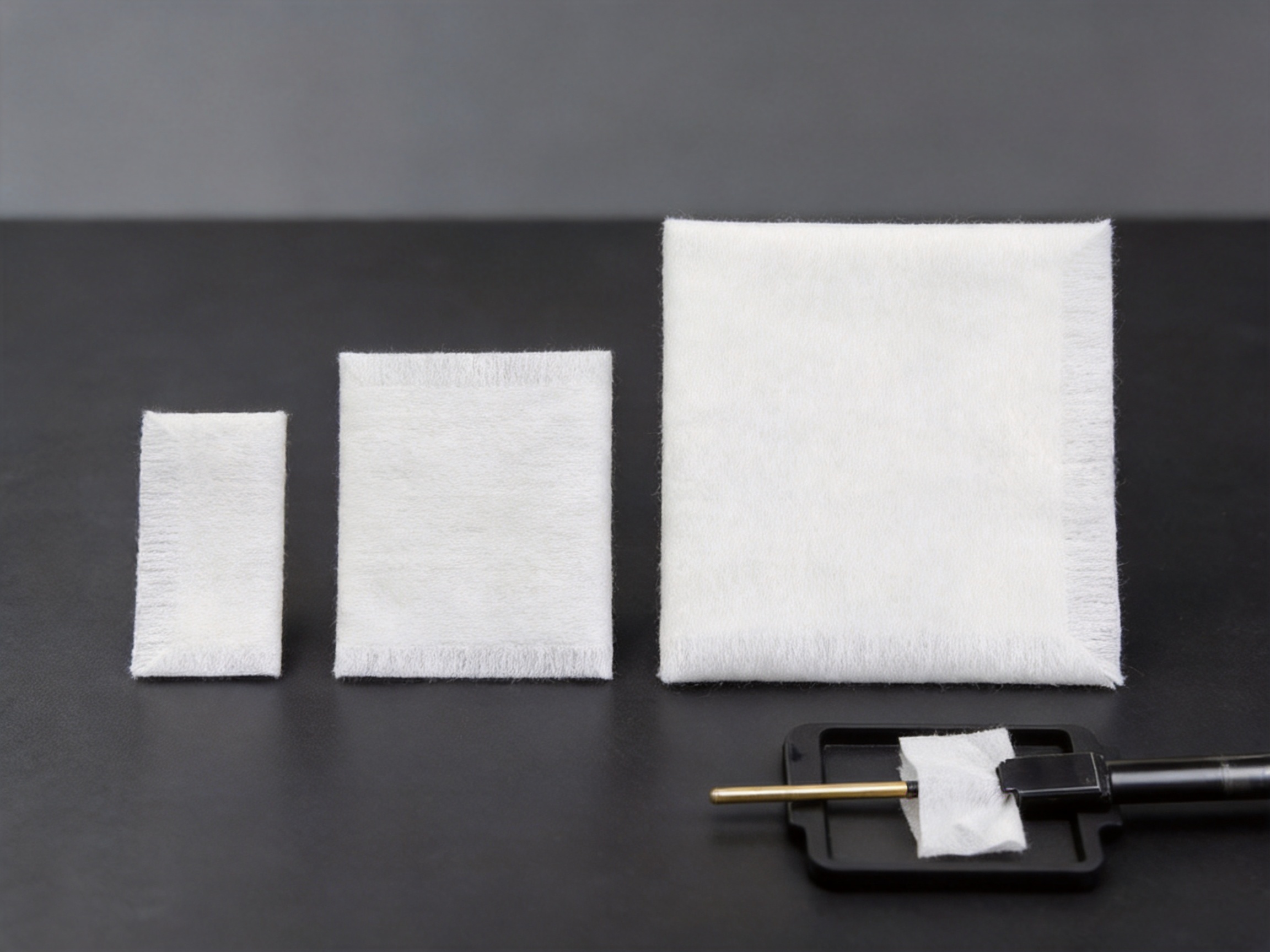
The product is rectangular and is offered in several size categories. Smaller patches are designed for use with cleaning rods, jags, and bore-cleaning accessories. Medium patches provide greater coverage for larger-caliber rifles and shotgun bores. Large sheets are intended for receivers, external firearm surfaces, metal parts, workbench tasks, and broader cleaning areas.
The standard product information identifies the model as 1211, with variants described as small, medium, and large. The listed standard specification is 50 sheets per pack for each size category. A large-size portable pack containing 10 pieces is also available for customers who prefer a lighter package for field use, travel, or limited maintenance tasks.
| Product type | Lint-free nonwoven gun cleaning cloth |
| Primary material | High-density hydroentangled nonwoven fabric |
| Shape | Rectangular |
| Primary functions | Dust removal, wiping, oiling, and cleaning |
| Model | 1211 |
| Small size | Approximately 7.5 × 3.8 cm |
| Medium size | Approximately 7.5 × 7.5 cm |
| Large size | Approximately 19 × 19 cm |
| Common packaging | 50 pieces per pack |
| Portable large-size option | 10 pieces per pack |
| Customization | OEM and ODM customization available |
| Typical markets | North America, Europe, Africa, the Middle East, and other export regions |
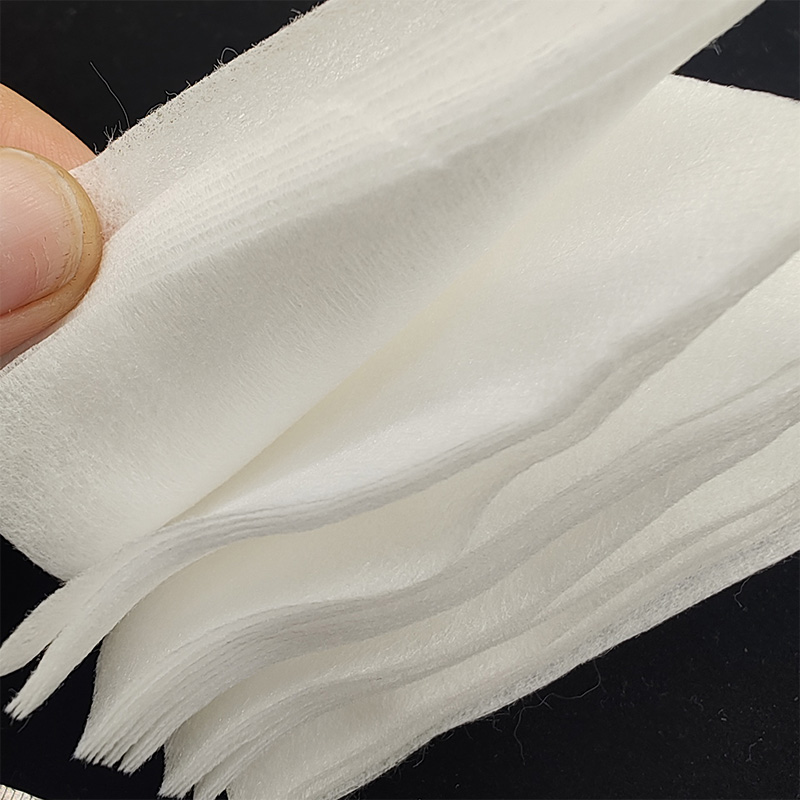
Nonwoven fabric is produced by forming and consolidating fibers without creating a conventional woven pattern. In this product, hydroentanglement uses high-pressure water jets to interlock the fibers into a stable sheet. This process creates a compact material with a consistent surface and good resistance to separation under normal wiping and bore-cleaning conditions.
The resulting structure is particularly useful for firearm maintenance. The cloth can conform to a surface, absorb or carry cleaning fluid, and collect loose fouling without the roughness associated with some paper products or coarse woven rags. Its surface is soft enough for routine contact with finished metal components, while its entangled fibers provide greater durability than fragile disposable tissue.
Another important advantage is the controlled fiber structure. When a cleaning cloth sheds fibers, those fibers can remain in grooves, around a breech area, or inside a bore. High-density nonwoven fabric is designed to reduce this problem. While no disposable material should be treated as completely contamination-proof under every condition, the compact structure helps minimize visible lint and loose residue during normal use.
The nonwoven material also provides flexibility in converting. It can be cut into different dimensions while maintaining a similar material specification across product variants. This allows one production platform to support small bore patches, medium cleaning squares, and large exterior-wiping sheets without requiring buyers to source unrelated materials from multiple suppliers.
The central selling point of this product is its lint-free design. Firearm cleaning often involves narrow passages, rifling, chambers, feed areas, and other locations where loose fibers are inconvenient. A cleaning patch that appears clean after wiping may still leave a small amount of fuzz behind if its fibers are loosely bonded. That residue can mix with oil, dust, or fouling and create additional cleaning work.
The high-density hydroentangled construction helps keep the fibers integrated within the sheet. Its surface is engineered to provide cleaning contact without behaving like a loosely woven textile. This makes the cloth appropriate for bore wiping, light oil application, and the cleaning of metal surfaces where a low-residue material is preferred.
For professional distributors, lint reduction is more than a product feature. It is also a quality and customer-service advantage. Consumers frequently judge cleaning patches by whether they leave visible fibers behind. Consistent low-lint performance can reduce complaints, returns, and negative product reviews, especially in online retail markets where product ratings strongly influence purchasing decisions.
For commercial and institutional users, a low-lint cloth can support a more standardized maintenance routine. A maintenance team can use one defined consumable for wiping, oiling, and final inspection rather than relying on improvised fabric scraps that vary in thickness, cleanliness, and fiber release.
The product is described as anti-static, which supports cleaner handling during maintenance. Static attraction can cause lightweight fibers and dust particles to cling to surfaces, packaging, gloves, or equipment. Reducing static-related attraction can make the cloth easier to use in environments where cleanliness and controlled handling are important.
Anti-static behavior is especially useful when cleaning dark metal surfaces, polished components, workbenches, and equipment that visibly reveals dust. A cloth that attracts fewer loose particles can help users achieve a cleaner final appearance. It may also reduce the tendency of small fibers to cling to the outside of a firearm after wiping.
Users should still follow appropriate maintenance procedures. The cloth is a cleaning consumable, not a substitute for a suitable solvent, lubricant, bore guide, cleaning rod, jag, brush, or inspection method. Its anti-static feature contributes to cleaner handling, but correct storage and proper preparation of the firearm remain essential.
Firearms vary widely in bore diameter, exterior dimensions, access points, and maintenance requirements. A single patch size may be too small for a shotgun bore or too large for a compact pistol. This product is therefore available in several dimensions to give buyers and end users greater flexibility.
The small patch is approximately 7.5 by 3.8 centimeters. Its narrow rectangular profile is suitable for pistols and smaller rifle applications when used with a cleaning rod, jag, or compatible patch holder. It can also be folded or adjusted according to the bore size and the desired contact pressure.
This size is useful for .17 caliber and other small-bore applications when the patch is selected and fitted correctly. It is also suitable for .223 and 5.56 mm rifle maintenance in appropriate cleaning systems. The user should avoid forcing an oversized patch through a bore, since excessive resistance can interfere with safe and controlled cleaning.
The medium square patch provides more material coverage than the narrow version. It is suitable for larger-caliber rifles, broader bore-cleaning tasks, and selected shotgun maintenance applications. The square format allows users to fold the patch, wrap it around a compatible accessory, or use it as a hand-wipe for accessible components.
For wholesalers, this size can serve as a versatile middle option in a cleaning-patch range. It is large enough for general maintenance but remains compact enough for convenient packaging and storage. A medium patch is also useful for users who prefer to tear or fold a sheet to match a specific task.
The large sheet is designed for broader surfaces rather than only narrow bores. It can be used to wipe receivers, firearm exteriors, metal components, stocks with suitable surface compatibility, tools, and maintenance areas. It may also be folded into smaller sections for separate cleaning stages.
The large format is practical for final wiping after solvent use, removing excess lubricant, or protecting work surfaces from oil and residue. A 10-piece portable pack is available for users who want a compact quantity for a range bag, service kit, travel case, or limited maintenance schedule.
| Size category | Approximate dimensions | Typical applications |
| Small | 7.5 × 3.8 cm | Pistols, small-caliber rifles, and rod-and-jag bore cleaning |
| Medium | 7.5 × 7.5 cm | Larger-caliber rifles, selected shotgun tasks, and general wiping |
| Large | 19 × 19 cm | Receivers, external surfaces, metal components, and workbench protection |
Many firearm owners use improvised cotton rags, paper towels, old clothing, or generic industrial wipes. These materials may be convenient, but they are not necessarily optimized for bore cleaning or precision maintenance. They may shed lint, tear when pushed through a passage, absorb inconsistently, or contain residues from previous washing and use.
The nonwoven cleaning cloth offers several practical advantages compared with these alternatives. First, its material specification is more consistent. Each production batch can be manufactured from a defined nonwoven substrate, whereas household rags can differ considerably in thickness and fiber content.
Second, the cloth is supplied in pre-cut sizes. This reduces preparation time and supports more uniform maintenance routines. Users do not need to cut a larger rag into uneven pieces before beginning work. Pre-cut patches also simplify inventory management for distributors and professional users.
Third, the compact fiber structure is designed to reduce shedding. This is important in firearm maintenance because visible lint can be mistaken for incomplete cleaning or can become an additional contaminant. A low-lint consumable provides a cleaner user experience and reduces the need for repeated inspection.
Fourth, the disposable format helps limit cross-contamination. A used patch can contain carbon, copper residue, old oil, dust, and other contaminants. Reusing it on another firearm or component may spread those materials. Single-use or task-specific patches provide a more controlled approach.
Finally, the three-size system supports a wider range of maintenance activities. Competitors that offer only one patch dimension may force users to fold, cut, or stretch the product. Multiple factory-defined sizes allow distributors to create complete cleaning-patch assortments and give end users a clearer selection.
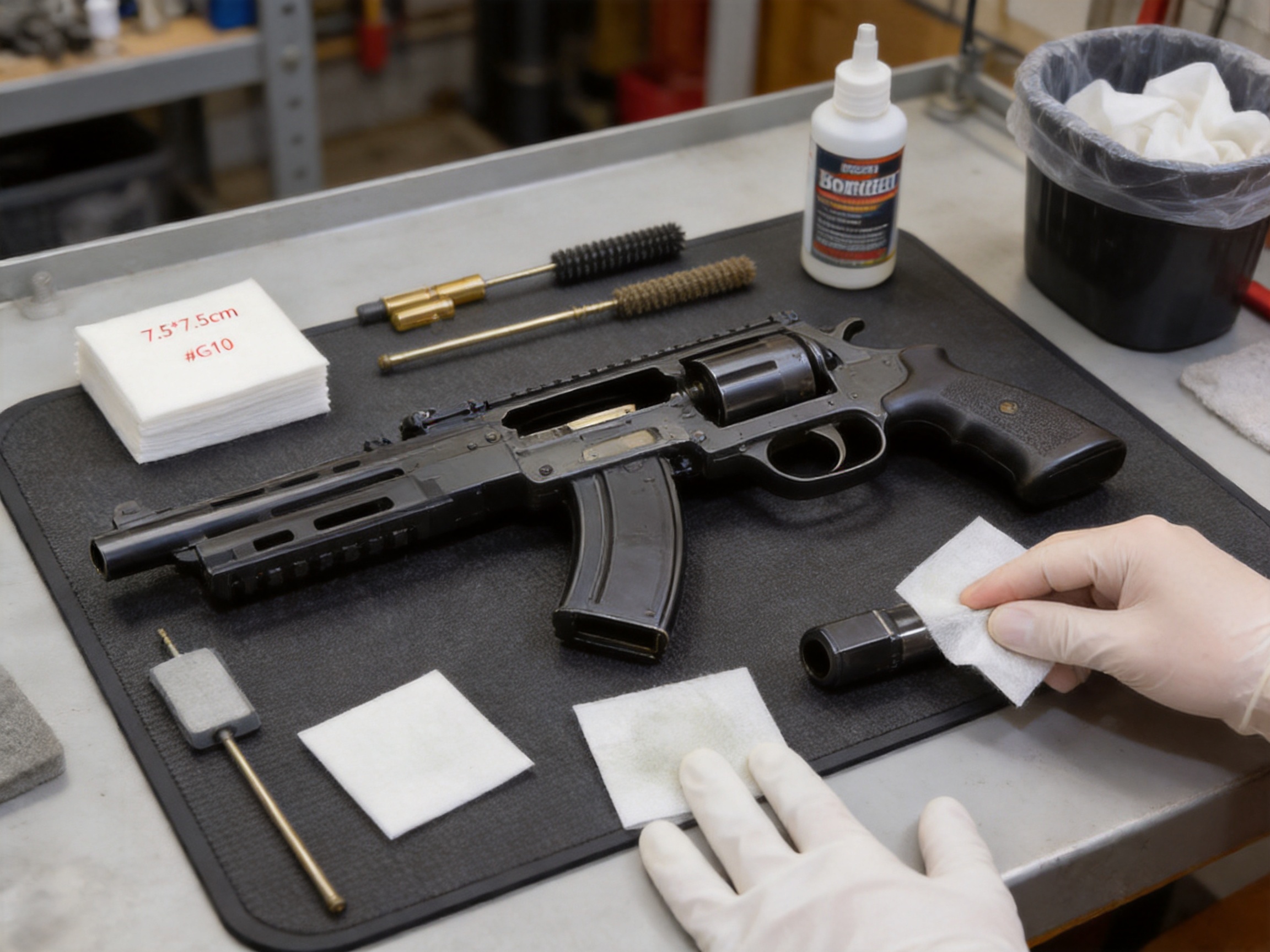
The cloth supports several stages of routine maintenance. During initial cleaning, it can help remove loose dust, excess lubricant, and visible residue from accessible surfaces. When used with an appropriate cleaning solution, it can carry loosened contaminants away from the firearm.
During bore care, a compatible patch can be attached to a cleaning rod or jag. The patch may be used after brushing to remove loosened fouling, or during a final pass to check whether additional residue remains. The exact number of passes depends on the firearm, the condition of the bore, the cleaning chemistry, and the maintenance procedure selected by the user.
The cloth can also be used for controlled oiling. A small amount of suitable lubricant may be applied to the patch before wiping approved external or internal surfaces. The cloth helps distribute a thin film rather than depositing an excessive amount of oil in one location. Excess lubricant should be removed where appropriate, particularly in areas where it could attract dust or interfere with operation.
For exterior care, the large sheet provides enough surface area to handle a receiver, barrel exterior, or other metal component. Users can designate separate patches for solvent application, residue removal, oiling, and final polishing. This staged approach helps prevent the transfer of aggressive cleaning chemicals or dirty lubricant between surfaces.
One of the product’s important functional advantages is its disposable format. A reusable cloth can be washed, but laundering does not always remove all metal particles, carbon deposits, oil, or chemical residue. If the cloth is reused without careful separation and cleaning, contaminants may be transferred to another firearm or a previously cleaned component.
Disposable patches provide a simple control point. A fresh patch can be used for a new cleaning stage, a different firearm, or a final inspection. This approach is particularly useful for professional service providers, training facilities, shooting clubs, distributors that offer maintenance services, and users who maintain multiple firearms.
Disposable does not mean the patch should be used carelessly. The cloth should be discarded responsibly after it becomes saturated, heavily soiled, torn, or contaminated with unsuitable chemicals. Users should also follow local requirements for the disposal of solvent-contaminated materials and should never leave used patches near heat, sparks, open flames, or other ignition sources.
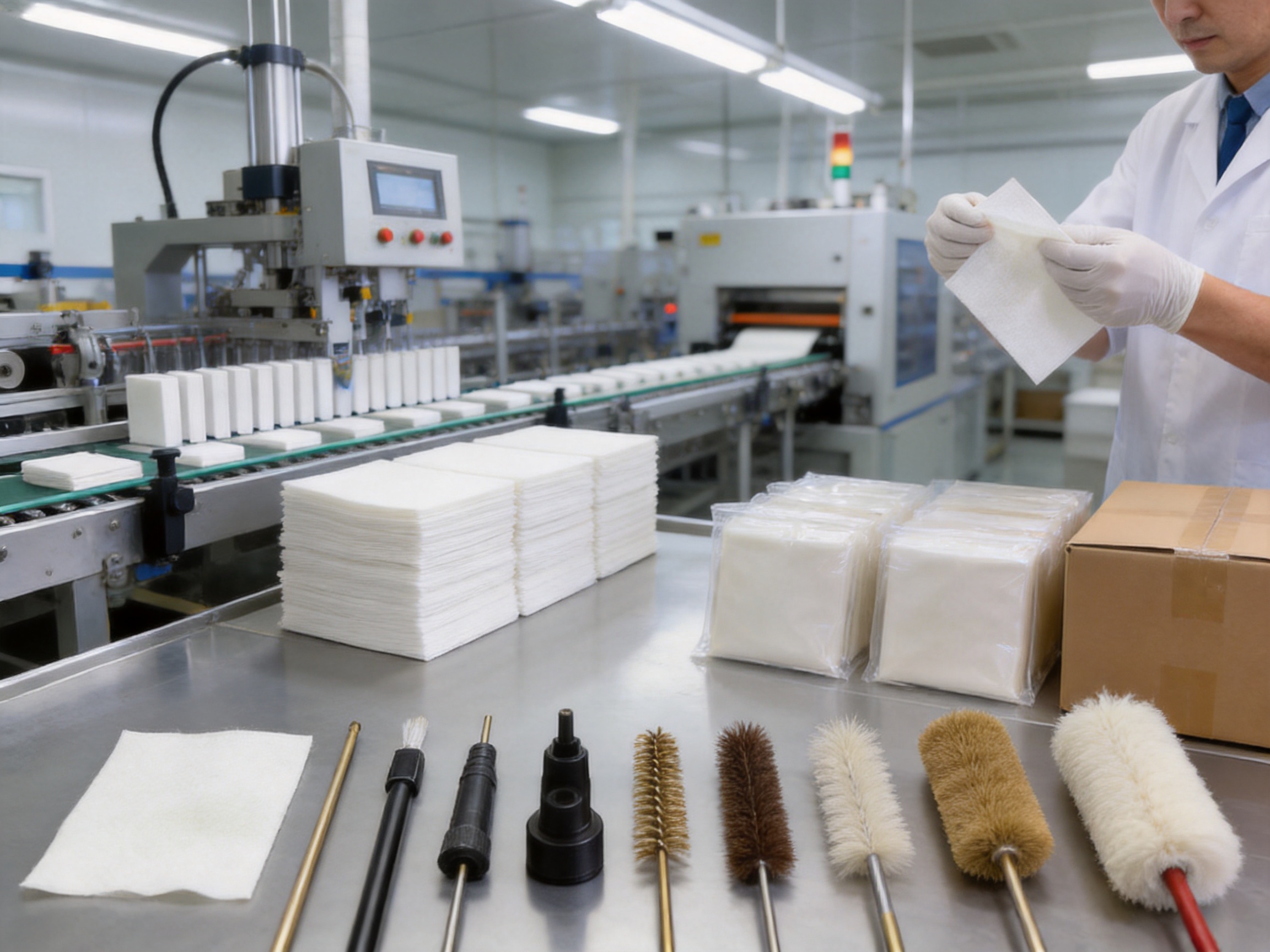
The product is manufactured from hydroentangled nonwoven fabric. In a typical production sequence, selected fibers are formed into a web, distributed to create a reasonably uniform sheet, and consolidated through water-jet entanglement. The resulting web is then dried, inspected, slit or cut, counted, packed, and prepared for shipment.
Hydroentanglement is valuable because it produces a fabric-like sheet without relying on conventional weaving. The fibers are mechanically interlocked, helping the material maintain its shape during handling. This supports the product’s low-lint objective, soft surface, and resistance to ordinary tearing and separation.
Converting the material into standardized rectangles requires accurate cutting equipment and process control. Consistent dimensions help the patch fit cleaning accessories more predictably and make each package easier to count and sell. For OEM customers, stable size and appearance also support consistent branded packaging and product photography.
Quality control can be applied at multiple points. Incoming material can be checked for appearance, thickness, cleanliness, and conformity with the required specification. During production, operators and quality personnel can inspect cut accuracy, edge condition, visible contamination, package count, and sealing quality. Finished products can then be reviewed before shipment.
The company behind this product operates a manufacturing facility with semi-automatic and fully automated production systems. The combination of equipment and experienced personnel supports scalable production for both standard orders and customized programs. Automation can improve repeatability, while human inspection remains useful for identifying visual defects, packaging problems, or unusual material conditions.
For buyers, this manufacturing structure offers a significant advantage over informal or small-scale supply channels. A factory with dedicated production, packing, and export experience can provide more stable lead-time planning, clearer product specifications, and better support for repeat orders.
Jinhua Tongshun Tool Factory was established in 1999 and has more than 26 years of experience in the development and manufacture of firearm cleaning kits, barrel-cleaning brushes, rods, patches, cloths, and related accessories. Its product range covers several categories, including bronze and brass brushes, nylon and other material brushes, bore mops, cleaning rods, adapters, patches, and OEM cleaning products.
This broader product portfolio is useful for buyers seeking to build complete maintenance programs. Instead of sourcing only a cloth from one supplier and rods, brushes, and mops from unrelated factories, a distributor may be able to coordinate several compatible product categories through one experienced manufacturing partner.
The facility uses semi-automatic and fully automated production systems to support large-scale orders. Production capability is particularly important for cross-border e-commerce sellers and wholesale distributors, because demand can increase rapidly after a successful product launch. A supplier that can maintain consistent output is better positioned to support replenishment and seasonal demand.
The company reports exports to more than 50 countries and regions. Experience with international customers can help with packaging coordination, product documentation, export arrangements, communication across time zones, and the practical requirements of different sales channels.
Customization is a major advantage for importers and brand owners. The product information identifies customization as available, and the factory provides OEM and ODM services for products, packaging, and logos. This allows buyers to sell the cloth under their own brand or include it in a larger proprietary cleaning kit.
OEM customization may include branded labels, printed packaging, insert cards, carton markings, and product assortment. Buyers can select the sizes they need, choose a package count, and create a product presentation that matches their existing line of firearm maintenance tools.
ODM cooperation may extend to product configuration and kit development. For example, a buyer could combine small bore patches, medium patches, large exterior cloths, cleaning rods, adapters, brushes, and lubricant-related accessories into a market-specific kit. The exact configuration should be discussed with the factory according to target-market requirements and production feasibility.
White-label supply is useful for online retailers that want to build brand recognition without establishing their own production line. A professionally packed cleaning cloth can complement other shooting accessories and increase the perceived completeness of a maintenance range.
| Customization area | Potential buyer requirements |
| Branding | Private logo, brand name, or product-series identity |
| Packaging | Retail box, pouch, polybag, carton, or custom printed format |
| Product assortment | Small, medium, large, or mixed-size combinations |
| Pack quantity | Standard 50-piece pack, portable 10-piece pack, or agreed quantity |
| Kit integration | Combination with rods, jags, brushes, mops, adapters, or other accessories |
| Export labeling | Language, barcode, carton, and market-specific information as required |
The cloth is suitable for several customer groups. Professional shooters may use it as part of a regular maintenance routine. Firearm retailers can offer it as an accessory or replacement consumable. Law-enforcement suppliers and institutional distributors may include it in maintenance kits, subject to their own procurement and compliance requirements.
Firearm maintenance service providers can benefit from the standardized dimensions and disposable format. A service technician can use a fresh patch for each stage of a maintenance job, helping organize the workflow and reduce the chance of transferring residue between customer firearms.
Cross-border e-commerce sellers may find the product attractive because it is lightweight, compact, and comparatively simple to package. The product can be marketed individually, in multi-packs, or as part of a complete gun-cleaning kit. Its small shipping volume can support efficient storage and fulfillment, although final logistics costs depend on order quantity, packaging, destination, and shipping method.
Hardware distributors can also use the large sheets for general metal-component cleaning. Although the product is positioned for firearm maintenance, its nonwoven construction and wiping function may be useful for compatible tools, machinery components, precision hardware, and workshop surfaces. Buyers should validate chemical compatibility and surface suitability before expanding into other applications.
Before beginning maintenance, make sure the firearm is unloaded and follow the manufacturer’s safety instructions. Remove ammunition from the immediate work area and use a stable, well-lit workspace. The cleaning cloth should be treated as one part of a complete maintenance system rather than as a replacement for safe handling procedures.
Select a patch size appropriate for the task. Use the small size for narrow bore-cleaning applications with a compatible rod and jag. Use the medium size for broader bore requirements or general wiping. Reserve the large sheet for receivers, external surfaces, metal components, and workbench protection.
When using a patch through a bore, select a suitable patch holder or jag and avoid excessive force. The patch should provide useful contact without becoming so tight that the rod binds. If resistance is abnormal, stop and reassess the patch size, accessory compatibility, and condition of the bore.
For solvent use, apply only a suitable amount of the product recommended for the specific cleaning stage. Allow the solvent to work according to its instructions, then use a fresh cloth or patch to remove loosened residue. Avoid mixing incompatible chemicals and prevent solvent from contacting surfaces that the firearm manufacturer identifies as unsuitable.
For oiling, apply a controlled amount of approved lubricant to the cloth rather than flooding the firearm. Wipe the intended surface evenly and remove excess oil where necessary. A final dry or lightly treated patch may be used to confirm that no unwanted accumulation remains.
Inspect the patch during use. Replace it when it becomes dirty, saturated, torn, or ineffective. Using several clean patches is often more efficient than repeatedly working with one contaminated patch.
The standard 50-piece package is suitable for regular users, maintenance departments, retailers, and wholesale distribution. A larger count gives customers enough material for repeated cleaning sessions and makes the product practical as a replenishment item.
The 10-piece large-size package is better suited to portability and occasional use. It can be positioned as a field-maintenance accessory, a range-bag item, or a supplementary pack for users who already own a full cleaning kit. Different pack sizes allow sellers to address both value-oriented and convenience-oriented customers.
For retail presentation, the product can be organized by size, application, or firearm category. Packaging should clearly identify the dimensions, quantity, material, recommended use, and any relevant care instructions. If a buyer uses private labeling, a clear size-color system can help customers distinguish small, medium, and large variants.
For wholesale cartons, buyers should confirm the inner-pack and master-carton configuration, carton dimensions, gross and net weights, labeling requirements, and palletization details with the factory. These specifications may vary according to custom packaging and order quantity.
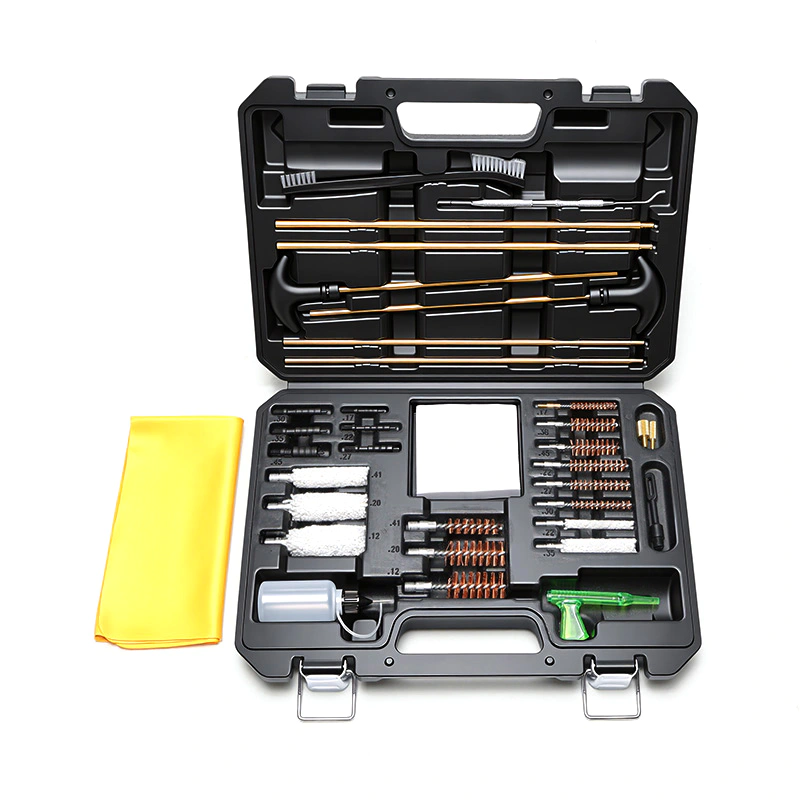
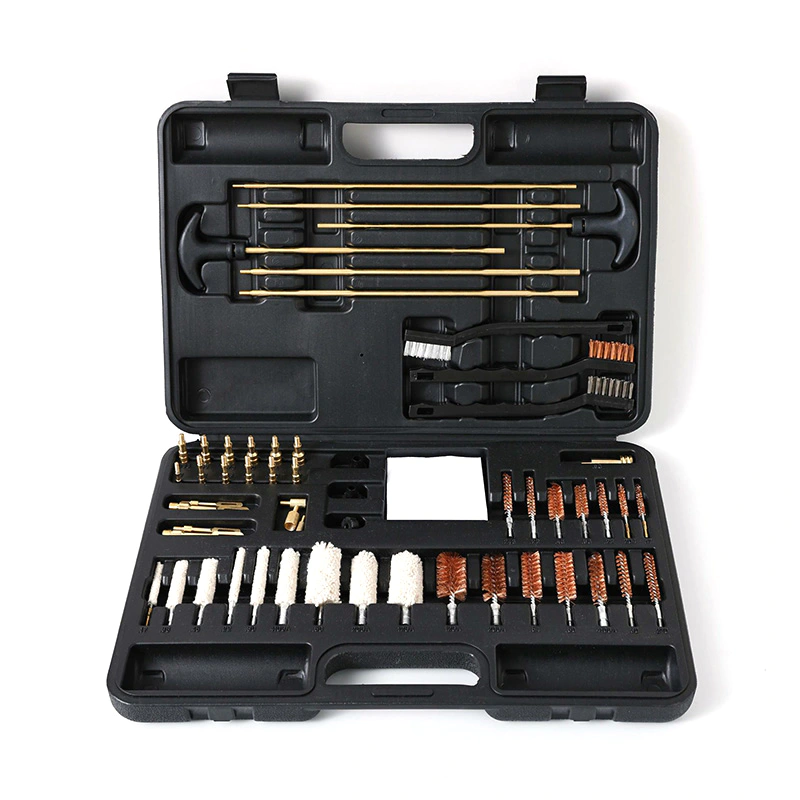
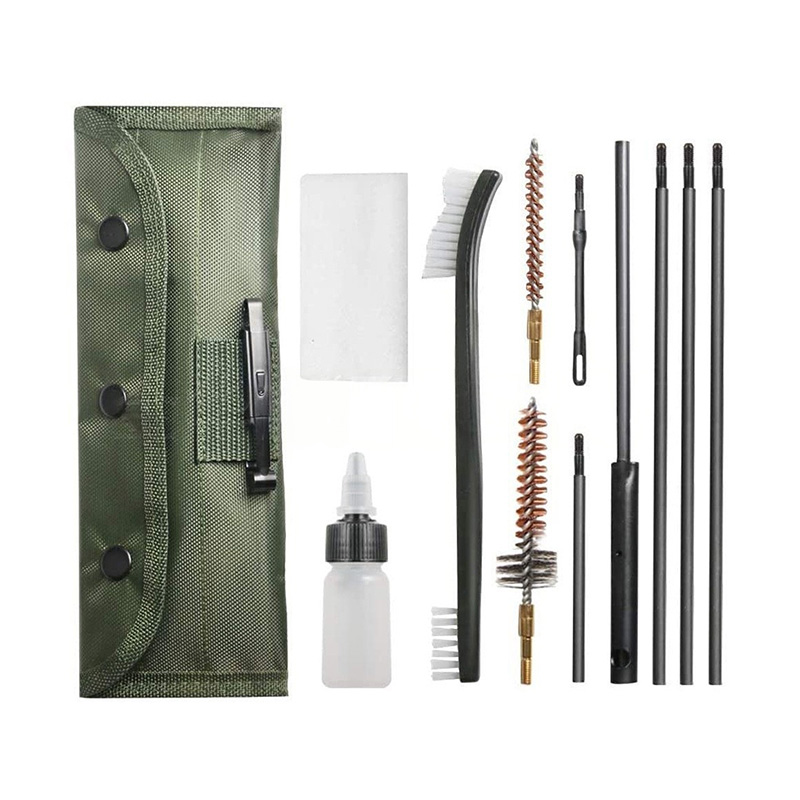
A cleaning cloth performs best when integrated with compatible tools. Brushes can loosen fouling, cleaning rods can provide controlled access, adapters can connect accessories, and bore mops can support specific cleaning or oiling steps. The cloth then removes loosened material, carries lubricant, and provides final wiping.
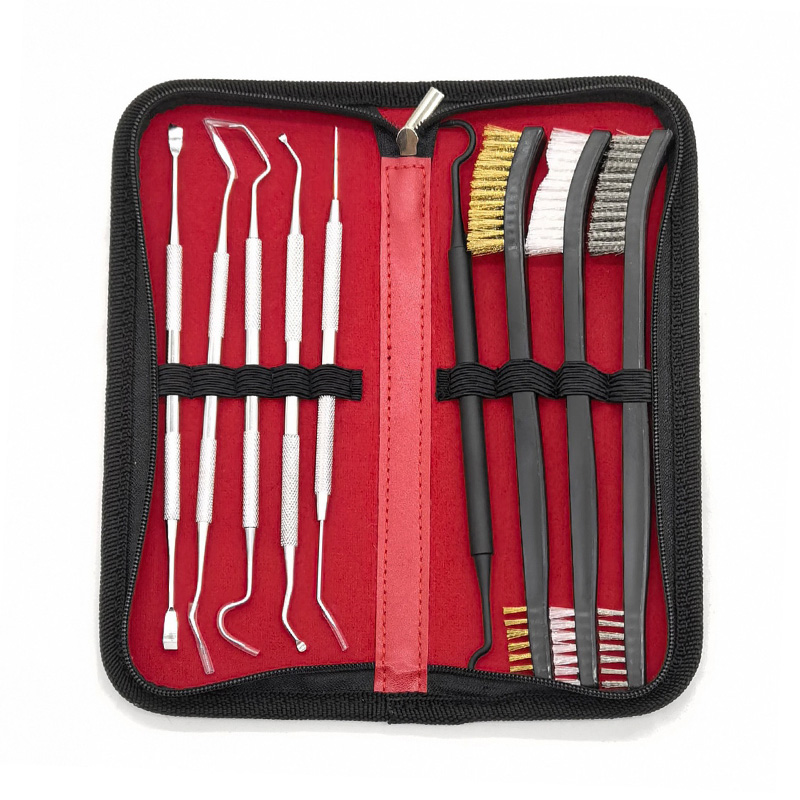
The manufacturer’s broader product categories include gun cleaning kits, bronze and brass brushes, nylon and other material brushes, bore mops, cleaning rods, adapters, patches, and cloths. This range allows buyers to develop coordinated product assortments. A complete kit may contain multiple brush materials because different surfaces and cleaning stages require different levels of stiffness and contact.
For retailers, coordinated compatibility can simplify product selection. A customer purchasing a cleaning rod may also need patches and a jag. A customer purchasing a bronze brush may need a final-wipe cloth. Offering related items from the same supply source can help create logical bundles and increase the usefulness of each product listing.
The main competitive strengths of this nonwoven cleaning cloth are its low-lint construction, anti-static positioning, multiple sizes, disposable format, factory-direct customization, and compatibility with broader cleaning-tool programs.
Compared with low-cost generic rags, it offers a more defined specification and more consistent dimensions. Compared with fragile paper products, it provides greater handling strength and better suitability for controlled wiping. Compared with reusable cloths, it provides a convenient way to separate cleaning stages and reduce cross-contamination.
Compared with suppliers that offer only a single product category, the factory can support a wider cleaning-tool range. This may reduce sourcing complexity for importers and help brand owners create a more unified product family.
| Competitive factor | Product or factory advantage |
| Fiber control | High-density hydroentangled construction helps reduce lint and loose residue |
| Surface care | Soft material supports wiping of approved metal and hardware surfaces |
| Product range | Small, medium, and large formats for different maintenance tasks |
| Hygiene and workflow | Disposable patches help reduce cross-contamination between tasks |
| Packaging flexibility | Standard 50-piece packs and portable large-size options |
| Brand development | OEM, ODM, logo, and packaging customization |
| Manufacturing support | Semi-automatic and automated systems for scalable production |
| Supply experience | More than 26 years of manufacturing experience and exports to over 50 regions |
Importers should confirm the exact dimensions, material specification, pack count, packaging format, and carton details before placing a production order. Product information may use approximate dimensions for marketing, while final manufacturing tolerances should be agreed in the purchase specification.
Buyers should also determine whether they need one size or a mixed assortment. A retailer focused on pistol and rifle owners may prioritize small patches, while a shotgun-oriented distributor may require more medium or large pieces. A complete kit brand may benefit from including all three sizes.
Private-label customers should prepare artwork according to the factory’s packaging requirements. Important details may include logo files, color references, barcode information, product claims, language versions, warning text, and carton markings. Clear approval procedures can reduce delays during sampling and mass production.
Samples are recommended before a large order. Buyers can evaluate the material, cutting accuracy, lint performance, absorbency, packaging quality, and compatibility with their intended cleaning accessories. Samples also allow a brand owner to check how the product photographs and how easily customers understand the size differences.
Market-specific compliance requirements should be reviewed by the buyer. Firearm accessory regulations, chemical labeling, packaging rules, environmental requirements, and import documentation can differ by destination. The factory can provide product and export information, but the importer remains responsible for confirming the requirements applicable to its market and sales channel.
Store unused cloths in clean, dry packaging away from direct moisture, excessive heat, dust, and chemical vapors. Keeping the package sealed until use helps preserve cleanliness and prevents the cloth from absorbing unwanted contaminants from the environment.
Do not place unused patches on dirty workbenches or in containers that previously held solvent or oily rags. If the product is supplied in a resealable package, close it after removing the required quantity. For wholesale storage, keep cartons elevated from damp floors and protect them from crushing or abrasion.
Used cloths should be separated from unused stock. Solvent-contaminated patches should be stored and discarded according to applicable safety procedures. They should not be exposed to flames, sparks, smoking materials, or uncontrolled heat.
The cloth is made from high-density hydroentangled nonwoven fabric. The fibers are mechanically entangled into a compact sheet designed to provide a soft, durable, and low-lint cleaning surface.
It means the material is designed to minimize fiber shedding during normal handling and cleaning. No disposable cloth should be assumed to leave absolutely zero particles in every situation, but the compact nonwoven structure helps reduce visible lint and residue compared with loosely woven or improvised materials.
The listed sizes include approximately 7.5 × 3.8 centimeters, 7.5 × 7.5 centimeters, and 19 × 19 centimeters. The small size is generally used for narrow bore-cleaning tasks, the medium size supports larger applications, and the large size is intended for exterior surfaces and broader wiping work.
The standard specification is 50 pieces per pack for the small, medium, and large variants. A portable large-size option with 10 pieces is also available.
It can be used to apply or remove suitable cleaning products, provided that the solvent is compatible with the firearm surface and the cloth’s intended use. Users should follow the solvent manufacturer’s instructions, avoid incompatible chemical combinations, and use appropriate ventilation and protective practices.
Yes. The product information identifies wiping and oiling as a variant or function. A small amount of suitable lubricant can be applied to the cloth for controlled distribution. Excess lubricant should be removed where necessary.
Yes. The small patch is intended for use with compatible cleaning rods, jags, and patch holders. Users should select the correct accessory and avoid forcing a patch that creates excessive resistance.
No. It is primarily suitable for receivers, exteriors, metal components, and larger cleaning areas, but it may also be useful for compatible tools and hardware. Surface compatibility should be confirmed before using it on painted, coated, polymer, or specially finished materials.
It is designed as a disposable cleaning consumable. Reuse may transfer dirt, carbon, metal particles, oil, or chemical residue. For cleaner and more controlled maintenance, users should replace the cloth when it becomes dirty, saturated, damaged, or contaminated.
Yes. Customization is available, including OEM and ODM services for products, packaging, and logos. Buyers should discuss minimum order quantities, artwork, sampling, packaging materials, and production schedules with the factory.
Yes. It can be combined with cleaning rods, adapters, brushes, bore mops, jags, and other accessories. The manufacturer’s broader product range makes it possible for buyers to develop coordinated cleaning-kit assortments.
The product is manufactured in Jinhua, Zhejiang, China, by a factory specializing in gun cleaning kits and related accessories.
Potential buyers include firearm-accessory distributors, shooting-sports retailers, law-enforcement suppliers, maintenance-service providers, cross-border e-commerce sellers, private-label brands, and importers seeking consumable cleaning products.
Buyers should confirm dimensions, material, pack quantity, packaging, logo requirements, carton details, production lead time, sample approval, shipping terms, and destination-market requirements. These details help ensure that the final product matches the intended sales channel.
The Lint-Free Nonwoven Gun Cleaning Cloth Anti-Static Factory Supply is a practical and scalable solution for bore cleaning, wiping, lubrication, and firearm surface care. Its high-density hydroentangled structure is designed to reduce lint and provide a durable yet soft cleaning surface. The anti-static positioning supports cleaner handling, while the disposable format helps separate maintenance stages and reduce cross-contamination.
Its three-size range makes the product suitable for small-caliber pistols, rifles, larger-caliber applications, shotguns, receivers, and exterior metal components. Standard 50-piece packs support regular maintenance and wholesale distribution, while the 10-piece large-size package offers a portable alternative.
For buyers, the product’s value extends beyond the cloth itself. The manufacturing partner provides more than 26 years of experience, semi-automatic and automated production systems, international export capability, and OEM and ODM customization. Its broader range of brushes, rods, mops, patches, and gun-cleaning kits creates opportunities for coordinated product sourcing and private-label development.
For retailers and distributors seeking a reliable cleaning consumable, this nonwoven cloth offers a balanced combination of material performance, size flexibility, packaging options, and factory support. With appropriate product selection, packaging design, and safe maintenance instructions, it can serve as a dependable component in professional firearm-care programs and global cleaning-accessory portfolios.
Lint-Free Nonwoven Gun Cleaning Cloth Anti-Static Factory Supply
1. Product specification and technical information supplied for the Lint-Free Nonwoven Gun Cleaning Cloth, Model 1211.
2. Manufacturer information for Jinhua Tongshun Tool Factory, including company history, production capabilities, OEM and ODM services, and export markets.
3. General nonwoven-fabric manufacturing principles, including fiber-web formation, hydroentanglement, material consolidation, converting, and quality inspection.
4. General firearm-maintenance practices concerning unloaded-firearm verification, bore-cleaning accessories, controlled lubrication, patch replacement, and safe handling of cleaning chemicals.
5. General packaging and wholesale product-development practices for private-label, OEM, ODM, and cross-border e-commerce distribution.