English
 русский
 Español
 عربى

HUNTACE HUNTACE HUNTACE HUNTACE HUNTACE
HUNTACE HUNTACE HUNTACE HUNTACE

Reliable firearm maintenance depends on having the right tools available at the right time. A cleaning kit must remove carbon fouling, powder residue, copper deposits, dust, and surface contamination without damaging the bore or rifling. It must also be organized, portable, durable, and practical enough for routine use by firearm owners, shooting clubs, outdoor users, maintenance professionals, retailers, and private-label brands.
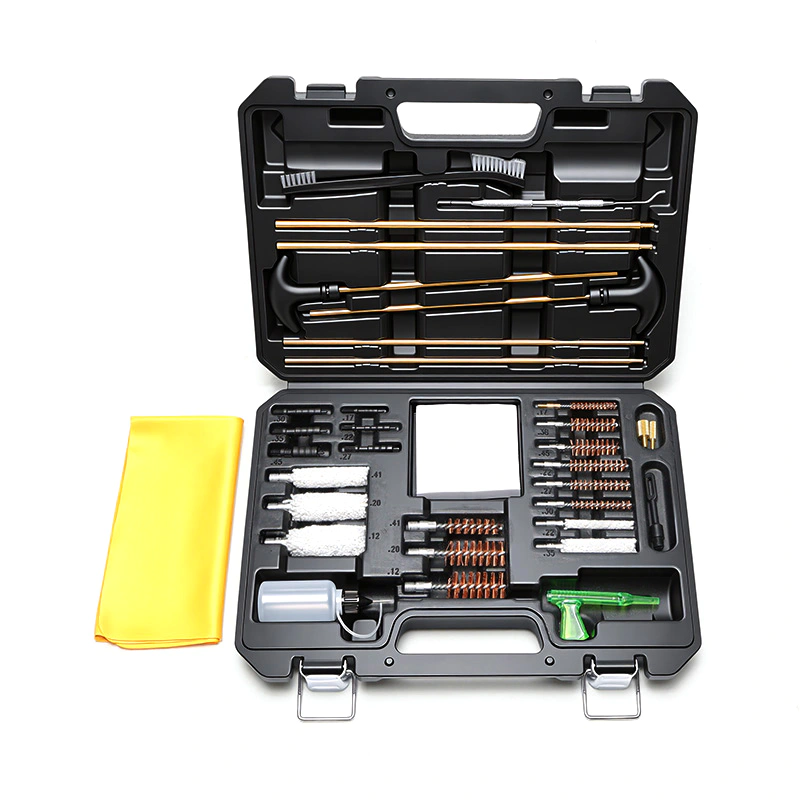
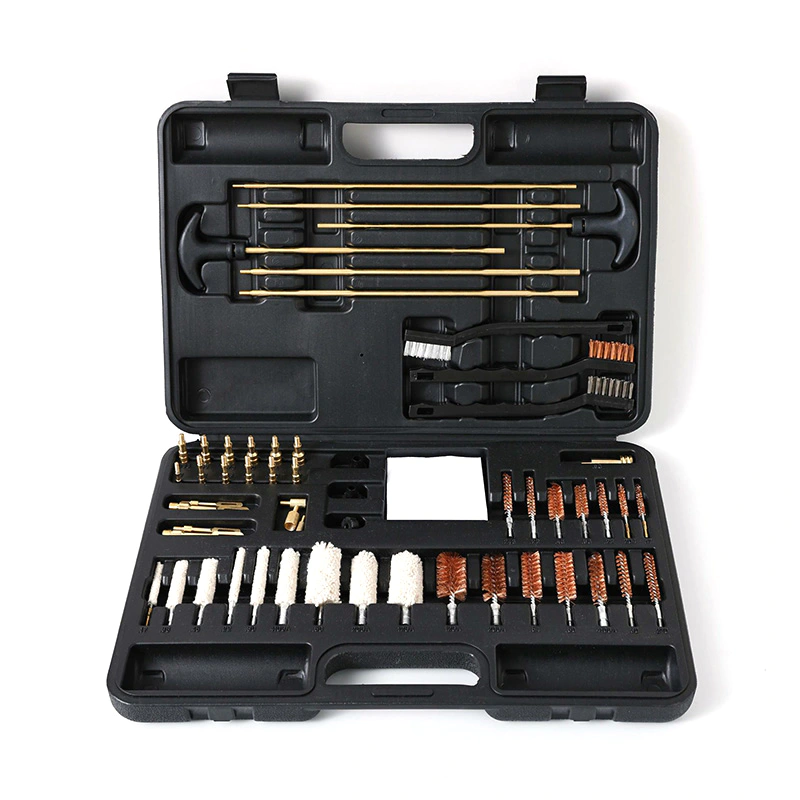
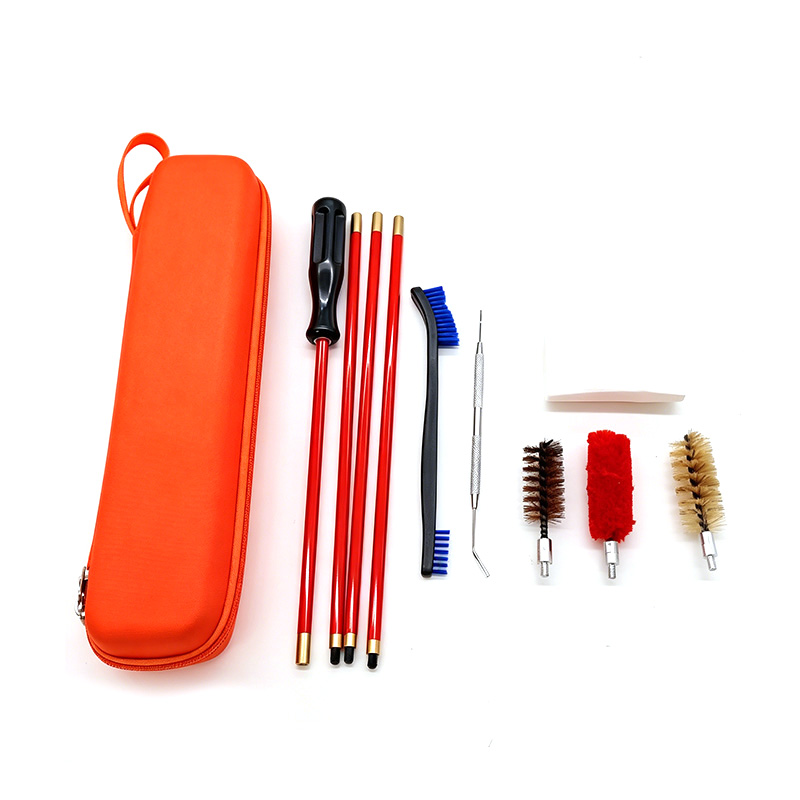
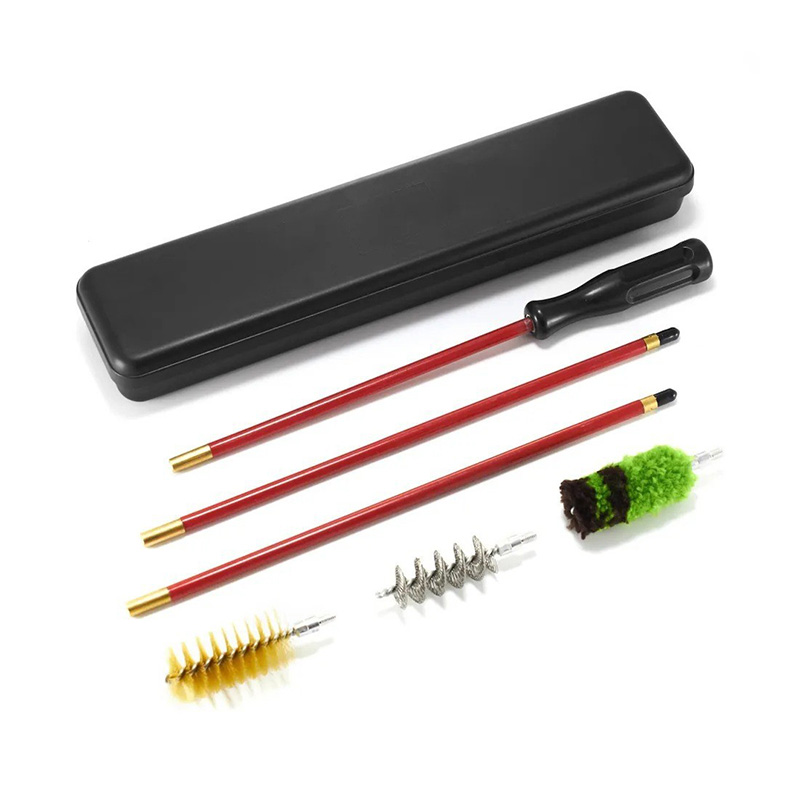
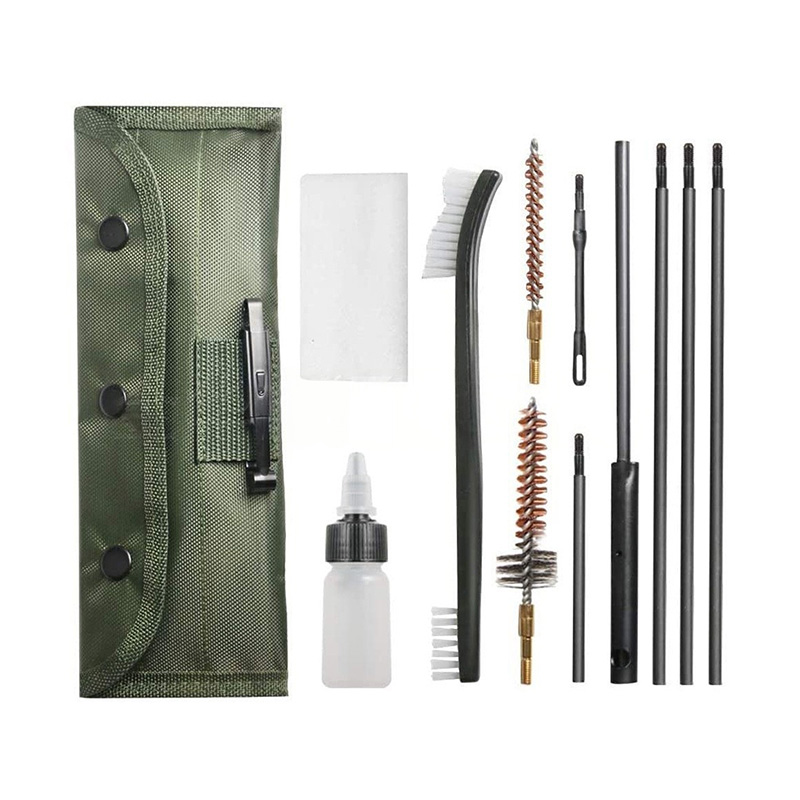
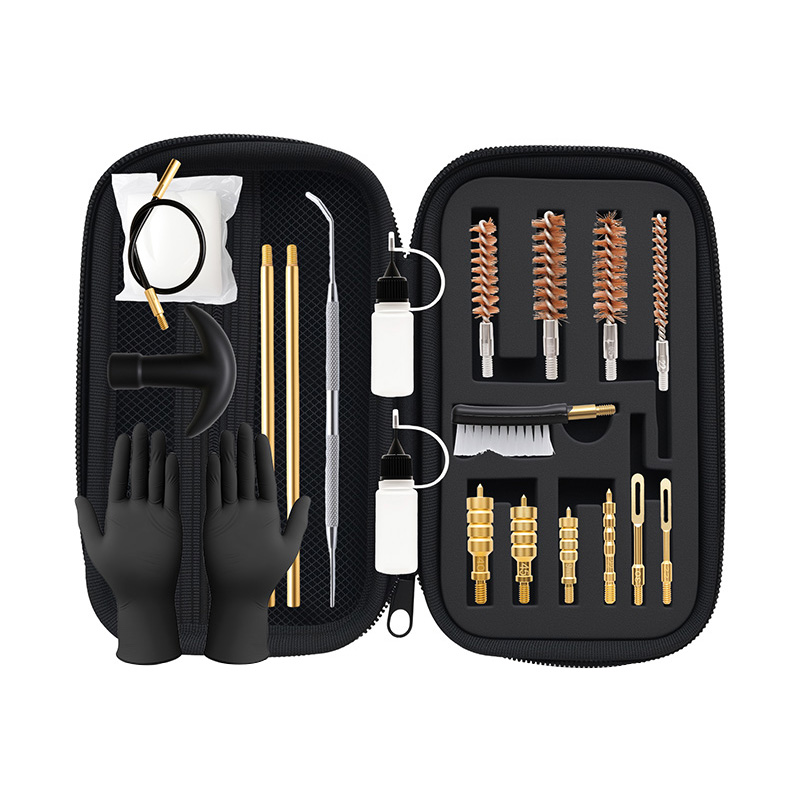
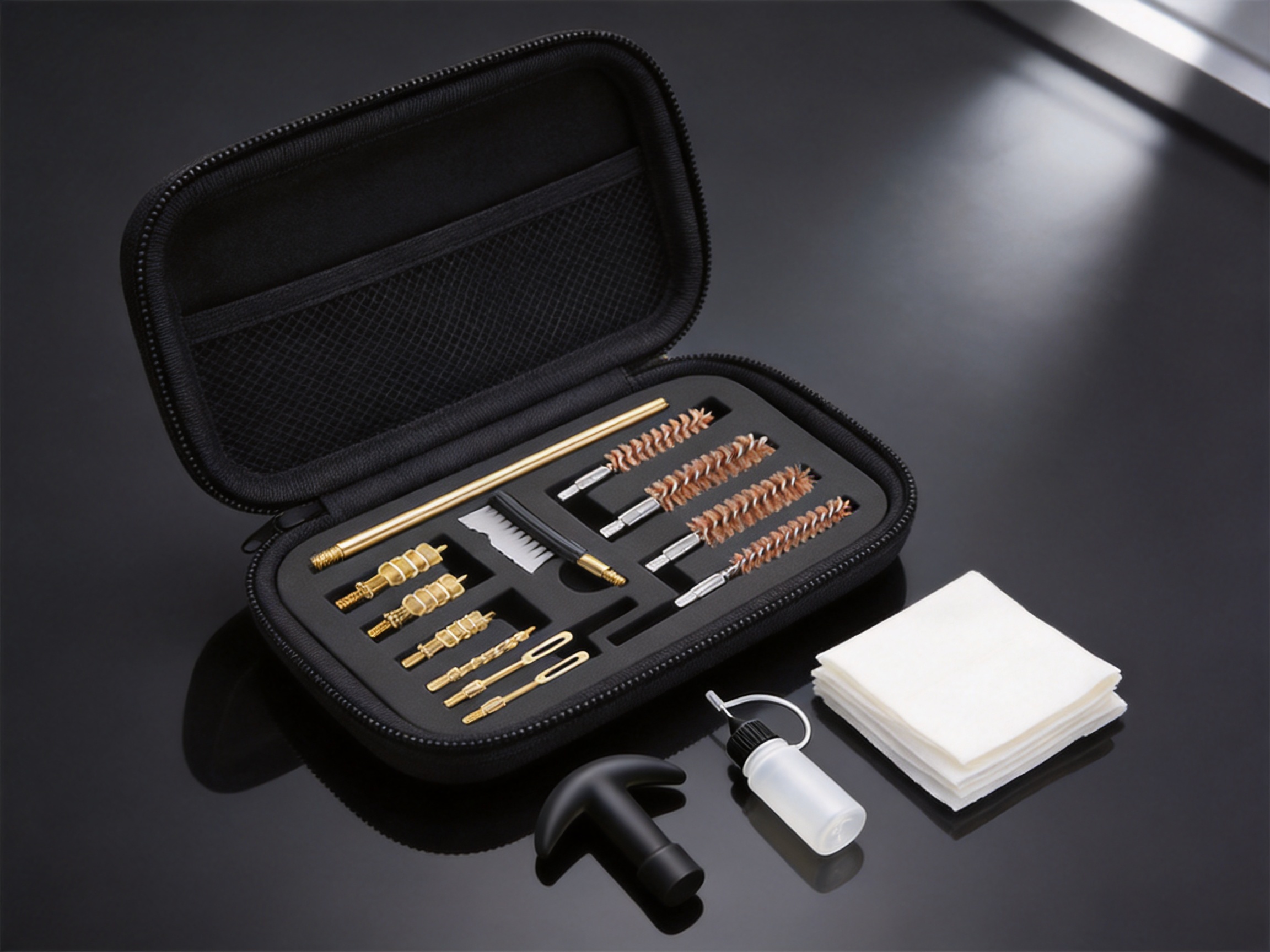
The Copper Wire Gun Cleaning Kit Set is designed as a complete maintenance solution for users who need more than a single brush or cleaning rod. It combines phosphor bronze brushes, nylon brushes, a brass cleaning rod, a cleaning hook, a T-handle, an oil bottle, and cleaning patches in one compact black carrying case. By bringing the primary cleaning components together, the kit supports deep bore cleaning, residue removal, rust-prevention routines, and general firearm care.
Its configuration balances cleaning effectiveness with bore protection. Copper-alloy and phosphor bronze components provide the mechanical action required to loosen stubborn fouling, while nylon brushes offer a softer option for lighter cleaning and sensitive surfaces. The brass rod provides rigidity and controlled reach, while the accessories improve convenience during disassembly, inspection, lubrication, and final wipe-down.
For wholesale buyers and product brands, this set also offers a practical product architecture. The factory supplies brass-based and nylon-based configuration options, allowing distributors to select the combination that best fits their customer base and target price point. The compact case supports retail presentation, storage efficiency, and transport, while OEM and ODM services allow customization of products, packaging, and logos.
Copper Wire Gun Cleaning Kit Set ( Hot-Seller)
Many basic firearm cleaning products are sold as individual components. A brush may be effective but lack a suitable handle. A rod may provide reach but not include patches or a hook. A bottle may be included without a case that keeps the tools organized. Such fragmented solutions can increase procurement complexity and make routine maintenance less convenient.
This cleaning kit addresses those limitations by combining the principal tools required for a complete cleaning session. The brush selection supports different cleaning stages, the rod provides controlled access to the bore, and the accessories help users manage small parts, patches, and lubrication materials. The result is a more coherent maintenance system rather than a collection of unrelated tools.
The included components are arranged in a compact EVA-lined case measuring approximately 11 × 17 × 4 cm. The EVA interior helps separate the tools, reduces movement during transport, and provides a defined storage position for each component. The black exterior offers a professional appearance suitable for outdoor equipment retailers, shooting accessories distributors, online sellers, and private-label product ranges.
Compact storage is especially valuable for users who travel to shooting ranges, participate in outdoor activities, maintain equipment in the field, or need a kit that can be stored in a range bag, workshop drawer, vehicle compartment, or equipment cabinet. A well-organized case also reduces the likelihood of misplaced accessories, which can otherwise interrupt the cleaning process.
Phosphor bronze brushes are widely used for firearm bore maintenance because they provide a useful combination of firmness, resilience, and controlled abrasion. They can help loosen powder residue, carbon fouling, and copper deposits while remaining suitable for normal barrel-cleaning applications when used correctly.
The copper-wire configuration gives the kit a strong cleaning identity. Copper-alloy bristles can enter the bore grooves and lands to dislodge material that may not be removed by patches alone. This is important because residue can accumulate in areas that are difficult to reach with a cloth, especially after repeated firing or extended storage.
The brush is not intended to replace correct cleaning technique. Users should select the appropriate brush size, apply suitable cleaning solvent when required, avoid excessive force, and follow the maintenance instructions applicable to the firearm. Within those normal precautions, the included metal brush provides the mechanical action needed for more demanding cleaning work.
Nylon brushes provide an alternative when the user wants a less abrasive cleaning method. They are suitable for lighter residue, preliminary brushing, surface cleaning, and situations where a softer material is preferred. Nylon can also be useful for cleaning areas around the action, chamber, threads, and other components where a metal brush may not be the first choice.
Including both metal and nylon brush options improves the flexibility of the kit. Users can begin with nylon for loose residue and move to phosphor bronze for more persistent fouling. Alternatively, they can use the metal brush for the bore and reserve the nylon brush for external or accessory cleaning. This multi-stage approach helps users match the tool to the task instead of relying on one brush for every application.
For distributors, the dual-material concept provides a clear selling point. A product that includes only one brush type may appeal to a narrow customer segment, while a kit containing both metal and nylon options is easier to position as a comprehensive maintenance package. It can serve occasional users who want convenience as well as experienced users who value tool selection.
The brass cleaning rod is a central component of the set. A rod provides a stable path for pushing patches and supporting cleaning accessories through the bore. Brass is commonly selected for cleaning rods because it offers useful rigidity and is generally considered a bore-conscious material when handled properly.
The rod works together with the brush and patches to create a sequential cleaning process. A user may first apply a brush to loosen fouling, then use patches to remove loosened residue and cleaning solution. This combination is more effective than relying on a dry cloth alone because brushing and wiping perform different functions.
The T-handle improves grip and control during use. A handle that can be held securely allows the user to apply steady, moderate pressure rather than excessive force. It also makes the cleaning process more comfortable during repeated passes. The handle material is listed as PP, a lightweight material commonly used for practical tool handles and accessory components.
Control is particularly important when working inside a bore. The objective is to clean thoroughly while avoiding unnecessary pressure, twisting, or impact. The rod, handle, and brush assembly are therefore most effective when used with a measured, straight, and firearm-appropriate cleaning technique.
The kit includes a cleaning hook, oil bottle, and cleaning patches in addition to brushes and the rod. These accessories are small, but they make the product more useful as a complete system.
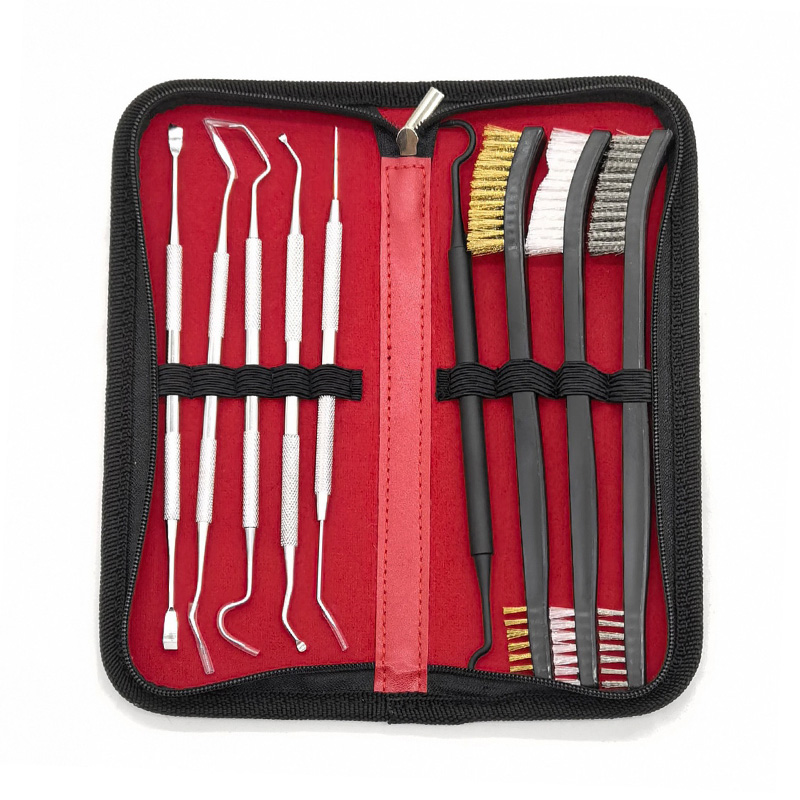
A cleaning hook can assist with handling patches, reaching narrow areas, and removing residue from locations that are difficult to access with a standard brush. It may also help users manage small cleaning materials without using their fingers in confined spaces. The hook should always be used carefully and only for appropriate maintenance tasks.
The oil bottle supports lubrication and rust-prevention routines. After cleaning and drying, a suitable firearm maintenance oil may be applied according to the firearm manufacturer’s guidance. A compact bottle is convenient for controlled application and helps users carry the necessary maintenance liquid without adding a separate accessory to the equipment bag.
Cleaning patches provide the final wiping stage of maintenance. They can carry cleaning solution into the bore, collect loosened residue, and help users inspect the condition of the barrel after brushing. Patches are also useful for wiping accessible external surfaces and removing excess oil after lubrication.
By including these components in one package, the set minimizes the need for additional purchases. This improves the user experience and creates a stronger value proposition for retailers. Buyers receive a coordinated product rather than having to determine which accessories are compatible with one another.
The primary purpose of the Copper Wire Gun Cleaning Kit Set is routine firearm maintenance. It is suitable for cleaning work associated with powder residue, carbon fouling, copper deposits, dust, and light surface contamination. The combination of brushes, rod, patches, and oil accessories supports both post-use cleaning and scheduled maintenance.
After shooting, residue can remain in the bore and other accessible areas. If maintenance is delayed, residue may become more difficult to remove and may contribute to corrosion risks when combined with moisture or unsuitable storage conditions. A complete kit makes it easier for users to establish a consistent cleaning routine.
The set can also support rust-removal and rust-prevention procedures when used with appropriate cleaning and protective products. The kit itself is a tool set; the user remains responsible for selecting chemicals that are compatible with the firearm and for following safe handling procedures. The oil bottle and patches help complete the process, but they do not replace correct storage, inspection, or manufacturer-recommended maintenance.
For professional users, repeatability is an important advantage. A fixed kit configuration provides the same basic tools each time maintenance is performed. This can help reduce preparation time, improve workshop organization, and support consistent procedures in retail demonstration environments, clubs, training facilities, and equipment service operations.
A single brush or rod may have a low purchase price, but users often need multiple accessories before they can perform a complete cleaning session. The Copper Wire Gun Cleaning Kit Set combines the key items into one product, reducing the time spent sourcing compatible tools.
For distributors, this integrated structure can simplify inventory management. One packaged item can cover multiple customer needs and can be displayed as a complete solution. It also creates opportunities for bundle promotions, seasonal outdoor campaigns, range-equipment packages, and private-label maintenance sets.
The inclusion of phosphor bronze, copper-alloy, and nylon cleaning options gives the kit more flexibility than a single-material product. Metal brushes provide stronger mechanical cleaning action, while nylon brushes support softer applications. This distinction is easy for retailers to explain and easy for end users to understand.
Competitor products that focus only on nylon may not provide the same level of mechanical action for stubborn fouling. Products that include only metal brushes may offer less flexibility for users who prefer a softer brush for certain areas. A mixed configuration helps the kit appeal to a wider audience.
Packaging is part of the product experience. Loose tools can become scratched, lost, or difficult to identify. The EVA-lined case gives the kit a defined storage structure and improves portability. It also presents the set as a professional product rather than an unorganized assortment of accessories.
The compact case is suitable for online retail fulfillment because it occupies limited storage space and can be packed efficiently. It is also suitable for brick-and-mortar displays, where a clean case presentation can communicate product value quickly.
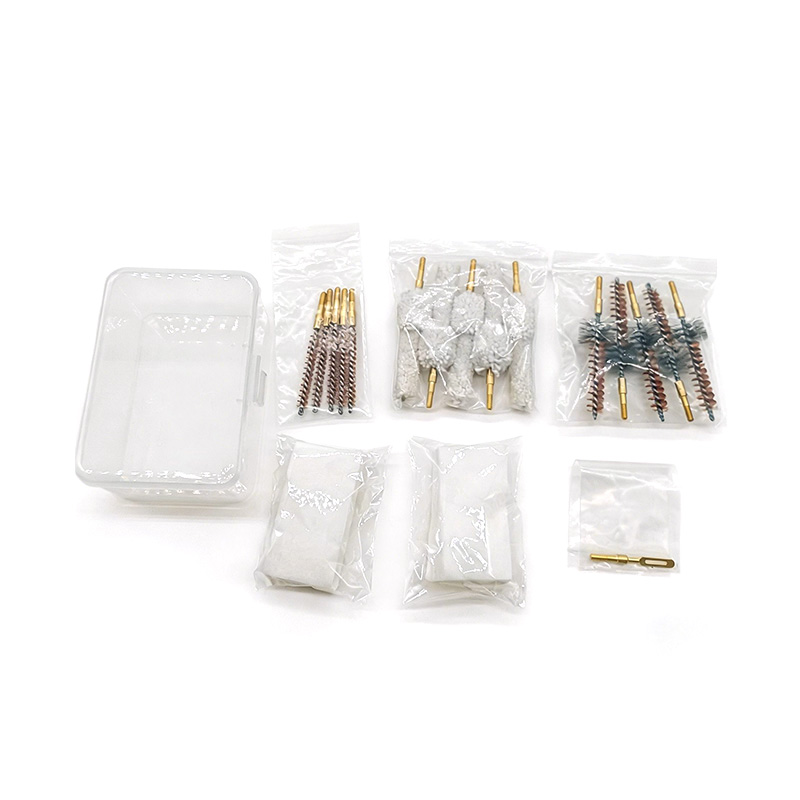
The factory offers brass-based and nylon-based configuration options. This enables buyers to select the configuration that aligns with regional demand, customer preferences, application requirements, and sales channel positioning. Wholesale purchasers do not have to rely on a single fixed version for every market.
Configuration flexibility is especially useful for OEM customers. A brand may prefer to promote a professional metal-brush version, while another may focus on a general-purpose nylon-oriented kit. Both can be developed from the same basic product platform, subject to specification confirmation and production requirements.
Direct factory sourcing can provide advantages in communication, specification control, production coordination, and order planning. Instead of relying solely on a trading intermediary, buyers can communicate product requirements directly with the manufacturer’s sales and production teams.
This structure is useful for customers who need custom packaging, logo application, product adjustments, or repeat supply. It can also support more consistent quality monitoring because the manufacturer controls the production process and can respond directly to technical questions.
The manufacturer behind the product was established in 1999 and has more than 26 years of experience in gun cleaning tools, barrel cleaning brushes, cleaning kits, and related accessories. This length of operating experience is significant for buyers seeking a stable supplier rather than a temporary source.
Long-term manufacturing experience supports the development of practical production knowledge. Brush construction, handle molding, accessory assembly, case organization, packaging, and inspection all require process familiarity. Over time, a factory can identify recurring quality risks, improve tooling, refine assembly methods, and establish more reliable production standards.
The company integrates research and development, production, and sales. This integrated structure allows product ideas and customer feedback to move more efficiently between commercial and manufacturing departments. It also supports the development of customized products for different markets and customer specifications.
The production facility uses semi-automatic and fully automated systems. Automation can improve consistency in repetitive operations, increase output capacity, and reduce variation caused by manual handling. Semi-automatic production remains valuable where product customization, assembly flexibility, or visual inspection requires human involvement. Combining both approaches allows the factory to balance efficiency with practical manufacturing control.
For large orders, stable production capacity is essential. A supplier may offer an attractive sample but struggle to reproduce the same quality at volume. The use of organized production systems helps support repeatable output across larger batches. Buyers should still confirm specifications, sample approval procedures, packaging details, and inspection standards before placing a commercial order.
The company exports to more than 50 countries and regions. International supply experience can help a manufacturer understand differences in packaging expectations, documentation, labeling, product configuration, and delivery coordination. It also indicates that the factory has experience serving buyers beyond its domestic market.
Quality control for a gun cleaning kit involves more than checking whether the final case contains the correct number of components. Each part must be reviewed for dimensions, fit, finish, functionality, and compatibility with the intended assembly.
Brushes should be checked for secure bristle attachment, consistent bristle distribution, proper shape, and clean connections. Loose or uneven bristles can reduce cleaning performance and affect the user’s perception of quality. Metal components should be inspected for burrs, sharp edges, deformation, and surface defects that could interfere with use.
The cleaning rod should be checked for straightness, thread quality, connection security, and compatibility with the included accessories. The T-handle should be firmly assembled and comfortable to hold. The cleaning hook should be shaped and finished so that it can be used safely for its intended maintenance purpose.
The EVA case should be evaluated for dimensional accuracy, interior layout, closure function, surface appearance, and component retention. A case that does not hold the tools securely can reduce the portability advantage of the product. Consistent case assembly also improves the appearance of retail-ready goods.
Packaging inspection is equally important for export orders. The factory can coordinate customized packaging and logos for OEM and ODM customers, but buyers should approve artwork, color references, printed information, barcode placement, carton configuration, and packing methods before mass production.
Quality control procedures may vary according to the order, market, and customer requirements. Professional buyers can establish a quality agreement covering approved samples, tolerances, inspection levels, defect classification, labeling, and shipment release conditions. These measures help protect both the supplier and the buyer by making expectations clear before production begins.
The Copper Wire Gun Cleaning Kit Set is suitable for customers building their own firearm maintenance product line. OEM and ODM services can support brand owners, distributors, sporting-goods companies, outdoor retailers, and e-commerce sellers who want a customized presentation.
Customization may include a printed or molded logo, retail box design, instruction materials, color selection, accessory arrangement, case branding, barcode labeling, and configuration changes. The exact options depend on order quantity, tooling requirements, materials, and production feasibility.
White-label supply can help a retailer enter the gun-cleaning accessory market without developing a completely new product from the beginning. The existing kit structure provides a practical starting point, while customized packaging and labeling can create a distinct market identity.
For ODM projects, the manufacturer’s experience with brushes, rods, patches, cases, and related accessories can help customers develop a more specific solution. A buyer may request a kit aimed at professional maintenance, range users, outdoor activities, gift packaging, or a particular sales channel. Product development should include sample evaluation and testing before mass production.
OEM and ODM buyers should provide clear technical information. This may include target markets, preferred materials, accessory lists, packaging dimensions, branding instructions, estimated order volume, required certifications, and shipping destinations. The more complete the specification, the easier it is for the factory to prepare an accurate quotation and production plan.
Wholesale buyers generally evaluate more than the product’s retail appearance. They also consider supply reliability, configuration options, packaging efficiency, quality consistency, customization potential, and communication speed. This kit addresses these requirements through a combination of complete accessories and factory-direct support.
The product code GK43 provides a reference for communication, sampling, order management, and configuration discussions. Buyers can use the product code when confirming whether they require the copper-fitting version, nylon-fitting version, or another agreed configuration.
The black case and compact dimensions make the product suitable for online marketplaces and specialty retail. It can be positioned as a complete firearm maintenance kit, a shooting-range accessory, an outdoor equipment item, or a practical gift for responsible firearm owners. Retailers may also pair it with gun cases, range bags, storage products, protective equipment, and other maintenance supplies.
For European and other international markets, buyers should confirm local requirements for packaging, labeling, product descriptions, materials declarations, and import documentation. Although the product is intended for cleaning and maintenance, market-specific rules may still apply to the sale and transport of accessory products.
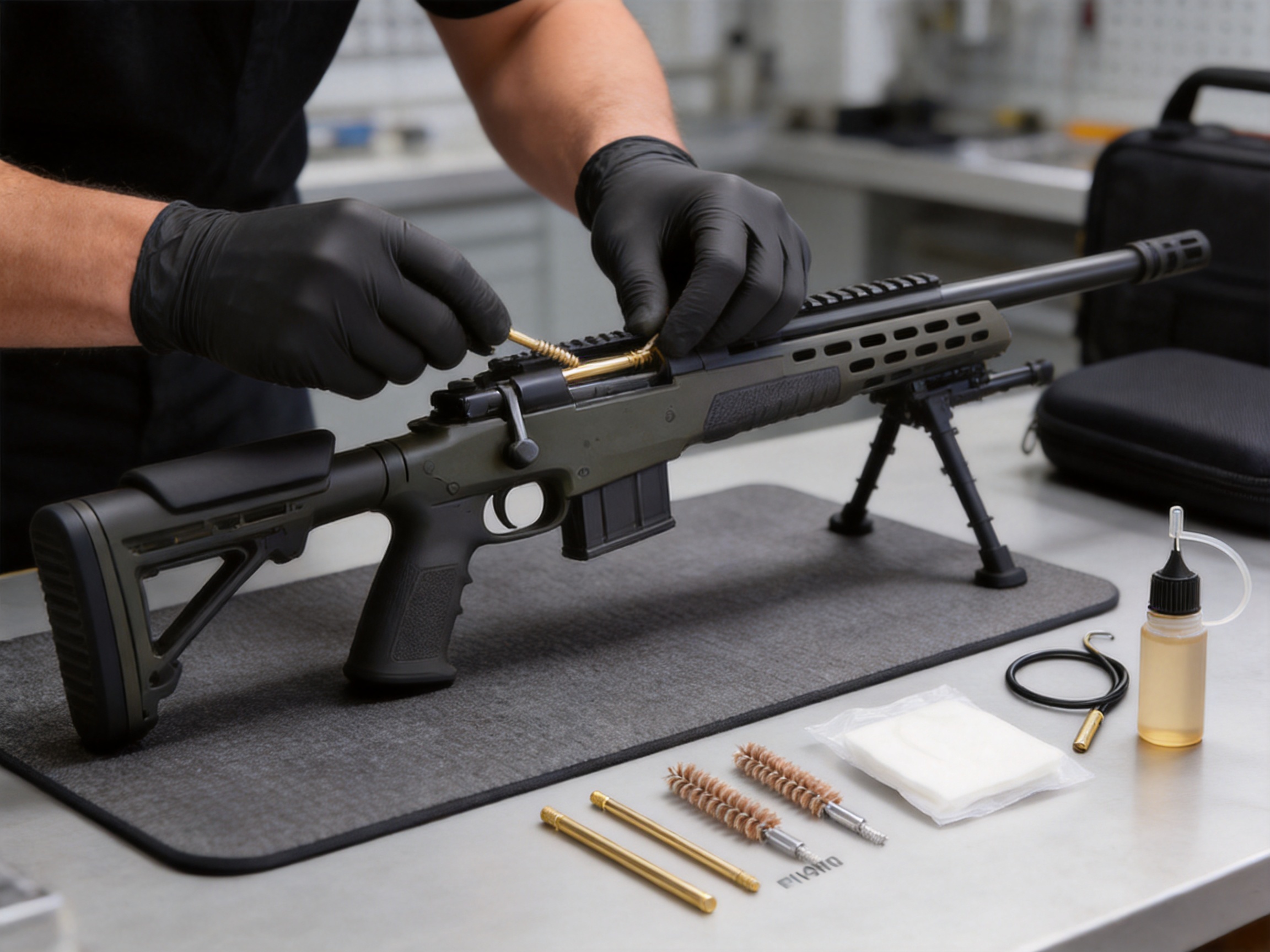
A typical cleaning process begins with safe preparation. The firearm must be unloaded, pointed in a safe direction, and handled in accordance with applicable laws, manufacturer instructions, and established firearm safety procedures. Users should verify the chamber and magazine area before beginning maintenance.
The next step is to prepare the cleaning area and select the appropriate brush. The nylon brush may be used for lighter residue or preliminary cleaning, while the phosphor bronze or copper-alloy brush may be selected for more persistent fouling. A compatible cleaning solution can be applied according to the firearm manufacturer’s recommendations.
The brush is then attached to the rod and used with controlled, deliberate movement. Users should avoid excessive force and should not improvise a tool for an application outside its intended purpose. The goal is to loosen residue while keeping the rod aligned with the bore.
After brushing, cleaning patches can be passed through the bore to remove loosened fouling and excess solution. Fresh patches may be used until they show reduced residue. The cleaning hook can assist with handling patches or reaching suitable areas during the process.
Once the bore and accessible components are clean and dry, an appropriate amount of firearm oil may be applied. Excess oil should be removed where necessary, as over-lubrication can attract dust or create other maintenance problems. The firearm should then be reassembled and stored according to the manufacturer’s instructions.
This sequence is a general guide rather than a substitute for the firearm manufacturer’s maintenance instructions. Different firearm platforms may have different disassembly, cleaning, lubrication, and inspection requirements. Users should always follow the appropriate manual and applicable safety standards.
The carrying case is one of the most practical features of the kit. With an approximate size of 11 × 17 × 4 cm, it can be stored in compact spaces while still accommodating the main accessories. The EVA interior helps maintain order and protects the components from unnecessary contact during transport.
Portable storage is useful for range visits, travel, field operations, outdoor shooting, and workshop use. A user can place the case in a larger equipment bag without having to gather individual brushes, patches, rods, and bottles before each trip.
For retailers, compact packaging can improve warehouse utilization. More units can be stored in a given area compared with larger, loosely packed products. Compact dimensions may also help reduce outer-carton volume, although the final shipping configuration should be confirmed with the supplier for each order.
The black color provides a neutral, professional appearance and can work with a variety of branding styles. It is suitable for plain packaging, private-label presentation, tactical-style retail ranges, outdoor product collections, and general hardware distribution.
| Item | Details |
|---|---|
| Product name | Copper Wire Gun Cleaning Kit Set |
| Product code | GK43 |
| Primary category | Gun Cleaning Kits |
| Brush options | Phosphor bronze, copper-alloy, and nylon configurations |
| Rod material | Brass |
| Handle material | PP |
| Included accessories | Cleaning hook, T-handle, oil bottle, and cleaning patches |
| Case | Compact black carrying case with EVA foam interior |
| Case dimensions | Approximately 11 × 17 × 4 cm |
| Shape | Round brush format |
| Main application | Firearm cleaning and maintenance |
| Available configurations | Brass-based and nylon-based sets |
| Manufacturing origin | China |
| Customization | OEM, ODM, packaging, and logo customization subject to confirmation |
Global buyers often need a product that is easy to explain, easy to package, and adaptable to different retail environments. This cleaning kit has a clear purpose and a straightforward component structure. Its selling points can be communicated through product photography, packaging copy, demonstrations, and online listings.
The product also serves several buyer groups. Outdoor and shooting retailers can offer it as a practical maintenance accessory. E-commerce sellers can position it as a complete cleaning set. Distributors can use it as part of a broader firearm-care catalog. Brand owners can customize the case and packaging for a dedicated product line.
Its compatibility with common e-commerce and marketplace sales models makes it appropriate for cross-border business, subject to platform and destination-market requirements. Buyers should ensure that all product claims, product images, packaging statements, and maintenance instructions are accurate and comply with the rules of the intended sales channel.
Stable supply is another important consideration. The manufacturer’s experience, automated and semi-automated production systems, export history, and OEM capabilities provide a foundation for repeat orders. As with any commercial purchase, buyers should confirm lead times, minimum order quantities, sample policies, shipping terms, payment conditions, and inspection arrangements before ordering.
Firearm cleaning should always be performed in a safe, controlled environment. The firearm must be completely unloaded before maintenance begins. Ammunition should be kept separate from the cleaning area, and users should follow all applicable laws, safety rules, and manufacturer instructions.
Cleaning tools should be used only for suitable applications. Users should select the correct brush and rod configuration, avoid excessive force, and inspect components before use. Damaged, bent, loose, or excessively worn tools should be replaced. Cleaning chemicals should be handled according to their labels and stored safely.
The kit is intended for maintenance and cleaning. It is not a substitute for professional gunsmithing, repair, inspection, or modification. If a firearm has a mechanical problem, visible damage, corrosion that affects safety, or a problem that cannot be resolved through normal cleaning, it should be examined by a qualified professional.
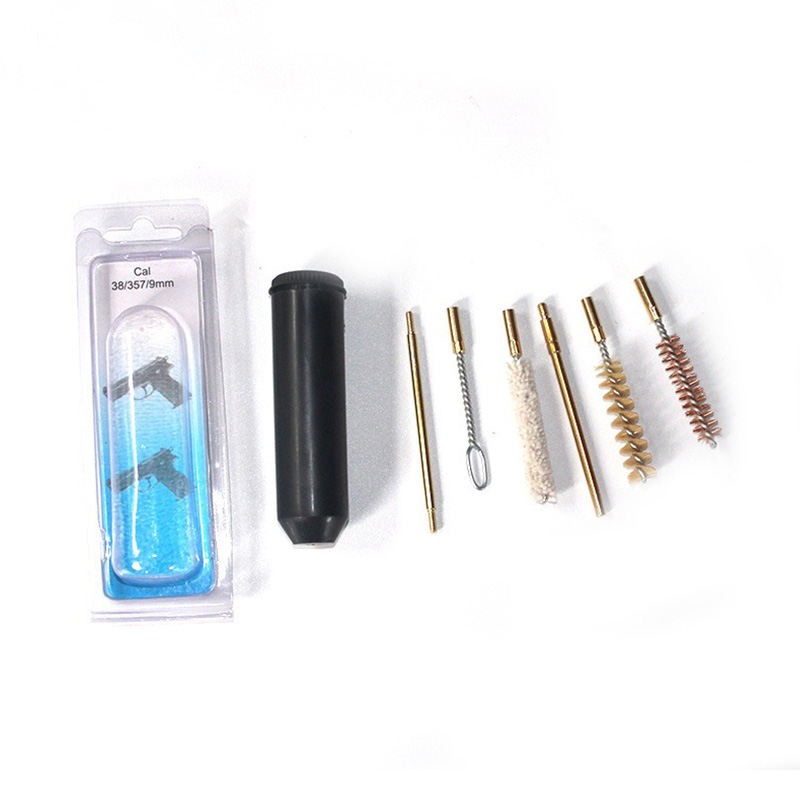
The set includes phosphor bronze or copper-alloy brushes, nylon brush options, a brass cleaning rod, a cleaning hook, a T-handle, an oil bottle, and cleaning patches. The components are stored in a compact black EVA-lined carrying case.
The kit is designed to help remove carbon fouling, powder residue, copper deposits, dust, and other common contaminants associated with firearm use and storage. Cleaning performance depends on the firearm, residue condition, cleaning solution, brush selection, and user technique.
Metal brushes provide stronger mechanical cleaning action for persistent fouling, while nylon brushes offer a softer option for lighter cleaning and selected surfaces. Having both types allows users to choose a tool that better matches the cleaning task.
The brass rod is designed to provide controlled support for brushes and patches during routine cleaning. It should be used carefully, kept aligned with the bore, and operated according to the firearm manufacturer’s instructions.
Yes. The components are organized in a compact black carrying case with an EVA foam interior. The approximate case dimensions are 11 × 17 × 4 cm.
Yes. Brass-based and nylon-based configurations are available. Buyers should confirm the exact brush combination, accessory list, packaging, and order specifications with the factory before production.
OEM and ODM services are available, including potential customization of products, packaging, and logos. Customization details depend on the requested design, order volume, materials, printing method, and production requirements.
The kit is suitable for distributors, firearm accessory retailers, outdoor equipment sellers, e-commerce businesses, shooting clubs, range suppliers, and private-label brands. Commercial terms should be confirmed directly with the manufacturer.
The durable multi-component design supports repeated routine use and can serve professional maintenance environments. However, professional users should establish their own inspection procedures and confirm that the selected configuration meets their specific operational requirements.
After use, tools should be cleaned, dried where appropriate, and returned to their designated positions in the EVA-lined case. The case should be stored in a dry place away from unsuitable chemicals, excessive moisture, and unauthorized access.
No. The kit provides cleaning tools, but users must follow the firearm manufacturer’s instructions for safe unloading, disassembly, cleaning, lubrication, reassembly, and storage.
Buyers should confirm the exact configuration, product code, brush materials, case dimensions, logo and packaging requirements, minimum order quantity, sample approval process, production lead time, inspection standards, shipping terms, and destination-market requirements.

The Copper Wire Gun Cleaning Kit Set offers a practical combination of cleaning performance, material flexibility, portability, and supply adaptability. Its phosphor bronze and copper-alloy brushes provide mechanical cleaning action for carbon, powder residue, and copper deposits, while nylon brushes offer a softer alternative for lighter or more delicate maintenance tasks.
The brass rod, T-handle, cleaning hook, oil bottle, and patches make the set more complete than a basic single-brush product. The compact EVA-lined case keeps the components organized and supports transport to ranges, workshops, outdoor locations, and field environments.
From a commercial perspective, the product benefits from factory-direct manufacturing, more than 26 years of production experience, semi-automatic and fully automated systems, international export experience, and OEM and ODM support. Brass-based and nylon-based configurations allow buyers to target different customer groups and price positions.
For distributors, retailers, and private-label brands, the set provides a clear and marketable firearm-care solution. Its complete accessory structure, compact presentation, and customization potential make it suitable for wholesale programs and international product lines. Buyers should confirm final specifications and safety-related requirements before ordering, but the product provides a strong foundation for dependable routine firearm maintenance.
1. Product specification information for Copper Wire Gun Cleaning Kit Set, product code GK43.
2. Manufacturer-provided company profile and production capability information.
3. General firearm maintenance principles concerning bore cleaning, residue removal, lubrication, and safe storage.
4. General material information relating to phosphor bronze brushes, nylon brushes, brass cleaning rods, polypropylene handles, and EVA protective cases.
5. General OEM and ODM sourcing practices for customized cleaning tools, packaging, and private-label products.